
Too much news?
The last week has been unprecedented in global news – although I do feel that every time we see the word unprecedented to refer to current events we’re just tempting fate to make it even worse. Our news has been dominated by crucially important and life-changing stories – the economic turmoil in the UK; the impact of global inflation; the real-life effects of Hurricanes Fiona and Ian on the east coast of Canada and the USA; Putin’s annexation of four more Ukrainian territories; the election of the most right-wing prime minister since Mussolini in Italy and; the suspected nation-state-orchestrated sabotage of the Nord Stream gas pipelines. This has been a busy news week. But beyond the headlines there have been so many other stories, other crises, other issues that in a ‘normal’ week (if there is such a thing anymore) would have demanded our attention.
So this week – I want to do a round-up of what we’ve missed as the world has become an even scarier place for too many people. To remind us all of what else is happening in the world that we’ve missed as we have been glued to the news that is struggling to report on everything that has happened.
- At least 18 journalists have been arrested in Iran for daring to cover the protests which have followed the brutal death of Mehsa Amina, who was beaten by state officials for incorrectly wearing a hijab.
- Prince Mohammed Bin Salman was appointed the Prime Minister of Saudi Arabia by his father, a move seemingly designed to give him an extra layer of legal protection in the ongoing lawsuits relating to the murder of Jamal Khashoggi.
- In an act of extraordinary self-sabotage which will undermine not only the British government’s global soft influence but will also significantly impact the promotion of real news and a free and fair media, the BBC World Service has announced deep cuts to their provision including ending Hindi, Arabic, Persian and Chinese radio services among others.
- Azerbaijan has launched an offensive into Armenia this month, with casualties reported on both sides. Although there is currently a ceasefire, the situation in Armenia looks bleak, with little international attention.
- Border clashes between Kyrgyzstan and Tajikistan have taken nearly 100 lives, with 137,000 people forced to flee the fighting in a week that has marked the worst violence in the area for years.
- The former democratic leader of Myanmar, Aung San Suu Kyi, has had a further three years added to her detention in a closed trial – her total sentence is now 23 years. In addition one of her advisors, the Australian citizen Sean Turnell, has also been sentenced to a three-year prison sentence by the military junta.
- In Zimbabwe, author Tsitsi Dangarembga has been arrested and fined for protesting against the government in the latest sign of a government crackdown against dissent.
- In Hong Kong, a man who attended the British Consulate in order to mark the passing of her Majesty Queen Elizabeth II has been arrested and charged with sedition for playing the British national anthem on his harmonica.
- A new report from Global Witness has highlighted the fact that an environmental activist is killed every two days while trying to prevent or expose aggressive forms of industry.
- In numerous states in the USA the impact of the end of Roe v Wade is now being felt. The University of Idaho has issued guidance informing faculty that they must remain neutral on issues relating to abortion or face dismissal – the rights afforded under academic freedom will not extend to this area.
- In the UK the Court of Appeal considered the case of the Colston 4 and the toppling of the statue of Edward Colston in Bristol. The judgement is far from ideal – and removes the human rights defence for future similar acts.
These are just a few of the dozens of stories that many of us missed this week while the world is in turmoil. As ever the role of Index is to make sure that these stories and those of dissidents are not ignored or forgotten.
Contents – Masked by Covid: The underreported stories of 2020 that must be heard
[vc_row][vc_column][vc_custom_heading text=”Special report “][/vc_column][/vc_row][vc_row][vc_column][vc_column_text]Another explosion for Lebanon by Zahra Hankir and Kareem Chehayeb: The blast in Beirut made international headlines. Even before that the nation was in turmoil and it has only worsened the mental health crisis
Who will report on Nicaragua? by Jemimah Steinfeld: Bianca Jagger tells Index a clampdown on dissent and independent media is reaching new heights
Remembering Rex Cornelio by Ryan Macasero: Months on from the murder of Philippines radio host Rex Cornelio we speak to those who knew him about his bravery and his awful death
Royally silenced by Pavin Chachavalpongpun: As students campaign against lèse-majesté laws, the Thai exile and royal critic with a Facebook group of two million followers considers their fate
Another black day for Poland by Katarzyna Kasia: The attack on women’s reproductive rights caused mass protests. Duda’s re-election gave it legitimacy
Tearing down the ivory tower by Kaya Genç: Amidst the noise of the pandemic, a thriving Istanbul university was shut down with litle outcry
Ganging up against the truth by Chris Havler-Barrett: El Salvador’s government do not want you to hear about a potential deal they’ve made with the country’s biggest gang
Mexico’s deadliest state by Stephen Woodman: The government’s promise to protect journalists from harm is failing. Just look at the state of Veracruz
Europe’s new Orban by Anuška Delić: Janez Janša, Slovenia’s new prime minister, is mirroring the extreme policies of his Hungarian counterpart
Democracy vs the people by Andy Morgan: Mali has seen a government coup following escalating protests. What has caused the unrest?
“The state won’t protest you” by Natasha Joseph: The death of Robert Mugabe brought so much hope, but improvements to daily life have not come for Zimbabweans. Far from it
Dying for the mother tongue by Uradyn E Bulag: Why have people in Inner Mongolia recently taken their lives?[/vc_column_text][/vc_column][/vc_row][vc_row][vc_column][vc_custom_heading text=”Global view “][/vc_column][/vc_row][vc_row][vc_column][vc_column_text]Hey, big brother – we’re watching you by Ruth Smeeth: We will fight louder and harder for those whose governments have taken away their freedoms[/vc_column_text][/vc_column][/vc_row][vc_row][vc_column][vc_custom_heading text=”In focus”][/vc_column][/vc_row][vc_row][vc_column][vc_column_text]Long march towards cultural genocide by Nick Holdstock: As news emerges of the present horrors happening in Xinjiang, an expert on the region looks at its recent history
How to challenge China by Tom Tugendhat, Lokman Tsui, Rushan Abbas & Anne-Marie Brady: How do we make a global power sit up and take notice? These experts offer advice
Abuse not part of journalists’ day job by Fréderike Geerdink: A reporter in the Netherlands has won a landmark case against her online harassers
Two faces of On Liberty by John Gray: Liberal institutions are becoming more censorial. Is the philosopher John Stuart Mill to blame?
Out with the old? by Robert Speel: Donald Trump’s conduct during and after the election appeared extraordinary, but a look at US history challenges that
The Sudanese revolution will be illustrated by Abraham Zere: A profile of Khalid Albaih, the political cartoonist dubbed “an enemy of the state”
Social media platforms have a moral duty to ban misinformation about vaccines by Julie Leask and Jonathan Kennedy: Two leading thinkers on vaccine hesitancy and misinformation debate this crucial question[/vc_column_text][/vc_column][/vc_row][vc_row][vc_column][vc_custom_heading text=”Culture “][/vc_column][/vc_row][vc_row][vc_column][vc_column_text]Fighting the propaganda tsars by Sergey Khazov-Cassia: The Russian writer speaks to Index about why his books are sold wrapped in plastic and shares an extract from The Gospel According To
Banning those who ban by Bothayna al-Essa: Jemimah Steinfeld talks to the Kuwaiti author about a landmark case in the country that saw a ban on books overturned. Plus an exclusive extract from al-Essa’s book Guardian of Superficialities
“Your limitless grief is a tale with no ending” by Joshua L Freeman: We publish the poetry of three Uighur poets – Abuqadir Jüme Tunyuquq, Idris Nurillah and Shahip Abdusalam Nurbeg – who have disappeared in China
Page turners or slow burners? by Leah Cross, Jessica Ní Mhainín & Marc Nash: New books reviewed on the murder of a Honduran activist, stories from a Tibetan town and a semi-autobiographical account of an artist in the USA[/vc_column_text][/vc_column][/vc_row][vc_row][vc_column][vc_custom_heading text=”Index around the world”][vc_column_text]World loses titans of free speech by Benjamin Lynch: A look at the free speech advocates that recently passed away including Sir Harold Evans[/vc_column_text][/vc_column][/vc_row][vc_row][vc_column][vc_custom_heading text=”Endnote”][/vc_column][/vc_row][vc_row][vc_column][vc_column_text]Fighting for Covid information by Lauren Brown: Meet the people who are ensuring that even those in the most censored environments receive accurate information on the pandemic[/vc_column_text][/vc_column][/vc_row]
“Tanzanians want democracy, respect for their basic human rights and dignity” – Tundu Lissu
[vc_row][vc_column][vc_column_text]
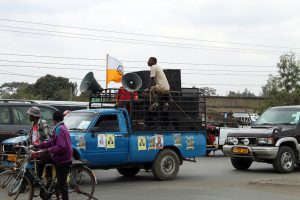
Campaigners at the 2010 election in Tanzania, when voter turnout was higher than today. Credit: flowcomm/Flickr
The 2020 general election in Tanzania is becoming a huge blemish on Tanzanian democracy. Held at the end of last month, the CCM incumbent, John Magufuli, was declared the winner by 84% of the vote, with his biggest opponent Tundu Lissu from Chadema getting only 13% of the vote. The ruling CCM also won by unprecedented numbers seats in the union parliament (over 90%), the Zanzibar house of representatives, as well as ward councillor seats, sending the country to a near single party era.
The main opposition parties, Chadema and ACT Wazalendo, have jointly denounced these results, declaring the entire election process illegitimate, citing rigging of epic proportions including reported but unverified claims of ballot stuffing in multiple constituencies and foul play against opposition candidates. They have also called out human rights abuses during the process, alleging that 14 people have died because of excessive use of force by police in Zanzibar.
Opposition leaders and members in different localities have been unlawfully detained during and after the elections. A call for nationwide peaceful protests seemed to go unanswered by the masses and was met with stern warnings from the police. Some opposition leaders like Lissu were forced to flee the country for their safety.
Instead of finding a path to dialogue and reconciliation that allows the concerns of millions of Tanzanians to be addressed, the government of Tanzania has mostly been dismissive of these allegations.
“Tanzanians want democracy, respect for their basic human rights and dignity,” said Lissu while speaking with Index via Zoom.
Until recently Tanzanians put a lot of trust in the ballot. But amid claims that the National Electoral Commission and Zanzibar Electoral Commission lack independence and therefore credibility to oversee a free and fair election, voter turnout has dropped. The chairs and members of NEC and ZEC are appointed and can be fired by sitting presidents of Tanzania and Zanzibar respectively, who may also be candidates in an election.
“Partiality is built into the Tanzanian system, making rigging a systemic problem,” said Lissu.
“Our minimum demand is for an independent electoral commission and substantial reforms in the electoral system,” he added.
But a systematic overhaul will take time.
Zitto Kabwe, a prominent leader from ACT Wazalendo, told Index, “We need a credible and independent investigation into the 2020 election.” He sees an independent investigation as a more immediate first step to restoring trust that has been eroded in the current regime.
Magufuli may have rightly won this election because of his popularity and ambitious economic agenda, but the process that declared him the winner was marred with allegations of irregularities. Agreeing to such an investigation could help clear these allegations and restore trust.
Opposition leaders like Lissu and Kabwe represent the voice of millions of Tanzanians, yet their speech is often vilified as ill will and unpatriotic. In fact, Tanzanians often treat Lissu much like the world treats women who face abuse: When he was shot many times people blamed him and demanded he produce evidence of his own assault; when he was in the news speaking about his attack, people said he wanted attention, that he was slandering the good name of the country, that he shouldn’t air the country’s dirty laundry. And so we find ourselves in a situation where there has been no proper investigation and no arrests for whoever attacked him.
Intensifying censorship in Tanzania has further tarnished the election. In addition to repressive laws that have mellowed the media, as well as stifled civil society and political parties in the past four years, private phone companies were co-opted into shutting down the internet for millions of people during and after the election.
In this toxic environment, the media has suffered further attacks, especially those who work at foreign media, which is tarnished by the brush of colonialism. Journalists and citizens don’t just suffer from the threats posed by this suppressive regime, they have to navigate how any speak highly critical of the government, and therefore country, might be seen as unpatriotic. The result is self-censorship. Writing negative news about your country is a terrifying act.
“We are in an economic warfare, and Tanzanians aren’t strangers to imperialism,” said Wilbrod Slaa, a disillusioned former Chadema secretary general and 2005 and 2010 presidential candidate. There is a mistrust of international involvement.
“What would speaking out do for the country?” several people who didn’t wish to be named asked Index.
But of course democracy demands free speech to be truly free.
“Tanzania has a history of solving its own problems. I wish the government would hear us and come to the table for dialogue and consensus and avoid extreme measures like sanctions,” said Ado Shaibu, Secretary-General of ACT Wazalendo. “We can’t afford to become another Zimbabwe,” Shaibu added.
Tanzania must end its war on dissent. Tanzanians deserve that much.[/vc_column_text][/vc_column][/vc_row]