21 Jan 2015 | Azerbaijan, Azerbaijan Letters, Campaigns, Germany, Statements
Chancellor Angela Merkel
Bundeskanzleramt
Willy-Brandt-Straße 1
10557 Berlin
Madam Chancellor,
As members of the international NGO coalition ‘Sport for Rights’ we are appealing to you to make human rights a central subject in your meeting next Wednesday, 21 January 2015, with president Ilham Aliyev of Azerbaijan.
In recent years, space for political activity and for civil society and journalism in Azerbaijan has gradually been curtailed, and the last six months in particular have witnessed a severe and unprecedented crackdown, with dozens of civil society activists and journalists serving or awaiting sentencing. The country’s most prominent investigative journalist and a number of leading human rights defenders are in prison, punished for their criticism of government policies. Sham charges such as ‘tax evasion’ are used to justify the criminalization of fundamental rights and freedoms.
The ‘Sport for Rights’ coalition has been established to raise this issue in the context of the forthcoming international sporting events to be hosted by Azerbaijan. Against a backdrop of systematic state-sponsored repression, these events will fail to reflect the spirit in which they were established. The next major sporting event is the Baku European Games, designed and regulated by the European Olympic Committees, scheduled for June 2015. A policy shift by the Azerbaijan towards an open society is urgently required if these Games are to be a success. Human rights defenders and journalists must be released, and we urge you to emphasize this point in your conversations with President Aliyev.
This issue is all the more important given that Azerbaijan is a member of the European community of nations: the country is a member of the Council of Europe (CoE), and part of the EU’s Eastern Partnership Initiative. By ratifying the European Human Rights Convention, Azerbaijan has made a commitment under international law to respect the fundamental freedoms contained therein. CoE officials have repeatedly called attention to Azerbaijan’s failure to uphold these freedoms for its citizens. In his retrospective on 2014, Nils Muiznieks, the CoE Human Rights Commissioner, declared:
One of the most difficult situations I have observed is in Azerbaijan, where the authorities are engaging in a systematic crackdown on human rights defenders, media professionals and civil society partners of the Council of Europe. The number of those in detention there or in exile continues to grow.
President Aliyev may point to token releases that take place from time to time – but please remember that not only are these rare, they are issued only after innocent people have served time in prison, losing months and years of their lives for exercising their basic rights to freedom of expression and association.
Among those unjustly arrested or convicted in 2014 are:
- Anar Mammadli and Bashir Suleymanli, co-founders of the Election Monitoring and Democracy Studies Centre – Mammadli and Suleymanli were arrested on 16 December 2013 and then sentenced to 5.5 and 3.5 years respectively in May 2014, following outspoken criticism of Azerbaijan’s presidential elections in October 2013. On 29 September 2014, Mammadli was awarded the Václav Havel Award for Human Rights by the Parliamentary Assembly of the Council of Europe.
- Leyla Yunus, Director of the Azerbaijan Institute of Peace and Democracy – Yunus was arrested on 30 July2014, and has remained in pre-trial detention since then, despite serious concerns about her health. She was awardedthe 2013 Theodore Hecker Award in Esslingen-am-Neckar “for her self-sacrificing contribution to the protection of human rights and civil freedoms in Azerbaijan.” Her husband Arif Yunus, Head of the Department of Conflict and Migration Institute of Peace and Democracy in Azerbaijan, Ph.D., a historian specializing in conflict studies, was arrested on 6 August 2014.
- Rasul Jafarov, one of the initiators and coordinators of the “Sing for Democracy” (2012) and “Art for Democracy” (2013) campaigns – Jafarov was arrested on 2 August2014 and has remained in detention since. His trial began on 15 January 2015.
- Intigam Aliyev, human rights defender and lawyer – Aliyev was has been in detention since his arrest 8 August 2014. In his capacity as a lawyer he has specialized in defending rights of citizens in the European Court of Human Rights. At the time of his arrest, he was dealing with over 100 cases pending before the Court.
- Khadija Ismayilova, investigative journalist; radio host for Radio Free Europe/Radio LibertyAzerbaijani service; member of the Organized Crime and Corruption Reporting Project – Ismayilova was arrested on 5 December 2014.
We ask you to unequivocally remind Azerbaijan of its obligations under the European Convention on Human Rights. Azerbaijan’s partners should insist that this terrible stainon the country’s human rights record is removed before Baku plays host to the European Games, and that these people be released immediately and unconditionally. Full execution of European Court of Human Rights should also be requested from Azerbaijan in this regard, aiming at amending legislation criminalising human rights defenders in line also with recommendations of the CoE Venice Commission.
We sincerely hope that we can count on your principled leadership on this urgentmatter. We thank you for your attention to the concerns set forth herein.
NGO coalition “Sport for Rights”, including:
- Centre for Civil Liberties (Ukraine)
- Helsinki Foundation for Human Rights (Poland)
- Index on Censorship (Great Britain)
- International Partnership for Human Rights (Belgium)
- Netherlands Helsinki Committee (The Netherlands)
- Norwegian Helsinki Committee (Norway)
- People in Need (Czech Republic)
- Platform (Great Britain)
- Youaid Foundation (Poland)
- A group of civil society activists from Azerbaijan who wish to remain anonymous out
of concern for the security of their family members
19 Jan 2015 | Awards, Campaigns, News, Statements
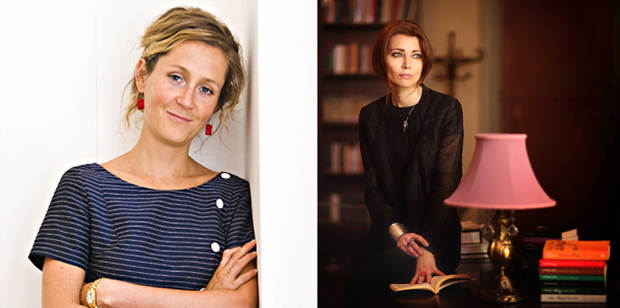
Digital rights champion Martha Lane Fox and bestselling Turkish author Elif Shafak were named today as judges for this year’s Index on Censorship Freedom of Expression Awards.
The awards, presented annually by Index on Censorship, have honoured some of the world’s most remarkable free expression heroes – from conductor Daniel Barenboim to cartoonist Ali Farzat to education activist Malala Yousafzai.
The awards shine a spotlight on individuals fighting to speak out in the most dangerous and difficult of conditions, many of whom are unknown and unsung outside their own countries.
In Azerbaijan, telling the truth can cost a journalist their life… For the sake of this right we accept that our lives are in danger, as are the lives of our families. But the goal is worth it, since the right to truth is worth more than a life without.
— Idrak Abbasov, award winner 2012
Index received more than 2,200 nominations for over 400 individuals and groups from around the world, for the 2015 awards, which are offered in four categories: campaigning (sponsored by Doughty Street Chambers); digital activism (sponsored by Google); journalism (sponsored by The Guardian), and arts.
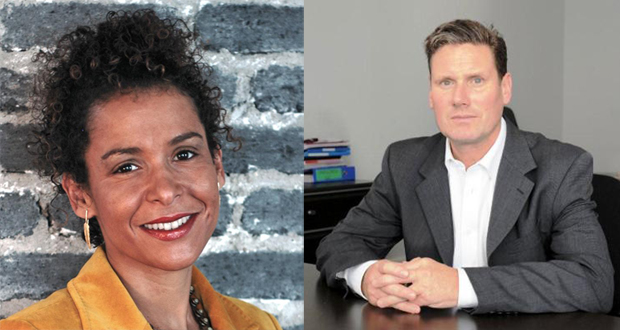
This year’s judging panel reflects the international scope of the awards. The four judges include award-winning journalist and campaigner Mariane Pearl; bestselling Turkish author, columnist, speaker and academic Elif Shafak; human rights lawyer Keir Starmer, the former UK Director of Public Prosecutions; as well as digital rights campaigner and philanthropist Martha Lane Fox.
The shortlist for the awards will be announced on 27 January and the winners unveiled at a gala ceremony on 18 March at The Barbican, London.
For more information, contact: [email protected]
15 Jan 2015 | News, Turkey
Richard Howitt MEP is foreign affairs spokesperson for both the Labour Party and the Socialist and Democrat Group in the European Parliament and is a member of its joint parliamentary committee with the Turkish Parliament
As millions mourn the shooting of journalists in France, the European Parliament convening this week in Strasbourg today extended the fight for freedom of expression to legal threats, harassment and character assassination against free journalism in Turkey.
Indeed last weekend’s scenes reminded me of the hundreds of thousands who went on to the streets after the Turkish writer Hrant Dink was shot in 2007 and my deep regret that, despite the work of a foundation established by his widow, the situation in Turkey appears to have got worse not better in the intervening years.
A resolution voted for by MEPs was provoked by dawn police raids on newspapers and television stations in December that led to the arrest of 31 people, mainly journalists, on charges of terrorism – which carry some of the gravest sentences under the Turkish penal code.
Two of the leading journalists arrested openly admit sympathies for the US-based cleric Fethullah Gulen ,whose followers withdrew support from the country’s governing AKP party and whose so-called ‘movement’ does indeed deserve greater scrutiny.
Nevertheless reports suggest no evidence was presented of actual criminal intent against those arrested, with the crackdown fitting a pattern of legal harassment, smears and threats against those who provide political opposition to the government or who critically report on corruption allegations against it.
Our resolution also condemns the recent arrest of a Dutch journalist, demonstrating how foreign journalists are not exempt from attack.
Correspondents of The Economist, Der Spiegel and the New York Times in Turkey have all been threatened, with one CNN correspondent forced to flee the country after being accused of espionage.
Previous attempts to ban social media are also being revived in the country this week, in an apparent attempt to suppress reports Turkey’s intelligence organisation may have been implicated in the supply of arms to ISIS fighters in Syria.
As someone who is proud to call himself a friend of Turkey, and a keen proponent for the country’s accession to the EU, it is with a heavy heart I sign up to such criticisms.
However in negotiations I had to argue against opponents of the country seeking to use this latest incident to introduce wording that would have imposed immediate financial penalties against Turkey or put up new barriers in the membership negotiations.
I did so because politicians as well as journalists must not allow ourselves to be trapped in to self-censorship. On these arrests, it was our duty to speak out.
I am saddened explanations that the release of all but four of the journalists given to me and to my fellow MEPs by the Turkish representative in Strasbourg this week seemed wantonly to ignore the climate of fear and self-censorship which remains inflicted on the country’s press as a result.
It is the blatant denials that undermine trust and confidence with those of us who want to support reform efforts in the country, and which one very senior EU official told me had led to “desperation” in the telephone calls between Brussels and Ankara which followed the arrests.
Meanwhile, former prime minister Recep Tayyip Erdoğan, now elected as the country’s president, reacted characteristically by telling a news conference: “Nowhere in Europe or in other countries is there a media that is as free as the press in Turkey.”
The sober truth is that Turkey ranks 154 out of 180 in press freedom according to the Reporters Without Borders index last year.
The annual survey by the Committee to Protect Journalists, published only last month, showed Turkey amongst the top ten countries in the world for imprisoning journalists, ranking alongside Azerbaijan, Iran and China.
However, Erdogan’s protestations must be put in to a context where he also rebuffed European criticisms of the arrests saying the EU should “mind its own business”, and last week when he was prepared to partly attribute the Charlie Hebdo terrorist attack to “Western hypocrisy”.
Today’s European Parliament vote ascribes that hypocrisy instead to the government in Ankara.
I wonder whether the Turkish press will fairly report even this?
This article was posted on 15 January 2015 at indexoncensorship.org
17 Dec 2014 | Magazine, Volume 43.04 Winter 2014
[vc_row][vc_column][vc_custom_heading text=”Packed inside this issue, are; an interview with fantasy writer Neil Gaiman; new cartoons from South America drawn especially for this magazine by Bonil and Rayma; new poetry from Australia; and the first ever English translation of Hanoch Levin’s Diary of a Censor; plus articles from Turkey, South Africa, South Korea, Russia and Ukraine.”][vc_row_inner][vc_column_inner width=”1/2″][vc_column_text]
Also in this issue, authors from around the world including The Observer’s Robert McCrum, Turkish novelist Elif Shafak, and Nobel nominee Rita El Khayat consider which clauses they would draft into a 21st century version of the Magna Carta. This collaboration kicks off a special report Drafting Freedom To Last: The Magna Carta’s Past and Present Influences.
[/vc_column_text][/vc_column_inner][vc_column_inner width=”1/2″][vc_single_image image=”62427″ img_size=”full”][/vc_column_inner][/vc_row_inner][vc_column_text]
Also inside: from Mexico a review of its constitution and its flawed justice system and Turkish novelist Kaya Genç looks at recent intimidation of women writers in Turkey.
[/vc_column_text][/vc_column][/vc_row][vc_row][vc_column][vc_custom_heading text=”SPECIAL REPORT: DRAFTING FREEDOM TO LAST” css=”.vc_custom_1483550985652{margin-right: 0px !important;margin-left: 0px !important;border-bottom-width: 1px !important;padding-top: 15px !important;padding-bottom: 15px !important;border-bottom-color: #455560 !important;border-bottom-style: solid !important;}”][vc_column_text]
The Magna Carta’s past and present influences
1215 and all that – John Crace writes a digested Magna Carta
Stripsearch cartoon – Martin Rowson imagines a shock twist for King John
Battle royal – Mark Fenn on Thailand’s harsh crackdown on critics of the monarchy
Land and freedom? – Ritu Menon writes about Indian women gaining power through property
Give me liberty – Peter Kellner on democracy’s debt to the Magna Carta
Constitutionally challenged – Duncan Tucker reports on Mexico’s struggle with state power
Courting disapproval – Shahira Amin on Egypt’s declining justice as the anniversary of the military takeover approaches
Digging into the power system – Sue Branford reports on the growth of indigenous movements in Ecuador and Bolivia
Critical role – Natasha Joseph on how South African justice deals with witchcraft claims
[/vc_column_text][/vc_column][/vc_row][vc_row][vc_column][vc_custom_heading text=”IN FOCUS” css=”.vc_custom_1481731813613{margin-right: 0px !important;margin-left: 0px !important;border-bottom-width: 1px !important;padding-top: 15px !important;padding-bottom: 15px !important;border-bottom-color: #455560 !important;border-bottom-style: solid !important;}”][vc_column_text]
Brave new war – Andrei Aliaksandrau reports on the information war between Russia and Ukraine
Propaganda war obscures Russian soldiers’ deaths – Helen Womack writes about reports of secret burials
Azeri attack – Rebecca Vincent reports on how writers and artists face prison in Azerbaijan
The political is personal – Arzu Geybullayeva, Azerbaijani journalist, speaks out on the pressures
Really good omens – Martin Rowson interviews fantasy writer Neil Gaiman, listen to our podcast
Police (in)action – Simon Callow argues that authorities should protect staging of controversial plays
Drawing fire – Rayma and Bonil, South American cartoonists’ battle with censorship
Thoughts policed – Max Wind-Cowie writes about a climate where politicians fear to speak their mind
Media under siege or a freer press? – Vicky Baker interviews Argentina’s media defender
Turkey’s “treacherous” women journalists – Kaya Genç writes about dangerous times for female reporters, watch a short video interview
Dark arts – Nargis Tashpulatova talks to three Uzbek artists who speak out on state constraints
Talk is cheap – Steven Borowiec on state control of South Korea’s instant messaging app
Fear of faith – Jemimah Steinfeld looks at a year of persecution for China’s Christians
Time travel to web of the past and future – Mike Godwin’s internet predictions revisited, two decades on
[/vc_column_text][/vc_column][/vc_row][vc_row][vc_column][vc_custom_heading text=”CULTURE” css=”.vc_custom_1481731777861{margin-right: 0px !important;margin-left: 0px !important;border-bottom-width: 1px !important;padding-top: 15px !important;padding-bottom: 15px !important;border-bottom-color: #455560 !important;border-bottom-style: solid !important;}”][vc_column_text]
Language lessons – Chen Xiwo writes about how Chinese authors worldwide must not ignore readers at home
Spirit unleashed – Diane Fahey, poetry inspired by an asylum seeker’s tragedy
Diary unlocked – Hanoch Levin’s short story is translated into English for the first time
Oz on trial – John Kinsella, poems on Australia’s “new era of censorship”
[/vc_column_text][/vc_column][/vc_row][vc_row][vc_column][vc_custom_heading text=”COLUMNS” css=”.vc_custom_1481732124093{margin-right: 0px !important;margin-left: 0px !important;border-bottom-width: 1px !important;padding-top: 15px !important;padding-bottom: 15px !important;border-bottom-color: #455560 !important;border-bottom-style: solid !important;}”][vc_column_text]
Global view – Jodie Ginsberg writes about the power of noise in the fight against censorship
Index around the world – Aimée Hamilton gives an update on Index on Censorship’s work
[/vc_column_text][/vc_column][/vc_row][vc_row][vc_column][vc_custom_heading text=”END NOTE” css=”.vc_custom_1481880278935{margin-right: 0px !important;margin-left: 0px !important;border-bottom-width: 1px !important;padding-top: 15px !important;padding-bottom: 15px !important;border-bottom-color: #455560 !important;border-bottom-style: solid !important;}”][vc_column_text]
Humour on record – Vicky Baker on why parody videos need to be protected
[/vc_column_text][/vc_column][/vc_row][vc_row][vc_column][vc_custom_heading text=”SUBSCRIBE” css=”.vc_custom_1481736449684{margin-right: 0px !important;margin-left: 0px !important;border-bottom-width: 1px !important;padding-bottom: 15px !important;border-bottom-color: #455560 !important;border-bottom-style: solid !important;}”][vc_column_text]Index on Censorship magazine was started in 1972 and remains the only global magazine dedicated to free expression. Past contributors include Samuel Beckett, Gabriel García Marquéz, Nadine Gordimer, Arthur Miller, Salman Rushdie, Margaret Atwood, and many more.[/vc_column_text][vc_row_inner][vc_column_inner width=”1/2″][vc_single_image image=”76572″ img_size=”full”][/vc_column_inner][vc_column_inner width=”1/2″][vc_column_text]In print or online. Order a print edition here or take out a digital subscription via Exact Editions.
Copies are also available at the BFI, the Serpentine Gallery, MagCulture, (London), News from Nowhere (Liverpool), Home (Manchester), Calton Books (Glasgow) and on Amazon. Each magazine sale helps Index on Censorship continue its fight for free expression worldwide.
 SUBSCRIBE NOW[/vc_column_text][/vc_column_inner][/vc_row_inner][/vc_column][/vc_row]