30 May 2014 | News, Politics and Society, United Nations
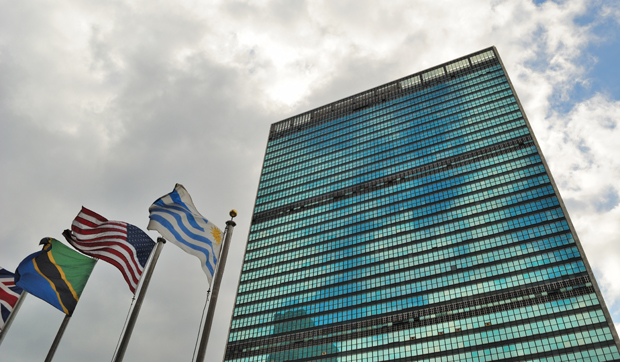
In a discretion well known to diplomatic circles, the United Nations so-called Committee on NGOs is meeting in New York this week. It is to select which NGOs fit the institution. The 19-member body’s aim could be to ensure a high-level and quality participation of independent NGOs to the United Nations – it is instead the 21st century censorship bureau.
Any governmental institution has to establish mechanisms by which participation of external organisations and lobbyists is regulated. The role of the Committee on NGOs of the United Nations is to look into applications of NGOs from all around the world. It is supposed to assess, case by case, whether the applicant NGO respects the Charter of the United Nations and abides by basic principles such as non-violence and democracy.
We know how much civil society has contributed to the development of the United Nations as such, and has been a force in pushing States to adopt a set of internationally binding standards to protect human rights and so many other issues. Access to the international bodies allowed NGOs to have a direct and formal input into the discussions. Unlike lobbyists at parliaments, representatives of NGOs can officially participate in the debates at the United Nations Human Rights Council. No need to be invited by an official or find strategies to get in contact with decision-makers. The access guaranteed to independent civil society, representing values and principles, not financial interests, is at the very core of the United Nations and a consequence of the organisation recognising it would be nothing if it had to count only on States to build itself and its standards up.
Some of those States are indeed the ones most willing to silence critical NGOs.
Throughout the globe, NGOs are fighting more and more for their own space in society, for their ability to work and defend victims of human rights violations. The work used to be all about those who loose their lives working as slaves, those who end up behind bars because of their beliefs, their engagement or their sexuality, those who loose their houses because from a day to another a ruler wants the land or a country believes it has the absolute right over it. Human rights defenders used to give body and soul to those people, and to so many others. Now, we need to include that we need to challenge governments shrinking the ability of those fighting for rights – human rights defenders need more and more to fight for themselves and their own space.
The United Nations should be an arena of dialogue aspiring to protect victims and promote peace. To do so, various voices are needed at the table. However, those who shrink space for civil society at home certainly do not want to see them at the table in New York or Geneva, or at any other international forum for that matter.
Along with inter alia Cuba, Pakistan and Venezuela, China and Russia are long-standing members of the Committee of NGOs. Both can proudly wear a label of censorship. Following President Vladimir Putin’s third election in March 2012, the country is undergoing a wave a repression and has adopted some of the most draconian laws against independent civil society. Dissenting with the Chinese regime is at the cost of one’s life, safety and integrity. The same behaviour is being observed by China and Russia at the Committee on NGOs – the institution is its tool to repress those the countries’ leadership do not agree with. And the consequences are grave. As world powers and permanent members of the Security Council, the two countries are already immune to critics within the UN on their rights record. The repression against political activists, human rights defenders and their NGOs, should have brought both countries to the centre of debates at the Human Rights Council and the General Assembly. It did not because they effectively prevents critics from getting into the room. Other States are now following the same strategy; one cannot believe that Azerbaijan, which will become a member of the Committee in 2015, shows a genuine interest in NGO participation in the international debate when it jails those who want to monitor the public life in Azerbaijan, such as the leader of the country’s only independent election monitoring group Anar Mammadli.
Member States of the Eastern European Group in the United Nations (the geographical groups are one of the legacies of the post world war era) should have run against Azerbaijan and Russia. Many of those Eastern Europe States are within the European Union. The Union was a step behind others by omitting to see that its willingness to promote rights and democracy in its direct neighbourhood will be affected by leaving a censorship tool in the hands of people who enjoy it.
Western countries have on their side left Turkey run unopposed for the Committee. The country has singled itself out recently, from all members of the Western European and Others Group, in blocking access to social media, especially Twitter. The single fact that a leader believes the power held in his hands allows him to block freedom of expression on the media of one’s choice should imply that that leader’s government is not to participate in the selection of civil society organisations participating in shaping the international arena.
Within the protected compound of the United Nations in Manhattan, the Committee on NGOs is this week looking into accepting those NGOs nobody will oppose, whilst blocking those NGOs publicly and forcefully engaging for human rights, including rights of people belonging to minorities or espousing minority beliefs. States should stand up for the space for critical NGOs. They might have the numbers and if they do not they are on the honourable side trying to support those NGOs that deserve to be at the United Nations. There is no shame in losing against censors – there is one in not trying to oppose them.
This article was posted on May 30, 2014 at indexoncensorship.org
9 May 2014 | Azerbaijan, Azerbaijan News, Bahrain, China, News, Oman, Saudi Arabia, Thailand, United Arab Emirates, United Kingdom
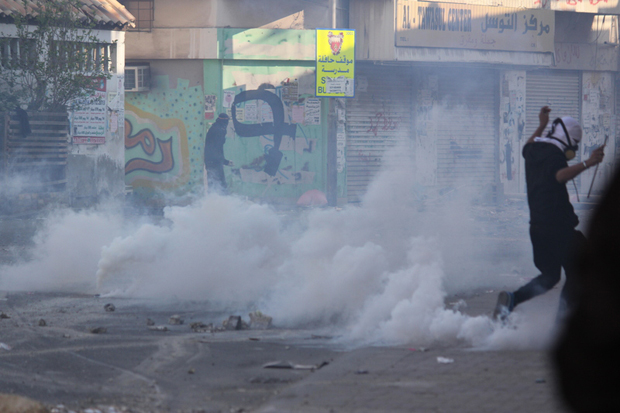
Made in Britain? Physicians for Human Rights (PHR) called for the immediate suspension of the use of excessive, indiscriminate and systematic use of tear gas against civilian protesters and densely populated Shia neighbourhoods in Bahrain (Image: Iman Redha/Demotix)
The Arab Spring has not stopped Britain from helping crush free expression and freedom of assembly by selling crowd control gear to authoritarian states including Saudi Arabia and Bahrain.
Analysis of newly-published data on export licences approved by the UK government have revealed ministers backed over £4 million of tear gas, crowd control ammunition and CS hand grenade sales over the last two years to Saudi Arabia – one of the most repressive states in the world.
The British government also allowed crowd control ammunition to be sold to Malaysia and Oman, as well as tear gas to Hong Kong and Thailand.
It gave the green light to anti-riot and ballistic shields to four authoritarian regimes listed by the Economist Democratic Index: the United Arab Emirates, Bahrain and Azerbaijan, as well as Saudi Arabia.
Its only refusal for an export licence in 2013 for equipment which could be used to suppress internal dissent was for an order of CS hand grenades and ‘tear gas/irritant ammunition’ to Turkey.
A lack of transparency across the secretive arms sector makes it difficult to establish which companies are providing the arms – or how the country in question intends to use them.
But the Geneva Convention forbids the military use of all gas weapons, meaning the UK government would have assumed the tear gas was for use against civilian protesters.
Brief explanatory notes included in the export licences data suggest all those mentioned above are primarily for use against domestic populations.
The notes typically state the licence is granted “for armed forces end use” or “for testing and evaluation by a government / military end user”.
The only exception is the note for a sizeable order of anti-protest equipment for Brazil, which makes clear the export licence is granted for “armed forces end users not involved in crowd control / public security”.
Further evidence has emerged that Britain’s leading arms firm, BAE, has signed a £360 million contract with an unnamed Middle Eastern country for the upgrade of armoured personnel carriers whose primary use is against protesters.
Industry insiders believe the improvements are being made in Saudi Arabia to a stockpile of the vehicles left in the country by the United States military.
BAE’s chairman Sir Roger Carr said contractual commitments prevented him from commenting at the defence giant’s annual general meeting in Farnborough yesterday.
He faced heckling and hissing from vocal critics in the audience who had infiltrated the two-hour question-and-answer session, but insisted BAE was “helping to preserve world peace” and that the company “are not undermining the broader international rules” of the arms trade.
Speaking afterwards, however, a member of BAE’s board suggested the “natural place for these decisions is with government” rather than the company.
“I’m not abrogating our moral responsibility,” he said, “but it’s right that the burden of these difficult decisions is on the government because, in the UK at least, this is an elected democracy.”
Britain’s parliament, at least, has proved reluctant to provide a critical voice on the UK’s arms trade.
Opponents had alleged Saudi Arabian troops which intervened to crush the Arab Spring in Bahrain had received British military training. A recent report from MPs accepted the Foreign Office’s rejection of British complicity, with ministers arguing none of the training had taken place “in a repressive way”.
The Commons’ foreign affairs committee did, however, call on the government to “adhere strictly to its existing policy to ensure that defence equipment sold by UK firms are not used for human rights abuses or internal repression”.
Its request for the government to provide further evidence that it is doing so in practice did not meet with a positive response.
Officials said the risk that export licence criteria might be broken is “factored into” the original decision to grant the licence.
The Foreign Office stated: “There are rigorous pre-licence checks and, for open licences, compliance audits at the exporters’ premises in the UK. We will continue to scrutinise carefully all arms sales to Saudi Arabia.”
Many believe the current export licence regime is not fit for purpose, however. In 2013 the UK approved military licences to a total of 31 authoritarian regimes including Russia, China, Qatar and Kuwait.
“BAE couldn’t sell the weapons they do to these countries without the support of the UK government,” Andrew Smith of the Campaign Against The Arms Trade said.
“The UK government can stop any of these exports at any time but is choosing not to because it’s putting arms company profits ahead of human rights.”
He suggested the government’s decision to exclude Bahrain from its list of ‘countries of concern’ on human rights was “politically motivated”.
And he warned arms sales went beyond small-scale arms and ammunition to include much bigger purchases like fighter jets.
“The reason the Saudis buy from Britain is not just because Britain is willing to sell arms,” Smith added, “but also because it comes with political support and the endorsement and silence of the British government.”
This article was posted on May 9, 2014 at indexoncensorship.org
8 May 2014 | Europe and Central Asia, News

Eurovision contestant Teo, in the music video for this year’s Belarusian entry Cheesecake (Image: Yury Dobrov/YouTube)
If you want a Eurovision of the future, imagine a faux-dubstep bassline dropping on a human falsetto, forever. That was how it felt watching YouTube footage of this year’s entrants in the continent’s greatest song-and-dance-spectacle.
The Eurovision Song Contest, born of the same hope for the future and fear of the past as the European Union, is approaching its 50th year. And strangely, it’s doing quite well. In spite of fears that the competition would end up as an annual carve up between former Soviet states, recent years have in fact seen a fairly equal spread of winners throughout the member states of the European Broadcasting Union (who do not actually have to be in Europe; a fact often missed by anti-Zionists who somehow see a conspiracy in the fact that Israel is a regular entrant in the competition is that channels in countries such as Libya, Jordan and Morocco are also members of the EBU, and technically could enter if they wish. Morocco did, in 1980). Since 2000, the spread of winners between Western Europe, the former Soviet states, and the Balkans and Turkey have been pretty much even.
While some of the geopolitics will always be with us — Turkey and Azerbaijan united in their hatred of Armenia, Cyprus and Greece douze-pointsing each other at every opportunity — the once-derided contest has in fact functioned as a genuine competition. Year in, year out, the best song in the competition tends to win, while the laziest entrants, not taking the event seriously as a songwriting competition (yes, we’re looking at you, Britain), tend to fall behind and then complain that Europe doesn’t “get” pop music.
The best songs and singers triumph, by and large. But Eurovision still does have a political edge.
Take Tuesday’s semi-final in Copenhagen. Russia’s entry, Shine, performed by the Tolmachevy Sisters and described by Popbitch as sounding like “almost every Eurovision song you’ve ever imagined” contained some unintentionally ominous lines:
Living on the edge / closer to the crime / cross the line a step at a time
Add an “a” to the end of that “crime”, and you’ve got the Kremlin’s current foreign policy neatly summed up in a single stanza.
I am not suggesting that the Tolmachevys were sent out to justify Putin’s expansionism. Nonetheless, the Copenhagen crowd were keen that Russia should know what the world thought of its foreign policy and domestic human rights record: as it was announced that Russia had made Saturday’s grand final, the arena erupted in jeering. The dedicated Eurovision fan is clearly not just a poppet living in a fantasy world of camp. They are engaged with the world, and particularly the regressive policies of countries such as Russia, Azerbaijan and Belarus, perhaps more so than your average European.
When Sweden’s Loreen won the competition in Baku, capital of Azerbaijan, in 2012, she pledged to meet the country’s human rights activists. That same year, BBC commentator “Doctor Eurovision” (he actually is a doctor of Eurovision) made explicit references to Belarus’s disgraceful dictatorship, rather than simply giggle at the funny eastern Europeans.
This raises an interesting question about how we engage with dubious regimes.
Before the Baku Eurovision in 2012, there was some discussion over whether democratic countries should boycott the competition, sending a message to Aliyev’s regime.
“No,” Azerbaijani civil rights activists told Index on Censorship. “Let the world come and see Azerbaijan.” They felt that for most of the world, most of the time, they are citizens of a far away country of whom we know nothing. They wanted to take their chance while the world was looking. I think they got it right. As discussed last week, Azerbaijan is engaged in a massive international PR campaign, but to most people in the world since that Eurovision and the attention it raised for the country’s opposition, it has not been able to entirely disguise its atrocious record on free speech and other rights.
On Friday, the International Ice Hockey Federation’s world championship will open in Belarus. Though there was some discussion of boycotting that event, it has died down. Nonetheless, journalists from Europe and North America will be covering the event, and fans will travel too.
Belarus’s macho dictator Alexander Lukashenko is a keen ice hockey fan, and will be aiming to sweep up the glory of hosting a major international sporting event, not long after the country hosted the world track cycling championships in 2013.
Ice hockey fans and sports journalists are generally not the type of people who go in for Eurovision. But maybe they should try to take a leaf out of the Song Contest supporters book. Have a look at the country around them, learn a little about the politics, and spread the word about the side the dictators don’t want us to see.
Autocrats try to use these international competitions to control the world’s view of them. We should beat them at their own games.
This article was posted on May 8, 2014 at indexoncensorship.org
30 Apr 2014 | About Index, Azerbaijan Letters, Campaigns, Statements
Minister Usubov Ramil Idris oglu
Minister of Internal Affairs of the Republic of Azerbaijan
Azerbaijan Avenue 7
1005 Baku
Republic of Azerbaijan
Email: [email protected]
Prosecutor General Zakir Bakir oglu Garalov
Nigar Rafibayli street 7
1001 Baku
Republic of Azerbaijan
Email: [email protected]
Mr Minister, Mr Prosecutor General,
We, the undersigned members and partners of the Human Rights House Network (HRHN) and the South Caucasus Network of Human Rights Defenders, express our deep concern over the persecution and hindrance of free movement of human rights defender Leyla Yunus and her husband Arif Yunus. We call upon you to put an end to the attacks, detention and harassment of human rights defenders and to take steps in order to foster a safe environment for human rights defenders, in line with Azerbaijan’s international obligations and commitments, including as a member of the Council of Europe.
On 28 April 2014 Leyla Yunus and her husband, the historian Arif Yunus, were prevented from leaving the country at Baku’s airport. She then was detained and interrogated by the police regarding the case of the arrested journalist Rauf Mirkadirov and questioned about the relation between the journalist and the Institute for Peace and Democracy. She was released only in the after-noon on 29 April 2014. Searches were conducted in the office of the Institute for Peace and Democracy, and continued in the private home of Leyla Yunus until the night of 29 April 2014. According to Leila Yunus, she was humiliated during the search by the officers. The official grounds on which Leyla Yunus and Arif Yunus were prevented from leaving the country and detained are unclear, as well as the grounds on which the searches are being carried out.
Leader of the Institute for Peace and Democracy, Leyla Yunus is a well-known Azerbaijani human rights defender. Her NGO is a member of the South Caucasus Network of Human Rights Defenders and has from the very start in 1995 worked on the issue to release political prisoners and to establish rule of law in Azerbaijan. Leyla Yunus has within several projects worked to establish dialogue between civil society actors in the South Caucasus. She is a Chevalier of the National Order of the Legion of Honour, as a tribute for her longstanding work promoting human rights.
We are worried that the persecution is related to her outspoken criticism in the past few days against the detention of Rauf Mirgadirov, the investigative journalist of the leading Russian-language newspaper Zerkalo (Mirror), who is now facing charges of treason for his efforts in the peace building process of the Nagorno-Karabakh conflict. Rauf Mirkadirov participated in the numerous joint projects between the Institute for Peace and Democracy and Armenian NGOs.
Under Azerbaijan’s commitments within the Organisation for Security and Cooperation’s Misnk Group, we strongly believe that public diplomacy and cooperation between civil society in the South Caucasus contributes to efforts aiming at finding a peaceful solution to the Nagorno-Karabakh conflict.
As the Commissioner for Human Rights of the Council of Europe Nils Muižnieks stated on his Facebook page, “this is an additional example showing the extent of intimidation and repression of critical voices in Azerbaijan, a problem which I have repeatedly highlighted […] and asked the Azerbaijani authorities to address.”[1]Azerbaijan should indeed guarantee the right to freedom of expression of all human rights defenders and critical voices, in line with its obligations as a member of the Council of Europe.
Furthermore, authorities should prevent the use of unreliable evidence and unwarranted investigations against human rights defenders, as laid out in the United Nations Human Rights Council resolution 22/6 of 21 March 2013.
We are extremely worried to see that human rights defenders, including journalists and bloggers, are persecuted, attacked and detained due to their work. In addition to Leyla Yunus, the Chairperson of the Election Monitoring and Democracy Studies Centre (EMDS) Anar Mammadli, the Executive Director of EMDS Bashir Suleymanli and Elnur Mammadov, president of the Volunteers of International Cooperation, are facing court trials[2].
Ahead of the Chairmanship of the Council of Europe by the Republic of Azerbaijan, we call upon you to put an end to the crackdown of the civil society and to take steps in order to foster a safe environment for human rights defenders.
We further call upon you to report to the Council of Europe on your plans to investigate the acts of the State agents, which prevented Leyla Yunus and Arif Yunus from leaving the country and later detained them and to end all persecutions against them and other human rights defenders.
Sincerely,
Human Rights House Azerbaijan (on behalf of the following NGOs):
- Azerbaijan Lawyers Association
- Institute for Reporters’ Safety and Freedom
- Legal Education Society
- Media Rights Institute
- Women Association for Rational Development
Belarusian Human Rights House in exile, Vilnius (on behalf of the following NGOs):
- Belarusian PEN Centre
- Belarus Watch
- City Public Association “Centar Supolnaść”
- Human Rights Centre “Viasna”
Human Rights House Belgrade (on behalf of the following NGOs):
- Belgrade Centre for Human Rights
- Lawyers Committee for Human Rights YUCOM
- Civic Initiatives
- Helsinki Committee for Human Rights in Serbia
- Policy Centre
Human Rights House Kiev (on behalf of the following NGOs):
- Association of Ukrainian Human Rights Monitors on Law-Enforcement
- Human Rights Information Centre
- Center for Civil Liberties
- Kharkiv Human Rights Protection Group
Free Word Centre London (on behalf of the following NGOs):
- Index on Censorship
- Vivarta
Human Rights House Sarajevo (on behalf of the following NGOs):
- Helsinki Committee for human Rights in Bosnia and Herzegovina
Human Rights House Tbilisi (on behalf of the following NGOs):
- Georgian Centre for Psychosocial and Medical Rehabilitation of Torture Victims – GCRT
- Caucasian Center for Human Rights and Conflict Studies
- Human Rights Centre
- Union Sapari
- Article 42 of the Constitution
- Media Institute
Human Rights House Oslo (on behalf of the following NGOs):
- Health and Human Rights Info
- Human Rights House Foundation
- FIAN Norway
Human Rights House Voronezh (on behalf of the following NGOs):
- Charitable Foundation
- Civic Initiatives Development Centre
- Confederation of Free Labor
- For Ecological and Social Justice
- Free University
- Golos
- Interregional Trade Union of Literary Men
- Lawyers for labor rights
- Memorial
- Ms. Olga Gnezdilova
- Soldiers Mothers of Russia
- Voronezh Journalist Club
- Voronezh-Chernozemie
- Youth Human Rights Movement
Human Rights House Yerevan (on behalf of the following NGOs):
- Armenian Helsinki Association
- Helsinki Citizens’ Assembly-Vanadzor
- Journalists’ Club “Asparez”
- Democracy Today
Human Rights House Zagreb (on behalf of the following NGOs):
- APEO/UPIM Association for Promotion of Equal Opportunities for People with Disabilities
- B.a.B.e.
- CMS – Centre for Peace Studies
- Documenta – Centre for Dealing with the Past
- GOLJP – Civic Committee for Human Rights
- Svitanje – Association for Protection and Promotion of Mental Health
Rafto Foundation, Norway
Helsinki Foundation for Human Rights, Poland
Public Union of Democracy Human Rights Resource Centre, Azerbaijan
Legal Protection and Awareness Society, Azerbaijan
Copies have been sent to:
- Ministry of Justice of the Republic of Azerbaijan
- Presidency of the French Republic
- Ministry of Foreign Affairs of the French Republic
- Office of the Commissioner for Human Rights of the Council of Europe
- Private Office of the Secretary General of the Council of Europe
- Chairman of the Committee of Ministers of the Council of Europe
- Delegation of the Council of Europe in Azerbaijan
- UN Special Rapporteur on human rights defenders
- Office for Democratic Institutions and Human Rights of the Organisation for Security and Cooperation in Europe (OSCE ODIHR)
- Delegation of the European Union in Azerbaijan
- Subcommittee on Human Rights of the European Parliament
- Diplomatic community in Baku, Brussels, Geneva and Strasbourg
- Various ministries of foreign affairs and parliamentary committees on foreign affairs
About the Human Rights House Network (www.humanrightshouse.org)
The Human Rights House Network (HRHN) unites 90 human rights NGOs joining forces in 18 independent Human Rights Houses in 13 countries in Western Balkans, Eastern Europe and South Caucasus, East and Horn of Africa, and Western Europe. HRHN’s aim is to protect, empower and support human rights organisations locally and unite them in an international network of Human Rights Houses.
The Human Rights House Azerbaijan is one of the members of HRHN and served as an independent meeting place, a resource centre, and a coordinator for human rights organisations in Azerbaijan. In 2010, 6’000 human rights defenders, youth activists, independent journalists, and lawyers, used the facilities of the Human Rights House Azerbaijan, which has become a focal point for promotion and protection of human rights in Azerbaijan. The Human Rights House Azerbaijan has been closed after the Ministry of Justice of the Republic of Azerbaijan ordered all activities to be been ceased on 10 March 2011.
The Human Rights House Foundation (HRHF), based in Oslo (Norway) with an office in Geneva (Switzerland), is HRHN’s secretariat. HRHF is international partner of the South Caucasus Network of Human Rights Defenders and the Balkan Network of Human Rights Defenders.
HRHF has consultative status with the United Nations and HRHN has participatory status with the Council of Europe.
[1]Statement available at https://www.facebook.com/HumanRightsHouseNetwork/posts/10152035306640965.
[2]Further information on those cases available at http://humanrightshouse.org/Articles/20033.html.
