11 Apr 2014 | Digital Freedom, News

(Illustration: Shutterstock)
State surveillance has been much publicised of late due to Snowden’s revelations, but allegations against the NSA and GCHQ are only one aspect of the international industry surrounding wholesale surveillance. Another growing concern is the emergence and growth of private sector surveillance firms selling intrusion software to governments and government agencies around the world.
Not restricted by territorial borders and globalised like every other tradable commodity, buyers and sellers pockmark the globe. Whether designed to support law enforcement or anti-terrorism programmes, intrusion software, enabling states to monitor, block, filter or collect online communication, is available for any government willing to spend the capital. Indeed, there is money to be made – according to Privacy International, the “UK market for cyber security is estimated to be worth approximately £2.8 billion.”
The table below, collated from a range of sources including Mother Jones, the Electronic Frontier Foundation, Bloomberg, Human Rights Watch, Citizen Lab, Privacy International and Huffington Post, shows the flow of intrusion software around the world.
| Surveillance Company |
Country of Origin |
Alleged Countries of Use |
| VASTech |
South Africa |
Libya (137) |
| Hacking Team |
Italy |
Azerbaijan (160), Egypt (159), Ethiopia (143), Kazakhstan (161), Malaysia (147), Nigeria (112), Oman (134), Saudi Arabia (164), Sudan (172), Turkey (154), Uzebekistan (166) |
| Elbit Systems |
Israel |
Israel (96) |
| Creative Software |
UK |
Iran (173) |
| Gamma TSE |
UK |
Indonesia (132) |
| Narus |
USA |
Egypt (159), Pakistan (158), Saudi Arabia (164) |
| Cisco |
USA |
China (175) |
| Cellusys Ltd |
Ireland |
Syria (177) |
| Adaptive Mobile Security Ltd |
Ireland |
Syria (177), Iran (173) |
| Blue Coat Systems |
USA |
Syria (177) |
| FinFisher GmbH |
Germany |
Egypt (159), Ethiopia (143) |
Note: The numbers alongside the alleged countries of use are the country’s ranking from 2014 Reporters without Borders World Press Freedom Index 2014.
While by no means complete, this list is indicative of three things. There is a clear divide, in terms of economic development, between the buyer and seller countries; many of the countries allegedly purchasing intrusion software are in the midst of, or emerging from, conflict or internal instability; and, with the exception of Israel, every buyer country ranks in the lower hundred of the latest World Press Freedom Index.
The alleged legitimacy of this software in terms of law enforcement ignores the potential to use these tools for strictly political ends. Human Rights Watch outlined in its recent report the case of Tadesse Kersmo, an Ethiopian dissident living in London. Due to his prominent position in opposition party, Ginbot 7 it was discovered that his personal computer had traces of FinFisher’s intrusion software, FinSpy, jeopardising the anonymity and safety of those in Ethiopia he has been communicating with. There is no official warrant out for his arrest and at the time of writing there is no known reason in terms of law enforcement or anti-terrorism legislation, outside of his prominence in an opposition party, for his surveillance. It is unclear whether this is part of an larger organised campaign against dissidents in both Ethiopia and the diaspora, but similar claims have been filed against the Ethiopian government on behalf of individuals in the US and Norway.
FinFisher GmbH states on its website that “they target individual suspects and can not be used for mass interception.” Without further interrogation into the end-use of its customers, there is nothing available to directly corroborate or question this statement. But to what extent are private firms responsible for the use of its software by its customers and how robustly can they monitor the end-use of its customers?
In the US Electronic Code of Federal Regulations, there is a piece of guidance entitled Know Your Customer. This outlines steps to be undertaken by firms to identify what the end-use of its products is. This is a proactive process, placing the responsibility firmly with the seller to clearly identify and act on abnormal circumstances, or ‘red flags’. The guidance clearly states that the seller has a “duty to check out the suspicious circumstances and inquire about the end-use, end-user, or ultimate country of destination.”
Hacking Team has sold software, most notably the Remote Control System (RCS) to a number of countries around the world (see above). Citizen Lab, based out of the University of Toronto, has identified 21 countries that have potentially used this software, including Egypt and Ethiopia. In its customer policy, Hacking Team outlines in detail the lengths it goes to verify the end-use and end-user of RCS. Mentioning the above guidelines, Hacking Team have put into practice an oversight process involving a board of external engineers and lawyers who can veto sales, research of human rights reports, as well as a process that can disable functionality if abuses come to light after the sale.
However, Hacking Team goes a long way to obscure the identity of countries using RCS. Labelled as untraceable, RCS has established a “Collection Infrastructure” that utilises a chain of proxies around the world that shields the user country from further scrutiny. The low levels of media freedom in the countries purportedly utilising RCS, the lack of transparency in terms of the oversight process including the make-up of the board and its research sources, as well as the reluctance of Hacking Team to identify the countries it has sold RCS to undermines the robustness of such due diligence. In the words of Citizen Lab: “we have encountered a number of cases where bait content and other material are suggestive of targeting for political advantage, rather than legitimate law enforcement operations.”
Many of the firms outline their adherence to the national laws of the country they sell software to when defending their practices. But without international guidelines and alongside the absence of domestic controls and legislation protecting the population against mass surveillance, intrusion software remains a useful, if expensive, tool for governments to realise and cement their control of the media and other fundamental freedoms.
Perhaps the best way of thinking of corporate responsibility in terms of intrusion software comes from Adds Jouejati of the Local Coordination Committees in Syria, “It’s like putting a gun in someone’s hand and saying ‘I can’t help the way the person uses it.’”
This article was posted on 11 April, 2014 at indexoncensorship.org
3 Apr 2014 | News, Politics and Society, Turkey

(Image: Mukets/Shutterstock)
Imagine you wake up one day, start your day as usual; you go on the tube with the Metro at hand and read the news on your way to work. Today, however, you learn that the Serious Fraud Office and Metropolitan Police have detained 47 people, including officials from the Department for Communities and Local Government, the Department for Environment, Food and Rural Affairs and the Westminster City Council, as well as the sons of four British ministers. They were all implicated together with real estate developers and the general manager of Bank of England and an Iranian businessman. Moreover, the minister of state for Europe became a potential suspect of bribery related to the Iranian businessman’s dealings in the country. The police confiscated some £10.5 million as money used for bribery during the investigation.
After all that you’ve learned, you start believing that there will be a great change in Britain. Everyone is excited to tell each other the new developments and they start waiting. Waiting…Waiting… After you witness the shoe boxes filled with millions of pounds found next to the money counters and money safes in the houses of the sons of the ministers and the general manager of Bank of England. And after the images of those shoe boxes and money safes start filling social media pages, and people all around Britain start leaving shoe boxes in front of the Bank of England, you start thinking that humour is the only way for the people to maintain their mental health. On social media, only this corruption and of course the shoe boxes, are discussed. The shoe box becomes a dangerous weapon, and when those carrying empty shoe boxes or those who leave them on the street or even those who sell them are arrested, you realise that for Britain, the shoe boxes are much more dangerous than a bribery scandal. For a moment, you wonder if there are any empty shoe boxes at your home, you hesitate to share it with anyone. Even if what’s been happening surprises you, you try to keep your cool. After all, as a nation you are known for your nonchalant attitude.
On 21 December, in total 91 people were detained in the investigation; 24 of them were arrested. You turn on Sky News with curiosity, and you hear that the investigation is part of a so called parallel government coup d’état planned by foreign powers trying to hinder Britain’s developing economy. You find it a little weird that the prosecutor leading this investigation, who is now accused by the government of planning a coup is the same one Prime Minister called a “hero” a few years back. But you don’t lose your resolve… You want to understand what is really happening.
Several newspapers report that a new investigation was expected on 25 December, possibly involving the prime minister’s sons, as well as certain Al- Qaeda affiliates from Saudi Arabia. The police officers in Scotland Yard, newly appointed by the government just a few days before, refuse to carry out the orders from this new investigation’s prosecutor. Similarly, the director of public prosecutions does not approve this new operation either. The man originally behind this second investigation, the prosecutor, is dismissed in the following hours of the same day and immediately a new one is assigned.
It was understood that a second wave of arrests was planned according to this second investigation, and a list was leaked to the press. At midnight on 7 January, a government decree was announced, which removed 350 police officers from their positions, including the chiefs of the units dealing with financial crimes, smuggling and organised crime. The influential leader of a social movement described these investigations as a purge of the country. The prime minister described the corruption investigation as a “judicial coup by the parallel government” by those jealous of his success — namely the secretive leader, backed by foreigners.
Since the beginning of the investigations, the Conservative Party government has been trying to exile both the police forces and the responsible prosecutors, thought to be related to the investigations. Unfortunately, those policemen and the prosecutors who replaced the previous “parallel government” policemen and prosecutors, were found to be also members of the parallel government by those in power. Then, they levelled accusations at these new officials and exiled them as well.
The Home Office and the Ministry of Justice changed the legal judgement regulations during the investigation period. The prime minister blamed the investigation on an international conspiracy and vowed revenge on the aforementioned group; here had been hostility between the prime minister and its leader. The prime minister also threatened the US ambassador to the UK with expulsion, because of his critical comments.
The home secretary and the chancellor of the exchequer, both of whose sons were arrested in the corruption operation, resigned together on the morning of the 25 December. That same afternoon, the secretary of state for environment, food and rural affairs resigned from office and as a member of parliament. Four hundred and fifty policemen in the specialist crimes and operations department were exiled and journalists were banned from entering New Scotland Yard.
Three members of parliament resigned from the Conservative Party on 26 December because of the ongoing scandal. These three ex-members of the Conservative Party were each separately under investigation by the party’s disciplinary committee, accused of opposing the party’s own regulations. They all resigned before the committee reached a verdict.
To understand what’s happening, you now constantly follow social media. However, everything’s happening so fast and it’s so incomprehensible that you have to ask yourself: is this real? You calmly wait, expecting the resignation of the government. In fact, during this wait, you read Beckett’s “Waiting for Godot” once again. It feels as though nothing’s happening in Britain, the news only written about on social media pages seems like it’s about a different country. When you get on the tube, you see that those who don’t use social media are clueless, and some who are aware believe that the prime minister has been set up despite all the evidence. It makes you wonder whether it’s the train moving really fast, as if it’s disappearing, or your mental health.
A voice recording said to be of a telephone conversation between the prime minister and his son, is at the centre of the latest political storm. In the conversation, the pair allegedly discusses how to hide large sums of money on the day the police raided houses as part of the corruption inquiry into the prime minister’s government.
Of course, you immediately listen to the recording and don’t know what’s worse — what is being discussed or the pathetic state the prime minister’s son is in. Even though a report from a US sound company was used to try and prove that the recordings were fake, the same company, whose name was revealed later, claimed that they prepared no such report. Still, even though the money discussed is billions of dollars, you are overcome with grief and overwhelmed by the sound of the prime minister’s son’s voice as he says “daddy”…
You think this is the final straw. After this, the government will definitely resign. But there is no movement. It’s as if Beckett has taken control, writing the fate of Britain but this time it’s called “Waiting for Resignation.” We all wait. While waiting, we feel sorry for the Prime Minister’s son. After the empty shoe boxes, you understand how dangerous the word “daddy” can be.
During all this, the fact that you are slowly losing your cool results in an identity crisis. You realise your talent for handling all situations with edgy, British humour is inadequate, which bothers you. But then you see the jokes on Facebook and Twitter, you see the cartoons depicting the situation and you feel relief that your country’s talent for humour has exponentially grown over the course of this huge scandal.
After the release of the first recording, you no longer have time to stop by at a pub for a drink, go to a football game or anything else… You feel like you’re in the middle of a ping-pong game between the new recordings and the perception the government is trying to impose against them. When you read tweets that say “can you hold the agenda for two minutes, I have to use the bathroom” a smile creeps up from your demoralised heart and you realise it’s right.
After the tapes, the world doesn’t end, the government doesn’t resign, the parliamentary questions asked by the opposition are left unanswered in parliament, where the attempts at projecting an illusion of normalcy fails; iPads and punches flying, adding some liveliness.
Suddenly you realise that most Brits are addicted to the prime minister’s tapes. The anxiety surrounding the country when there is no tape that day featuring the prime minister or the ministers worries you.
In the meantime, when you listen to a recording of a conversation between the prime minister and someone from Sky News, you finally believe that this is it. Because you learn that the prime minister personally interferes with the news. Soon after, you find out that the prime minister calls not just Sky News but also Channel 4 and ITV to scold the directors of these media outlets. It doesn’t surprise you to learn the next day that newspapers run the headlines by him, before publishing anything. You don’t know what’s more shocking, the talent of the prime minister or the surrender of the media. You are constantly conflicted because even after all this, there is nothing. When the prime minister makes an announcement saying “of course I’ll interfere” you begin doubting yourself. You think that maybe you and people like you are the weird ones… You seriously start questioning what is normal and not.
But the news cycle doesn’t give you any time to continue doubting yourself. So you think, maybe you should just fly to the North Pole for a while. Maybe if you get away far enough, you can see things more clearly but you can’t. Because now the ping-pong game is over and you are living life on the back of a galloping horse… So nauseating.
Now, social media channels determine the order of the day so the prime minister has to find a way to control it. It’s not surprising that a new internet law is prepared so quickly. You are still so sure that in a democratic country like the United Kingdom, such a controversial law — allowing the government to shut down any internet site without the approval of a court — would never pass in parliament. You can’t imagine it any other way. If it does, you want to believe the Queen would use her power to veto it. However, you are disappointed once again. The law is passed and approved. The Queen makes a statement: “I know that some clauses in this bill are against the law, but I believe the parliament will amend those in time.” In order to make sure your ears aren’t deceiving you, that you understand what’s been said, you listen to the statement over and over again. When you finally realise that you understood right the first time, you are reminded of the “Matrix” movie and think “is someone making everyone take the blue pill?” If you take the blue pill, you believe the illusion, anything that’s absurd becomes normal; if you take the red pill you will think all that was normal is actually absurd…
You secretly question your friends in the pharmaceutical business while you still wait for something to happen… Slowly you start having headaches, because you can’t sleep anymore. You are getting annoyed at listening to yet another fury-induced berating of the crowd by the prime minister. Always angry, always provocative… On the other hand you still wonder “is this the side effect of the blue pill?”
While you try to maintain a healthy mind, the prime minister, once again furious, yells out: “Enough with this Twitter, I will ban all of it” and you think “no way!” But it has been months since you actually saw that line you thought wouldn’t be crossed because there was “no way…”
You start missing the tapes one by one, because there is no way you can keep up, even if the days had more hours. After showering that morning, you reluctantly open your computer to peruse Twitter; you are met with the message: “The access to the site you are trying to open has been blocked.” Now you have to learn the new jargon, understand what DNS is and download new applications, like you have the time. You find it normal that the number of users in the UK increase after the Twitter ban. After you read the tweet by the Queen saying “I hope the ban will be lifted soon” your suspicions are confirmed: everyone took the blue pill.
When the reactions to the ban pour in from within the UK and outside, the prime minister becomes bolder and claims: “The whole world will see how strong we are. We brought Twitter to its knees.” You just don’t understand. Understanding, comprehending, thinking and analysing… Your brain short circuits from all the pressure and all you can do is just laugh.
You are not surprised that YouTube is also banned. There are no longer any straws left, the camel’s back has been broken for months… There is no more waiting… You rip the pages of “Waiting for Godot.” Whoever it may be, you cannot explain away the power-hungry. You cannot blame the blue pill anymore. You feel exhausted and empty.
You understand how far a mind so warped can go for power, and as a result of ever growing anger. This time you focus on the elections, five days away. This time you know you will definitely vote. Your mind is divided. One side says “this is really the end. The Prime Minister will not stay in power after this. His votes will decrease this time.” The other side starts “if he gets more than 40 % of the vote…” You don’t even want to think about it. This election is very important for the future of the whole country… When you go on Twitter, you see “this is not just an election it’s an IQ test” and all you can do is smile.
After months of such tension, what do you feel when you see that the prime minister’s party has received over 43% of the votes?
No further questions…
This article was posted on April 3, 2014 at indexoncensorship.org
25 Mar 2014 | Americas, Europe and Central Asia, Events, United Kingdom, United States
Over a year after the Leveson report came out, regulation of the British press is still a question of intense debate. Meanwhile, the NSA/Snowden revelations – and the related detention of David Miranda (supported recently by British courts) – open up core questions of how investigative and public interest journalism can function in a world of mass surveillance. In the US, while Guardian editor-in-chief Alan Rusbridger rightly praises the first amendments, Obama himself has a growing reputation as a president who has pursued sources and journalists through the courts.
Join us on a Google Hangout with Guardian Digital journalist, James Ball (now based in New York) and LA Times London correspondent, Henry Chu, hosted by our Editor, Online and News, Sean Gallagher for a lively debate around the media freedom on either side of the Atlantic.
The recording will be broadcast live via Index’s Google+ and YouTube accounts from 10am (EST)/ 2pm (GMT) on Wednesday 26th March. Get involved in the discussion on our Twitter feed and website. Visit the Google+ page here and the YouTube page here.
24 Mar 2014 | Digital Freedom, India, News
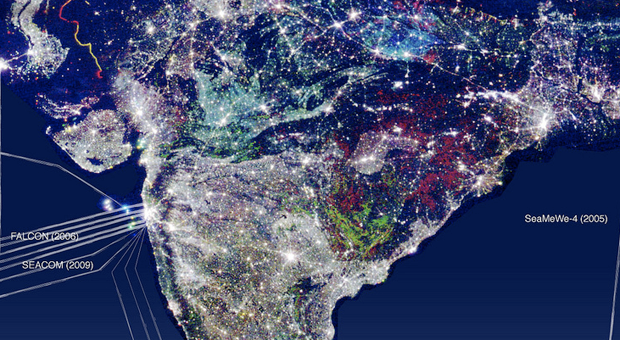
For many years, the Indian public in particular, had very little interest in who controlled the internet and decisions taken at a structural level that shaped its future.
The press carried little tidbits about the World Summit on Information Society; a pair of United Nations-sponsored conferences about information, communication and, with an aim to bridge the so-called global digital divide separating rich countries from poor countries by spreading access to the internet in the developing world, the UN body, International Telecommunications Union (ITU); which coordinates the shared global use of the radio spectrum, promotes international cooperation in assigning satellite orbits, works to improve telecommunication infrastructure in the developing world, and assists in the development and coordination of worldwide technical standards, and Internet Corporation for Assigned Names and Numbers (ICANN), which coordinates the Internet Assigned Numbers Authority (IANA) functions, which are key technical services critical to the continued operations of the Internet’s underlying address book, the Domain Name System (DNS) and also UN Commission of Science and Technology Working Group on Enhanced Cooperation, where governments come together to discuss issues like internet governance.
What was commonly known followed a similar trajectory: America invented the internet, it is a global commons, and it works well.
Over the last few years, however, as the Indian experience with the internet has matured, questions of governance, both internally and externally have started making headlines. Allegations of mass surveillance have hogged all headlines. Another factor cannot be missed: the Indian digital economy is growing rapidly, and while internet governance is nowhere close to being an election issue in India, domestically, access, freedom of expression, cyber crime and cyber security are growing concerns. There also the reality that as India’s population gets increasingly connected, it will host one of the biggest online demographies in the world. Therefore, India’s views and actions in terms of how the internet should grow and be governed is crucial to the future of the internet itself.
In October 2011, the Indian government proposed that a UN Committee for Internet-Related Policies (CIRP) be formed, so that governments can debate and deliberate on vital issues such as intellectual property enforcement, privacy and data protection, online filtering and censorship and network neutrality. Those opposed to the idea have warned that the “open” nature of the internet will be threatened by governments who favor a controlled and censored form of the internet. Also the proposed structure of the UN-CIRP seemed to be the very anti-thesis of a dynamic internet; it involved setting up a 50 member committee that only met for two weeks in the year. Those opposed to this bureaucratic suggestion, instead, favour a multi-stakeholder transnational governance mechanism, which gives all stakeholders of the internet a place on the table; including governments, businesses and civil society members.
The last few months of 2013 were very active internationally, on questions of internet governance. Three big international events made headlines, and India’s role in them is especially telling. The first was the Internet Governance Forum (IGF) in Indonesia in November. This event brought together all members of civil society on a common platform to deliberate on the rules of global governance, but in effect did not have any binding powers. Given that it was held in the wake of the Snowden revelations of NSA surveillance, the conversations centered around the need to ensure better protection of all citizens in the online environment and to reach a proper balance between actions driven by national security and respect for freedom of expression, privacy and human rights. While in the 2012 IGF, India’s Minister for Communication Technology had been present, in 2013, was “extremely small” according to Dr Anja Kovaks who participated there. She added that, “many developing countries look up to India’s engagement with internet-governance forums to ensure that the concerns of the developing world are not ignored during policy-making.”
In December, 2013, the UN Commission of Science and Technology Working Group on Enhanced Cooperation released a statement which also carried India’s proposal that, “The UN General Assembly could embark on creation of a multilateral body for formulation of international Internet-related public policies. The proposed body should include all stakeholders and relevant inter-governmental and international organisations in advisory capacity within their respective roles as identified in Tunis agenda and WGIG report. Such body should also develop globally applicable principles on public policy issues associated with the coordination and management of critical Internet resources.” Earlier this year, a note written by India’s National Security Council Secretariat (NSCS), leaked to an Indian newspaper in March 2014, warns of the DNS system under US control, and goes on to say that “India’s position is aligned with Russia, Saudi Arabia and Iran who also want governments to collectively drive internet management worldwide…” It adds that, “trust in the internet has declined and India’s objective in the Geneva session was to ensure its concerns are accommodated in whatever international regime of Internet governance finally emerges.”
However, in the backdrop of continuing internet governance discussions, came the announcement by Brazilian President Dilma Rousseff that in the light of revelations of global mass surveillance by the US, Brazil was going to host an internet governance conference — NETmundial — in April 2014. This announcement was made after consulting the head of ICANN, Fadi Chehde. In contrast, the Indian reaction to these revelations seemed rather muted, perhaps because India too is building a mass surveillance regime within its national borders. It is also believed that Brazil asked India take a bigger role with them, however, Indian foreign ministry officials have stated off-the-record that details about the conference were not easy to come by from Brazil. Either way, the conference dates coincide with Indian general elections of 2014 and the formation of a new national government, and will most likely see a small Indian delegation.
A month before the Brazil conference comes the announcement by the United States government that the U.S. National Telecommunications and Information Administration will end its formal relationship with the Internet Corporation for Assigned Names and Numbers in late 2015, with ICANN developing a new global governance model. It has been made clear by the ICANN President and CEO Fadi Chehadé that the transition out of NTIA was “not a final decision to surrender control of the internet” or about announcing a new law or policy. “The [U.S.] government also set clear boundaries for that discussion, including a very clear statement that it will not release control of these functions to any government-led or inter-governmental organization solution.” Former CEO of ICANN Rod Beckstorm gave an interview in which he speculated that the US government made the announcement now “because they face the serious risk of losing even more at the upcoming NETmundial conference on internet governance in Brazil. This event could potentially lead to greater United Nations control over the internet and open the door to increased influence by countries opposed to a free and open internet.”
This, of course, is a hint that the US government would rather restructure ICANN and keep the multistakeholder approach towards internet governance open, rather than let some governments steer the course towards a government led body governing the internet.
In a reaction to the announcement, Member of Parliament and vocal critic of the Indian government’s position, Rajeev Chandrasekhar told Index that “India needs to think ahead, because its position on the governance of the internet and its inexplicable alliance with China, Saudi Arabia on this issue has been based on the so called US control of the net. First, the Ministry of External Affairs’s entrenched position of a UN body needs to be withdrawn forthwith. I have substantiated its problems at multiple levels. India has lost its leadership status to Brazil in the internet governance space, thanks to government’s position, and reflects complete failure of thought by Indian leadership.” Looking towards the future, Chandrasekhar added that, “the new government needs to hold national, open public consultation on the issue. Parliament needs to be involved. Governments want to regulate; industry invests, builds infrastructure and drives innovation; and civil society/academia protects civil ideals and users’ interest, including privacy, free speech and human rights. A free, open, safe, secure and truly global internet can only be managed through a multi-stakeholder mechanism with specific areas of intergovernmental cooperation, such as cyber terrorism, international jurisdiction.”
Other civil society voices, too, have called for the Indian government to rise to this new challenge. Security expert, Dr. Raja Mohan wrote in the Indian Express that, “Delhi has a long record of posturing at multilateral forums and shooting itself in the foot when it comes to national interest. Believe it or not, in the 1970s, India opposed, at the UN, the direct broadcast satellite technology in the name of protecting its territorial sovereignty. With an IT sector that is deeply integrated with the global economy and contributing nearly 8 per cent of India’s GDP as well as the world’s third-largest group of internet users, India does not have the luxury of quixotic pursuits. Delhi’s negotiating position must be rooted firmly in India’s economic interests. Issue-based coalitions — with countries, companies and civil society groups — are critical for ensuring the best possible outcomes.”
Given the Indian government’s taste for pushing unilateral mechanisms for governing the internet at an international level, and Indian civil society, which for the most part seems to vocally support a multistakeholder approach, the Indian elections might bring about a new opportunity for both sides to find clarity. Some argue that multistakeholder models give an equal seat to governments like the US, but also to their corporate giants such as Google, Facebook, AT&T, which might help them secure a majority over crucial issues and therefore an international unilateral model might be beneficial for smaller countries. Alternatively, a government-led model, as India suggests, pre-supposes a consultative mechanism within countries so that the will of the people can be reflected. One thing is clear, with its technology boom, population, and growing dependence on the internet for economic prosperity, governance and free expression, the country can no longer afford to not assume a leadership role in this area, while at the same time sticking to its core democratic principles. It needs to rise to its leadership potential and reflect the will of its people.
This article was published on 24 March 2014 at indexoncensorship.org
