Winners of the Freedom of Expression Awards 2011
The 11th annual Index on Censorship Freedom of Expression Awards, sponsored by SAGE, were presented tonight (24 March) at a ceremony in London hosted by Jonathan Dimbleby

The 11th annual Index on Censorship Freedom of Expression Awards, sponsored by SAGE, were presented tonight (24 March) at a ceremony in London hosted by Jonathan Dimbleby
Thanthawut Taweewarodomkul, who operated an anti-government website, has been sentenced to 13 years in prison on charges of lese majeste and breaching the Computer Crime Act. He was arrested in April 2010, during the anti-government Red Shirt protests, on the charge that his website carried an article that insulted the king. His sentencing comes at a time when another website editor, Chiranuch Premchaiporn, faces a long prison sentence for not being quick enough to take down comments critical of the king that had been left on her website by a user.
Awards judge Lindsey Hilsum introduces the nominees for the Guardian Journalism award
“In the era of new media, some might think traditional journalism is yesterday’s story, but this year’s entries prove that’s not so. Today’s facebookers and tweeters are building on the bravery and dedicated investigative skills of old-school journalists, many of whom still face persecution. I’m struck by how those on this year’s shortlist don’t give up, whatever the forces brought to bear against them. When their publication is closed down, they start a new one. When released from prison, they start reporting where they left off. They are an inspiration.”
Chiranuch Premchaiporn
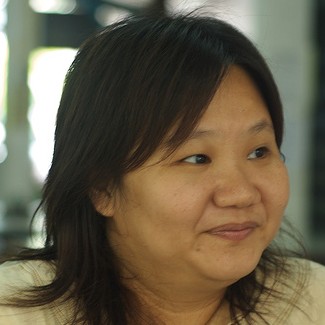 Chiranuch Premchaiporn is the executive director and co-founder of the Thai online news site Prachatai (“Thai people”). She is also a founding member of Thai Netizen Network (TNN), a group of media activists, internet users, bloggers and IT academics who monitor violations of freedom of expression on the internet.
She is currently on trial, facing up to 50 years in jail, for comments posted on Prachatai that were critical of the monarchy. The comments were posted by a user; Chiranuch removed the comments after she was contacted by officials from the Ministry of Information. She is being prosecuted under both the Computer Crimes Act of 2007 and lèse majesté legislation, which makes criticism of the king an offence. The case is seen as part of a crackdown on the media in Thailand, targeting satellite television news stations, community radio stations, print publications and websites aligned with anti-government advocates. The trial resumes in the autumn.
Ibrahim Eissa
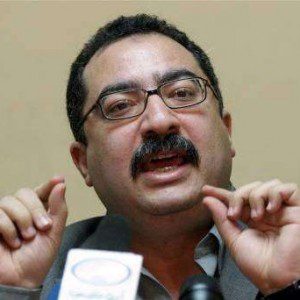 Ibrahim Eissa is Egypt’s leading independent editor, described as a “one-man barometer of Egypt’s struggle for political and civic freedom”. Throughout his career, he has faced prosecution when his push for media freedom has fallen foul of the government. In 2010, he was fired from his position as editor of the independent newspaper al Dostour, after new owners bought the paper; his popular satellite talk show was also taken off air. His sacking came in the midst of a wider media crackdown in the run-up to the parliamentary elections, when Mubarak’s ruling National Democratic Party emerged victorious amid accusations of unprecedented vote rigging.
When Eissa was sacked from his job last year, the novelist Alaa al Aswany wrote: “Ibrahim Eissa did not oppose the government; he opposed the system … He called for real democratic change through free and fair elections and regular change at the top.
Awards judge Hans-Ulrich Obrist introduces the Intelligent Life Arts Award
“In the field of the arts, liberty of expression is very often taken for granted. However, one should not forget that some artists struggle to express themselves in a lot of places around the world.
“Through different mediums, the three nominees have battled against censorship in remarkable ways. The cineaste Jafar Panahi’s unfailing support for Iran’s 2009 Green Revolution resulted in his ban from filming for 20 years. Gurpreet Kaur Bhatti’s great play Behzti satirised censorship, depicting with particular insight the relationship between creativity and controversy. Lastly, MF Husain’s immense courage and brave rejection of the prevalent academicism has led to self-exile in the UK and UAE as a result of sustained campaigns of legal harassment and mob violence.
“At the hour of globalisation, one should remember Edouard Glissant’s invigorating concept of mondialité: poetics and politics not apprehended as two distinct categories, but poetry clearly opening out into politics.”
Gurpreet Kaur Bhatti
Gurpreet Kaur Bhatti is a British Sikh playwright and television and radio scriptwriter. Her 2004 award-winning play Behzti (“Dishonour”) met with controversy after its depiction of sexual abuse in a Sikh temple (Gurdwara) caused offence to some members of the local Sikh community. Protests outside the Birmingham Repertory Theatre, where the play was to be performed, turned violent and the theatre cancelled the run. Following death threats, Bhatti went into hiding and was given police protection.
Behud (“Beyond belief”) a sharp satire of censorship in modern-day Britain, is Bhatti’s artistic response to the Behzti affair; it was staged in 2010, at the Belgrade Theatre, Coventry and Soho Theatre, London. The play strikes at the tension between freedom of expression and faith groups’ assertion of the right not to be offended. It is testimony to Bhatti’s commitment to confront hypocrisy and fight for her right to freedom of expression in the face of hostility and potential risk to her personal safety.
Jafar Panahi
 Iranian director Jafar Panahi has received international recognition for his films, which include The Circle, White Balloon — winner of a Camera d’Or at Cannes in 1995 — and the award-winning Offside, the story of a young female football fan.
In July 2009, Panahi was detained briefly after he joined mourners at the grave of Neda Soltan, the young protester who became an icon of the country’s “Green Revolution” when she was shot dead. He was arrested again in March 2010 and taken from his home to Tehran’s Evin prison. The international film community rallied, with numerous petitions and letters sent to the Iranian authorities demanding his release. He was released on bail in May. Last December he was found guilty of colluding against the Islamic republic and sentenced to six years in prison. He has been banned from travelling for 20 years and from making films for the same period.
MF Husain
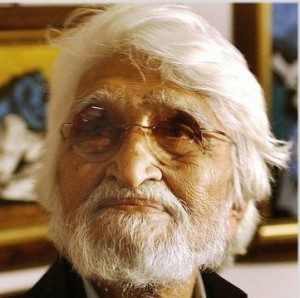 Celebrated and critically-acclaimed Indian artist Maqbool Fida (MF) Husain has been battling against censorship in his native India and elsewhere for close to 20 years. Born in 1915, he is recognised as one of India’s greatest living artists. He has lived in exile since 2006.
Husain’s work has caused controversy in sections of the conservative Hindu community, who regard his depiction of Hindu gods and goddesses in the nude as blasphemous and offensive. Husain has received numerous threats and exhibitions of his work have come under attack on several occasions; in India, he has faced hundreds of legal actions relating to his work.
In January 2011, three of Husain’s artworks were removed from the Indian Art Summit in New Delhi following threats. Organisers said they could not guarantee the safety of the artwork or of those visiting the exhibition.