21 Jul 2017 | Bahrain, Middle East and North Africa, News
[vc_row][vc_column][vc_column_text]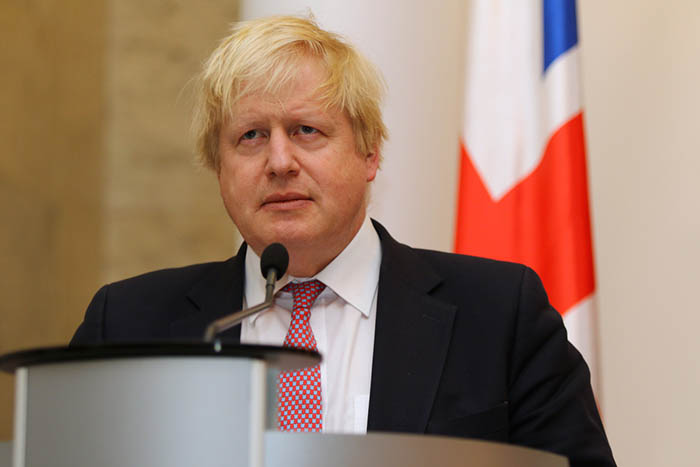
Index on Censorship welcomes UK foreign secretary Boris Johnson’s interest in human rights. The UK Foreign and Commonwealth Office’s 2016 Annual Human Rights Report, released on Thursday 20 July, highlights the UK’s work to promote human rights around the world and sets out a list of 30 “Human Rights Priority Countries”, including Bahrain, Iran, Russia and Saudi Arabia.
In the report preface, Johnson writes: “Human rights are not inimical to development and prosperity; the opposite is true. Freedom of speech, freedom of association, freedom to practice whatever religion you want and live your life as you please, provided you do no harm, are the essential features of a dynamic and open society.”
Index agrees wholeheartedly and acknowledges that the report features many valiant efforts, including, for the first time, a section dedicated to modern slavery – a top priority for the UK government.
But the report – issued on “take out the trash” day, the last of the parliamentary sessions before a seven-week recess – does not, as it claims, seem to aspire to the “passionate advocacy” of Charles James Fox, the British Whig statesman and anti-slavery campaigner.
Instead, Johnson offers a watered-down endorsement of human rights and his department’s understanding of advocacy is seriously flawed. To borrow the foreign secretary’s own words, this is “unthinkable for anyone inspired by the example of Charles James Fox”.
Take Bahrain, for example. While the report does go some way to criticising a handful of the country’s human rights violations, this is not done not in nearly strong enough terms, and you’d be forgiven for thinking these violations are blips in an otherwise rosy picture. This is, after all, a country which has only “restricted some civil liberties”.
“There was a mixed picture on human rights in Bahrain in 2016,” the discussion of the Persian Gulf kingdom begins. “Compared with the region, Bahrain remains progressive in women’s rights, political representation, labour rights, religious tolerance and institutional accountability.”
Firstly, this is a faulty comparison. Looking at the region as a whole serves only to make Bahrain look better than it actually is. Bahrain may have 15% representation of women in parliament, as the report highlights, but this cannot be described as progressive. As of 2014, the government of Saudi Arabia, not known for its feminism, was made up of 19.9% women.
In April 2016, a royal decree that increased the rights of women in Bahrain only passed through parliament scrutiny on a technicality. In March of that year, Bahrain detained human rights activist and blogger Zainab al-Khawaja along with her one-year-old son. She was released in May but fled the country out of fear of re-arrest.
While the report does go on to criticise the dissolving of the country’s main Shia opposition party, Al Wefaq, it remains a mystery why the report would first highlight political representation and religious tolerance as positives in Bahrain.
The country certainly does not have enough institutional accountability, and this is not something it should be commended on.
Even the brief mention of Bahraini human rights activist Nabeel Rajab, sentenced to two-years in prison just for speaking to journalists 10 days before the government’s report was released, only refers to Index award-winner as having been arrested. The sheer scale of Rajab’s case is not accounted for.
On 3 February a coalition of 21 groups and individuals, including Index on Censorship, urged Johnson to call for Rajab’s release. In the time since, the US state department has called for Rajab’s release and condemned his sentencing. The UK government so far has only “voiced its concern” in the weakest possible terms, and as yet has not acknowledged Rajab’s sentencing.
When Theresa May became prime minister of the UK, Bahrain was one of the first countries she visited. As new documents reveal, UK contractors visited the country 28 times in 12 months amid Bahrain’s ongoing human rights crackdown. In all, “UK government contractors have spent more than 650 days in Bahrain training prison guards, including officers at the notorious Jau prison where death-row inmates are held and allegedly tortured,” the Middle East Eye reported earlier this month.
The UK government appears to be in no position to heap praise on Bahrain for strengthening the rule of law, justice reform, its independent human rights institutions, prisoners’ rights and improvements at Jau.
Many more issues in the Annual Human Rights Report must be scrutinised when MPs return in September. If the Bahrain section is anything to go by, the report should be found to fall far short of being “passionate” about human rights.
[/vc_column_text][/vc_column][/vc_row][vc_row][vc_column][vc_basic_grid post_type=”post” max_items=”4″ element_width=”6″ grid_id=”vc_gid:1500646119465-139983e0-dcda-4″ taxonomies=”716″][/vc_column][/vc_row]
23 Jun 2017 | Bahrain, Bahrain Statements, Campaigns -- Featured, Egypt, Qatar, Saudi Arabia, Statements, United Arab Emirates
[vc_row][vc_column][vc_column_text]The call by four Arab states — UAE, Bahrain, Saudi Arabia and Egypt — for Qatar to close news network Al Jazeera is clearly motivated by a desire to control the media in the region and silence reporting of stories that these governments would rather not see exposed.
Al Jazeera has brought the world news from the Arab Spring and many of the recent important moments from the region. Including the closure of Al Jazeera in a list of demands that Qatar “should” comply with to end a diplomatic crisis is about reducing media freedom in a region where it is already threatened.
“From its treatment of blogger Raif Badawi to its tightly controlled media environment, the Saudi authorities must not be able to dictate access to information for the public in other countries. Al Jazeera and press freedom must not be used as a bargaining chip,” Rachael Jolley, editor of Index on Censorship said.
None of the nations involved have a free independent media. Bahrain regularly targets critics, journalists and the one remaining opposition newspaper in the country, Al Wasat. Saudi Arabia sentenced blogger Raif Badawi to 10 years in jail and 1,000 lashes for his “criminal” writings. Egypt has regularly tried journalists on accusations of terrorism. The UAE, too, curtails discussion of its domestic policies. UAE Federal Law No. 15 of 1980 for Printed Matter and Publications regulates all aspects of the media and is considered one of the most restrictive press laws in the Arab world, according to Freedom House. Reporters Without Borders ranks them all below 118, with Saudi Arabia, Egypt and Bahrain all below 160 out of the 180 nations it covers.[/vc_column_text][/vc_column][/vc_row][vc_row][vc_column][vc_basic_grid post_type=”post” max_items=”12″ style=”load-more” items_per_page=”4″ element_width=”6″ grid_id=”vc_gid:1498231474147-ef0d779a-68d3-0″ taxonomies=”9044″][/vc_column][/vc_row]
20 Apr 2017 | Bahrain, Bahrain Statements, Campaigns, Campaigns -- Featured, Middle East and North Africa, Statements
[vc_row][vc_column][vc_column_text]
To: Sheikh Hamad bin Isa Al Khalifa
King of Bahrain
CC: Hon. Zeid Ra’ad Zeid al-Hussein
High Commissioner for Human Rights
Ms. Frederica Mogherini
High Representative of the European Union for Foreign Affairs and Security Policy
Mr. Sigmar Gabriel
Vice-Chancellor and Foreign Minister of the Federal Republic of Germany
Mr. Rex W. Tillerson
United States Secretary of State
The Right Honorable Boris Johnson
Foreign & Commonwealth Office of the United Kingdom
Mr. Jean-Marc Ayrault
Minister of Foreign Affairs of France
King Hamad,
We, the undersigned, express our deep concern with the government of Bahrain’s continued targeting of journalists, which further restricts free press and expression in the country. On 23 April 2017, the court of appeals will hold another hearing for Sayed Ahmed Salman al-Mousawi, an internationally-renowned photographer, after he was arrested more than three years ago for alleged terrorist activities. The government’s repeated harassment of al-Mousawi and other journalists highlight the ongoing censorship and restrictions on free press and expression in Bahrain.
Sayed Ahmed Salman al-Mousawi is a 29-year-old freelance photographer who has won 169 international photography prizes—a number of which he even won while in detention. He is a member of FIAP, PSA, UPI and Qatif photos.
Authorities arrested al-Mousawi, along with his brother Sayed Mohammed, on 10 February 2014 from their home in Duraz. The plain-clothes masked policemen did not present any arrest warrant and confiscated his cameras and electronic devices. After holding al-Mousawi for six days, officials transferred him to Dry Dock prison. Security forces then took him to the Criminal Investigations Directorate (CID) for another six days where they tortured him “cruelly without mercy,” as he later told his father. Security officers hung him on a door four times, electrocuted him, and did not allow him to sit for four days. They stripped him naked, beat him and sexually assaulted him. No independent investigation into his torture allegations has ever been conducted.
Al-Mousawi spent over nine months in detention without official charges against him. At his first trial on 24 December 2014, the prosecutor charged him with forming and participating in a terror cell, accusing him of providing SIM cards to protesters —“terrorists”—and taking photos of anti-government demonstrations. He and other witnesses denied that he had anything to do with the riots. Over the course of 2015, officials postponed his trial six times. Meanwhile, the government continued to deny him his basic human rights, including restricting access to a lawyer, placing him in solitary confinement, and denying family visits.
On 23 November 2015, the Bahraini court sentenced al-Mousawi to 10 years imprisonment and revoked his citizenship. However, the Court of Cassation overturned the ruling earlier this year. His postponed appeal hearing next month provides an opportunity to end his prolonged arbitrary detention and mistreatment. Al-Mousawi has now been held arbitrarily for over three years, merely for exercising his right to free expression.
Al-Mousawi’s case is representative of the Bahraini government’s growing repression against basic civil rights. We, the undersigned, have raised our concern over numerous cases of torture, arbitrary detention, unfair trials, and trumped up terrorism charges used to restrict expression unfavourable to the government. Journalists, bloggers, online activists and human rights defenders such as Faisal Hayyat, Nazeeha Saeed, and Nabeel Rajab, among others, have increasingly come under attack by authorities since the 2011 pro-democracy protests. Arbitrary arrests of journalists, systematic torture and impunity have turned Bahrain into a dangerous country for those who speak out. The country is ranked 162nd out of 180 countries in Reporters Without Borders’ (RSF) 2016 World Press Freedom Index and has become one of the biggest detainers for journalists and bloggers with at least 14 behind bars as of today.
Furthermore, the government has also censored and restricted the media, most recently in January, temporarily suspending the online version of Alwasat, the only independent newspaper in the country. Through a combination of media and counterterrorism legislation, as well as excessive government oversight, to justify their actions against the press and journalists, Bahraini officials continue to act with impunity.
The targeting and judicial harassment of journalists simply performing their work is unacceptable and violates international human rights standards. Bahrain is a signatory to the International Covenant on Civil and Political Rights (ICCPR), which states in Article 19 that “Everyone shall have the right to freedom of expression.” This includes the requirement that “a free press and other media [be] able to comment on public issues without censorship or restraint and to inform public opinion.” The pattern of reprisals and suppression of freedom of express far exceeds the limited restrictions placed on this right under article 19.3.
We, the undersigned, raise our concerns about restrictions on free press and expression in Bahrain and call on the Bahraini government to:
- Immediately and unconditionally release Sayed Ahmed Salman al-Mousawi and all other journalists arrested and imprisoned for merely exercising their right to free expression;
- Guarantee the right to free expression by removing restrictions on the media and peaceful dissent, and foster an independent free press to fulfil Bahrain’s international human rights obligations.
Signed,
ActiveWatch (Romania)
Africa Freedom of Information Centre
Americans for Democracy & Human Rights in Bahrain (ADHRB)
Article 19
Bahrain Institute for Rights and Democracy (BIRD)
Bytes for All, Pakistan
Canadian Journalists for Free Expression
European Center for Democracy and Human Rights
Freedom House
Gulf Center for Human Rights
Index on Censorship
Journaliste en Danger (JED)
Maharat Foundation
Media Foundation for West Africa
Reporters Without Borders (RSF)
World Association of Newspapers and News Publishers[/vc_column_text][/vc_column][/vc_row][vc_row][vc_column][vc_basic_grid post_type=”post” max_items=”4″ element_width=”6″ grid_id=”vc_gid:1492705737868-c65e7005-0971-10″][/vc_column][/vc_row]
28 Nov 2016 | Bahrain, Bahrain Letters, Campaigns, Campaigns -- Featured
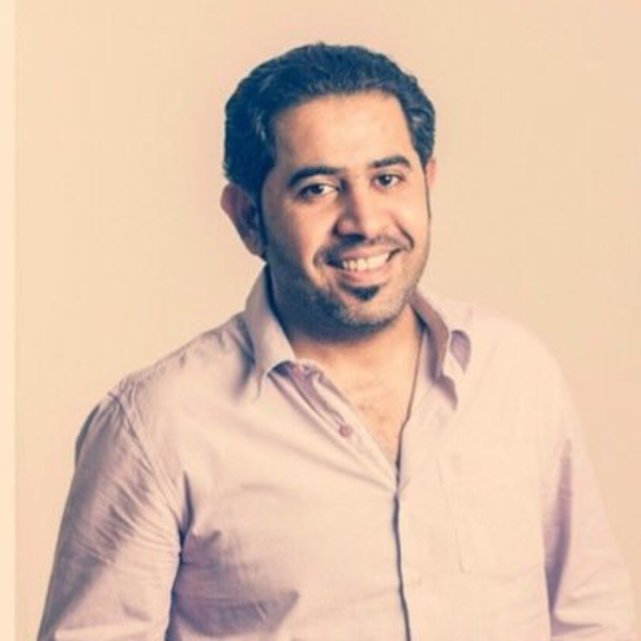
On 29 November Faisal Hayyat was sentenced to 3 months in prison
To: Sheikh Hamad bin Isa Al Khalifa
King of Bahrain
CC :
Hon. Zeid Ra’ad Zeid al-Hussein
High Commissioner for Human Rights
Mr. John F. Kerry
United States Secretary of State
Frederica Mogherini
High Representative of the European Union for Foreign Affairs and Security Policy
The Right Honorable Boris Johnson
Foreign & Commonwealth Office
King Hamad,
We, the undersigned, express our deep concern with the Government of Bahrain’s campaign targeting journalists and activists exercising their right to free expression. On 9 October 2016, the Public Prosecution charged Faisal Hayyat, a sports journalist and social media activist, with insulting a sect and a religious figure. The government’s repeated harassment of Faisal and other online activists demonstrate the ongoing criminalization of free expression in Bahrain.
Faisal Hayyat is a renowned journalist and has appeared on various sports channels and has written for local Bahraini newspapers, Alalam, Albilad, and Akhbar Al Khaleej. He directs and presents short video programs online that provide critical perspectives on local politics.
Bahraini officials previously arrested Faisal in April 2011 for his involvement in the 2011 pro-democracy protests. The Bahraini security forces detained him for 84 days. During his detainment, authorities subjected Faisal to physical and psychological torture, including sexual harassment and degrading treatment. He has been vocal about this and recently published a letter on social media to the Bahraini Minister of Interior detailing the torture to which the government had subjected him. Government authorities never provided compensation for the abuse and never held any officials accountable. In the letter Faisal mentions, “I write this and I know it may cost me my freedom.”
On 7 October, Faisal published tweets commenting on events from early Islamic history. Two days later, Faisal was arrested and charged with “insulting a sect.” The government is therefore treating Faisal Hayyat’s opinion on events of Islamic history as a criminal liability. The government’s decision to prosecute him infringes both his freedom of expression and religion.
The undersigned NGOs believe Faisal has been targeted as part of a silencing campaign against critical voices of the government. Recently, the Bahraini government has brought further criminal charges against human rights defender Nabeel Rajab for an open letter published in the New York Times, and against political opposition leader Ebrahim Sharif for an interview he gave with the Associated Press. Furthermore, the opposition politician Fedhel Abbas received three years in prison for tweets criticizing the war in Yemen.
We, therefore, call on the authorities to respect Article 19 of the International Covenant on Civil and Political Rights (ICCPR), which mandates that “Everyone shall have the right to freedom of expression.” The Bahraini government must also respect Article 19 of the Universal Declaration of Human Rights (UDHR), which mandates that “Everyone has the right to freedom of opinion and expression; this right includes freedom to hold opinions without interference and to seek, receive and impart information and ideas through any media and regardless of frontier.”
As organisations concerned with the right to freedom of expression, we call on the Government of Bahrain to:
■ Immediately and unconditionally release Faisal Hayyat, Nabeel Rajab, and all internet users arrested and imprisoned for merely exercising their right to freedom of expression; and
■ Abide by international human rights standards, including the ICCPR and UDHR, by upholding the right to freedom of expression without any restrictions.
Signed,
Americans for Democracy and Human Rights in Bahrain
Adil Soz – International Foundation for Protection of Freedom of Speech
Afghanistan Journalists Center
Africa Freedom of Information Centre
Albanian Media Institute
ARTICLE 19
Bahrain Center for Human Rights
Bytes for All
Cambodian Center for Human Rights
Canadian Journalists for Free Expression
Center for Independent Journalism – Romania
Centre for Independent Journalism – Malaysia
Freedom Forum
Freedom House
Free Media Movement
Gulf Centre for Human Rights
Human Rights Network for Journalists – Uganda
Hungarian Civil Liberties Union
Independent Journalism Center – Moldova
Index on Censorship
Institute for Reporters’ Freedom and Safety
Institute for the Studies on Free Flow of Information
International Federation of Journalists
International Press Centre
International Press Institute
Maharat Foundation
MARCH
Media, Entertainment and Arts Alliance
Media Institute of Southern Africa
Palestinian Center for Development and Media Freedoms – MADA
PEN American Center
PEN International
Reporters Without Borders
Social Media Exchange – SMEX
South East European Network for Professionalization of Media
Vigilance pour la Démocratie et l’État Civique
World Association of Community Radio Broadcasters – AMARC
World Association of Newspapers and News Publishers
Bahrain Institute for Rights and Democracy (BIRD)
Bahrain Press Association (BPA)
Burundi Child Rights Coalition
English PEN
European – Bahraini Organisation for Human Rights (EBOHR)
European Center for Democracy and Human Rights (ECDHR)
International Federation for Human Rights (FIDH)
Project on Middle East Democracy (POMED)
Salam for Democracy and Human Rights
Union de Jeunes pour la Paix et le Developpement
