30 Jan 2015 | Bahrain, mobile, News
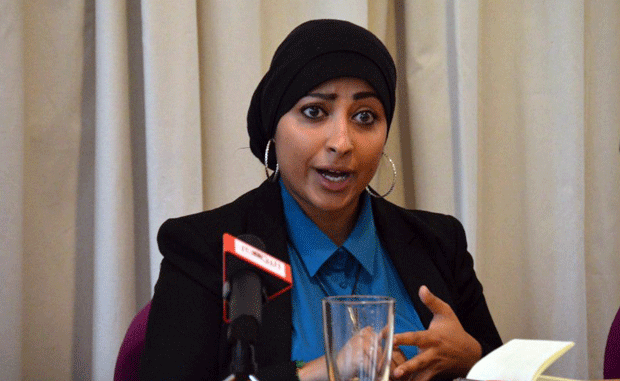
Maryam Al-Khawaja spoke out in October for the release of fellow human rights activist Nabeel Rajab. (Photo: David Coscia for Index on Censorship)
Nine people have been arrested in Bahrain for “misusing social media”, a charge which is punishable by a fine or up to two years in prison.
Human rights defender Nabeel Rajab was last week sentenced to six months in prison over a tweet he posted which was deemed insulting to public institutions. Rajab has been bailed, and tweeted on 21 January that he will appeal his conviction on 11 February.
Human Rights Watch has dedicated seven pages of its 25th annual report to Bahrain. The World Report 2015, released on Thursday, reviews the human rights situation in over 90 countries.
The report states that over 200 defendants have been sentenced to long stints in prison by the Bahraini courts on charges of national security or terrorism, with at least 70 of those being sentenced to life.
It says: “Bahrain’s courts convicted and imprisoned peaceful dissenters and failed to hold officials accountable for torture and other serious rights violations. The high rate of successful prosecutions on vague terrorism charges, imposition of long prison sentences, and failure to address the security forces’ use of lethal and apparently disproportionate force all reflected the weakness of the justice system and its lack of independence.”
In December, co-director of the Gulf Center for Human Rights (GCHR), Maryam Al-Khawaja, boycotted a court hearing which saw her sentenced to one year in prison. Al-Khawaja was charged with assaulting two policewomen last year when she traveled to Bahrain to visit her father Abdulhadi, who is currently serving a life sentence for his involvement in anti-government protests in 2011. In related news, the GCHR website was yesterday reportedly blocked in the United Arab Emirates.
Al-Khawaja’s sister Zainab was arrested in October on charges of insulting the king, and gave birth to her second child just a few days before being sentenced to three years in prison. She was then sentenced to an additional 16 months less than a week later, on separate charges of insulting a public official.
This article was published on 30 January 2015 at indexoncensorship.org
23 Jan 2015 | News
Bahrain
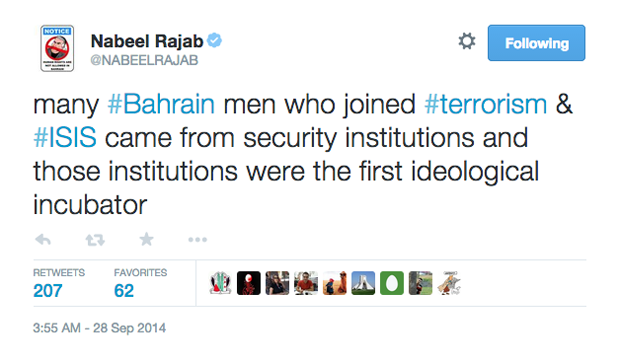
This week, prominent Bahraini human rights activist Nabeel Rajab was handed down a six month suspended sentence over a tweet in which both the country’s ministry of interior and ministry of defence allege that he “denigrated government institutions”. Rajab was only released last May after two years in prison, over charges that included sending offensive tweets. His experience is not unique in Bahrain. In May 2013, five men were arrested for “insulting the king” via Twitter.
Turkey
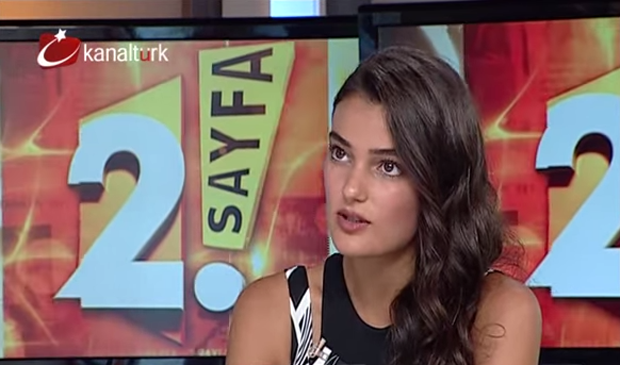
A former Miss Turkey was recently arrested for sharing a satirical poem criticising the country’s President Recep Tayyip Erdogan on her Instagram account. She is set to go on trial later this year. Turkey has a chequered relationship with social media, temporarily banning both Twitter and YouTube in the wake of the Gezi Park protests, in large part organised and reported through social media. In 2013, authorities arrested 25 individuals for spreading “untrue information” on social media.
Saudi Arabia
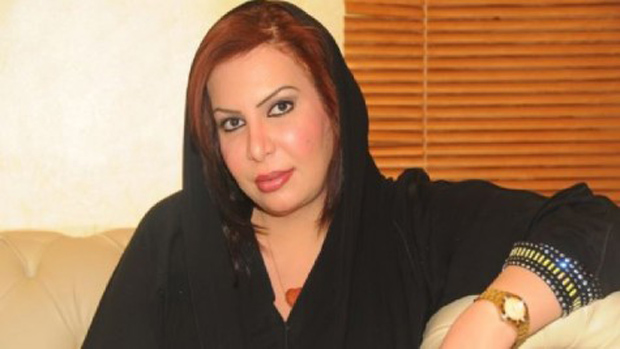
(Photo: Gulf Centre for Human Rights)
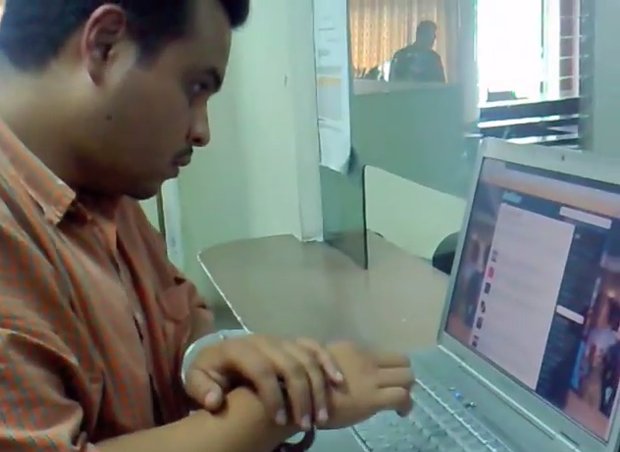
In late 2014, women’s rights activist Souad Al-Shammari was arrested during an interrogation over some of her tweets. The charges against her include “calling upon society to disobey by describing society as masculine” and “using sarcasm while mentioning religious texts and religious scholars”, according to the Gulf Centre for Human Rights.
France
![(Photo: « Source : Réseau Voltaire » [CC BY-SA 3.0 (http://creativecommons.org/licenses/by-sa/3.0)], via Wikimedia Commons](https://www.indexoncensorship.org/wp-content/uploads/2015/01/Dieudonné_Axis_for_Peace_2005-11-18.jpg)
(Photo: Réseau Voltaire [CC BY-SA 3.0], via Wikimedia Commons)
Following the series of terrorist attacks in Paris in early January, at least 54 people have been detained by police for “defending or glorifying terrorism”. A number of the cases, including against comedian Dieudonne M’bala M’bala, are believe to be connected to social media comments.
Britain
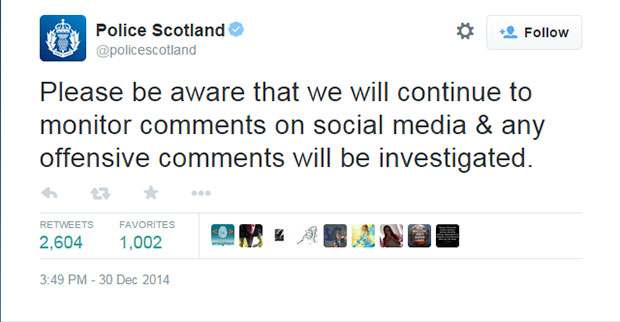
A 22 year old man was arrested in for “malicious communication” following Facebook messages made in response to the murder of soldier Lee Rigby, and another user was arrested after taunting Olympic diver Tom Daly about his dead father. More recently, police arrested a 19-year-old man over an “offensive” tweet about a bin lorry crash in Glasgow that killed six people. TV personality Katie Hopkins, known for her controversial tweets, was also reported to Scottish police following some tasteless tweets about about Scots. The incident prompted Scottish police the to post their now infamous tweet declaring they would continue to “monitor comments on social media“.
China
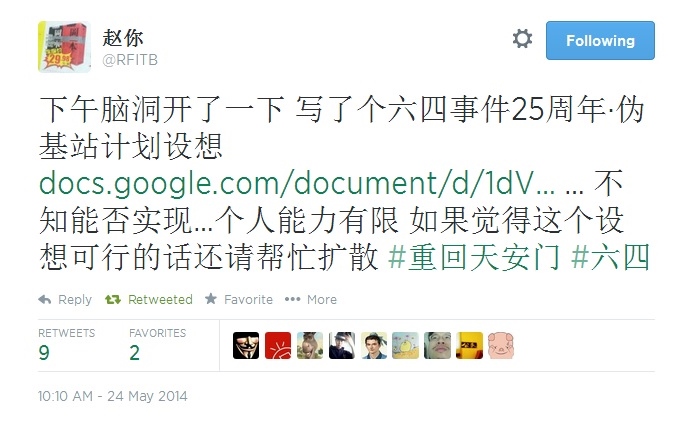
Online activist Cheng Jianping was arrested on her wedding day in 2010 for “disturbing social order” by retweeting a joke by her fiance. She was sentenced to one year of “re-education through labour”. Twitter is officially banned in China, and microblogging site Weibo is a popular alternative. In 2013, four Weibo users were arrested for spreading rumours about a deceased soldier labelled a hero and used in propaganda posters. The four were said to have “incited dissatisfaction with the government”, according to the BBC.
Australia
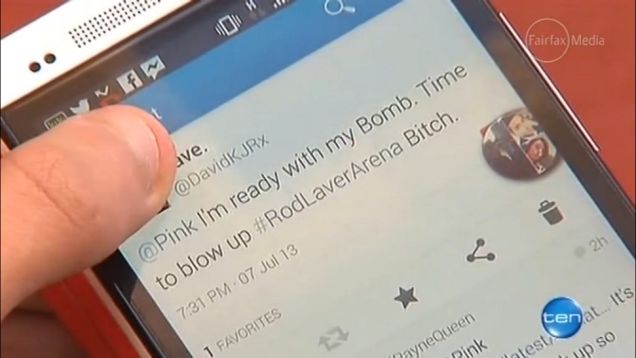
A teen was arrested prior to attending a Pink concert in Melbourne for tweeting: “I’m ready with my Bomb. Time to blow up #RodLaverArena. Bitch.” The tweet referenced lyrics from the American popstar’s song Timebomb.
India
An Indian medical student was arrested in 2012 over a Facebook post questioning why her city of Mumbai should come to a standstill to mark the death of a prominent politician. Her friend was arrested for liking the post. Both were charged with engaging in speech that was offensive and hateful.
United States
Back in 2009, a New York man was arrested, had his home searched and was placed under £19,000 bail for tweeting police movements to help G20 protesters in Pittsburgh avoid the officers. According to Global Voices, it is unclear whether his actions were actually illegal at the time.
Guatemala
A man was arrested in 2009 for causing “financial panic” by tweeting that Guatemalans should fight corruption by withdrawing all their money from banks.
This article was posted on 23 January, 2015 at indexoncensorship.org
15 Jan 2015 | Bahrain, News, Statements
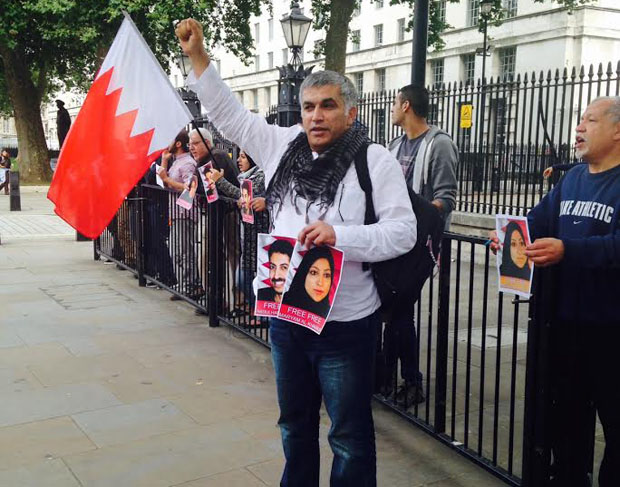
Nabeel Rajab during a protest in London in September (Photo: Milana Knezevic)
Index on Censorship is calling on the government of Bahrain to drop its charges against human rights campaigner Nabeel Rajab.
In October a Bahraini court ruled that Nabeel Rajab would face criminal charges stemming from a single tweet in which both the ministry of interior and the ministry of defence allege that he “denigrated government institutions”. If convicted, Rajab could face up to six years in prison.
“Nabeel Rajab, an Index on Censorship Freedom of Expression award winner, was arrested for a tweet in which he did no more than simply express an opinion. For this he faces years in jail. As the world renews its focus on freedom of expression it is vital that we defend those punished for speaking out no matter where they are in the world. Join us in calling for Nabeel’s release,” Index on Censorship CEO Jodie Ginsberg said.
15 January 2015 — 16 human rights organisations have written to 47 States to express grave concern ahead of a 20 January verdict in the trial of Nabeel Rajab, a prominent Bahraini human rights defender. Additionally, Americans for Democracy and Human Rights in Bahrain, The Bahrain Center for Human Rights and The Bahrain Institute for Rights and Democracy sent letters to members of parliament in all 47 States and United Nations officials, urging them to publicly call on the Government of Bahrain to drop all charges against Rajab.
On 1 October 2014, Rajab reported to the Cyber Crimes Unit of Bahrain’s General Directorate of Criminal Investigations (CID) after being summoned for questioning. Following hours of interrogation in relation to a tweet he published while abroad, Rajab was arrested. The tweet read: “Many #Bahrain men who joined #terrorism & #ISIS came from security institutions and those institutions were the first ideological incubator.”
For this tweet, Rajab was charged with insulting the Ministries of Interior and Defense under article 216 of Bahrain’s penal code, which states that “A person shall be liable for imprisonment or payment of a fine if he offends by any method of expression the National Assembly, or other constitutional institutions, the army, law courts, authorities or government agencies.” Rajab was released on bail on 2 November, but was banned from traveling outside the country. If found guilty, he could face up to six years in prison.
The charges leveled against Rajab are illegal under Bahrain’s commitments to the international community and international human rights law. Bahrain is party to the International Covenant on Civil and Political Rights (ICCPR), having acceded to the covenant in 2006. Article 19 of the ICCPR provides everyone with the fundamental rights to opinion and expression. Further, international jus cogens norms protect against the arbitrary deprivation of liberty, especially in relation to acts related to free expression. By prosecuting Rajab for statements that he made over Twitter, the Bahraini government violates its own commitments to the international community.
The ongoing suppression of basic human rights in Bahrain has drawn heavy criticism from the international community. In June 2014, 47 United Nations Member States signed a joint statement on Bahrain expressing concern “about the continued harassment and imprisonment of persons exercising their rights to freedom of opinion and expression, including human rights defenders.” The statement also called on Bahrain to “release all persons imprisoned solely for exercising human rights, including human rights defenders.” In 2014 a European Parliament resolution also called for “the immediate and unconditional release of all prisoners of conscience, political activists, journalists, human rights defenders and peaceful protesters, including Nabeel Rajab. …”
The undersigned NGOs close the letter by urging the international community to explicitly and publicly call for the Government of Bahrain to immediately drop all charges against Rajab and the many others currently facing charges or serving arbitrary jail sentences for exercising their rights to freedom of expression, association and assembly.
NGO signatories:
Amnesty International
CIVICUS
English Pen (Letter to the UK Foreign Office only)
Freedom House
Front Line Defenders
Human Rights Watch
Index on Censorship
Pen International
Project on Middle East Democracy
Rafto Foundation for human rights (Letter to the Norwegian Ministry of Foreign Affairs only)
FIDH in the framework of the Observatory for the Protection of Human Rights Defenders
OMCT in the framework of the Observatory for the Protection of Human Rights Defenders
Americans for Democracy and Human Rights in Bahrain
Bahrain Center for Human Rights
Bahrain Institute for Rights and Democracy
Gulf Center for Human Rights
Additional Background:
Nabeel Rajab is the President of the Bahrain Center for Human Rights, Deputy Secretary General of the International Federation for Human Rights (FIDH), and a member of Human Rights Watch’s Middle East Advisory Board.
Bahraini authorities have previously prosecuted Rajab on politically motivated charges. They have never presented any credible evidence that Rajab has advocated, incited or engaged in violence.
Rajab was detained from May 5 to May 28, 2012, for Twitter remarks criticizing the Interior Ministry for failing to investigate attacks carried out by what Rajab said were pro-government gangs against Shia residents. On 28 June 2012, a criminal court fined him 300 Bahraini Dinars (US$790) in that case.
Authorities again detained Rajab on 6 June 2012, for another Twitter remark calling for Prime Minister Khalifa bin Salman al Khalifa to step down. On 9 July 2012, a criminal court convicted and sentenced him to three months in prison on that charge. A court of appeal overturned that verdict, but in a separate case a criminal court sentenced him to three years in prison for organizing and participating in three unauthorized demonstrations between January and March 2012. An appeals court reduced the sentence to two years, which Rajab completed in May 2014.
In September 2014, Rajab traveled to Europe to call for stronger international action on Bahrain. He met with representatives of various European governments and the EU, spoke to the media, and addressed UN fora.
In the current case, Rajab was detained on 1 October 2014, within 24 hours of his return to Bahrain.
5 Dec 2014 | Bahrain, Middle East and North Africa, News
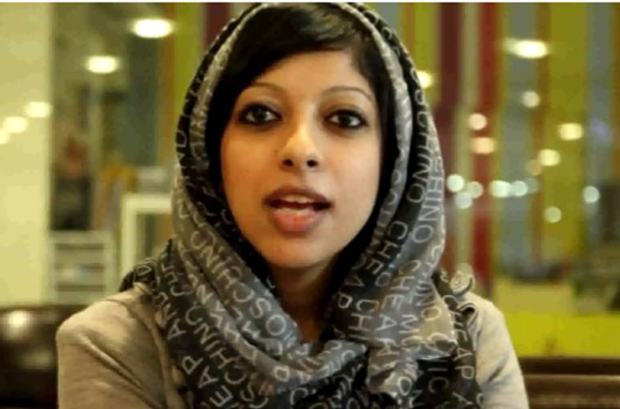
Bahraini human rights activist Zainab Al-Khawaja has been sentenced to three years in prison for “insulting the king”.
The verdict was handed down by a Manama court on Thursday, and also included a fine of 3,000 Bahraini Dinar (£5,000). She was on trial for tearing up a photo of King Hamad bin Isa Al-Khalifa at an October court date where she faced charges connected to previous rights campaigning. This comes only days after she gave birth to her second child.
The Al-Khawaja family have been heavily involved in Bahrain’s pro-democracy movement, and have been continuously targeted by authorities in the constitutional monarchy.
Al-Khawaja’s father Abdulhadi Al-Khawaja has been serving a life sentence since 2011 for the role he played in the country’s ongoing protest movement which started that year. Her sister Maryam Al-Khawaja boycotted the recent court hearing which saw her sentenced to one year in prison on what is widely acknowledged to be trumped up charges.
This article was posted on 5 Dec 2014 at indexoncensorship.org