17 Feb 2022 | Opinion, Ruth's blog
Tyrants love a distraction. There are only so many issues, so many countries, so many crises that our global institutions can focus on at any given time. So the worst but most effective of authoritarian regimes seek to implement their most repressive acts when the world is looking elsewhere. Of all those that seek to use misdirection and obfuscation I think it’s fair to suggest that Vladimir Putin is one of the masters.
In recent weeks we’ve seen a terrifying but all consuming escalation in Russian threats against Ukraine. 60% of their land army is now deployed on the borders of Ukraine and Belarus – but we are meant to believe that they have no plans to invade, or rather continue their war against Ukraine that began in 2014 when they invaded Crimea.
The world has rightly been focused on troop movements on the Ukrainian border. Every leader has spoken publicly of events in Eastern Europe. NATO leaders have talked daily, and nearly every democratic power has met with or spoken directly to President Putin. Their conversations have not touched on human rights violations within Russia, Putin’s support for a ruthless dictatorship in Belarus or even their weaponising of cyber activism to undermine democracies.
In the phoney propaganda war Putin is winning. On his own terms. And the world is letting him. He has determined the agenda at hand, world leaders are flocking to meet him in order to stop World War Three (rightly) and the rest of his indiscretions and human rights violations are, for now at least, off the table.
Which brings me to the subject of this blog. Alexei Navalny. On Tuesday, as our world leaders sought to prevent a new war, Putin’s biggest critic was put on trial, again.
The popular Russian opposition leader is accused of embezzling donations to his FBK anti-corruption organisation, which spearheaded investigations into Russian officials and sparked large protests against Putin. Navalny has denied the charges and says they’re politically motivated.
Putin is so fearful of dissent that he has held the trial not in Moscow, in a court, but rather in the prison that Navalny is already detained in. Navalny is being tried three to four hours from Moscow, a journey which is less than straightforward. If lawyers and observers do manage to get to the IK-2 penal colony then no phones or recording equipment may be taken inside, no evidence of impropriety obtained.
Hi wife Yulia wrote on Instagram on the eve of the trial: “[The authorities] want to hide him from all people, from his supporters, from journalists. It is so pathetic that they are afraid to hold the trial in Moscow.”
If Navalny is found guilty, again, then he will face a further 15 years in prison. Every day his family fear for his safety, not unreasonably after the attempted assassination attempt with Novichock in 2020.
Navalny’s case embodies Putin’s dismissal of the rule of law and his callous disregard for basic human rights. Index will continue to stand with Navalny and will keep telling his story to make sure that Putin knows the world is still watching.
2 Feb 2022 | Europe and Central Asia, News, Russia, Ukraine
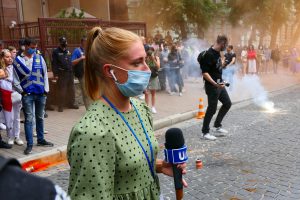
A journalist covering a demonstration in Kyiv, Ukraine, August 2020. Credit: Oleksandr Polonskyi/Shutterstock
While media crews from around the world are arriving in Ukraine to cover the situation amid a build-up of Russian troops on Ukraine’s border, local journalists are trying to overcome the many obstacles that stand in the way of their media freedom. The working environment is challenging: from disinformation campaigns and orchestrated propaganda to limited resources in newsrooms, attacks on journalists and the often inadequate response of law enforcement.
In Ukraine, the armed conflict has been going on for almost eight years, ever since Russia annexed the Crimean peninsula and put armed forces in eastern Ukraine. In the wake of this, the Ukraine government has trod a difficult path as they have tried to balance media freedom and plurality against the risks that could be posed from an unregulated media landscape. They have not always made the right decisions. For example, one year ago, President Volodymyr Zelensky imposed sanctions that resulted in three TV channels associated with a pro-Russian politician – ZIK, NewsOne and 112 Ukraine – being taken off air. While some Ukrainian media experts supported the move, others saw it as repressive and criticised the authorities because they bypassed legal procedures and did not provide enough information to justify emergency restrictive measures.
At the same time Ukraine does face a real problem when it comes to misinformation. The ecosystem of online platforms and various social media in Ukraine that are being used by both state, influential non-state and political players is extensive. According to a report from Freedom House, paid commentators and trolls have proliferated Ukraine’s online public space. In many cases, these online platforms are anonymous and are spreading and amplifying messages that benefit the Russian government and seek to destabilise the Ukrainian political landscape. Many of these accounts have tens of thousands of subscribers and are being used by interested parties from inside or outside the country. They spread anything from malicious disinformation to banal clickbait to attract news audiences and they also attack journalists. According to the Institute of Mass Information survey, the majority of Ukrainian journalists have experienced some form of cyberbullying.
Independent journalists suffer from the damage related to misinformation, and their day-to-day duties are not easy either. Media workers in Ukraine are often defenseless against attacks and police responses to them can be inadequate. About 100 Ukrainian media workers were physically assaulted in 2021, revealed Ukraine’s National Union of Journalists (NUJU). This is hardly an improvement on the last year, when 101 journalists were physically assaulted.
Despite the tightening of legislation regarding accountability for attacks on journalists, the efficiency of the law enforcement system remains low, so the perpetrators often go unpunished. Several murders of famous journalists have not yet led to the punishment of those responsible. In 2019, Vadim Komarov, a journalist and blogger from Cherkasy, was violently attacked by an unknown person in a city center. Komarov was known for his exposes of corruption. He died in hospital after several months in a coma. Police still haven‘t found the perpetrator and the investigation remains open.
Another frightening example of the violence that Ukrainian journalists encounter in their work is the murder of Pavel Sheremet in 2016. Sheremet, who was a harsh critic of Ukrainian, Belarusian and Russian authorities, died in a car explosion in downtown Kyiv. Three years later, after a new president came to power, the police detained five suspects. The trial is ongoing and as yet no one has been sentenced.
Sometimes difficulties arise from where they were not expected. For example, the NUJU says that rising prices for natural gas and fuel have caused many regional newsrooms to be unable to heat their editorial offices.
It’s hardly a surprise that about 48% of journalists reported self-censoring in the Ukrainian media, according to a 2019 study by the Ilko Kucheriv Democratic Initiatives Foundation. Topics related to patriotism, separatism, terrorism and Russia were the ones most avoided. And almost 65% believe that the war has increased self-censorship. Then there are those who literally get told what to say. For example, former employees of the state TV channel DOM have spoken about censorship by the Office of the President of Ukraine, which has demanded positive news about the president and his initiatives.
Given all of these attacks, how exactly can Ukraine’s journalists hold power to account?
And yet, thanks to the efforts of the journalistic community there is progress, the head of the NUJU Sergiy Tomilenko believes. Representatives of media and journalistic organisations have consistently raised concerns about the safety of journalists publicly and in face-to-face meetings with government officials for years. According to Tomilenko, the police have begun to investigate faster than before, and now see attacks against journalists as what they are – threats to the very nature of their work.
Media freedom and pluralism is crucial in general and no more so now. We need to see more positive change and fast.
12 Jan 2022 | News, Russia, Ukraine
[vc_row][vc_column][vc_single_image image=”118142″ img_size=”full” add_caption=”yes”][vc_column_text]On 10 January 2022, Yuri Dmitriev, a historian prosecuted on disputed charges of paedophilia, and his lawyers lodged appeals with the Supreme Court of Karelia where he was prosecuted. Dmitriev’s case is part of a long-running battle between the authorities and the Memorial Human Rights Centre (MHRC), whose Karelia branch was led by the historian.
The battle may be drawing to a conclusion. Two weeks’ earlier, on 28 December 2021, Russia’s Supreme Court ordered the dissolution of MHRC, which was established in 1988 by young reformers and Soviet dissidents. It was accused of not using the “foreign agent” designation on all its material indicating that it was a body “receiving overseas funding and engaging in political activities”. Prosecutor Zhafyarov also denounced Memorial for painting “the USSR as a terrorist state”.
The decision indicates that Russian President Vladimir Putin is now blatantly rehabilitating the USSR. Dmitriev’s prosecution in 2016 dates from an era when the regime was more veiled in its attack on critics of the regime. Another historian Sergei Koltyrin, who also researched Stalinist crimes in Karelia, was arrested on disputed paedophilia charges in 2018. He died in a prison hospital on 2 April 2020; Dmitriev and his defence attorney fought several appeals but on 27 December 2021 he was sentenced to 15 years in a strict-regime penal colony.
“Their real crime,” says John Crowfoot of the Dmitriev Affair website, “was to commemorate the victims of Stalinism, in particular the thousands shot at Sandarmokh killing field during the Great Terror (1937-1938).” Sandarmokh is the last resting place for as many as 200 members of Ukraine’s Executed Renaissance, who were leading figures in the blossoming of Ukrainian culture during the 1920s.
The imminent closure of Memorial will sicken many in Ukraine, where an estimated 3.9 million people died in the Holodomor famine genocide, a topic which the organisation has also helped research. Similar concern will be felt in the Baltic States and Kazakhstan, where up to 1.5 million people died of a famine related to collectivisation in 1931-33 and where Russian troops have been involved in violently crushing protests since the beginning of January 2022.
Even before the dissolution of Memorial there were attempts to restrict the discussion around Soviet-era crimes in Russia. In 2011, for example, historians were instructed to compile archival documents to deny the unique character of famine in Ukraine during 1932-33 and instructed on how to write about the subject. Yet numerous documents indicate that Ukraine and ethnically Ukrainian areas of Russia were targeted (in particular the 23 January 1933 directive sealing the borders of these areas to stop peasants fleeing starvation). And in 2008 a letter from Russian president Dmitry Medvedev to Ukrainian president Viktor Yushchenko continued the line that it was simply a tragedy when he wrote that “the tragic events of the 1930s are being used in Ukraine in order to achieve instantaneous and conformist political goals.”
There are already laws outlawing comparisons of the Soviet Union to Nazi Germany as of June 2021. But how will the decision affect debate in Russia now? According to Memorial, who I contacted for this article, their dissolution means that now, “there is only one point of view that is acceptable in discussions on historical topics, that of the state”.
Putin is playing up nostalgia for the Soviet Union. He is even surrounding Ukraine with troops and possibly considering an invasion in an attempt to boost his flagging popularity. The closure of Memorial combined with troop movements is one of many signals that he is considering not only rehabilitating but even perhaps partly renewing the Soviet Union by annexing Ukraine.
However, rather than enthusiastically flocking to join the new union Ukrainians are enlisting in territorial defense units.
Thanks in part to the work of Memorial, and Russian and Ukrainian demographers and archivists, they know that millions of their family members died at the hands of the regime and they do not want to relive that experience. Putin may succeed in stifling debate in the media and in universities but he cannot stop people in a country as big as Russia from talking. The mass graves in the tundra and across many former Soviet countries cannot be censored off the map.
Steve Komarnyckyj an award-winning poet and translator. He works on Ukrainian literary translations and is currently producing a book by Lina Kostenko[/vc_column_text][/vc_column][/vc_row][vc_row][vc_column][/vc_column][/vc_row]
2 Dec 2019 | Artistic Freedom Commentary and Reports, Azerbaijan, Azerbaijan Incident Reports, Belarus, Belarus Incident Reports, News, Russia, Turkey, Ukraine
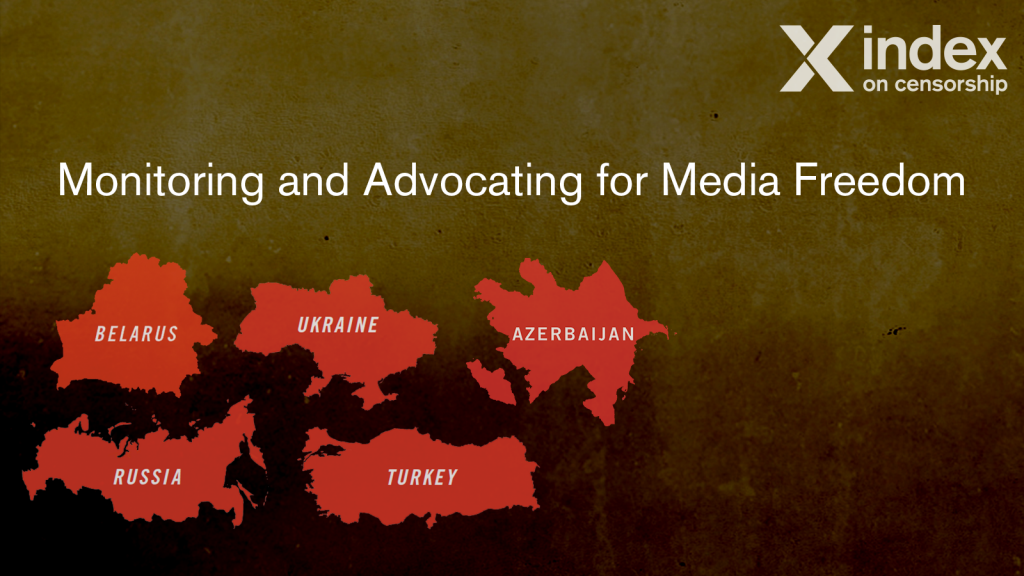
Index on Censorship’s Monitoring and Advocating for Media Freedom project monitors threats, limitations and violations related to media freedom in Azerbaijan, Belarus, Russia, Turkey and Ukraine. Previously these countries were also included in the Mapping Media Freedom project, which Index incubated and managed between 2014 – 2018.
This report summarises policy recommendations based on analysis since April, 2019. The recommendations are based on research by in-country correspondents and Index staff. Country reports published by the project since April are available on the project webpage.
After a brief background section, the report sets out key policy recommendations that apply to all the project countries, followed by key recommendations for each project country.
Background
It is essential that media freedom groups and international organisations continue to monitor, verify and document threats, limitations and violations related to media freedom in Azerbaijan, Belarus, Russia, Turkey and Ukraine, continue to raise awareness about the challenges and to advocate for change. Media freedom is severely restricted in all these countries and journalists are under great pressure.
Violence against journalists; misuse of counter-terror and security legislation to silence journalists; travel bans that isolate journalists and impact them professionally; failure to investigate violent crimes against journalists and silencing and punishing journalists through defamation and insult laws – all these are familiar tactics and increasingly common. In more recent years the introduction of restrictive internet-related legislation, such as in Russia, has opened a new frontline in the fight to safeguard media freedom.
RECOMMENDATIONS FOR ALL PROJECT COUNTRIES
- Governments and the EU must take a stronger stand for media freedom
Governments and multilateral groups, in particular the European Union (EU), must take a strong stand in defence of media freedom and journalists, both in their bilateral relations with the project countries and in multilateral processes. Governments and the EU should ensure that issues such as proposed or existing legislation that restricts media freedom, violence against journalists and failures to investigate crimes against journalists, form part of the agenda in strategic bilateral and multilateral discussions.
Countries that have a version of the Magnitsky Act (in the EU, this includes Estonia, Latvia, Lithuania and The Netherlands) should consider making use of this legislation in cases where media freedom and the safety of journalists are at stake. Countries that have not yet introduced such legislation should consider doing so. The UK should put its Magnitsky amendment into use.
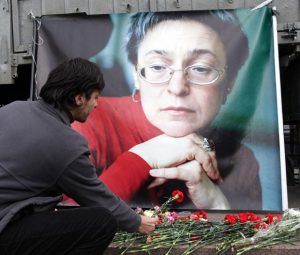
A man lays flowers near the picture of murdered journalist Anna Politkovskaya, during a rally in Moscow, Russia, 7 October 2009. CREDIT: EPA / Alamy Stock Photo
Impunity is a major challenge in all the project countries. In Azerbaijan, the death of freelance journalist Rafic Tagi, who died in hospital after a stabbing in 2011, has never been investigated properly. Belarussian cameraman Dzmitry Zavadski disappeared in 2000 on his way to meet journalist Pavel Sheremet, later killed in Ukraine in 2016. Zavadski’s body was never found.
The instigator of the 2006 contract killing of investigative journalist Anna Politkovskaya in Russia is still not known, nor is the motive. In 2018 the European Court of Human Rights found that the Russian authorities had failed to carry out an effective investigation into her killing. Turkey failed to investigate the death of editor Rohat Aktaş, killed when he was covering hostilities between Kurdish separatists and Turkish forces in 2016.
Ukrainan journalist Pavel Sheremet was killed by a car bomb in Kyiv in 2016 and, despite statements from the authorities that the case is a priority, there has been no progress. All the project countries should commit to investigating unsolved killings of journalists and should implement the guidelines in recommendation CM/Rec(2016)4 of the Committee of Ministers of the Council of Europe.
In relation to impunity, the guidelines envisage that when investigations and prosecutions have not resulted in justice member states can consider establishing special inquiries or independent specialised bodies, and that the latter could involve participation by respected media and/or civil society figures.
 Council of Europe member states must engage fully with the platform for journalism
Council of Europe member states must engage more actively with the Council of Europe’s Platform for the protection of journalism and safety of journalists. The partner organisations of the platform, which include Index on Censorship, should continue to use the platform to raise awareness of media freedom violations and threats to journalists. This should include advocating for states to respond to all alerts communicated to the platform.
The overall response rate from states in 2018 was only 39%. It is also important that states provide substantive replies to alerts and engage in follow-up dialogue with the partner organisations. The platform is an underused mechanism, with potential to achieve more. Partner organisations can also be of assistance to member states that are willing to engage fully.
Belarus is not a member of the Council of Europe, but other international organisations and processes, such as the special procedures of the United Nations human rights council, should be engaged to follow up cases and issues in Belarus.
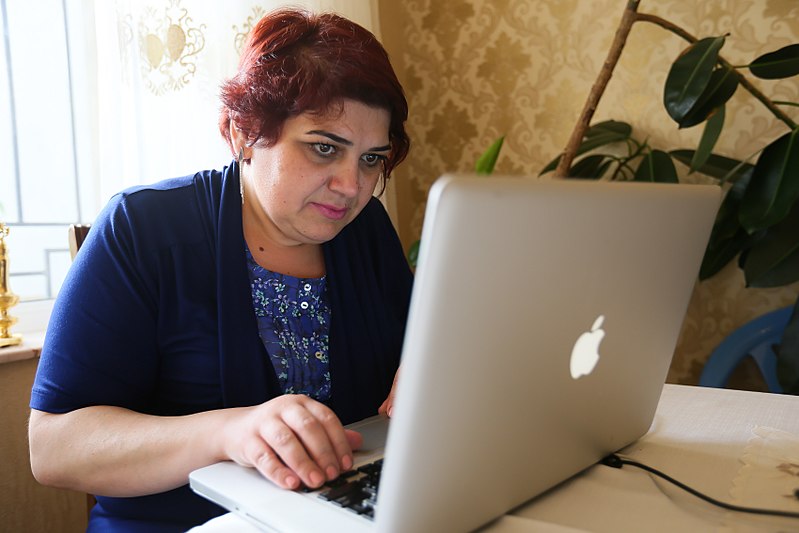
Azerbaijan must halt its use of travel bans for journalists including Khadija Ismayilova
AZERBAIJAN
- The EU must defend media freedom in negotiations with Azerbaijan
The EU must use its influence to defend media freedom and journalists in Azerbaijan. Negotiations on an agreement to replace the EU-Azerbaijan Partnership and Cooperation Agreement, in place since 1999, are at an advanced stage and will need to be brought to a conclusion by the new European Commission. It is extremely important that the EU raises media freedom and human rights in these negotiations.
In 2018, the European Parliament adopted a resolution which recommended that the EU should make deepening of relations with Azerbaijan conditional on respecting democratic values and human rights, and that it should ensure that Azerbaijan frees its political prisoners (including journalists such as Afgan Mukhtarli) before the negotiations on a new partnership agreement are concluded. Mukhtarli remains imprisoned.
Azerbaijan must refrain from targeting journalists’ online activities, including through call hacking, internet blocking and distributed denial-of-service (DDoS) attacks. In October, internet blockages and disruption to mobile phone services were reported in central Baku in connection with ongoing protests. Several journalists were also detained or subjected to physical violence during the protests. Social media platforms such as YouTube should respect Azerbaijani users’, including journalists’ right to seek, receive and impart information. Platforms should implement terms and conditions consistently and transparently, including when dealing with harassment of journalists by alleged state-sponsored trolls.
Azerbaijan must halt its use of travel bans for journalists. For example, the well known journalist Khadija Ismayilova is currently under a travel ban. OSCE Media Freedom Representative Harlem Désir has stated that it is a serious hindrance to her work as a professional journalist.
BELARUS
- Amend the law on mass media
Belarus must amend the law on mass media. The legislation currently requires journalists, including freelancers, who work for media outlets registered outside Belarus to obtain accreditation from the foreign affairs ministry. This has led to journalists being fined repeatedly. At a very minimum, Belarus must urgently establish procedures that enable journalists to appeal rejected accreditation requests.
- Other governments must signal that restrictions are not acceptable
Other governments must make it clear to Belarus that restrictive and repressive actions against journalists will not be tolerated. This applies to the requirements for accreditation for journalists working for non-Belarussian media outlets above, but also to the practice of detaining journalists for short periods. Some observers have credited Belarus’ tendency to impose fines on journalists or to detain them for short periods – rather than sentence and imprison them – as an attempt to build alliances in the West at a time when relations with Russia are weak. Other governments need to signal clearly it is not acceptable.
- Train journalists in human rights and United Nations procedures
In the case of Belarus, which is not a member of the Council of Europe, it is important that support and training aimed at enabling journalists to defend their rights includes training on other international organisations and processes, such as the special procedures of the United Nations human rights council, including the special rapporteur on the situation of human rights in Belarus.
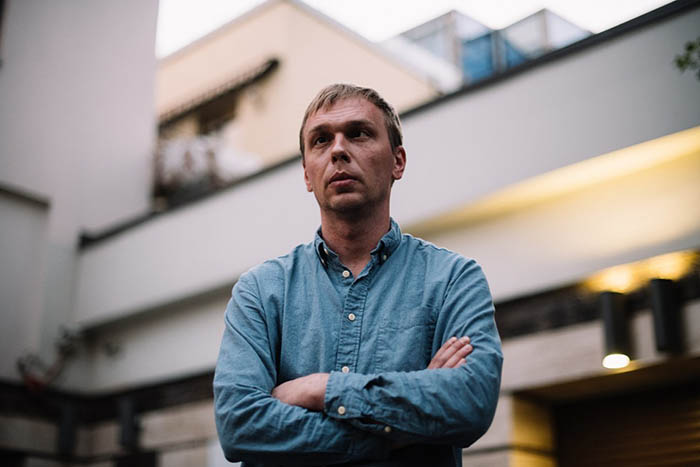
Russia must investigate cases of trumped-up charges against journalists such as Ivan Golunov
RUSSIA
- Halt the extension of foreign agent legislation to individual journalists
Russia must refrain from finalising the legislative changes that would extend the scope of “foreign agent” to individual journalists. Existing problematic legislation already requires media outlets that receive funds from abroad to register as foreign agents. At the time of writing the Duma has approved changes that would extend this to individual journalists, including freelance journalists and bloggers. Any one of these receiving payments for services, or a salary from abroad, would need to register with the ministry of justice. All published work would need to display a “foreign agent” label. This legislation should not proceed, and existing legislation that labels media outlets as foreign agents should be reviewed.
- Ensure access for journalists to court proceedings
Access to court proceedings is a frequent problem for journalists. As stated in Opinion No. 8 of the Consultative Council of European Prosecutors: “Transparency in the performance of the prosecutor’s duties is an essential component of the rule of law, and one of the important guarantees of a fair trial. Not only must justice be done, but it must also be seen to be done. In order for this to be possible, the media should be able to provide information on judicial, criminal or other proceedings” (paragraph 30). The authorities must review existing processes for compliance with international standards.
- Investigate cases of trumped-up charges against journalists
The authorities must thoroughly investigate cases of trumped-up charges against journalists and ensure that the instigators are brought to justice. Recent incidents include the high-profile case of Ivan Golunov, arrested for possession and trafficking of drugs, and what appears to be a fake letter sent in the name of Nikita Telizhenko with the aim of discrediting him.
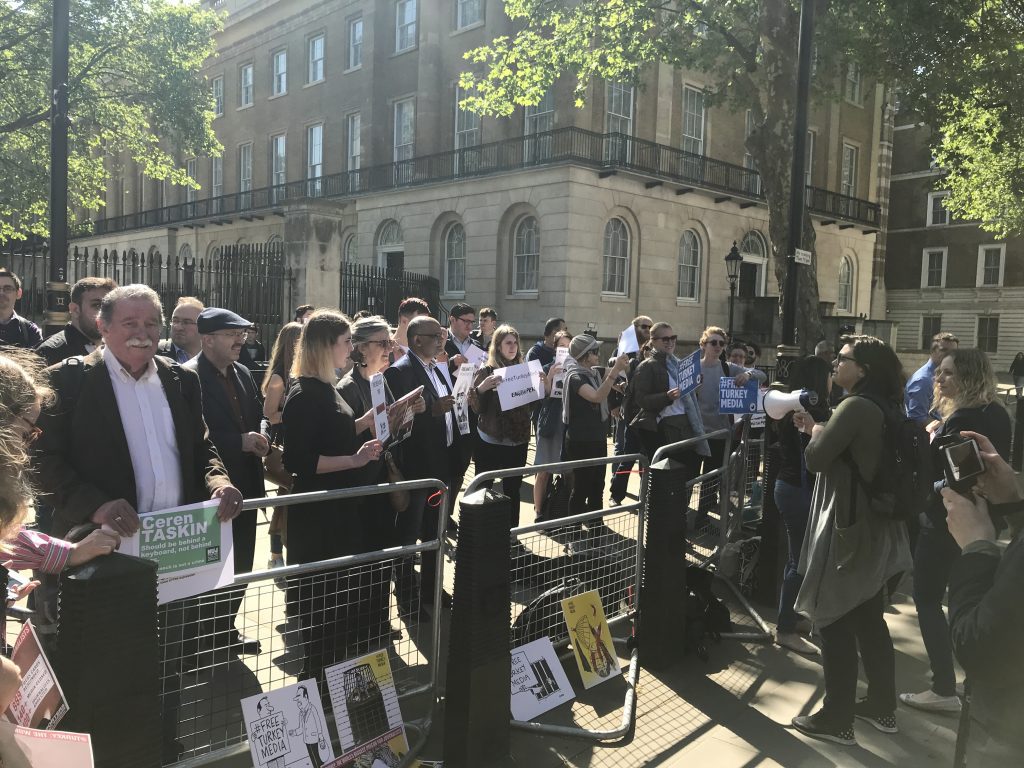
Index on Censorship magazine editor Rachael Jolley leads chants in support of Turkey’s jailed journalists ahead of Turkish President Erdogan’s visit to Downing Street in May 2018
TURKEY
- Other governments should not support Turkey’s judicial reform strategy, at least not in its current form
The judicial reform strategy (JRS), launched in May, 2019, will not achieve any meaningful change, at least not in its current form. Turkey’s judicial system is not independent: it is overloaded with cases, many which concern journalists, and it has been undermined through the large-scale dismissal of judges. It is extremely important that other countries and international organisations scrutinise the judicial reform strategy, and make it clear that in its current form it is completely inadequate when it comes to addressing the enormous structural problems of the judiciary.
- Implement the recommendations of the United Nations special rapporteur
In May 2019, the United Nations special rapporteur on the promotion and protection of the right to freedom of opinion and expression published a follow-up report to an earlier visit to Turkey in 2016. The rapporteur had made a series of recommendations in 2016, which included releasing jailed journalists and reversing the closure of media outlets. The follow-up report found that Turkey had either failed to implement or had contravened all the recommendations, with the exception of one (lifting the state of emergency). Turkey should urgently implement all the recommendations made by the United Nations special rapporteur.
- Support trial observation
Diplomatic representations and international organisations, including the EU, need to support observation of trials that involve journalists and media outlets. High-profile trials in central locations can be well-attended by observers, but coverage of trials in remote locations is more limited. Support can include sending representatives to follow trials and/or financial support for organisations that monitor trials.
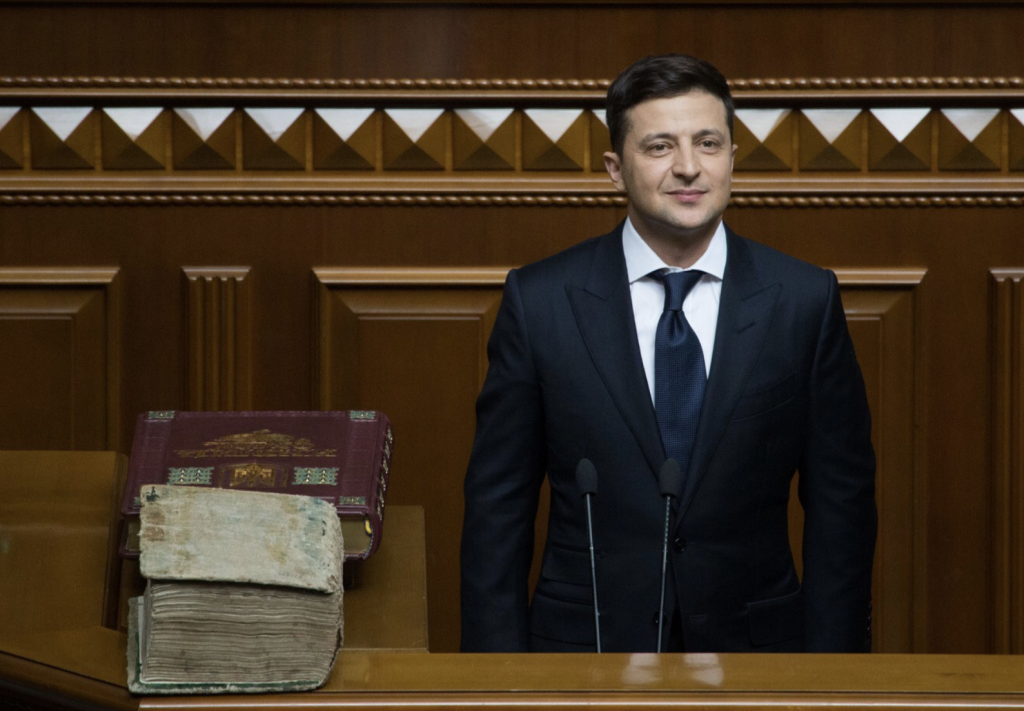
Ukraine President Volodymyr Zelenskiy must engage with the media. Photo: Wikimedia
UKRAINE
- The government must review state support for far-right groups associated with extremism
The government needs to undertake an independent and transparent review of state support, including financial support for far-right groups associated with extremism. The review should involve international experts. It should include investigating the possibility of state security force collusion with paramilitary and extremist organisations and thorough investigations of alleged involvement in violence against journalists, such as the unsolved murder of Oles Buzina.
- Elected representatives must engage with the media
President Volodymyr Zelenskiy reportedly held a 14-hour press conference in October, attended by 300 journalists. Whether it signals a new era in the relationship between Ukraine’s elected representatives and the media remains to be seen. The failure of the president and lawmakers to engage meaningfully with the media in the past has been a challenge for journalists and this needs to change.
- Invest in the public service broadcaster
In the highly divisive media landscape, the role of the public broadcaster is extremely important. Ukraine’s public broadcasting company is severely underfunded and currently has a very small audience. As Index on Censorship outlined in its Demonising the Media report a year ago, a significant but underreported trend in the region is the threat to public broadcasters. A number of national broadcasters in the EU and neighbouring countries were brought under closer government control in 2014-18. Ensuring both sufficient funding and editorial independence are crucial in ensuring the public’s right to know is defended.
