4 Jul 2019 | Belarus, Belarus Incident Reports
[vc_row][vc_column][vc_column_text]
Index on Censorship’s Monitoring and Advocating for Media Freedom project tracks press freedom violations in five countries: Azerbaijan, Belarus, Russia, Turkey and Ukraine. Learn more.
[/vc_column_text][/vc_column][/vc_row][vc_row][vc_column][vc_row_inner][vc_column_inner][vc_custom_heading text=”5 Incidents” use_theme_fonts=”yes”][vc_column_text]
Journalists barred from covering roundtable on drug problem
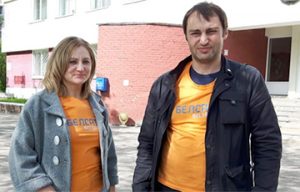
Zmitser Kazakevich and Viachaslau Lazarau
26 June 2019 – Vitsebsk independent journalists Zmitser Kazakevich and Viachaslau Lazarau were not allowed to cover a roundtable discussion between education officials and the parents of individuals convicted of drug offenses.
The journalists were told they could not be present at the event because they were not listed as invitees. Officials turned down a request from the organisers that the press be allowed to attend.
Link: https://baj.by/be/content/vicebskih-zhurnalistau-ne-puscili-na-krugly-stol-pa-prableme-narkotykau
Category: Blocked Access
Source(s) of violation: State Agency
Journalists banned from visiting Brest regional government
12 June 2019 – Media professionals were barred from attending a meeting between Anatol Lis, head of the Brest regional government, and environmental protestors. Three independent journalists had been included in a list of meeting participants. Audio recording and photographing during the meeting were banned.
Link: https://charter97.link/ru/news/2019/6/13/337549/
Category: Blocked Access
Source(s) of violation: State Agency
Independent media workers blocked from attending press conference
11 June 2019 – Management of a controversial battery plant I-Power blocked some independent media representatives and bloggers from attending a press conference. The Brest factory has drawn protests from area residents concerned about its environmental impacts.
Link: https://baj.by/be/content/zhurnalistau-ne-puscili-na-sustrechu-starshyni-bresckaga-ablvykankama-z-praciunikami
Category: Blocked Access
Source(s) of violation: Company
Independent newspaper’s journalist prevented from entering new court building
7 June 2019 – A Brestskaya Gazeta journalist was told she could not enter a new court building after its inauguration citing the lack of accreditation.
Link(s): https://www.b-g.by/news/otkryitie-doma-pravosudiya-v-breste-nachalos-s-torzhestva-spravedlivosti-korrespondenta-bg-vnutr-ne-pustili/
Category: Blocked Access
Source(s) of violation: Public Official
Brest blogger Piatrukhin detained while broadcasting online
2 June 2019 – Blogger Siarhei Piatrukhin was pushed into a car by men in camouflage on the corner of Mayakovski and Savietskaya Streets and taken to the Leninski district police department. The incident happened while he was conducting a live broadcast from a protest march against construction of a battery plant near Brest.
At the police station, a report was filed against Piatrukhin for disorderly conduct and he was jailed pending a trial.
On 3 June 2019, Piatrukhin was brought from the prison to the Leninski district court of Brest. There a judge postponed the hearing until 10 June 2019 and released him.
Update:
10 June 2019 – A judge in the Leninski district court of Brest fined Siarhei Piatrukhin Br765 (about $370) for disorderly conduct (Article 17.1 of the Code of Administrative Offences).
The reason for the ruling was the alleged insult of the deputy head of Leninski district police department of Brest Mikalai Samasiuk. At the trial, Samasiuk explained that the blogger asked Samasiuk, who was on duty at the time, to accept a complaint against an administrative offense “in importunate manner”. Samasiuk considered such behavior of Piatrukhin as unacceptable and called the riot police.
Links:
https://charter97.link/en/news/2019/6/3/336370/
https://charter97.link/en/news/2019/6/4/336484/
https://charter97.link/en/news/2019/6/11/337333/
Category: Detention, Blocked Access, Fines
Source(s) of violation: Police, Court[/vc_column_text][/vc_column_inner][/vc_row_inner][/vc_column][/vc_row][vc_row][vc_column][vc_basic_grid post_type=”post” max_items=”4″ element_width=”6″ grid_id=”vc_gid:1562239181704-1669af44-11ae-10″ taxonomies=”8996″][/vc_column][/vc_row]
26 Jun 2019 | Global Journalist, Media Freedom, media freedom featured, News, Tajikistan
[vc_row][vc_column][vc_column_text]This article is part of Index on Censorship partner Global Journalist’s Project Exile series, which has published interviews with exiled journalists from around the world.[/vc_column_text][vc_column_text]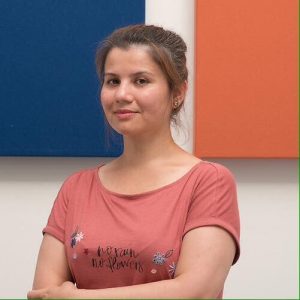 The calls came to Tajik journalist Humayra Bakhtiyar at her sports club, at the shopping center and at home. Whatever she was doing, agents from Tajikistan’s State Committee for National Security wanted her to know that they knew about it.
Then there were the social media attacks by pro-government trolls: the unflattering photoshopped images of Bakhtiyar and innuendo about her family on Facebook. There were reports attacking her in government media. Finally, there was the official from the former Soviet republic’s security service, still known colloquially as the KGB, who came to the office asking about her family members and why she was putting herself in such a dangerous situation. Would she consider spying on her colleagues for him?
At issue was Bakhtiyar’s reporting on corruption, human rights and other sensitive issues in the central Asian nation for news outlets including the Russian-language Asia-Plus news site, the Institute for War and Peace Reporting and Turkey’s Anadolu Agency.
Such reports were particularly sensitive during presidential elections in 2013 and parliamentary elections in 2015, both won by the ruling party of Tajik President Emomali Rahmon amid criticism from outside observers. Fearing for her safety and that of her family, Bakhtiyar moved to Germany in 2015.
President Rahmon, whose official titles include “Founder of Peace and National Unity,” has ruled the country of 9 million since 1992 in part by imposing severe restrictions on the media. In 2019 Tajikistan ranked 161st of 180 countries on Reporters Without Borders World Press Freedom Index, which notes that much of the country’s independent media has been eliminated. “Harassment by the intelligence services, intimidation and blackmail are now part of the daily routine” for journalists in the country, according to the Paris-based press freedom group.
The U.S.-backed Radio Free Europe/Radio Liberty, one of the few independent news organizations to operate in the country, is routinely blocked by the government – despite criticism that an RFE/RL local language affiliate has itself become a voice for government propaganda. But RFE/RL is far from alone in facing censorship. Following the killing of four foreign tourists by Islamic State militants last year, much of Tajikistan’s internet was shut down.
Now living in Hamburg, Germany, Bakhtiyar spoke with Global Journalist’s Kyle LaHucik about her budding career as a Tajik journalist and the threats she faced for reporting criticism of the government. Below, an edited version of their conversation:
Global Journalist: Why did you want to go in to journalism?
Bakhtiyar: I wanted to become a diplomat in my school years. But later, I understood that my family cannot pay for me. I never wanted to become a journalist, but when I started to study, I really loved it. From my third year, I started to work full time. From early morning I’d work, and then in the afternoon I went to university to study. From 2007 to 2009, I worked overnight. Many times I slept in my office.
GJ: What subjects did you report on?
Bakhtiyar: At first, I started with social issues. But in early 2008, I was sent to parliament to report. [At] first, I really hated it because it was so boring to listen to the old men talking. But later I started to [take] interest. What does it mean? Why are they sitting there? Why are they writing what they are writing? For whom?
…After that, I started to be interested much more about the government, about who is in government, about nepotism and human rights.
GJ: Tell us about some of the human rights and government issues that interested you.
Bakhtiyar: People really don’t have any rights. When you are getting married, girls have to have this test or papers that say they reserved their virginity and can marry. Even Tajik emigrants who have to move to Russia for work, they also don’t have any rights in Russia and really no rights in Tajikistan. When you go to the hospital there is not good service, and for some doctors you have [pay bribes] because they have really low salaries.
But from Tajikistan government news you will get information that you are really living in some paradise.
GJ: How did the government try to silence you?
Bakhtiyar: I worked more or less 10 years in Tajikistan. I covered all issues: government, parliamentary corruption, nepotism, and the financial system, which is so horrible.
In early 2013, I got some messages from the KGB, the security police: I have to be careful writing, I have to stop covering some issues. In 2013 we had a presidential election, so that’s why I think the security police started to control all mass media. They started to talk to every editor first. They started to push journalists through the editors. Three or four times they contacted my chief editor at a Tajik newspaper and advised them to stop me.
My chief editor informed me every time that the security police want to talk to me. They have some special topic they want to discuss. Every time I ignored this. I said, “I don’t have anything to share with them.”
Later, they came to my office to talk with me. They asked that I talk to them, and when I talked, they asked me to come to the security office. I didn’t want to go because I was afraid. I heard how some activists and journalists have had some accidents that year. I said that if you have any official reasons to talk to me, you have to send me an official letter [that states] why, who you are, why you want to talk to me.
GJ: What did the internal security agent say in response?
Bakhtiyar: [He asked] “How are you living? How is your family? What is your father doing? Where is your mother? Is she alive? How are your brothers?”
I got the message that he already knew everything about my life. My parents are divorced for 18 years [something] I never shared with my colleagues. I lived with my father and my stepmother.
He asked me: “Do you have good relations with your stepmom?”
I tried to be so calm. I told him: “If you are so interested in my family, one day you should come for dinner and I can introduce you to them if they are so important for your office.”
He started to change our conversation and said, “You are so young, so young and so beautiful. Why are you trying to put yourself in a dangerous situation?…You are doing wrong things, your opinion is wrong, everything that you said is bad in our country is not bad. We should keep our peace. You should support our government, it is [a] really nice government.”
I said, ” I don’t want to hear from you…[I] suggest you’re free to go.”
And he just said, “You can write something as you want, but you can work with us. For example, share about what people are talking [about] around you, especially in your office, your colleagues.”
I was so angry, I asked him, “Are you serious?”
Then he started to call me many times and every time when he calls me he informed me that he knows where I am at that moment: when I was at home, when I was at my office, when I was in the shopping center or even my sports club. He really persecuted me and later I started to feel that some people are following me on the street, but I tried to ignore it.
GJ: Did this continue?
Bakhtiyar: Later they started a social attack. There were many, many of my photos published on social media, some Russian social media but mostly Facebook, because I was really active on Facebook. There were many of my photos [that were] Photoshopped and many, many wrong and dirty rumors about my life, about my family. They started to write that I have some psychological problem because I grew up with a stepmother. All the time I knew that they have just one goal: they want to see me out of journalism.
In 2015, we had a parliamentary election. I was really so active, I wrote about it. In some government newspapers they wrote some articles against me. It makes you a bit tired, morally. During this moment, one of my friends in Tajikistan, my colleague and my friend, he [suggested] that maybe I can get some scholarship outside for a short time and maybe it can help me to get a bit of rest. When I will be out of Tajikistan, they cannot see me every day. Maybe they will forget about me. I was really, really tired to live under such pressure.
We found a scholarship at [German news network] Deutsche Welle in Bonn, Germany in May 2015. They said that you are free, you can write about anything. Immediately after my second article, the Deutsche Welle editor got a letter of complaint from the Ministry of Foreign Affairs of Tajikistan. They invited a Deutsche Welle correspondent in [Tajik capital] Dushanbe in and pushed him to say how I got an internship. What am I doing in Deutsche Welle in Bonn? Who helped me? Why am I writing from Germany about Tajik issues?
My editor just told me: “Don’t be afraid…we will stand behind you. Just continue what you think is right.”
And I continue to write. [/vc_column_text][/vc_column][/vc_row][vc_row][vc_column width=”1/2″][vc_video link=”https://youtu.be/6BIZ7b0m-08″][/vc_column][vc_column width=”1/2″][vc_column_text]Index on Censorship partner Global Journalist is a website that features global press freedom and international news stories as well as a weekly radio program that airs on KBIA, mid-Missouri’s NPR affiliate, and partner stations in six other states. The website and radio show are produced jointly by professional staff and student journalists at the University of Missouri’s School of Journalism, the oldest school of journalism in the United States. [/vc_column_text][/vc_column][/vc_row][vc_row][vc_column][vc_custom_heading text=”Don’t lose your voice. Stay informed.” use_theme_fonts=”yes”][vc_separator color=”black”][vc_row_inner][vc_column_inner width=”1/2″][vc_column_text]Index on Censorship is a nonprofit that campaigns for and defends free expression worldwide. We publish work by censored writers and artists, promote debate, and monitor threats to free speech. We believe that everyone should be free to express themselves without fear of harm or persecution – no matter what their views.
Join our mailing list (or follow us on Twitter or Facebook). We’ll send you our weekly newsletter, our monthly events update and periodic updates about our activities defending free speech. We won’t share, sell or transfer your personal information to anyone outside Index.[/vc_column_text][/vc_column_inner][vc_column_inner width=”1/2″][gravityform id=”20″ title=”false” description=”false” ajax=”false”][/vc_column_inner][/vc_row_inner][/vc_column][/vc_row][vc_row full_width=”stretch_row_content”][vc_column][three_column_post title=”Global Journalist / Project Exile” full_width_heading=”true” category_id=”22142″][/vc_column][/vc_row]
23 Jun 2019
[vc_row full_width=”stretch_row_content”][vc_column][vc_empty_space][vc_custom_heading text=”Monitoring and Advocating for Media Freedom” font_container=”tag:h1|text_align:center” use_theme_fonts=”yes”][/vc_column][/vc_row][vc_row][vc_column][vc_column_text]
Index on Censorship’s Monitoring and Advocating for Media Freedom project monitors threats, limitations and violations related to media freedom in five countries: Azerbaijan, Belarus, Russia, Turkey and Ukraine for the purpose of identifying and analysing issues, trends and drivers and exploring possible response options and opportunities for advocating media freedom. The project collects and analyses limitations, threats and violations that affect a journalist as they do their job.
[/vc_column_text][vc_row_inner][vc_column_inner width=”1/4″][vc_icon icon_fontawesome=”fa fa-globe” color=”black” background_style=”rounded” size=”xl” align=”right” link=”url:https%3A%2F%2Fmappingmediafreedom.org|||”][/vc_column_inner][vc_column_inner width=”3/4″][vc_column_text]The project builds on the experience and insights gathered during Index’s 4.5 years monitoring media freedom in 43 European countries as part of Mapping Media Freedom platform, which ended its first phase on 31 January 2019 and is now managed by the European Centre for Press and Media Freedom.[/vc_column_text][/vc_column_inner][/vc_row_inner][vc_row_inner][vc_column_inner width=”1/4″][vc_single_image image=”106364″ img_size=”medium”][/vc_column_inner][vc_column_inner width=”3/4″][vc_column_text]
See the latest policy recommendations for Azerbaijan, Belarus, Russia, Turkey and Ukraine.[/vc_column_text][/vc_column_inner][/vc_row_inner][/vc_column][/vc_row][vc_row][vc_column][vc_custom_heading text=”Reports” font_container=”tag:h3|text_align:left” use_theme_fonts=”yes”][/vc_column][/vc_row][vc_row][vc_column width=”1/4″][vc_single_image image=”98651″ img_size=”full” onclick=”custom_link” link=”https://www.indexoncensorship.org/2019/09/in-a-country-that-keeps-its-media-under-a-dome-belaruss-independent-journalists-face-mounting-fines/”][/vc_column][vc_column width=”3/4″][vc_column_text]
On the surface, Belarus is one of the quieter places for journalists – one rarely hears about gruesome violations, physical assaults or murders of media workers in this post-Soviet country. But a lack of horror stories does not mean there is a liberal policy towards the media.
Read the full report[/vc_column_text][/vc_column][/vc_row][vc_row][vc_column width=”1/4″][vc_single_image image=”107324″ img_size=”full” onclick=”custom_link” link=”https://www.indexoncensorship.org/2019/07/trolls-and-insults-azerbaijans-exiled-media-increasingly-under-fire/”][/vc_column][vc_column width=”3/4″][vc_column_text]
After the total capture of the media environment inside the country, the government of Ilham Aliyev has turned its attention to silencing critics in exile.
Read the full report[/vc_column_text][/vc_column][/vc_row][vc_row][vc_column width=”1/4″][vc_single_image image=”98654″ img_size=”full” onclick=”custom_link” link=”https://www.indexoncensorship.org/2019/07/turkey-physical-violence-report/”][/vc_column][vc_column width=”3/4″][vc_column_text]
- In Turkey, the government uses national security and terror legislation to censor journalists.
- Arrests, detentions and trials of media workers are frequent.
- Index on Censorship’s Monitoring and Advocating Media Freedom project documented seven assaults in Turkey in May, and another one in June 2019.
Turkey’s freedom of the press was curbed after the attempted military coup in July 2016, when over 150 media outlets were shut down.
Many journalists working in Kurdish territory were subject to physical violence and threats, and Rohat Aktaş, a journalist who covered the Kurdish-Turkish conflict in the town of Cizre, was killed.
Though physical assaults on media workers have become rare in recent years, a recent surge has raised concerns about the continuing pressure on media professionals in the country.
Read the full report[/vc_column_text][/vc_column][/vc_row][vc_row][vc_column width=”1/4″][vc_single_image image=”98655″ img_size=”full” onclick=”custom_link” link=”https://www.indexoncensorship.org/2019/07/ukraine-physical-violence-report/”][/vc_column][vc_column width=”3/4″][vc_column_text]
- The majority of violations in Ukraine catalogued by Index on Censorship’s Monitoring and Advocating for Media Freedom project from 1 February to 30 June 2019 were categorised as physical assaults, attacks to property or blocked access.
- Most frequently, these actions were taken by agents of the state — whether law enforcement or other governmental structures.
The Monitoring and Advocacy for Media Freedom project has recorded 16 incidents in which journalists have been subjected to physical assaults, and 17 incidents in which journalists has their equipment and property damaged since February 2019, 4 of which are in both categories. The project’s numbers are corroborated by the National Union of Ukrainian Journalists (NSJU), which recorded 36 incidents targeting journalists since 1 January 2019, including physical assaults and attacks on property, as part of their Index of Physical Safety of Ukrainian Journalists.
Read the full report[/vc_column_text][/vc_column][/vc_row][vc_row][vc_column width=”1/4″][vc_single_image image=”98652″ img_size=”full” onclick=”custom_link” link=”https://www.indexoncensorship.org/2019/07/russia-physical-violence-report/”][/vc_column][vc_column width=”3/4″][vc_column_text]
- Independent media sources have been hamstrung by restrictive legislation and police, governmental, and private interference.
- Physical assaults, detentions, lawsuits, fines, and blocked access are common. Many outlets have chosen to practice self-censorship to protect themselves.
- Strict new laws limiting press freedom have been introduced, despite having progressive press laws from the 1990s still on the books and a constitutional article guaranteeing freedom of the press.
Out of 175 violations recorded in Russia by the Monitoring and Advocating for Media Freedom project between February and June 2019, 20 were physical assaults that came from political figures, police structures, known private individuals and unknown perpetrators. Several of the cases are egregious examples of how physical violence is used to target journalists in Russia.
Read the full report
Previous report: Legislative restrictions, bomb threats and vandalism are just some of the issues Russian journalists have faced this year[/vc_column_text][/vc_column][/vc_row][vc_row][vc_column][three_column_post title=”Latest” full_width_heading=”true” category_id=”35195″][/vc_column][/vc_row][vc_row][vc_column][vc_custom_heading text=”Incidents by Month” font_container=”tag:h3|text_align:left” use_theme_fonts=”yes”][/vc_column][/vc_row][vc_row][vc_column][three_column_post title=”Azerbaijan” full_width_heading=”true” category_id=”34499″][/vc_column][/vc_row][vc_row][vc_column][three_column_post title=”Belarus” full_width_heading=”true” category_id=”34498″][/vc_column][/vc_row][vc_row][vc_column][three_column_post title=”Russia” full_width_heading=”true” category_id=”34497″][/vc_column][/vc_row][vc_row][vc_column][three_column_post title=”Turkey” full_width_heading=”true” category_id=”34359″][/vc_column][/vc_row][vc_row][vc_column][three_column_post title=”Ukraine” full_width_heading=”true” category_id=”34327″][/vc_column][/vc_row][vc_row][vc_column][vc_custom_heading text=”Resources” font_container=”tag:h3|text_align:left” use_theme_fonts=”yes”][/vc_column][/vc_row][vc_row][vc_column][vc_row_inner][vc_column_inner width=”1/4″][vc_icon icon_fontawesome=”fa fa-file-text-o” color=”black” background_style=”rounded” size=”xl” align=”right” link=”url:https%3A%2F%2Fwww.indexoncensorship.org%2F2019%2F06%2Fmonitoring-and-advocating-for-media-freedom-methodology%2F|||”][/vc_column_inner][vc_column_inner width=”3/4″][vc_column_text]
The project works with a network of independent journalists who monitor local news sources, speak to individuals involved in the situations and interface with journalist unions to understand the facts of the situation and help put the press freedom violation in a larger context.[/vc_column_text][/vc_column_inner][/vc_row_inner][/vc_column][/vc_row][vc_row][vc_column][vc_custom_heading text=”Mapping Media Freedom reports” font_container=”tag:h3|text_align:left” use_theme_fonts=”yes”][vc_column_text]Index on Censorship’s Mapping Media Freedom tracked press freedom violations in 43 countries between 1 May 2014 and 31 January 2019. These reports summarised the findings from that project, which is now managed by the European Centre for Press and Media Freedom.[/vc_column_text][/vc_column][/vc_row][vc_row][vc_column][vc_row_inner][vc_column_inner width=”1/4″][vc_single_image image=”108218″ img_size=”full” onclick=”custom_link” link=”https://www.indexoncensorship.org/mapping-media-freedom-by-the-numbers-may-2014-july-2018/”][/vc_column_inner][vc_column_inner width=”3/4″][vc_column_text]
The numbers are stark and the contexts very, but the unmistakable message they convey is that journalism is at risk in the EU35
A companion to Demonising the media: Threats to journalists in Europe, the numbers contained in this document are drawn from 3,187 press freedom violations reported to Mapping Media Freedom, an Index on Censorship project, between May 2014 and July 2018 covering 35 European Union member states, candidates and potential candidates for entry.
[/vc_column_text][/vc_column_inner][/vc_row_inner][vc_row_inner][vc_column_inner width=”1/4″][vc_single_image image=”108220″ img_size=”full” onclick=”custom_link” link=”https://www.indexoncensorship.org/demonising-the-media-threats-to-journalists-in-europe/”][/vc_column_inner][vc_column_inner width=”3/4″][vc_column_text]
Burned in effigy. Insulted. Menaced. Spat at. Discredited by their nation’s leaders. Assaulted. Sued. Homes strafed with automatic weapons. Rape threats. Death threats. Assassinations.
This is the landscape faced by journalists throughout Europe over the past four years.
[/vc_column_text][/vc_column_inner][/vc_row_inner][vc_row_inner][vc_column_inner width=”1/4″][vc_column_text]
[/vc_column_text][/vc_column_inner][vc_column_inner width=”1/4″][vc_column_text]
[/vc_column_text][/vc_column_inner][vc_column_inner width=”1/4″][vc_column_text]
[/vc_column_text][/vc_column_inner][vc_column_inner width=”1/4″][vc_column_text]
[/vc_column_text][/vc_column_inner][/vc_row_inner][/vc_column][/vc_row][vc_row][vc_column][/vc_column][/vc_row][vc_row][vc_column][vc_single_image image=”106364″][/vc_column][/vc_row]
19 Jun 2019 | Monitoring and Advocating Coverage
[vc_row][vc_column][vc_column_text]
Index on Censorship’s Monitoring and Advocating for Media Freedom project tracks press freedom violations in five countries: Azerbaijan, Belarus, Russia, Turkey and Ukraine. Learn more.
[/vc_column_text][vc_column_text]How does Monitoring and Advocating for Media Freedom work?
The project relies on a network of independent journalists who monitor local news sources, speak to individuals involved in the situations and interface with journalist unions to understand the facts of the situation and help put the press freedom violation in a larger context.
Correspondents, who are each responsible for a particular country, submit narrative summaries of the facts of the situation to a research editor, who works with the correspondent to verify the information. The narrative reports are then published in summary form in periodic roundups of developments. Once monthly, a themed article is published highlighting a particular aspect of press freedom drawing on the submitted narratives. Periodically reports summarising the issues for a particular country are published to highlight the situation for journalists on the ground.
Who is a journalist?
Monitoring and Advocating for Media Freedom defines a journalist a person who gathers, assesses, verifies, organises, and presents news and information, via print, digital or broadcast media; who holds government, business, and other institutions and authorities accountable; who provides citizens with the information they need to make the best possible decisions about their lives, their communities, their societies, and their governments; and who puts the public good above all else, without regard for the political viewpoint of the outlet.
What is a press freedom violation?
Monitoring and Advocating for Media Freedom defines a “press freedom violation” against a set of categories to help understand the incident and place it in a larger analytical framework.
For example, a journalist barred from reporting in a country’s parliament; a reporter injured by police or demonstrators at the site of a protest, despite presenting press credentials and identifying safety gear. An independent journalist refused entry to a press conference because of material they had previously published. Press freedom violations can take many different forms and the above examples are just a small sampling.
How does Monitoring and Advocating for Media Freedom evaluate press freedom violations?
Each narrative report that is sent to Monitoring Media Freedom is run against a set of categories to place it in a larger context and allow for analysis.
- Limitation to Media Freedom
-
- Death/Killing – Media worker killed as a result of their work
- Physical Assault/Injury – Media worker subjected to violence as a result of their work
- Arrest/Detention/Interrogation – Media worker arrested, detained or called in for questioning as a result of their work
- Criminal Charges/Fines/Sentences – Media worker charged in connection with their work
- Intimidation – Media worker (and/or their family/friends) menaced as a result of their work
- Blocked Access – Media worker prevented from covering a story or speaking to a source; media worker prevented from entering a place/institution/country
- Attack to Property – Media worker’s computers, cameras or other tools damaged while on assignment; media worker’s home or vehicle sabotaged as result of their work; media office sabotaged
- Subpoena / Court Order/ Lawsuits – Media worker sued as a result of their work; Media worker ordered to court; This would also include SLAPP suits where a journalist is targeted with legal action. Libel, defamation suits:
- Legal Measures – Legislation or court rulings that directly curtail media freedom
- Online Defamation/Discredit/Harassment/Verbal Abuse – Media worker harassed, bullied, threatened, ridiculed online (via email/social media/website comments/on forums)
- Offline Defamation/Discredit/Harassment/Verbal Abuse – Media worker harassed, bullied, threatened, ridiculed verbally, in a public or private setting
- DDoS/Hacking/Doxing – News site or journalist targeted with or without violation of privacy
- Censorship — Journalist’s material altered, removed or spiked
- Previously published work substantially edited or removed from public access
- Journalist’s work altered beyond normal editing or withheld from publishing
- Commercial interference: Threats by companies to pull adverts over coverage; Pressure from media owners; Bribing journalists, editors or media outlets to publish fake news or favorable coverage about a company
- Soft censorship: indirect government pressure on media groups through advertising decisions and restrictive legislation;
- Self-censorship: Journalist says they have not reported on a subject because of pressure or fear
- Loss of Employment: Journalist fired, suspended, or forced to quit their job because of their reporting
- Other Serious Issues — other cases that don’t fit into existing categories
-
- Employer/Publisher/Colleague(s)
- Police/State security
- Private security
- Government/State Agency/Public official(s)/Political party
- Court/Judicial
- Corporation/Company
- Known private individual(s)
- Criminal organisation
- Another media
- Unknown — any other type. If the abusing party is known but there’s also an unknown mastermind, we use two categories – the one that applies to the known party, and Unknown.
[/vc_column_text][vc_basic_grid post_type=”post” max_items=”4″ element_width=”6″ grid_id=”vc_gid:1562066317956-93988c67-cdc0-4″ taxonomies=”35195″][/vc_column][/vc_row]
