UPDATE: 30 June, Erol Onderoglu and Şebnem Korur have been released from prison.
Index on Censorship calls for the immediate and unconditional release of journalists Şebnem Korur Fincancı, Erol Önderoğlu and Ahmet Nesin, who were arrested by Turkish authorities on 20 June.
“These individuals have committed no crime. Their transgression was to exercise freedom of speech to show their support for a free and pluralistic media. It shows the depths to which Turkey’s authorities have sunk to silence any and all narratives that differ with the government’s,” Melody Patry, senior advocacy officer for Index, said.
In May, Turkish authorities began investigations for “terrorist propaganda” against journalists that participated in a solidarity campaign with the Kurdish daily newspaper Özgür Gündem. The campaign, which involved editors-in-chief, was launched on 3 May 2016 — World Press Freedom Day. On 25 May, Önderoglu – a representative for Reporters Without Borders and member of the governing council of international free expression group IFEX, as well as a correspondent for Bianet – was added to the list under investigation. Korur Fincancı is president of Human Rights Foundation of Turkey (HRFT) and acting as editor-in-chief ad interim of Özgür Gündem. Nesin is a journalist and author.
Index reiterates its call for Turkey to review its terrorism legislation and to end the abusive practice of prosecuting journalists under anti-terror laws.
Press freedom in Turkey has rapidly declined in the last six months with over 60 verified incidents reported to Index’s project Mapping Media Freedom. Since 1 January 2016, three journalists have been killed, with attempts made on the lives of two others. Mapping Media Freedom has recorded 31 incidents of arrest and detention since the start of 2016.
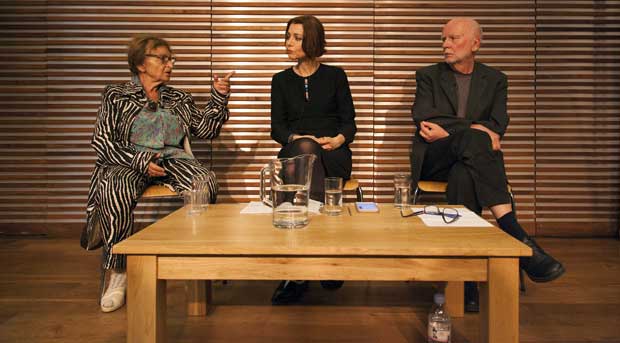
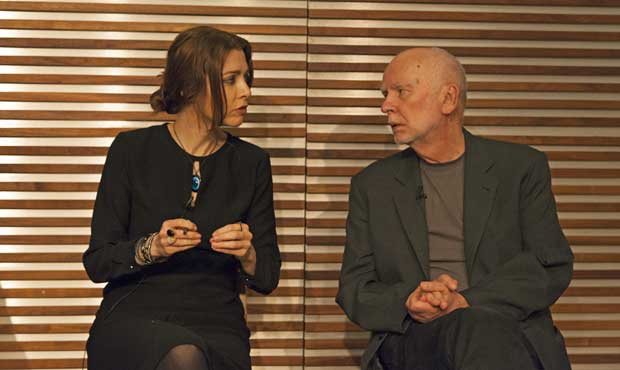
Free Word in partnership with Index on Censorship brought together three major cultural figures from Hungary, Poland and Turkey to compare their stories and ask: is Europe just a place, or a set of values that are rapidly unravelling?
Europe was a bastion of hope for more than a million refugees last year. What brought them? A hunger for safety and security? Dreams of freedom? The draw of liberal democracy with its ideals of free expression, equal opportunity and persecution for none?
But look within our own continent and you will see the cracks. In Hungary, Victor Orban’s administration looks increasingly autocratic. Poland’s new conservative government is making changes to its public media that critics have said amount to a takeover. How can we support neighbours like Turkey in their fight to avoid authoritarianism if we can’t fly the banner for freedom at home?
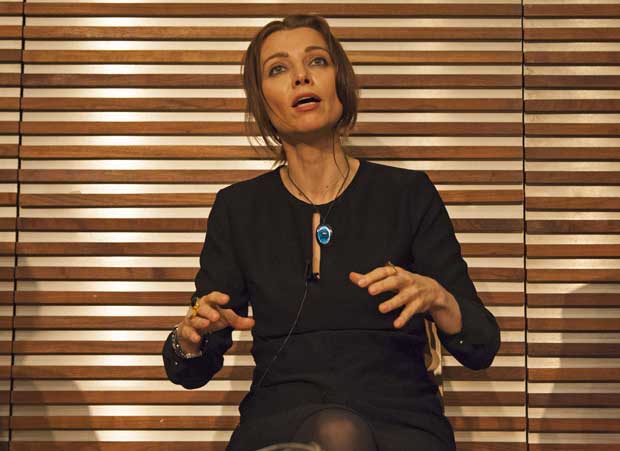
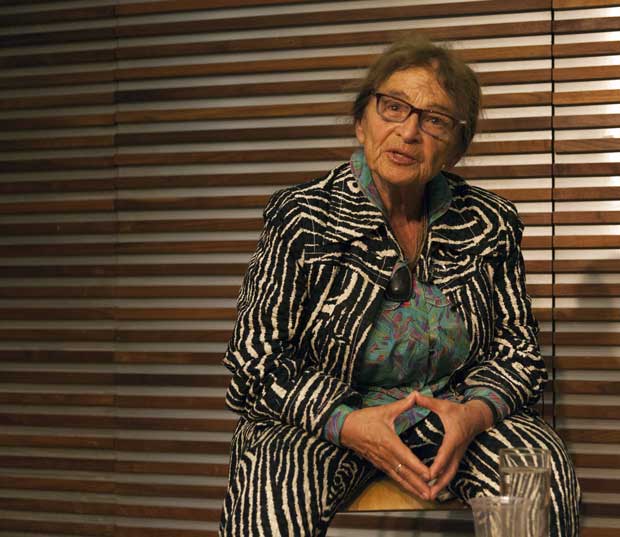
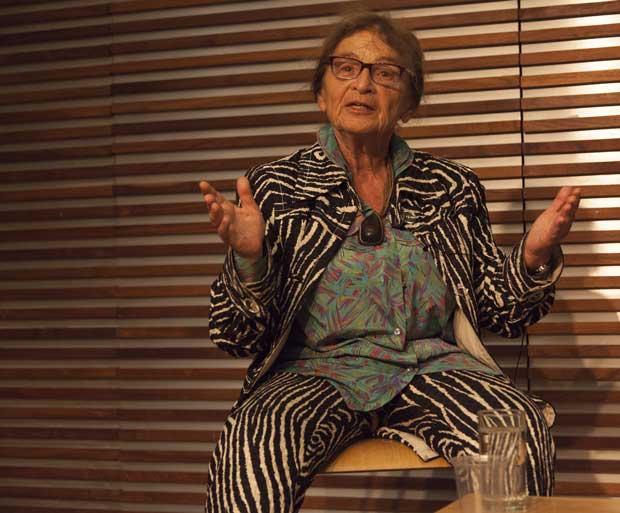
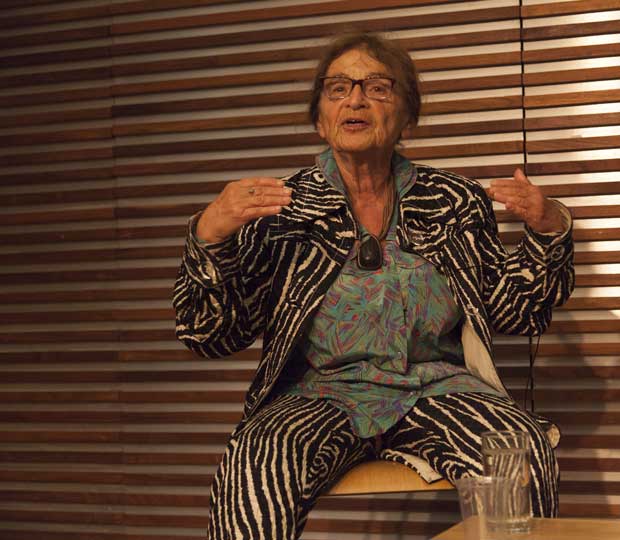
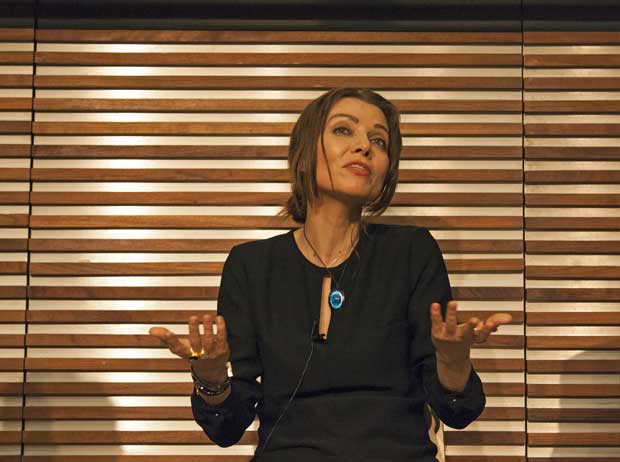
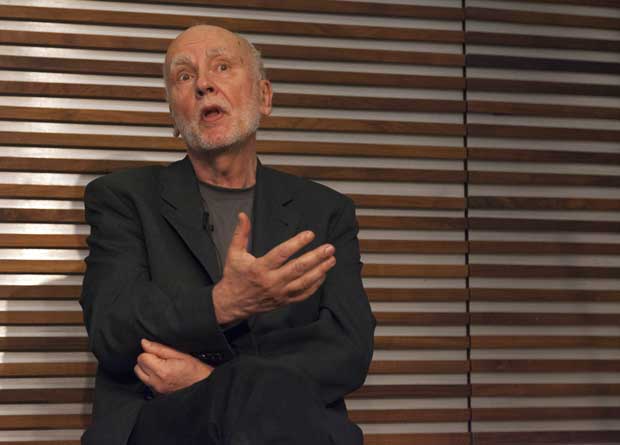
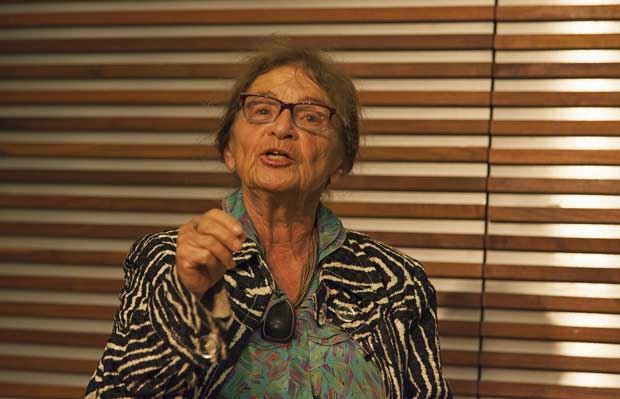
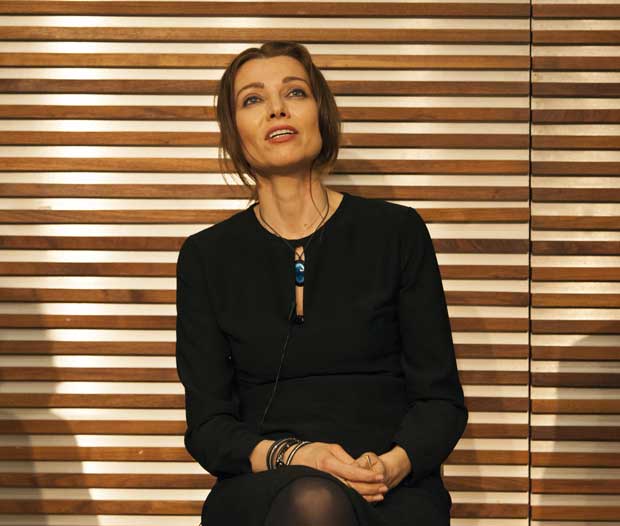
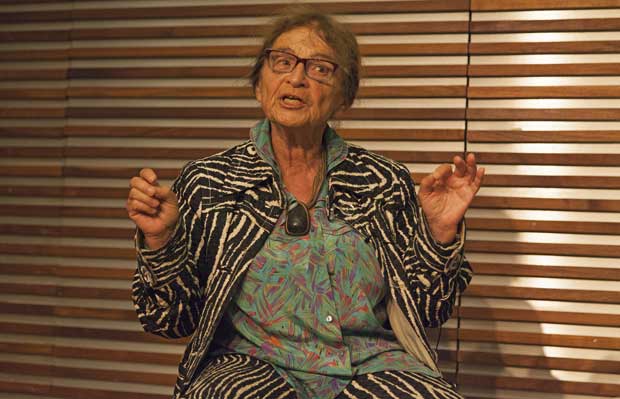
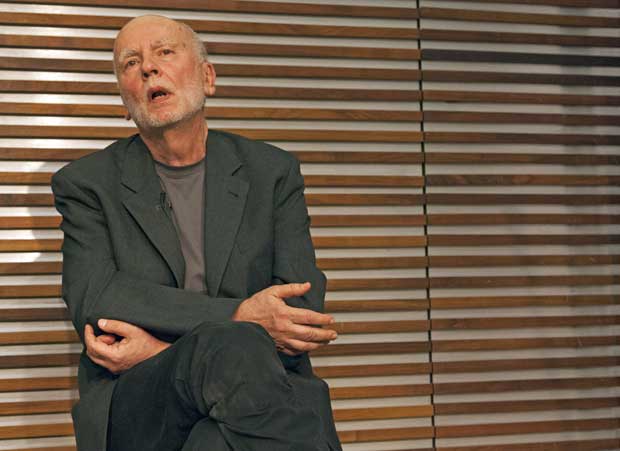
Agnes Heller, Elif Shafak and Adam Zagajewski Photos: Sean Gallagher/Index on Censorship
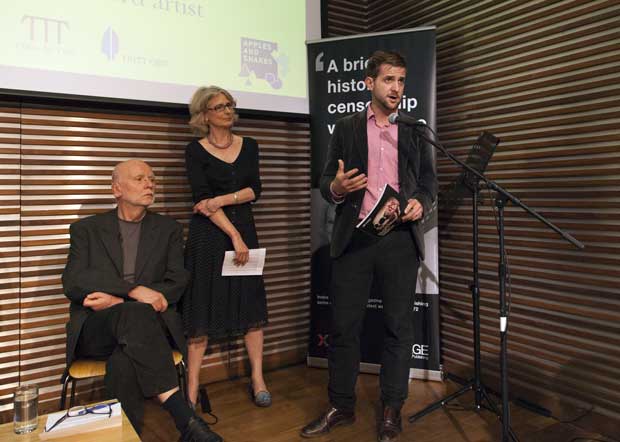
Poland, Hungary and Turkey come up on Index’s radar far too often at the moment, says @DBetzH, introducing tonight’s panelists #fweurope
— Index on Censorship (@IndexCensorship) June 15, 2016
In Turkey people cite Singapore as example of having economic success without democracy. Says @Elif_Safak#fweurope
— Index on Censorship (@IndexCensorship) June 15, 2016
‘Liberal democracy is majority decision but not majority rule.’ #AgnesHeller#FWEurope
Agnes Heller was born in 1929 and is one of the leading thinkers to come out of the tradition of critical theory. Her broad intellectual range and publications include ethics, philosophical anthropology, political philosophy and a theory of modernity and its culture. Hungarian by birth, she was one of the best-known dissident Marxists in central Europe in the 1960s and 1970s. She has held visiting lectureships all over the world and has been the Hannah Arendt Professor of Philosophy at the New School in New York. She now lives in Budapest and is one of the most popular and outspoken critics of the current regime.
Elif Shafak was born in Strasbourg, France, in 1971. She is an award-winning novelist and the most widely read woman writer in Turkey. Critics have named her as “one of the most distinctive voices in contemporary Turkish and world literature”. Her books have been published in more than 40 countries and she was awarded the honorary distinction of Chevalier of the Order of Arts and Letters. Elif has published thirteen books, nine of which are novels. She writes fiction in both Turkish and English. Elif blends Western and Eastern traditions of storytelling, bringing out the myriad stories of women, minorities, immigrants, subcultures, youth and global souls. Her work draws on diverse cultures and literary traditions, as well as a deep interest in history, philosophy, Sufism, oral culture, and cultural politics. Elif’s writing breaks down categories, clichés, and cultural ghettoes. She also has a keen eye for black humour.
Adam Zagajewski is an award-winning poet, novelist, translator and essayist. Born in Lwow in 1945, he first became well-known as one of the leading poets of the Generation of ‘68’ or the Polish New Wave (Nowa Fala). His poems and essays have been translated into many languages. Among his honors and awards are a fellowship from the Berliner Kunstlerprogramm, the Kurt Tucholsky Prize, a Prix de la Liberté, and a Guggenheim Fellowship. Since 1988, he has served as visiting associate professor of English in the Creative Writing Programme at the University of Houston. In 2010, he was nominated for the Nobel Prize in Literature. Adam is currently co-editor of Zeszyty Literackie (Literary Review). He lives in Krakow.
Click on the dots for more information on the incidents.
Each week, Index on Censorship’s Mapping Media Freedom project verifies threats, violations and limitations faced by the media throughout the European Union and neighbouring countries. Here are five recent reports that give us cause for concern.
Jiménez alleges that Antonio Fernández-Galiano Campos, president of El Mundo’s owner Unidad Editorial, pressured him to edit the paper to conform with the publisher’s corporate strategy.
Jiménez, who was hired as director in May 2015, claimed his right to direct editorial coverage independently was suppressed. His firing came just four days after the paper laid off 168 staffers including 38 journalists due to financial pressures.
The Greek Union of Photojournalists denounced the “flagrant violation of the freedom and pluralism of press”, during an operation to evacuate the country’s largest informal refugee camp of Idomeni. The statement stressed that journalists and photojournalists were not in danger, at least “not more than the ERT and ANA journalists”.
“If the trapped people use violence it won’t be against journalists and photojournalists, but against the police,” the organisation said in its statement.
Journalists for the provincial radio and TV station RTV Vojvodina claim they will be replaced by new journalists who have been chosen by the Serbian Progressive Party, which has been the ruling party in the autonomous region Vojvodina since the elections in April 2016.
The entire editorial staff was told on Wednesday 18 May 2016 that they no longer need to come to work, and that other journalists would take over their jobs. They have not been fired.
Editor-in-chief of TV channel 1, Mirjana Jovic, and general director Srdjan Mihajlovic had earlier resigned. Both are believed to have left the station under “political pressure”. Programme director Slobodan Arezina has also been dismissed, B92 reported.
In response, around forty journalists and editors have sent an open letter in which they express their worries about “sudden personnel changes that have not been clearly explained”. They are demanding a public explanation from the management “about why there has been such a sudden shift without explanation and whether this is a political decision”.
A court in the city of Mersin sentenced journalist Arzu Yildiz to 20 months in jail and deprived of legal guardianship over her children for footage she published in May 2015.
The footage was from a court hearing where four prosecutors were on trial for ordering a search of trucks belonging to Turkey’s MIT intelligence agency as they traveled to Syria in 2014, Reuters reported. President Erdogan accused those who covered the story as plotting against his government along with enemies to undermine Turkey and to embarrass the country.
The lawyer said the decision to strip parental rights was an act of revenge. “There are many cases in which the court does not execute this article of the penal code. They didn’t have to do it”.
Ukrainian president Petro Poroshenko signed a decree to impose personal sanctions against 17 Russian media executives for broadcasting propaganda, the Unian information agency reported.
According to Human Rights Watch, among the 17 are Konstantin Ernst, general director of Channel One, Russia’s main state-owned television channel, and Margarita Simonyan, chief editor of Russia’s international television network RT (formerly Russia Today) and the Rossiya Segodnya news agency. Journalists on the list also include Vladislav Fronin, chief editor of the official government newspaper Rossiyskaya Gazeta, and Vitali Leibin, editor at Russkiy Reporter magazine. Russia either owns — at least partially — or exerts significant control over the media outlets listed in the presidential decree, HRW said.
According to the decree the 17 individuals “create real and potential threat to national interests, national security, sovereignty, and territorial integrity of Ukraine; facilitate terrorist activity and violate citizens’ rights and freedoms; contribute to the occupation of territories, and obstruct full realization of rights and freedoms by Ukrainian citizens.”
The decree bars the 17 from entering Ukraine through December 31 2017.
Mapping Media Freedom Violations, censorship and needs of threatened journalists in Europe
Click on the bubbles to view reports or double-click to zoom in on specific regions. The full site can be accessed at https://mappingmediafreedom.org/
Nothing could illustrate the course of developments in Turkey better than the case of prosecutor Murat Aydın.
In what was described as a “judicial coup” in critical media, Aydin was one of 3,746 judges and prosecutors, who were reassigned in recent days, an unprecedented move that has shaken the basis of the justice system. Some were demoted by being sent into internal “exile”, some were promoted.
Aydin’s transgression was to challenge the Turkish Penal Code’s Article 299 — the basis of “insulting the president” cases — in the country’s constitutional court. He argued that Article 299 was unconstitutional and conflicted with the European Convention on Human Rights. He had asked the top court to void the article.
After the reshuffle, he was told he would now be handling cases in Trabzon on the Black Sea coast, clear across the country from İzmir on the Aegean, where he had been working.
“I was exiled because of the decisions I have made and my expressed views,” he told Cumhuriyet. ”The worst part is, there is no authority any longer where we seek these type of sanctions to be checked, where we can challenge unjust acts.”
Meanwhile, another prosecutor, Cevat İslek, who made his name filing charges against journalists on the basis of “insulting the president” was promoted, Cumhuriyet noted, to the position as the deputy chief prosecutor in Ankara.
One wonders how such transfers are perceived by the public. Do Turks notice that the how the president, Recep Tayyip Erdoğan, and his AKP government are seizing control over the domain of expression through the imposition of large-scale punitive measures? Do they notice that this is taking place in defiance of the constitution, which defines the office of the president as being “impartial”?
The accelerated authoritarianism in Turkey — chiefly targeting media, academia and civil dissent — leaves nothing to chance. Though the media sector and its professionals remain top of the list for the president’s persecution, those who are seen as instrumental in filing and judging the court cases against them are also targets.
The issue has raised the alarm levels to new heights. In a recent report a global body of legal experts issued an “orange level” of concern on the state of the judiciary in Turkey, warning, after scrutinising the rising problems, that it is falling into total subordination of the executive.
”The ICJ remains concerned that transfers are being applied as a hidden form of disciplinary sanction and as a means to marginalize judges and prosecutors seen as unsupportive of government interests or objectives,” the Geneva-based International Commission of Jurists (ICJ) wrote in its report, Turkey: the Judicial System in Peril, which was prepared after a long series of talks with anonymous judges and prosecutors, among others.
“Many of those with whom the mission met noted that there are now unprecedented levels of pressure, division, distrust and fear in the Turkish judiciary. There are alarming signs that this has already led to manipulation of the judicial system on political grounds, including to target government opponents or to criminalize and prosecute criticism of the government. Of particular concern, is the high number of prosecutions for offences restricting freedom of expression, in particular for the offence of ‘insulting the president’.”
With the backbone of justice highly infected by partisanship, a “total eclipse” is looming and it becomes much easier to grasp the magnitude of oppression. “Insulting” cases may have risen above 2,000 since last year, but what is happening today is a multifaceted assault on freedom of speech and journalism as a whole.
The remnant segment of independent journalism operates, under great legal and financial strain, with dailies such as secular Cumhuriyet, liberal Özgür Düşünce, leftist Birgün and Evrensel, and Kurdish Özgür Gündem. On the TV side, the “capture” is even more severe: there are only three channels — Kurdish IMC TV, liberal CanErzincan and secular Halk TV — airing critical content.
But even such a weakened media segment seems to worry the authorities. The most recent meeting of the National Security Council, a powerful body symbolising state authority, ended with the endorsement that the battle against what the AKP sees as the “domestic enemies”, namely the Kurdish Political Movement and what Erdoğan depicts as “parallel structure” Gülenists, will be escalated.
Everybody knows what this refreshed announcement means: the remaining independent outlets will be criminalised by any means necessary. The latest developments indicate that the special office of prosecution on crimes against the constitution is preparing to launch inquiries against a number of outlets, chiefly targeting the Kurdish media. In other words, further closures may be expected to appear on the government’s agenda.
Along with the systematic arrests of more than 12 reporters of Dicle News Agency, which is almost the only source of news on what takes place during “scorched earth” operations in the mainly Kurdish southeastern provinces, the strongest sign on the media clampdown is the legal investigation filed against more than 15 well-known journalists — most of them non-Kurdish — who took part in an act of solidarity, “Chief Editors Vigil”, with the pro-Kurdish daily, Özgür Gündem.
The journalists are expected to be charged with “terrorist propaganda” under Turkey’s anti-terror law, which Erdoğan and the AKP government refuses to revise despite EU demands – a key criteria for visa liberalisation for Turkish citizens.
Nothing, it seems, will suffice to alter the authoritarian course Turkey has been taking and the price journalists and peaceful dissidents are forced to pay rises geometrically.
But nothing seems to stop the tiny-but-tough core of resistant journalists who continue to confront the Orwellian state as it consolidates itself under the nose of the pro-government and subservient media.
Turkey Uncensored is an Index on Censorship project to publish a series of articles from censored Turkish writers, artists and translators.