31 Oct 2025 | Bulgaria, Europe and Central Asia, News, Statements
A new report published by the partner organisations of the Council of Europe’s Safety of Journalists Platform and the Media Freedom Rapid Response (MFRR) examines media freedom in Bulgaria. The findings make for depressing reading. Although partners say there has been some progress, the landscape in which journalists operate “remains characterised by the corrosive influence of political and economic interests over editorial independence and media pluralism”.
The mission to Sofia, on which the report is based, took place between 24 and 26 September 2025. Index CEO Jemimah Steinfeld was present as were representatives from Article 19 Europe; Association of European Journalists (AEJ); European Broadcasting Union (EBU); European Centre for Press and Media Freedom (ECPMF); European Federation of Journalists (EFJ); International Press Institute (IPI); Reporters Without Borders (RSF); Osservatorio Balcani e Caucaso Transeuropa (OBCT). The local partner was the Association of European Journalists Bulgaria.
We are reprinting the executive summary below and a copy of the full report can be found here.
Executive summary
While Bulgaria has experienced modest progress on media freedom in the last four years, the situation remains undermined by persistent structural, legal and political challenges, with urgent action needed by government and public authorities to push forward both domestic and EU-mandated reforms.
Deep political polarisation continues to shape the media environment, fuelling hostility toward journalists and obstructing consensus on key developments. However, a window of opportunity exists to consolidate recent gains and implement long-overdue changes.
Despite the recent progress, Bulgaria continues to suffer from one of the lowest levels of media freedom in the European Union, according to both the World Press Freedom Index and the Media Pluralism Monitor.
To solidify these gains, measures are needed to prevent and prosecute attacks on journalists, resolve the ongoing dispute over the leadership of the public broadcaster, guarantee the independence of the Council for Electronic Media, pass and effectively implement anti-SLAPP legislation to curb vexatious lawsuits against journalism.
Verbal attacks by politicians remain common, while trust in law enforcement is low and investigations into attacks are often slow. No system exists to track such cases. Bulgaria has not yet nominated a national focal point or engaged actively in implementing the Council of Europe’s Journalists Matter campaign. Threats from organised crime persist and concerns remain over reports of the use and hosting of digital surveillance technologies in Bulgaria.
The recent approval and then withdrawal of controversial amendments to the penal code to introduce fines and prison sentences of up to six years for disseminating personal information about an individual without their consent would have, if approved, seriously undermined media freedom and risked the imprisonment of journalists carrying out public interest reporting.
Overall, the country’s media landscape remains characterised by the corrosive influence of political and economic interests over editorial independence and media pluralism, resulting in persistent media capture challenges.
Key issues include opaque media ownership, non-transparent distribution of state advertising, and weak protections against interference and pressure on independent journalism, all of which are contributing to low levels of public trust in media.
Economic pressures on Bulgarian media are exacerbated by the technological challenges posed by digital platforms and AI generative models, both of which threaten their revenues and business models.
Continued uncertainty over the management of Bulgarian National Television (BNT), the repeated inability of the CEM to reach a majority vote in selecting a new Director General, as well as ongoing appeals and legal battles over the appointment process, reflect Bulgaria’s broader media governance challenges, including politicised regulatory bodies and the fragile independence of public broadcasting. The ongoing deadlock and drawn out legal disputes are undermining the trust in both institutions.
If effectively implemented, the EMFA, in full force since August 2025, offers potential remedies to this and many of the other structural challenges that continue to affect the Bulgarian media landscape. However, the authorities’ preparedness for alignment with the EMFA remains low. While the Ministry of Culture confirmed to the mission that a new working group has been formed to implement EMFA reforms to the Radio and Television Act (RTA), no information was provided about plans for wider implementation of any other Articles of EMFA and the timeline for additional reforms remains unclear.
It remains unclear what the difference between the two working groups is and how much the previous strategies would be followed or not.
To push forward reforms, media professionals must unite with journalistic associations, unions and other representative bodies to strengthen solidarity and cooperation within the journalistic profession, to monitor progress, document violations and push for better working conditions for the industry.
Breaking this legislative inertia will require cross-party support and a shared understanding of the role that a free and independent media play in democracy. Any marginal advancement of reform in Bulgaria must be accompanied by a shift in political culture which views critical and watchdog journalism as a core pillar of the country’s democratic fabric that requires attention and additional safeguards.
3 Oct 2024 | Europe and Central Asia, Georgia, News, Statements
The Mission of the Partner Organisations of the Council of Europe’s Safety of Journalists Platform and members of the Media Freedom Rapid Response (MFRR) consortium have concluded a fact-finding mission to Georgia. The aim of the mission was to collect information on Georgia’s implementation of its freedom of expression and freedom of the media commitments, including in relation to the on-going election campaign.
This statement presents interim findings of the mission.
We, international press freedom, freedom of expression and journalists organisations, have just concluded a two day mission to Georgia. Before diving into the concrete findings of the mission, we want to say that we have observed the deterioration of press freedom as well as human rights at large in Georgia. It has been made clear to us that a wide range of tools and mechanisms are used to discredit and curtail dissenting voices, including those of independent journalists.
We want to once again declare our full support and solidarity with the journalists, media, press freedom and civil society organizations. We came with concerns about media freedom, but we were appalled by what we heard.
Media situation ahead of the election
Exchanges with journalists, civil society and political and institutional leaders bear witness to a democratic backsliding and human rights violations that go far beyond the erosion of media pluralism and violations of press freedom. Civil society as a whole is facing an illiberal drift, characterized by a weakening of democratic checks and balances.
Concerns over recent legislation
The representatives of journalists’ organizations, media and civil society alike heavily criticised the recently passed law on ‘Transparency of Foreign Influence’ and ‘Law on the Protection of Family Values and Minors’. They cited obstacles to the normal functioning of media outlets and media rights organisations, which are obliged to register under the foreign influence law if they receive at least 20 percent funding from abroad. They noted that only a small number of CSOs and one media outlet had so far consented to register. Both laws are perceived as tools of the executive and the ruling party for exerting pressure on the media.
When questioned about this, a representative from the ruling Georgian Dream party did not fully address our concerns. Even if not yet fully implemented, the law on Transparency of Foreign Influence has already had a significant chilling effect on CSOs and media outlets. The law already leads to self-censorship, intimidation of journalists’ sources, and a hostile environment, preventing journalists from reporting from the field.
All interlocutors have complained about polarisation of the media sphere. The lack of political debates between opposing parties exacerbates this division. The Mission recommends that political actors, public figures, and parties should abstain from fuelling it and refrain from ostracising societal groups and public figures.
Safety of Journalists: a feeling of fear and exodus from the profession
Our meeting with the stakeholders reinforced the picture, which was mentioned in the previous reports. Journalists are attacked physically, verbally, legally and financially. Journalism has become a dangerous occupation in Georgia.
Journalists are concerned about their safety to such a degree that some of them take chaperons to journalistic assignments. Representatives of several outlets noted that journalists leave the industry, and some relocate abroad. Additionally, several media outlets reported that they were making arrangements to register their media abroad.
Besides physical assaults on journalists, numerous cases of intimidation of journalists were reported to the Mission. Threats, short-term detention, cases of alleged abuse of the administrative code and targeted smear campaigns in social media were reported by journalists themselves and media rights organisations.
The interlocutors were also concerned about misuse of national sentiments by naming journalists and or media outlets ‘anti-Georgian’. The Mission is concerned that the ‘foreign influence law’ pours fuel on the fire of a deeply polarized political environment and dramatically undermines the safety of journalists.
Impunity for crimes and intimidation of journalists
Most of the organisers and perpetrators of physical assaults, threats, smear campaigns or other pressure on journalists are not prosecuted. We observed that this impunity creates a hostile climate for journalists’ work. During the mission we met with representatives from political parties, from the Public Defender’s office and media. We raised the question of impunity with all and were told that the existing means are insufficient or insufficiently used to resolve an issue.
Ever since the tragic events of July 2021,the people who attacked journalists and the organisers of these heinous acts as well as members of law enforcement allegedly responsible for violence against reporters were not held accountable for attacks.
Public service media
In 2023 the Georgian Public Broadcaster’s (GPB) funding was reduced by amendments to the Broadcasting Law and the funding mechanism of the GPB changed, from a fixed percentage of gross domestic product (GDP) to an annual allocation in the state budget. The amendments were proposed without prior assessment, without consultations with GBP and without an open public debate with stakeholders and experts. Public Service Media in Georgia needs stable and predictable funding, which safeguards their independence.
SLAPP lawsuits against media
Interlocutors reported that lawsuits concerning defamation against media are used as a tool by high-ranking politicians and businesspeople affiliated with the ruling party, less by private actors. Concerns about the lack of independence of the judicial system amplify concerns about these cases. At the same time, in order to prove innocence journalists are indirectly pressured to reveal their sources.
Journalists in exile
Some media outlets have already moved their staffers abroad and have spent their resources on registering their outlets abroad, especially in the campaign period and in the anticipation of the enforcement of the Law On Transparency of Foreign Influence.
Access to information
Reportedly, a law on creating a body responsible for regulating access to information has remained a draft since 2014. However, even the existing norms of replies by public bodies to journalists’ requests within ten days are frequently not met. Reportedly, critical and investigative journalists have the most difficulty receiving replies to their requests.
The Mission recommends that the capacity of the body dealing with the implementation of the Law on Free Access to Information should be strengthened.
Rules are imposed which limit journalists’ presence in the parliament and accreditation is used as a tool of curbing independent reporting. In 2024, journalists were not allowed in the Parliament during the vote on the Law on Transparency of Foreign Influence.
Recommendations
- Guarantee a safe and free working environment for journalists. Ensure that journalists can cover the pre-election period and elections without obstruction or interference.
- Pieces of media legislation which are not in line with international freedom of expression standards should be revised, the Law on Transparency of Foreign Influence and the Law on protection of Family Values and Minors must be repealed.
- Ensure the proper implementation of the media legal framework, with a particular focus on the law regarding Free Access to Information. Establish relevant bodies where necessary to support and oversee the effective enforcement of these laws.
- Foreign journalists who are in exile in Georgia must be allowed to work freely and not be denied access to the country.
Background
The mission comprised of representatives from the ARTICLE 19 Europe, Committee to Protect Journalists (CPJ), the European Federation of Journalists (EFJ), the European Centre for Press and Media Freedom (ECPMF), Index on Censorship, the International Press Institute (IPI), the Justice for Journalists Foundation, and Reporters Without Borders (RSF).
On 1 and 2 October 2024, the Mission met with the Chief of Staff of the Speaker of the Parliament of Georgia, the Communications Commission (the Georgian media regulator), the Office of the Public Defender of Georgia, representatives of the public service broadcaster GBP, representatives of political groups and MPs, representatives of civil society organisations, journalists and editors of broadcast, printed press and online media and representatives of the international community. The Mission requested meetings with the Ministries of Justice and Culture as well as the Legal Affairs Committee of the Parliament. The Ministries could not meet the Mission; the Chief of Staff spoke on behalf of the Legal Affairs Committee.
The Partner Organisations and MFRR members held a press briefing on 2 October 2024.
The Platform for the Protection of Journalism and Safety of Journalists is a unique mechanism which helps the dialogue between the governments and the organisations of journalists, with the aim of stopping violations to press freedom in the member states of the Council of Europe and enabling journalists to exercise their profession without the risk of compromising their safety.
Since 2015, the Platform facilitates the compilation and dissemination of information on serious concerns about media freedom and safety of journalists in Council of Europe member states, as guaranteed by Art. 10 of the European Convention on Human Rights.
The Media Freedom Rapid Response (MFRR) tracks, monitors and reacts to violations of press and media freedom in EU Member States and Candidate Countries. This project provides legal and practical support, public advocacy and information to protect journalists and media workers.
This is a revised version of a statement.
11 May 2022 | Media Freedom, News, Rwanda, United Kingdom
Index has filed a Council of Europe alert raising concerns about the decision to exclude certain journalists from accompanying UK Home Secretary Priti Patel on an official visit to Rwanda where she announced a proposed new arrangement for sending British migrants to the central African country to have their asylum claims decided.
Journalists from The Guardian, Financial Times and The Mirror were among those excluded by the Home Office on the mid-April press trip, restricting their ability to scrutinise a significant development in British foreign policy.
Among those excluded was Rajeev Syal, the Guardian’s home affairs editor, who had previously reported extensively on bullying allegations against Patel. Other home affairs specialists did accompany Patel on the trip. The Guardian said: “We are concerned that Home Office officials are deliberately excluding specific journalists from key briefings and engagements.”
The Financial Times told Press Gazette: “On this occasion our journalists were excluded from the press trip and received minimal briefing. It is clearly not good practice to exclude some media from government meetings simply because they are willing to ask difficult questions.”
Index understands it is not the first time journalists have been blacklisted by the Home Office in this way. Only a select group of reporters was invited on a trip Priti Patel made in November 2021 to Washington DC to discuss terrorism and the global migration crisis with Alejandro Mayorkas, US secretary of homeland security.
The government’s controversial scheme will see migrants who arrive in small boats after crossing the English Channel flown 4,000 miles to Rwanda to have their claims processed; in her speech in Rwanda, Patel said 28,000 migrants crossed the Channel this way in 2021.
Migrants will be encouraged to relocate to the African country. Patel said, “Those who are resettled will be given support, including up to five years of training to help with integration, accommodation, and healthcare, so that they can resettle and thrive.”
Opponents of the scheme have questioned Rwanda’s record on human rights and free expression. Journalists working in Rwanda operate under a strict accreditation system and criticism of President Paul Kagame is off limits.
In March, Human Rights Watch said Rwanda did not match up to international standards of free speech and warned of a wave of arrests of Rwandan journalists and commentators: “Judicial authorities in Rwanda, lacking the independence to stand up and protect free speech in accordance with international law, have unjustly convicted and jailed people based on their protected speech and opinions,” said Lewis Mudge, Central Africa director at Human Rights Watch.
The first legal challenge to the Rwanda scheme was launched last week on behalf of an Iranian asylum seeker. Lawyers argue the proposals breach international law, the UN refugee convention and British data protection legislation.
In her speech in Rwanda, Patel said, “This agreement fully complies with all international and national law, and as part of this ground-breaking agreement, the UK is making a substantial investment in the economic development of Rwanda.”
The Home Office has denied targeting certain journalists and says it adheres the UK’s Government Communication Service Propriety Guidance in dealing with the media.
The Council of Europe was founded after World War II to protect human rights, democracy and the rule of rule across the continent. It is committed to upholding the European Convention on Human Rights.
The British government will be asked to provide a formal response to the alert, although it has a poor record in this regard, responding to just 10 per cent of the alerts filed in 2021.
29 Apr 2022 | China, Media Freedom, News, Russia, Ukraine
Physical attacks on journalists have increased dramatically over the past year, according to the latest annual report from the Council of Europe Platform on media freedom in Europe.
The platform, of which Index on Censorship is a partner, reports on serious threats to the safety of journalists and media freedom in Europe in order to reinforce the Council of Europe’s response to the threats and member states’ accountability.
The new report, Defending Press Freedom in Times of Tension and Conflict, reveals that the number of cases involving the safety and physical integrity of journalists has jumped by 51% year-on-year, with 82 cases reported to the platform.
Many of the attacks on journalists have taken place during public protests.
“Violence against journalists during street protests is fed by a wave of media bashing and an avalanche of hate speech on social networks – very often prompted by political figures – which directly target journalists, questioning their independence and legitimacy and therefore making them more vulnerable to physical aggression,” the report says.
Overall, the number of alerts in all categories published by the CoE platform has sky-rocketed to 280 in 2021, up from around 200 in 2020 and more than double the level reported in 2016. Of the 280 alerts, 110 related to the harassment and intimidation of journalists.
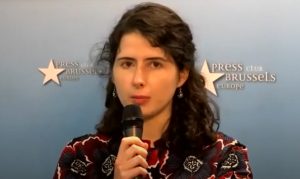
Index’s policy and campaigns manager Jessica Ní Mhainín
Speaking at the launch of the report, Index’s policy and campaigns manager Jessica Ní Mhainín highlighted cases of impunity in CoE’s report.
“Impunity for crimes against journalists refer to failure of states to identify, prosecute and punish anyone including the assailants and masterminds involved in committing a crime against a journalist,” she said. “Cultures of impunity contribute to self-censorship by making journalists more vulnerable to pressures out of fear of reprisals or harm.”
Some 35 cases of impunity have been registered on the platform since 2015 and two new impunity cases – those of Turkish journalist Uğur Mumcu, murdered in 1993, and Turkish-Cypriot journalist Kutlu Adalı, murdered in Cyprus in 1996 – were added to the impunity category during the year.
“In 2021, we welcomed the Slovak Supreme Court’s decision to overturn the not-guilty verdicts of the suspected masterminds of the 2018 murder of journalist Ján Kuciak and his fiancée Martina Kušnírová. The case will be heard in the Specialized Criminal Court later this year,” said Ní Mhainín.
Last year also saw the publication of a 438 page-report from the public inquiry into the assassination of investigative journalist Daphne Caruana Galizia, which concluded that the state of Malta “must bear responsibility for the assassination because it created an atmosphere of impunity”.
“We once again call on the Maltese authorities and the Commission of Experts to implement the recommendations of the Public Inquiry,” said Ní Mhainín.
Russia, Turkey and Ukraine account for 60% of all the cases relating to impunity on the platform. Last October marked the 15th anniversary of Russian journalist Anna Politkovskaya’s murder.
Ní Mhainín said, “The masterminds of her murder are still at large, sending the incredibly dangerous message that killing a journalist is a low-risk crime.”
Yet impunity is not restricted to these countries.
A BBC Spotlight investigation has uncovered serious concerns over the police investigation and the failure to prosecute those behind the murder of Irish journalist Martin O’Hagan, who was killed in September 2001 for his reporting on paramilitary activities in Northern Ireland. The concerns raised in the programme, which aired on 2 March 2022, came in the wake of several Police Ombudsman reports that uncovered collusive behaviour between the police and loyalists in Northern Ireland. According to the BBC’s investigation, police did not act on important information – including individual names – that were handed over to them within 48 hours of the murder. The journalist’s family are now taking legal action against the Police Service of Northern Ireland (PSNI) and the Ministry of Defence.
“Press freedom is the canary in the coal mine – it is a key indicator of the clear and worrying degree of democratic backsliding that is taking place across Europe,” said Ní Mhainín. “That’s why we once again call on Council of Europe member states to ensure that the highest priority is given to conducting thorough and transparent investigations into all crimes against journalists and we remind member states of the 2016 Recommendation of the Committee of Ministers which requires states ‘adopt appropriate criminal law provisions to prevent impunity’”
