25 Sep 2013 | India, News, Politics and Society
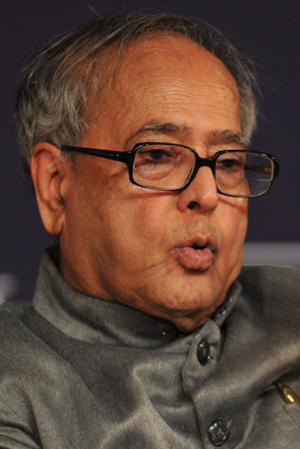
India’s President Pranab Mukherjee (Photo: Wikipedia)
In September 2013, India’s President Pranab Mukherjee spoke about the inviolable right to privacy that citizens of India must enjoy, at the annual event of the Central Information Commission (CIC), a body constituted by India’s Right to Information Act, 2005.
Both the Act and the CIC have empowered ordinary citizens to submit applications requesting information from government bodies, injecting a new phase of transparency in an infamously opaque bureaucracy. In fact, the RTI Act has been born of, and has encouraged, large RTI ‘movements’, that have exposed layers of corruption in numerous schemes across various government departments.
For citizens, the fact that a government official has to release information regarding budgets, forms, decisions and other facets of public governance has led to the belief that unchecked corruption might finally simmer down, and that they are not longer helpless against the system.
However, as the RTI movement has matured over the last decade, serious questions of privacy protection have also started making their way into public discourse. The Act itself excludes a number of security and police agencies from having to divulge any information, and private companies and NGOs do not fall under the Act.
However, political parties that do fall under the act are furiously trying to legislate their way out from under the scanner. In fact, this move, supported by the ruling government that helped bring in the RTI has attracted a lot of criticism and well earned scepticism from the public. In a report on the matter, one of India’s biggest English news channels, NDTV, wrote, “The government decided to amend the law after political parties opposed the Central Information Commission’s order in June that six political parties including the Congress and the BJP will be under the RTI as they were substantially funded by public money. This would mean political parties would have to disclose campaign funding or how members voted during a secret ballot.” Indicative of the mistrust between government and the public, the report was called ‘Divided on everything else, political parties unite against RTI Act.’
Therefore, when the conversation turns to a conflict between the right to information and privacy, in India, it can often become muddled. It can seem that wrongdoers might attempt to hide behind the excuse of ‘privacy’. However, there is no escaping that protecting individual privacy is a genuine concern.
Many countries across the world that have enacted national RTI Acts also have privacy laws that carefully spell out the limits to which information about individuals can be disclosed. In general, information about personal life, sometimes including medical information, is exempt from RTI. Should names be revealed from all official documents, are all court proceedings public? And finally, do some people necessarily lose some privacy because of a ‘public interest’ test?
The World Bank Institute released a paper that describes RTI and privacy as “two sides of the same coin, essential human rights in modern information society.” It also goes on to add that, “privacy laws can be used to obtain information in the absence of RTI laws and RTI can be used to enhance privacy by revealing abuses,” and that both have been designed for accountability.
India does not have a privacy law in place right now, although what should be in the law has attracted considerable debate. Therefore, the contours of privacy in the RTI gambit have resulted from various decisions and court orders given over the years. For example, in 2011, the then chief information commissioner of the CIC informed India’s Reserve Bank of India that it had to reveal information, even if it meant public confidence in the institution might be adversely affected. And, as recently as early September 2012, the Mumbai High Court ruled that “disclosure of personal information in respect of service record, income tax returns and assets of an individual is illegal unless it is necessary in larger public interest.” This judgement protected the individual against any disclosure that had nothing to do with public interest, but instead caused unwarranted invasion of privacy.
There have also been reports that some RTI applications are filed only to be a nuisance, with cases of RTI being used to blackmail public officials, with the threat of burying them under paperwork. In April 2013, one applicant was fined for filing over 100 applications.
Moving ahead, President Mukherjee’s speech indicated that public authorities should be proactive and voluntarily put information in the public domain for the use of citizens, effectively inculcating a culture of transparency from the beginning.
However, until that happens, one can assume that the citizen will most certainly have to rely on the RTI for full disclosure about its government’s activity, and the government will have to be wary of those using RTI applications for ulterior purposes. Most importantly, the individual right to privacy should not be lost in this paper war, between the two sides of the same coin.
This article was originally posted on 25 Sept 2013 at indexoncensorship.org
25 Sep 2013 | Uncategorized
Nelson Mandela’s legacy has been “too easily dismissed”, South African editor Nic Dawes tells Index on Censorship magazine in the latest issue.
In an interview for the magazine, Dawes, who has just left his job as editor at South Africa’s Mail & Guardian for a new job at the Hindustan Times, said: “His legacy is being brought back to us.”
South Africa was going through a phase when the people who brought us press freedom “now seek to restrict it”.
“We are going through a very classical process, what happens when a liberation movement has been in power for a while and starts to see its hegemony challenged and then reaches for a convenient lever to limit that challenge.”
Read the full interview with Nic Dawes in the new issue of Index on Censorship magazine.
Listen to the podcast below or click here.
25 Sep 2013 | News, Religion and Culture
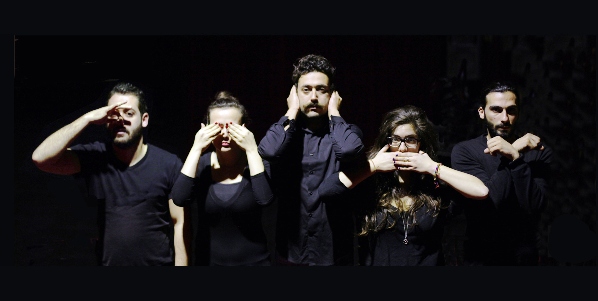
A publicity shot from Lucien Bourjeily’s latest play
Banning a work of art, a book or a play says more about a society and its temperament than anything else. As free speech and readers mark Banned Books Week, Index on Censorship magazine editor Rachael Jolley looks at Lebanon, where the country’s Censorship Bureau has recently flexed its muscles
In the past few weeks, Lebanese playwright Lucien Bourjeily has had his play Will It Pass or Won’t It? banned by his government. Ironically, the play is about censorship, specifically the process in Lebanon whereby plays are passed by the Censorship Bureau of the General Security Office — or not performed.
Bourjeily’s play dramatically challenged that process. But the censors did not see the funny side of his finger poking at a system that involves playwrights putting their words through the wringer of a censorship process, before being squeezed out again.
The censors came up with a variety of reasons why the play should not be shown, ranging from it not being “realistic” (surely missing the point of fiction there), to it not being good enough. Those in charge decided it was not for the people to decide whether it was worthy of their time, it was for them. And with that the play was to be banned.
Banning a work of art, a book or a play says more about the society and its temperament than anything else. Some nations are less than confident about themselves; they are clearly worried that if their ideas are questioned they will be weakened and their power diminished. Ban a book or a play if you worry that by talking an idea or a principle that discussion will somehow harm society. If you don’t worry about your values, principles or laws being discussed since you are perfectly willing and able to defend them, then there is no need for a work of art, book or play to be censored.
A robust, vibrant and creative society is a place where open discussions can take place, and Index on Censorship magazine, throughout its life, has often helped publish some important writings which were censored in other parts of the world, and smuggled out to Index. When the Soviet Union still existed, great thinkers there were censored and silenced, and Index helped their voices to be heard. Today it still seeks to help publish those whose words and ideas are silenced by their own governments. In its winter edition it will publish an extract from Bourjeily’s play so that readers can make up their own minds about whether it is worth performing.
Healthier societies do not hold back debates, even when they may disagree with them. They allow them oxygen to see how worthy of consideration they are. Ideas can shock or offend. Robust societies can cope with that, and even feel healthier for it.
Prodding and debating, as any writer, politician, thinker, inventor or scientist knows, is good for an idea or a thesis; it might be flawed, disproved or ignored. Or not. In the same way that scientists depend on their ideas being tested to see if they work and should be developed, leaders of nations should expect their proposals, their laws or processes to be prodded, debated and discussed. And that is what happens in a book or a play.
In a recent interview, Bourjeily said he felt that the Lebanese were treating their people as children, not allowing them to make their own decisions. Because of that, they were no longer expressing ideas in public, because of the consequences. They are self censoring, they are not exploring. None of that is good for any developing society. Inventors and scientists are attracted to those vibrant centres as are artists and writers. Across the world and throughout history those buzzing hives of thought have led the globe financially and culturally. As ever an open lively society attracts the world’s leading thinkers and creators, a place where censorship and fear is rife does not. Leaders of the world take note.
Rachael Jolley is editor of Index on Censorship, an award-winning magazine, devoted to protecting and promoting free expression. International in outlook, outspoken in comment, Index reports on free expression violations around the world, publishes banned writing and shines a light on vital free expression issues through original, challenging and intelligent commentary and analysis, publishing some of the world`s finest writers.
To mark Banned Books week, Index’s publisher SAGE has freed up access to the full archive of Index on Censorship through 28 Sept. Access articles here: http://ioc.sagepub.com/
This article was originally posted on Sage Connection
24 Sep 2013 | News, Uganda
(Photo illustration: Shutterstock)
In May this year, the Ugandan government closed two newspapers. The crime The Monitor and The Red Pepper newspapers committed was publishing a letter by the now renegade former Coordinator of Security Services, General David Sejusa, in which he claimed that President Yoweri Museveni was grooming his son Muhoozi Kainerugaba to succeed him. In the same letter, General Sejusa claimed that there was a plot to assassinate all army officers and senior government officials who are against the president’s succession plan.
The letter had been written to the Internal Security Organization (ISO) boss to investigate the allegations, but was leaked to the media. Despite this, the government went ahead and closed the two media houses which had run the story for two weeks. They were only allowed to reopen after meetings with the minister of internal affairs, where the editors were told that government would not hesitate to close the media houses for good if they did not stop “reporting irresponsibly.” These are the only privately owned dailies in the country.
This was not The Monitor’s first run-in with the government. At its inception in the early 1990’s, it was the only privately owned daily that competed with the government-owned New Vision. New Vision towed the government line as a mouthpiece and enjoyed all the advertising deals from all government ministries and agencies. The Monitor was totally denied all government adverts, with the intention of killing it off because it was the only paper that was questioning government decisions on different issues. It was the readership plus some support from private businesses that kept it alive. The African Centre for Media Excellence (ACME) has also criticised the paper and its sister FM station, KFM, for bending under government pressure. This came after it pulled down a critical story about the president, claiming that it had been badly written.
Print media is not alone in being targeted. During the 2009 riots that rocked Uganda, the government closed five privately owned FM radio stations reporting on it. Four of them were reopened after six weeks, after they had publicly apologised to the president and promised never to do that again. Central Broadcasting Services (CBS), however, was closed for over a year. It took a lot of pleading to the president from the media, church, monarchy and other wealthy and influential people to reopen CBS. Since it went back on air, most of the political discussions were bumped off air and some individuals who government felt were anti-establishment were barred from appearing as panelists on the different radio talk shows.
To add to the problem, the government also directly controls a wide range of media. New Vision is run under the government-owned Vision Group and is building up a powerful media conglomerate with four other newspapers publishing in local languages, three television stations, three radio stations in the capital Kampala, plus other local radio stations in at least all the other regions of the country. All these are strictly government mouthpieces, and management will not allow opposition politicians or activists to use these platforms to reach the masses. The national broadcaster, Uganda Broadcasting Corporation (UBC), which runs the national television station and a multitude of radio stations in the countryside, is also tightly under government control.
Furthermore, while Uganda is seen in the East African region as having the best and less repressive media legislation, the government has of late tended to make amendments to the existing media laws to make them restrictive. The African Media Barometer (AMB), which is made up of leading media practitioners in the country from private and government-owned media houses, as well as lawyers and representatives from civil society, reported in 2012 that there are a few positive developments in Uganda with the licensing of more print and electronic media outlets. However, AMB also notes that the media freedom declines ahead of elections as the government grows increasingly nervous and attempts to clamp down on freed speech. Private media houses, especially radio stations, also practice self-censorship in order not to annoy the powers that be.
Ibrahim Bisika from the government’s Media Centre says the friction between media and government arises out of “editorial mismanagement” where media houses publish stories that bring them in direct confrontation with government. Moses Serwanga, a director at the Uganda Media Development Foundation (UMDF) says that media freedoms in the country are getting curtailed because of the creeping political dictatorship where political leaders do not want to leave office.