19 Mar 2014 | Campaigns, Europe and Central Asia, United Kingdom
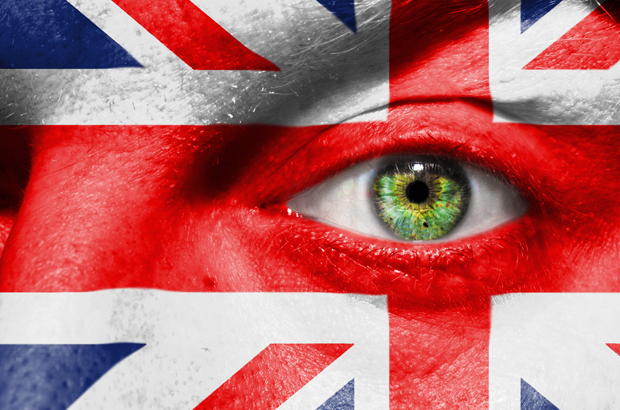
(Image: Semmick Photo/Shutterstock)
Restricting press freedom in the name of national security, the Royal Charter press regulator and the UK’s lack of constitutional guarantees for freedom of expression were only some of the things criticised in a new report by the World Association of Newspapers and News Publishers (WAN-IFRA). The organisation represents over 18,000 publications and 15,000 websites in over 120 countries.
Referring to the UK’s influence internationally WAN-IFRA says: “How changes to the system of press regulation are managed in the UK will have an unparalleled impact beyond its shores.” They fear that a regulator with government involvement — such as the Royal Charter — risks being “an open invitation for abuse” of press freedom in less democratic countries. The report in many ways echoes Index on Censorship’s position on press regulation and threats to press freedom in the UK.
The report comes after concerns were expressed by UK media and press freedom organisations over the state of press freedom following the Leveson debate, and the threats and pressure faced by the Guardian over their reporting on Snowden and mass surveillance, culminating in the destruction of hard drives in the Guardian’s basement overseen by GCHQ representatives. A delegation from WAN-IFRA travelled to the UK on a fact-finding mission in January.
The report agrees that the phone hacking scandal led to a major breach in public confidence in the press, but stressed that the vast majority of British journalists “adhere to professional standards”. It warns against conflating the hacking scandal with the regulatory debate, stressing that: “British law provides appropriate remedy for illegal activity in proven cases of wrongdoing.”
The report makes several heavy criticisms of the proposed Royal Charter system. Punitive damages, enshrined in statute, for not signing up to the regulator “defies any definition of ‘voluntary’ as understood by the WAN-IFRA delegation”. The report in particular says that it was quite inappropriate to develop a system of press regulation without the involvement of the industry in the final stages of discussion, when the government’s preferred Royal Charter was drawn up. The speed of implementation, the lack of legislative scrutiny, parliamentary vote or public consultation was criticised, with the report arguing the whole process should have been more transparent. “The Royal Charter system — used as an example or transposed elsewhere to countries lacking the United Kingdom’s historic commitment to human rights — risks an open invitation for abuse in other parts of the world,” it argues.
The report further states that claims of the Royal Charter being a “hands-offs” regulator is “undermined by the readiness of the UK government to intervene against the Guardian newspaper”. The treatment the Guardian has been subject to following their mass surveillance revelations was identified as a cause for concern. Prime Minister David Cameron’s claims that the reporting harmed national security, with no evidence to back this up, “suggest an unprecedented level of political interference in the freedom of the press”. The report states that he should distance his government from conflating terrorism with journalism. However, the recent court judgement finding the detention of David Miranda (partner of Glen Greenwald) legal under the UK’s Terrorism Act suggests that any positive response to this recommendation is unlikely. The report also criticised other publisher’s perceived lack of support for the Guardian, calling it a “low point” given “the apparent need for solidarity within the media fraternity”.
“If the UK government feels it is acceptable, in the name of national security, to dictate what is in the public interest, and given the UK’s continued influence over developing nations where media are essential for the spread of democratic values, the future of a free, independent press that can hold power to account is under threat worldwide,” said WAN-IFRA CEO, Vincent Peyrègne.
The report also expresses, among other things, worries over the arrests of journalists, criminalisation of social media, mass surveillance and proposals to introduce web filters.
Recommendations include urging the UK government “to step back from any further involvement – perceived or otherwise – in the regulation issue”, to defend and support public interest journalism, and encourage investigative reporting “as an essential benefit to society”.
This article was posted on 19 March 2014 at indexoncensorship.org
19 Mar 2014 | Campaigns, Europe and Central Asia, Statements, United Kingdom
Index welcomes the report by the World Association of Newspapers and News Publishers (WAN-IFRA) on the worrying state of press freedom in the UK. The WAN-IFRA report criticises the use of national security concerns to threaten and restrict investigative journalism, in particular the Guardian’s revelations and reporting on the Snowden mass surveillance scandal. WAN-IFRA also provides detailed analysis of the post-Leveson debate about press regulation, and challenges in particular both the involvement of politicians in the Royal Charter approach, the use of exemplary damages enshrined in statute for those who do not participate in a “voluntary”, Royal Charter-compliant press regulator, and the failure to bring the print industry on board in the final discussions around the Royal Charter.
Index CEO, Kirsty Hughes, said: “It is a sad day when the state of press freedom in Britain is so degraded that an international mission of editors and journalists finds so many concerns – from mass surveillance to politicians intervening in press regulation to national security being used to trump investigative journalism.”
She went on: “Index hopes that politicians from all parties will read and take very seriously this damning report – it should be a wake-up call to all those who see a free press as fundamental to our democracy.”
This statement was posted on 19 March 2014 at indexoncensorship.org
19 Mar 2014 | China, Digital Freedom

WeChat was the darling of the Chinese start-up scene, the sexy competitor to Weibo domestically, and Twitter and WhatsApp, on the global stage. The design of the website meant that freedom of speech was for a while preserved – mainly because messages between users remained relatively private and insulated from the wider internet. But Beijing has orchestrated a sudden clampdown on the service : closing several high-profile accounts, some with hundreds of thousands of followers.
When users access the banned accounts, a Chinese message appears, translated as:
Due to reports from users that have been confirmed, all functions for this public account have been shut down for violating regulations. We suggest you cancel your subscription.
Users operating the site in English received a slightly different message – notably without any mention of “We suggest you cancel the subscription.”
WeChat started as a messaging service – however in 2012 the company behind the app – Tencent, introduced public accounts so that subscribers could follow celebrities, brands and well-known journalists and media outlets.
All of these subscription-based accounts on WeChat come with a “report” button at the bottom right of the content page. Some accounts had hundreds of thousands of subscribers.
Tencent has not stated its reasons for shutting down the accounts. The Chinese authorities have previously warned users that “spreading rumours” online is a crime – “spreading rumours” being a euphemism for speculation about corruption amongst senior Chinese officials.
Users of WeChat had already reported that the app blocked certain sensitive words.
Analysts have said they are not surprised by the censorship – although admit that WeChat has survived longer than most websites in China without restrictions on freedom of speech.
“I don’t find the suspensions surprising, though it’s still disheartening,” Jason Ng, author of Blocked on Weibo and social media expert.
“It would’ve been foolish of authorities not to regulate WeChat, like they do all other social media when they clearly have the capability and the will to do so.” Ng added “The only thing holding them back perhaps was a lack of resources.”
Ng pointed to the original “insular nature” of WeChat messaging, meanig it was less likely for “rumours” to go viral. However since 2012, the introduction of “new public accounts had clearly changed the authorities assumptions [about WeChat]”.
Yunchao Wen, a freedom of speech activist and Chinese social media expert told Index
“The Chinese government have never leaves any permanent space for political expression – sometimes they don’t find them straight away, sometimes they’re too busy dealing with other issues, but they are always censored.”
Wen also stressed that more than two hundred people were jailed by the Chinese authorities over political or human rights issues in 2013, as well as suggesting that the news had been “buried” while journalists were distracted.
“They closed down the Wechat public accounts on the last day of 12th National People’s Congress, trying to make sure foreign journalists didn’t notice,” said Wen.
Speculating on whether the censorship campaign will have hit WeChat commercially, Ng was sceptical.
“I don’t think it’s hit them too hard; it was only 50 or so accounts.” Ng also quipped “One Lionel Messi commercial and this event will probably be forgotten,” referring to the high profile celebrites who are regularly featured on the site.
WeChat was launched in early 2011, reportedly attracting 100 million registered users in its first fifteen months. The company revealed that it had 270 million active monthly users, up 124% from the previous year.
Sina Weibo, a key competitor for WeChat, is gearing up for an IPO on the Nasdaq – targeted to raise $500m. However investors have been warned that China’s censorship policies may negatively affect business – with several paragraphs in their sales materials relating to censorship.
Sina Weibo faced similar censorship to WeChat in 2012, telling investors “we had to disable the comment feature on our platform for three days to clean up feeds related to certain rumors.” Users were speculating about a possible coup d’etat in Beijing.
This article was published on 19 March 2014 at indexoncensorship.org
19 Mar 2014 | Digital Freedom, News, Turkey
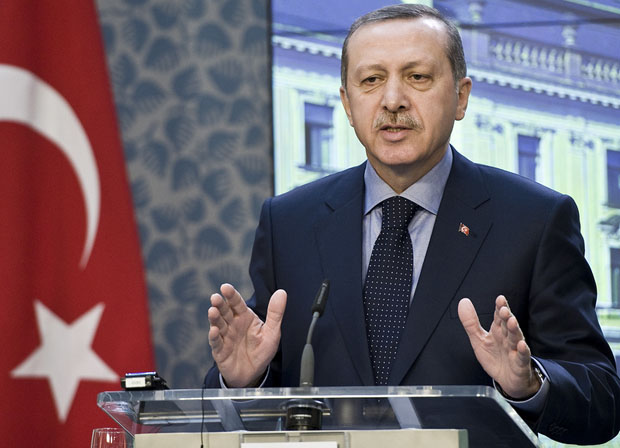
Turkish Prime Minister Recep Tayyip Erdogan (Photo: Philip Janek / Demotix)
In February, Turkish president Abdullah Gül prompted intense criticism when he approved restrictive new amendments to the law that regulates internet activity in Turkey, known as 5651. Since then, the Turkish government has continued to threaten internet freedom, placing added pressure on social media platforms. Earlier this month, prime minister Recep Tayyip Erdoğan suggested that his government could block access to Facebook and Youtube after municipal elections on 30 March.
With over 34 million Facebook active users, Turkey is among the top 15 countries on the platform, and both the prime minister and Gül each have over four million Twitter followers. One day after Erdoğan’s statement during a live television interview, Gül countered that blocking access to social media was out of the question. Last week, Erdoğan followed by backtracking on his own comments.
Considering the already strained relationship that Erdoğan’s government has to social media, the turnaround on his comments is still no promise that there may be less restrictions on internet freedom to come in Turkey. In recent months, a number of wiretapped telephone recordings, allegedly of Erdoğan’s conversations, have been leaked onto social media platforms, including YouTube, SoundCloud and Vimeo, suggesting the prime minister’s meddling in corruption and intimidation of mainstream media. On the day that Erdoğan’s television interview aired, a new phone conversation was leaked onto YouTube, purportedly featuring the prime minister berating the media magnate Erdoğan Demirören for coverage in his daily Milliyet of a 2013 peace talk with Abdullah Öcalan of the separatist Kurdish Workers’ Party (PKK).
Erkan Saka, an assistant professor at Istanbul Bilgi University and a researcher on new media, says
Erdoğan’s comments about Facebook and YouTube reflect his interest in controlling Turkish media. “Most of the mainstream media is already under their control, so this seems to be the only way now for people to express their opposition,” Saka said. With leaks appearing on video or audio sharing websites and spreading through Twitter and Facebook, social media platforms have become instrumental for circulating information related to the ongoing government corruption scandal.
Shutting down entire websites as Erdoğan suggested would mean going beyond the very recent amendments to law 5651 that make possible URL-based blocking of individual web pages ruled offensive, without restricting access to entire websites. YouTube was previously censored in Turkey for over two years after a video was posted on the site that was deemed insulting to Mustafa Kemal Atatürk, the founder of the Turkish Republic. Earlier this year, Vimeo and SoundCloud were both temporarily shut down within Turkey following leaks that were published on those websites. Lawmakers from Erdoğan’s party, the AKP, have defended the controversial new version of 5651 because it allows for an alternative to restricting access to entire websites. Supporters of the law claim that with URL-based page blocking, defamatory content can instead be removed selectively.
In the run up to the elections at the end of this month, the recurring leaks and violent protests around Turkey threaten to tarnish Erdoğan’s popularity with voters. Responding aggressively in the televised interview, Erdoğan’s derision of social media platforms is personal, tactical, and aimed to discredit the websites as a threat to internet users’ safety. “We will not leave this nation at the mercy of YouTube and Facebook,” the prime minister said in his interview with journalists on broadcaster ATV. Calling the websites immoral, Erdoğan added, “they don’t have limits.” By casting social media websites as damaging to all internet users in Turkey, Erdoğan set the stage for potentially restricting access to those sites on moral grounds. Even after correcting his statement, Erdoğan’s suggestion that social media platforms are a source of danger is in line with his government’s use of internet filtering programs and ad campaigns that portray the internet as debauched to justify restricted access to content it considers harmful.
Aside from facing access restrictions, websites operating from Turkey are forced to comply with other laws that compromise their users’ privacy. Sedat Kapanoğlu, founder of the popular satirical, user-generated online dictionary Ekşi Sözlük, says internet companies in Turkey are put under pressure by laws requiring them to share user data. “A successful platform must create a free environment which protects its users’ rights. We are not able to do that. We are forced to provide IP addresses to prosecution even for completely legal content,” Kapanoğlu said.
One of the social media websites that Erdoğan singled out in his interview, Youtube, which is owned by Google, has an office in Turkey, while other large platforms like Facebook, SoundCloud, Vimeo, and Twitter do not.
Although he later rescinded his original statement, Erdoğan’s recent threat is alarming because it shows that in Turkey’s precarious climate for media independence, it might be plausible for his government to increase control of social media. With elections approaching this month, Erdoğan is himself coming under more pressure to win votes while facing a corruption scandal playing out on social media. The amendments to 5651 already make it easier for the Turkish Directorate of Telecommunication (TİB) to remove web pages from the internet. As more leaks continue to emerge, there is a lingering risk of new restrictions targeting social media platforms that have been at the centre of freedom of speech debates in Turkey.
This article was posted on 19 March 2014 at indexoncensorship.org
