26 Mar 2018 | Awards, Fellowship, Fellowship 2018, News
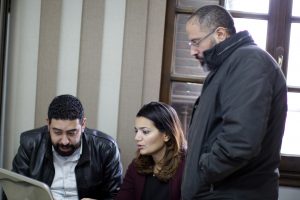
[vc_row][vc_column][vc_video link=”https://youtu.be/7kseuuaARZQ”][vc_column_text]The Egyptian Commission for Rights and Freedoms (ECRF) is one of the only human rights organisations still operating in a country increasingly hostile to dissent and in which countless civil society organisations have been forced to close. The commission coordinates campaigns for those who have been tortured or disappeared, as well as highlighting numerous incidences of human rights abuses.
“Our main goal to achieve in the future, which is stated in our mission, is to empower individuals to acquire their rights, promote a culture of democracy in the Egyptian society, and expand human rights to every home in Egypt,” ECRF told Index. “But in the end of the day we decide to carry out with our work regardless of the challenges because if everyone is silenced this would be the ultimate gain to the current regime, and the ultimate victory to Egypt’s state of fear.”
Between August 2016 and August 2017, the ECRF documented 378 cases of enforced disappearance many of whom were students. The cases of the disappeared are not reported in the heavily censored local media, and the commission’s website and social media sites are some of the few places their plight can be publicised, reported and mapped.
The highly restrictive and repressive environment Egypt has made it increasingly difficult for the organisation to do its work.
Their website was blocked in September in government measures designed to close the organisation down, but the ECRF managed to create a parallel website to maintain their presence and engagement with the public. Twice last year ECRF’s headquarters was raided by security forces with two staff members being arrested. As a result, the staff need help dealing with the risks of being arrested, as well as dealing with the interrogation process and knowing how to protect information.
Over the past 12 months the ECRF has been fighting censorship and defending human rights in two ways. The first is through the criminal justice programme which tackles issues of torture and enforced disappearances in Egypt. It has been particularly focused on the arrest of activists who took part in demonstrations against Egypt’s agreement to cede two uninhabited islands in the Red Sea to Saudi Arabia.
Secondly, ECRF has worked on challenging censorship imposed on student associations in universities. Recently the commission launched an online platform to bring students and practitioners online to discuss a student charter related to freedom of association in universities. The platform was heavily criticised by the ministry of higher education in Cairo, which led to further condemnation of it in official media outlets.
As a direct result of the work ECRF has carried out over the past year, there has been an increased awareness of enforced disappearances, media censorship, the scale of torture, and violations of freedom of association and expression in media and universities.
“ECRF is honored to be shortlisted alongside three peer organizations/campaigns also facing severe human rights challenges in their own countries,” said ECRF. “The international recognition of ECRF’s efforts in campaigning for fundamental freedoms emboldens its members and staff in their resilience to strive for human rights and democracy in Egypt. Regardless of the winner, progress towards equal rights in Russia means progress in Egypt and progress in Kenya means progress in Iran and vice-versa.”
See the full shortlist for Index on Censorship’s Freedom of Expression Awards 2018 here.[/vc_column_text][/vc_column][/vc_row][vc_row full_width=”stretch_row_content” equal_height=”yes” el_class=”text_white” css=”.vc_custom_1490258749071{background-color: #cb3000 !important;}”][vc_column width=”1/2″][vc_custom_heading text=”Support the Index Fellowship.” font_container=”tag:p|font_size:28|text_align:center” use_theme_fonts=”yes” link=”url:https%3A%2F%2Fwww.indexoncensorship.org%2Fsupport-the-freedom-of-expression-awards%2F|||”][vc_column_text]
By donating to the Freedom of Expression Awards you help us support
individuals and groups at the forefront of tackling censorship.
Find out more
[/vc_column_text][/vc_column][vc_column width=”1/2″ css=”.vc_custom_1521479845471{background-image: url(https://www.indexoncensorship.org/wp-content/uploads/2017/05/2017-awards-fellows-1460×490-2_revised.jpg?id=90090) !important;background-position: center !important;background-repeat: no-repeat !important;background-size: cover !important;}”][/vc_column][/vc_row][vc_row][vc_column][vc_basic_grid post_type=”post” max_items=”4″ element_width=”6″ grid_id=”vc_gid:1522065946315-a2955265-bb40-3″ taxonomies=”10735″][/vc_column][/vc_row]
26 Mar 2018 | Press Releases
 Od dnešného dňa je k dispozícii nový fond s prostriedkami v hodnote až 450 000 EUR na podporu cezhraničnej investigatívnej žurnalistiky v Európskej únii. Fond sprístupnil Európske centrum pre slobodu tlače a médií (ECPMF) a Medzinárodný tlačový inštitút (IPI).
http://www.ij4eu.net/
Fond Investigatívna žurnalistika pre Európu (#IJ4EU) má podporovať a posilňovať spoluprácu medzi novinármi a redakciami v Európskej únii na odhaleniach vo verejnom záujme, ktorých význam siaha za hranice jedného štátu. Cieľom fondu je podpora zisťovania skutočností ako jednej z úloh médií, ktoré sa majú podieľať na verejnej kontrole moci, a pomáhať verejnosti zabezpečiť, aby osoby v riadiacich pozíciách v štáte niesli zodpovednosť za svoje konanie a povinnosti. V rámci toho sa fond usiluje prispieť k udržateľnosti demokracie a práva v EÚ.
Fond bude spravovať organizácia IPI, čo je globálna sieť vydavateľov, riadiacich pracovníkov z oblasti médií a popredných novinárov, ktorá chráni slobodu tlače od roku 1950.
V roku 2018 sa môžu cezhraničné tímy investigatívnych reportérov a/alebo mediálne kanály z najmenej dvoch štátov EÚ uchádzať o granty v maximálnej výške 50 000 EUR, ktoré použijú na zisťovanie skutočností o téme, ktorá má cezhraničný význam a je vo verejnom záujme.
Cieľom navrhovaných projektov musí byť odhalenie nových informácií. O grant sa môžu uchádzať už existujúce investigatívne tímy, ako aj tie, ktoré boli založené na účely projektu #IJ4EU. Prostriedky môžu získať aj už prebiehajúce, no ešte neukončené zisťovania skutočností, aby mohol vzniknúť príbeh, ktorý sa dá publikovať. Obzvlášť vítané sú tímy novinárov alebo mediálne kanály, ktoré sa nachádzajú mimo hlavných alebo najväčších miest alebo v štátoch, v ktorých je investigatívna žurnalistika obzvlášť rizikovou činnosťou.
Program bude posudzovať možnosť financovania všetkých platforiem vrátane tlače, rozhlasu, internetových médií, tvorby dokumentárnych filmov a príbehov, pri ktorých sa využívajú viaceré platformy.
Podmienkou, aby navrhované projekty mohli získať financie, je ich zverejnenie (a dostupnosť v publikovateľnej forme) v renomovaných mediálnych kanáloch alebo na platformách aspoň v dvoch štátoch EÚ najneskôr do 31. decembra 2018.
Konečným termínom podávania prihlášok je 3. máj 2018, ktorý je zároveň Svetovým dňom slobody tlače. Prihlášky musia byť v anglickom jazyku. Uchádzači budú musieť uviesť podrobný opis projektu, informácie o investigatívnom tíme, plán výskumu a publikovania, rozpočet a hodnotenie rizík.
Projekty, ktoré získajú financie, vyberie nezávislá porota a zmluvy s úspešnými uchádzačmi by mali byť uzatvorené do 15. júna 2018.
Ak chcete podať prihlášku a prečítať si všetky informácie o spôsobilosti, prihláškach a výberovom procese, navštívte webovú lokalitu fondu.
„Investigatívna žurnalistika, ktorá plní základnú službu zabezpečujúcu fungovanie demokracie, je v celej EÚ pod tlakom,“ povedala výkonná riaditeľka inštitútu IPI Barbara Trionfiová. „Poskytovanie finančnej podpory investigatívnym projektom je spôsob, ako možno zaistiť, aby sa k verejnosti dostali informácie o takých témach, ako sú korupcia, finančná trestná činnosť, zneužívanie ľudských práv a poškodzovanie životného prostredia.“
Dodala: „Keďže takéto zisťovanie skutočností sa dnes len zriedka obmedzuje na jeden štát, pre tímy novinárov je kľúčové, aby ich práca na témach siahala za hranice. Sme hrdí, že vďaka fondu #IJ4EU budú mať takúto možnosť.“
For any questions, please contact:
Javier Luque
Head of Digital Media
IPI
Email: [email protected]
Tel.: +43 1 5129011
23 Mar 2018 | Events
[vc_row][vc_column][vc_column_text]
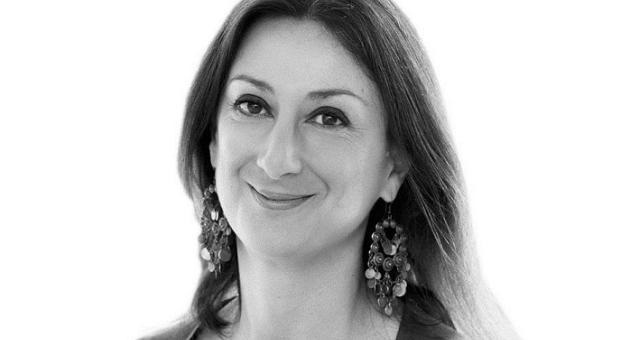
Daphne Caruana Galizia
On 16 April, we will be holding a vigil at Malta House in London to mark six months since Daphne Caruana Galizia’s murder and to continue calls for justice.
The vigil is co-sponsored by English PEN, Reporters Without Borders (RSF), Committee to Protect Journalists (CPJ), Index on Censorship and Il-Kenniesa.
#DaphneCaruanaGalizia #JusticeForDaphne #Malta[/vc_column_text][/vc_column][/vc_row][vc_row][vc_column][vc_column_text]
When: Monday 16 April 1-2 pm
Where: Malta House, 36-38 Piccadilly, W1J 0DP (Directions)
[/vc_column_text][/vc_column][/vc_row][vc_row][vc_column][vc_basic_grid post_type=”post” max_items=”12″ style=”load-more” items_per_page=”4″ element_width=”6″ grid_id=”vc_gid:1521822472254-d1afe82d-332d-10″ taxonomies=”18782″][/vc_column][/vc_row]
23 Mar 2018 | Campaigns -- Featured, Statements, Turkey, Turkey Statements
[vc_row][vc_column][vc_column_text]
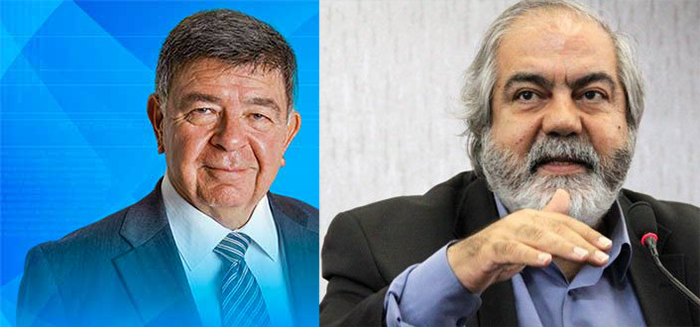
Şahin Alpay and Mehmet Altan
Turkey should immediately implement the judgments of the European Court of Human Rights (ECtHR) and release the veteran journalists Mehmet Altan and Şahin Alpay without delay, a coalition of nongovernmental groups said on 23 March 2018. Furthermore, Turkey must ensure that domestic remedies for human rights violations are effective, in particular by ensuring the urgent review of all cases of journalists and writers currently pending before its Constitutional Court.
The organizations, which had intervened as third parties in the cases before the court, included PEN International, ARTICLE 19, Committee to Protect Journalists, European Centre for Press and Media Freedom, European Federation of Journalists, Human Rights Watch, Index on Censorship, International Press Institute, International Senior Lawyers Project and Reporters Without Borders. The coalition welcomed the judgments announced on March 20, 2018. The rulings are the first by the court in the cases of journalists arrested and detained on charges in relation to the failed 2016 coup attempt in Turkey. They set an important precedent for the other cases of 154 detained journalists in Turkey.
“The Turkish government must take action to implement the European Court of Human Rights’ judgement. The ongoing trials are a serious breach of human rights and freedom of expression by the government. Turkey must cease its judicial harassment of journalists, academics and lawyers,” said Joy Hyvarinen, head of advocacy of Index on Censorship said.
In its two judgments, the European Court found violations of Article 10 of the European Convention on Human Rights, which protects the right to freedom of expression. The court made clear that criticism of governments should not attract criminal charges since, in addition to pre-trial detention, this would inevitably have a chilling effect on freedom of expression and would silence dissenting voices.
“We welcome these rulings, in particular the European Court’s recognition that a state of emergency must not be abused as a pretext for limiting freedom of expression,” said Carles Torner, executive director of PEN International.
While acknowledging the threat posed to Turkey by the attempted coup, the court crucially noted that “the existence of a ‘public emergency threatening the life of the nation’ must not serve as a pretext for limiting freedom of political debate, which is at the very core of the concept of a democratic society.”
The European Court has also found that the journalists’ detention was unlawful under the right to liberty protected by Article 5 (1) of the European Convention. The European Court endorsed the January 2018 ruling of Turkey’s Constitutional Court, which held that there was not sufficient evidence to keep the defendants in detention and ordered their release.
The judgment further sharply criticized the lower courts for refusing to carry out the Constitutional Court’s decision. In particular, the applicants’ continued pre-trial detention raised serious doubts as to the ability of the domestic legal system in providing an effective remedy for human rights violations, stating: “For another court to call into question the powers conferred on a constitutional court to give final and binding judgments on individual applications runs counter to the fundamental principles of the rule of law and legal certainty.”
“We welcome the court’s finding that the right to liberty of the applicants was violated,” said Caroline Stockford, Turkey Advocacy Coordinator for the International Press Institute. “The Court rightly criticised the refusal by the lower domestic courts to implement the Turkish Constitutional Court’s decisions and to release Mehmet Altan and Şahin Alpay.”
The European Court decided not to examine the applicants’ complaint that the detention of the applicants was politically motivated, under Article 18 of the convention.
“In deciding not to rule on Article 18, the European Court dodges an important question at the core of this litigation, which is whether Turkey’s prosecutions of journalists just for doing their work is part of a larger campaign to crack down on independent journalism?”, said Torner.
“The decision stated that ‘the investigating authorities had been unable to demonstrate any factual basis’that indicate that both journalists had committed the offenses with which he was charged’. The Court repeats what we have been saying with our affiliates for years to Turkish authorities that journalism is not a crime and journalists, like writers or academicians in the country, must not be prosecuted for their work or opinions,” said Ricardo Gutiérrez, EFJ General Secretary.
What the judgments mean for other cases
The judgments contain some important statements of principle on unlawful detention and freedom of expression. In particular, the European Court emphasised that it is not permissible to prosecute individuals on the basis of expression that is critical of the government.
However, in practice, the judgments also imply that the European Court will wait for the Constitutional Court to rule on the other pending cases of Turkish journalists before proceeding to its own review. This is because the European Court still considers the Constitutional Court an effective remedy in general.
Although the European Court was prepared to accept the length of time the Constitutional Court took to review these cases, the judgment is effectively putting the Constitutional Court on notice, saying that it will keep the situation under review and that it cannot continue taking this long to decide on cases.
The coalition repeats its call for the immediate implementation of these two judgments and for the release of Mehmet Altan from prison and Şahin Alpay from house arrest.
“These judgments are an important affirmation of the right to free expression and clearly state that the state of emergency is not a good enough reason to hold journalists and writers in detention for what they say,” said Gabrielle Guillemin, Senior Legal Officer at ARTICLE 19. “The Turkish authorities must now immediately release them both and the Turkish courts should apply these principles to the many other cases of detained journalists in Turkey,” she added.
[/vc_column_text][/vc_column][/vc_row][vc_row][vc_column][vc_basic_grid post_type=”post” max_items=”12″ style=”load-more” items_per_page=”4″ element_width=”6″ grid_id=”vc_gid:1521808770518-0e88bc5e-2722-5″ taxonomies=”8862″][/vc_column][/vc_row]
