NEWS

Why doesn’t the UK stand up for its overseas detainees?
Our fears the British government will abandon Brits jailed in Dubai for exercising free speech
02 Apr 2026

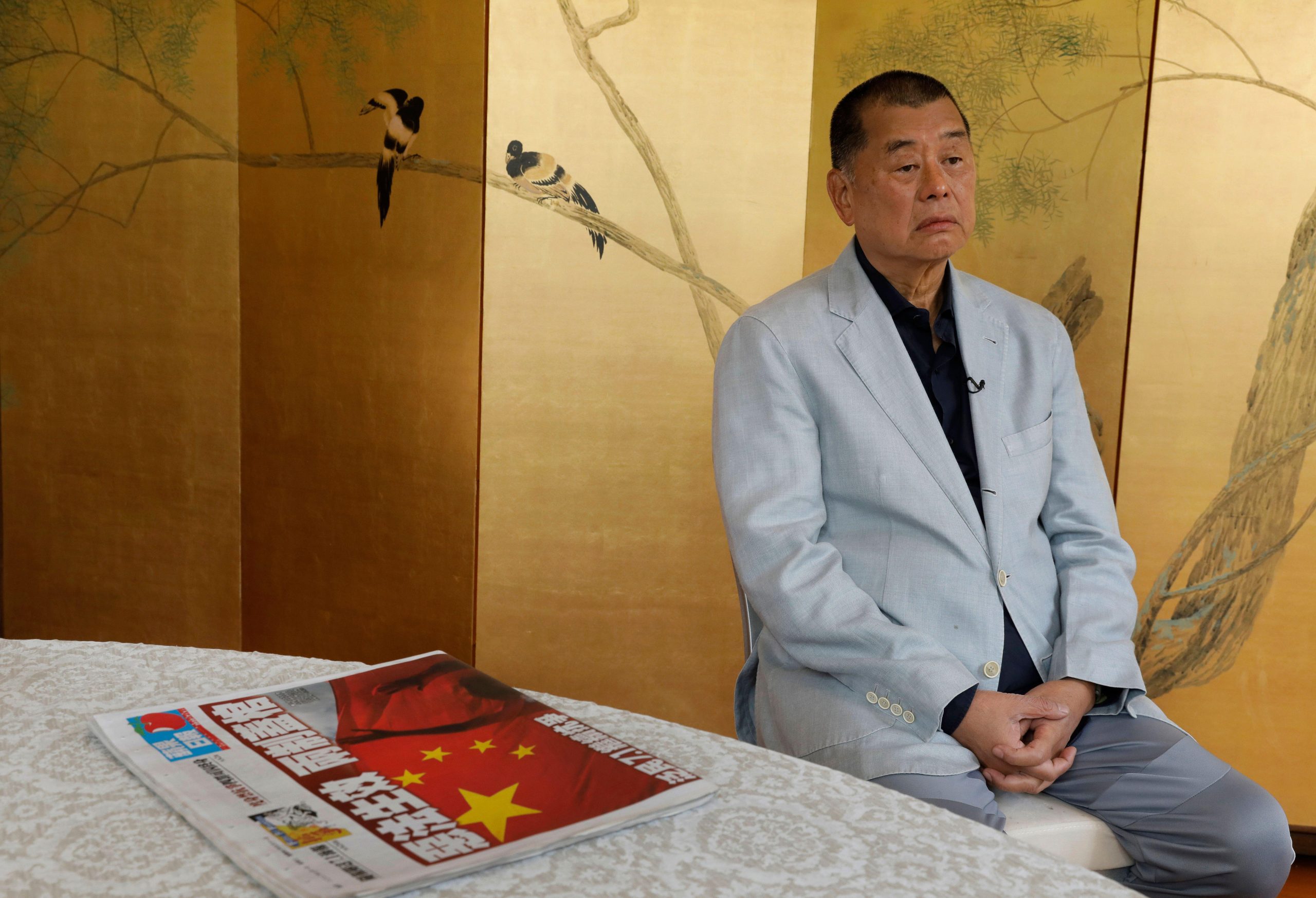
Hong Kong media tycoon Jimmy Lai, the publisher of shuttered Hong Kong newspaper Apple Daily, during an interview in 2020. Photo: AP Photo/Vincent Yu/Alamy

For simply documenting Iranian attacks, hundreds of people have been detained in the United Arab Emirates, all charged under the UAE’s draconian cybercrime laws. They could be jailed for life. Around 70 of those are UK citizens. There should be an outcry from our government. But is there? No, none. No minister has made a public statement condemning the arrests. Instead the Foreign Office has issued statements like this one calling the Gulf countries “our partners” and ones along these lines that offer support to get overseas Brits home – that is, those who aren’t in prison. According to the Foreign Office’s own admission, it’s only offering consular assistance to a select few of the 70 incarcerated.

The families of those detained are now voicing their frustration and calling the response inadequate. They’re right but sadly their cries are likely to fall on deaf ears. I cannot tell you the number of meetings and conferences I’ve attended with current and former hostages and their families to discuss the UK government’s woeful response to the plight of people held abroad. Sebastian Lai and a legal team at Doughty Street Chambers have been asking the British government for years to put pressure on China to release Jimmy Lai, who’s been held since 2020; the relatives of Jagtar Singh Johal, a human rights defender from Dumbarton in Scotland held by the Indian government, have been campaigning even longer. Both men are British nationals. The UK should have moved mountains to get them home. But no government has even moved a mound.

It’s a trend that goes back decades. Jill Morrell became a fixture of the news in the 1980s after her boyfriend, British journalist John McCarthy, was kidnapped in Beirut. While he was eventually released, he lost years of his life to jail and it was the dogged persistence of Morrell which forced ministers to act.

We should be ashamed by all this, even more so when you consider that countries like Ireland and Australia have a better track record. I could joke that a British passport might get you into lots of countries but it sure as hell won’t get you out of them.  Except it’s not the remotest bit funny.

2023 report by the foreign affairs select committee, which took evidence from Richard and Nazanin Zaghari-Ratcliffe and the families of other political prisoners, condemned the Foreign Office’s attitude as secretive, inconsistent and built on an erroneous belief that quiet diplomacy works. Three years on and it’s hard to see any change.

Why exactly are we so callous about our political prisoners abroad? We at Index simply don’t know, though we do have theories (prioritisation of trade over human rights, the diminishing stature of Britain on the global stage, political football around dual nationals, a fear of giving in to hostage-taking – to list four). All we know for certain is the terrible impact of our policy on those incarcerated and on their families.

What a sorry state. We have a group of people languishing overseas for simply exercising their free expression rights, and successive governments including our current one which appear unwilling to defend their right to do so.


Support free expression for all


At Index on Censorship, we believe everyone deserves the right to speak freely, challenge power and share ideas without fear. In a world where governments tighten control and algorithms distort the truth, defending those rights is more urgent than ever.

But free speech is not free. Instead we rely on readers like you to keep our journalism independent, our advocacy sharp and our support for writers, artists and dissidents strong.

If you believe in a future where voices aren’t silenced, help us protect it.

Make a £10 monthly donation

At Index on Censorship, we believe everyone deserves the right to speak freely, challenge power and share ideas without fear. In a world where governments tighten control and algorithms distort the truth, defending those rights is more urgent than ever.

But free speech is not free. Instead we rely on readers like you to keep our journalism independent, our advocacy sharp and our support for writers, artists and dissidents strong.

If you believe in a future where voices aren’t silenced, help us protect it.

Make a £20 monthly donation

At Index on Censorship, we believe everyone deserves the right to speak freely, challenge power and share ideas without fear. In a world where governments tighten control and algorithms distort the truth, defending those rights is more urgent than ever.

But free speech is not free. Instead we rely on readers like you to keep our journalism independent, our advocacy sharp and our support for writers, artists and dissidents strong.

If you believe in a future where voices aren’t silenced, help us protect it.

Make a £10 one-off donation

At Index on Censorship, we believe everyone deserves the right to speak freely, challenge power and share ideas without fear. In a world where governments tighten control and algorithms distort the truth, defending those rights is more urgent than ever.

But free speech is not free. Instead we rely on readers like you to keep our journalism independent, our advocacy sharp and our support for writers, artists and dissidents strong.

If you believe in a future where voices aren’t silenced, help us protect it.

Make a £20 one-off donation

At Index on Censorship, we believe everyone deserves the right to speak freely, challenge power and share ideas without fear. In a world where governments tighten control and algorithms distort the truth, defending those rights is more urgent than ever.

But free speech is not free. Instead we rely on readers like you to keep our journalism independent, our advocacy sharp and our support for writers, artists and dissidents strong.

If you believe in a future where voices aren’t silenced, help us protect it.

Donate a different amount

Jemimah Steinfeld

Jemimah Steinfeld has lived and worked in both Shanghai and Beijing where she has written on a wide range of topics, with a particular focus on youth culture, gender and censorship. She is the author of the book Little Emperors and Material Girls: Sex and Youth in Modern China, which was described by the FT as "meticulously researched and highly readable". Jemimah has freelanced for a variety of publications, including The Guardian, The Telegraph, The Independent, Vice, CNN, Time Out and the Huffington Post. She has a degree in history from Bristol University and went on to study an MA in Chinese Studies at SOAS.

READ MORE

CAMPAIGNS

SUBSCRIBE

SUPPORT INDEX'S WORK