Every year, as 4 June approaches, an old ritual unfolds in China.
Censors spring into action. Social media posts disappear. Searches for “Tiananmen”, “June Fourth”, “1989”, and even more cryptic references are scrubbed from the internet. Activists are placed under surveillance, or sent on forced holidays. Foreign journalists gather in Hong Kong, Taipei, London and Washington to commemorate an event that officially never happened.
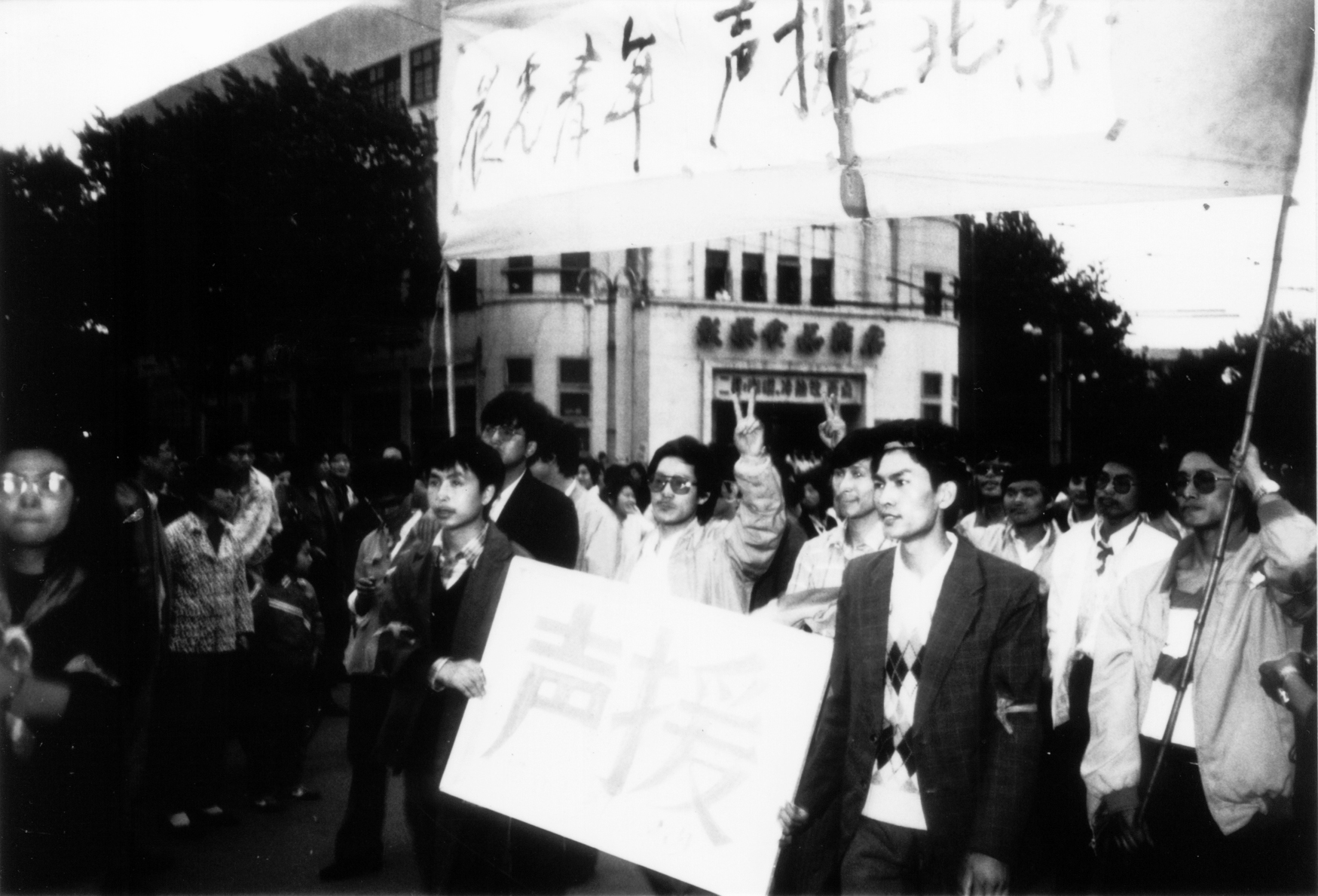
For more than three decades, the Party has tried to erase the memory of Tiananmen. The effort itself suggests how deeply it remains haunted by it. I know because I was there. Not in Tiananmen Square itself, but in Nanjing, where I was a 25-year-old factory worker. Like millions of Chinese, I watched events unfold with excitement and hope. The student demonstrations soon spread beyond the universities. People from all walks of life joined in. I organised a large protest by workers from my missile factory in support of the students. For the first time in my life, I felt history opening before me. My fellow protesters and I believed that ordinary people could help shape our country’s future.
Then, in the darkness before dawn on 4 June, came the sound of gunfire. The movement was crushed. The hopes of a generation were shattered. Like many others, I learned a painful lesson about the limits of political change in China.
What has fascinated me ever since is not only the crackdown itself but the Chinese Communist Party’s determination to erase it from public memory. The campaign has been remarkably successful. Many young Chinese know little or nothing about Tiananmen. Some have never heard of it. Others know only fragments.
In 2013, shortly before Xi Jinping came to power, when the political atmosphere was still somewhat more relaxed than it is today, I gave a book talk attended by university students. Afterwards, an earnest-looking young man approached me.
“Did the government really open fire on the students on 4 June 1989?” he asked. “That was just Western propaganda, wasn’t it?”
I have often been struck by the gap between my memories and their knowledge.
Personally, I have never regretted what I did in 1989. I was repeatedly interrogated by the police and suspended from work, yet it remains the most meaningful thing I have ever done in my life. It shaped not only my understanding of China but also a lifelong fascination with politics and power.
Looking back, I do not see 4 June simply as a tragedy. I also see it as a watershed. The movement arose not only from a desire for democracy and human rights, but also from widespread frustration with everyday life. Corruption was rampant, inflation was rising, and personal freedom was limited.
The Party’s response was twofold. Politically, it tightened control. Economically, however, it accelerated reform and gradually gave people more personal freedom. Chinese citizens today can choose where to live, what careers to pursue and, to a much greater extent than before, how to live. The cage remains, but it has grown so large that many no longer feel its bars.
In that sense, the protests of 1989 were not an absolute failure. Some of the grievances that fuelled it were addressed. Without that shock, China’s rulers might never have felt compelled to expand the cage.
The Party may have defeated the movement, but it has never fully escaped its legacy. It fears Tiananmen not because it threatens its power today. China’s young people are more likely to worry about jobs, housing prices and economic uncertainty than political reform.
What Tiananmen represents, however, is a challenge to the Party’s preferred narrative. The official story of modern China is one of stability, prosperity and national rejuvenation under Communist rule. Tiananmen reminds people that there was another possible path, and another vision of China’s future.
When I was young, the Chinese government encouraged us to remember past humiliations and injustices. It understood that memory shapes identity. The same principle applies to Tiananmen. An event of such magnitude cannot be permanently erased. It survives in family stories, private conversations, overseas communities, memoirs and fragments of testimony.
Now, 37 years later, the Party may have largely succeeded in making Tiananmen invisible. It has not succeeded in making it irrelevant. The impulses that brought people onto the streets in 1989 have not entirely disappeared. The desire for dignity, fairness and a voice in public life still surface quietly: parents challenging school policies on WeChat, residents petitioning local authorities over pollution or land disputes, women speaking out despite the risks. These are not movements in any formal sense, but they reveal something persistent – a wish to be heard. When repression goes too far, people are willing to push back, as seen in the White Paper Movement of late 2022, spontaneous protests which erupted nationwide against suffocating Covid rules.
For me, the events of 1989 remain a reminder of a moment when millions of Chinese briefly imagined a different future. The tanks ended that dream, but they did not entirely extinguish the questions that inspired it.
That is why, every June, the censors return to work. Not because Tiananmen is remembered too much, but because it is remembered at all.