5 Jun 2019 | Australia, Campaigns -- Featured, Media Freedom, Statements
[vc_row][vc_column][vc_single_image image=”107111″ img_size=”full”][vc_column_text]Index on Censorship condemns the raid by Australian federal police on the offices of public broadcaster ABC over a 2017 article it ran in on operations of Australian special forces in Afghanistan.
The search warrant named three ABC journalists — news director Gaven Morris, Daniel Oakes, Samuel Clark — and gives police wide-ranging powers, including the power to “add, copy, delete or alter” material in the ABC’s computers. Thousands of documents are being sought by police in the raid.
“The power of this warrant is terrifying,” said Index chief executive Jodie Ginsberg. “Protection of journalistic sources is one of the basic conditions for press freedom – and the huge scope of this warrant puts that at risk.”
The federal police said it was investigating “allegations of publishing classified material, contrary to provisions of the Crimes Act”.
The raid comes a day after the federal police searched the home of Annika Smethurst, a News Corp political editor, over articles she published on plans to expand Australia’s domestic surveillance capabilities.
Last week, the High Court in Belfast, Northern Ireland ruled that warrants against two Northern Irish journalists whose homes and office were raided by police last year were “inappropriate”. Three days later, the criminal investigation into Trevor Birney and Barry McCaffrey was dropped.
Birney and McCaffrey produced a documentary No Stone Unturned, which examines claims of state collusion in the murders of six men. During the Northern Irish raid, police seized documents, personal computers and USB sticks belonging to family members and copied a computer server that contained years of sensitive reporting by the documentary makers, risking endangering confidential sources unrelated to the film.
Index on Censorship and colleagues English PEN intervened in the judicial review of the case, noting the “chilling effect” of such orders, which were “likely to have the effect of intimidating journalists throughout Northern Ireland and further afield.”[/vc_column_text][vc_basic_grid post_type=”post” max_items=”4″ element_width=”6″ grid_id=”vc_gid:1559725317075-72546647-22cf-1″ taxonomies=”6534″][/vc_column][/vc_row]
11 Apr 2017 | Awards, News
[vc_row][vc_column][vc_column_text]
Iranian Kurdish journalist Behrouz Boochani fled the city of Ilam in Iran in May 2013 after the police raided the Kurdish cultural heritage magazine he had co-founded, arresting 11 of his colleagues. He travelled to Australia by boat, intending to claim asylum, but less than a month after arriving he was forcibly relocated to a “refugee processing centre” in Papua New Guinea that had been newly opened.
Imprisoned alongside nearly 1,000 men who have been ordered to claim asylum in Papua New Guinea or return home, Boochani has been passionately documenting their life in detention ever since. Publicly advertised by the Australian Government as a refugee deterrent, life in the detention centre is harsh. For the first 2 years, Boochani wrote under a pseudonym. Until 2016 he circumvented a ban on mobile phones by trading personal items including his shoes with local residents. And while outside journalists are barred, Boochani has refused to be silent, writing numerous stories via Whatsapp and even shooting a feature film with his phone.
“I have never stopped thinking and working as a journalist. Despite attempts to silence me, I have not been silenced,” Boochani told Index on Censorship.
See the full shortlist for Index on Censorship’s Freedom of Expression Awards 2017 here.[/vc_column_text][/vc_column][/vc_row][vc_row full_width=”stretch_row_content” equal_height=”yes” el_class=”text_white” css=”.vc_custom_1490258749071{background-color: #cb3000 !important;}”][vc_column width=”1/2″][vc_custom_heading text=”Support the Index Fellowship.” font_container=”tag:p|font_size:28|text_align:center” use_theme_fonts=”yes” link=”url:https%3A%2F%2Fwww.indexoncensorship.org%2Fsupport-the-freedom-of-expression-awards%2F|||”][vc_column_text]
By donating to the Freedom of Expression Awards you help us support
individuals and groups at the forefront of tackling censorship.
Find out more
[/vc_column_text][/vc_column][vc_column width=”1/2″ css=”.vc_custom_1490258649778{background-image: url(https://www.indexoncensorship.org/wp-content/uploads/2016/04/donate-heads-slider.jpg?id=75349) !important;background-position: center !important;background-repeat: no-repeat !important;background-size: cover !important;}”][/vc_column][/vc_row][vc_row][vc_column][vc_basic_grid post_type=”post” max_items=”4″ element_width=”6″ grid_id=”vc_gid:1491903256509-6b1bda87-09b9-1″ taxonomies=”8734″][/vc_column][/vc_row]
15 Feb 2017 | Awards
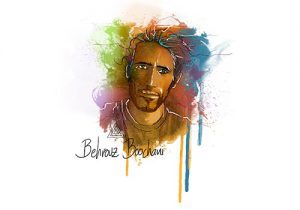
Behrouz Boochani has been shortlisted for a 2017 Index on Censorship Freedom of Expression Award in the journalism category.
Australia’s Media Entertainment Arts Alliance launched a campaign to open Australia’s borders to the Index Award-shortlisted Kurdish-Iranian journalist Behrouz Boochani, who is currently interned in Papua New Guinea.
The alliance is calling for the Australian government to resettle Boochani, along with actor Mehdi Savari and cartoonist ‘Eaten Fish’, from the Manus Island immigration detention centre to Australia.
“We believe that to continue to detain these three individuals without charge or trial undermines freedom of expression and the right to seek asylum”, according to a statement on the alliance’s website. “We urge you to allow them to be resettled in Australia so that they can live, work and contribute to Australian society.”
Boochani has been shortlisted in the journalism category of the 2017 Index on Censorship’s Freedom of Expression Awards. Winners will be announced in April.
Boochani, who has been held at the detention centre since 2013, fled the city of Ilam in Iran after police raided the magazine he had co-founded, Kurdish Cultural Heritage. After less than a month in Australia he was forcibly relocated to the newly opened “refugee processing centre” in Papua New Guinea.
Preferring not to return home, Boochani reluctantly claimed asylum in Papua New Guinea alongside nearly 1000 other prisoners hoping to make it to Australia’s mainland. He has done his best to continue writing by passionately documenting his life in the restricted detention centre.
“I have never stopped thinking and working as a journalist”, says Boochani. “Despite attempts to silence me, I have not been silenced.”
He circumvented a ban on cell phones until 2016 by trading with the local residents in Papua New Guinea. Boochani was able to write many stories via the messenger app Whatsapp, even finding the time and space to shoot a feature film on his phone.
More than 100 journalists, actors, writers and cartoonists have collaborated in writing to the prime minister and immigration minister requesting that Boochani, Savari and Eaten Fish be resettled in Australia as soon as possible.
“WE, the undersigned, write as journalists, writers, cartoonists and performers to urge you to allow our colleagues Behrouz Boochani, Mehdi Savari, and ‘Eaten Fish’ to be resettled in Australia.
All three men have sought protection as refugees from Iran and are currently detained at the Manus Island Regional Processing Centre in Papua New Guinea which is operated on behalf of the Australian Government.
Well into the fourth year of their ordeal on Manus Island, and with delays and uncertainties in relation to any US resettlement deal, the three men remain in limbo. To varying degrees, the years of detention have severely impacted their mental and physical health.
- Behrouz Boochani, 33, is a Kurdish journalist. He has worked as a journalist and editor for several Iranian newspapers. On February 17, 2013, the Islamic Revolutionary Guards Corps ransacked his offices in Ilam and arrested 11 of Boochani’s colleagues. Six were imprisoned. He has courageously continued to work as a journalist while in detention, and is a regular contributor to publications in Australia and overseas, often reporting on the situation and conditions on Manus Island. He has been recognised as a refugee and we urge you to allow him to reside in Australia to resume his career as a journalist. Boochani is a Main Case of PEN International, and has been recognised as a detained journalist by Reporters Without Borders. (RSF)
- Mehdi Savari, 31, is an Ahwazi Arab performer. As an actor, he has worked with numerous theatre troupes in many cities and villages in Iran, and performed for audiences in open public places. He was also well-known as the host of a satirical children’s TV show before fleeing Iran. Mehdi is a person of short stature and has met with severe discrimination over his life. His dwarfism has been exacerbated by the conditions and his treatment on Manus Island over the last three years, and he continues to suffer a range of physical ailments and indignities, as well as regular bouts of depression and chronic pain. As he has also been recognised as a refugee, we urge you to facilitate his resettlement in Australia. We also refer you to a resolution passed by the International Federation of Actors congress in Sao Paulo, Brazil, in September calling for his release from detention.
- Eaten Fish, 24, is a cartoonist and artist who prefers to be known by his nom-de-plume. He has recently received Cartoonists’ Rights Network International’s 2016 award for Courage in Editorial Cartooning. His application for refugee status has not been assessed. Since he was detained at Manus Island, he has been diagnosed with mental illnesses which have been compounded by his incarceration. We urge you to allow him to live in Australia until the final status of his claim can be determined.
As journalists, cartoonists, writers and performers, we are aware that the rights we enjoy are matched by a responsibility to challenge and confront tyranny and wrongdoing, to bear witness and uphold truth, and to reflect our society, even if sometimes unfavourably. We are privileged that in Australia we are able to pursue these ends without fear of persecution or threat to our personal liberty.
We believe that to continue to detain these three individuals without charge or trial undermines freedom of expression and the right to seek asylum. All three have courageously continued to practice their vocations on Manus Island despite their incarceration. We urge you to allow them to be resettled in Australia so that they can live, work and contribute to Australian society.
MEAA is joined in this letter by the the International Federation of Journalists, the International Federation of Actors, Reporters Without Borders, the Cartoonists’ Rights Network International, PEN International and members of the global network of the International Freedom of Expression Exchange.
We urge you to give the cases for resettlement of these three men serious consideration.”
5 Aug 2014 | Australia, Digital Freedom, News, Politics and Society
(Image: Shutterstock)
A piece of proposed legislation in the senate in Australia is attempting to wrestle with the legacy of the Snowden leaks with potential implications for media freedom.
In late 2013 information was released to the world that revealed the depth and breadth of the covert architecture in place to monitor and harvest personal data. The unprecedented capabilities and actions of surveillance agencies the world over ignited debate around the nature of privacy in our digital age. But the emergence was not manufactured by the security apparatus or by governments; it was the result of leaked information being published by the press.
Now, a new law proposed by Attorney-General, George Brandis, the National Security Legislation Amendment Bill (no.1) outlines a number of reforms to “modernise and improve” Australia’s capabilities to tackle national security threats. If passed, it could have significant implications for Australian media.
The creation of Special Intelligence Operations (SIO) – covert operations that offer limited immunity for its participants to engage in unlawful conduct – as well as the expansion of computer access warrants are among the sweeping reforms contained within the bill.
Further reforms outline new offences for “unauthorised dealings with an intelligence-related record, including copying, transcription, removal and retention”. But as highlighted by publications such as The Guardian, the Australian Lawyers Alliance (ALA) and members of the opposition, including Greens Senator Scott Ludlam, the bill opens up the possibility for criminal culpability to lie beyond the security operatives dealing with intelligence-related records, to journalists and media outlets who report on information they receive about SIOs. The bill’s explanatory memorandum states that the offence applies to:
“[D]isclosures by any person, including participants in an SIO, other persons to whom information about an SIO has been communicated in an official capacity, and persons who are the recipients of an unauthorised disclosure of information, should they engage in any subsequent disclosure.”
The transcript of the bill’s second reading demonstrates Brandis’s opinion of Snowden, dismissing him as a “so-called ‘trusted insider’” (he has previously referred to the NSA whistle-blower as an “American traitor”). But while he has stated that the bill is not intended to threaten media outlets or limit media freedom, the wording of the bill has set alarm bells ringing. Quoted in The Guardian, ALA spokesperson Greg Barns stated that this bill “takes the Snowden clause and makes it a Snowden/Assange/Guardian/New York Times clause.”
He goes further, explaining how the structure of approving SIOs, threatens media coverage: “ASIO [Australian Security Intelligence Organisation] could secretly declare many future cases to be special intelligence operations. This would trigger the option to prosecute journalists who subsequently discover and report on aspects of these operations.” This lack of clarity in the wording of the bill, as well as the limited oversight as to how the bill can be used – political appointees have the final say – sets a precedent for potential restrictions on media freedom both in Australia and, as a template for action, globally.
The size and scale of the surveillance network, involving governments worldwide, most notably the “five eyes” countries, the US, UK, Canada, New Zealand and Australia raises uncomfortable questions, with no forthcoming answers. The reforms proposed by Brandis seem to suggest that the best way of satisfying these questions is to ensure they are not asked in the first place.
Restricted by inadequate whistle-blower protections, due in part to his status as a private contractor, as well as the national security implications of the leaked documents, reaching out to the media provided to be the sole outlet for Ed Snowden. But it seems now that it could be the media who will be punished for such inadequate protections.
After two readings in the Senate, the bill is poised to be debated in September. And although Brandis has set his sights elsewhere, having mentioned data retention in an interview to ABC, the precedent set by Australia, were this bill to pass, could resonate throughout the world. Scott Ludlam outlined his concern: “I can’t see anything that conditions it or carves out any public interest disclosures. I can’t see anything that would protect journalists.”
This concern does not seem to be shared across the political spectrum. The Australian Prime Minister, Tony Abbott called on journalists for a “sense of responsibility, a sense of national interest”, and the Liberal senator, Cory Bernardi went further by stating that “we need to make sure the press are free to report within the constraints of what is in, I’d say, the national interest”.
Would protecting national interests include the refusal to publish information surrounding the allegations that the Defence Signals Directorate, or DSD, (now called the Australian Signals Directorate) attempted to monitor the calls of the Indonesian president, his wife and senior politicians? What about the DSD’s desire to share harvested online data (or “unminimised” metadata) with other governments without any privacy restraints?
If decisions such as these are left to those who define the role of the press as one of propagating national interests, then the freedom that Bernadi speaks of is surely no freedom at all.
This article was published on August 5, 2014 at indexoncensorship.org
