6 Sep 2017 | Austria, Awards, Europe and Central Asia, News
[vc_row][vc_column][vc_column_text]
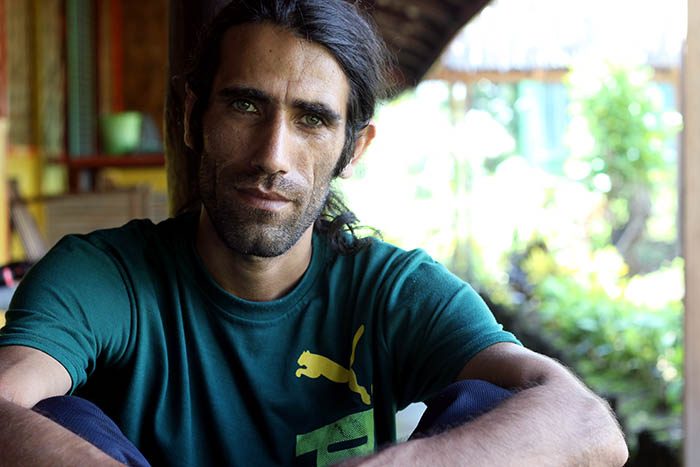
Behrouz Boochani, Manus Island
Manus Island is the location of a controversial detention centre which the Australian government uses to hold over 1,000 asylum seekers indefinitely. It is also home to Iranian journalist and 2017 Index journalism award nominee Behrouz Boochani.
His film Chauka, Please Tell Us the Time, which exposes the realities of life as a detainee on Manus Island, has been selected for the London Film Festival in October after premiering at the Sydney Film Festival in June 2017. Shot with a smartphone acquired in return for his shoes, the feature length film exposes daily life as a Manus Island inmate.
Journalists are banned from the island but Boochani hopes that his film will expose the horrible conditions of the detention centre. He was forcibly relocated there after attempting to seek asylum by boat in May 2013. The Kurdish cultural magazine he wrote for had been raided and 11 of his colleagues were arrested forcing him to flee his native Iran.
Boochani was denied a visa to attend the premiere in Sydney but is hopeful of attending the London screening having written to the High Commissioner of the UK to Australia and the Sadiq Khan, the Mayor of London.
“The London Film Festival is one of the biggest cultural events in England and cinema can make our world more peaceful and remind us that we should care about our humanity and values,” Boochani told Index. “I’m sure the people who are running this festival want to make our world better. I wrote a letter to get a visa to go and share my ideas with people in London and I’m sure that the organisers of the festival and Mayor of London will support me.”
“I hope that more people become aware of this concentration camp and know more about how the Australian government is torturing people in this remote prison,” Boochani added. “I have been working as a journalist and human rights defender in this prison for more than three years and have found that journalism is not powerful enough to tell the history of the suffering in this prison.”
Boochani had been approached in the past about making a film but did not feel comfortable until he spoke to Dutch-Iranian filmmaker Arash Kamali Sarvestan. “Although some directors made contact with me two years ago we could not understand each other,” Boochani said. “I did not want to make a simple movie but fortunately Arash could understand me.”
Making a feature-length film is hard enough, but Boochani had no previous experience. “Arash helped me a lot. We had long conversations every day and talked a lot about the shots and how we can make this movie. I’m a novelist and I think a novelist is able to do any kind of art.”
Boochani hopes his film will also show how Manus Island and its people are being affected by the centre. “A part of this movie is about Manusian people and their culture and how Australia is using this island for its political benefits,” he said.
“This movie is not only for me or Arash but is a voice of 2,000 children, women and men who have suffered under torture for more than four years and we want the world to hear their voice,” Boochani added.
He does not think that it is the current global attitudes towards refugees which are causing mistreatment of asylum seekers. “We should think deeply in a philosophical way about liberalism. Why has liberalism lost its human values? A lot of people died in Manus and Nauru but still, most people in Australia don’t care,” Boochani said.
Boochani describes Australia’s behaviour on Manus Island as a “new kind of fascism” which is “very dangerous to our values”.
Manus Island detention centre was scheduled to close last year after the Papa New Guinea Supreme Court declared it to be illegal. Many detainees now face resettlement in Papa New Guinea but face rising hostility from the locals. Many have been acknowledged as refugees but many still remain informal or waiting to know their status. [/vc_column_text][/vc_column][/vc_row][vc_row][vc_column][vc_basic_grid post_type=”post” max_items=”4″ element_width=”6″ grid_id=”vc_gid:1504690014885-9d831161-78d0-4″ taxonomies=”9020, 9030, 8148″][/vc_column][/vc_row]
18 Aug 2017 | News, Youth Board
[vc_row][vc_column][vc_column_text]Index on Censorship has recruited a new youth advisory board to sit until December 2017. The group is made up of young students, journalists and researchers from four continents.
Each month, board members meet online to discuss freedom of expression issues around the world and complete an assignment that grows from that discussion. For their first task the board were asked to write a short post about a pressing freedom of expression issue from their countries of residence.
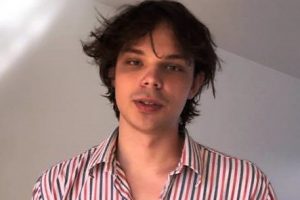
Sean Eriksen – Brisbane, Australia
Eriksen is a 21-year-old Arts/Law student majoring in history and international relations
Notwithstanding the aphorism that ‘if free expression is to mean anything then it must protect unpopular opinions’, censorship is most tolerable at the fringes; and it is a mark of social progress that bigotry is considered so unpopular that many countries have tried to legislate it out of existence. But the suggestion that hate speech laws represent a positive cultural development does not endear them to those who believe free expression is inherently sacrosanct.
Section 18C(1)(a) of Australia’s federal Racial Discrimination Act 1975 prohibits acts that are reasonably likely to ‘offend, insult, humiliate or intimidate another person or group of people’ based on their race, colour, or national or ethnic origin. This allows administrative review and ultimately litigation, giving judges a wide capacity to make rulings on acceptable public discourse.
Defenders of the law claim that sufficient legislative exemptions protecting artists, commentators and academics exist elsewhere in the legislation, but in practice the standard for offence has not been particularly high. Most famously in Eatock v Bolt, articles by a conservative columnist were prohibited from further publication because he had suggested that many people were identifying as indigenous solely because it had become trendy to do so. This is perhaps a crass point to make, but not one that adults cannot reasonably be exposed to.
Though it may be meant well, the censorship of ugly or even disturbing speech is still censorship. Bad ideas do exist and the only harm is in hiding them.

Adam Rossi, youth advisory board, July-December 2017
Adam Rossi – Vancouver, Canada
Rossi is a Canadian student pursuing an MA in International Relations. He recently spent a year teaching English in Barcelona, Spain
Seven years after Catalonia’s government outlawed bullfighting in the autonomous region, its officials now find themselves back in the ring. They’ve been thrown in with a great bull, the Spanish government, which has been trying to skewer any Catalan public figure expressing pro-independence views as if they were matadors clad in red.
They have already suspended, fined, and barred from office the former Catalan prime minister, some of his cabinet members, and city councillors for organising a mock referendum back in 2014 and for continually speaking publicly about their belief in the need for real independence. Joan Coma, a leftist city councillor of the Catalan CUP party, now faces an eight-year prison sentence with his passport confiscated for saying, “To make an omelet, you must break some eggs,” in a discussion on independence. Spanish authorities claim that this was a call for political violence. Meanwhile, Spanish President Manuel Rajoy has even threatened to use force to stop the referendum. Not allowing the vote to happen would be undemocratic, essentially ignoring the voice of the people. In addition, these targeted shots at individual citizens such as Joan Coma only serve to drag Spain back to a dark past of civil oppression. They are even using the Francoist penal code to charge Coma. However, these acts only seem to be fuelling the hearts of Catalans, as street demonstrations and “si” vote flags begin to fly proudly outside people’s homes. The current Catalan president, Carles Puigdemont, says the vote will happen regardless, and that the Catalan government will be prepared for immediate separation if the result is a “yes.”

Huw Roberts, youth advisory board, July-December 2017
Huw Roberts – Hampshire, UK
Roberts graduated from Durham University in June 2017 with a BA in Politics. He has been granted a scholarship to study Public Administration at Shanghai Jiao Tong University
In May 2016 major social media firms, including Facebook and Twitter, signed up to a voluntary code of conduct aimed at combating illegal hate speech. This agreement, in partnership with the European Commission, required the signees to remove hate speech posted on their platform within a twenty-four hour period. Since this deal, the pressure placed on these companies to remove hate speech has been increasing, with proposals forwarded by European Union member states for binding legislation and punitive fines. Undoubtedly, the scope for the facilitation and proliferation of hate speech on these platforms requires a response, however, the current demands being placed on social media firms are fostering policies which often lack refinement and curtail legitimate free speech.
Leaked documents from earlier this year revealing Facebook’s hate speech policies typify the problems censorious practices can raise for free expression. The leading headline from these documents was that white men (as a group) were considered a protected category, yet, black children were not. As such, under Facebook guidelines attacks directed against white men were required to be removed, whilst those targeted at black children were permissible. This policy would not only seem discriminatory towards those most vulnerable within society, but has also proven detrimental to discourse. For example, campaigners from social justice groups such as Black Lives Matter have found their accounts blocked due to criticising structural privileges held by white men. Without an overhaul of the current guidelines in place and a more nuanced approach to censoring hate speech, those most marginalised within society risk having a vital outlet for raising debate and challenging inequalities shut down.

Madara Melnika, youth advisory board, July-December 2017
Madara Melnika – Riga, Latvia
Madara is a law student at University of Latvia. She has also studied in Salzburg and Berlin
At the beginning of July 2017 one of the most popular sports commentators in Latvia, Armands Puče, was dismissed from covering the Latvian Kontinental Hockey League club Dinamo Riga’s games. Although he was dismissed by the private media enterprise MTG TV Latvia, this case is noteworthy as the journalist claims that the decision on his dismissal was taken after the company received an ultimatum from the KHL bureau in Moscow, threatening to end the KHL’s broadcasting agreement with MTG TV unless Puče was removed.
His colleagues hinted that “just like in Soviet times”, all of the articles written by Puče in his parallel work as a journalist, in which he criticised the political ideology of the KHL and its impact on Dinamo Riga, had been translated into Russian and sent to the KHL main bureau in Moscow. It is important to stress that the mentioned articles were not connected to his hockey broadcasts.
After some time, the media enterprise claimed that its cooperation with Puče was ended due to plans for a new show concept, which would include also changing the anchor of the broadcast. Thus Puče, who had led the Hockey studio ever since the first season of the renewed hockey club Dinamo Riga, had to be let go.
Of course, the commentator is connected to his media employer and represents it. However, can the fate and work opportunities of a sports commentator absolutely depend on his ideology and activities done outside work – and will the teams suddenly play better, if their games are covered by loyal commentators?
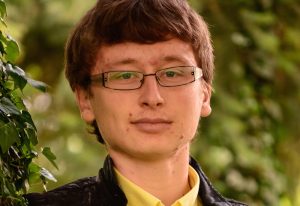
Daniel Penev, youth advisory board, July-December 2017
Daniel Penev – Kyustendil, Bulgaria
Penev is a Bulgarian freelance journalist and a member of the Association of European Journalists
Valentin Todorov is a journalist from Novi Iskar, a town in western Bulgaria, who owns the local news website www.noviiskar.bg. He registered the website under this name in 2010. In June, Todorov learned that Daniela Raycheva, the mayor of the district since 2011, had challenged his right to use this domain. According to the general terms set out by Register BG Ltd., which administrates web domains in Bulgaria, the names of municipalities and regions are reserved for domains registered by the respective administrations. However, when the name is already in use, the parties wanting to use it must either choose another name or wait until it becomes vacant. Here comes the gist of the struggle: when he registered his website, Todorov secured a declaration in which Valentin Kotov, then mayor of Novi Iskar, explicitly states that he will not claim the name while it is active.
“There arises the question as to whether the public administration may, whenever it wishes, make claims in relation to something it has given away and which a citizen owns and has invested in for years,” the Association of European Journalists – Bulgaria wrote in July. “Trust is a media outlet’s greatest capital and it is inseparably connected to its name.”
Todorov suspects that the district mayor resorted to such actions because of the website’s more critical reporting on the various problems in the district. Notably, the mayor only decided to challenge his use of the domain six years after she took office. The administration also already has its own website, www.novi-iskar.bg. Todorov is optimistic about the outcome of the dispute, due by the end August, but if the Register BG commission rules in favour of the mayor, this will set worrying a precedent for all media outlets in Bulgaria.

Sophie Baggott, youth advisory board, July-December 2017
Sophie Baggott – London, UK
Baggott is a journalist focused on promoting human rights
Another resounding voice has blasted proposed changes to the regime protecting official information in the UK, which would deem anyone who communicates information seen ‘to prejudice the United Kingdom’s safety or interests’ or anyone who ‘obtains or gathers’ such information as having committed an offence, potentially resulting in a jail sentence of up to 14 years. To what extent will our government listen to the outcry?
“The proposals threatened would be ‘both retrograde and repressive’”, said the News Media Association (NMA) in a 20-page document released at the end of July. The NMA, which speaks for national and regional UK news media, has highlighted the industry’s concerns about consultative proposals for changes to the Official Secrets Acts and the Data Protection Act, as well as to other unauthorised disclosure offences.
The proposed reforms would lead to ‘damaging and dangerous inroads into press freedom by making whistle-blowers, journalists and media organisations prime targets for state surveillance and criminal prosecution’, the NMA warned. The association said the changes would ‘extend and then entrench official secrecy’, adding: ‘It would be conducive to official cover up. It would deter, prevent and punish investigation and disclosure of wrongdoing and matters of legitimate public interest’.
Investigative journalism could endure a ‘chilling effect’, said the NMA, from how the changes would make it easier for the government to prosecute anyone involved in obtaining, gathering and disclosing information, even if no damage were caused, and irrespective of the public interest. The proposed reforms might also precipitate a more widespread use of state surveillance powers against the media under the guise of suspected media involvement in offences. This would pose a threat to confidential sources and whistle-blowers, the NMA noted.
Is the government going to reconsider or restrict? Either way, the media industry will certainly have to remain on high alert for the foreseeable future.
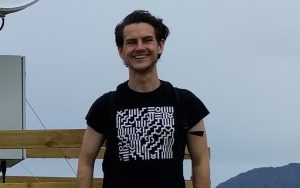
Dan Bateyko, youth advisory board, July-December 2017
Dan Bateyko – Sarasota, Florida
Bateyko is an internet rights researcher from Sarasota, Florida. He is currently travelling on a Watson Fellowship, a one-year purposeful grant for global independent study
U.S. Twitter users blocked by their twit president might have a remedy. On July 11, the Knight First Amendment Institute filed a lawsuit arguing that US President Donald Trump violated the First Amendment rights of dissenting citizens when he blocked them from reading his tweets and contributing their own. Speaking to Index, Katie Fallow, senior staff attorney at Knight Institute, distilled the issue:
“The president may be using social media in a new way, but the First Amendment principles at stake are longstanding. When the government sets up a public forum, whether on Twitter in a town hall, it can’t exclude people just because it doesn’t like what they have to say.”
But whether Trump’s Twitter account can be considered a public forum is a point of contention. As the Knight Institute argues, Trump’s account has all the hallmarks of a public forum; the account tweets news on policy and provides a platform for public debate. However, in a recent statement, the justice department rejoined that Trump’s editorial control over who to follow and block on his private account is not a constitutional issue.
I chose to highlight this case in my first blog post as a member of Index’s youth advisory board because social media is an incredible tool for giving citizens a voice, granting them a platform to exchange views and petition their public officials. But where and how free speech rights extend online is still far from clear—as Lyrissa Lidksy, dean of Missouri’ School of Law, writes, determining whether comment removal on government-sponsored pages is constitutional “requires close examination of the U.S. Supreme Court’s public forum and government speech doctrines, both of which are lacking in coherence – to put it mildly.” With clarity, public officials once reticent to tackle the thorny issue of public accounts could feel comfortable with more online civic engagement. And by establishing further precedent, the Knight Institute’s defense of Twitter users will hopefully protect people’s hard-fought rights to free expression online.
Isabela Vrba Neves youth advisory board, July-December 2017
Isabela Vrba Neves – Stockholm, Sweden
Vrba Neves is a journalist and writer based in Sweden, and a graduate from Kingston University London
Sweden is known for having a good track record when it comes to freedom of expression, and is regarded as being an example in democracy and equality. However, the Nordic country has recently been faced by a wave of threats by far-right groups attacking journalists and media organisations. In February 2017 journalist Evelyn Schreiber received hundreds of death threats and threats of sexual violence after questioning a Facebook post by Peter Springare, a police officer who heavily criticised immigrants for violent crimes.
Springare received support by far-right groups who went after Schreiber with messages and phone calls. In a radio interview Schreiber explained how she believed the threats were “organised” as she would receive a large amount of messages every time a far-right group shared her article on Facebook.
She also described how at first the groups mostly criticised her article, but then progressed to personal vulgar and sexist attacks towards her. The newspaper, Nerikes Allehanda, which published her article, reported the threats to the police.
An issue that Schreiber brings up with these kinds of incidents is that journalists may self-censor for their own safety, which in turn can threaten freedom of expression. To combat this, the Swedish government announced in July 2017 an action plan which aims to strengthen the preventative work towards hate and threats against journalists, artists and elected representatives.
The Swedish Victim Support and the Swedish Crime Victim Compensation and Support Authority have been commissioned to develop material that will provide knowledge and support to those who have been under threat for participating in public conversations, in order to strengthen free speech and freedom of expression.[/vc_column_text][/vc_column][/vc_row][vc_row full_width=”stretch_row_content”][vc_column][three_column_post title=”More from the youth advisory board” category_id=”6514″][/vc_column][/vc_row]
6 Jul 2017 | Artistic Freedom, Event Reports, News

Union Chapel, Islington (Photo: Elina Kansikas for Index on Censorship)
Stand Up For Satire, hosted at the Union Chapel in Islington on Tuesday 4 July, was a night of top comedy in support of Index on Censorship, hosted by Australian stand-up Brendon Burns. The stellar line-up featured comedians Al Murray, Tim Key, Dane Baptiste, Kerry Godliman, Deborah Frances-White, Felicity Ward and Robin Ince, plus a special reading from George Orwell’s Animal Farm by actor and Index patron Simon Callow.
Among the topics poked fun at were North London conformists, the British, the middle class, Brexit, hipsters and your racist nan.
For this special podcast below, Index spoke with Burns, Baptiste, Ince and Murray backstage about the importance of satire and why their craft is uniquely powerful.

Union Chapel, Islington. (Photo: Elina Kansikas for Index on Censorship)

Union Chapel, Islington. (Photo: Elina Kansikas for Index on Censorship)

Comedian and host Brendon Burns (Photo: Elina Kansikas for Index on Censorship)
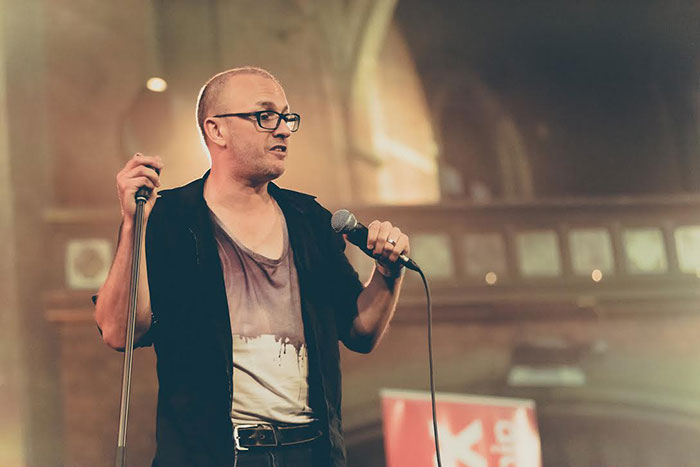
Comedian and host Brendon Burns (Photo: Elina Kansikas for Index on Censorship)
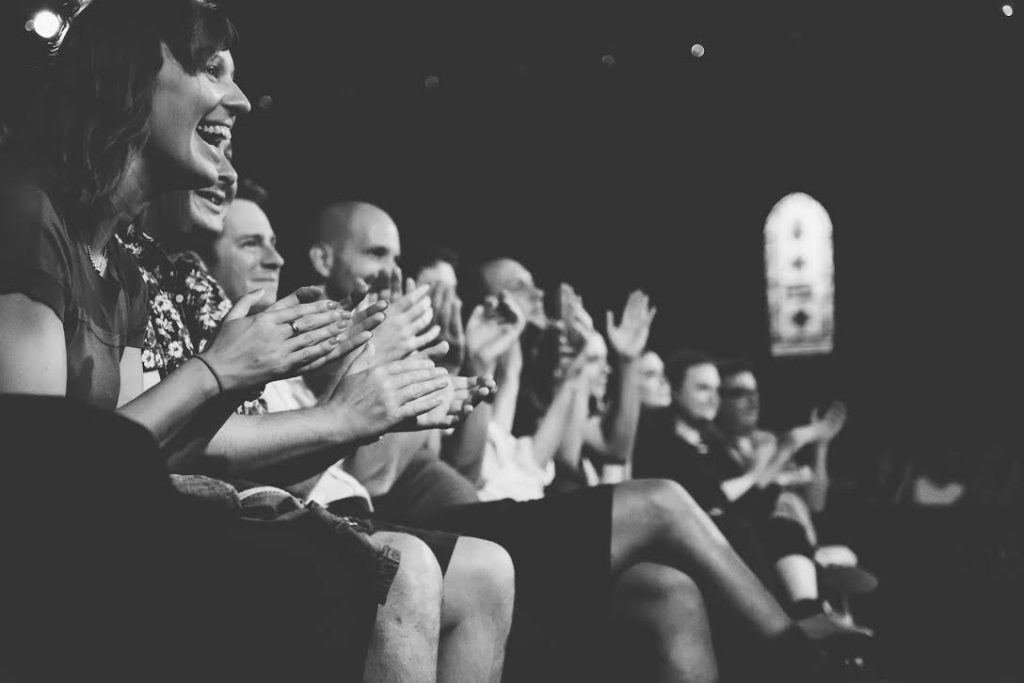
Union Chapel, Islington (Photo: Elina Kansikas for Index on Censorship)
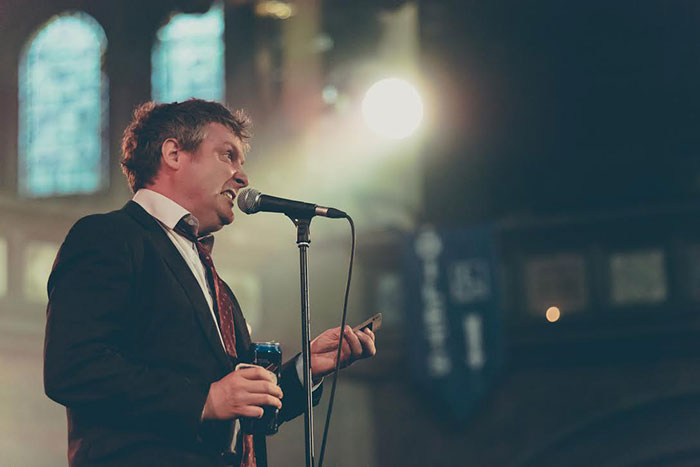
Comedian Tim Key (Photo: Elina Kansikas for Index on Censorship)

Comedian Tim Key (Photo: Elina Kansikas for Index on Censorship)

Comedian Felicity Ward (Photo: Elina Kansikas for Index on Censorship)

Comedian Felicity Ward (Photo: Elina Kansikas for Index on Censorship)

Comedian Felicity Ward (Photo: Elina Kansikas for Index on Censorship)
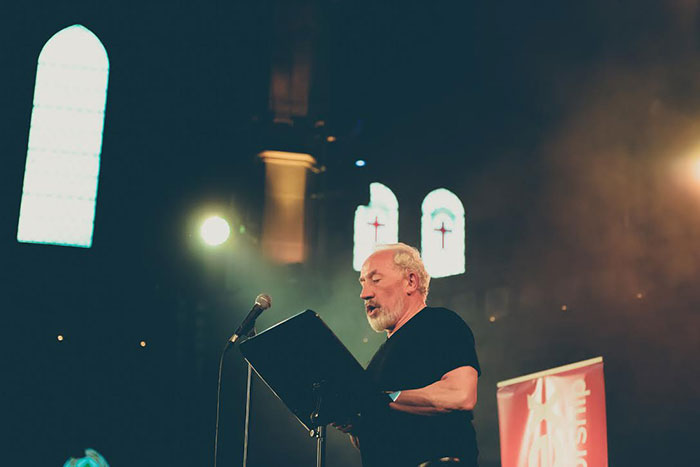
Actor Simon Callow (Photo: Elina Kansikas for Index on Censorship)

Comedian Dane Baptiste (Photo: Elina Kansikas for Index on Censorship)
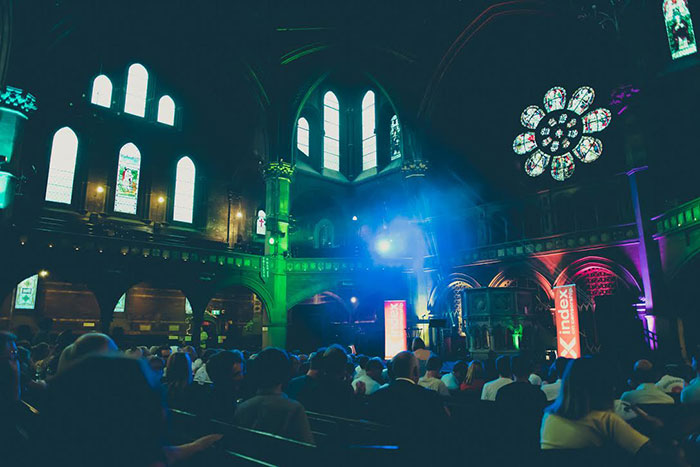
Union Chapel, Islington (Photo: Elina Kansikas for Index on Censorship)
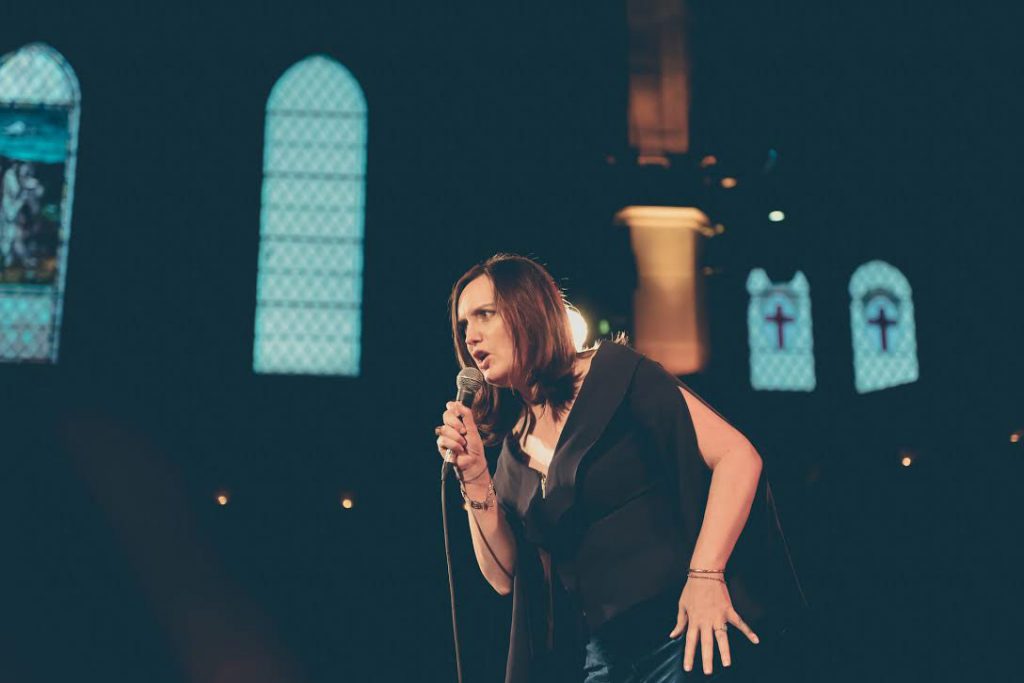
Comedian Deborah Frances-White (Photo: Elina Kansikas for Index on Censorship)
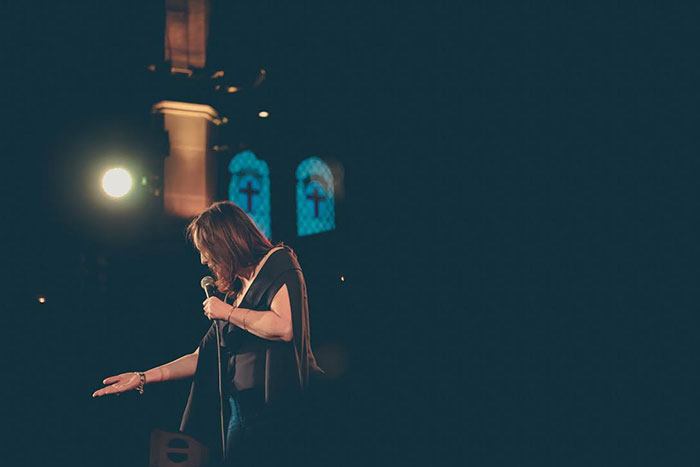
Comedian Deborah Frances-White (Photo: Elina Kansikas for Index on Censorship)

Comedian Kerry Godliman (Photo: Elina Kansikas for Index on Censorship)

Comedian Kerry Godliman (Photo: Elina Kansikas for Index on Censorship)
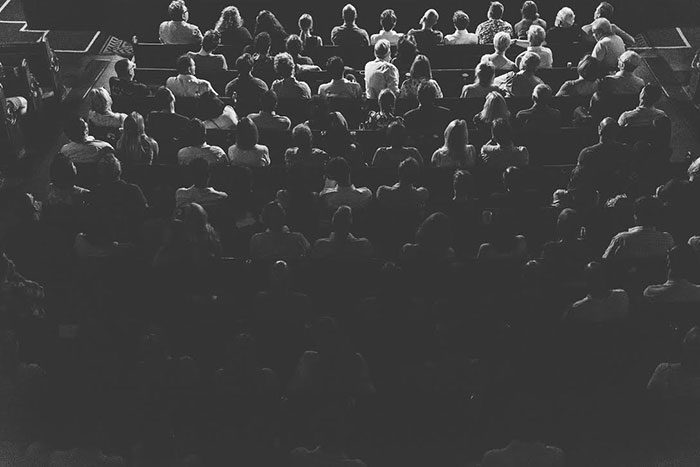
Union Chapel, Islington (Photo: Elina Kansikas for Index on Censorship)

Comedian Robin Ince (Photo: Elina Kansikas for Index on Censorship)
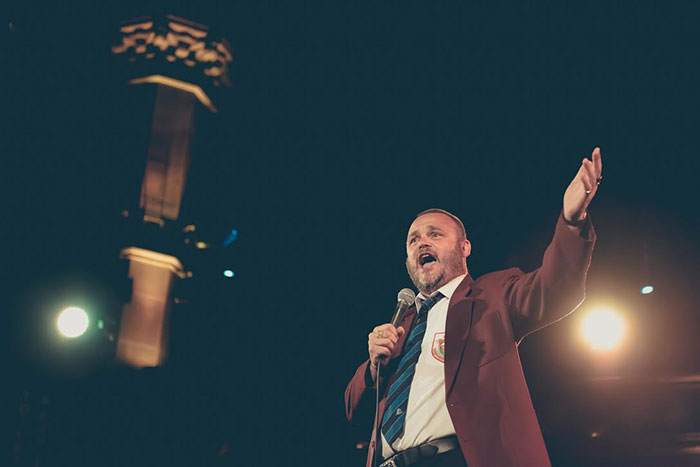
Comedian Al Murray (Photo: Elina Kansikas for Index on Censorship)
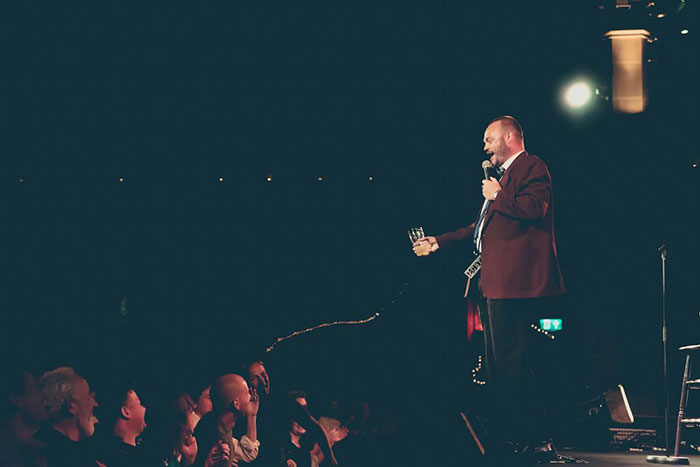
Comedian Al Murray (Photo: Elina Kansikas for Index on Censorship)

Comedian Al Murray (Photo: Elina Kansikas for Index on Censorship)
30 Jun 2017 | Campaigns -- Featured, Digital Freedom, Digital Freedom Statements, Statements
Today, 84 organisations and individuals from Australia, Canada, New Zealand, the UK and the USA sent letters to their respective governments insisting that government officials defend strong encryption. The letter comes on the heels of a meeting of the “Five Eyes” ministerial meeting in Ottawa, Canada earlier this week.
The “Five Eyes” is a surveillance partnership of intelligence agencies consisting of Australia, Canada, New Zealand, the United Kingdom, and the United States. According to a joint communique issued after the meeting encryption and access to data was discussed. The communique stated that “encryption can severely undermine public safety efforts by impeding lawful access to the content of communications during investigations into serious crimes, including terrorism.”
In the letter organised by Access Now, CIPPIC, and researchers from Citizen Lab, 83 groups and individuals from the so-called “Five Eyes” countries wrote “we call on you to respect the right to use and develop strong encryption.” Signatories also urged the members of the ministerial meeting to commit to allowing public participating in any future discussions.
Read the letter in full:
Senator the Hon. George Brandis
Attorney General of Australia
Hon. Christopher Finlayson
Attorney General of New Zealand
Hon. Ralph Goodale
Minister of Public Safety and Emergency Preparedness of Canada
Hon. John Kelly
United States Secretary of Homeland Security
Rt. Hon. Amber Rudd,
Secretary of State for the Home Department, United Kingdom
CC: Hon. Peter Dutton, Minister for Immigration and Border Protection, Australia;
Hon. Ahmed Hussen, Minister of Immigration, Refugees, and Citizenship, Canada;
Hon. Jeff Sessions, Attorney General for the United States;
Hon. Jody Wilson-Raybould, Minister of Justice and Attorney General, Canada;
Hon. Michael Woodhouse, Minister of Immigration, New Zealand
To Ministers Responsible for the Five Eyes Security Community,
In light of public reports about this week’s meeting between officials from your agencies, the undersigned individuals and organisations write to emphasise the importance of national policies that encourage and facilitate the development and use of strong encryption. We call on you to respect the right to use and develop strong encryption and commit to pursuing any additional dialogue in a transparent forum with meaningful public participation.
This week’s Five Eyes meeting (comprised of Ministers from the United States, United Kingdom, New Zealand, Canada, and Australia) discussed “plans to press technology firms to share encrypted data with security agencies” and hopes to achieve “a common position on the extent of … legally imposed obligations on … device-makers and social media companies to co-operate.” In a Joint Communiqué following the meeting, participants committed to exploring shared solutions to the perceived impediment posed by encryption to investigative objectives.
While the challenges of modern day security are real, such proposals threaten the integrity and security of general purpose communications tools relied upon by international commerce, the free press, governments, human rights advocates, and individuals around the world.
Last year, many of us joined several hundred leading civil society organisations, companies, and prominent individuals calling on world leaders to protect the development of strong cryptography. This protection demands an unequivocal rejection of laws, policies, or other mandates or practices—including secret agreements with companies—that limit access to or undermine encryption and other secure communications tools and technologies.
Today, we reiterate that call with renewed urgency. We ask you to protect the security of your citizens, your economies, and your governments by supporting the development and use of secure communications tools and technologies, by rejecting policies that would prevent or undermine the use of strong encryption, and by urging other world leaders to do the same.
Attempts to engineer “backdoors” or other deliberate weaknesses into commercially available encryption software, to require that companies preserve the ability to decrypt user data or to force service providers to design communications tools in ways that allow government interception are both shortsighted and counterproductive. The reality is that there will always be some data sets that are relatively secure from state access. On the other hand, leaders must not lose sight of the fact that even if measures to restrict access to strong encryption are adopted within Five Eyes countries, criminals, terrorists, and malicious government adversaries will simply switch to tools crafted in foreign jurisdictions or accessed through black markets. Meanwhile, innocent individuals will be exposed to needless risk. Law-abiding companies and government agencies will also suffer serious consequences. Ultimately, while legally discouraging encryption might make some useful data available in some instances, it has by no means been established that such steps are necessary or appropriate to achieve modern intelligence objectives.
Notably, government entities around the world, including Europol and representatives in the U.S. Congress, have started to recognise the benefits of encryption and the futility of mandates that would undermine it.
We urge you, as leaders in the global community, to remember that encryption is a critical tool of general use. It is neither the cause nor the enabler of crime or terrorism. As a technology, encryption does far more good than harm. We, therefore, ask you to prioritise the safety and security of individuals by working to strengthen the integrity of communications and systems. As an initial step, we ask that you continue any engagement on this topic in a multi-stakeholder forum that promotes public participation and affirms the protection of human rights.
We look forward to working together toward a more secure future.
Sincerely,
Access Now
Advocacy for Principled Action in Government
American Library Association
Amnesty International
Amnesty UK
Article 19
Australian Privacy Foundation
Big Brother Watch
Blueprint for Free Speech
British Columbia Civil Liberties Association (BCCLA)
Canadian Civil Liberties Association (CCLA)
Canadian Journalists for Free Expression (CJFE)
Center for Democracy and Techology
Centre for Free Expression, Ryerson University
Chaos Computer Club (CCC)
Constitutional Alliance
Consumer Action
CryptoAustralia
Crypto.Quebec
Defending Rights and Dissent
Demand Progress
Digital Rights Watch
Electronic Frontier Foundation
Electronic Frontiers Australia
Electronic Privacy Information Center
Engine
Equalit.ie
Freedom of the Press Foundation
Friends of Privacy USA
Future Wise
Government Accountability Project
Human Rights Watch
i2Coalition
Index on Censorship
International Civil Liberties Monitoring Group (ICLMG)
Internet NZ
Liberty
Liberty Coalition
Liberty Victoria
Library Freedom Project
My Private Network
New America’s Open Technology Institute
NZ Council for Civil Liberties
OpenMedia
Open Rights Group (ORG)
NEXTLEAP
Niskanen Center
Patient Privacy Rights
PEN International
Privacy International
Privacy Times
Private Internet Access
Restore the Fourth
Reporters Without Borders
Rights Watch (UK)
Riseup Networks
R Street Institute
Samuelson-Glushko Canadian Internet Policy & Public Interest
Clinic (CIPPIC)
Scottish PEN
Subgraph
Sunlight Foundation
TechFreedom
Tech Liberty
The Tor Project
Voices-Voix
World Privacy Forum
Brian Behlendorf, executive director, Hyperledger, at the Linux Foundation
Dr. Paul Bernal, lecturer in IT, IP and media law, UEA Law School
Owen Blacker, founder and director, Open Rights Group; founder, NO2ID
Thorsten Busch, lecturer and senior research fellow, University of St Gallen
Gabriella Coleman, Wolfe Chair in scientific and technological literacy at McGill University
Sasha Costanza-Chock, associate professor of civic media, MIT
Dave Cox, CEO, Liquid VPN
Ron Deibert, The Citizen Lab, Munk School of Global Affairs
Nathan Freitas, Guardian Project
Dan Gillmor, professor of practice, Walter Cronkite School of Journalism and Mass Communication, Arizona State University
Adam Molnar, lecturer in criminology, Deakin University
Christopher Parsons, The Citizen Lab, Munk School of Global Affairs
Jon Penney, research fellow, The Citizen lab, Munk School of Global Affairs
Chip Pitts, professorial lecturer, Oxford University
Ben Robinson, directory, Outside the Box Technology Ltd and Discovery Technology Ltd
Sarah Myers Wes, doctoral candidate at the Annenberg School for Communication and Journalism
J.M. Porup, journalist
Lokman Tsui, assistant professor at the School of Journalism and Communication, the Chinese University of Hong Kong (Faculty Associate, Berkman Klein Center)
