16 Dec 2016 | Magazine, Magazine Contents, Volume 45.04 Winter 2016
[vc_row][vc_column][vc_custom_heading text=”Contributors include Lily Cole, Daphne Selfe, Linda Grant, Bibi Russell, Katy Werlin, Jang Jin-sung, Maggie Alderson and Eliza Vitri Handayani”][vc_row_inner][vc_column_inner width=”1/2″][vc_column_text]
The latest issue of Index on Censorship magazine looks at fashion and how people both express freedom through what they wear. But it also looks at how women in particular have their freedom of expression curtailed by rigid dress codes – whether they are women in Saudi Arabia who have to wear abayas by law or women in the UK and Canada whose employers insist they wear high heels shoes.
[/vc_column_text][/vc_column_inner][vc_column_inner width=”1/2″][vc_single_image image=”82377″ img_size=”full”][/vc_column_inner][/vc_row_inner][vc_column_text]
Models Lily Cole and Daphne Selfe discuss why changes in society are reflected in the clothes we (are allowed) to wear. Maggie Alderson, former editor of Elle describes how she was arrested for being a punk rocker in the 1970s, while Eliza Vitri Handayani talks about how punks in Indonesia today are still persecuted for what they wear and how they look. Nigerian model and journalist Wana Udobang riffs on fashion in Nigeria and how she was snubbed by bouncers and waiters at a wedding for wearing the wrong clothes.
Ismail Einashe describes how traditional dress can be life-threatening for Oromos in Ethiopa, while Magela Baudoin delves into class and ethnic gradations in Bolivia and reveals that the way some women dress means they are discriminated against. Novelist Linda Grant describes how her Jewish immigrant parents used the way they dressed to try and fit into middle-class British society. Meanwhile Katy Werlin gives a historical perspective as she discusses how the 18th century French revolutionaries, known as sans-culottes, celebrated their peasant clothes as they overthrew the aristocratic regime.
Martin Rowson brings another perspective to fashion in his new cartoon which depicts a catwalk on which despots show off their latest costumes. Spot President-elect Donald Trump sporting a furry thong. Trump is also in US media expert Eric Alterman’s sights as he describes why journalists in the USA believe the new president will seek to challenge media freedoms guaranteed by the constitution. Turkish researchers Burak Bilgehan Özpek and Başak Yavcan investigate how the Turkish government is using state advertising to control the media.
We also publish an interview with Turkish intellectual, linguist and founder of a mathematics village Sevan Nişanyan. Our reporter communicated with him using notes smuggled out from the prison where he is serving a 16-year sentence on charges connected with freedom of speech. The culture section includes poems from a former North Korean propagandist Jang Jin-sung who defected to the South and now runs a website smuggling news out of North Korea. We also carry poems about the extraordinariness of everyday life from Brazilian author Paulo Scott and a never before seen English translation of a short story by legendary Argentine writer Haroldo Conti.
[/vc_column_text][/vc_column][/vc_row][vc_row][vc_column][vc_custom_heading text=”SPECIAL REPORT: FASHION RULES” css=”.vc_custom_1481731933773{margin-right: 0px !important;margin-left: 0px !important;border-bottom-width: 1px !important;padding-top: 15px !important;padding-bottom: 15px !important;border-bottom-color: #455560 !important;border-bottom-style: solid !important;}”][vc_column_text]
Dressing to oppress: why dress codes and freedom clash
The censors’ new clothes, by Rachael Jolley: Freedom is not about the amount of clothing you put on or take off, but about having the choice to do so
Fashion police, by Natasha Joseph: Some feel the miniskirt is a threat to the state in Uganda and women are getting attacked for wearing it
Wearing a T-shirt got me arrested, by
Maggie Alderson: Wearing punk clothes in 1970s London was dangerous, but now British teenagers can wear anything
Colour bars, by Magela Baudoin: Traditional clothing is still a sign of social status in Bolivia and wearing such clothes often leads to discrimination
Models of freedom, by Bibi Russell: Bangladeshi women are now vital to the economy but they are still restricted in their dress
The big cover-up, by Laura Silvia Battaglia: Women in Saudi Arabia and Yemen test how far they can customise what they are allowed to wear. Translation by Lucinda Byatt
Rebel with a totally fashionable cause, by Wana Udobang: A Nigerian model refuses to conform to stifling social expectations and sees the consequences
Stripsearch cartoon, by Martin Rowson: A fetching new range of despotwear
Ethiopia in crisis, closes down news, by Ismail Einashe The Oromo people use traditional clothing as a symbol of resistance and it is costing them their lives
Baggy trousers are revolting
, by Katy Werlin: The sans-culottes of the French revolution transformed peasant dress into a badge of honour
Muslim punks in mohawks attacked, by Eliza Vitri Handayani: Punks in Indonesia are persecuted but still manage to maintain a culture which stands up for difference
Design is the limit, by Jemimah Steinfeld: China is loosening up on personal freedoms including fashion, but designers still face some constraints
A modest proposal, by Kaya Genç: “Modest” dress codes are all the rage in Turkey as some turn their backs on the legacy of Atatürk
Uniformity rules, by Jan Fox: Prisoners often try to customise their uniforms but does stripping individuality make rehabilitation more difficult?
Keeping up appearances, by Linda Grant: Linda Grant’s immigrant family were upwardly mobile and bought clothes that showed their aspirations
Sewing it up, by Rachael Jolley: At 88 Daphne Selfe is Britain’s oldest supermodel. She talks about how fashion has changed in her lifetime
Style counsels, by Kieran Etoria-King: Model, activist and actor Lily Cole talks about how school girls customise their uniforms to give them a sense of individuality
Tall stories, by Sally Gimson: Wearing high heels is a way for some women to express freedom, while for others it’s a form of oppression
[/vc_column_text][/vc_column][/vc_row][vc_row][vc_column][vc_custom_heading text=”IN FOCUS” css=”.vc_custom_1481731813613{margin-right: 0px !important;margin-left: 0px !important;border-bottom-width: 1px !important;padding-top: 15px !important;padding-bottom: 15px !important;border-bottom-color: #455560 !important;border-bottom-style: solid !important;}”][vc_column_text]
Challenging media, by Eric Alterman: If his campaign is anything to go by, President Trump is likely to restrict freedom of the press
Living in limbo, by Marco Salustro: A journalist reveals the challenges of reporting from inhumane migrant detention camps in Libya
Follow the money, by
Burak Bilgehan Özpek and Başak Yavcan: The Turkish government is rewarding newspapers which favour its position with more state-sponsored advertising
Fighting for our festival
freedoms, by Peter Florence: Mutilated bodies, petitions and a citizen’s arrest: the director of the Hay literary festivals describes the trials and tribulations of his job
Barring the bard, by Jennifer Leong: Actor Jennifer Leong on confronting attempts to censor performances of Shakespeare around the world
Assessing Correa’s free
speech heritage, by Irene Caselli: The Ecuadorian president’s record on free speech is reviewed as his term in office comes to an end. He gave sanctuary to Wikileaks founder, Julian Assange, in the country’s London embassy but brought in restrictive media laws at home
Framed as spies, by Steven Borowiec: South Korean journalist Choi Seung-ho hit a national nerve when he exposed the security services for framing ordinary citizens as North Korean spies
[/vc_column_text][/vc_column][/vc_row][vc_row][vc_column][vc_custom_heading text=”CULTURE” css=”.vc_custom_1481731777861{margin-right: 0px !important;margin-left: 0px !important;border-bottom-width: 1px !important;padding-top: 15px !important;padding-bottom: 15px !important;border-bottom-color: #455560 !important;border-bottom-style: solid !important;}”][vc_column_text]
Back from the Amazon, by
Paulo Scott: Newly translated poems from Scott’s acclaimed collection, Even Without Money I Bought a New Skateboard. Interview by Kieran Etoria-King. Poems translated by Stefan Tobler
A story from the disappeared, by Haroldo Conti: Jon Lindsay Miles introduces a poignant short story, published in English for the first time, by the award- winning Argentine writer who disappeared in 1976. Translation also by Jon Lindsay Miles
Poems for Kim, by Jang Jin-sung: North Korean propagandist poet turned high profile defector talks about life within the world’s most secretive country. Interview by Sybil Jones
[/vc_column_text][/vc_column][/vc_row][vc_row][vc_column][vc_custom_heading text=”COLUMNS” css=”.vc_custom_1481732124093{margin-right: 0px !important;margin-left: 0px !important;border-bottom-width: 1px !important;padding-top: 15px !important;padding-bottom: 15px !important;border-bottom-color: #455560 !important;border-bottom-style: solid !important;}”][vc_column_text]
Global view, by Jodie Ginsberg: Face-to-face encounters are still important and governments worldwide know that restricting travel continues to be an effective way of stifling voices
Index around the world, by
Kieran Etoria-King: Coverage of Index’s work over the last few months including exposing the difficulties of war reporting and our Mapping Media Freedom project
[/vc_column_text][/vc_column][/vc_row][vc_row][vc_column][vc_custom_heading text=”END NOTE” css=”.vc_custom_1481880278935{margin-right: 0px !important;margin-left: 0px !important;border-bottom-width: 1px !important;padding-top: 15px !important;padding-bottom: 15px !important;border-bottom-color: #455560 !important;border-bottom-style: solid !important;}”][vc_column_text]
Where’s our president? by
Kiri Kankhwende: Malawi’s journalists tease their president as part of a campaign to make the government more transparent
[/vc_column_text][/vc_column][/vc_row][vc_row][vc_column][vc_custom_heading text=”SUBSCRIBE” css=”.vc_custom_1481736449684{margin-right: 0px !important;margin-left: 0px !important;border-bottom-width: 1px !important;padding-bottom: 15px !important;border-bottom-color: #455560 !important;border-bottom-style: solid !important;}”][vc_column_text]Index on Censorship magazine was started in 1972 and remains the only global magazine dedicated to free expression. Past contributors include Samuel Beckett, Gabriel García Marquéz, Nadine Gordimer, Arthur Miller, Salman Rushdie, Margaret Atwood, and many more.[/vc_column_text][vc_row_inner][vc_column_inner width=”1/2″][vc_single_image image=”76572″ img_size=”full”][/vc_column_inner][vc_column_inner width=”1/2″][vc_column_text]In print or online. Order a print edition here or take out a digital subscription via Exact Editions.
Copies are also available at the BFI, the Serpentine Gallery, MagCulture, (London), News from Nowhere (Liverpool), Home (Manchester), Calton Books (Glasgow) and on Amazon. Each magazine sale helps Index on Censorship continue its fight for free expression worldwide.
 SUBSCRIBE NOW[/vc_column_text][/vc_column_inner][/vc_row_inner][/vc_column][/vc_row]
19 Jan 2016 | Bahrain, Bahrain Statements, Campaigns, Statements
NGOs from the around the world call for the immediate release of prisoner of conscience Dr. Abduljalil al-Singace on his 300th day of hunger strike. Dr. al-Singace began his hunger strike in March 2015 as a response to police subjecting inmates at the Central Jau Prison to collective punishment, humiliation and torture.
Since 21 March 2015, Dr. al-Singace has foregone food and subsisted on water and IV fluid injections for sustenance. Days later, Jau prison authorities transferred him to the Qalaa hospital, where he is still being kept in a form of solitary confinement.
Dr. al-Singace’s family, who visited him on 7 January, state that the prison administration is controlling his treatment at Qalaa hospital, and has for five months continuously, denied his need for a physical checkup by his hematologist at Salmaniya Medical Complex.
According to Dr. al-Singace’s family, he is not allowed to walk outside. He remains isolated in the Qalaa hospital, and is provided only irregular contact with his family. He is frequently denied basic hygienic items including soap, and is not allowed to interact with other patients in the hospital.
Dr. al-Singace is a member of the Bahrain 13, a group of thirteen peaceful political activists and human rights defenders, including Ebrahim Sharif and Abdulhadi al-Khawaja, sentenced to prison terms for their peaceful role in Bahrain’s Arab Spring protests in 2011.
Dr. al-Singace was first arrested in August 2010 at Bahrain airport. He had just returned from a conference at the British House of Lords regarding human rights in Bahrain. Security forces detained Dr. al-Singace for six months, during which he was tortured, and released him in February 2011 during the height of protests. However, Dr. al-Singace was rearrested on 17 March 2011, after his participation in peaceful pro-democracy protests. In detention, officers blindfolded, handcuffed, and beat Dr. al-Singace in the head with their fists and batons. Officers threatened him and his family with reprisals.
On 22 June 2011, a military court sentenced Dr. al-Singace to life for attempted overthrow of the regime. Since then, he has been imprisoned in the Central Jau Prison, and has only recently received treatment for a nose injury sustained during torture. He has been denied treatment for a similar ear injury also sustained during torture since his incarceration.
In 2015, Dr. al-Singace was awarded the Liu Xiaobo Courage to Write Award by the Independent Chinese PEN Centre, and was named one of Index on Censorship’s 100 “free expression heroes” in 2016. He has long campaigned for an end to torture and political reform, writing on these and other subjects on his blog, Al-Faseela, which remains banned by Bahraini Internet Service Providers. Bahrain has become a dangerous place for those who speak out, with peaceful dissidents at risk of arbitrary arrests, systematic torture and unfair trial.
We, the undersigned NGOs, call on the government of Bahrain to immediately secure the release of Dr. al-Singace and all prisoners of conscience, and to provide all appropriate and necessary medical treatment for Dr. al-Singace.
Signatories:
Americans for Democracy and Human Rights in Bahrain (ADHRB)
ARTICLE 19
Bahrain Center for Human Rights (BCHR)
Bahrain Institute for Rights and Democracy (BIRD)
Committee to Protect Journalists (CPJ)
Croatian PEN
Danish PEN
English PEN
European Center for Democracy and Human Rights (ECDHR)
FIDH, within the framework of the Observatory for the Protection of Human Rights Defenders
Ghanaian PEN
Gulf Centre for Human Rights (GCHR)
Icelandic PEN
Index on Censorship
Italian PEN
Norwegian PEN
PEN America
PEN Bangladesh
PEN Bolivia
PEN Canada
PEN Català
PEN Center Argentina
PEN Center USA
PEN Centre of German Speaking Writers Abroad
PEN Eritrea in Exile
PEN Flander
PEN Germany
PEN International
PEN Netherlands
PEN New Zealand
PEN Québéc
PEN Romania
PEN South Africa
PEN Suisse Romand
Peruvian PEN
Reporters Sans Frontiers (RSF)
San Miguel PEN
Scholars at Risk
Scottish PEN
Serbian PEN
Trieste PEN
Wales PEN Cymru
World Organisation Against Torture (OMCT), within the framework of the Observatory for the Protection of Human Rights Defenders
Zambian PEN
7 Jan 2016 | Campaigns, Europe and Central Asia, France, mobile, Statements
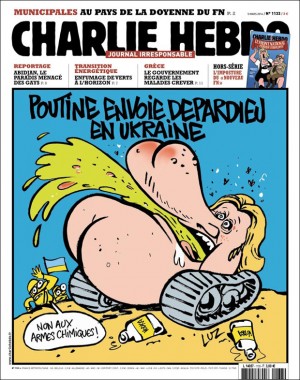
On the anniversary of the brutal attack on the offices of Charlie Hebdo we, the undersigned, reaffirm our commitment to the defence of the right to freedom of expression, even when that right is being used to express views that some may consider offensive.
The Charlie Hebdo attack, which left 11 dead and 12 wounded, was a horrific reminder of the violence to which journalists, artists and other critical voices are subjected in a global atmosphere marked by increasing intolerance of dissent. The killings inaugurated a year that has proved especially challenging for proponents of freedom of opinion.
Non-state actors perpetrated violence against their critics largely with impunity, including the brutal murders of four secular bloggers in Bangladesh by Islamist extremists, and the killing of an academic, M M Kalburgi, who wrote critically against Hindu fundamentalism in India.
Despite the turnout of world leaders on the streets of Paris in an unprecedented display of solidarity with free expression following the Charlie Hebdo murders, artists and writers faced intense repression from governments throughout the year. In Malaysia, cartoonist Zunar is facing a possible 43-year prison sentence for alleged ‘sedition’; in Iran, cartoonist Atena Fardaghani is serving a 12-year sentence for a political cartoon; and in Saudi Arabia, Palestinian poet Ashraf Fayadh was sentenced to death for the views he expressed in his poetry.
Perhaps the most far-reaching threats to freedom of expression in 2015 came from governments ostensibly motivated by security concerns. Following the attack on Charlie Hebdo, 11 interior ministers from European Union countries including France, Britain and Germany issued a statement in which they called on Internet service providers to identify and remove online content ‘that aims to incite hatred and terror.’ In July, the French Senate passed a controversial law giving sweeping new powers to the intelligence agencies to spy on citizens, which the UN Human Rights Committee categorised as “excessively broad”.
This kind of governmental response is chilling because a particularly insidious threat to our right to free expression is self-censorship. In order to fully exercise the right to freedom of expression, individuals must be able to communicate without fear of intrusion by the State. Under international law, the right to freedom of expression also protects speech that some may find shocking, offensive or disturbing. Importantly, the right to freedom of expression means that those who feel offended also have the right to challenge others through free debate and open discussion, or through peaceful protest.
On the anniversary of the Charlie Hebdo attacks, we, the undersigned, call on all Governments to:
- Uphold their international obligations to protect the rights of freedom of expression and information for all, and especially for journalists, writers, artists and human rights defenders to publish, write and speak freely;
- Promote a safe and enabling environment for those who exercise their right to freedom of expression, and ensure that journalists, artists and human rights defenders may perform their work without interference;
- Combat impunity for threats and violations aimed at journalists and others exercising their right to freedom of expression, and ensure impartial, timely and thorough investigations that bring the executors and masterminds behind such crimes to justice. Also ensure victims and their families have expedient access to appropriate remedies;
- Repeal legislation which restricts the right to legitimate freedom of expression, especially vague and overbroad national security, sedition, obscenity, blasphemy and criminal defamation laws, and other legislation used to imprison, harass and silence critical voices, including on social media and online;
- Ensure that respect for human rights is at the heart of communication surveillance policy. Laws and legal standards governing communication surveillance must therefore be updated, strengthened and brought under legislative and judicial control. Any interference can only be justified if it is clearly defined by law, pursues a legitimate aim and is strictly necessary to the aim pursued.
PEN International
ActiveWatch – Media Monitoring Agency
Adil Soz – International Foundation for Protection of Freedom of Speech
Africa Freedom of Information Centre
ARTICLE 19
Bahrain Center for Human Rights
Belarusian Association of Journalists
Brazilian Association for Investigative Journalism
Bytes for All
Cambodian Center for Human Rights
Canadian Journalists for Free Expression
Center for Independent Journalism – Romania
Center for Media Freedom and Responsibility
Comité por la Libre Expresión – C-Libre
Committee to Protect Journalists
Electronic Frontier Foundation
Foundation for Press Freedom – FLIP
Freedom Forum
Fundamedios – Andean Foundation for Media Observation and Study
Globe International Center
Independent Journalism Center – Moldova
Index on Censorship
Initiative for Freedom of Expression – Turkey
Institute for the Studies on Free Flow of Information
Instituto de Prensa y Libertad de Expresión – IPLEX
Instituto Prensa y Sociedad de Venezuela
International Federation of Journalists
International Federation of Library Associations and Institutions
International Press Institute
International Publishers Association
Journaliste en danger
Maharat Foundation
MARCH
Media, Entertainment and Arts Alliance
Media Foundation for West Africa
National Union of Somali Journalists
Observatorio Latinoamericano para la Libertad de Expresión – OLA
Pacific Islands News Association
Palestinian Center for Development and Media Freedoms – MADA
PEN American Center
PEN Canada
Reporters Without Borders
South East European Network for Professionalization of Media
Vigilance pour la Démocratie et l’État Civique
World Association of Community Radio Broadcasters – AMARC
PEN Mali
PEN Kenya
PEN Nigeria
PEN South Africa
PEN Eritrea in Exile
PEN Zambia
PEN Afrikaans
PEN Ethiopia
PEN Lebanon
Palestinian PEN
Turkish PEN
PEN Quebec
PEN Colombia
PEN Peru
PEN Bolivia
PEN San Miguel
PEN USA
English PEN
Icelandic PEN
PEN Norway
Portuguese PEN
PEN Bosnia
PEN Croatia
Danish PEN
PEN Netherlands
German PEN
Finnish PEN
Wales PEN Cymru
Slovenian PEN
PEN Suisse Romand
Flanders PEN
PEN Trieste
Russian PEN
PEN Japan
15 Dec 2015 | Asia and Pacific, mobile, News, South Korea
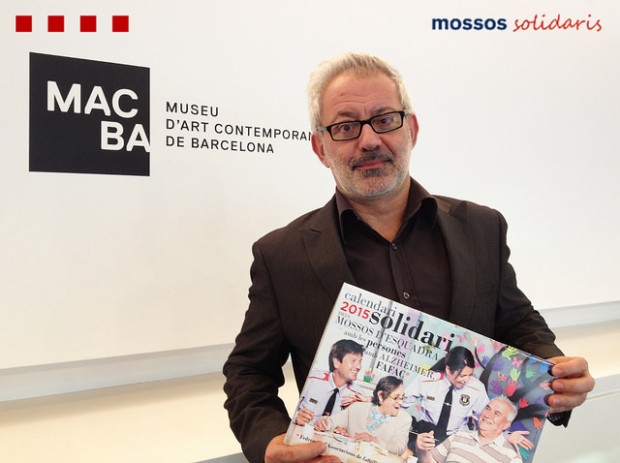
Bartomeu Marí at the charity launch of a calander at the MACBA, from which he controversially resigned earlier this year. Credit: Flickr/Mossos. Generalitat de Catalunya
The South Korean art community has released a statement requesting that the Ministry of Culture, Sports and Tourism (MCST) implement reforms to protect artistic freedom ahead of the appointment of Bartomeu Marí as director of the National Museum of Modern and Contemporary Art (MMCA).
The decision to appoint Marí has been met with objections due to his controversial resignation as director of the Barcelona Museum of Contemporary Art (MACBA) in March, after he was accused of attempting to have a sculptor removed from an exhibition called La Bestia y el Soberano (The Beast and the Sovereign).
The satirical sculpture by Ines Doujak, titled Not Dressed for Conquering, featured former Spanish King Juan Carlos and Bolivian labour leader and feminist Domitila Chúngara involved in a sexual act with a dog on a bed of SS helmets. The exhibition went ahead despite Marí’s alleged attempts to cancel the whole exhibition when curators refused to remove the sculptor, leading to him firing two curators and his own resignation.
The Korean art community released their statement in November when Marí was the leading candidate for the position. They stated: “We demand that both the MMCA and its overseeing body, the MCST, offer plausible explanations regarding the appointment of the new MMCA director and institute fully fledged reforms to protect and foster artistic freedom so they may perform the duties they were originally intended as proponents of the arts.”
They also used the statement, which has been signed by nearly 800 artists, to highlight their concerns about the South Korean government’s mounting censorship of and bureaucratic restrictions on artistic freedom. They state: “We strongly oppose all variants of censorship and surveillance that harm the autonomy of art, and we pledge multifaceted, continued efforts to recover the autonomy and independence of art.”
Marí, who is also currently the president of the International Committee for Museums and collections of Modern Art (CiMAM), was officially appointed as director on 2 December leading the group to release a new statement again asking the newly appointed director and the MCST institute reforms protecting artistic freedom, which would be submitted to the culture minister and director on his appointment today.
The new director took nearly two weeks to respond to the complaints by stating he opposes censorship of any kind. He told a press conference in Seoul: “I stand against all kinds of censorship, and I support the freedom of expression. These are my values.”
He added: “I am sad there are artists who opposed my nomination. But there are many who support me. I hope I can be judged by what I do here, not by what some people say happened in the past.”
