17 Oct 2019 | News, Student Reading Lists
[vc_row][vc_column][vc_column_text]Index on Censorship was established in 1972 in a febrile period: Idi Amin had taken power in Uganda, the Vietnam war continued, direct rule was imposed in Northern Ireland, there was a coup in Bolivia and Congo was renamed Zaire by its dictator president. As writer Robert McCrum said in our 40th anniversary issue: “The abuses of freedom worldwide in the 1970s were so appalling and so widespread that the magazine rapidly found itself in the frontline of campaigns. Index became a clarion voice in the cause of free expression.” The right to protest and freedom of expression are now being sought in Hong Kong and elsewhere, and Index is still to the forefront in reporting abuses. Here are just some of the conflicts between freedom and dictatorship we have reported on in the past 47 years.
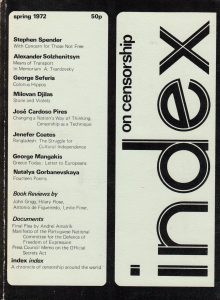
The first issue of Index on Censorship magazine, in March 1972
The Clockwork Show vol 1, issue 1, March 1972
In an anonymous article about life in Greece under the regime of the Colonels’ junta, the writer considered the psychology of the situation; the feelings and attitudes, the long-ranging impact of this harrowing experience. “There is nothing more demoralizing than to be bound to a public body, an administration, a government with which one can never for a moment identify, which is the exact opposite of everything one believes in. One cannot live side by side with Philistinism, chauvinism, bigotry, blatant hypocrisy, crass ignorance, injustice, violence and brutality and not be affected by them, even if one manages—only just—to keep them out of one’s own life. Under this regime there is no relief; no exception: the regime has penetrated every single aspect of public life.”
Read the full article
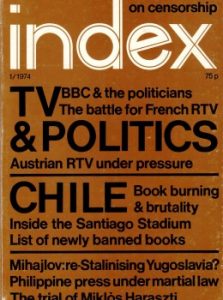
March 1974: TV, politics and Chile Index on Censorship magazine
Book burning and brutality vol 3, issue 1, March 1974
A fascinating insight into life in Chile six months after a coup ended the tyranny of President Salvador Allende: worse was to come under a military dictatorship, reported Michael Sanders, an Englishman in Santiago. “When Allende left Chile to address the UN in December 1972, a leading opposition newspaper had as its front-page a photo depicting the president flushing himself down a lavatory, with the caption ‘ good riddance’. The contrast in December 1973 is gloomy indeed. Not so much, or not only because of the drab uniformity of censored newspapers that, for all they may be censored, willingly reflect the views of the Military Junta. But for the fact that 43.6% of the population have been deprived of all means of expression, of all normal communication, and live in daily fear of their lives and jobs.”
Read the full article

Russia, East Germany, South Africa: May 1979 Index on Censorship magazine
Black journalists under apartheid volume 8, issue 3, May 1979
William A Hachten reports: Black journalists came to the fore in the Soweto riots of 1976 when they reported from the ghetto for a white press without access. Yet black journalists still faced daily harassment under apartheid, which worsened with the death of Steve Biko in 1977. Vusi Radebe, a black stringer for the Rand Daily Mail, said: “The situation is worse since the 1976 riots. Police will beat up reporters on the slightest provocation for what they consider obstruction of justice.” While whites had 23 newspapers, there were none for non-whites to express their political frustration. Black journalist Pearl Luthuli said: “The black journalist can’t be objective. We try to tell it like it is but the white editors won’t print it.” Another said: “We are black people first, journalists second. If it comes to a conflict between the struggle and the job, the struggle comes first.”
Read the full article

Beckett and Havel: Index on Censorship magazine, February 1984
Iran under the party of God, volume 13, issue 1, February 1984
“Censorship was planned by the regime of the Islamic Republic even before the February 1979 revolution brought Ayatollah Khomeini’s theocratic oligarchy to power. This particular kind of censorship may not be without precedent in history, but it must certainly be rare. There were attacks on coffee-houses, restaurants and other public places by men armed with clubs and stones; unveiled women were harassed; slogans of the opposition were cleaned from the walls; banks, cinemas and theatres were burned” – a personal account of the first years of the revolution and its attack on culture, by one of Iran’s leading writers Gholam Hoseyn Sa’edi. “And it keeps on happening. The Islamic regime of today has gone a step beyond censoring the creations of science, culture and art, beyond censoring life itself: it has rendered life vain and all but unliveable.”
Read the full article
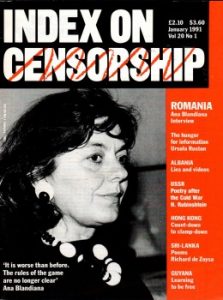
Romania, Albania, USSR: Index on Censorship magazine January 1991
A sense of solidarity, volume 20, issue 1, January 1991
Romania’s celebrated poet, Ana Blandiana, on censorship under Ceausescu and how she fought back. Her work was completely banned three times. “In my case, the form of censorship progressed from the banning of a word to that of a line, then of a poem, then of a book, to the total erasure of my signature as author: an eradication of identity. My inner freedom was assured by a decision I took in 1980, a personal one rather than as a writer. I decided to be outspoken and say what I thought at the risk of becoming a victim myself, rather than suspect a possibly honest person. At first it kept me sane, and then it helped me to be a normal writer, relatively free of self-censorship. This was the strongest form of censorship under Communism in the last 10 or 15 years, and was much more refined and subtle than the official censorship.”
Read the full article
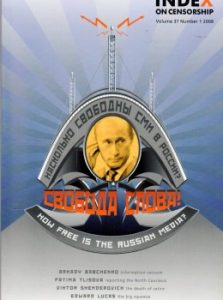
How free is the Russian media? Index on Censorship, Spring 2007
The Big Squeeze, volume 37, issue 1, Spring 2008
“The fact remains that since the departure of the oligarchs, Russian media freedom has gone from the imperfect and beleaguered to the moribund. At national television, which 90 per cent of Russians say is their main source of news, editors receive weekly or even daily instructions from the Kremlin on the ‘line to take’ on important stories; around half of Russian viewers think that what they watch is objective, a 2007 poll said. Foreign coverage is polemical and outrageously politicised. The message of all this is ‘be quiet’. If you annoy the rich and powerful you face threats, beatings or death. Even when the Kremlin is not directly involved, its reaction to the persecution of journalists sends a clear message: if you offend the powerful, don’t expect the law to protect you.” Edward Lucas gave an early taste of what freedom of expression meant under Putin.
Read the full article
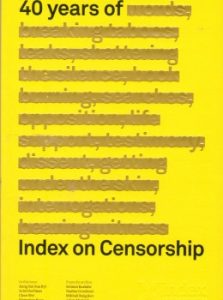
40 years of Index on Censorship March 2012
Grit in the engine, volume 41, issue 1, Spring 2012
Robert McCrum on the 40th anniversary of Index on Censorship. “The success of Index was not a foregone conclusion. Stephen Spender, its founder, was fully alert to the potential for windbaggery and failure. There was, he wrote, ‘the risk that the magazine will become simply a bulletin of frustration’. Actually, the opposite came to pass. Index became a clarion voice in the cause of free expression. The abuses of freedom worldwide in the 1970s were so appalling and so widespread that the magazine rapidly found itself in the frontline of campaigns. Perhaps the most important thing Index did, from the beginning, was to universalise an issue in peril of becoming a special interest: freedom was not ‘a luxury enjoyed by bourgeois individualists’. Along with self-expression, it was a human right, and an instrument of human consciousness.
Read the full article
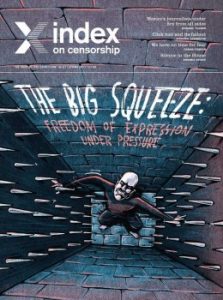
The big squeeze: Index on Censorship magazine Spring 2017
Freedom of expression under pressure, volume 46, issue 1, Spring 2017
The spring 2017 issue of Index on Censorship magazine looks at how pressures on free speech are currently coming from many different angles, not just one. Special features on how to spot fake news, articles from former BBC World Service director Richard Sambrook and former UK attorney general Dominic Grieve, an exclusive interview with the Spanish puppeteer arrested last year, and fiction from award-winning writer Karim Miské.
[/vc_column_text][/vc_column][/vc_row]
11 Feb 2019 | Magazine, News, Student Reading Lists
[vc_row][vc_column][vc_column_text]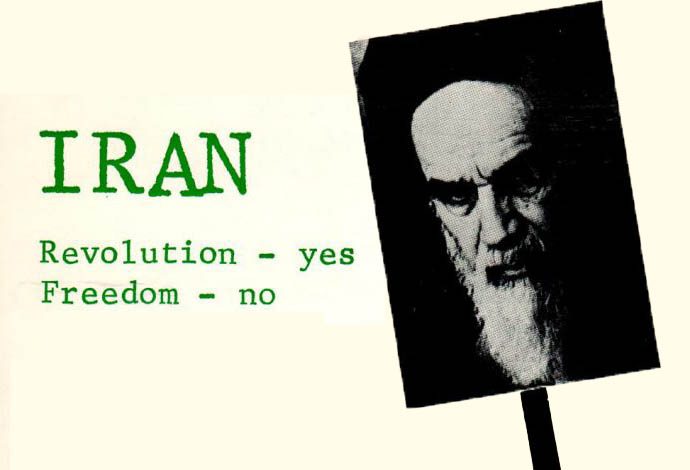
Forty years ago, on 11 February 1979, the rule of Mohammad Reza Pahlavi, the last shah of Iran, came to an end after millions of Iranians, from all backgrounds, took to the streets in protest at what they saw as an authoritarian, oppressive and lavish reign.
After decades of royal rule, and following 10 days of open revolt since the return of Ayatollah Khomeini to the country after 14 years of exile, Iran’s military stood down. With Pahlavi forced to leave the country, the Islamic Republic of Iran was declared in April 1979.
Here Index on Censorship magazine highlights key articles from its archives from before, during and after the revolution, an event that has since shaped the entire Middle East and has had a lasting impact to this day.
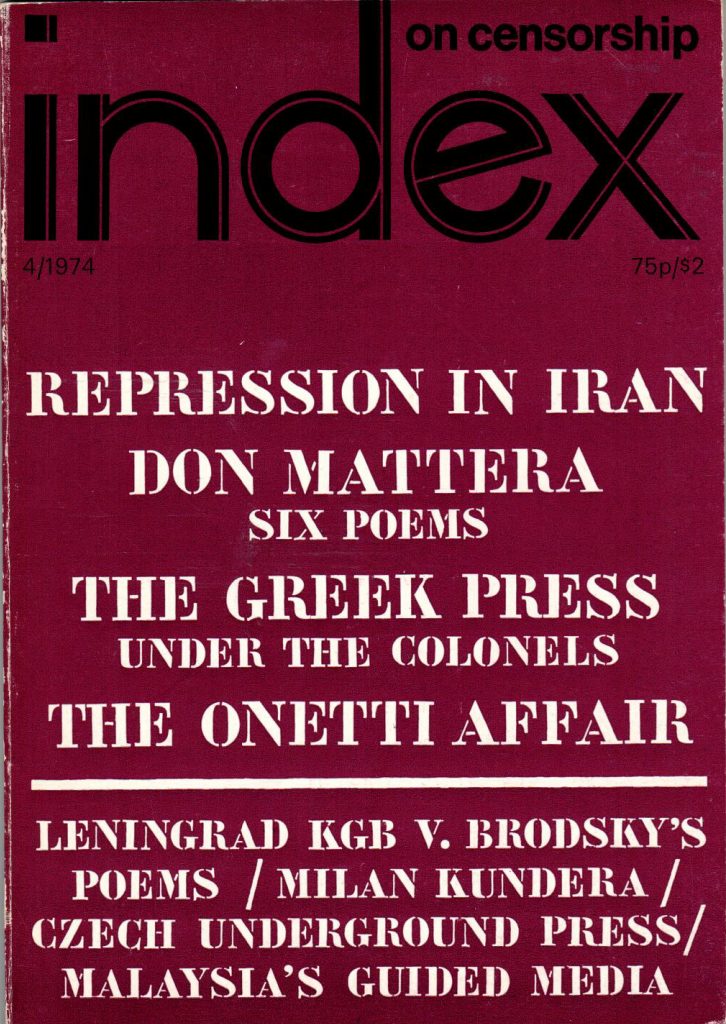
Repression in Iran , the Winter 1974 issue of Index on Censorship magazine
Repression in Iran
Ahmad Faroughy
December 1974, vol. 3, issue 4
In October 1972, the shah of Iran celebrated the 2,500th year of Persian Monarchy which, despite twenty national dynastic changes, has constantly endeavoured to remain Absolute. Although the aim of this article is not to debate the political merits and demerits of autocracy as a means of government, it is obvious that whatever minor benefits Iran may have derived from hereditary dictatorship, freedom of expression is certainly not one of them.
Read the full article

China: Unofficial texts, the September 1979 issue of Index on Censorship magazine
The press since the shah
M. Siamand
September 1979, vol. 8, issue 5
The Muslim clerical establishment had not been decimated, and the various peoples of Iran, showing a remarkable unanimity, rallied behind the exiled Ayatollah to overwhelm the imperial army into submission by staring it In the face. What the great majority of observers regarded as impossible has come to be: the minority cultures seem no longer in danger of quick extinction, and everyone is engaged in an exhilarating debate about the future. But unfortunately, threatening clouds can be seen gathering on the horizon. The revolution has not yet started to devour its own children, yet some powerful men in the new hierarchy are already saying that it might have to do so: secular, democratic opponents of the former regime are denounced as counter-revolutionaries, most clergymen seem determined to turn Iran into an intolerant theocracy and a cultural backwater, and martyrdom for Islam is held up for the young as the highest achievement they should aim at.
Read the full article

The rebirth of Chilean cinema in exile, the April 1980 issue of Index on Censorship magazine
Explaining Iran
Edward Mortimer
April 1980, vol. 9, issue 2
An extraordinary exhilaration gripped the Iranian people as the revolution at last triumphed and the remnants of the imperial regime suddenly crumbled away. One returns to confront the irritation of a European intelligentsia which is at once alarmed by the possible consequences of the Iranian revolution and perplexed by the fact that it does not quite fit into any of the ideological pigeon-holes which Western thought had prepared for it; and one is expected to atone by taking responsibility for the events which follow it.
Read the full article

Iran: Revolution – yes, Freedom – no, the June 1981 issue of Index on Censorship magazine
Iran since the shah
Leila Saeed
June 1981, vol. 10, issue 3
Concern for the restoration of social justice, for basic human rights, as well as national independence, provided the fundamental motive for the formidable mass movement which brought down the Pahlavi dynasty in February 1979. Iranians of different social backgrounds, ethnic and religious groups, of different creeds and ideologies came together in their revolt against the oppressive and arbitrary regime. And it was religion which provided the formal channels and the leadership by means of which the opposition expressed its demands and conducted its struggle.
Read the full article

Writers and Apartheid, the June 1983 issue of Index on Censorship magazine.
The Islamic attack on Iranian culture
Amir Taheri
June 1983, vol. 12, issue 3
Book-burning did not become an Islamic tradition. On the contrary. The Bedouin’s enchantment in front of the written word soon prevailed over the Caliph’s ‘ impulsive outburst. Islam expanded and developed into an established religion with universal appeal, and became an accidental heir to the wisdom of the classical world which it later passed on to the West. In 1979, in the triumph of the Islamic Revolution in Iran, an echo of Omar was heard. In their hatred of the “corrupt” contemporary world, Iran’s mullahs, who had designed and led the revolution, tried to “return to the source” and recreate the early Islamic society as they imagined it. An important step in that direction was what the revolution’s Supreme Guide, Ayatollah Ruhollah Khomeini, described as “deculturisation”.
Read the full article

Samuel Beckett: Catastrophe, the January 1984 issue of Index on Censorship magazine.
Iran under the Party of God
Gholam Hoseyn Sa’edi
February 1984, vol. 13, issue 1
Censorship was planned by the regime of the Islamic Republic even before the February 1979 revolution brought Ayatollah Khomeini’s theocratic oligarchy to power. This particular kind of censorship may not be without precedent in history, but it must certainly be rare. There were attacks on coffee-houses, restaurants and other public places by men armed with clubs and stones; unveiled women were harassed; slogans of the opposition were cleaned from the walls; banks, cinemas and theatres were burned. None of this seemed to follow any specific plan, but nonetheless it just kept on happening. Men with angry faces, dressed in shabby clothes, would be seen lurking in corners; they would come out for a moment of sudden violence and then disappear again. An astute observer might have called those attacks wounds on the body of the revolution as it was in the process of taking shape, but not many people noticed, and consequently they saw this deranged behaviour simply as a sign of revolutionary anger and class hatred.
Read the full article
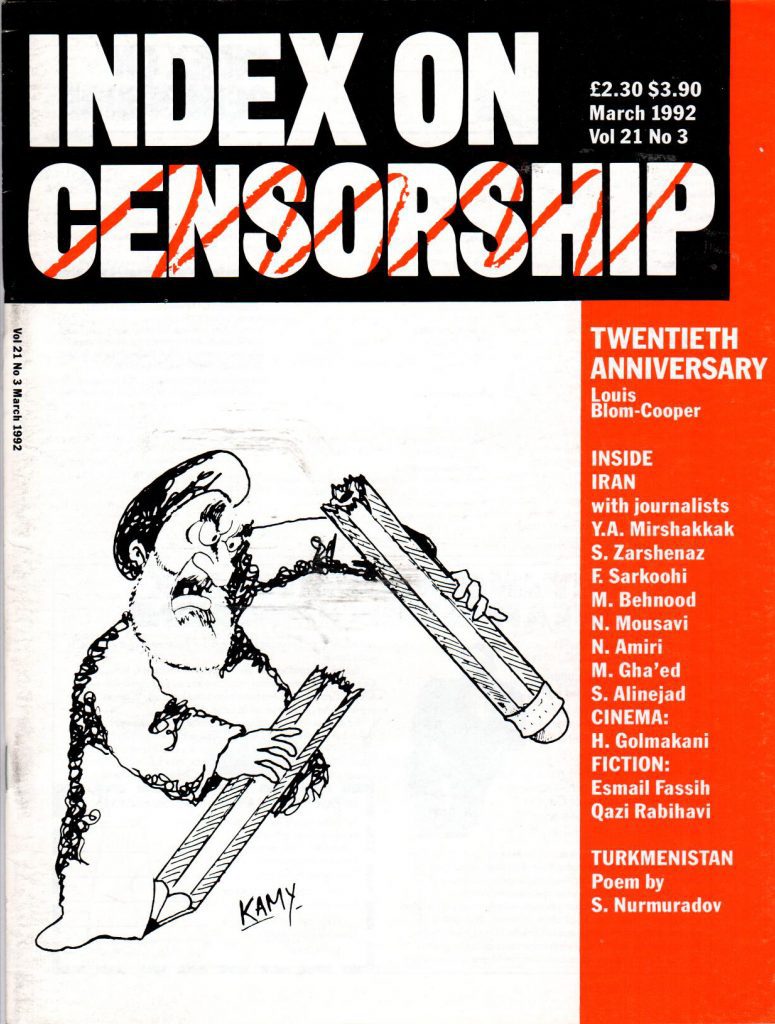
20th Anniversary: Freedom and responsibility, the March 1992 issue of the Index on Censorship magazine.
Inside Iran: A Special Survey
Gholam Hoseyn Sa’edi
March 1992, vol. 21, issue 3
Index brings together opposing views on the nature of human rights, freedom of expression and democracy within the Islamic Republic of Iran. This unique confrontation, first presented on 14 December 1991 on the UK’s independent Channel 4 TV programme South, reveals the gulf that separates the ‘universal’ principles of the Western Christian/humanist tradition from the theocentric teachings of Islam on the same matters. Even within Iran, the battle between rival and opposing interpretations of Koranic teaching on these subjects reaches into the highest levels of government.
As the Iranian journalist Enayat Azadeh, intimately connected with the film, himself says, we are not talking about anything as simple as those who are for and those who are against the Revolution. Committed supporters of the Islamic state who, influenced by education and inclination, wish to incorporate Western liberal ideas into Islamic thinking on, for instance, freedom of expression in the media or the arts, find themselves at odds with the pure Islamists who will brook no interference with the integrity of Islam
Read the full article
[/vc_column_text][/vc_column][/vc_row][vc_row][vc_column][vc_basic_grid post_type=”post” max_items=”4″ element_width=”6″ grid_id=”vc_gid:1549892591542-afaf5ec8-5514-0″ taxonomies=”8890″][/vc_column][/vc_row]
4 Oct 2018 | Awards, Cuba, Fellowship, Fellowship 2018, News, Press Releases
[vc_row][vc_column][vc_single_image image=”102925″ img_size=”full”][vc_column_text]The UK has overturned a decision to refuse visas to two award-winning Cuban artists who had been invited to take up a two-week artistic residency in Britain.
Luis Manuel Otero Alcántara and Yanelys Nuñez Leyva, winners of this year’s Index on Censorship Freedom of Expression Awards for Arts, were told last month their visa request had been denied — the second refusal this year. The artists had been scheduled to attend Index’s award ceremony in London in April but were denied visas to attend.
Alcántara and Nunez are founders of The Museum of Dissidence, a public art project and website celebrating dissent in Cuba. Set up in 2016, the museum organises radical public art projects and installations, concentrated in the poorer districts of Havana. This year, the two have been granted visas to Argentina, Chile, the Czech Republic, and the United States.
They were called to the UK embassy in Havana on October 2 and told the visa would be granted after all having “reevaluated” their application.
Jodie Ginsberg, Index on Censorship chief executive said: “Fortunately the UK has realised its mistake and reversed what was clearly an unfair decision. Government ministers talk repeatedly of freedom of speech as a key British value so it’s critical the UK demonstrates it in practice. Denying visas to artists who have faced oppression in their own countries for speaking out simply emboldens the oppressor.”
Last month, Cuban authorities arrested Nuñez and Alcantara for their role in organising a concert against Decree 349, a vague law that will give the government more control over the display and exchange of art. The law, due to come into force on 1 December 2018, gives the Ministry of Culture increased power to censor, issue fines and confiscate materials for work of which they do not approve. The pair were beaten during their detention.
It was the second arrest in three weeks for Alcantara in relation to Decree 349.
Nunez and Alcantara – will now be able to take up most of their planned two-week residency in Southend with Metal, an organisation that champions artistic innovation and provides practical support to artists, as well as receive in person their Freedom of Expression Award.
Colette Bailey, CEO and Artistic Director of Metal, said: “Metal are absolutely delighted that the decision not to allow Nunez and Alcantara to visit the UK as part of an artistic exchange has been overturned. We are very excited to welcome them in the coming weeks to Southend on Sea as part of our International Artists in Residence programme and are now busy preparing for their stay during which they will meet our local and regional artistic communities.”
Nunez and Alcantara were originally refused their visas on the grounds of insufficient evidence they would be able to support themselves financially during their stay.
“We had provided ample evidence of the support they would receive and that Index would stand as guarantor,” said Index on Censorship’s fellowships and advocacy officer Perla Hinojosa. “We have run our awards for nearly 20 years and never had any of our winners overstay or breach their visa terms. We’re so pleased the UK recognised how important it is to be able to welcome groups like the Museum of Dissidence to the UK.”
In August, directors of some of Britain’s biggest festivals signed a letter calling for the government to make its “overly complex” visa application process more transparent, after a surge in refusals and complications for authors, artists and musicians invited to perform in the UK.[/vc_column_text][/vc_column][/vc_row][vc_row][vc_column][vc_basic_grid post_type=”post” max_items=”12″ style=”load-more” items_per_page=”4″ element_width=”6″ grid_id=”vc_gid:1538647532051-bd795fb1-e996-5″ taxonomies=”23707″][/vc_column][/vc_row]
26 Sep 2018 | Awards, Fellowship, Fellowship 2018, News, Press Releases
[vc_row][vc_column][vc_video link=”https://youtu.be/-UpVto-2Sf0″][vc_column_text]The UK has refused visas for a second time to two award-winning Cuban artists who had been invited to take up a two-week artistic residency.
Luis Manuel Otero Alcántara and Yanelys Nuñez Leyva, winners of this year’s Index on Censorship Freedom of Expression Awards for Arts, had also been due to collect their award. They had been scheduled to receive their honour in April at the Index award ceremony in London but were denied visas to attend.
“We had hoped that – having been recognised with this award, and given the fact Luis Manuel and Yanelys have been granted visas to Argentina, Chile, the Czech Republic, and the United States this year – the UK government would give them the opportunity to visit the UK,” said Index on Censorship Fellowships and Advocacy Officer Perla Hinojosa.
Alcántara and Nunez are founders of The Museum of Dissidence, a public art project and website celebrating dissent in Cuba. Set up in 2016, the museum organises radical public art projects and installations, concentrated in the poorer districts of Havana.
Last month, Cuban authorities arrested Nuñez and Alcantara for their role in organising a concert against Decree 349, a vague law that will give the government more control over the display and exchange of art. The law, due to come into force on 1 December 2018, gives the Ministry of Culture increased power to censor, issue fines and confiscate materials for work of which they do not approve. The pair were beaten during their detention.
It was the second arrest in three weeks for Alcantara in relation to Decree 349.
“The UK makes much of its support for freedom of expression,” said Index on Censorship chief executive Jodie Ginsberg. “But while it talks the talk, it fails to walk the walk. Denying visas to artists who have faced oppression in their own countries for speaking out simply emboldens the oppressor.”
In August, directors of some of Britain’s biggest festivals signed a letter calling for the government to make its “overly complex” visa application process more transparent, after a surge in refusals and complications for authors, artists and musicians invited to perform in the UK.
Signatories of the letter included Nick Barley, the director of Edinburgh international book festival, and Chris Smith, the director of Womad after both went public with their festivals’ attempts to get visas for authors and musicians.
Yana Peel, CEO of the Serpentine Galleries and a judge of this year’s Freedom of Expression Awards said: “This is extremely disappointing news. Artists from overseas are being unfairly treated by the current visa system and it is beginning to have a significant impact on our programmes and events. In today’s climate, it is especially important that artists coming to Britain know that they are welcome.”
Nunez and Alcantara – who had been due to take up a two-week residency with Metal in Southend – were refused their visas on the grounds of insufficient evidence they would be able to support themselves financially during their stay.
“That’s nonsense,” said Hinojosa. “We provided ample evidence of the support they would receive and that Index would stand as guarantor. We have run our awards for nearly 20 years and never had any of our winners overstay or breach their visa terms.”
Colette Bailey, CEO and Artistic Director of Metal, said: “We are incredibly disappointed not to be welcoming Nunez and Alcantara to the UK as part of our International Artists in Residence programme. Our artists in residence programme is a platform for the exchange of ideas, culture and knowledge between artists from around the world and our local communities and young people. It is activity like this that contributes to the creativity of Britain, across sectors, and our enviable reputation as a creative powerhouse. This refusal is part of a worrying trend that cannot go unchallenged.”
In 2016, Index complained to UK authorities after UK border officials confiscated the passport of Syrian journalist, Zaina Erhaim who had been invited in her capacity as that year’s winner of the Freedom of Expression Award for journalism to speak at an event alongside veteran journalist Kate Adie.[/vc_column_text][/vc_column][/vc_row][vc_row][vc_column][vc_basic_grid post_type=”post” max_items=”12″ style=”load-more” items_per_page=”4″ element_width=”6″ grid_id=”vc_gid:1537976994705-c0f32970-0b8a-0″ taxonomies=”23772″][/vc_column][/vc_row]
