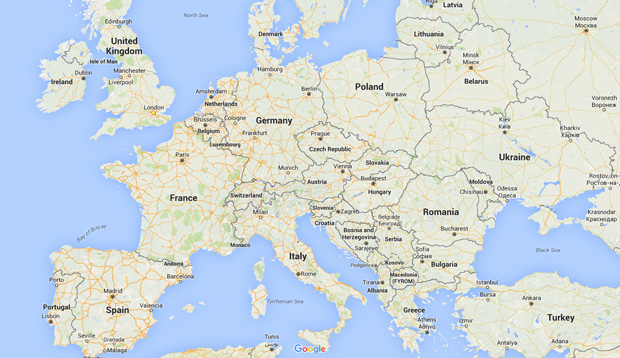
Index recently appointed a new youth advisory board cohort. The eight young students and professionals, from countries including Hungary, Germany, India and the US, will hold their seats on the board until December.
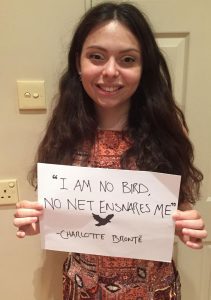
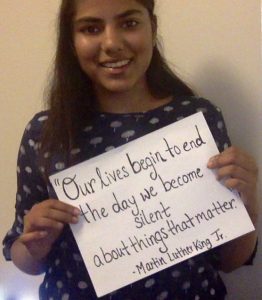
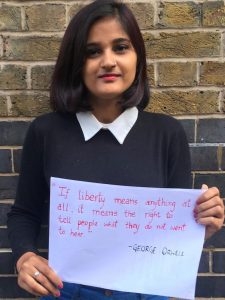
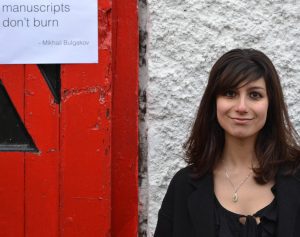
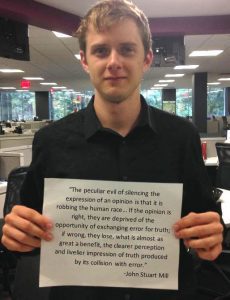
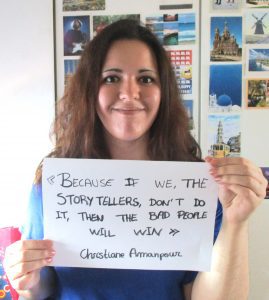
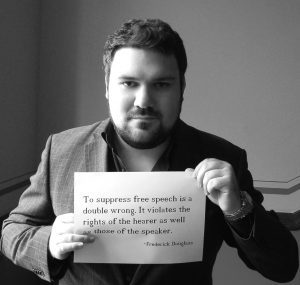
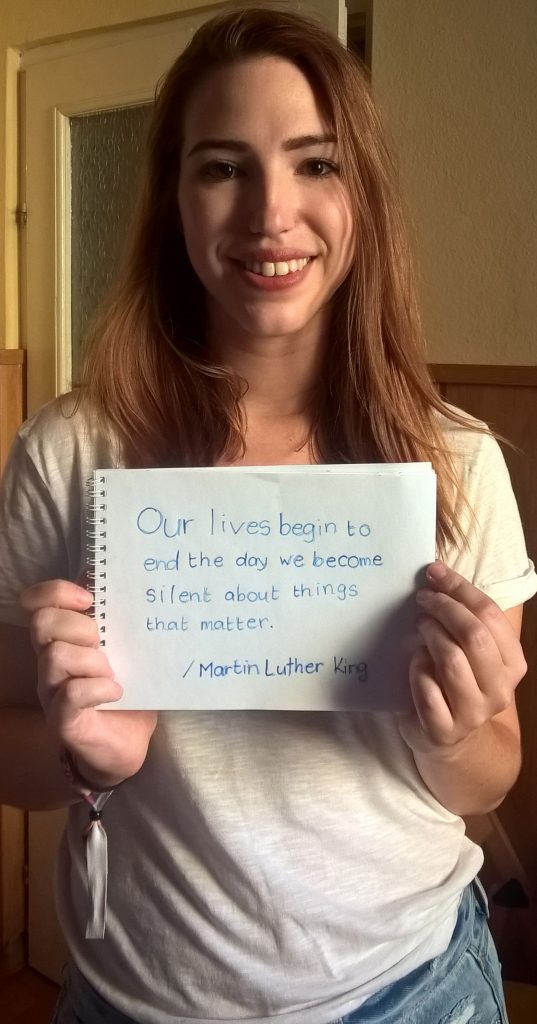
Each month, board members meet online to discuss freedom of expression issues occurring around the world and complete an assignment that grows from that discussion. For their first task the board were asked to write a short bio and take a photo of themselves holding a quote that reflects their belief in free speech.
Sophia Smith-Galer
I’m half English, half Italian, and was born and raised in London. I have just graduated from Durham University with a degree in Spanish and Arabic and will be studying for a Master’s in broadcast journalism at City University next year.
I have just returned from a trip to New York after winning a multilingual world essay prize which included speaking at the United Nations’ General Assembly. I was in the group of Arabic language winners and our speeches were about tackling climate change, which is one of the UN’s sustainable development goals for 2030. Now that I am embarking on a career in journalism I’m looking forward to continue supporting these goals in my work.
Freedom of expression is particularly important to me as several countries that speak both of the languages I have dedicated years of study to continue to be plagued by tyrants and censors. I’m particularly interested addressing censorship in Latin America and the Middle East, especially with regard to the arts, as I’m also a classical singer and keen art historian.
Shruti Venkatraman
Originally from Mumbai, I am currently a first year undergraduate studying law at the University of Edinburgh. As a law student, I am interested in advocacy in general, but I am particularly interested in advocating for fundamental human rights.
In today’s socio-political context, the phrase “freedom of expression” has gained importance and expanded in its meaning from it’s original intent to prevent minority persecution. Having lived in India and South Africa, I was able to grasp the importance of free speech in the context of regional history, and I learnt how human rights appeals have had local and global impacts and are inherently tied with social development. Index on Censorship’s admirable work to promote and defend freedom of expression highlights how important this cause is in our quest for social progress, justice and equality and how repression of these rights result in societal backwardness.
Niharika Pandit
I am currently a master’s candidate at the Centre for Gender Studies at SOAS, University of London with South Asia as my focus area of gender research. I became interested in issues of censorship during my undergraduate studies in mass media with a specialisation in journalism from Bombay.
As a journalist and an active social media user in India, I was witness to numerous instances of online abuse, trolling and silencing of women politicians, journalists and activists who voiced opinions on political and social issues. As a response to the barrage of abuse in the online space, otherwise a liberating space to hear diversified opinions, I wrote a piece on Twitter trolls in India and the use of sexist abuse as a tool to muzzle women for Index on Censorship’s Young Writers’ Programme.
Within censorship, I am particularly interested in working on the intersections of social media, gender along with looking at censorship in militarised zones and its growing legitimacy in contemporary political ethos as part of my research.
Layli Foroudi
It was studying literary works from the Soviet period during my undergraduate degree that highlighted the issue of censorship for me initially. Clearly this issue has outlived (and predates) the Soviet Union and is still of pressing concern in Russia today and globally. After graduating, I worked as a journalist on issues of freedom of expression and belief in Iran, and then in Russia at the Moscow Times. By pushing a state-sponsored version of the truth and punishing those at variance with it, these countries and others marginalise people and stifle innovation and creativity.
Freedom of expression and public debate underpin what society consists of and being denied this freedom is being denied the right to participation in society, as Hannah Arendt wrote: the polis is “the organisation of people as it arises out of acting and speaking together”. Historically, many have been denied the right to “act and speak”, based on ethnicity, gender, belief, immigration status, etc, and continue to be. I am interested in encouraging a diversity voices in the public sphere, something I have enjoyed exploring more this past year while undertaking an MPhil in race, ethnicity, and conflict at Trinity College Dublin and as a member of the youth advisory board since January.
Ian Morse
I’m a student and journalist at Lafayette College in the US, but I have studied in Germany, Turkey and the UK. I really started studying news media when I lived in Turkey 18 months ago, because even then (much more so now) journalists and bloggers had a very tough time gathering and publishing good information. Since then, I’ve been a journalist in Turkey, the UK and Greece. I study history and mathematics-economics, but almost every project I do is focused on news media.
I’ve encountered freedom of expression violations in many fashions, from student pressures against speakers to petty government retaliation to Twitter blocking. There is quite a bit of nuance that is overlooked in many cases, but that nuance is needed to understand where the line needs to be drawn. Words have a lot of power in society – but it is often difficult to get the truth out when lies are louder or gags are stronger. I hope with Index that we can find ways to fix this.
Anna Gumbau
I am a journalist living between Barcelona and Brussels. I am passionate about youth work, having volunteered for five years as member of AEGEE-Europe / European Students’ Forum, including a year as member of its international board. I have taken part in, and often led projects, run by students for other students all over Europe, on topics such as pluralism of media, election observation and media literacy. I am also involved in the field of internet governance, participating in the last two editions of the EuroDIG and joining the Youth Observatory of the Internet Society.
As a young media-maker who grew up listening to the stories of censorship in the times of the Spanish dictatorship, I believe strongly in free speech, a free press and media pluralism as essential pillars for democracy. I am fascinated by the power of words and freedom of expression to empower citizens and stand up to what they believe in. I also envision free media as a crucial element for better informed societies and, in extension, for more responsible individual citizens to participate in the public space.
Constantin Eckner
I am originally from Germany. I graduated from University of St Andrews with a master’s degree in modern history. Currently, I am a Ph.D. candidate specialising in human rights, asylum policy and the history of migration. Moreover, I have worked as a writer and journalist since I was 17 years old, covering a variety of topics over the years. Longer stays in cities like Budapest and Istanbul have raised my awareness for pressures exerted upon freedom of expression.
In a perfect world journalists, as well as every citizen, would live without fear of state censorship and potentially facing repercussions for the words they write or speak, for the pictures they draw, for the photos they shoot or for music they play.
Freedom of expression and access to information are cornerstones of an enlightened society. Unfortunately, in 2016 the world is still challenged by undemocratic regimes and powers that intend to quash people, which is an oppressive situation that has to change. It is up to us to help those who cannot raise their voice fearlessly.
Fruzsina Katona
I was born and raised in Hungary, although I spent my pre-university years in a small town in eastern Hungary. Today I am a freelance journalist.
I always knew I wanted to be a journalist, since I was always interested in literally everything that surrounded me. The urge to publish became stronger at the age of 17, after I returned from Japan, where I spent a school year. That one year made me realise, that my home country is really far from the image I had of it. And the only way I can fight against corruption, abuses and narrow-mindedness – apart from voting – is to educate and inform the public. I took an internship at Hungary’s leading investigative journalism center, and 2015 Index on Censorship Freedom of Expression award-winner, Atlatszo.hu. I have worked for them as a freelancer ever since, and I enjoy my work pretty much.
I recently received a graduate degree in communication and media studies, and supplemented my “official” studies with training, workshops and conferences across Europe.
In the future I would like to be a post-conflict reporter or a human rights journalist, specialising in freedom of expression and the press.
How can we protect a free media and space for civil society? What are the growing restrictions facing journalists? How can investigative journalism fight corruption?
As the space for free media in Europe is threatened, the importance of an independent media must be emphasised. A free and independent media plays a vital role in exposing corruption and holding governments and the corporate world accountable.
Restrictions on Media and the Press in the European Union, 3.45pm-4.45pm
Jodie Ginsberg, chief executive, Index on Censorship
Andras Peltho, founder/editor, Direckt 36 Hungary
Dirk Voorhoof, board member, European Centre for Press and Media Freedom
Investigating Corruption, 4.45pm-5.45pm
Miranda Patrucic, editor, Organised Crime and Corruption Reporting Project
Kristoff Clerix, Knack Magazine (ICIJ member who has worked on LuxLeaks, SwissLeaks and Panama Papers)
When: 2-6pm, 14 July Where: Residence Palace, Rue de la Loi 155, Brussels Tickets: To attend this event, register here. To apply for a travel grant contact [email protected]
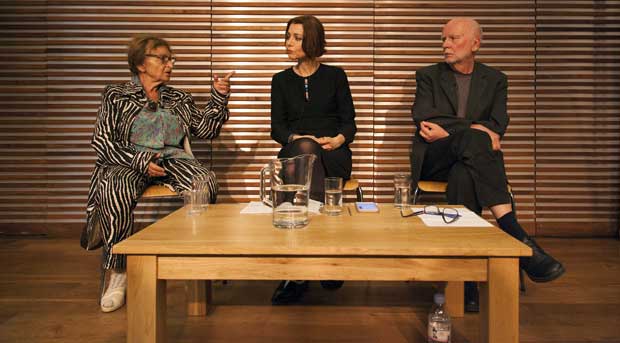
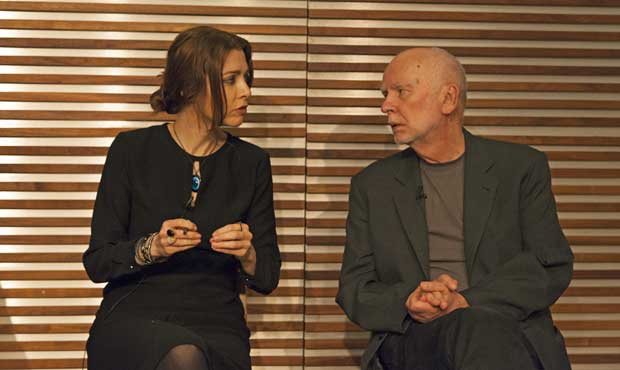
Free Word in partnership with Index on Censorship brought together three major cultural figures from Hungary, Poland and Turkey to compare their stories and ask: is Europe just a place, or a set of values that are rapidly unravelling?
Europe was a bastion of hope for more than a million refugees last year. What brought them? A hunger for safety and security? Dreams of freedom? The draw of liberal democracy with its ideals of free expression, equal opportunity and persecution for none?
But look within our own continent and you will see the cracks. In Hungary, Victor Orban’s administration looks increasingly autocratic. Poland’s new conservative government is making changes to its public media that critics have said amount to a takeover. How can we support neighbours like Turkey in their fight to avoid authoritarianism if we can’t fly the banner for freedom at home?
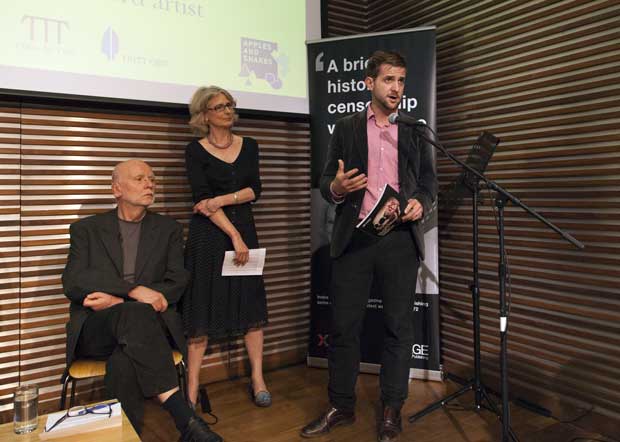
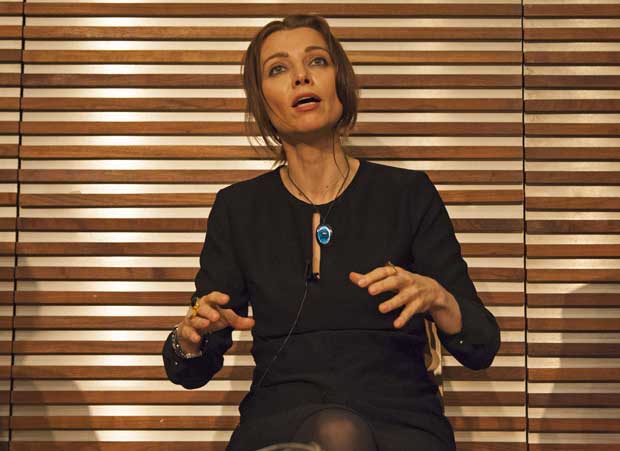
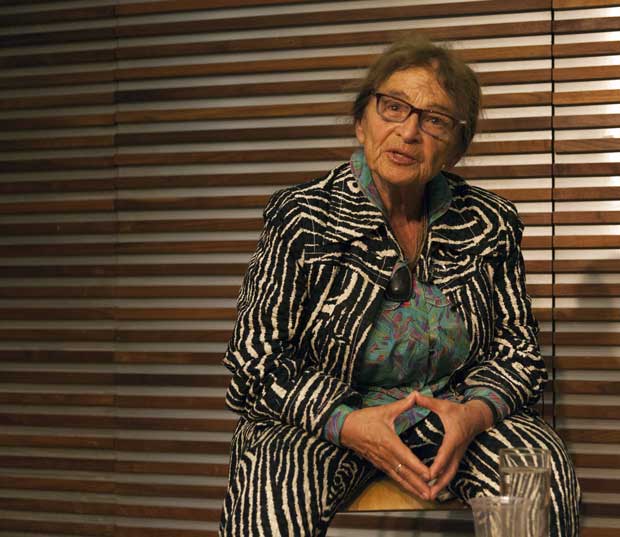
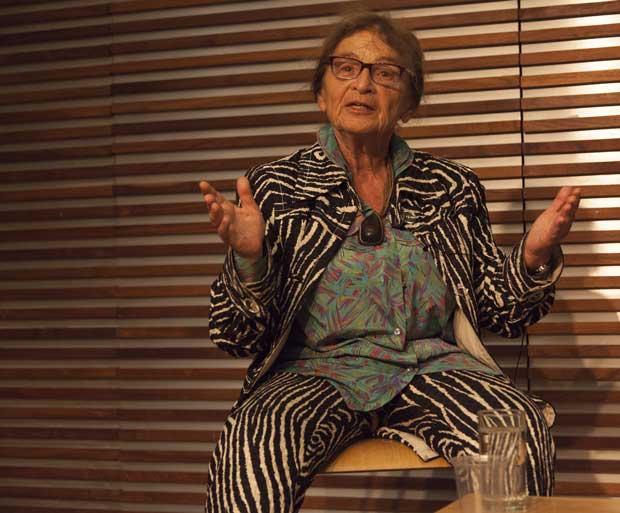
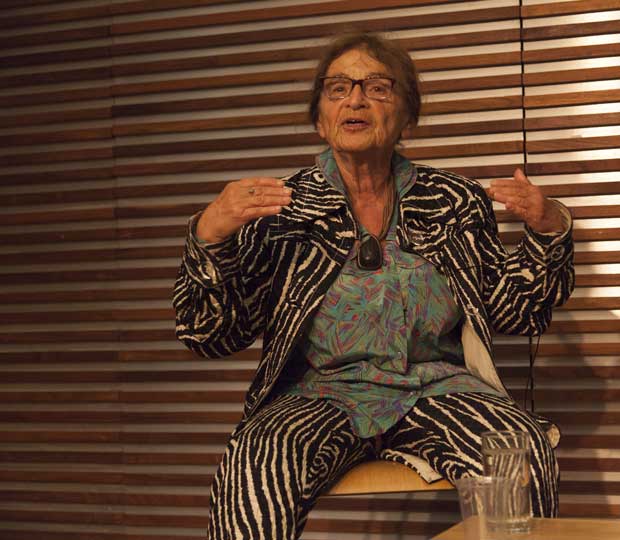
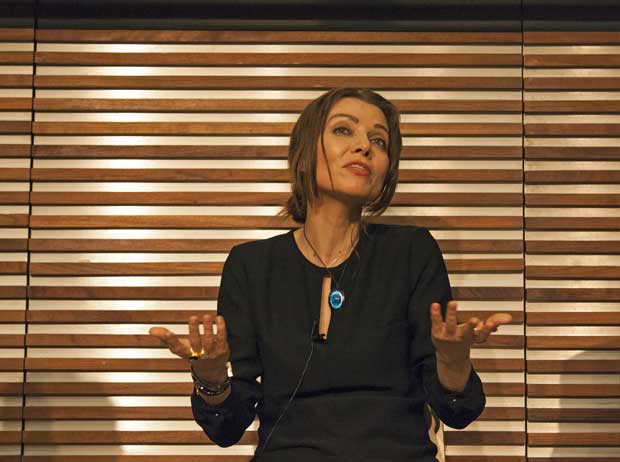
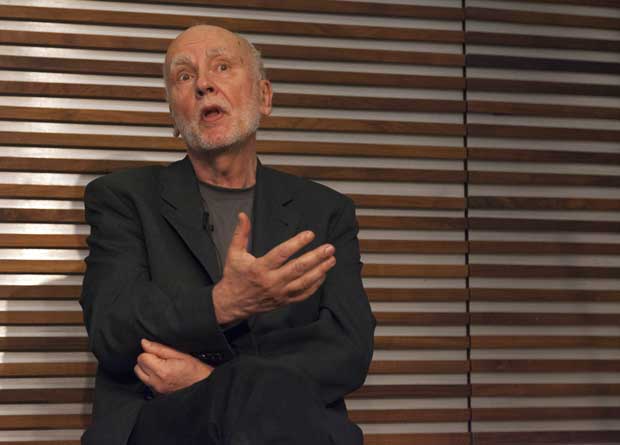
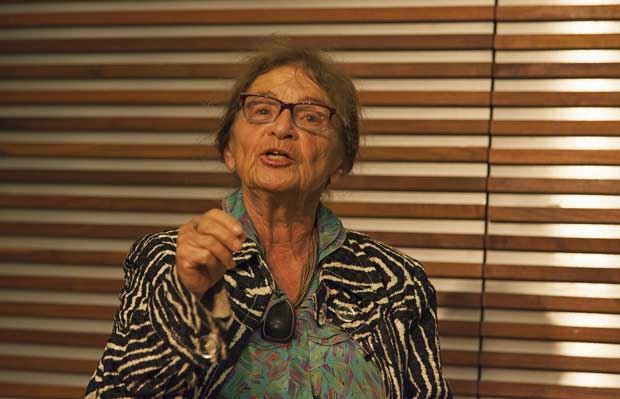
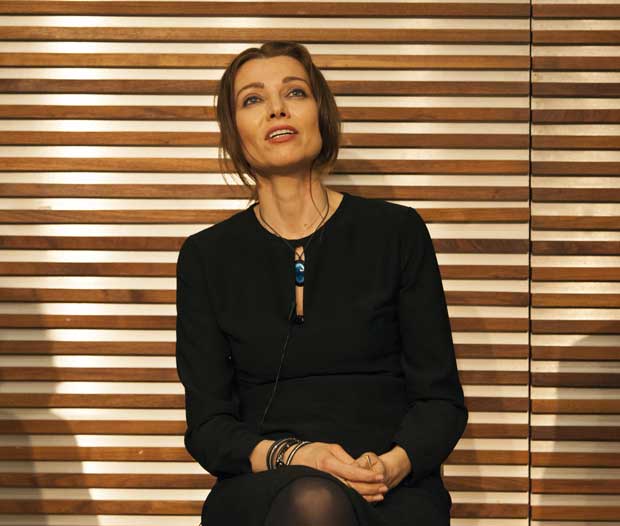
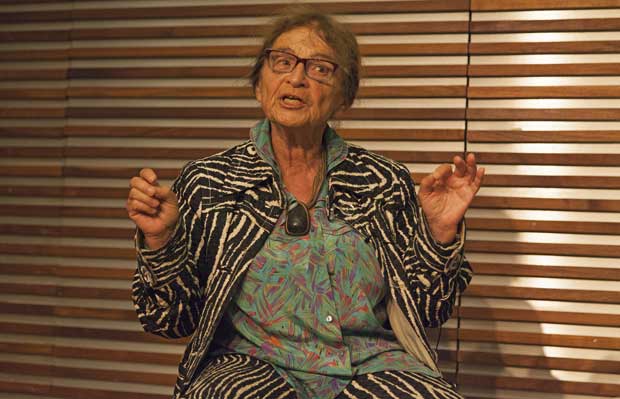
Agnes Heller, Elif Shafak and Adam Zagajewski Photos: Sean Gallagher/Index on Censorship
Poland, Hungary and Turkey come up on Index’s radar far too often at the moment, says @DBetzH, introducing tonight’s panelists #fweurope
— Index on Censorship (@IndexCensorship) June 15, 2016
In Turkey people cite Singapore as example of having economic success without democracy. Says @Elif_Safak#fweurope
— Index on Censorship (@IndexCensorship) June 15, 2016
‘Liberal democracy is majority decision but not majority rule.’ #AgnesHeller#FWEurope
Agnes Heller was born in 1929 and is one of the leading thinkers to come out of the tradition of critical theory. Her broad intellectual range and publications include ethics, philosophical anthropology, political philosophy and a theory of modernity and its culture. Hungarian by birth, she was one of the best-known dissident Marxists in central Europe in the 1960s and 1970s. She has held visiting lectureships all over the world and has been the Hannah Arendt Professor of Philosophy at the New School in New York. She now lives in Budapest and is one of the most popular and outspoken critics of the current regime.
Elif Shafak was born in Strasbourg, France, in 1971. She is an award-winning novelist and the most widely read woman writer in Turkey. Critics have named her as “one of the most distinctive voices in contemporary Turkish and world literature”. Her books have been published in more than 40 countries and she was awarded the honorary distinction of Chevalier of the Order of Arts and Letters. Elif has published thirteen books, nine of which are novels. She writes fiction in both Turkish and English. Elif blends Western and Eastern traditions of storytelling, bringing out the myriad stories of women, minorities, immigrants, subcultures, youth and global souls. Her work draws on diverse cultures and literary traditions, as well as a deep interest in history, philosophy, Sufism, oral culture, and cultural politics. Elif’s writing breaks down categories, clichés, and cultural ghettoes. She also has a keen eye for black humour.
Adam Zagajewski is an award-winning poet, novelist, translator and essayist. Born in Lwow in 1945, he first became well-known as one of the leading poets of the Generation of ‘68’ or the Polish New Wave (Nowa Fala). His poems and essays have been translated into many languages. Among his honors and awards are a fellowship from the Berliner Kunstlerprogramm, the Kurt Tucholsky Prize, a Prix de la Liberté, and a Guggenheim Fellowship. Since 1988, he has served as visiting associate professor of English in the Creative Writing Programme at the University of Houston. In 2010, he was nominated for the Nobel Prize in Literature. Adam is currently co-editor of Zeszyty Literackie (Literary Review). He lives in Krakow.
Since the 1920s, generations of western Europeans got used to the monopoly of public radio and later public television. These broadcasters developed strategies to better serve audiences and distance themselves from governments. The arrival of private broadcasters, in many cases taking place only in the 1970’s, was generally viewed as a complimentary service aimed at entertaining the public. Although public service broadcasting lost market share, it remained a respected institution in society; necessary to bring up youth, to get an objective picture of the world and cater to the interests of minorities.
Eastern Europeans also got used to the monopoly of state radio and television. Those broadcasters served the communist parties and were administered and financed by governments. Their political bankruptcy came with the collapse of communist ideology, underlined in particular by the plurality of private broadcasters that came on to the scene in the early 1990s.
These private media – with plentiful Western programming – was indeed television, for so long hidden from the viewers by totalitarian regimes. Politicians flocked to their studios to take part in talk shows, abandoning once-mighty state television. Thus, in the east, the public perception of public broadcasting was predominantly sceptical, if not negative. A discussion on its development was of tangential interest, at least during the saturation process of the new private media.
Abandoned by politicians and the public, the slow and clumsy transformation of the state broadcasters into public ones was guided by the bureaucrats, almost by themselves. The driving force behind the transformation was almost exclusively the activity of Strasbourg and Brussels. We all know that in the words of European institutions “public service broadcasting is a vital element of democracy in Europe.” Transformation of state television into a public one was a condition precedent of new democracies becoming member states of the Council of Europe in some cases. The authenticity of the transformation has been important to become a candidate for entry into the European Union and even sometimes to NATO.
Developments in younger EU member states show the importance of public service broadcasters for the development of democracy – and how they can be misused.
In December 2015, Poland‘s parliament adopted a law giving the treasury minister the mandate to appoint and dismiss members of management and supervisory boards. Since the law came into effect in January, reportedly more than 100 journalists in public media have lost their jobs, allegedly for not being government-friendly.
Hungary was probably the first example in the EU where public service broadcasting was practically turned back into state broadcasting, going against international standards calling for independence. New media laws in 2010 and the restructuring of the media landscape led, within a matter of one year, to all public service media being subordinated to political decisions. The new system introduced and cemented the political dependence of public service media; the governing party had nominated all new heads of public service media and the Media Authority now controls the budget of all public service media. The law vested unusually broad powers in the politically homogeneous Media Authority and Media Council, enabling them to control content of all media.
The battle to establish credible public service broadcasters in transitional democracies has been even more difficult to wage.
The latest example is the steering board of Bosnian Radio and Television which last month decided to suspend operation of all programming at the end of this month. This decision, a wrong one for several reasons, follows years of political and financial wrangling over control of the operation.
Throughout the western Balkans, significant issues are pending affecting the independence and financial stability of public broadcasting.
A bureaucratic response to the need to establish public service broadcasters has brought predictable results. The newly established broadcasters were visibly underfunded, with formal and informal administrative links – if not strings – to governments and no clear commitments to the public. Once established, it was unclear what to do with them. Most governments viewed them as an element of bureaucracy itself, a burden to carry on the road to a united Europe. If possible and convenient, they tried to make use of them through a carrot-and-stick policy.
As such, the new public service broadcasters immediately became subject to criticism by almost anyone who wanted to speak about them. Left to survive in the monstrous buildings of brutal architecture that once belonged to powerful state television, they had to sell airtime to advertisers, beg for Western donations and save on everything.
The advance of the internet and other new technologies almost killed the whole idea of television and radio, including public service broadcasting. It was saved by the transformation process – from public service broadcasting to public service media. In the West, the BBC and other companies have struggled to make use of the changing trends in media consumption. They went online, launched smartphone applications, became interactive, archived in order to engage fragmented audiences where and when required by the viewers.
Unfortunately this is not the case in the East. Public service broadcasters at best try to appeal to the older and well-educated audiences, traditional in their use of public service media. For our children, today’s debate is not only irrelevant, it is beyond their understanding.
Is there a future?
In my view we are losing the battle and might soon lose the war. To reverse the trend, we should do the following:
Give public service broadcasters a clear-cut mandate and obligation to program for the public which, in turn, should have effective feedback and control over content. There should be programmes that cater to minorities; there should be objective news, calm and matter-of-fact debates, educational and children’s programmes.
Public service broadcasters should function independently of the government. Buffer boards, meaning councils should be established to guarantee that only an abuse of a clear-cut mandate may serve to reprimand or dismiss an editor; only mismanagement and corruption may lead to firing executive directors.
And, finally, licence fees should be introduced or increased to heighten a feeling of public ownership. We can talk about other methods of independent funding, but none of them may bring this feeling of owning an institution that serves you.

 Fruzsina Katona