19 Jun 2017 | Artistic Freedom, News, Volume 46.02 Summer 2017
[vc_row][vc_column][vc_custom_heading text=”When cartoonists are being arrested, and novelists told their plots must only support the government line, you know your nation is in deep trouble, argues Rachael Jolley”][vc_row_inner][vc_column_inner][vc_column_text]
[/vc_column_text][/vc_column_inner][/vc_row_inner][/vc_column][/vc_row][vc_row][vc_column][vc_column_text]
A COUNTRY’S SENSE OF humour is a nebulous thing. But when it starts to disappear, something serious is afoot.
And so it is in Spain right now. Comedy, it turns out, is touching a nerve, as it often does, and rather surprisingly the lawyers are getting involved. Comedy is not only a threat, but under threat.
What’s bizarre is, this is Spain, a modern democracy, a solid, sensible country at the centre of Europe. Locking people up for making a joke, that’s something you might expect from an authoritarian and struggling state. But Spain?
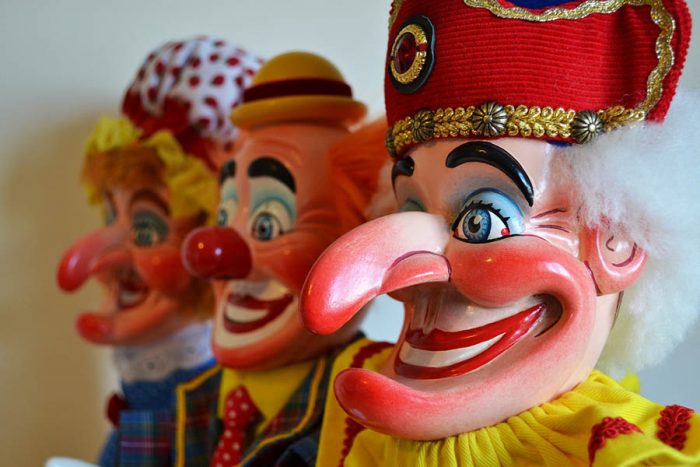
Well, it turns out, this is Spain in the 21st century. The list of comedy offences is not short. Spanish comedian Dani Mateo was told to testify before a judge in May for telling a joke referring to a monument built by Franco’s regime as “shit”. He told the joke during a satirical show. Now it doesn’t sound like the best joke in the world, but hell, we defend his right to tell it. And Mateo is not alone in the Spanish comic fraternity. There’s Facu Díaz, who was prosecuted last year for posting jokes on social media; Cassandra Vera, who was sentenced to a year in prison for making jokes about a former Spanish president; and three women who were accused of a religious hate crime for mocking a traditional Easter procession. Puppeteers whose Punch and Judy show included a sign for a made-up terrorist organisation carried by a witch spent a year fighting prosecution, unable to leave the country for weeks, receiving anonymous threats and having to report regularly to the police. On and on it goes, as Silvia Nortes reports for us on page 85.
So why does any of this matter? Well, jokes are a barometer of public mood, and as British comedian Andy Hamilton told this summer’s Hay Festival, you can even use them to test how much the public like or dislike a politician or public figure. He remembered making a joke about then Prime Minister Margaret Thatcher, and being told by one of her staunchest supporters to expect a wave of outrage. On checking, he found just three complaints, and that’s when, he said, he knew Thatcher was on the way out. Similarly, a recent joke about former UK Justice Secretary Michael Gove received a big fat zero moans in the BBC complaints box. Hamilton reckoned this was a sign of just how little the public cared about Gove.
So jokes do take the temperature of the nation, and one of many reasons politicians fear them is, as Mark Twain said, “Against the assault of laughter, nothing can stand.”
Politicians fear being made fun of, and fear that a satirical representation of themselves may take root in the electorate’s brain. They fear the public seeing their weaknesses. Some may remember that the classic satirical British TV puppet show Spitting Image reduced each member of the cabinet to a single ridiculous idea, a spitting former Home Secretary Roy Hattersley or a tiny David Steel tucked in the top pocket of David Owen (joint leaders of the SDP-Liberal alliance). Not good for their egos, not good for their future prospects. Steel said later that the sketch definitely affected his image.
[/vc_column_text][/vc_column][/vc_row][vc_row][vc_column width=”1/4″][vc_icon icon_fontawesome=”fa fa-quote-left” color=”custom” align=”right” custom_color=”#dd3333″][/vc_column][vc_column width=”3/4″][vc_custom_heading text=”That idea of groupthink, honed by the Soviet Union, satirised by George Orwell, continues to haunt writers in former communist countries today” google_fonts=”font_family:Libre%20Baskerville%3Aregular%2Citalic%2C700|font_style:400%20italic%3A400%3Aitalic”][/vc_column][/vc_row][vc_row][vc_column][vc_column_text]
Joke-telling is not the only ingredient in the comedy cupboard that upsets the powers that be. Historically, exaggerated portraits, as Edward Lucie-Smith writes in issue 197 of Index on Censorship, have long been used to diminish or enhance a public character. The most obvious creators of exaggerated portraits are newspaper cartoonists, who sometimes feel the long arm of the police on their shoulders as a result.
In our exclusive interview with legendary South African cartoonist Zapiro, he talks not only about the power of cartoonists, but the pressure on them not to offend or upset. In an interview with South African journalist Raymond Joseph, Zapiro said: “We provoke thought, even if that thought is pretty outrageous. Others can do it too. We just occupy a space where you can really push the boundaries.” Zapiro faced a six-year court battle with South Africa’s President Jacob Zuma over one of his cartoons. But Zapiro is just as feisty as ever, and reckons he is bolshier than the generations that have come after him.
Cracking down on comedy is just one way to command and control society. This issue’s special report examines others as we study the long shadows Russia’s 1917 revolution cast within and without its national borders.
From the beginning the early Soviets were not particularly fond of disagreement. Shortly after their rise to power, between October 1917 and June 1918, around 470 opposition publications were closed down. Lenin was clear how the nation should work. He believed that journalists, novelists and opinion formers were either with him, or against the state. If they were against the state, they shouldn’t be allowed to write or outline their views. “Down with non-partisan writers,” he argued. This is a view very much in favour with many other rulers today, including Angola’s President José Eduardo dos Santos, Chinese President Xi Jinping, and, recently, US President Donald Trump.
That idea of groupthink, honed by the Soviet Union, satirised by George Orwell, continues to haunt writers in former communist countries today. In Uzbekistan, as Hamid Ismailov outlines, the Soviet Union may have fallen, but the thinking remains the same. Writers with arguments that contradict President Shavkat Mirziyoyev are either neutralised by being employed by the state as advisers and consultants, or leave the country, or fail to be published.
In President Vladimir Putin’s Russia most of the media, apart from a few brave exceptions, fall into line with government positions. For instance, in February this year, according to the Index-led Mapping Media Freedom project, major Russian national television channels abruptly reduced the number of times they mentioned the US president. This followed a Kremlin order to cut back on “fawning coverage” of Trump.
In all the recent furore over “fake news”, prompted by almost incessant use of the term by Trump to undermine any reporting he didn’t like, it’s worth pointing out that tricks to get the public to believe something that is not true have been used throughout history. In fact, as Jemimah Steinfeld investigates (page 114), the Roman emperor Augustus was a master of manipulation well before PR handbooks were written.
And open the pages of a treasured book in our office and you’ll see an early version of photoshopping at work. Photographs featured in The Commissar Vanishes: The Falsification of Photographs and Art in Stalin’s Russia, show how people were “disappeared” from official Soviet portraits in the 1930s as they fell out of favour. Belarusians have been experiencing government attempts to get them to believe false stories for decades. In his report on page 52, Andrei Aliaksandrau unpicks the tricks used over the years and holds them up to the light.
And there’s some excellent thoughtful pieces in our fiction section too, with two new short stories written for this publication: one by Turkish writer Kaya Genç, and the other by British writer Jonathan Tel. The final slice is a new English translation of a much older story, by Russia’s “Comrade Count” Alexei Tolstoy.
To finish, a sad note. Our regular, and fantastic, Brazil correspondent Claire Rigby has died suddenly. Claire did amazing reporting for us, and we will miss her.
[/vc_column_text][/vc_column][/vc_row][vc_row][vc_column][vc_column_text]
Rachael Jolley is the editor of Index on Censorship magazine. She recently won the editor of the year (special interest) at British Society of Magazine Editors’ 2016 awards
[/vc_column_text][/vc_column][/vc_row][vc_row][vc_column][vc_custom_heading text=”From the Archives”][vc_row_inner][vc_column_inner width=”1/3″][vc_single_image image=”80569″ img_size=”213×289″ alignment=”center” onclick=”custom_link” link=”http://journals.sagepub.com/doi/pdf/10.1177/0306422017716030″][vc_custom_heading text=”Provoking the president” font_container=”tag:p|font_size:24|text_align:left” link=”url:http%3A%2F%2Fjournals.sagepub.com%2Fdoi%2Fpdf%2F10.1177%2F0306422017716030|||”][vc_column_text]June 2016
Legendary South African cartoonist Zapiro talks about being sued for millions by Jacob Zuma, fighting for “Lady Press Freedom” and death threats.[/vc_column_text][/vc_column_inner][vc_column_inner width=”1/3″][vc_single_image image=”90636″ img_size=”213×289″ alignment=”center” onclick=”custom_link” link=”http://journals.sagepub.com/doi/pdf/10.1177/030642200002900126″][vc_custom_heading text=”Funeral of laughter” font_container=”tag:p|font_size:24|text_align:left” link=”url:http%3A%2F%2Fjournals.sagepub.com%2Fdoi%2Fpdf%2F10.1177%2F030642200002900126|||”][vc_column_text]January 2000
Oscar Collazos reports on the Colombian mourners after the assassination of comedian Jaime Garzon, who told insolent truths to the world.[/vc_column_text][/vc_column_inner][vc_column_inner width=”1/3″][vc_single_image image=”89185″ img_size=”213×289″ alignment=”center” onclick=”custom_link” link=”http://journals.sagepub.com/doi/pdf/10.1080/03064220500157814″][vc_custom_heading text=”You must be joking! ” font_container=”tag:p|font_size:24|text_align:left” link=”url:http%3A%2F%2Fjournals.sagepub.com%2Fdoi%2Fpdf%2F10.1080%2F03064220500157814|||”][vc_column_text]May 2005
Israeli comedians who dare to make jokes around the Shoah run foul of their country’s ultimate taboo: this is no laughing matter.[/vc_column_text][/vc_column_inner][/vc_row_inner][vc_separator][/vc_column][/vc_row][vc_row content_placement=”top”][vc_column width=”1/3″][vc_custom_heading text=”100 Years On” font_container=”tag:p|font_size:24|text_align:left” link=”url:https%3A%2F%2Fwww.indexoncensorship.org%2F2017%2F06%2F100-years-on%2F|||”][vc_column_text]Through a range of in-depth reporting, interviews and illustrations, the summer 2017 issue of Index on Censorship magazine explores how the consequences of the 1917 Russian Revolution still affect freedoms today, in Russia and around the world.
With: Andrei Arkhangelsky, BG Muhn, Nina Khrushcheva[/vc_column_text][/vc_column][vc_column width=”1/3″][vc_single_image image=”91220″ img_size=”medium” alignment=”center” onclick=”custom_link” link=”https://www.indexoncensorship.org/magazine”][/vc_column][vc_column width=”1/3″ css=”.vc_custom_1481888488328{padding-bottom: 50px !important;}”][vc_custom_heading text=”Subscribe” font_container=”tag:p|font_size:24|text_align:left” link=”url:https%3A%2F%2Fwww.indexoncensorship.org%2Fsubscribe%2F|||”][vc_column_text]In print, online. In your mailbox, on your iPad.
Subscription options from £18 or just £1.49 in the App Store for a digital issue.
Every subscriber helps support Index on Censorship’s projects around the world.
 SUBSCRIBE NOW[/vc_column_text][/vc_column][/vc_row][vc_row full_width=”stretch_row_content_no_spaces” content_placement=”middle”][vc_column][vc_single_image image=”91122″ img_size=”full” alignment=”center” onclick=”custom_link” link=”https://www.indexoncensorship.org/2017/05/stand-up-for-satire/”][/vc_column][/vc_row]
16 Jun 2017 | Magazine, Magazine Contents, Volume 46.02 Summer 2017
[vc_row][vc_column][vc_custom_heading text=”Contributors include Nina Khrushcheva, David Aaronovitch, BG Muhn, Andrei Arkhangelsky, Rafael Marques de Morais and Bernard Gwertzman”][vc_row_inner][vc_column_inner width=”1/2″][vc_column_text]
The Summer 2017 issue of Index on Censorship magazine looks at how the consequences of the 1917 Russian Revolution still affect freedoms today, in Russia and around the world. Andrei Arkhangelsky argues that the Soviet impulse to censor never left Russia, and Nina Khrushcheva, a great-granddaughter of Nikita Khrushchev, reflects on the Soviet echoes in Trump’s use of the phrase “enemies of the people”.
[/vc_column_text][/vc_column_inner][vc_column_inner width=”1/2″][vc_single_image image=”91220″ img_size=”full”][/vc_column_inner][/vc_row_inner][vc_column_text]
Hamid Ismailov, a writer who fled Uzbekistan in 1992, also reflects on how the superficial removal of the symbols of Soviet rule did little to change the mentality of the country or its government.
BG Muhn explores the legacy of socialist realism art in North Korea, arguably the only remaining totalitarian communist country, where painters work in government-run studios to produce artwork inspired by Soviet ideals and Korean pride. Also examining propaganda in art, David Aaronovitch looks back at the famous Soviet films he grew up watching, and asks whether their distortion of true events is any more sinister than that of Hollywood.
Jan Fox also interviews Luis Lago Diaz, a Cuban filmmaker, showing the global reach of Soviet influence, and Rafael Marques de Morais dissects the Stalin-inspired cult of personality surrounding the president of Angola.
Meanwhile, with eyes on history, Kaya Genç examines the complex relationship between Russia and Turkey, Bernard Gwertzman reflects on his time as the New York Times’ Moscow correspondent during the 1960s, and Duncan Tucker investigates how Leon Trotsky’s journey from founding Soviet leader to dissident non-person saw him become a champion of free speech during his exile in Mexico.
Outside of the special report, Laura Silvia Battaglia interviews a Yemeni journalist about his ordeal reporting on his country’s war, which has included being kidnapped, tortured and shot, and Eliza Vitri Handayani explains how a small rural community in Indonesia has found innovative ways of standing up to big industry, including encasing their feet in cement.
Plus Jemimah Steinfeld asks the author Margaret Atwood about current threats to free speech, the South African cartoonist Zapiro discusses the time President Jacob Zuma sued him and in the culture section award-winning writer Jonathan Tel presents a surreal, original short story about China’s ban on time-travelling television.
[/vc_column_text][/vc_column][/vc_row][vc_row][vc_column][vc_custom_heading text=”SPECIAL REPORT: 100 years on” css=”.vc_custom_1497355747157{margin-right: 0px !important;margin-left: 0px !important;border-bottom-width: 1px !important;padding-top: 15px !important;padding-bottom: 15px !important;border-bottom-color: #455560 !important;border-bottom-style: solid !important;}”][vc_column_text]
What difference Russia’s revolution makes to our freedom today
Mexico’s unlikely visitor, by Duncan Tucker: Leon Trotsky might have arrived in Mexico with blood on his hands, but he quickly became a free speech fighter
Land of milk and honey, by Lahav Harkov: Israel’s kibbutz movement walks a fine line between being harmonious and restrictive
Friends reunited, by Kaya Genç: For most of the 20th century, Turkey and Russia were hostile neighbours. Now as both clamp down on free speech, they’re finding common ground
The enemies of those people, by Nina Khrushcheva: Nikita Khrushchev’s great-grandchild considers life in Trump’s USA compared to her Soviet upbringing
Airbrushing history, by Jeffery Wasserstrom & Yidi Wu: With China’s Communist Party still in power, the way 1917 is remembered must follow the party line. One man learnt the hard way
Being the big man, by Rafael Marques de Morais: Angola’s long-ruling president has constructed an image of himself straight out of Stalin’s playbook
The big chill, by Bernard Gwertzman: Staged press conferences and tapped phones were two obstacles to reporting from Moscow during the Cold War for The New York Times’ correspondent
Help! I’m a Taiwanese communist, by Michael Gold: Taiwan went through a mass killing of its communists. Today the country is opening up about this dark past and communists face a freer environment
Shot in Havana, by Jan Fox: The state still controls Cuba’s film industry, but a Cuban producer is hopeful about changes ahead
[/vc_column_text][/vc_column][/vc_row][vc_row][vc_column][vc_custom_heading text=”IN FOCUS” css=”.vc_custom_1481731813613{margin-right: 0px !important;margin-left: 0px !important;border-bottom-width: 1px !important;padding-top: 15px !important;padding-bottom: 15px !important;border-bottom-color: #455560 !important;border-bottom-style: solid !important;}”][vc_column_text]
Provoking the president, by Raymond Joseph: South African cartoonist Zapiro talks censorship and drawing in an exclusive interview
Novel lines, by Jemimah Steinfeld: An interview with Margaret Atwood on current threats to free speech and why scientists need defending
No country for free speech? by Daniel Leisegang: An old libel law and a new one aimed at social media are two threats to free expression in Germany
Read all about it, by Julia Farrington: Somaliland’s hugely successful festival is marking 10 years of extending access to books
See no evil: A Chechen journalist on the current climate of fear and intimidation that is stopping real news getting out
No laughing matter, by Silvia Nortes: Making jokes about Franco and ETA is off the table in Spain if you want to avoid trouble with the law
Cementing dissatisfaction, by Eliza Vitri Handayani: Indonesians experimenting with creative forms of protest are grabbing attention and sparking new movements
[/vc_column_text][/vc_column][/vc_row][vc_row][vc_column][vc_custom_heading text=”CULTURE” css=”.vc_custom_1481731777861{margin-right: 0px !important;margin-left: 0px !important;border-bottom-width: 1px !important;padding-top: 15px !important;padding-bottom: 15px !important;border-bottom-color: #455560 !important;border-bottom-style: solid !important;}”][vc_column_text]
Frenemies, by Kaya Genç: A mysterious man arrives at the White House. What does he want? A short story written exclusively for Index
Stitched in time, by Jonathan Tel: The award-winning writer on why the Chinese government controls historical narratives and an original story based on their ban of time travel shows
A tale of two Peters, by Alexei Tolstoy: First-time English translation of a story about Peter the Great by Russia’s Comrade Count, Alexei Tolstoy
[/vc_column_text][/vc_column][/vc_row][vc_row][vc_column][vc_custom_heading text=”COLUMNS” css=”.vc_custom_1481732124093{margin-right: 0px !important;margin-left: 0px !important;border-bottom-width: 1px !important;padding-top: 15px !important;padding-bottom: 15px !important;border-bottom-color: #455560 !important;border-bottom-style: solid !important;}”][vc_column_text]
Global view, by Jodie Ginsberg: Freedoms are being curtailed across the globe in the name of “national security”
[/vc_column_text][/vc_column][/vc_row][vc_row][vc_column][vc_custom_heading text=”END NOTE” css=”.vc_custom_1481880278935{margin-right: 0px !important;margin-left: 0px !important;border-bottom-width: 1px !important;padding-top: 15px !important;padding-bottom: 15px !important;border-bottom-color: #455560 !important;border-bottom-style: solid !important;}”][vc_column_text]
[/vc_column_text][/vc_column][/vc_row][vc_row][vc_column][vc_custom_heading text=”SUBSCRIBE” css=”.vc_custom_1481736449684{margin-right: 0px !important;margin-left: 0px !important;border-bottom-width: 1px !important;padding-bottom: 15px !important;border-bottom-color: #455560 !important;border-bottom-style: solid !important;}”][vc_column_text]Index on Censorship magazine was started in 1972 and remains the only global magazine dedicated to free expression. Past contributors include Samuel Beckett, Gabriel García Marquéz, Nadine Gordimer, Arthur Miller, Salman Rushdie, Margaret Atwood, and many more.[/vc_column_text][vc_row_inner][vc_column_inner width=”1/2″][vc_single_image image=”76572″ img_size=”full”][/vc_column_inner][vc_column_inner width=”1/2″][vc_column_text]In print or online. Order a print edition here or take out a digital subscription via Exact Editions.
Copies are also available at the BFI, the Serpentine Gallery, MagCulture, (London), News from Nowhere (Liverpool), Home (Manchester) and on Amazon. Each magazine sale helps Index on Censorship continue its fight for free expression worldwide.
SUBSCRIBE NOW[/vc_column_text][/vc_column_inner][/vc_row_inner][/vc_column][/vc_row][vc_row full_width=”stretch_row_content_no_spaces” content_placement=”middle”][vc_column][vc_single_image image=”91122″ img_size=”full” alignment=”center” onclick=”custom_link” link=”https://www.indexoncensorship.org/2017/05/stand-up-for-satire/”][/vc_column][/vc_row]
9 Jun 2017 | Campaigns, Campaigns -- Featured, Statements, Yemen
[vc_row][vc_column][vc_single_image image=”78277″ img_size=”full” add_caption=”yes”][vc_column_text]The Huthi and allied forces should immediately and unconditionally release ten Yemeni journalists detained arbitrarily without charge or trial, said eight NGOs today, on the second anniversary of their detention.
The organisations remain extremely concerned for the well-being of the journalists.
Family members of the journalists told Amnesty International that all ten men are currently held in the Political Security Office (PSO) in Sana’a, Yemen, after access to their families was further restricted throughout the month of May. Nine of the journalists were also interrogated during this month. To Amnesty International’s knowledge, this was the first time that some of these men had been questioned since their arrest two years ago.
Abdelkhaleq Amran, Hisham Tarmoom, Tawfiq al-Mansouri, Hareth Hamid, Hasan Annab, Akram al-Walidi, Haytham al-Shihab, Hisham al-Yousefi and Essam Balgheeth have been detained since 9 June 2015 when they were arrested by armed men in a room from where they were working in Qasr Al-Ahlam Hotel, Sana’a. Those who arrested the men were dressed in a mixture of civilian, military and General Security clothing, and some had slogans on their weapons that are associated with the Huthi armed group and its political wing, Ansarullah.
According to their families, the men are not aware of the reasons for their continued detention, and have not been formally charged or brought to trial. In the past, family members told Amnesty International that the detainees told them they overheard guards saying that the nine journalists are being held because they are linked to “terrorism” and “tarnishing the image of the Huthi popular committees”, as well as “working for Saudi Arabia, Qatar, United Arab Emirates, America and Israel.” The journalists work for a variety of news outlets in Yemen, some of which oppose the Huthi armed group, while others are aligned to the al-Islah opposition political party.
On 28 August 2015 a tenth journalist, Salah al-Qaedi, was also arrested by members of the Huthi forces at his home, also in Sana’a. Salah al-Qaedi’s family told Amnesty International that he had been tortured during his detention. There are no formal charges against him but his family suspect he is being detained because he worked for the al-Islah aligned Suhayl Channel, which was raided in September 2014 by the Huthi forces and eventually shut down in March 2015.
The families of some of the journalists told Amnesty International that they believe increased visiting restrictions were in retaliation for the peaceful campaigning activities some of them undertook around World Press Freedom Day, on 3 May 2017, including an online campaign and vigils in front of the Office of the High Commissioner for Human Rights in Sana’a, as well in Ma’rib, Ta’iz and Aden. At the time of writing, at least seven families confirmed that they were allowed a visit last week, having had restricted access for over a month.
All ten journalists have had illnesses and medical conditions caused or aggravated by their detention conditions or treatment, including abdominal and intestinal pain, hearing problems, haemorrhoids and headaches, their families told Amnesty International. Some have been taken to a hospital outside of the prison for medical treatment but have not been given appropriate medication. Others have been denied medical treatment altogether.
According to Essam Balgheeth’s family, when they last visited him at the end of May, he was suffering from dizziness and regular fainting episodes. The prison authorities refused to take him to a hospital and would not allow his family to bring him natural remedies, such as honey, during their visits. Several other families were also not allowed to bring medication to their detained relatives.
Tawfiq al-Mansouri has also been suffering from deteriorating health. According to his family, he was diagnosed with a swelling in his prostate and has only received painkillers and topical medications as treatment.
The ten journalists must be released immediately and unconditionally, as they are detained solely for their peaceful exercise of their rights to freedom of expression and their perceived political opinions. Pending the journalists’ release, the de facto Huthi authorities must ensure that they are protected from torture and other ill-treatment and are given, without delay, regular access to their families, lawyers and adequate medical treatment.
There has been a surge in arbitrary arrests, detentions and enforced disappearances by Huthi and allied forces of their critics and opponents, as well as journalists, human rights defenders and members of the Baha’i community since the beginning of the Saudi Arabia-led coalition’s aerial campaign in Yemen in March 2015. Mwatana Organization for Human Rights has documented the arbitrary detention of five other journalists by the Huthi authorities in Sana’a and Dhamar, including one detainee who has been forcibly disappeared since June 2015. Reporters without Borders have documented the arbitrary detention of another additional journalist by Huthi forces.
On 12 April 2017, Yemeni journalist Yahia al-Jubaihi, who has been arbitrarily detained since September 2016, was sentenced to death by the de facto Huthi authorities for allegedly communicating with Saudi Arabian-led coalition forces. The death sentence against Yahia al-Jubaihi must immediately be quashed and the Huthi authorities must ensure he is retried in proceedings that conform to international fair trial standards and without the possibility of a death sentence or released.
Yemen is ranked 166th (out of 180) in Reporters Without Border’s 2017 World Press Freedom Index.
***
Amnesty International
Committee to Protect Journalists
Gulf Center for Human Rights
Human Rights Watch
Index on Censorship
Mwatana Organization for Human Rights
PEN International
Reporters Without Borders[/vc_column_text][/vc_column][/vc_row][vc_row][vc_column][vc_basic_grid post_type=”post” max_items=”12″ style=”load-more” items_per_page=”4″ element_width=”6″ grid_id=”vc_gid:1496992331269-b804eac7-adf5-0″ taxonomies=”9059″][/vc_column][/vc_row]
6 Jun 2017 | Academic Freedom, Mapping Media Freedom, News, Turkey
[vc_row][vc_column][vc_single_image image=”91204″ img_size=”full” add_caption=”yes” alignment=”center”][vc_column_text]Turkey’s authoritarian shift has been unmistakable this past year. Following the coup attempt in July 2016, President Recep Tayyip Erdogan’s purge of state institutions has led to mass dismissals, including over 8,000 academics. Similarly, over 2,000 schools, dormitories and universities have now been shut down, causing great concern for Turkish education.
Nuriye Gulmen, a professor of literature, and Semih Ozakca, a primary school teacher, were both fired following the issuing of emergency decree 675 by Erdogan’s government. Shortly afterwards the pair joined forces demanding that academics across Turkey get their jobs back. Since they began protesting over six months ago with the slogan “I want my job back”, Gulmen and Ozakca have been detained by Turkish authorities over 30 times, most recently on 22 May. It is being reported that they will be tried for “membership of a terror organisation”.
The pair embarked on a hunger strike on 9 March 2017, which is now in its 90th day. While their story has now gained much international attention, they have little recognition from their own government.
“Amid a nationwide crackdown on freedom of expression, a hunger strike is the form Nuriye and Semih have chosen to protest the dire situation faced by academics in Turkey,” Index on Censorship’s head of advocacy Melody Patry said. “Index calls for their immediate release and for all charges against them to be dropped.”
Due to the massive number of arrests of journalists, academics and others within the last year, there is a serious backlog in the Turkish courts which means it could be a year from now before their case is even heard.
After protesting in various forms, from collecting signatures, distributing flyers and going door to door to share their story, Gulmen and Ozakca found little success. Instead, they were continuously detained by authorities before being released soon after.
Throughout their current hunger strike, there has been a significant deterioration in their health, and Ozakca has lost over 37 pounds from a diet consisting of salt water and sugar solutions with a single B vitamin. Gulmen says she experienced heartburn and a drastic drop in blood pressure which then lead to aching muscles, difficulty moving, loss of tissue, sensitivity to light and trouble concentrating. Eventually, the pair experienced severe difficulty walking as well as muscle atrophy, and are now both confined to wheelchairs.
This has not, however, hindered their hope of victory in their battle with the government. In a video released earlier in May, Gulmen stated that the solidarity and support of the public was making her feel better and that the pair’s “resistance is continuing and we will not stop until we gain our rights again.”
Similarly, they stated their latest detention will not halt their hunger strike, as they promised to continue it in prison.
The solidarity and support, which they have expressed thanks for, has come in many forms. David Harvey, professor of anthropology and geography at the Graduate Center of the City University of New York, released a video providing support in which he said: “I want to express my solidarity with my friends and colleagues who are on a hunger strike in Turkey. I think that the sooner we enter a democratic process in Turkey, the better. I support all the actions made for this purpose with all my heart.” Turkish singer, Sezen Aksu, has also offered support and called on the Turkish government to take action and “listen to their voices”
Over 145,000 public workers have been fired since the failed coup, resulting in an array of protests and public demonstrations by activists and the general public throughout the world. Many Turkish public workers have protested on their own behalf in an attempt to regain their jobs and draw attention to the government crackdown.
Many, including Efe Sevin, a Turkish post-doctoral researcher at the University of Fribourg, believe the coup has become an excuse for Erdogan to do anything he wants, including stamping out opponents and potential opponents by labelling them as enemies of the state and members of terrorist organisations.
“Erdogan is very dismissive of intellectual capital and opposition,” Sevin added. “The only reason one may oppose him is if they have some secret/hidden agenda to overthrow the government or they are terrorists or they are supported by foreign powers to do so.”
Thinking about the overall impacts of these dismissals on Turkish academia depresses Sevin both personally and professionally depressed. “Especially with the most recent decrees that dismissed peace petition signatories that had no known ties with Gulen, I think ‘will there be a new decree with my name on it?’ is a fear all Turkish faculty members share.”
“Even though it is becoming more and more difficult to defend academic freedom under the current regime, we should not pretend that Erdogan took over an academic freedom utopia,” Sevin said. “Especially after the coup in 1980 and the establishment of Council on Higher Education, academic freedom was at best questionable in Turkey.”
Similarly to Gulmen and Ozakca, one of Turkey’s most prominent academic reformers, Kemal Guruz, was sentenced to thirteen years and eleven months in prison by a criminal court in Turkey on 5 August 2013. His ordeal began in 2009 when he was accused of being a member of a secret terrorist organisation and ”reached a climax” in 2012 when a further charge of attempting to forcibly overthrow the government was levelled at him.
Guruz, who served 438 days of his sentence before being released, told Index: “The two cases, though seeming to have fizzled out, are still continuing in courts. I use the qualifier ‘seeming to’ because you never know how things will turn out in the Turkish courts of today.”
“All of the prosecutors who prepared the indictments against me and all but one of the judges who presided over my trials in the past are either in jail or fired or have fled the country,” he added. “I understand what is going on today is a struggle between the legitimate government and the Gulenists who appear to have attempted a coup last summer, but I must add that the two sides were in cahoots in the past, especially in my two court cases.”
“Apparently, both sides hate my me for my staunchly secular and pro-Western stand.”
As Gulmen and Ozakca’s hunger strike continues, efforts to get the Turkish government to acknowledge them are growing more urgent. Index urges prominent public figures to follow the actions of David Harvey and speak out on Nuriye’s and Semih’s behalf in the form of a short video expressing solidarity. [/vc_column_text][/vc_column][/vc_row][vc_row][vc_column][vc_video link=”https://youtu.be/c9pyXZ8pTGc”][/vc_column][/vc_row][vc_row][vc_column][vc_basic_grid post_type=”post” max_items=”4″ element_width=”6″ grid_id=”vc_gid:1496766579296-290161d0-415f-4″ taxonomies=”8607″][/vc_column][/vc_row]