[vc_row][vc_column][vc_custom_heading text=”Contributors include Richard Sambrook, Dominic Grieve, Roger Law, Karim Miské, Mark Frary and Canan Coşkun”][vc_row_inner][vc_column_inner width=”1/2″][vc_column_text]
The spring issue of Index on Censorship magazine looks at how pressures on free speech are currently coming from many different angles, not just one. Richard Sambrook, former director of global news at the BBC, shows how journalists are in a bind, caught between what advertisers want and what readers want. Also looking at journalists, Duncan Tucker casts his eye on the grave situation in Mexico, where getting to the truth involves working against the government, violent cartels and even coworkers.
Meanwhile, in the Maldives Zaheena Rasheed shows how a mix of forces conspire against those who want to write anything beyond the usual tourist sale pitch.
But the squeezes on free expression don’t just concern journalists. Annemarie Luckreports from Japan, where penis festivals are popular, but women struggle to discuss their own bodies. Can they find a voice through art and manga? For musician Smockey from Burkina Faso, art should indeed be a way to confront truth and yet that’s not always the case. Expectations run high for him to not be “too political” in his lyrics.
Universities, normally the cradle of free expression, aren’t faring too well either, as two articles show. Jan Foxreports from the USA, where bias response teams are becoming a staple of US collegiate life. In South Africa Fees Must Fall has created a divide between right and left, writes Natasha Joseph, with neither side talking to each other and those in the middle being silenced altogether.
Outside of our special report, Roger Law, creator of the iconic TV satire Spitting Image, talks about the great fun he had with the series back in the day and questions whether the show would be able to air today. Alfonso Lázaro de la Fuente might say no. He was one of the Spanish puppeteers arrested last year for a show that referenced Basque-separatist organisation ETA. In an Index exclusive, he explains what the charges have meant for his personal and professional life.
Want to know how to spot fake news? Then read Reel-time news in which Index’s team of experienced global reporters offer tips on how to spot fake news from a mile/screen away. And don’t miss Martin Rowson‘s fake o’clock news, a hilarious – and sinister – take on what a future of alternative facts would look like.
Index also publish an interview with Turkish journalist Canan Coşkun, whose coworkers are currently in jail, and a pair of writers discuss the situation of free speech in Poland, which is tumbling down global charts following the election of the Law and Justice party. And in the UK, former attorney general Dominic Grieve reveals that MPs are avoiding hard talk in parliament.
Finally, the culture section includes a short story from award-winning French writer Karim Miské and original work from Vyacheslav Huk, a Crimean novelist who is unable to publish work in his mother tongue.
Fact-filled future? by Rachael Jolley: Journalists need to step up, and produce more detailed news coverage. The public needs it
Between a rock and a hard place, by Duncan Tucker: Mexico’s journalists face threats from cartels, the government and each other
Reality rapped, by Smockey: An award-winning musician from Burkina Faso explains why he won’t water down his lyrics to avoid rocking the boat, despite pressure to do so
Talking a tightrope, by Kaya Genç: Despite the crackdown in Turkey, the post-Gezi spirit still survives among the determined
Taking the bait, by Richard Sambrook: The quest for instant gratification online is seriously compromising news reporting
Dangerous minds, by Natasha Joseph: Rather than creating an alliance, Fees Must Fall is limiting free speech at South Africa’s universities, leaving some early supporters disheartened
Japan’s Madonna complex, by Annemarie Luck: Japan’s contradictory attitudes include highly sexualised images of women and women not being allowed to talk about sex-related subjects
Squeezed in the closet, by Hannah Leung: Get married and be quiet are the messages China’s LGBT community is given
Degrees of separation, by Jan Fox: The author investigates units appearing on US campuses suggesting students should report lecturers who they feel are biased
Dying to tell a story, by Sadaf Saaz: The list of what Bangladesh writers cannot talk about is getting longer, but that isn’t stopping some from writing
Trouble in paradise, by Zaheena Rasheed: Behind the image of palm-lined beaches is a side of the Maldives the government doesn’t want you to see
Your cover is shown, by Mark Frary: Tech giants and governments are out to get your data. Soon it might be impossible to remain anonymous
We have no time for fear, by Canan Coşkun: A Turkish journalist on the perils of reporting in her country when fellow reporters are imprisoned
Reel-time news, by Natasha Joseph, Kaya Genç, Jemimah Steinfeld, Duncan Tucker, Abraham T Zere, Raymond Joseph: As “fake news” dominates headlines, Index’s global team of experienced journalists offers tips on how to spot falsehoods before you click and share
Singing from the same hymn sheet, by Suhrith Parthasarathy: Rising Indian nationalism is creating a repressive state where non-conformity is deemed unpatriotic
Poland: Special Focus, by Wojciech Przybylski, Marcin Król: Poland has gone from free speech hero to villain almost overnight. Two writers discuss the shift and why history is being rewritten
Shooting from the hip, by Irene Caselli: A new mayor in a Mexican border city believes he will make it less dangerous for journalists
Silence in the house, by Dominic Grieve: The former UK attorney general says MPs are shying away from tough topics in parliament
Puppet masters, by Roger Law: The creator of iconic TV satire Spitting Image on whether we still have our sense of humour
Drawing the line, by John Power: Australia is debating free speech, one cartoon at a time. Cartoonist Bill Leak interviewed just before he died
Puppet state, by Alfonso Lázaro de la Fuente: A Spanish puppeteer, arrested after terrorism charges related to a show, discusses the impact on his life
Novel take on terror, by Karim Miské: The award-winning crime writer on why fiction and reality overlap. Plus his short story featuring a future where tech rules supreme. Interview by Sally Gimson
The war of the words, by Amira Hanafi: Translated extracts from an American-Egyptian writer’s project to capture the shifting linguistic landscape in Egypt since 2011. Interview by Sally Gimson
Crimean closedown, by Vyacheslav Huk: The Crimean novelist on being unable to publish in his mother tongue and a story of the narrator’s memories. Introduced and translated by Steve Komarnyckyj
Index around the world, byKieran Etoria-King: What to look out for at Index’s Freedom of Expression Awards 2017, alongside news of other projects that Index has been working on in the last few months
Getting print out, by Jemimah Steinfeld: Self-publishing may be a new solution to censorship in China and other countries
[/vc_column_text][/vc_column][/vc_row][vc_row][vc_column][vc_custom_heading text=”SUBSCRIBE” css=”.vc_custom_1481736449684{margin-right: 0px !important;margin-left: 0px !important;border-bottom-width: 1px !important;padding-bottom: 15px !important;border-bottom-color: #455560 !important;border-bottom-style: solid !important;}”][vc_column_text]Index on Censorship magazine was started in 1972 and remains the only global magazine dedicated to free expression. Past contributors include Samuel Beckett, Gabriel García Marquéz, Nadine Gordimer, Arthur Miller, Salman Rushdie, Margaret Atwood, and many more.[/vc_column_text][vc_row_inner][vc_column_inner width=”1/2″][vc_single_image image=”76572″ img_size=”full”][/vc_column_inner][vc_column_inner width=”1/2″][vc_column_text]In print or online. Order a print edition here or take out a digital subscription via Exact Editions.
Copies are also available at the BFI, the Serpentine Gallery, MagCulture, (London), News from Nowhere (Liverpool), Home (Manchester), Calton Books (Glasgow) and on Amazon. Each magazine sale helps Index on Censorship continue its fight for free expression worldwide.
Karim Miské is a documentary maker and novelist who lives in Paris. His debut novel is Arab Jazz, which won Grand Prix de Littérature Policière in 2015, a prestigious award for crime fiction in French, and the Prix du Goéland Masqué. He previously directed a three-part historical series for Al-Jazeera entitled Muslims of France. He tweets @karimmiske
Annemarie Luck
Journalist
Annemarie Luck is editor-in-chief of Tokyo Weekender magazine in Tokyo, Japan. She was previously the editor of Time Out Tokyo, and while living in South Africa she wrote for Men’s Health, Marie Claire and Rolling Stone.
Canan Coşkun
Journalist
Canan Coşkun is a legal reporter at Cumhuriyet, one of the main national newspapers in Turkey, which has been repeatedly raided by police and attacked by opponents. She currently faces more than 23 years in prison, charged with defaming Turkishness, the Republic of Turkey and the state’s bodies and institutions in her articles.
Wang Liming, better known under the pseudonym Rebel Pepper, is one of China’s most famous political cartoonists. He is best-known for his work satirising China’s president Xi Jinping, for which he has faced repeated persecution.
“Most of my political cartoon works expose the CCP’s crimes against the law, and the social problems and environmental crises that they have created,” Wang says. ”Comics are a simple and direct visual language, often more than the performance of an article, so the Communist authorities naturally hate my works very much.”
Rebel started drawing political cartoons in 2009. In 2014, he was forced to remain in Japan, where he was on holiday, after serious threats against him were posted on government-sanctioned forums. Wang and his wife only intended to stay in Japan for three months, but they remain there today.
The Chinese state has since disconnected him from his fan base by repeatedly deleting his social media accounts, he alleges his conversations with friends and family are under state surveillance, and self-imposed exile has made him isolated, bringing significant financial struggles.
Life in exile has been difficult for Wang for many others reasons, not least his financial woes. He reported in a post that his status in Japan is precarious because of problems renewing his Japanese visa.
Nevertheless, he keeps drawing, ferociously criticising the Chinese regime.
See the full shortlist for Index on Censorship’s Freedom of Expression Awards 2017 here.[/vc_column_text][/vc_column][/vc_row][vc_row full_width=”stretch_row_content” equal_height=”yes” el_class=”text_white” css=”.vc_custom_1490259018105{background-color: #cb3000 !important;}”][vc_column width=”1/2″][vc_custom_heading text=”Support the Index Fellowship” font_container=”tag:p|font_size:28|text_align:center” use_theme_fonts=”yes” link=”url:https%3A%2F%2Fwww.indexoncensorship.org%2Fsupport-the-freedom-of-expression-awards%2F|||”][vc_column_text]
Judges include actor Noma Dumezweni; former Vanity Fair editor Tina Brown
Sixteen courageous individuals and organisations who fight for freedom of expression in every part of the world
A Zimbabwean pastor who was arrested by authorities last week for his #ThisFlag campaign, an Iranian Kurdish journalist covering his life as an interned Australian asylum seeker, one of China’s most notorious political cartoonists, and an imprisoned Russian human rights activist are among those shortlisted for the 2017 Index on Censorship Freedom of Expression Awards.
Drawn from more than 400 crowdsourced nominations, the shortlist celebrates artists, writers, journalists and campaigners overcoming censorship and fighting for freedom of expression against immense obstacles. Many of the 16 shortlisted nominees are regularly targeted by authorities or by criminal and extremist groups for their work: some face regular death threats, others criminal prosecution or exile.
“The creativity and bravery of the shortlist nominees in challenging restrictions on freedom of expression reminds us that a small act — from a picture to a poem — can have a big impact. Our nominees have faced severe penalties for standing up for their beliefs. These awards recognise their courage and commitment to free speech,” said Jodie Ginsberg, CEO of campaigning nonprofit Index on Censorship.
Awards are offered in four categories: arts, campaigning, digital activism and journalism.
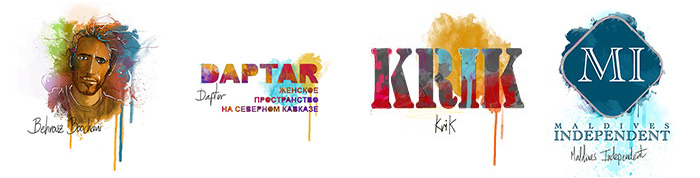
Nominees include Pastor Evan Mawarire whose frustration with Zimbabwe’s government led him to the #ThisFlag campaign; Behrouz Boochani, an Iranian Kurdish journalist who documents the life of indefinitely-interned Australian asylum seekers in Papua New Guinea; China’s Wang Liming, better known as Rebel Pepper, a political cartoonist who lampoons the country’s leaders; Ildar Dadin, an imprisoned Russian opposition activist, who became the first person convicted under the country’s public assembly law; Daptar, a Dagestani initiative tackling women’s issues like female genital mutilation that are rarely discussed publicly in the country; and Serbia’s Crime and Corruption Reporting Network (KRIK), which was founded by a group of journalists to combat pervasive corruption and organised crime.
Other nominees include Hungary’s Two-tail Dog Party, a group of satirists who parody the country’s political discourse; Honduran LGBT rights organisation Arcoiris, which has had six activists murdered in the past year for providing support to the LGBT community and lobbying the country’s government; Luaty Beirão, a rapper from Angola, who uses his music to unmask the country’s political corruption; and Maldives Independent, a website involved in revealing endemic corruption at the highest levels in the country despite repeated intimidation.
Judges for this year’s awards, now in its 17th year, are Harry Potter actor Noma Dumezweni, Hillsborough lawyer Caiolfhionn Gallagher, former Vanity Fair editor Tina Brown, designer Anab Jain and music producer Stephen Budd.
Dumezweni, who plays Hermione in the stage play Harry Potter and the Cursed Child, was shortlisted earlier this year for an Evening Standard Theatre Award for Best Actress. Speaking about the importance of the Index Awards she said: “Freedom of expression is essential to help challenge our perception of the world”.
Winners, who will be announced at a gala ceremony in London on 19 April, become Index on Censorship Freedom of Expression Awards Fellows and are given support for their work, including training in areas such as advocacy and communications.
“The GreatFire team works anonymously and independently but after we were awarded a fellowship from Index it felt like we had real world colleagues. Index helped us make improvements to our overall operations, consulted with us on strategy and were always there for us, through the good times and the pain,” Charlie Smith of GreatFire, 2016 Freedom of Expression Awards Digital Activism Fellow.
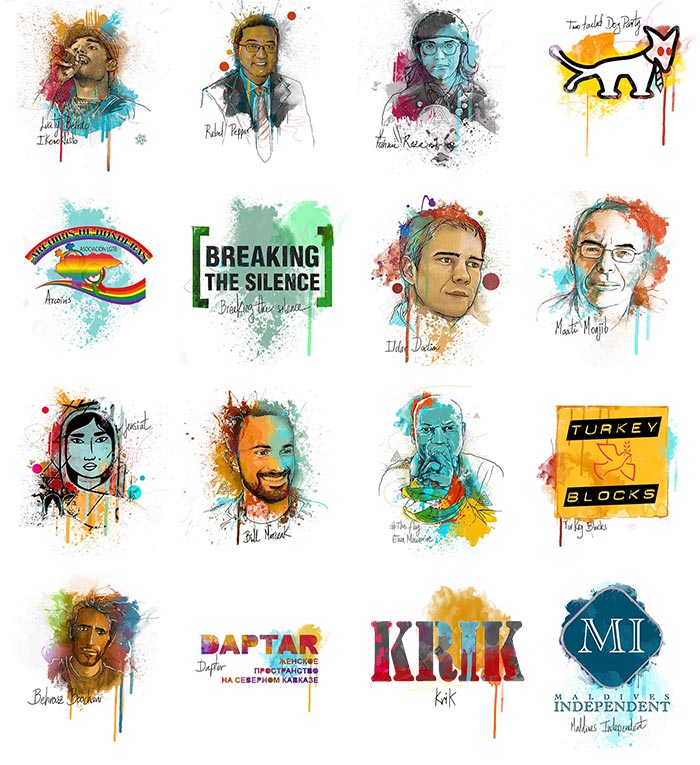
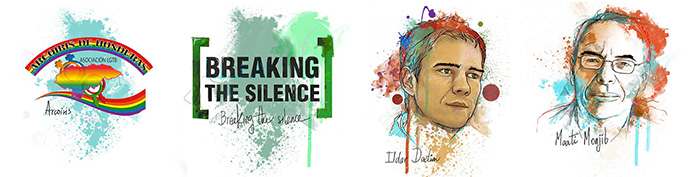
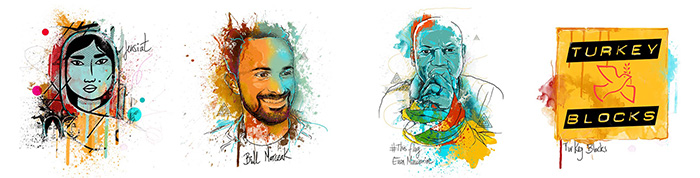
This year, the Freedom of Expression Awards are being supported by sponsors including SAGE Publishing, Google, Vodafone, media partner CNN, VICE News, Doughty Street Chambers, Psiphon and Gorkana. Illustrations of the nominees were created by Sebastián Bravo Guerrero.
Notes for editors:
Index on Censorship is a UK-based non-profit organisation that publishes work by censored writers and artists and campaigns against censorship worldwide.
More detail about each of the nominees is included below.
The winners will be announced at a ceremony at The Unicorn Theatre, London, on 19 April.
For more information, or to arrange interviews with any of those shortlisted, please contact: Sean Gallagher on 0207 963 7262 or [email protected]. More biographical information and illustrations of the nominees are available at indexoncensorship.org/indexawards2017.
Index on Censorship Freedom of Expression Awards nominees 2017
Arts
Luaty Beirão, Angola
Rapper Luaty Beirão, also known as Ikonoklasta, has been instrumental in showing the world the hidden face of Angolan President José Eduardo dos Santos’s rule. For his activism Beirão has been beaten up, had drugs planted on him and, in June 2015, was arrested alongside 14 other people planning to attend a meeting to discuss a book on non-violent resistance. Since being released in 2016, Beirão has been undeterred attempting to stage concerts that the authorities have refused to license and publishing a book about his captivity entitled “I Was Freer Then”, claiming “I would rather be in jail than in a state of fake freedom where I have to self-censor”.
Rebel Pepper, China
Wang Liming, better known under the pseudonym Rebel Pepper, is one of China’s most notorious political cartoonists. For satirising Chinese Premier Xi Jinping and lampooning the ruling Communist Party, Rebel Pepper has been repeatedly persecuted. In 2014, he was forced to remain in Japan, where he was on holiday, after serious threats against him were posted on government-sanctioned forums. The Chinese state has since disconnected him from his fan base by repeatedly deleting his social media accounts, he alleges his conversations with friends and family are under state surveillance, and self-imposed exile has made him isolated, bringing significant financial struggles. Nonetheless, Rebel Pepper keeps drawing, ferociously criticising the Chinese regime.
Fahmi Reza, Malaysia
On 30 January 2016, Malaysian graphic designer Fahmi Reza posted an image online of Prime Minister Najib Razak in evil clown make-up. From T-shirts to protest placards, and graffiti on streets to a sizeable public sticker campaign, the image and its accompanying anti-sedition law slogan #KitaSemuaPenghasut (“we are all seditious”) rapidly evolved into a powerful symbol of resistance against a government seen as increasingly corrupt and authoritarian. Despite the authorities’ attempts to silence Reza, who was banned from travel and has since been detained and charged on two separate counts under Malaysia’s Communications and Multimedia Act, he has refused to back down.
Two-tailed Dog Party, Hungary
A group of satirists and pranksters who parody political discourse in Hungary with artistic stunts and creative campaigns, the Two-tailed Dog Party have become a vital alternative voice following the rise of the national conservative government led by Viktor Orban. When Orban introduced a national consultation on immigration and terrorism in 2015, and plastered cities with anti-immigrant billboards, the party launched their own mock questionnaires and a popular satirical billboard campaign denouncing the government’s fear-mongering tactics. Relentlessly attempting to reinvigorate public debate and draw attention to under-covered or taboo topics, the party’s efforts include recently painting broken pavement to draw attention to a lack of public funding.
Campaigning
Arcoiris, Honduras
Established in 2003, LGBT organisation Arcoiris, meaning ‘rainbow’, works on all levels of Honduran society to advance LGBT rights. Honduras has seen an explosion in levels of homophobic violence since a military coup in 2009. Working against this tide, Arcoiris provide support to LGBT victims of violence, run awareness initiatives, promote HIV prevention programmes and directly lobby the Honduran government and police force. From public marches to alternative awards ceremonies, their tactics are diverse and often inventive. Between June 2015 and March 2016, six members of Arcoiris were killed for this work. Many others have faced intimidation, harassment and physical attacks. Some have had to leave the country because of threats they were receiving.
Breaking the Silence, Israel
Breaking the Silence, an Israeli organisation consisting of ex-Israeli military conscripts, aims to collect and share testimonies about the realities of military operations in the Occupied Territories. Since 2004, the group has collected over 1,000 (mainly anonymous) statements from Israelis who have served their military duty in the West Bank and Gaza. For publishing these frank accounts the organisation has repeatedly come under fire from the Israeli government. In 2016 the pressure on the organisation became particularly pointed and personal, with state-sponsored legal challenges, denunciations from the Israeli cabinet, physical attacks on staff members and damages to property. Led by Israeli politicians including the prime minister, and defence minister, there have been persistent attempts to force the organisation to identify a soldier whose anonymous testimony was part of a publication raising suspicions of war crimes in Gaza. Losing the case would set a precedent that would make it almost impossible for Breaking the Silence to operate in the future. The government has also recently enacted a law that would bar the organisation’s widely acclaimed high school education programme.
Ildar Dadin, Russia
A long-term opposition and LGBT rights activist, Ildar Dadin was the first, and remains the only, person to be convicted under Russia’s 2014 public assembly law that prohibits the “repeated violation of the order of organising or holding meetings, rallies, demonstrations, marches or picketing”. Attempting to circumvent this restrictive law, Dadin held a series of one-man pickets against human rights abuses – an enterprise for which he was arrested and sentenced to three years imprisonment in 2015. In November 2016, website Meduza published a letter smuggled to his wife in which Dadin wrote that he was being tortured and abuse was endemic in Russian jails. The letter, a brave move for a serving prisoner, had wide resonance, prompting a reaction from the government and an investigation. Against his will, Dadin was transferred and disappeared within the Russian prison system until a wave of public protest led to his location being revealed in January 2017. Dadin was released on February 26 after a supreme court order.
Maati Monjib, Morocco
A well-known academic who teaches African studies and political history at the University of Rabat since returning from exile, Maati Monjib co-founded Freedom Now, a coalition of Moroccan human rights defenders who seek to promote the rights of Moroccan activists and journalists in a country ranked 131 out of 180 on the Reporters Without Borders Press Freedom Index. His work campaigning for press freedom – including teaching investigative journalism workshops and using of a smartphone app called Story Maker designed to support citizen journalism – has made him a target for the authorities who insist that this work is the exclusive domain of state police. For his persistent efforts, Monjib is currently on trial for “undermining state security” and “receiving foreign funds.”
Digital Activism
Jensiat, Iran
Despite growing public knowledge of global digital surveillance capabilities and practices, it has often proved hard to attract mainstream public interest in the issue. This continues to be the case in Iran where even with widespread VPN usage, there is little real awareness of digital security threats. With public sexual health awareness equally low, the three people behind Jensiat, an online graphic novel, saw an an opportunity to marry these challenges. Dealing with issues linked to sexuality and cyber security in a way that any Iranian can easily relate to, the webcomic also offers direct access to verified digital security resources. Launched in March 2016, Jensiat has had around 1.2 million unique readers and was rapidly censored by the Iranian government.
Bill Marczak, United States
A schoolboy resident of Bahrain and PhD candidate in computer science at the University of California, Berkeley, Bill Marczak co-founded Bahrain Watch in 2013. Seeking to promote effective, accountable and transparent governance, Bahrain Watch works by launching investigations and running campaigns in direct response to social media posts coming from activists on the front line. In this context, Marczak’s personal research has proved highly effective, often identifying new surveillance technologies and targeting new types of information controls that governments are employing to exert control online, both in Bahrain and across the region. In 2016 Marczak investigated several government attempts to track dissidents and journalists, notably identifying a previously unknown weakness in iPhones that had global ramifications.
#ThisFlag and Evan Mawarire, Zimbabwe
In May 2016, Baptist pastor Evan Mawarire unwittingly began the most important protest movement in Zimbabwe’s recent history when he posted a video of himself draped in the Zimbabwean flag, expressing his frustration at the state of the nation. A subsequent series of YouTube videos and the hashtag Mawarire used, #ThisFlag, went viral, sparking protests and a boycott called by Mawarire, which he estimates was attended by over eight million people. A scale of public protest previously inconceivable, the impact was so strong that private possession of Zimbabwe’s national flag has since been banned. The pastor temporarily left the country following death threats and was arrested in early February as he returned to his homeland.
Turkey Blocks, Turkey
In a country marked by increasing authoritarianism, a strident crackdown on press and social media as well as numerous human rights violations, Turkish-British technologist Alp Toker brought together a small team to investigate internet restrictions. Using Raspberry Pi technology they built an open source tool able to reliably monitor and report both internet shut downs and power blackouts in real time. Using their tool, Turkey Blocks have since broken news of 14 mass-censorship incidents during several politically significant events in 2016. The tool has proved so successful that it has begun to be implemented elsewhere globally.
Journalism
Behrouz Boochani, Manus Island, Papua New Guinea/Australia (he is an Iranian refugee)
Iranian Kurdish journalist Behrouz Boochani fled the city of Ilam in Iran in May 2013 after the police raided the Kurdish cultural heritage magazine he had co-founded, arresting 11 of his colleagues. He travelled to Australia by boat, intending to claim asylum, but less than a month after arriving he was forcibly relocated to a “refugee processing centre” in Papua New Guinea that had been newly opened. Imprisoned alongside nearly 1000 men who have been ordered to claim asylum in Papua New Guinea or return home, Boochani has been passionately documenting their life in detention ever since. Publicly advertised by the Australian Government as a refugee deterrent, life in the detention centre is harsh. For the first 2 years, Boochani wrote under a pseudonym. Until 2016 he circumvented a ban on mobile phones by trading personal items including his shoes with local residents. And while outside journalists are barred, Boochani has refused to be silent, writing numerous stories via Whatsapp and even shooting a feature film with his phone.
Daptar, Dagestan, Russia
In a Russian republic marked by a clash between the rule of law, the weight of traditions, and the growing influence of Islamic fundamentalism, Daptar, a website run by journalists Zakir Magomedov and Svetlana Anokhina, writes about issues affecting women, which are little reported on by other local media. Meaning “diary”, Daptar seeks to promote debate and in 2016 they ran a landmark story about female genital mutilation in Dagestan, which broke the silence surrounding that practice and began a regional and national conversation about FGM. The small team of journalists, working alongside a volunteer lawyer and psychologist, also tries to provide help to the women they are in touch with.
KRIK, Serbia
Crime and Corruption Reporting Network (KRIK) is a new independent investigative website which was founded by a team of young Serbian journalists intent on exposing organised crime and extortion in their country which is ranked as having widespread corruption by Transparency International. In their first year they have published several high-impact investigations, including forcing Serbia’s prime minister to admit that senior officials had been behind nocturnal demolitions in a Belgrade neighbourhood and revealing meetings between drug barons, the ministry of police and the minister of foreign affairs. KRIK have repeatedly come under attack online and offline for their work –threatened and allegedly under surveillance by state officials, defamed in the pages of local tabloids, and suffering abuse including numerous death threats on social media.
Maldives Independent, Maldives
Website Maldives Independent, which provides news in English, is one of the few remaining independent media outlets in a country that ranks 112 out of 180 countries on the Reporters Without Borders Press Freedom Index. In August 2016 the Maldives passed a law criminalising defamation and empowering the state to impose heavy fines and shut down media outlets for “defamatory” content. In September, Maldives Independent’s office was violently attacked and later raided by the police, after the release of an Al Jazeera documentary exposing government corruption that contained interviews with editor Zaheena Rasheed, who had to flee for her safety. Despite the pressure, the outlet continues to hold the government to account.

 SUBSCRIBE NOW[/vc_column_text][/vc_column_inner][/vc_row_inner][/vc_column][/vc_row]
 Judges include actor Noma Dumezweni; former Vanity Fair editor Tina Brown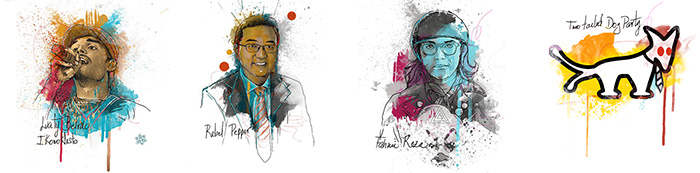
 Arcoiris, Honduras
 Jensiat, Iran