29 Jun 2009 | Index Index, minipost
A law passed by the Lithuanian parliament that would ban “propaganda for homosexuality and bisexuality” from public places for their ‘detrimental’ effect on children has been vetoed by the president after protests by gay-rights activists
Read more here
27 Oct 2025 | Belarus, Europe and Central Asia, Lithuania, News, Volume 54.03 Autumn 2025
This article first appeared in Volume 54, Issue 3 of our print edition of Index on Censorship, titled Truth, trust and tricksters: Free expression in the age of AI, published on 30 September 2025. Read more about the issue here.
At the end of June, Belarusians witnessed something close to a miracle. After meeting with US Special Envoy for Ukraine Keith Kellogg, Belarusian dictator Alyaksandr Lukashenka “pardoned” and deported to Lithuania a group of political prisoners: five Belarusians and nine foreign nationals.
Among them were former Radio Free Europe/Radio Liberty journalist Ihar Karnei and Minsk State Linguistic University associate linguistics professor Natallia Dulina. Most unexpectedly, they also included Siarhei Tsikhanouski, blogger and activist, the first to challenge Lukashenka in the 2020 election. He is the husband of Sviatlana Tsikhanouskaya, who stepped into her husband’s political shoes when he was jailed and who many consider Belarus’s president-elect.
Index went to Lithuania and Poland to speak with these three.
Tsikhanouski was arrested in May 2020 shortly after he announced his plans to run for the presidency in opposition to Lukashenka. He was eventually charged with organising mass unrest and fuelling social hatred, and sentenced to 18 years in prison, with an extra one and a half years added during his sentence for supposedly breaking prison rules. He spent more than two years incommunicado before his unexpected release this summer.
In October 2022, Dulina was put behind bars for public order offences and promoting extremist activities, after she took part in peaceful protests. She was sentenced to three and a half years in a penal colony.
Karnei, a journalist, was arrested in July 2023 and charged with participating in an extremist group. After being sentenced to three years in prison, he was transferred to a penal colony, where he was placed in a punitive isolation cell.
In June, the three with 11 others went through a forced exile and were delivered to the Lithuanian border with bags on their heads, absolutely uninformed. The next thing they heard was: “It’s all right guys, you are under the protection of American diplomacy – you are free.”
Below, Tsikhanouski, Dulina and Karnei share, in their own words, a glimpse of what it means to be a political prisoner in Belarus. And while 14 were released in June, there are nearly 1,300 political prisoners still being held in penal colonies in Belarus.
Siarhei Tsikhanouski
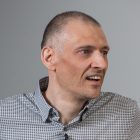 My arrest and criminal case clearly show that I was persecuted solely for my words. I was prosecuted for defending freedom of speech and the right to share information. The charges they invented had no evidence whatsoever – nothing was presented in court. The regime doesn’t even understand what a real court is. What they have has nothing to do with justice.
When you’re tried, Stalin-style, inside the prison itself, behind closed doors, your lawyers can’t defend you. Meanwhile, on state TV, they broadcast false and defamatory claims, but neither I nor my lawyers can respond. Sitting in prison “with my mouth shut,” I couldn’t even make a final statement. People couldn’t hear my evidence of innocence or my arguments – nothing. The regime throws out baseless accusations and hands down long sentences. My trial lasted about six months.
It’s absurd. The UN Working Group on Arbitrary Detention had already ruled that my detention was arbitrary and therefore illegal. But the regime didn’t care.
This is how the justice system works in Belarus: when the dictator appoints the head of the Investigative Committee, the prosecutor general, the head of the KGB and the ministers, he appoints everyone. He also appoints judges by his own decree. Our constitution states there is a separation of powers, three branches
of government, but in reality this does not exist. He appoints everyone by his decrees, and they carry out his will.
And it turns out that it is impossible to fight this within the framework of the law. Impossible. We suffered not because we fought in some way outside the law, but because we spoke up, exposed and showed it. Accordingly, they engaged their instruments of force and simply put everyone who did not stay silent and spoke out into prison.
Ihar Karnei
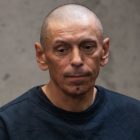 From the very start, a segregation process begins in prisons. Those convicted under so-called “extremist” articles – which cover a wide range of charges, from participating in public gatherings to posting comments allegedly insulting the honour and dignity of officials and the president – are stripped of nearly all rights.
Such prisoners are immediately labelled “malicious violators of prison rules”. Often, there is no real basis for this, but it’s simply the procedure: a person is automatically considered to be breaking internal regulations in detention facilities.
On this basis, they are placed on a preventive register, meaning they are under heightened scrutiny from their first day in a penal institution. Usually, they are subjected to all possible punishments: disciplinary cells, denial of parcels and packages from relatives, and bans on any visits.
Political prisoners – marked with yellow tags – are even denied the right to visit the library, use the sports yard or attend church, despite small chapels existing in all colonies. Torture by solitary confinement is common. I spent almost six months in a medium-security colony in Shklou. In total, I spent 160 days in solitary confinement there.
Natallia Dulina
 After a long period in prison, people often feel disoriented when they are released. Reactions vary. Some initially experience euphoria and joy at being reunited with loved ones, but may struggle to adjust to the changed reality. At first, they might feel okay, but many have told me that after a while, psychological problems begin. The original traumas don’t disappear – they’re deeply buried but eventually resurface.
I have personally experienced this in two ways. During short administrative arrests, the first time I was released, I felt very bad – scared, as if they were about to come for me again. I went through that fear, processed it, let it out and felt relief. Later, after subsequent short arrests, I was able to resume life as if nothing had happened. But those were very brief detentions.
Now, I have been released outside Belarus. I think if I had returned home, I would feel better – because being in exile brings its own challenges. My case is unusual, as my release was forced. I was taken out of the country without my knowledge, blindfolded, with no explanation of where I was being moved. In the first days, the anger and despair over still having no control over my life overshadowed everything else.
Thanks to the support I received in exile – practical, financial, and from friends – it became much easier for me. And perhaps one of the important things were the words of my loved ones. Now, they too have breathed a sigh of relief, and for their peace of mind, I am ready to face personal difficulties.
12 Sep 2025 | Africa, Belgium, Europe and Central Asia, Kenya, Middle East and North Africa, News, Saudi Arabia, Turkey
Bombarded with news from all angles every day, important stories can easily pass us by. To help you cut through the noise, every Friday Index publishes a weekly news roundup of some of the key stories covering censorship and free expression. This week, we look at the release of political prisoners in Belarus and the cancellation of a concert in Ghent.
Belarus releases 52 political prisoners after easing of US sanctions
A number of political prisoners held in Belarusian jails have been released from custody and taken over the border to Lithuania following a visit from a US delegation and the easing of sanctions on national airline Belavia.
The easing of sanctions is set to allow Belavia to purchase American manufactured parts for its aircraft, something that critics claim opens doors for Russia to bypass sanctions.
Opposition activist and politician Mikola Statkevich reportedly refused to leave Belarus, spending a few hours in the border area between the two countries before being brought back into Belarus by border guards.
Among the released prisoners were Belsat journalists Larysa Shchyrakova and Yauhen Merkis who both wrote for Index in 2021 about the persecution they faced a the hands of hte government.
Opposition leaders claim that some of the prisoners had almost finished serving their sentences, and have now been left exiled with no way to return to home.
Sviatlana Tsikhanouskaya, exiled leader of the opposition, said in a post on X: “Freed political prisoners must have the right to remain in Belarus, not be forcibly deported. Many were released only weeks or months before their unjust prison terms ended. Forcing them out is not freedom – it’s another crime by the regime.”
Kenyan documentary filmmakers have spyware installed on their devices while in police custody
Arrested Kenyan filmmakers have discovered – with the help of forensic analysis by the University of Toronto’s Citizen Lab – that spyware was installed onto their devices while they were in custody.
Mark Denver Karubiu, Bryan Adagala, Nicholas Wambugu, and Christopher Wamae were all arrested following the release of the BBC documentary Blood Parliament. They were accused of working on the documentary, charges both the BBC and the filmmakers deny.
A statement from the BBC Press Office said: “We have been made aware of the arrest of four journalists in Kenya. To confirm, they were not involved in any way in the making of BBC Africa Eye’s Blood Parliament documentary,”
The filmmakers were taken into custody in Nairobi on 2 May 2025 and had their devices seized. They were released on 3 May however their devices were not returned until 10 July. It is during this time that the police are accused of installing FlexiSPY software.
FlexiSPY describes itself as “the world’s most powerful monitoring software for computers, mobile phones and tablets”
The filmmakers face a court hearing on 15 September. They are accused of publishing false information and cyber-bullying.
Flanders festival Ghent cancels show amid uncertainty around conductor’s stance on Israel
In a move condemned by Belgian and German officials a performance by the Munich Philharmonic Orchestra has been cancelled by the Flanders Festival Ghent.
The cancellation of the show is due to concerns from the organisers regarding the stance towards the Netanyahu government of the Israeli conductor of the orchestra Lahav Shani who was to lead the performance. Shani is also the music director for the Israel Philharmonic Orchestra.
Belgian Prime Minister Bart De Wever posted on X: “This decision has rightfully provoked great consternation and has been characterised as antisemitic.
“Equally troubling is the unprecedented requirement that artists provide written statements of their political views. This runs directly counter to the very essence of artistic freedom.”
A statement from the festival said: “Lahav Shani has spoken out in favour of peace and reconciliation several times in the past, but in the light of his role as the chief conductor of the Israel Philharmonic Orchestra, we are unable to provide sufficient clarity about his attitude to the genocidal regime in Tel Aviv. In line with the call from the Minister of Culture, the city council of Ghent and the cultural sector in Ghent, we have chosen to refrain from collaboration with partners who have not distanced themselves unequivocally from that regime.”
The festival will be going ahead without this concert, with shows running from 12 September until 2 October.
Saudi citizen executed for protests when he was a teen
A Saudi man Jalal Labbad was executed on 21 August 2025 for his involvement in protests that took place in 2011 and 2012, when he was 15 years old.
Labbad was arrested in 2017 and went on trial in 2019 accused of participating in a demonstration, attending funerals of victims shot by government forces, and helping to treat and shelter wanted persons who were wounded while attacking soldiers. In 2020 he was sentenced to death.
Saudi Arabia executed a total of 180 people between January and June 2025.
A statement released by UN human rights experts said; “We are dismayed by the execution of Mr. Jalal al-Labbad on 21 August, despite our grave concerns repeatedly communicated to the authorities. It is particularly disturbing that his family was not informed of the execution date and reportedly learned of his death through social media. We call on authorities to immediately return Mr. al-Labbad’s body to his relatives and permit an independent medico-legal examination.”
Turkish reporter faces up to 15 years in prison
Freelance court reporter Furkan Karabay faces 6 to 15 years in prison following his arrest in May relating to posts on X and YouTube.
Karabay is facing charges of “insulting the President,” “repeatedly targeting individuals who served in the fight against terrorism,” and “insulting a public official because of their duty,” based on social media posts..
The journalist has faced arrest on a number of occasions for similar charges based on his reporting, but was acquitted back in 2024.
This follows a concerning trend in Turkey, where a number of journalists have been detained this year alone.
27 Jun 2025 | Africa, Americas, Asia and Pacific, Australia, Belarus, Europe and Central Asia, Hungary, Israel, Kenya, Middle East and North Africa, News, Palestine, United States
In the age of online information, it can feel harder than ever to stay informed. As we get bombarded with news from all angles, important stories can easily pass us by. To help you cut through the noise, every Friday Index publishes a weekly news roundup of some of the key stories covering censorship and free expression. This week, we look at Hungary’s banned Pride demonstration, and mass anti-government protests in Kenya.
Pride in spite of the law: Hungary’s LGBTQ+ march to go ahead in violation of police ban
On Tuesday 18 March, Hungary’s ruling Fidesz party led by Viktor Orbán rushed a bill through parliament banning LGBTQ+ pride marches, sparking outrage from the EU and activists. The ban was made on the grounds that such events are allegedly harmful to children, with Orbán stating “We won’t let woke ideology endanger our kids.” This put Budapest’s annual Pride march, scheduled to take place on Saturday 28 June, in jeopardy – but Hungary’s LGBTQ+ community is refusing to back down.
The march, which marks the 30th anniversary of Budapest Pride, is scheduled to go ahead with backing from Budapest’s liberal mayor, who has taken the step of organising the event through the city council under the name “Day of Freedom” to circumvent the law against LGBTQ+ gatherings – but the city police, still under the control of Fidesz, will be moving to quash these efforts. Those partaking in the event will be targeted by facial recognition technology and could face fines. With more than 200 Amnesty International delegates set to march alongside thousands of Hungarians in solidarity, Saturday is likely to see a clash between Hungary’s LGBTQ+ community and the state police.
Brutality begets brutality: Kenyan protests against government cruelty result in further loss of life
On 25 June 2024, a mass protest outside parliament in Nairobi against tax rises escalated into a tragedy, with Kenyan police officers firing on protesters as they attempted to storm the parliament building. The Kenyan National Commission on Human Rights announced that 39 had been killed in the nationwide demonstrations, and it was recently revealed by BBC Africa Eye that some officers had shot and killed unarmed protesters. Marking a year since this incident, Kenyans took to the streets this week to demonstrate against the government, and further brutality has followed.
Amnesty International Kenya has reported that 16 people were killed at the anniversary protests on 25 June 2025, with approximately a further 400 injured. CNN witnessed police firing live ammunition to disperse peaceful protesters, and the government regulator, Communications Authority of Kenya, issued an order for all local TV and radio stations to stop broadcasting live coverage of the protests. Tensions have been on the rise in recent months, with the murder of Kenyan blogger Albert Ojwang in police custody, and the shooting of street vendor Boniface Kariuki at a demonstration in Ojwang’s honour inflaming the situation further.
Free at last: Pro-Palestinian student activist Mahmoud Khalil released
Palestinian-Algerian activist and Columbia University student Mahmoud Khalil was released from his detention in a Louisiana Immigration and Customs Enforcement (ICE) facility on the evening of Friday 20 June after 104 days in detention.
Khalil’s arrest sparked a national outcry. A prominent pro-Palestinian activist on Columbia’s campus, he would sometimes act as a spokesperson for the student protest movement, making him a prime target for ICE’s crackdown on immigrant protesters – despite Khalil holding a green card, which grants an individual lawful permanent resident status in the USA.
He was arrested without a warrant on 8 March 2025. Charged with no crime, Khalil was earmarked for deportation by Secretary of State Marco Rubio under the belief that his presence in the country had “foreign policy consequences”. This move was deemed unconstitutional, and Khalil was released after a Louisiana judge ruled that Khalil was neither a flight risk nor dangerous, and that his prolonged detention – which led to him missing the birth of his son – was potentially punitive.
Khalil returned to the frontlines of protests just days after his release, but his feud with the Donald Trump administration is far from over. The government is reportedly set to appeal the ruling to release Khalil, and rights groups such as the American Civil Liberties Union (ACLU) have suggested that there could be a long legal road ahead.
Unfairly dismissed: Australian journalist wins court case after losing her job over Gaza repost
Australian journalist Antoinette Lattouf has won her court case against Australia’s national broadcaster, Australian Broadcasting Corporation (ABC), with a judge ruling she was unfairly dismissed from her job after sharing a post on social media about the Israel-Gaza conflict.
Lattouf reportedly shared a post by Human Rights Watch that accused Israel of committing war crimes in Gaza in December 2023, resulting in her sacking from her fill-in radio presenter role just hours later.
ABC claimed that the post violated its editorial policy, but after the ruling has apologised to the journalist, saying it had “let down our staff and audiences” in how it handled the matter. According to The Guardian, the broadcaster had received a “campaign of complaints” from the moment Lattouf was first on air, accusing her of anti-Israel bias based on her past social media activity. It has also been reported that due process around Lattouf’s dismissal was not followed, with the allegations in the email complaints not put to her directly prior to her sacking.
Justice Darryl Rangiah ruled that Lattouf had been fired “for reasons including that she held a political opinion opposing the Israeli military campaign in Gaza”, in violation of Australia’s Fair Work Act. Lattouf was awarded 70,000 Australian dollars ($45,000) in damages. She told reporters outside the courtroom “I was punished for my political opinion”.
Sudden freedom: 14 Belarusian political prisoners freed from prison following US official visit
During the visit of the US special envoy Keith Kellogg to Belarus’s capital Minsk, dictator Alyaksandr Lukashenka made the surprise move of releasing 14 political prisoners from detention on 21 June 2025. The US brokered deal, reportedly led by Kellogg, saw the release of prominent Belarusian activist Siarhei Tsikhanouski who was arrested in 2020 and sentenced with 18 years in prison after declaring his intention to run for president. Also released was journalist Ihar Karnei who worked at Radio Free Europe/Radio Liberty for more than 20 years.
Tsikhanouski has recounted his experience in prison as being “torture”. He said he was kept in solitary confinement and denied adequate food and medical care, and he lost more than 100 pounds during his five years’ imprisonment. He told the Associated Press that prison officials would mock him, saying “You will be here not just for the 20 years we’ve already given you – we will convict you again” and “You will die here.”
Tsikhanouski is the husband of Sviatlana Tsikhanouskaya, who following his arrest took his place in running for president and became the main opposition leader in Belarus. Now living in exile in Lithuania, the two have been reunited in Vilnius – but Tsikhanouskaya insists that her work is not finished with reportedly more than 1,100 political prisoners still remaining inside Belarusian jails.
