5 Mar 2014 | Awards, Azerbaijan, Azerbaijan News, News
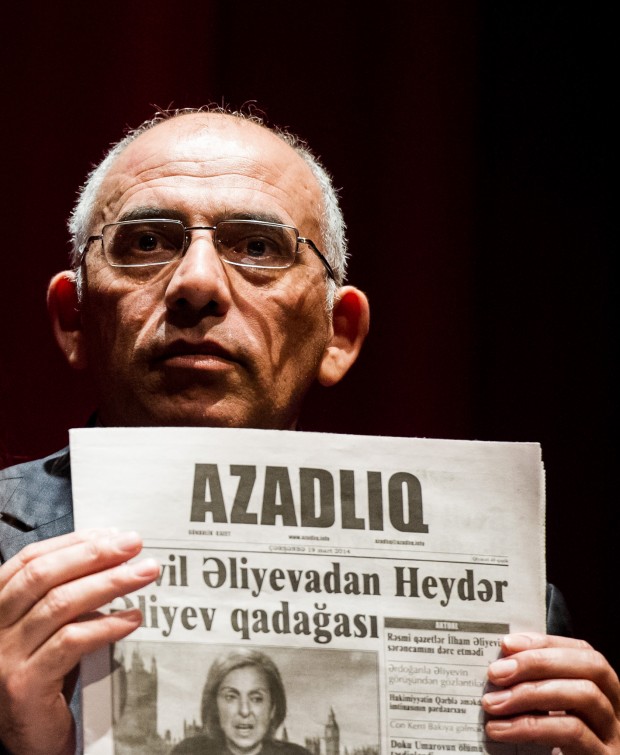
Rahim Haciyev, deputy editor-in-chief of Azerbaijani newspaper Azadliq (Photo: Alex Brenner for Index on Censorship)
One of the few remaining independent media outlets in Azerbaijan, the newspaper Azadliq has continued to report on government corruption and cronyism in spite of an increasing financial squeeze enforced by the authorities.
The country likes to present itself as a modern democracy, but it is widely recognised as an authoritarian regime where opposition is often brutally cracked down on and critical voices silenced. In this environment, Azadliq works to hold the ruling Aliyev family, and the rest of the powerful elite in the country to account. The latest attacks on the paper came hot on the heels of the country’s 2013 presidential election, where Ilham Aliyev was reelected in a vote labelled flawed by the OSCE.
The paper has been been the target of defamation suits that have resulted in £52,000 in fines. Courts found Azadliq guilty of “damaging” the business reputation of Kabira Mamedova, director of the Baku-based Bina shopping centre, and Taghi Ahmadov, CEO of the Baku Metro, after the paper published articles critical of their activities.
The paper’s bank accounts have been frozen since 25 October, and Gasid, the state-owned press distribution company, has not been transferring payments that reflect the paper’s sales; according to Azadliq’s latest calculations, Gasid now owes about £44,000.
Azadliq’s journalists also face continuous threats. On 4 October 2013, Azadliq reporter Ramin Deko was part of a group of journalists assaulted by a pro-government mob while covering an opposition rally in the central Azerbaijan town of Sabirabad. He also alleges he was abducted and beaten up on 3 and 4 April 2011 by law enforcement bodies. While he was illegally detained, he said he was told to stop writing critical articles and to change his workplace to a pro-government newspaper.
Despite this, Azadliq refuses to back down, and continues to cover the activities of the Azerbaijan corrupt elite. “We play a significant role in providing people with alternative information. Our staff are underpaid, overworked, and yet are fully committed to their work”, said deputy editor-in-chief and acting editor Rahim Haciyev.
Haciyev, who joined the paper in 2001, talked to Andrei Aliaksandrau about why his work at Azadliq is so important.
Index: Your publication faces constant pressure from the authorities. Have you ever thought of leaving for a safer job?
Haciyev: No, this is my work, and it is not only a job, it is my form of expression. The fight for free speech is sacred for me. This is the way of opposing lawlessness and tyranny, and working for Azadliq provides me with a possibility to continue this fight for what I believe in.
Index: What is the wider media landscape in Azerbaijan? And how does this fit into the wider political and social situation?
Haciyev: Repressive steps taken by the government of the country have led to significant restrictions of media freedom. Today there is a real threat of independent press in Azerbaijan totally disappearing. The country lives under a strict authoritarian rule. Activists of political opposition, civil society organisations and independent journalists face constant pressure. There are more than a hundred political prisoners behind bars in Azerbaijan, including journalists.
Index: What is your view on the Snowden/Greenwald revelations about mass surveillance?
Haciyev: Our newspaper covered the story. I think a government should keep its secrets – but it is the role of the press to inform the public and share the information they gather. And any kind of pressure exerted on the media is nothing but a violation of the freedom of expression.
Index: Technologies have changed the media market globally. Do you think newspapers are still relevant?
Haciyev: I am sure printed newspapers will keep their relevance for a long time. Despite the development of the internet, we can still see great demand for newspapers among the audience. For us,our website is getting more and more popular, and the circulation of the printed newspaper is going down – but it is not because people are losing their interest in the printed publication, merely because of all the restrictions and pressure our authorities put on us.
Nominees: Advocacy | Arts | Digital Activism | Journalism
Join us 20 March 2014 at the Barbican Centre for the Freedom of Expression Awards
This article was posted on March 4, 2014 at indexoncensorship.org
4 Mar 2014 | Americas, Awards, News, United States
Glenn Greenwald had previously blogged on surveillance and civil liberties for Salon and the Guardian, attracting thousands of followers with his dogged writing. Laura Poitras’s background is in documentary making, having made highly acclaimed films about Iraqis living during the US military occupation and The Oath, a film about Yemenis caught up in the War on Terror.
A lawyer by training, Greenwald built a strong reputation for detailed, forensic articles. According to the Guardian, an article by Greenwald about Poitras’s work and fears over targeting by the government was what convinced Edward Snowden to approach him with his cache of NSA files in late 2012.
Working with a range of outlets, from the Guardian to Brazil’s O Globo, Greenwald published a range of stories on the workings of the National Security Agency’s surveillance. Germany-based Poitras collaborated with Der Spiegel amongst others, generating huge debate in that country.
In August 2013, Greenwald’s partner David Miranda was detained at Heathrow Airport under terrorism legislation and had documents he had received from Poitras confiscated by UK authorities.
Interviewed by Esquire magazine, Greenwald explained why he felt it was important to uncover mass surveillance: “ultimately the reason privacy is so vital is it’s the realm in which we can do all the things that are valuable as human beings. It’s the place that uniquely enables us to explore limits, to test boundaries, to engage in novel and creative ways of thinking and being”
Nominees: Advocacy | Arts | Digital Activism | Journalism
Join us 20 March 2014 at the Barbican Centre for the Freedom of Expression Awards
This article was posted on March 4, 2014 at indexoncensorship.org
25 Feb 2014 | Digital Freedom, News, United Nations
(Image: Mahmoud Illean/Demotix)
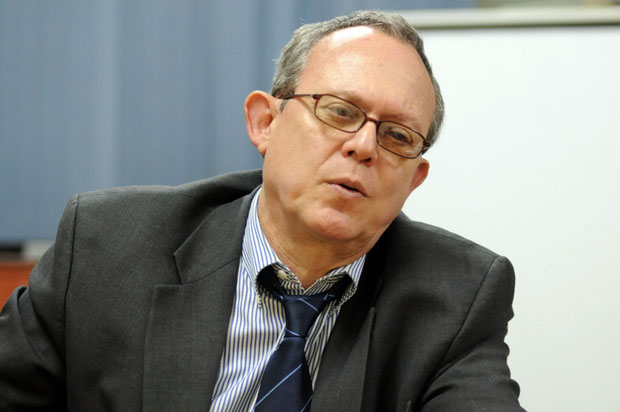
There should be a special United Nations mandate for protecting the right to privacy, says the Frank La Rue, the UN Special Rapporteur on the Promotion and Protection of the Right to Freedom of Opinion and Expression. “I believe that privacy is such a clear and distinct right…that it would merit to have a rapporteur on its own.”
While he pointed out there is some opposition to creating new mandates on economic grounds, he said: “In general If you would ask me, I would say yes, this right deserves a [UN] mandate.” He also called for a coordinated effort from the UN human rights system to deal with the issue of privacy.
The comments came during an expert seminar in Geneva Monday on “The Right to Privacy in the Digital Age” in the aftermath of the mass surveillance revelations.
La Rue said that the right to privacy has not been given enough attention in the past, calling it equal, interrelated and interdependent to other human rights. In particular, he spoke of its connection to freedom of expression and how having or not having privacy can affect freedom of expression.
“Privacy and freedom of expression are not only linked, but are also facilitators of citizen participation, the right to free press, exercise of free opinion, and the possibility of gathering individuals, exercising the right to free association and to be able to criticise public policies.”
He also warned against trying to protect national security at the expense of democracy and human rights, saying: “If we pitch one against the other…I think we’ll end up losing both.”
This echoes the sentiments of his report released in June 2013, which concluded that: “States cannot ensure that individuals are able to freely seek and receive information or express themselves without respecting, protecting and promoting their right to privacy.”
This article was posted on 25 February 2014 at indexoncensorship.org
19 Feb 2014 | Campaigns, United Kingdom
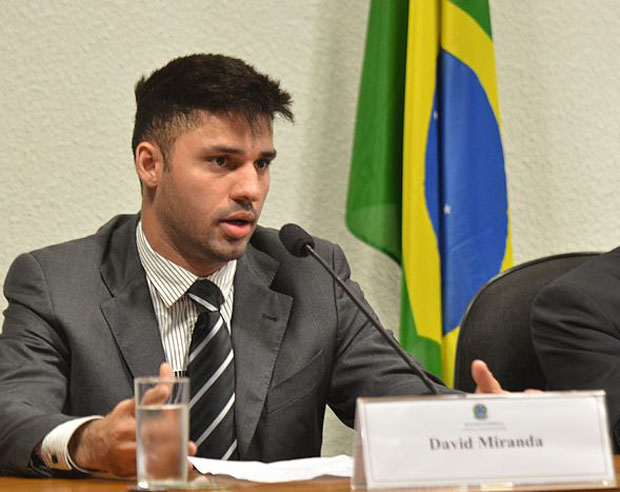
David Miranda (Image: Elza Fiúza/Agência Brasil/Wikimedia Commons)
Index on Censorship today expressed disappointment at the High Court’s dismissal of David Miranda’s application for a judicial review of the use of anti-terror laws to detain him at Heathrow Airport.
“This ruling represents a dangerous elision of terrorist activity and legitimate journalistic practice,” said Kirsty Hughes, Chief Executive of Index on Censorship. “We must hope that it will not stand as precedent, as it could seriously endanger journalists working in the public interest.”
Mr Miranda, the spouse of journalist Glenn Greenwald, was stopped and searched under Schedule 7 of the Terrorism Act 2000 on 18 August 2013. He had been carrying encrypted files and documents originating from Edward Snowden’s leak of information on the National Security Agency’s mass surveillance programme.
A coalition of media and free speech organisations, including Index on Censorship, argued that it is inappropriate to use terror laws against someone such as Miranda, who was engaged in journalistic activity in transporting the documents intended to be used as source material for news stories in the public interest.
But the High Court today ruled that the use of the Terrorism Act did not infringe David Miranda’s right to free speech, or the rights of journalists to protect sources and materials. In his judgment, Lord Justice Laws ruled that the Schedule 7 detention of Miranda had been proportionate and did not “offend” his right to free speech under the European Convention on Human Rights.
Read the full judgment here
This article was published on 19 February 2014 at indexoncensorship.org
