12 Feb 2015
By Thomas A. Bass
Today Index on Censorship continues publishing Swamp of the Assassins by American academic and journalist Thomas Bass, who takes a detailed look at the Kafkaesque experience of publishing his biography of Pham Xuan An in Vietnam.
The first installment was published on Feb 2 and can be read here.
With the censor’s boot on their necks, a generation of Vietnamese writers has been forced into silence or exile. To report on their plight, I met with three of the country’s best-known authors: Bao Ninh in Hanoi, Duong Thu Huong in Paris, and Pham Thi Hoai in Berlin. Each had his or her own story to tell about censorship, arrest, banishment, or silence—realities that are becoming increasingly dire in Vietnam.
Bao Ninh (whose real name is Hoang Au Phuong, with Bao Ninh being the name of his family’s native village) was a seventeen-year-old student when he enlisted in 1969 as an infantryman in the 5th Battalion/24th Regiment/10th Division. He would spend six years fighting his way down the Ho Chi Minh Trail, surviving some of the war’s deadliest battles, before his regiment captured Saigon’s Ton Son Nhut airport in 1975. Of the five hundred men who joined his military unit in 1969, Ninh is commonly reported to be one of ten who survived.
Son of Hoang Tue, former director of Vietnam’s Linguistics Institute, Bao Ninh went back to school after the war and finished college in 1981. He worked briefly in a biology lab at Vietnam’s Science Institute and then picked up his pen to become a writer. In 1984, the thirty-two-year-old former soldier enrolled in the second class admitted to the Nguyen Du Writers School (named after the celebrated Vietnamese poet who wrote The Tale of Kieu). For his school thesis, Ninh wrote a novel about his war-time experience. “The Sorrow of War” began circulating around Hanoi in roneo form in the late 1980s. This stenciled duplication, similar to a mimeograph, was published in 1990 under the anodyne title Fate of Love. The original title was restored in a 1991 edition and then removed again when Fate of Love was reissued in 1992. The book won a major literary award and became instantly famous—too famous, apparently. A denunciation campaign was launched against Bao Ninh, his literary award was retracted, and his book went out of print. In fact, it went out of print for a decade. “The time is not right” to republish it, he was told. Fate of Love reappeared in 2003, but it was not until 2006—fifteen years after its original publication—that The Sorrow of War reappeared in Vietnam. The Vietnamese use a variety of euphemisms to describe this gap in Bao Ninh’s literary career, but the correct term is censorship. He was not thrown in prison or banned. In fact, he was rewarded for his silence, but he was censored, nonetheless.
Translated into English by Vietnamese poet Phan Thanh Hao and Australian journalist Frank Palmos, The Sorrow of War sparked another literary sensation when it was published in London in 1993. The book revealed that Vietnam’s veterans on the winning side suffered the same trauma and disillusionment as the losers. Hailed as a great novel, comparable to Erich Maria Remarque’s All Quiet on the Western Front, The Sorrow of War has been republished in a dozen languages and named by the Society of Authors as one of the fifty best translations of the twentieth century.
While the novel was becoming a best-seller in the West, in Vietnam the book reverted to being passed hand-to-hand in pirated editions. Bao Ninh stopped writing, or, to be more precise, he stopped publishing. He took a government job, and his son was allowed to leave the country to study economics at the University of Massachusetts. The Sorrow of War is currently widely available in Vietnam, but its two successor volumes remain unpublished.
At my first meeting with Bao Ninh in Hanoi in 2008, we talked about his unpublished books. He assured me the works had been written, gave me their titles, and described their plots. I have to say that I have not personally verified the existence of these manuscripts, which have assumed a status in Vietnamese literature comparable to Captain Ahab’s great white whale—doubted by many, believed by some, seen by few. The subversive nature of Bao Ninh’s trilogy is revealed only after confronting the shock of the first volume. The Sorrow of War may be a great war novel, but it holds a double surprise for readers in the West by revealing the bitterness of NVA soldiers, the soldiers who won the war. They were betrayed by incompetent commanders and self-serving politicians. They were scorned by a post-war generation that wanted to forget the incredible suffering inflicted on Vietnam during thirty years of war and turn instead to making money. The survivors of the war are ravaged by guilt, attacked by bad dreams. They drink too much, brawl too much, and drift all too often from failure to suicide. They display all the symptoms of post-traumatic stress disorder, shell-shock, battle fatigue, or whatever we call the soul-sucking misery that invades a soldier’s bones at the sight of men killing other men.
The “friendly, simple peasant fighters … were the ones ready to bear the catastrophic consequences of this war, yet they never had a say in deciding the course of the war,” writes Kien, the narrator of the novel, who, like its author, spent a decade fighting Americans in Vietnam’s Central Highlands. “We have so many of those damned idiots up there in the North enjoying the profits of war, but it’s the sons of peasants who have to leave home,” he writes in a manuscript that turns out to be the book we are holding in our hands.
At war’s end, the former infantryman is detailed into recovering the corpses of his fallen comrades. “Over a long period, over many, many graves, the souls of the beloved dead silently and gloomily dragged the sorrow of war into his life.” He returns to his native Hanoi in 1976 to find the city consumed by careerism, graft, corruption, and all the other ailments of an emerging Asian Tiger. The political propaganda is ham-fisted. His former fiancée is a prostitute. He joins the ranks of the “traumatized misfits” who survived the war, works as a journalist, and writes a novel that sits abandoned on his desk, until the pages blow away in the wind.
“Those who survived continue to live,” writes Kien. “But that will has gone, that burning will which was once Vietnam’s salvation. Where is the reward of enlightenment due to us for attaining our sacred war goals? Our history-making efforts for the great generations have been to no avail. What’s so different here and now from the vulgar and cruel life we all experienced during the war?”
“In this kind of peace it seems people have unmasked themselves and revealed their true, horrible selves,” Kien says to a fellow veteran. “So much blood, so many lives were sacrificed—for what?”
“I’m simply a soldier like you who’ll now have to live with broken dreams and with pain,” his colleague replies. “But, my friend, our era is finished. After this hard-won victory fighters like you, Kien, will never be normal again.”
Kien is wracked by the kind of survivor guilt that comes from knowing “that the kindest, most worthy people have all fallen away, or even been tortured, humiliated before being killed, or buried and wiped away by the machinery of war.” He is left with the “appalling paradox” that “Justice may have been won, but cruelty, death, and inhuman violence have also won.”
On the two occasions when Bao Ninh was allowed to travel to the United States (he visited Boston in 1999 and Texas in 2005) he gravitated to the war veterans in the crowd. They swapped reticent greetings, established whether they had carried guns or flown airplanes, and then started drinking, letting the silence fill with the ghosts of departed friends. Bao Ninh had more dead friends than the Americans, and they died more gruesome deaths, but dead is dead, and he bore no grudges as he sat among his fellow soldiers. “Soldiers never say ‘sorry’ to each other,” he told me later. “They have nothing to apologize for.”
When former U.S. marine Wayne Karlin met Bao Ninh at a hotel café in Hanoi in 2007, Karlin was reminded of another Vietnam veteran turned writer, Tim O’Brien. “Both men are compact, their faces not so much sharp as sharpened, their eyes bright, at times with a flare of pain, at times with a gleefully malevolent intelligence, a sardonic, challenging grunt’s stare. And they both smoke like hell,” wrote Karlin in his book Wandering Souls (2009).
I am not a former soldier who fought in Vietnam, but the war was the cloud under which I came of age, and I seized the chance to begin traveling to Vietnam when the country opened to outsiders in the early 1990s. I met Pham Xuan An on my first trip in 1991, when the journalist-spy was still under police surveillance, and I kept returning to see him as I wrote my New Yorker profile and then my book, both entitled The Spy Who Loved Us. After An’s death in 2006, I visited Vietnam again two years later to talk to sources reticent about speaking while he was alive, and it was on this trip that I first met Bao Ninh.
Part 10: Eyes in the back of his head
This ninth installment of the serialisation of Swamp of the Assassins by Thomas A. Bass was posted on February 11, 2015 at indexoncensorship.org
5 Feb 2015
By Thomas A. Bass
Today Index on Censorship continues publishing Swamp of the Assassins by American academic and journalist Thomas Bass, who takes a detailed look at the Kafkaesque experience of publishing his biography of Pham Xuan An in Vietnam.
The first installment was published on Feb 2 and can be read here.
What the Party wants, it gets, and what it fears, it suppresses
|
About Swamp of the Assassins
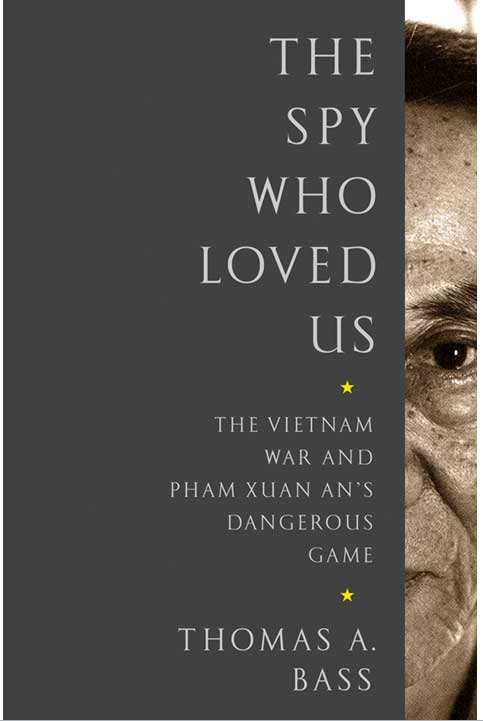
Thomas Bass spent five years monitoring the publication of a Vietnamese translation of his book The Spy Who Loved Us. Swamp of the Assassins is the record of Bass’ interactions and interviews with editors, publishers, censors and silenced and exiled writers. Begun after a 2005 article in The New Yorker, Bass’ biography of Pham Xuan An provided an unflinching look at a key figure in Vietnam’s pantheon of communist heroes. Throughout the process of publication, successive editors strove to align Bass’ account of An’s life with the official narrative, requiring numerous cuts and changes to the language. Related: Vietnam’s concerted effort to keep control of its past
|
About Thomas Bass
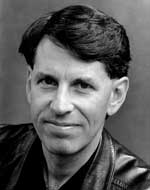
Thomas Alden Bass is an American writer and professor in literature and history. Currently he is a professor of English at University at Albany, State University of New York.
|
About Pham Xuan An
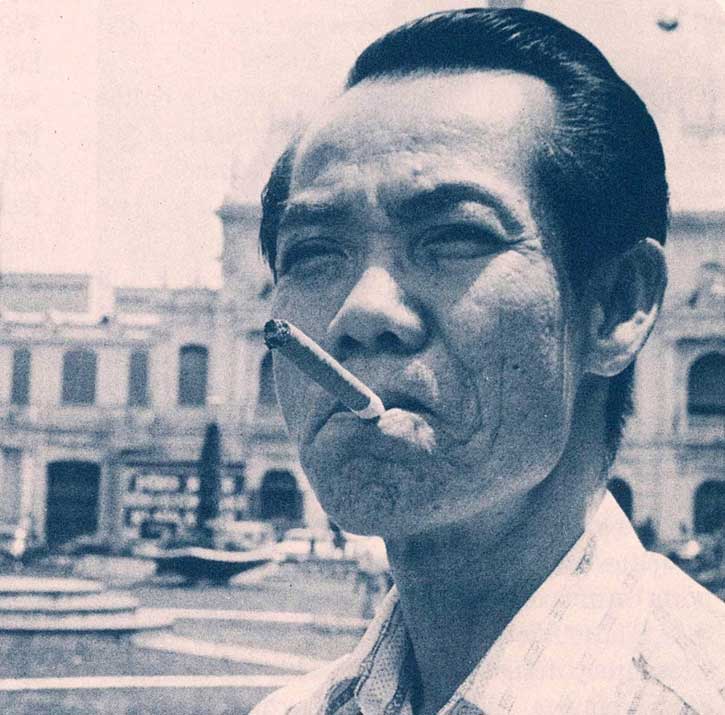
Pham Xuan An was a South Vietnamese journalist, whose remarkable effectiveness and long-lived career as a spy for the North Vietnamese communists—from the 1940s until his death in 2006—made him one of the greatest spies of the 20th century.
|
Contents
2 Feb: On being censored in Vietnam | 3 Feb: Fighting hand-to-hand in the hedgerows of literature | 4 Feb: Hostage trade | 5 Feb: Not worth being killed for | 6 Feb: Literary control mechanisms | 9 Feb: Vietnamology | 10 Feb: Perfect spy? | 11 Feb: The habits of war | 12 Feb: Wandering souls | 13 Feb: Eyes in the back of his head | 16 Feb: The black cloud | 17 Feb: The struggle | 18 Feb: Cyberspace country
|
The process by which censorship works in Vietnam is described by Vietnamese reporter Pham Doan Trang in a blog post released in June 2013 by The Irrawaddy Magazine. Trang explains how, every week, the Central Propaganda Commission of the Vietnamese Communist Party in Hanoi and the Commission’s regional officials in Ho Chi Minh City and elsewhere throughout the country “convene ‘guidance meetings’ with the managing editors of the country’s important national newspapers.”
“Not incidentally, the editors are all party members. Officials of the Ministry of Information and Ministry of Public Security are also present. …At these meetings, someone from the Propaganda Commission rates each paper’s performance during the previous week—commending those who have toed the line, reprimanding and sometimes punishing those who have strayed.”
Instructions given at these meetings to the “comrade editors and publishers,” sometimes leak into the blogosphere (the online forums from which the Vietnamese increasingly get their news). Here one learns that independent candidates for political office, such as actress Hong An, are not be mentioned in the press and that dissident activist Cu Huy Ha Vu, who is charged with “propagandizing against the state,” should never be addressed as “Doctor Vu.” Also buried are reports on tourists drowning in Halong Bay, Vietnam’s decision to build nuclear power plants, and Chinese extraction of bauxite from a huge mining operation in the Annamite Range.
The weekly meetings are secret and further discussions throughout the week are conducted face-to-face or by telephone. “Because no tangible evidence remains that … the press was gagged on such and such a story, the officials of the Ministry of Information can reply with a straight face that Vietnam is being slandered by ‘hostile forces,’” Trang says. These denials were strained when a secret recording of one of these meetings was released by the BBC in 2012.
The Propaganda Department considers Vietnam’s media as the “voice of party organizations, State bodies, and social organizations.” This approach is codified in Vietnam’s Law on the Media, which requires reporters to “propagate the doctrine and policies of the Party, the laws of the State, and the national and world cultural, scientific and technical achievements” of Vietnam.
Trang concludes her report with a wry observation. “Vietnam does not figure among the deadlier countries to be a journalist,” she says. “The State doesn’t need to kill journalists to control the media, because by and large, Vietnam’s press card-carrying journalists are not allowed to do work that is worth being killed for.”
Another person knowledgeable about censorship in Vietnam is David Brown, a former U.S. foreign service officer who returned to Vietnam to work as a copy editor for the online English language edition of a Vietnamese newspaper. In an article published in Asia Times in February 2012, Brown describes how “The managing editor and publisher [of his paper] trooped off to a meeting with the Ministry of Information and the Party’s Central Propaganda and Education Committee every Tuesday where they and their peers from other papers were alerted to ‘sensitive issues.’”
Brown describes the “editorial no-go zones” that his paper was not allowed to write about. These taboo subjects include unflattering news about the Communist Party, government policy, military strategy, Chinese relations, minority rights, human rights, democracy, calls for political pluralism, allusions to revolutionary events in other Communist countries, distinctions between north and south Vietnamese, and stories about Vietnamese refugees. The one subject his paper is allowed to cover is crime, and the press is not toothless in Vietnam, Brown says. In fact, journalists can prove quite useful to the government by exposing low-level corruption and malfeasance. “To maintain their readerships, they aggressively pursue scandals, investigate ‘social evils’ and champion the downtrodden. Corruption of all kinds, at least at the local level, is also fair game.”
Another expert on censorship in Vietnam is former BBC correspondent Bill Hayton, who was expelled from Vietnam in 2007 and is still banned from the country. Writing in Forbes magazine in 2010, Hayton describes the limits to political activity in Vietnam, where Article 4 of the Constitution declares that “The Communist Party of Vietnam, the vanguard of the Vietnamese working class, the faithful representative of the rights and interests of the working class, the toiling people, and the whole nation, acting upon the Marxist-Leninist doctrine and Ho Chi Minh thought, is the force leading the State and society.” In other words, what the Party wants, it gets, and what it fears, it suppresses. “There is no legal, independent media in Vietnam,” says Hayton. “Every single publication belongs to part of the state or the Communist Party.”
Lest we think that Vietnamese culture is frozen in place, Trang, Brown, Hayton, and other observers remind us that the rules are constantly changing and being reinterpreted. “Vietnam … is one of the most dynamic and aspirational societies on the planet,” says Hayton. “This has been enabled by the strange balance between the Party’s control, and lack of control, which has manifested itself through the practice of ‘fence-breaking,’ or pha rao in Vietnamese.” So long as you “don’t confront the Party or pry too deeply into high-level corruption, editors and journalists can get along fine,” he says.
In certain circumstances, even journalists who pry more deeply can get along fine, depending on who is controlling the news leaks and for what end. This process of controlled leaks is described by another observer of censorship in Vietnam, Geoffrey Cain. In his master’s thesis, completed in 2012 at the School of Oriental and African Studies at the University of London, Cain writes that the Communist Party in Vietnam uses journalists and other writers as an “informal police force.” They help the central government keep regional officials in line, limit their bribe taking, and patrol aspects of public life that otherwise might remain in the shadows. This represents “soft authoritarianism,” which is characterized by “a series of elite actions and counter-actions marked by ‘uncertainty’ as an instrument of rule.” What is often described in Vietnam as a battle between “reformers” and “conservatives” is actually the method by which an increasingly market-oriented society can be “simultaneously repressive and responsive.” In this interpretation, journalists and bloggers lend themselves to the “informal policing” of free-market profiteers.
The “legal” mechanisms for the arrest of journalists and bloggers who overstep the boundaries, or accidentally get caught on the wrong side of shifting rules, include Article 88c of the Criminal Code, which forbids “making, storing, or circulating cultural products with contents against the Socialist Republic of Vietnam” and Article 79 of the Criminal Code, which forbids “carrying out activities aimed at overthrowing the people’s administration.” Other grounds for arrest range from “tax evasion” to “stealing state secrets and selling them abroad to foreigners.” (This was the charge leveled against novelist Duong Thu Huong when she mailed one of her book manuscripts to a publisher in California.)
Other repressive measures lie in the Press Law of 1990 (amended in 1999), which begins by declaring, “The press in the Socialist Republic of Vietnam constitutes the voice of the Party, of the State and social organizations” (Article 1). “No one shall be allowed to abuse the freedom of the press and freedom of speech in the press to violate the interests of the State, of any collective group or individual citizen” (Article 2:3). Then there is the Law on Publishing of 2004, which prohibits “propaganda against the Socialist Republic of Vietnam,” the “spread of reactionary ideology,” and the “disclosure of secrets of the Party, State, military, defense, economics, or external relations.”
On goes the list of laws and regulations through various decrees and “circulars,” including Decree Number 56, on “Cultural and Information Activities,” which forbids “the denial of revolutionary achievements,” Decree Number 97, on “Management, Supply, and Use of Internet Services and Electronic Information on the Internet,” which forbids using the internet “to damage the reputations of individuals and organizations,” Circular Number 7, from the Ministry of Information, which “restricts blogs to covering personal content” and requires blogging platforms to file reports on users “every six months or upon request,” and the 2012 draft Decree on “Management, Provision, and Use of Internet Services and Information on the Network,” which requires foreign-based companies that provide information in Vietnamese “to filter and eliminate any prohibited content.”
This 2012 draft Decree was codified the following year as Decree 72, which outlaws the distribution of “general information” on blogs, limiting them to “personal information” and making it illegal for individuals to use the internet for news reporting or commenting on political events. Condemning this statute as “nonsensical and extremely dangerous,” Reporters Without Borders, in an August 2013 press release, said that Decree 72 could be implemented only with “massive and constant government surveillance of the entire internet. …This decree’s barely veiled goal is to keep the Communist Party in power at all costs by turning news and information into a state monopoly.”
Vietnam has borrowed many of these techniques for monitoring the internet from China, its neighbor to the north. According to PEN International, China has imprisoned dozens of authors, including Nobel laureate Liu Xiaobo. Like China, Vietnam falls near the bottom in rankings of press freedom. Freedom House calls Vietnamese media “not free.” In 2014, Reporters Without Borders ranked Vietnam 174 out of 180 countries in press freedom. (It fell between Iran and China.) In 2013, the Committee to Protect Journalists ranked Vietnam as the world’s fifth worst jailer of reporters, with at least eighteen journalists in prison. Recently, a draconian crackdown against bloggers and anti-Chinese protestors sent dozens more to jail, for terms as long as twelve years. Pro-democracy and human rights activists, writers, bloggers, investigative journalists, land reform protestors, and whistleblowers are all being swept up in Vietnam’s totalitarian dragnet.
Part 5: Literary control mechanisms
This fourth installment of the serialisation of Swamp of the Assassins by Thomas A. Bass was posted on February 5, 2015 at indexoncensorship.org
2 Feb 2015
By Thomas A. Bass
Today Index on Censorship begins publishing a serialisation of Swamp of the Assassins by American academic and journalist Thomas Bass, who takes a detailed look at the Kafkaesque experience of publishing his biography of Pham Xuan An in Vietnam.
These are dark days in Vietnam, as the courts decree long prison terms for writers, journalists, bloggers, and anyone else with the temerity to criticize the country’s rulers. The brief efflorescence of Vietnamese literature that followed the collapse of the Berlin Wall in 1989—known as doi moi, or the Renovation movement—is long gone. After twenty years of black pens and prison, the censors have wiped out an entire generation of Vietnamese writers, driving them into silence or exile.
I myself have spent the last five years fighting with Vietnam’s censors, as they busied themselves cutting, rewriting, and then blocking from publication a Vietnamese translation of one of my books, The Spy Who Loved Us (2009). Based on a New Yorker article published in 2005, the book tells the story Pham Xuan An, the South Vietnamese journalist, whose remarkable effectiveness and long-lived career as a spy for the North Vietnamese communists—from the 1940s until his death in 2006—made him one of the greatest spies of the twentieth century. Trained in the U.S. as a journalist and using his profession as his cover, An worked as a correspondent for Time during the Vietnam war and served briefly as the magazine’s Saigon bureau chief. Charged with drawing battlefield maps, following troop movements, and analyzing political and military news, An leaked invaluable information to the North Vietnamese Army.
After the war, the victorious communists made An a Hero of the People’s Armed Forces and elevated him the rank of general. He is a natural subject for a biography, and, indeed, six have already been published, including another work in English by Georgia State University historian Larry Berman. Called Perfect Spy (2007), the book characterizes An as a patriot, a strategic analyst who observed the war from afar, until he happily retired to his living room, where he entertained a stream of distinguished visitors, from Morley Safer to Daniel Ellsberg.
My own account of An’s life is more troubling. I concluded that this brilliant raconteur developed a second cover as a spy. Claiming to be a friend of the West, an honest man who never told a lie (although his whole life was based on subterfuge), An had worked for Vietnamese military intelligence, not only throughout the Vietnam war, but also for thirty years after the war. At the same time, Vietnam’s northern power brokers distrusted this wise-cracking southerner who was outspoken in his attacks on the corruption and incompetence of Vietnam’s communist government. An’s rise in military rank was slow and begrudging, and he had been kept under police surveillance for years. The Vietnamese government might initially have been pleased by the prospect of publishing not one, but two, American-authored books on their “perfect spy,” but the longer the censors squinted at my version of An’s life, the more nervous they got, and the more the story had to be chopped and rewritten before it could be approved for publication.
After rejecting offers to translate my book from several publishers, including the People’s Public Security Publishing House (an official arm of Vietnam’s Ministry of Public Security) and the Ministry of Culture, Sports, and Tourism (one of the country’s largest censors), I signed a contract in July 2009 with Nha Nam, a respected publisher whose list of translated authors ranges from Jack Kerouac and Annie Proulx to Umberto Eco and Haruki Murakami. Nha Nam is an independent publisher, one of the few in Vietnam not affiliated with a ministry or other state censor. Nha Nam is occasionally fined for publishing “sensitive” books, and sometimes their titles are pulled from the shelf and pulped. Only later would I learn that Nha Nam’s status as an independent publisher does not guarantee its independence, but to their credit, the company has kept me apprised of every move made over the past five years to censor The Spy Who Loved Us.
Many authors ignore their books in translation. They delegate the sale of subsidiary rights to their agents and barely glance at the texts that arrive later in German or Chinese. I planned something different for my Vietnamese translation. I suspected it would be censored and wanted to track the process. I asked my agent to write into my contract a clause stating that the book would not be published without my prior consent and that I had to be consulted about changes made to the manuscript. Other clauses wired the book like a literary seismometer. I wanted it to record the work of the censors, to register their preoccupations and anxieties, so that by the end of the day I would know what the Vietnamese government feared and wanted to suppress.
The process of translating my book into Vietnamese began in March 2010, when I received an email saying, “I am Nguyen Viet Long of Nha Nam company, now editing the translation of The Spy Who Loved Us. I should like to correspond with you in regard to the translation.”
Long begins by asking if I know the correct diacritical marks for the name of Pham Xuan An’s grandfather. These are missing in English but important in Vietnamese, and I appreciate his attention to detail. Unfortunately, the rest of his email adopts a more aggressive tone. “You make some mistakes,” he writes, before correcting a laundry list of items. Many of these mistakes are not really mistakes, but questions of interpretation or judgment or matters of dispute in the historical record. They are the Vietnamese equivalent of inside baseball, arcane tidbits good for keeping scholars dancing on pinheads.
For example, did Jean Baptiste Ngo Dinh Diem (the first president of the Republic of Vietnam) become a provincial governor at the age of twenty-five? This depends on the day he was born, which is not an easy question to answer. People in Vietnam customarily fudge their birth dates, a practice recommended for scaring away demons, improving astrological signs, and attracting younger mates. An obscure item for an American author is apparently a big deal for the Vietnamese. If one assumes that Ngo Dinh Diem was an American puppet, a running dog for the imperialist invaders, then the last thing one wants to do is credit him with youthful accomplishment. Hence, one denies that he was the youngest governor in Vietnamese history and complicates the issue so extensively that it becomes easier simply to drop the claim.
Responding to a query from my literary agent, Long on March 15 writes, “There will be (absolutely) censorship, the book is sensitive. But please do not worry. We will keep talking to the author and will do our best to protect as much as possible the wholeness of the book.”
Long is trying to rush the book into print by April 30th—the auspicious day marking the end of the Vietnam war. After my agent reminds him that he is contractually obligated to show me the translation of the book before it can be published, Long misses the first deadline, and then he misses more deadlines, until, finally, six months later, in September 2010, I receive a copy of the galleys. The first thing I notice is an unusual number of footnotes scattered throughout the text, in a book that originally had no footnotes. I have enlisted a coterie of friends—academics, translators, an ex-CIA agent, and a former U.S. diplomat and his Vietnamese wife—to review the translation. They come back to me with sobering news. Apparently, many of the footnotes begin by saying, “The author is wrong.” Then they correct my “mistakes.”
Clearly, I have misunderstood the function of Vietnamese editors. Even before my book goes to the real censors—the chaps who control Vietnam’s publishing licenses—it has to be massaged in-house. Long will do the first whack, and the more efficiently he prunes, the more appreciated he will be by the state officials who can cap their black pens and turn to censoring more important things.
Part 2: Fighting hand-to-hand in the hedgerows of literature
This first installment of the serialisation of Swamp of the Assassins by Thomas A. Bass was posted on February 2, 2015 at indexoncensorship.org
6 Jan 2015 | Egypt, Middle East and North Africa, News
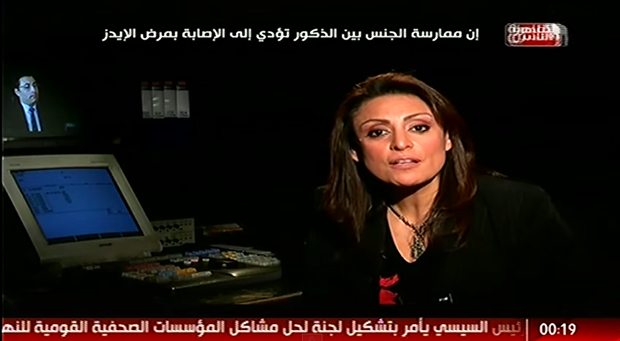
Journalist Mona El Iraqi colluded with security forces in a raid on a public bathhouse allegedly frequented by gay people (Image: Al Kahera Wal Nas TV Network/YouTube)
When prominent Egyptian actor Khaled Abul Naga criticised President Abdel Fattah El Sisi counter-terrorism policies in Sinai in a video posted on the El-Bawaba news website last November, he was slammed by government loyalists and Egypt’s pro-regime media.
Lawyer Samir Sabry, notorious for filing legal complaints against opposition activists, filed a lawsuit against Abul Naga accusing him of “treason” and “inciting anti-government protests”. In a telephone interview with the Egyptian privately-owned satellite channel Sada El Balad, Sabry said “those who go against the will of the people who elected El Sisi, must be punished”.
Abul Naga’s prosecution reflects the growing intolerance in Egyptian society and the persistent intimidation of dissenters since the ouster of Islamist President Mohamed Morsi some eighteen months ago. Since the military takeover of the country on 3 July, 2013, anyone expressing a view that runs counter to the official narrative is labeled a “traitor” and a “spy” by supporters of Egypt’s military-backed regime.
Even more disturbing than the criminal charges faced by Abul Naga is the barrage of insults hurled at him by government loyalists in the media who poked fun at the actor’s alleged sexual orientation.
Talk show host Tawfiq Okasha scandalously mocked Abul Naga’s sexuality, hinting that the actor was gay.
“Why do you sleep on your stomach and not on your back?” the controversial TV presenter (and owner of Faraeen Channel) asked, adding that there must have been a reason why Abul Naga was exempted from military service.
Mazhar Shaheen, a pro-government cleric who presents a talk show on a privately-owned satellite channel, also scoffed at Abul Naga, suggesting that he leave the country.
“If you are not happy with the military’s performance, you should go to either Syria or Iraq,” he said, addressing Abul Naga.
“But watch your pants while you are there,” he sarcastically warned.
Abul Naga’s lampooning by the pro-government media reflects the shrinking space for free expression in today’s Egypt. It also highlights the increased vulnerability of and continued discrimination against the LGBT community in Egypt’s deeply conservative society.
In recent months, Egypt’s gay population have increasingly been targeted amid a brutal crackdown that has seen 150 suspected homosexuals arrested and detained since November. While Egyptian law does not expressly ban homosexuality, gay people are frequently charged with “debauchery” and detained. Muslim scholars and prosecutors have condoned the arrests, arguing that “homosexuals are shameful to God” and that “it is the government’s duty to protect morality” — a conservative view that is widely shared by the Egyptian public. A Pew survey conducted in 2013 found only three per cent of Egyptians accept homosexuality.
While disdain for homosexuality is not new in Egypt, inflammatory reporting by Egypt’s pro-government media has in recent months further fuelled prejudice against gay people and deepened the stigma associated with homosexuality.
Last month, TV reporter Mona El Iraqi who works for the privately-owned Al Kahera Wal Nas TV channel, colluded with security forces in a raid on a public bathhouse in downtown Cairo, allegedly frequented by gay people. Iraqi used her cell phone to take pictures of 26 half-naked men wrapped only in bath-towels as they were arrested. After sending undercover agents to the bathhouse to spy on visitors, she alerted the police, claiming that “promiscuous orgies” were taking place there. On 7 December, police — accompanied by Iraqi’s camera crew stormed the bathhouse and indiscriminately arrested the suspects.
Iraqi unashamedly posted pictures of the half-naked men on her public Facebook page. The images were removed a couple of hours later after she was lambasted by rights activists enraged by what they described as her “insensitivity” and “flagrant intolerance”. Defending her actions in a Facebook post, she insisted that the bathhouse was a “hotbed of immorality” and was “helping spread HIV and AIDS in Egypt”.
Despite the outpouring of horror over the bathhouse raid on social media networks, Iraqi’s episode was broadcast to “mark World AIDS Day and spread awareness about the causes of HIV and AIDS in Egypt” — according to Iraqi.
The 26 men who were arrested were charged with “debauchery” and subjected to intrusive anal checks to determine their sexuality. Human Rights Watch has decried the anal examinations, describing them as being in violation of “international standards against torture“. The forensics report claimed that two of the 26 defendants may have been subjected to rape as signs of struggle were evident on the bodies of the men in question. At the trial last Sunday, defence lawyers argued however, that it was almost impossible to verify whether the men had indeed practiced homosexuality. They also slammed the decision to allow Iraqi to film the arrests, describing the move as “unconstitutional”. Denouncing the arrests, they said it was only natural for the men to have been naked “for they were either in the shower or the steam bath when police stormed the premises”. Khaled Naqash, one of the defence lawyers meanwhile, claimed his client had been fully dressed but was stripped naked by the police before his arrest. The defendants’ families were barred from entry into the courtroom and complained they were “ruffled up” by security guards who had apparently already condemned the defendants even before the verdict has been pronounced. The trial has been adjourned until 12 January when the fate of the men will be decided.
The latest mass arrests are reminiscent of the 2001 so-called “Queen Boat raid“, when security forces stormed a floating nightclub moored on the Nile in Cairo’s affluent neighbourhood of Zamalek, arresting 52 men. That incident sparked international outrage and condemnation and sent a chilling message to Egypt’s LGBT community. Rights advocates say the latest arrests are even more disturbing than the Queen Boat incident as they show media colluding with the police instead of holding security forces to account for their actions.
The bathhouse raid also comes hot on the heels of similar raids on gay hangouts in Cairo in recent months including cafes, bars and even private house parties. In March last year, four men were arrested in a raid on a house party after police allegedly found the men dresses in women’s clothing. The men were accused of “debauchery” and sentenced to eight years in prison. In September, a video of an alleged “gay wedding ceremony” posted online prompted the arrest of another eight men including the alleged “gay couple” who were seen in the video exchanging rings and hugging. While all the men had reportedly tested “negative” for homosexuality, they were nevertheless, sentenced to three years in prison each. A Cairo appeals court later reduced the sentences to one year in prison. The court also ruled however, that the men would remain under police surveillance after completing their jail terms. Last Sunday, El Youm El Sabe’ reported that two men were arrested in Alexandria by “morality police” and charged with “debauchery” and “destroying public morals”.
The recent spate of mass arrests of gay suspects has sparked serious concerns for Egypt’s LGBT community.
“I no longer feel safe,” Karim, a 26 year-old Egyptian homosexual told Index. “Egypt has never been safe for us but things are worse now under the military-backed authorities because we know we are being targeted.” He explained that the current regime was trying to woo the conservatives in the society by “appearing more Islamist than the ousted Islamist regime”.
“I’m always looking over my shoulder now and constantly live in fear,” said Mohamed, 32, another member of Egypt’s LGBT community. “I would leave Egypt if I could.”
For Mohamed and other gay people in Egypt, what is even more worrying than persecution and prosecution is the humiliation and shame they may bring onto their families if their identities were revealed — as has happened with the defendants in the recent bathhouse case.
“Now that the media is aligned with the police, we are at serious risk of public defamation and loss of dignity,” he lamented.
“What is even sadder is that few Egyptians are denouncing the arrests of gays as some media are telling the public that homosexuality is a disease that will destroy public morality and hence, it is necessary to rid the society of the scourge,” he added.
Buthayna Haleem ( her name has been changed to protect her identity) an Egyptian lesbian writer is one of the few people in Egypt condemning the raids.
“It is not something that concerns others,” she told Agence France Press in a recently televised interview. “This is oppression against people.”
Update: An earlier version of this article incorrectly stated Mona Iraqi had removed the images posted to Facebook. Facebook removed the images because they violated the service’s terms.
This article was published on 6 January 2015 at indexoncensorship.org
