20 Apr 2017 | Bahrain, Bahrain Statements, Campaigns, Campaigns -- Featured, Middle East and North Africa, Statements
[vc_row][vc_column][vc_column_text]
To: Sheikh Hamad bin Isa Al Khalifa
King of Bahrain
CC: Hon. Zeid Ra’ad Zeid al-Hussein
High Commissioner for Human Rights
Ms. Frederica Mogherini
High Representative of the European Union for Foreign Affairs and Security Policy
Mr. Sigmar Gabriel
Vice-Chancellor and Foreign Minister of the Federal Republic of Germany
Mr. Rex W. Tillerson
United States Secretary of State
The Right Honorable Boris Johnson
Foreign & Commonwealth Office of the United Kingdom
Mr. Jean-Marc Ayrault
Minister of Foreign Affairs of France
King Hamad,
We, the undersigned, express our deep concern with the government of Bahrain’s continued targeting of journalists, which further restricts free press and expression in the country. On 23 April 2017, the court of appeals will hold another hearing for Sayed Ahmed Salman al-Mousawi, an internationally-renowned photographer, after he was arrested more than three years ago for alleged terrorist activities. The government’s repeated harassment of al-Mousawi and other journalists highlight the ongoing censorship and restrictions on free press and expression in Bahrain.
Sayed Ahmed Salman al-Mousawi is a 29-year-old freelance photographer who has won 169 international photography prizes—a number of which he even won while in detention. He is a member of FIAP, PSA, UPI and Qatif photos.
Authorities arrested al-Mousawi, along with his brother Sayed Mohammed, on 10 February 2014 from their home in Duraz. The plain-clothes masked policemen did not present any arrest warrant and confiscated his cameras and electronic devices. After holding al-Mousawi for six days, officials transferred him to Dry Dock prison. Security forces then took him to the Criminal Investigations Directorate (CID) for another six days where they tortured him “cruelly without mercy,” as he later told his father. Security officers hung him on a door four times, electrocuted him, and did not allow him to sit for four days. They stripped him naked, beat him and sexually assaulted him. No independent investigation into his torture allegations has ever been conducted.
Al-Mousawi spent over nine months in detention without official charges against him. At his first trial on 24 December 2014, the prosecutor charged him with forming and participating in a terror cell, accusing him of providing SIM cards to protesters —“terrorists”—and taking photos of anti-government demonstrations. He and other witnesses denied that he had anything to do with the riots. Over the course of 2015, officials postponed his trial six times. Meanwhile, the government continued to deny him his basic human rights, including restricting access to a lawyer, placing him in solitary confinement, and denying family visits.
On 23 November 2015, the Bahraini court sentenced al-Mousawi to 10 years imprisonment and revoked his citizenship. However, the Court of Cassation overturned the ruling earlier this year. His postponed appeal hearing next month provides an opportunity to end his prolonged arbitrary detention and mistreatment. Al-Mousawi has now been held arbitrarily for over three years, merely for exercising his right to free expression.
Al-Mousawi’s case is representative of the Bahraini government’s growing repression against basic civil rights. We, the undersigned, have raised our concern over numerous cases of torture, arbitrary detention, unfair trials, and trumped up terrorism charges used to restrict expression unfavourable to the government. Journalists, bloggers, online activists and human rights defenders such as Faisal Hayyat, Nazeeha Saeed, and Nabeel Rajab, among others, have increasingly come under attack by authorities since the 2011 pro-democracy protests. Arbitrary arrests of journalists, systematic torture and impunity have turned Bahrain into a dangerous country for those who speak out. The country is ranked 162nd out of 180 countries in Reporters Without Borders’ (RSF) 2016 World Press Freedom Index and has become one of the biggest detainers for journalists and bloggers with at least 14 behind bars as of today.
Furthermore, the government has also censored and restricted the media, most recently in January, temporarily suspending the online version of Alwasat, the only independent newspaper in the country. Through a combination of media and counterterrorism legislation, as well as excessive government oversight, to justify their actions against the press and journalists, Bahraini officials continue to act with impunity.
The targeting and judicial harassment of journalists simply performing their work is unacceptable and violates international human rights standards. Bahrain is a signatory to the International Covenant on Civil and Political Rights (ICCPR), which states in Article 19 that “Everyone shall have the right to freedom of expression.” This includes the requirement that “a free press and other media [be] able to comment on public issues without censorship or restraint and to inform public opinion.” The pattern of reprisals and suppression of freedom of express far exceeds the limited restrictions placed on this right under article 19.3.
We, the undersigned, raise our concerns about restrictions on free press and expression in Bahrain and call on the Bahraini government to:
- Immediately and unconditionally release Sayed Ahmed Salman al-Mousawi and all other journalists arrested and imprisoned for merely exercising their right to free expression;
- Guarantee the right to free expression by removing restrictions on the media and peaceful dissent, and foster an independent free press to fulfil Bahrain’s international human rights obligations.
Signed,
ActiveWatch (Romania)
Africa Freedom of Information Centre
Americans for Democracy & Human Rights in Bahrain (ADHRB)
Article 19
Bahrain Institute for Rights and Democracy (BIRD)
Bytes for All, Pakistan
Canadian Journalists for Free Expression
European Center for Democracy and Human Rights
Freedom House
Gulf Center for Human Rights
Index on Censorship
Journaliste en Danger (JED)
Maharat Foundation
Media Foundation for West Africa
Reporters Without Borders (RSF)
World Association of Newspapers and News Publishers[/vc_column_text][/vc_column][/vc_row][vc_row][vc_column][vc_basic_grid post_type=”post” max_items=”4″ element_width=”6″ grid_id=”vc_gid:1492705737868-c65e7005-0971-10″][/vc_column][/vc_row]
13 Apr 2017 | Awards, Digital Freedom, News
[vc_row][vc_column][vc_column_text]In a Russian republic marked by a clash between the rule of law, the weight of traditions, and the growing influence of Islamic fundamentalism, Daptar, a website run by journalists Zakir Magomedov and Svetlana Anokhina, covers the issues affecting women that receive little coverage by other local media. Daptar seeks to promote debate. The small team of journalists, working alongside a volunteer lawyer and psychologist, also tries to provide help to the women they are in touch with.
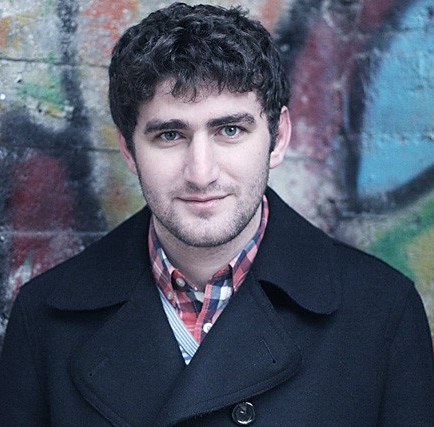
Index spoke to Magomedov ahead of the Freedom of Expression Awards.
 Ryan McChrystal: What led you to set up Daptar?
Zakir Magomedov: I am a journalist from Dagestan. A few years ago I worked for a human rights organisation there, helping people mistreated by the police. During that time we received a lot of statements from victims of domestic and sexual violence. In Dagestan there are a lot of human rights organisations, but they are human rights organisations in name only – they don’t actually do anything, especially when it comes to women’s rights.
I decided it would be a good idea to create a website for women, which we started in 2014. We write a lot of articles about domestic violence and honour killings in Dagestan, Chechnya and other North Caucasus regions. And our content isn’t just about women’s problems; we also profile women doing well in business, sports and other areas.
McChrystal: What does the name “Daptar” mean?
Magomedov: It’s an Arabic word that means different things in different caucuses. In the Chechen language it means copybook. In one of the Dagestani languages it means diary.
McChrystal: How is Daptar staffed?
Magomedov: It’s just me and my colleague Svetlana. I am like the director and she is the editor. These are positions without money or salary. The little funds we do receive go towards paying journalists for their articles, for example. We also worked with a lawyer and a psychologist for online consultation services, but now we haven’t any support. I often spend my own money to pay for articles.
We sometimes got support from some local businessmen, but it wasn’t enough. But Svetlana and I aren’t working for money. For me, it’s about doing something good.
McChrystal: How has the lawyer helped?
Magomedov: In one case, the child of a woman from Dagestan was kidnapped by her ex-husband. The woman was beaten. He then took gasoline and said if she didn’t sign papers to say the children could live with him, he would burn her.
After that, she came to us and we took her to the police to give her statement. Every day during that month, I waited for her after work to walk her home because she feared her ex-husband would come. In the end, she got her child and is now living in Russia. We helped her move from Dagestan.
McChrystal: Why do journalists in the region seem to neglect these issues? What are the main difficulties?
Magomedov: In Dagestan, for example, there is freedom of speech, but local journalists don’t cover women’s problems. I don’t know why – perhaps they don’t want to work with unpopular topics, or maybe it’s because of the dangerous.
When we wrote an article about FGM we got a lot of abuse from the internet, especially directed at Svetlana. She got very depressed when a lot of people wrote things like: “we’re going to kill you”, “we’re going to destroy your website”, “you shouldn’t write about this topic”, “you are lying”.
Many suppose we were lying about the extent of FGM, domestic violence and honour killings.
McChrystal: You say Svetlana has suffered quite badly as a result of Daptar’s work. Is it any easier for you as a man to speak out on these issues?
Magomedov: It was difficult for me at first. I was born and grew up in this society. My friends would call me a feminist and say things like: “Today you write about women’s issues and tomorrow it’ll be LGBT issues.” They didn’t mean this in a good way. They would say horrible things, but I’m OK with that. I can write about these topics just like an ordinary journalist with a job.
I was the first person to write about women’s circumcising in Dagestan and I got bullied a lot for that. I don’t care though.
McChrystal: What is it about the culture in Dagestan that makes a word like “feminism” such a dirty word?
Magomedov: It is definitely a dirty word in Dagestan, especially for men. This is a patriarchal society. The culture is that a women’s place is the kitchen. She should just look after the children and be a housewife. Anyone writing about women’s rights is seen as an enemy. The word “feminist” is a dirty word in Russian, but in Dagestan it is especially negative. But I have no problem with calling myself a feminist.
McChrystal: Your investigation into FGM last year went a long way to breaking the silence around the practice by fostering a nation-wide debate. This must make you very proud. What other investigations are you proud of in the last year?
Magomedov: The generation gap among Chechens means that a lot of older relatives don’t like the behaviour of their children. They don’t it like when Chechen girls have dates or are meeting with guys, especially if they aren’t Chechen guys. It all brings shame on that person. There have been a few situations where parents take their girls and kill them. We are currently investigating these cases. We worked with an expert in Chechnya on this issue.
We also cover dress codes in Chechnya, because officials there want girls to wear the hijab. We wrote about divorce in the region and one story in particular where one murdered woman’s sister wasn’t able to get justice for her in court.
Children with HIV is a big issue in Chechnya, and we’ve done work in this area. We cover a lot of stories, and all of them are very important.
McChrystal: What have been some of the more positive reactions to Daptar?
Magomedov: I won’t lie – we haven’t really seen much of a positive reaction. After the work on FGM, we met with Muslim leaders in Dagestan. They acknowledged it was a big problem and said we shouldn’t talk about it, we should write more and more articles, even in religious newspapers. But it was just one meeting and nothing happened after that.
We do hear stories from and about women we have aided or encouraged, including the eight victims of domestic violence we helped last year.[/vc_column_text][/vc_column][/vc_row][vc_row][vc_column][vc_basic_grid post_type=”post” max_items=”4″ element_width=”6″ grid_id=”vc_gid:1492084802623-2cd71c55-f5dc-8″][/vc_column][/vc_row]
5 Apr 2017 | News, Volume 46.01 Spring 2017
[vc_row full_width=”stretch_row” full_height=”yes” css=”.vc_custom_1491319101960{background-image: url(https://www.indexoncensorship.org/wp-content/uploads/2017/04/Cover-slider.jpg?id=88947) !important;background-position: center !important;background-repeat: no-repeat !important;background-size: contain !important;}”][vc_column][/vc_column][/vc_row][vc_row][vc_column][vc_custom_heading text=”The “now” generation’s thirst for instant news is squeezing out good journalism.
We need an attitude change to secure its survival” google_fonts=”font_family:Libre%20Baskerville%3Aregular%2Citalic%2C700|font_style:400%20italic%3A400%3Aitalic”][/vc_column][/vc_row][vc_row][vc_column][vc_column_text]
THIS WORLD HAS never been in more need of good, well-researched journalism. It is tempting to write the words “old-fashioned” here too. And if by old-fashioned, what is meant is detailed, neutral, in-depth and well thought-out writing, then old-fashioned is what is called for.
Around the world there are squeezes from all directions, stifling what the public is allowed to know, and what it is allowed to say or write. From government pressure to mafia threats, from commercial agencies to reputation- damaging (ro)bots, the right to speak and report is under huge pressure.
And good journalism must be there to unmask those threats. With the rise of the words “fake news” comes a spirit that seems to think that I can apply this phrase to anything I disagree with. So the epithet “fake news” was out of its box and being used to try to disarm reporters and to undermine public belief both in research, experts, truth and often journalism.
So, this is a time for journalists and journalism to step up and do a really excellent, thorough job of discovering and publishing the news: that’s not a news broadcast or publication that is just a hodgepodge of opinions based on very little research; nor a news story that has so much spin in it it’s hard to discern any actual facts. There are those that might argue that the media has been through a pretty unimpressive period in the past 10 years, with some valiant exceptions. The line between the news and opinion pages has become increasingly hard to distinguish. So, it might be less than surprising that the public might have lost faith in news sources.
Social media has played a massive part in this. Hysterical opinion goes down a storm, instantly shared across platforms; while well-argued journalism, with more facts than screeching, tends to stay in its box, unread. And, of course, there are signs that attention spans are melting away. So not only does every item have to be now, now, now, but we can only be bothered to read the first line, or look at the picture.
Sadly, research from Stanford University shows young people are gathering their “news” from social media without bothering even to click through on a link. They also have trouble discerning the difference between a social media-placed advertising feature and a news story from a well-established news media company. So shareable opinion has become king, and news has melted away and merged into a hybrid of what it once was.
But journalists need to take back the news wherever they can, and re-establish it as a well-researched, investigated piece of information, not an outpouring of ill-informed thoughts. And the public has to take some responsibility too. We need to be capable of a bit more dissection and scepticism when we see stories, rather than swallowing them whole without thinking.
[/vc_column_text][/vc_column][/vc_row][vc_row][vc_column width=”1/4″][vc_icon icon_fontawesome=”fa fa-quote-left” color=”custom” align=”right” custom_color=”#dd3333″][/vc_column][vc_column width=”3/4″][vc_custom_heading text=”Hysterical opinion goes down a
storm, instantly shared across
platforms; while well-argued
journalism, with more facts
than screeching, tends to stay in
its box, unread” google_fonts=”font_family:Libre%20Baskerville%3Aregular%2Citalic%2C700|font_style:400%20italic%3A400%3Aitalic”][/vc_column][/vc_row][vc_row][vc_column][vc_column_text]
As our seasoned journalists explain in our Decoding the News special, everyone should be aware of techniques and tools to stop them being taken in, at least most of the time. Meanwhile, journalists are doing some really strong investigations.
As we go to press the BBC was broadcasting a story about truck drivers in the supply chain for furniture company Ikea, who were being paid less than the minimum wage, and being forced to live in their vehicles. They were drivers from Romania but working in Denmark, where they should have been paid according to Danish laws. The journalist was on the road talking to lorry drivers to find the story. Stories like these are hard to dispute, because the journalist has evidence to stand up the allegations.
Over in the Maldives, journalist Zaheena Rasheed, shortlisted for an Index journalism award this year (see page 37), is reporting about what is happening in the south Asian island country, despite a climate of fear. And in other countries, remarkable reporters continue to make extraordinary efforts to get news out, despite dangerous conditions.
There are some signs that the world is starting to realise it needs good journalism. The New York Times saw a growth of 41,000 subscriptions in the week immediately after the election of President Trump. Sales of satire and news magazine Private Eye recently hit their highest level ever with 287,334 copies sold for one issue. Reports from Poland suggest a surge in sales of independent weekly Tygodnik Powszechny (see our report on page 69). This in a country that is seeing its media freedom fall down global charts. Jeremy Leslie, creative director of magazine- only shop Magculture in London, said he is seeing an upward tick in the sales of magazines “with serious intent”.
“More people are making [magazines with that type of content] and more people are buying it,” he told Index on Censorship.
Is this a sign that some members of the public are learning at last that if they want journalism that tells them something they don’t know (and isn’t made up), they just might have to pay for it? Only time will tell. Otherwise, the survival of journalism looks fraught with danger.
[/vc_column_text][/vc_column][/vc_row][vc_row][vc_column][vc_column_text]
Rachael Jolley is the editor of Index on Censorship magazine. She recently won the editor of the year (special interest) at British Society of Magazine Editors’ 2016 awards
[/vc_column_text][/vc_column][/vc_row][vc_row][vc_column][vc_custom_heading text=”From the Archives”][vc_row_inner][vc_column_inner width=”1/3″][vc_single_image image=”80566″ img_size=”213×289″ alignment=”center” onclick=”custom_link” link=”http://journals.sagepub.com/doi/pdf/10.1177/0306422015605737″][vc_custom_heading text=”A matter of facts: fact-checking’s rise” font_container=”tag:p|font_size:24|text_align:left” link=”url:http%3A%2F%2Fjournals.sagepub.com%2Fdoi%2Fpdf%2F10.1177%2F0306422015605737|||”][vc_column_text]September 2015
Vicky Baker looks at the rise of fact-checking organisations being used to combat misinformation, from the UK to Argentina and South Africa.[/vc_column_text][/vc_column_inner][vc_column_inner width=”1/3″][vc_single_image image=”80569″ img_size=”213×289″ alignment=”center” onclick=”custom_link” link=”http://journals.sagepub.com/doi/pdf/10.1177/0306422016657017″][vc_custom_heading text=”Giving up on the graft and the grind” font_container=”tag:p|font_size:24|text_align:left” link=”url:http%3A%2F%2Fjournals.sagepub.com%2Fdoi%2Fpdf%2F10.1177%2F0306422016657017|||”][vc_column_text]June 2016
European journalist Jean-Paul Marthoz argues that journalists are failing to investigate the detailed, difficult stories, fearing for their careers.[/vc_column_text][/vc_column_inner][vc_column_inner width=”1/3″][vc_single_image image=”90839″ img_size=”213×289″ alignment=”center” onclick=”custom_link” link=”http://journals.sagepub.com/doi/pdf/10.1177/030642209702600315″][vc_custom_heading text=”In quest of journalism” font_container=”tag:p|font_size:24|text_align:left” link=”url:http%3A%2F%2Fjournals.sagepub.com%2Fdoi%2Fpdf%2F10.1177%2F030642209702600315|||”][vc_column_text]May 1997
Jay Rosen looks at public journalism, asserting that the journalist’s duty is to serve the community and not following professional codes.[/vc_column_text][/vc_column_inner][/vc_row_inner][vc_separator][/vc_column][/vc_row][vc_row][vc_column width=”1/3″][vc_custom_heading text=”The Big Squeeze” font_container=”tag:p|font_size:24|text_align:left” link=”url:https%3A%2F%2Fwww.indexoncensorship.org%2Fmagazine|||”][vc_column_text]The spring 2017 issue of Index on Censorship magazine looks at multi-directional squeezes on freedom of speech around the world.
Also in the issue: newly translated fiction from Karim Miské, columns from Spitting Image creator Roger Law and former UK attorney general Dominic Grieve, and a special focus on Poland.[/vc_column_text][/vc_column][vc_column width=”1/3″][vc_single_image image=”88788″ img_size=”medium” alignment=”center” onclick=”custom_link” link=”https://www.indexoncensorship.org/magazine”][/vc_column][vc_column width=”1/3″][vc_custom_heading text=”Subscribe” font_container=”tag:p|font_size:24|text_align:left” link=”url:https%3A%2F%2Fwww.indexoncensorship.org%2Fsubscribe%2F|||”][vc_column_text]In print, online. In your mailbox, on your iPad.
Subscription options from £18 or just £1.49 in the App Store for a digital issue.
Every subscriber helps support Index on Censorship’s projects around the world.
 SUBSCRIBE NOW[/vc_column_text][/vc_column][/vc_row]
4 Apr 2017 | Digital Freedom, Mapping Media Freedom, News, Turkey, Turkey Uncensored
[vc_row][vc_column][vc_column_text]
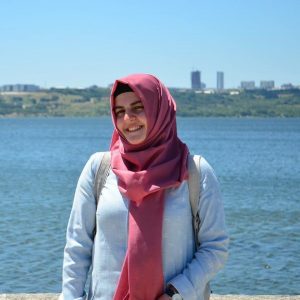
Journalist Nur Ener
It was around 2am on the morning of 3 March 2017 that Turkish police broke the door open to the apartment of Nur Ener, a journalist who works for the daily Yeni Asya. Her house was searched. She was held in custody for three days at the Kocasinan Police Department detention centre in complete isolation before she was arrested on 6 March.
A court ordered her arrest on charges of being affiliated with the Fethullah Gülen network, a religious community which Turkish authorities claim is behind Turkey’s July 15 failed coup. Since then, she has been imprisoned in Bakırköy Women’s Prison in Istanbul. As an alleged member of the group involved in the coup, she is allowed only 45 minutes of family visits a week and only an hour to consult with her lawyer. She is barred from all written communication with the outside world.
It later emerged that her arrest was based on a tip-off from a former flatmate, who was likely coerced into providing names to go free in Turkey’s increasingly Kafkaesque judicial system, where letters or emails are accepted as enough evidence to be arrested on very serious charges by Turkey’s controversial Criminal Judicatures of Peace. Currently, over 150 journalists are imprisoned in the country, almost all accused of terrorism charges, both as part of and outside the coup investigation.
Life before journalism
Nur was born in the city of İzmir in 1991 to a devout Muslim family. Her father, Uğur Ener, is a furniture seller and her mother, Nazan Ener, a housewife. The couple has another daughter, Rana Ener, who is two years older than Nur.
As a child, Nur was very active and curious, according to her mother Nazan Ener. She was a very good student at school but also had a seemingly limitless energy for a wide range of extracurricular activities, from horseback riding to archery. She was brought up in İzmir and lived there, until her admission into the Communications Department of Erzurum University in 2010.
As a leading member of her university’s Communications Student Club, she often organised panels. During such one event, she met with Kazım Güleçyüz, the editor-in-chief of Yeni Asya, the flagship newspaper of a community in Turkey which profoundly respects and adheres to the Risale-i Nur a collection of treatises offering interpretations of the Quran by the 19th-century Sunni theologian Said’i Nursi.
She interned at the newspaper that summer, and was hired formally in 2015, shortly after her graduation.
“When she was four, we were in the yard and her father asked her to bring something. She said she couldn’t walk in that direction because she didn’t want to step on the ants walking outside. She was always very compassionate,” Nur’s distraught mother said.
“Nur was always respectful of other people’s opinions,” she continued. She mentioned the name of a neighbor, whom she referred to as “our grandfather,” a staunchly secular old man, who “had a complete opposite worldview” from the Ener family. “One day, she saw him painting the yard wall, and she jokingly said ‘Grandfather Mevlüt, I can’t let you tarnish your charisma like that with that paint roller!’ and painted the wall herself.”
Most staff at Yeni Asya agrees that Nur is a natural peacemaker, a born mediator. Her mother remembers: “When she was just a schoolgirl, she once forced us to have a positive dialogue with a neighbor who had yelled at Nur for playing soccer infront of her house.” The neighbor was surprised when Uğur Ener politely asked the neighbor what was wrong, instead of arguing for yelling at her daughter. The neighbor never found out that this had happened on Nur’s demand, and in fact Uğur Ener was initially very angry at him.
Assertive journalist
“I shared a flat with Nur,” said Ülker Caba, a fellow editor at Yeni Asya. “She is a very active person. Before she started working at Yeni Asya, she was involved in various projects in the media. For example, I remember she contributed to Bianet [Independent News Network, a secular news website in Turkey with a good reputation for its journalism, funded by SIDA] . She is a great journalist. She was always very insistent about getting interviews for example. She would call a person a thousand times to make sure that she would get an interview.”
“She was very social and very engaged. Starting these Periscope sessions was her idea,” said Kazım Güleçyüz, who met me in his office at Yeni Asya minutes after completing a morning Periscope broadcast on Yeni Asya’s Twitter account. “We often broadcast these together with Nur,” he said.
Ener’s boisterous and energetic personality also made her an active person outside work. “We cycled or took strolls along the shore on the weekends,” says Recep Kılınç, Nur’s fiancé, who works at the newspaper’s accounting department. The couple had set a wedding date for 29 April. Rana, Nur’s sister, was looking for a wedding gown a few days before her arrest.
“She also loved reading, we would talk for hours and sometimes go star-gazing at night.” Kılınç cannot visit his fiancée in prison as per the restrictions imposed on journalists arrested as part of the coup investigation under Turkey’s State of Emergency rules, which went into force on 20 July, five days after the coup attempt.
Speaking of Nur’s initial detention, Kılınç said: “There wasn’t a single female police officer when they came to her house. All male officers raiding the house of a woman who lived alone in the middle of the night,” a deeply offensive act for the devout family. “They seized her laptop, her books; they left the house a mess.”
Interviews that disturbed some
But why was Nur detained and later arrested, nearly after seven months after the coup attempt? Her family says that a former flatmate of Nur had given her name to the police after being detained herself shortly after the coup attempt. She later called Nur and admitted what she had done, and even apologised. Turkey’s so-called “repentance law” allows suspects to be released if they provide more information about an organisation. Still, her newspaper and family find it perplexing that the police would wait so long to continue the investigation. Could it be a message to Yeni Asya, which has so far been spared in the post-coup decimation of news outlets in Turkey? 160 media organisations have been shut down under several Cabinet Decrees under the post-coup State of Emergency rule.
The answer could be a yes, according to Yeni Asya editor-in-chief Güleçyüz. “It is possible. She recently published some reports that disturbed [the Turkish government]” he said. “Most recently, she published an interview with Fatma Bostan Ünsal,” who parted ways with the Justice and Development Party over differences in opinion after being one of its founders. “The interview criticised the State of Emergency implementations. Its headline quoted Ünsal saying ‘We were freer in Feb. 28,’ a reference to the 1997 unarmed military intervention against a religious-minded government, which caused much grievance among Turkey’s conservative segments, who were profoundly affected by the intervention.
Unclear charges
Because there is a confidentiality decision on the investigation, Nur’s lawyers have not been formally informed of the charges she faces. Nor have they been able to see any document pertaining to the investigation. According to the arrest ruling, she was arrested for having downloaded ByLock, a little-known mobile chat application which Turkish officials say was used only by the members of the Fethullah Gülen network. Although the National Intelligence Agency itself has said that the use of ByLock by the group ended long before the coup, thousands have been arrested for downloading the app.
Nur was put under arrest by a ruling of the 4th Criminal Judicature of Peace. An objection filed by her lawyers to another Judicature of Peace was not processed at any point. However, it recently appeared that an indictment has been prepared and submitted to a court — a rare and positive development in Turkey, a habitual offender in terms of using pre-trial detention as a form of punishment for journalists — and Nur will soon be tried by the 26th High Criminal Court, to which the objection was referred; a procedural violation. A court date has yet to be set.
“We are hoping for her release. The fact that they haven’t rejected our objection might mean that she might be released any time,” Güleçyüz said.
Kılınç agreed, smiling optimistically, he said: “Yes, we start every new day with that hope.”[/vc_column_text][vc_column_text]

Turkey Uncensored is an Index on Censorship project to publish a series of articles from censored Turkish writers, artists and translators.
[/vc_column_text][/vc_column][/vc_row][vc_row][vc_column][vc_basic_grid post_type=”post” max_items=”4″ element_width=”6″ grid_id=”vc_gid:1491296439514-9b2a04ec-9c56-3″ taxonomies=”8607″][/vc_column][/vc_row]
