7 May 2014 | Asia and Pacific, China, News
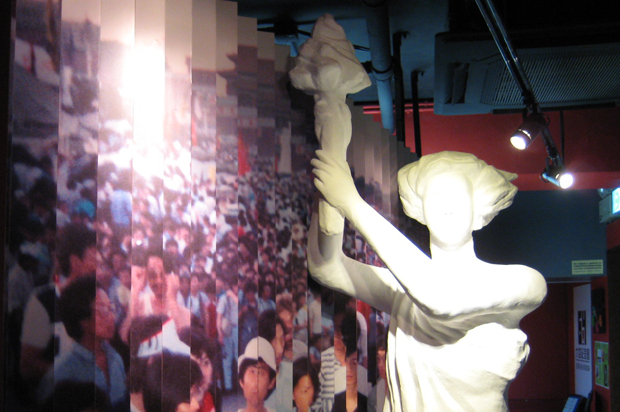
(Photo: Hannah Leung)
The world’s first museum dedicated to the 1989 pro-democracy protests in Beijing’s Tiananmen Square opened in Hong Kong last Saturday to mark the 25 year anniversary. Named the June 4 Memorial Museum, it hopes to educate the millions of mainland tourists who visit Hong Kong each year.
The violent suppression of student protests in Tiananmen Square remains a taboo topic in mainland China, banned from official discourse. Beijing considers the weeks of peaceful protest by students and workers a “counter-revolutionary” revolt and defends its decision to send in the army. To this day no official numbers of the death toll have been released and many young Chinese in particular are unaware of its occurrence.
Index visited the museum a few days after its launch. Located in the busy district of Tsim Sha Tsui, the bustling side streets of Hong Kong’s main Korean centre, the museum sits on the fifth floor of a commercial building. Inconspicuously sandwiched in the throngs of bars and Korean fried chicken joints, discretion is key. It’s easy to walk past the museum if you don’t know what you are looking for and signs of its existence are only given at the floor directory located by the elevator.
A curator at the museum tells Index that since its opening the museum has received around 300 visitors per day, with an even split between mainlanders and Hong Kong residents. At the time of our visit, there were mostly Hong Kong residents in attendance, with a sprinkling of mainland visitors. It’s also packed. Despite being a normal weekday and an hour before closing time, a queue weaves out the door. The sense of eagerness to discover something is palpable amongst the patrons.
The space is modest – 800 square feet in total – with both people and information meticulously squeezed in. School children browse through books and pamphlets found on a bookshelf. Some pose for pictures with a Goddess of Democracy statue located by the entrance. The statue is a replica of one created by the protesters in the days before the crackdown.
Copies of newspaper clippings, photos, videos and an interactive feature on the configuration of the protestors at Tiananmen Square, which went on for a month, are all on display. The centrepiece is a video of the Tiananmen Mothers, a group of activists personally affected by the protests, some of whom lost children or relatives in the crackdown. Testimonies given in the clips go through the agony of losing a university-aged child, and the subsequent upset of being forced to lie about the way their children died. They have been forbidden by the government, then and now, to reveal the truth.
One young woman, a tourist from mainland China, is visibly in tears as she watches the documentary. Others are less moved and some attendees have criticised the museum for not being sombre enough. A couple, also from the mainland, fiddle with the interactive feature found in the centre of the museum before the man, seemingly bored, says he wants to leave.
That visitors are here however, is a feat in and of itself. While free speech is protected in Hong Kong in theory under the One Country Two Systems agreement, closer ties to the Chinese mainland in recent years have led to incursions on free speech, as Index recently reported. In the weeks leading up to the museum’s unveiling many were sceptical about whether it would open at all. Occupants of the same building called for its closure, citing safety concerns. The museum’s backers believe Communist Party officials were behind these efforts. In another incident, Yang Jianli, a US-based activist who participated in the protests in 1989, was refused entry to Hong Kong to attend the opening ceremony. The launch was greeted by more protests from pro-China demonstrators.
Over in a small area by the exit, memorabilia is sold. USB memory drives are also available upon enquiry containing information and images related to the killings. Museum founders hope visitors will smuggle these over the border into mainland China, and in so doing force the Communist government to admit its crimes. They might be an overly optimistic aim, but at least the June 4 museum is confronting China’s recent past in an honest, open way.
This article was published on May 7, 2014 at indexoncensorship.org
30 Apr 2014 | About Index, Campaigns, Press Releases
VIENNA, April 30, 2014 – The European Commission’s support for projects addressing violations of media freedom and pluralism, and providing practical support to journalists, gives European Union countries reason to celebrate this year on May 3, World Press Freedom Day, media freedom watchdogs said today.
However, new research into defamation law and practice – one of four, one-year projects launched in February under a Commission-funded grant programme focusing on the 28 EU member and five candidate countries – has shed light on one big elephant in the room, the Vienna-based International Press Institute (IPI) said. Preliminary results of a study by IPI and the Center for Media and Communications Studies (CMCS) at Budapest’s Central European University reveal that criminal laws in the EU addressing libel, slander, and insult remain rife and, in many cases, contravene international and European standards.
Furthermore, as another project, “Safety Net for European Journalists”, registered, attacks on journalists continue to represent a major challenge to press freedom in Europe. Research and field work by the Osservatorio Balcani e Caucaso, IPI affiliate the South East Europe Media Organisation (SEEMO), Ossigeno per l’Informazione and Dr. Eugenia Siapera of Dublin City University have shown that journalists across Southeast Europe, Turkey and Italy often face common threats and pressure, highlighting a crucial need for transnational support.
“Media freedom and pluralism can unfortunately not be taken for granted in Europe,” Neelie Kroes, vice-president of the European Commission responsible for the Digital Agenda, said. “We all, governments, NGOs, the media, and the EU institutions have a role to play in standing firmly to defend these principles, in Europe and beyond, now and tomorrow, on and off-line. I am interested to see what the outcome of the independent projects will be.”
The European Commission grant programme, the “European Centre for Press and Media Freedom”, is funding two projects in addition to IPI’s project researching the effects of defamation laws on journalism in Europe and raising awareness of the same, and the “Safety Net” project establishing a transnational support network for journalists in Southeast Europe, Turkey and Italy. Index on Censorship has created a project to map media freedom violations, and the Florence-based Centre for Media Pluralism and Media Freedom (CMPF), also working in conjunction with CMCS, is creating tools and networks to strengthen journalism in Europe.
The grantees’ work, combating violations of the fundamental right to press and media freedom, is intended to play a critical role in protecting both the fundamental human right of free expression, as guaranteed by Article 11 of the EU’s Charter of Fundamental Rights, as well as the media’s instrumental role in safeguarding democratic order.
Some of the grantees will also collaborate to establish an intra-European network of legal assistance for media outlets facing legal proceedings.
IPI and CMCS plan to launch a comprehensive report in early June on the status of criminal and civil defamation law in EU member and candidate countries, intended to help identify states where engagement is required most urgently. The report will evaluate each country across a number of categories, including the types of defences and punishments available and the existence of provisions shielding public officials, heads of state, or national symbols from criticism. It will also include a first-of-its-kind “perception index” to gauge the subjective effect that criminal and civil defamation proceedings have on press freedom.
Preliminary research shows that, in nearly all EU member states, libel and insult remain criminal offences punishable with imprisonment – up to five years in some cases – and that journalists continue to face prosecutions in numerous countries, particularly Croatia, Greece, Hungary, Italy, Malta and Portugal. While some countries have seen movement toward decriminalisation, only a small minority of states have fully abolished criminal libel and insult provisions, among them Ireland, Romania and Britain.
A key finding so far is that while national courts in many cases apply European Court of Human Rights precedents on protection of freedom of expression, few EU member states have adopted legislation that meets these standards. This is particularly true with regard to defences available to journalists in libel proceedings. In IPI’s view, the lack of modern legislation clearly establishing defences of truth, public interest, fair comment and honest opinion contributes to an atmosphere of uncertainty and potential self-censorship on matters of public interest.
Additionally, the research so far has shown that legal protections shielding public officials from scrutiny are prevalent in many countries, and that such provisions often are found in tandem with increased punishments for journalists and media outlets that publish content that could be deemed defamatory. The combination of these two instruments – present in the laws of many EU member states – significantly weakens legal safeguards that enable journalists and media outlets to perform their necessary watchdog roles. Such barriers pose undue restrictions on freedom of expression rights and the public’s right to know, as established by international and EU conventions and treaties.
Despite clear challenges, however, the research has also found several important positive movements, including the enactment of modern civil defamation legislation in Ireland in 2009 and in England and Wales in 2013, as well as the full repeal of criminal libel in those jurisdictions. The removal, for the most part, of prison sentences as a punishment for libel in Finland, new discussions among Italian lawmakers to end imprisonment for criminal defamation and the repeal of a French law punishing insults to the president all indicate a growing, if slow, willingness to tackle archaic legislation.
If you would like more information or to schedule an interview with IPI Senior Press Freedom Adviser Steven M. Ellis, please call +43 (1) 512 9011 or email [email protected].
25 Apr 2014 | Academic Freedom, News, United Kingdom, Young Writers / Artists Programme
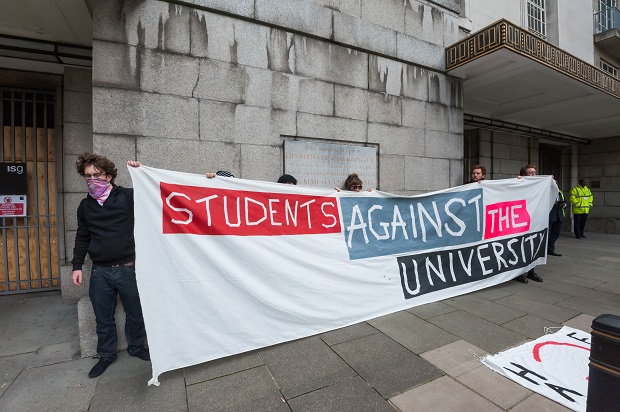
In February, students defied a protest ban imposed by the University of London to speak out against the privatisation of university support services. (Photo: Peter Marshall/Demotix)
There is a strong attitude across university campuses that censorship is a good tool for the benefit of a multicultural and inclusive society, that respects the values of all its members, freeing them from being exposed to anything they may find “harmful”.
Many students now sign up to policies that promote “safe space” throughout the university campus from the clubs and bars, to the seminar room and lecture theatres. Most of the time these policies go unnoticed and unchallenged as the bureaucrats strengthen their grip over the university and its members, and political activity wains under prevailing conformity and debateophobia.
These policies exist in antithesis to the true purpose of institutions of higher learning – to debate every idea and challenge every prejudice.
The promotion of safe spaces has been the preserve of National Union of Students (NUS) officials and university management for a number of years, seeking to create inclusive and welcoming environment for a growing student body, and attract more students from minority and/or vulnerable backgrounds. Originally the policy specifically dealt with the LGBT community. The US group Advocates for Youth describe safe space as one in which every individual can “relax and be fully self-expressed” free from feeling uncomfortable, unwelcome or unsafe.
The University of Bristol Students’ Union expresses the policy aptly: “The principle values [adopted from the NUS’ ‘safe space’ policy] are to ensure an accessible environment in which every student feels comfortable, safe and able to get involved in all aspects of the organisation free from intimidation or judgement” (my emphasis); ranging from freedom from physical and criminal activity, to being free from having one’s culture and beliefs questioned.
In the November of last year the LGBT society at the University of Liverpool lodged a complaint against the Islamic Society’s (ISoc) hosting of Cleric Mufti Ismail Menk due to his homophobic views, appealing to the Liverpool Guild of Students safe space policy. Despite the meeting being private and only open the ISoc members, the LGBT believed that the events would impinge on their “freedoms and happiness”, and would rather the Liverpool Guild of Students ban the event than have their lifestyles judged by others.
Even university institutions themselves have codified what free speech should look like on campus. The London School of Economics requires speakers to be screened. Bolton University details topics considered to be outside of the realm of debate, because of their controversial or sensitive nature, from animal experimentation to sexual abuse of children and paedophilia, and, most worryingly, “where the subject matter might be considered to be of a blasphemous nature”.
Given that such august institutions have taken on the narrative of safety first, it is no surprise that this has only strengthened students as censors resolve.
Last month the student union at the University of Derby revealed that it would be continuing its ban on the UK Independence Party (UKIP) in an upcoming debate in the run up to the 22 May European and local council elections. This follows its refusal to allow David Gale, UKIP candidate in the Police and Crime Commissioner elections of 2012, to take part in a Q&A session. This censorship and conformism came under the tired old banner of ‘no platform’, with the SU contending that they had the right to create a space in which students feel safe while studying on campus.
The safety-first mentality also pervades throughout the on-going No More Page 3 and anti-lad culture campaigns that are swarming across campuses in the UK. Painting a regressive view of human beings the campaigns believe that a bad joke, a bit of over zealous flirting and seeing a pair of breasts irredeemably damage women who come into have to look at them and creates an “unrealistic and potentially damaging picture of what women’s bodies look like”.
Unsurprisingly, whether it’s No More Page 3 or the ban of Blurred Lines, any attempt to engage in open and critical discussion of the issues has been met with scorn. Lucy Pedrick, of Sheffield Students’ Union council, believes a “referendum [on the banning of the sale of The Sun newspaper on campus] would not be a fair debate”, keeping the discussions behind closed doors for those who are members of the right forums and councils.
It appears then that today’s students are too vulnerable to be exposed to any robust and challenging discussion. This grows out of a culture that has promoted the idea that every individual is emotionally vulnerable and cannot cope with a growing range of encounters and experiences. It is now believed that we live in a world of unmitigated risks and problems, only waiting around the corner to trip you up again, and our ability to deal with everyday problems seems to have diminished. According to sociologist Frank Furedi, vulnerability has become conceptualised a central component of the human condition and “contemporary culture unwittingly encourages people to feel traumatised and depressed by experiences hitherto regarded as routine”, from unwanted cat-calling to the discussion of dangerous ideas.
It’s a far cry from the tradition out of which the theory of liberal education and the modern university was born. The period of the Enlightenment was led by the rallying call of Immanuel Kant – ‘Sapere aude!’ – dare to know and dare to use your own understanding in the creation and formation of your own opinions. However, this is the reverse of what we are seeing today as debate is closed down and speech is censored on campus all in the name of safety.
If we are to recapture the campus, lead the progress of human knowledge, and create an active and engaged citizenry towards progressive social change, it’s free speech and expression we must engage in.
This article was posted on 25 April 2014 at indexoncensorship.org
24 Apr 2014 | Lebanon, News, Religion and Culture, Young Writers / Artists Programme
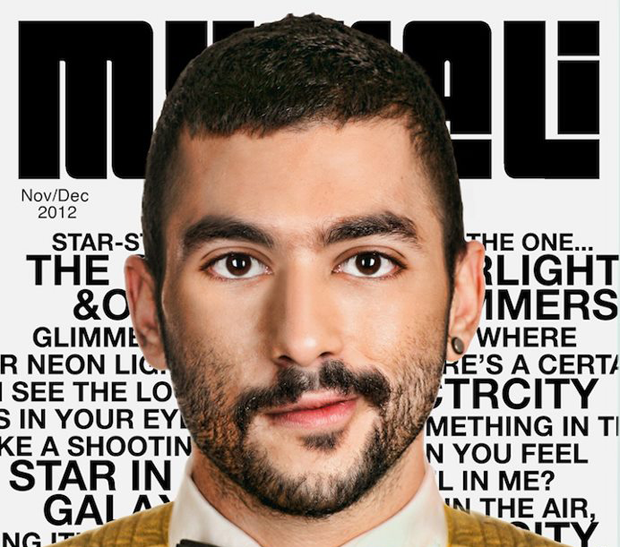
Hamed Sinno, who is openly gay, is the lead singer of Mashrou’ Leila
While walking the streets of the upscale downtown district of Beirut, or sipping cocktails in one of El-Hamra’s bustling bars, one could easily forget that Lebanon is a country where civil liberties are still in debate.
Article 534 of the Lebanese penal code states: “Any sexual intercourse contrary to the order of nature is punished by imprisonment for up to one year.” The vaguely worded article has and is still being used to crackdown on the LGBT community in Lebanon. Compared to its neighbours in the Middle East, Lebanon has long been considered one of the least conservative countries in the region. According to a poll conducted by the Pew Research Centre in 2013, 18% of the Lebanese population thinks that homosexuality should be accepted in the society, putting it way ahead of Egypt, Jordan and Tunisia where almost 97% of the population views homosexuality as deviant and unnatural.
The Lebanese Psychiatric Society issued a statement in early 2013 saying that: “The assumption that homosexuality is a result of disturbances in the family dynamic or unbalanced psychological development is based on wrong information” — making Lebanon the first Arab country to dismiss the belief that homosexuality is a mental disorder. On 28 January 2014, Judge Naji El Dahdah of Jdeideh Court in Beirut dismissed a claim against a transgender woman accused of having a same-sex relationship with a man, stating that a person’s gender should not simply be based on their personal status registry document, but also on their outward physical appearance and self-perception. The ruling relied on a 2009 landmark decision by Judge Mounir Suleimanfrom the Batroun Court that consenual relations can not be deemed unnatural. “Man is part of nature and is one of its elements, so it cannot be said that any one of his practices or any one of his behaviours goes against nature, even if it is criminal behaviour, because it is nature’s ruling,” stated Suleiman.
Despite the recent positives, being gay in Lebanon is still a taboo. In a country drenched in sectarianism, debates about homosexuality are easily dismissed in the name of religion and homosexuals are accused of promoting debauchery.
“People in Lebanon, and across the region, still act like homosexuality doesn’t exist in our society,” said Kareem, who requested that Index only use his first name. “I think it’s important that we start the conversation and get the issues out in the open, so people can start acknowledging it and then decide their stance on. The fight for our rights comes later on,” he added.
In 2013, Antoine Chakhtoura, mayor of the Beirut suburb of Dekwaneh, ordered security forces to raid and shut-down Ghost, a gay-friendly nightclub. “We fought battles and defended our land and honor, not to have people come here and engage in such practices in my municipality,” the mayor asserted.
Four people were arrested during the raid and brought back to municipal headquarters where they were subject to both physical and verbal harassment: forced to undress, enact intimate acts which included kissing, as well as being violently beaten. Marwan Cherbel, minister of interior at the time of the incident, backed the mayor’s actions, adding that: “Lebanon is opposed to homosexuality, and according to Lebanese law it is a criminal offence.”
Unfortunately, this was not an isolated incident. In a similar raid on a movie theatre in the municipality of Burj Hammoud known to cater for a gay clientele, 36 men were arrested and forced to undergo the now abolished anal probes — known as tests of shame. The raid came only a few months after Lebanese TV host Joe Maalouf dedicated an episode of his show Enta Horr (You’re Free) to exposing a porn cinema in Tripoli where it was claimed that young boys were being sexually abused by older men.
“The fact that these incidents received a lot of media coverage, some of which denounced the raids, is a sign that the public is little by little taking an interest in the issue of gay rights,” said Kareem. “Five or six years ago, this could have easily gone unnoticed. While the gay community might not be fully accepted or tolerated in Lebanon, it has been gaining a lot more visibility in recent years.”
Helem, a Beirut-based NGO, was established in 2004 to be the first organisation in the Middle East and Arab world to advocate for LGBT rights. In addition to campaigning for the repeal of Article 543, Helem offers a number of services, including legal and medical support to members of the LGBT community. Organisations like Helem and its offshoot Meem, a support group for lesbian women, had a huge impact on raising awareness and correcting misconceptions about homosexuality. Support from Lebanese public figures has also been on the rise in recent years. For example, popular TV host Paula Yacoubian and pop star Elissa have both shown support for the LGBT community in Lebanon via their Twitter accounts.
While the struggle to change the law continues, young artists have been challenging social norms through art. Mashrou’ Leila, a Beirut-based indie rock band, has sparked a lot of controversy thanks to their songs, in which they unapologetically sing about sex, politics, religion and homosexuality in Lebanon. In Shim el Yasmine, the band’s lead singer, Hamed Sinno, who is openly gay, sings about an old love, a man whom he wanted to introduce to his family and be his housewife. Director and art critic, Roy Dib, recently won the Teddy Award for best short film in 2014 at the 64th Berlinale International Film Festival with his film Mondial 2010. The film tells the story of a gay Lebanese couple on the road to a holiday weekend in Ramallah, Palestine. It tries to explore the boundaries that make it impossible for a Lebanese person to go into Palestine, as well as the challenges faced by a homosexual couple in the region.
The battle for gay rights in Lebanon is multilayered, and while change is starting to feel tangible, there is still a lot to be done.
This article was originally posted on 24 April 2014 at indexoncensorship.org
