27 Jun 2013 | In the News
INDEX POLICY PAPER
Is the EU heading in the right direction on digital freedom?
While in principle the EU supports freedom of expression, it has often put more emphasis on digital competitiveness and has been slow to prioritise and protect digital freedom, Brian Pellot, digital policy advisor at Index on Censorship writes in this policy paper
(Index on Censorship)
AUSTRALIA
Australia doubles down on censorship, refuses R18+ classification to State of Decay
Australia, coming off the back of refusing classification to Saints Row IV yesterday, apparently wasn’t satisfied with just one act of censorship. Today Undead Labs announced that their game too had been refused classification, so for the foreseeable future Australia will not be seeing State of Decay. Again, the issue seems to be related to some sort of drug use. The team is currently exploring their options with Microsoft
(NeoSeeker)
BAHRAIN
Bahrain mulls clamp on Internet calls
Bahrain is considering introducing controls on calls made via the Internet, including those on Skype and Viber, said a top official.
(Trade Arabia)
BRAZIL
Brazil’s left and right struggle for ownership of protests
Rival groups split on the political direction of the protests, with claims two organisations back military rule
(The Guardian)
EGYPT
Egypt journalists to march for free expression on 30 June
Journalists criticise attacks on freedom of expression under President Mohamed Morsi
(Ahram Online)
EUROPEAN UNION
EU adopts guidelines to “protect and promote” LGBTI rights
Coming on the heels of Russia’s enactment of a “gay propaganda” law, the European Union’s decision to adopt guidelines to protect the rights of lebian, gay, bisexual, transgender and intersex persons in foreign relations on Monday is welcome. Sean Gallagher writes
(Index on Censorship)
FRANCE
Pro-Israeli activist found guilty of libel
A man has been convicted of defamation in France for his claims about a widely-publicised video which showed a 12-year-old Palestinian boy’s death in Gaza Strip.
(Al Jazeera)
ISRAEL
Knesset members seek libel protection for IDF soldiers
If passed, legislation will enable class-action suits against critics who make false claims about army operations
(The Times of Israel)
INDIA
Censor laws are extremely ambiguous: Anand Gandhi
Independent filmmaker Anand Gandhi was in the city recently to screen his film ‘Ship of Theseus’ for the students of Film and Television Institute of India. Anand spoke to TOI about being an independent filmmaker, film censorship and why serious engagement from the government for Indian films is the need of the hour.
(The Times of India)
JORDAN
Jordan Accused Of Targeting Online Dissent
Jordan’s King Abdullah vowed to make the desert kingdom a “free Internet” country as he began his rule more than a decade ago. On June 2, when local Internet providers were ordered to block hundreds of news websites across the kingdom, Web publishers protested the broken promise and international media watchdog organizations charged censorship.
(NPR)
RUSSIA
Blockage of Major News Websites Raises Censorship Fears
A ruling by a court in the central Russian town of Ulyanovsk ordering a state-run Internet provider to block access to 15 websites, including those of two prominent national newspapers, has sparked fears of a broader campaign of Internet censorship in the country.
(The Moscow Times)
SOUTH AFRICA
South African groups seek arrest warrants for Obama
Two South African groups were trying to obtain arrest warrants for US President Barack Obama, who will visit the country later this week.
(Times Live)
TURKEY
Turkey seeks to tighten grip on Twitter after protests
Turkey said on Wednesday it had asked Twitter to set up a representative office inside the country, which could give it a tighter rein over the microblogging site it has accused of helping stir weeks of anti-government protests.
(Reuters)
UNITED KINGDOM
Banning of Geller and Spencer from UK will only build grievance
Britain’s ban on anti-Muslim activists could do more harm than good, says Padraig Reidy
(Index on Censorship)
Change in libel laws ‘not required in Northern Ireland’
A Stormont committee has been told there is no need to reform antiquated Northern Ireland’s libel laws by a high-profile libel lawyer.
(Belfast Telegraph)
Daily Mail in £110k libel payout over Syrian chemical weapons story
The Daily Mail has been forced to pay more than £100,000 in damages and apologise for a story linking a UK defence company with the use of chemical weapons in Syria.
(Press Gazette)
UNITED STATES
Jeff Olson Faces 13 Years In Jail For Writing Anti-Bank Messages In Chalk
Jeff Olson, a man who is being prosecuted for writing anti-bank messages on sidewalks in water-soluble chalk last year, is facing a 13-year jail sentence.
(Opposing Views)
Companies win U.S. free speech shield over scientific articles
Authors and publishers of controversial scientific articles, and the companies sponsoring those articles, won broad free speech protection from a U.S. appeals court on Wednesday.
(Reuters)
Sexual predator cries censorship over Jaycee Dugard memoir
Eight years ago, a New York journalist named Peter Braunstein, then 41, forced his way into the apartment of a 34-year-old Manhattan woman by pretending to be a firefighter. He proceeded to drug the woman, a former colleague, and sexually assault her for more than 12 hours.
(Los Angeles Times)
VIETNAM
In Vietnam, “Depraved” Blogging Could Get You Locked Up for a Decade
Vietnam is not a good place to be a blogger. At least, it’s not a good place to be a blogger if you actually want to write what’s on your mind.
(Motherboard)
Previous Free Expression in the News posts
June 26 | June 25 | June 24 | June 21 | June 20 | June 19 | June 18 | June 17
21 Jun 2013 | In the News
INDEX POLICY PAPER
Is the EU heading in the right direction on digital freedom?
While in principle the EU supports freedom of expression, it has often put more emphasis on digital competitiveness and has been slow to prioritise and protect digital freedom, Brian Pellot, digital policy advisor at Index on Censorship writes in this policy paper
(Index on Censorship)
BAHRAIN
HRW: ‘No Space for Political Dissent’ in Bahrain
New laws and lengthy jail terms for activists have put freedom of association in Bahrain under severe threat, according to a report from Human Rights Watch.
(VOA)
BANGLADESH
Facebook and freedom of speech
The parliament of Bangladesh on June 11 passed the Anti-Terrorism (Amendment) Bill 2013 which will allow the courts to accept videos, still photographs and audio clips used in Facebook, Twitter, Skype, and other social media for trial cases.
(Dhaka Tribune)
BORNEO
Film industry players told to instil patriotism, cultural values
Film industry players have been urged to instil the values of patriotism and culture in their products to educate society.
Deputy Home Minister Datuk Wan Junaidi Tuanku Jaafar said this was in order to change the perception of society towards the values of culture and nationhood.
(The Borneo Post)
BRAZIL
Brazil’s president meets protests with an anti-Erdogan response
Protests have popped up across the globe in recent years, but government response has varied. Rousseff’s approach contrasted with the adversarial position of Turkey’s Erdogan, for example.
(Christian Science Monitor)
CANADA
BC Supreme Court rejects Zesty’s comedian appeal
The BC Supreme Court has upheld a decision by the BC Human Rights Tribunal which found that Lorna Pardy’s complaint against comedian Guy Earle and the owners of Zesty’s restaurant was justified.
(Xtra!)
EUROPE
Media: freedom has declined in West Balkans, Turkey
Freedom of the media has declined in the past two years in the Balkans and in Turkey, OSCE Representative Dunja Mijatovic said at the EU ”Speak Up!” conference on Freedom of Expression here today.
(Ansa Med)
GHANA
Defamation against FCT Minister: Kaduna-based Publisher Risks N5b Libel Suit
FCT Minister, Senator Bala Mohammed has served notice of his intention to slam a Five Billion Naira (N5,000,000,000:00) on the Kaduna based Desert Herald newspaper and its publisher, Alhaji Tukur Mamu for defamation and libel following series of damaging publications against him by Mamu through his newspaper and two others. Similarly, the Director of Treasury of FCT Administration, Alhaji Ibrahim Bomai through the same solicitors has threatened to institute a Two Billion Naira (N2,000,000,000:00) against Mamu for the same offence of defamation and libel.
(Spy Ghana)
IRELAND
“The ferociousness of the censorship made Ireland a laughing stock”
Diarmaid Ferriter discusses the widespread censorship of publications in Ireland during the 20th century
(NewsTalk 106-108FM)
LIBYA
Blasphemy Charges Over Election Posters – Political Party Officials Could Face Death Penalty
Libyan judicial authorities should immediately drop all criminal charges that violate freedom of speech over election poster cartoons against two Libyan National Party officials. Under the laws being applied in this case, the men could face the death penalty over posters their party displayed during the 2012 election campaign for the General National Congress.
(All Africa)
MEXICO
Will Mexico’s plans for reducing violence mean anything for journalists?
Mexico’s president, Enrique Peña Nieto, promised that tackling crime and drug-related violence is a priority for his six-month-old government. While improving safety is important, Peña Nieto must also remember that protecting journalists and human rights workers must go beyond words, says Sara Yasin
(Index on Censorship)
TANZANIA
Zanzibar Legislators Call for National Unity Govt Self-Censorship
A LEGISLATOR of the Zanzibar House of Representatives, Mr Omar Ali Shehe (CUF), has said Zanzibaris were unhappy with the performance of the Government of National Unity (GNU), formed jointly between Chama Cha Mapinduzi (CCM) and CUF two-and-half years ago.
(All Africa)
TUNISIA
How Tunisia is Turning Into a Salafist Battleground
An interview with a professor who was attacked for standing up for secularism.
(The Atlantic)
TURKEY
Şanar Yurdatapan on Turkey: ‘Things will never be the same again’
In Phnom Penh, Cambodia, for the IFEX General Meeting and Strategy Conference 2013, Index Director of Campaigns and Policy Marek Marczynski spoke with 2002 Index on Censorship award winner Şanar Yurdatapan, a composer and song writer who campaigns against the prosecution of publishers by the Turkish authorities. Yurdatapan shared his views on the events sweeping Turkey
(Index on Censorship)
UNITED KINGDOM
The end of Britain’s social media prosecutions?
Keir Starmer’s new guidelines aim to minimise controversial criminal cases against Twitter and Facebook users. But will they work, asks Padraig Reidy
(Index on Censorship)
Psychic wins libel case over claim she duped Dublin audience
The publisher of the Daily Mail has agreed to pay “substantial” damages to a psychic after an article suggested she had “perpetrated a scam” on a Dublin theatre audience.
(Irish Times)
Government to propose new free speech clause for marriage supporters
Government ministers are expected to announce new proposals to offer more protection in law for those who express the view that marriage can only be between one man and one woman.
(Christian Concern)
UNITED STATES
Supreme Court upholds free speech for groups fighting AIDS
The Supreme Court rejects a federal law that requires organizations to announce anti-prostitution policies in order to receive funding.
(Los Angeles Times)
L. Brent Bozell III: Media coverage shows ‘anti-gay’ view censorship
The media elites have never been less interested in objectivity than they are right now on “gay marriage.” They don’t wear rainbow flags on their lapels when they appear on television, but the coverage speaks for itself.
(NVDaily)
Student wins free-speech lawsuit against teacher
A Michigan teacher who kicked a student out of class after the teen made a comment against homosexuality during a high school anti-bullying day was ordered to pay $1 for violating his free speech rights.
(Associated Press via SFGate.com)
No Sympathy For Media Just Now Realizing Obama ‘A Serious Threat’ To Free Speech
On Thursday, conservative columnist Michelle Malkin joined Fox & Friends host Steve Doocy where she dug into the ongoing scandals and controversies that have engulfed President Barack Obama’s administration. Malkin noted that some in the media who had previously supported the president are now more leery of the administration.
(Mediaite)
Fair Trade Music Project Speaks Out for Silenced Songwriters
Following the success of the World Creators Summit held in Washington, DC, June 4-5, the Music Creators North America (spearheading the Fair Trade Music Project) took another step toward defending the rights of creators.
(Herald Online)
Planned Parenthood says Kansas abortion law violates doctors’ free speech rights
Planned Parenthood filed a lawsuit Thursday over a new Kansas law requiring doctors to inform women seeking abortions that they’re ending the life of a “whole, separate, unique, living human being.”
(The Washington Post)
UCF Professor Accused of ‘Hate Speech Toward Islam’
The Council on American-Islamic Relations (CAIR) has filed a complaint against a University of Central Florida (UCF) professor, who they claim is teaching that Muslims are taught to hate “from the cradle.” According to The Raw Story, CAIR referenced a seminar held by Professor Jonathan Matusitz in January, which included “inaccurate information, anti-Muslim bigotry and hostility in the form of hate speech toward Islam and Muslims.”
(Ring of Fire)
EU-US trade talks won’t exclude film, culture: US envoy
The US ambassador to the European Union insisted Thursday that Europe’s film and cultural industry will not be totally excluded from upcoming talks on striking the world’s biggest free trade deal.
(AFP)
VIETNAM
Access submits UPR report on Vietnam: Cyber attacks on civil society a key concern
Access has partnered with ARTICLE 19, PEN International, and English PEN on a joint submission on Vietnam to the United Nations Universal Periodic Review (UPR). The submission focuses on the lack of improvement of human rights, specifically freedom of expression, in Vietnam since the last UPR in 2009, and highlights the Vietnamese government’s troubling response to the recent increase in cyber attacks against civil society.
(Access)
Previous Free Expression in the News posts
June 20 | June 19 | June 18 | June 17 | June 14 | June 13 | June 12
14 Jun 2013 | Uncategorized
To be an artist today means facing some age-old restrictions — whether they are economic, or the controversies that arise from clashing with society’s norms and standards.Women, however, face specific challenges when it comes to artistic freedom. The UN Special Rapporteur in the field of Cultural Rights, Farida Shaheed, recently released a report that captured some of these challenges:
“Restrictions on artistic freedoms may target some categories of the population more specifically. Women artists and audiences are at particular risk in some communities, and are prohibited from performing arts altogether, from solo performances before mixed audiences, or from performing with men. In a number of countries, many women making a living as artists, or wishing to engage in artistic careers, particularly in the areas of cinema, theatre, dance and music, continue to be labelled as “loose” or “prostitutes.”
Shaheed also emphasises the importance of artists having their work in public spaces: “the Special Rapporteur is convinced that freedom of artistic expression and creativity cannot be dissociated from the right of all persons to enjoy the arts, as in many cases restrictions on artistic freedoms aim at denying people access to specific artworks. Hence removing creative expressions from public access is a way to restrict artistic freedom.”
Add in religious or conservative values — and that only makes things a bit more tricky. For female artists who are also Muslim, there can be enormous challenges in bringing their work to the public space, and there have been some projects aimed at amplifying the stories and works of Muslim women. Projects like the Birmingham-based Ulfah Arts targets faith-based communities, who aren’t as engaged with the arts, and other projects like like Muslima — created by the International Museum of Women — showcase the artworks of Muslim women around the world in a virtual exhibition.
In some cases, restrictions on artistic freedom aren’t a question of space, but rather problems with a community’s notions of honour and propriety. Norwegian artist Deeyah, who made a documentary about the 2006 “honour killing” of a young Kurdish woman called Banaz Mahmood, said in an interview with the Free Word Centre that the value placed on “honour” cripples the freedom of expression of women in communities where it is a form of social currency:
This collective sense of honour and shame has for centuries confined our movement, freedom of choice and restricted our autonomy. You cannot be who you are; you cannot express your needs, hopes and opinions as an individual if they are in conflict with the greater good and reputation of the family, the community, or the collective. If you grow up in a community defined by these patriarchal concepts of honour and social structures, these are the parameters you are expected to live by.
Index has asked three Muslim women to write about the challenges they’ve faced as artists:
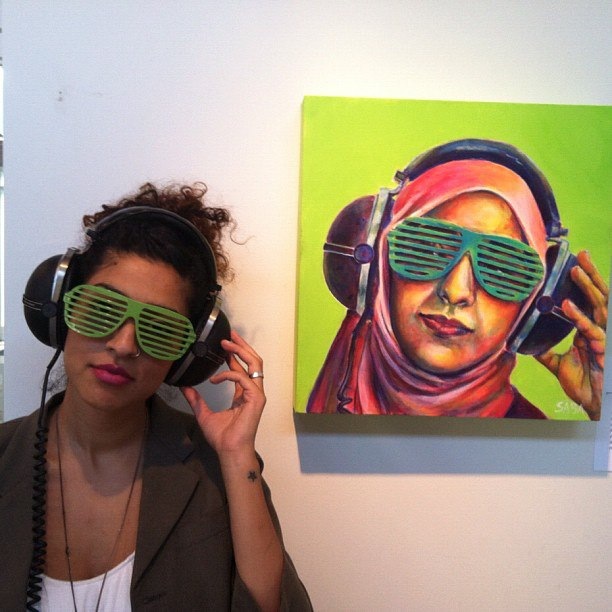 I am Pakistani, and like many other Pakistanis around me, I was strongly encouraged to become a doctor — because doing so would grant me both social status and financial security. In my family, and for most other Pakistanis I know, daughters and sons are expected to take both their education and careers seriously. A career in art seemed like an impractical and even wasteful pursuit — because it is neither financially secure, nor is it viewed as respectable in many circles. To top it all off, I had also had to consider whether or not I was risking eternal damnation by painting portraits (frowned upon by some Muslims). Before I began painting Muslim women, I was encouraged to explore my religious background through my art, and even capitalise on it, because Islam is currently the site of a controversial and political debate. But what I noticed is that the demand that exists is for images of Muslim women that illustrate the already existing narrative in the West. Through my work, I try to give a nuanced image based in truth, without passing judgment — which is a much harder sell, even though those are the stories about women that we need to experience.
Saba Barnard, painter
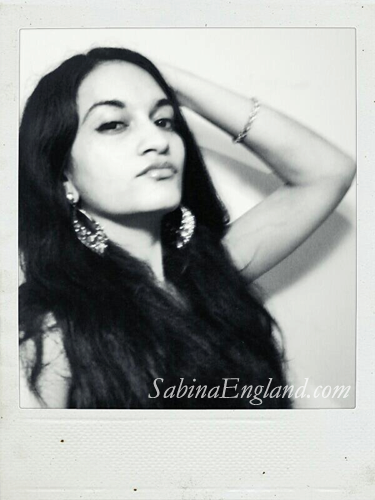 Being Muslim and deaf, and coming from a culture (Indian/South Asian) where family pressure is a big part of creating one’s future, I constantly struggle as an artist, writer, and filmmaker. Previously I’ve faced opposition from my parents, who did not want me to participate in the performing arts. Fortunately they have come around and now they support me, but they still don’t understand my passion for the arts — which is my driving force. They do not understand that my life is about creating art, breathing the air of Mother Earth, and thanking Goddess (Allah). I have faced hostility and rejection from dominantly white and western theatres and film festivals uninterested in my female-centric, woman of colour, deaf-perspective stories, films, and expressions. I never know if my works are rejected because I am Muslim, or if they’re rejected because a deaf woman of colour’s stories are so alien and foreign to the people considering them. There are fewer deaf people than Muslims — and I guess my perspective is very alien in many ways, but it doesn’t help to have my voice kept out of the mainstream. Rejection especially hurts, because my background isn’t really represented — and it would surely be a break from the white males who seem to constantly receive praise and space for uninspiring, homogenous crap. There’s also resistance from other Muslims (usually Muslim males) who think that I should shut up, be quiet, and not be seen or heard. I am so tired of it all. Now, I just do my own things and I publish my works through my own channels. That way, I can keep writing, creating, performing, filming what I want — and no one can silence or reject me.
Sabina England, filmmaker & stage performance artist
 The two biggest restrictions placed on Muslim women wanting to enter the arts are the reactions of the community to the arts, and self-censorship. For example, while most of the reactions to my play about a Muslim girl finding “the one” were positive, one female friend made her disapproval clear to me. She said, for a “Muslim girl”, I shouldn’t have written such a play — because it’s forbidden to talk about sex before marriage openly. This is all the more reason why we should write about it — it’s an expression of opinion. There’s also a double standard: when Muslim males write about sex, it’s OK. But as soon as a Muslim woman writes about sex, she is labelled a “slut.” And it’s because of this judgment that many choose self-censorship instead of speaking up. Shouldn’t the arts be about being true to oneself? I don’t want to be labelled for writing about religion, politics, and terrorism. There’s more to me than these three things. Even with pressure, Muslim women are slowly overcoming these restrictions — but communities need to be more open-minded. Hopefully, Muslim women can eventually be judged solely for the work, rather than what’s “expected.”
Mediah Ahmed, playwright
13 Jun 2013 | In the News
AUSTRALIA
WA premier denies censorship over PM event
THE West Australian government scuppered the venue booking for a Labor fundraiser featuring Prime Minister Julia Gillard, but claims it was not political censorship.
(Herald Sun)
BELARUS
The first rule of dictator club…
Belarus’s president Alexander Lukashenko will be able to count on some “like-minded” friends when it comes to a vote on his human rights record at the UN this week. Andrei Aliaksandrau reports
(Index on Censorship)
Belarus tries opposition activist for treason
An oil refinery mechanic went on trial in Belarus on Wednesday on treason charges after the government said it had foiled his attempt to pass information to foreign powers.
(Business Recorder)
BULGARIA
Bulgaria’s Ex PM Launched ‘Spate’ of Libel Lawsuits
Boyko Borisov, former Prime Minister and current leader of center-right party Citizens for European Development of Bulgaria, GERB, has informed that he has launched a number of libel lawsuits, with plans to use the proceeds for charity.
(Novinite.com)
CANADA
Ashley Madison repeats ‘censorship’ cry as CougarLife jokes canned in Canada
CougarLife.com is crying “censorship” over an ad in which a busty woman runs roughshod over younger women in a bar while explaining why cougars are better dates, because a Canadian regulatory body—the Television Bureau of Canada—has ordered that it can’t be aired unless the sandwich-shoving and the chair-pushing shots are removed.
(Novinite.com)
GREECE
Greeks protest public broadcast closure
It happened so quickly, few people inside Greece, and fewer watching from outside could comprehend it. Antonis Samaras, prime minister and leader of the Greek coalition government, announced that the state TV channel ERT, the equivalent of the BBC, would be shut down from midnight on 11 June. Dawn Foster reports.
(Reuters)
HUNGARY
Analysis: Divided EU in a bind over Hungary’s ‘erring’ Orban
Europe is in a bind over what to do about Hungary and a feeling that the former Soviet satellite is drifting back towards authoritarianism under Prime Minister Viktor Orban.
(Reuters)
INDIA
Caught in a web of censorship
Deepesh T. is only one feature film old but he is already feeling the heat of censorship. As a teacher of drawing at CHMHS, Thillankeri in Kannur, he always exhorts students to speak the truth. The filmmaker in him is no different.
(The Hindu)
PAKISTAN
Internet Censorship in Pakistan
As the people of Pakistan celebrate a historic turning point, the first successful transfer of power from one civilian government to other in the nation’s 65-year history, the country faces numerous challenges in the road to development and democracy.
(Voice of Journalists)
PHILIPPINES
Pugad Baboy and freedom of expression
There appears to be some misunderstanding on the nature of freedom of expression lately.
(Manila Standard)
RUSSIA
Anti-gay law passes in Russia
New legislation against “homosexual propaganda” has been passed against backdrop of piousness and machismo of Putinism, says Padraig Reidy
(Index on Censorship)
Russia introduces jail terms for ‘religious offenders’
A controversial law introducing jail sentences for the crime of offending religious believers was approved by Russia’s lower house of parliament on Tuesday.
(The Telegraph)
TUNISIA
Tunisia jails three Europeans for topless feminist protest
A Tunisian court sentenced three European feminist activists to four months in jail on Wednesday after they demonstrated topless in central Tunis last month against the Islamist-led government, one of their lawyers said.
(Reuters)
TURKEY
Turkey’s Taksim Square cleared after violent clashes
In a bid to gain control of Taksim Square, Turkish security forces last night clashed with antigovernment protesters camped out in Istanbul’s centre. Sara Yasin reports
(Index on Censorship)
US cautions Turkey on ‘punishing protesters exercising their right to free speech’
The United States on June 15 cautioned Turkish authorities against seeking to punish any demonstrators merely for exercising their right to free speech in the latest of several statements that have been addressed during the ongoing Gezi Park protests.
(Hurriyet Daily News)
Turkey’s history of military coups hangs over protests
Turkey’s “pashas”, the generals who once made politicians quake at the mere hint of disapproval, are staying silent as riots sweep the nation. Today the words “military coup” are nowhere to be heard, a tribute perhaps to the prime minister now accused of trampling on democracy.
(Reuters)
UNITED KINGDOM
Prism surveillance: spies thrive in the internet’s legal free-for-all
MPs almost wear their technophobia with pride. No wonder William Hague faced no serious questioning in the Commons
(The Guardian)
Drug laws amount to scientific censorship, says David Nutt
Former government adviser says illegal status of psychoactive drugs stymies research into their potential therapeutic uses
(The Guardian)
‘This rigmarole feels wrong,’ says journalist at centre of free speech row
Ahead of his talk about the Church of Scientology at the Senedd on Monday, BBC Panorama journalist John Sweeney says Cardiff council’s decision not to allow him to speak at Cardiff Library is a matter of free speech
(Wales Online)
Out of order! Speaker’s wife Sally sells furniture on eBay from flat in Parliament
Sally Bercow has blundered into controversy again – by flogging antiques from her free home in Parliament.
(Daily Mail)
UNITED STATES
Free speech outside Supreme Court: Ban on protests in plaza struck down
A 60-year-old statute barring all protest on the marble plaza outside the US Supreme Court is ‘irreconcilable with the First Amendment,’ a federal judge in Washington ruled.
(The Christian Science Monitor)
Fleming proposal to require free religious expression in military draws White House objections
The Obama administration is objecting to a proposed amendment by Rep. John Fleming, R-Minden, that would require the military to accommodate, except in cases of military necessity, “actions and speech” reflecting the “conscience, moral principles, or religious beliefs of the member.”
(The Times-Picayune)
Believers, nonbelievers vent over religious expressions during graduation
Graduation, religion and free speech combined for the perfect storm at the conclusion of the 2013 high school year.
(Deseret News)
PRISM Class-Action Lawsuit Filed: $20B, Injunction Sought Against ‘Complicit’ Companies and Officials
Lawsuit says Obama chilled free speech; attorney encourages citizens to ‘man the barricades of freedom’
(US News and World Report)
Snowden saw what I saw: surveillance criminally subverting the constitution
What Edward Snowden has done is an amazingly brave and courageous act of civil disobedience.
(The Guardian)
EDITORIAL: Trampling free speech
In a surveillance society, it’s wise to watch your words. A careless, offhand remark on Facebook can be grounds for a sacking or even probable cause for arrest, just for speaking your piece.
(The Washington Times)
Spies Without Borders I: Using Domestic Networks to Spy on the World
Much of the U.S. media coverage of last week’s NSA revelations has concentrated on its impact on the constitutional rights of U.S.-based Internet users. But what about the billions of Internet users around the world whose private information is stored on U.S. servers, or whose data travels across U.S. networks or is otherwise accessible through them?
(EFF)
