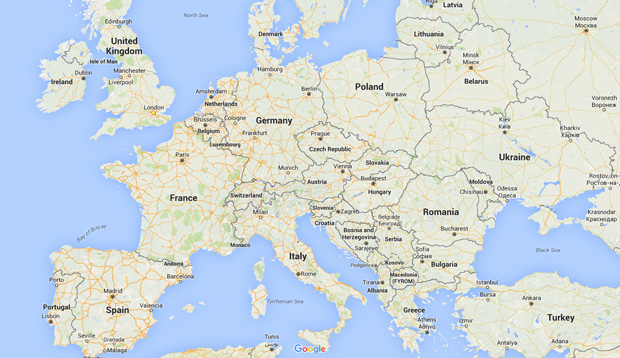
Click on the dots for more information on the incidents.
Each week, Index on Censorship’s Mapping Media Freedom project verifies threats, violations and limitations faced by the media throughout the European Union and neighbouring countries. Here are five recent reports that give us cause for concern.
Turkey: Warrants issued for arrest of 89 journalists
Turkish authorities have issued two lists of journalists to be arrested since the 15 July failed military coup attempt in the country. Firstly, on 25 July, authorities issued the names of 42 journalists as part of an inquiry into the coup attempt. Well-known commentator and former parliamentarian Nazli Ilicak was among those for whom a warrant was issued, as was Ercan Gun, the head of news department at Fox TV in Turkey.
26 July, 2016 – Media Print Macedonia, the publisher of several daily and weekly newspapers, announced that it would dismiss 20 staff members, mostly experienced journalists and former editors from the daily Vest.
Layoffs are also to include employees from daily Utrinski Vesnik, Dnevnik, Makedonski Sport and weekly magazine Tea Moderna.
MPM stated layoffs were prompted by bad results and that the decision on who to dismiss would be based on the company’s internal procedures. Employees who lose heir jobs are to be compensated from one up to five average salaries, TV Nova reported.
24 July, 2016 – Emir Talirevic, a doctor who owns Moja Klinika, a private healthcare institution in Sarajevo, used Facebook to insult Selma Ucanbarlic, a journalist for the Centre for Investigative Journalism, following her articles about Moja Klinika, regional TV outlet N1 reported.
On 24 July Talirevic wrote on Facebook, among other things, that “judging by her psycho-physical attributes [the journalist] should never be allowed to do more complex work than grilling a barbecue”. He alleged hers were “imbecilic findings”, adding that “her work requires higher IQ than 65”.
In a second post, published on 27 July, Talirevic wrote that “as the toilet tank is taking away my associations on Selma and her CIN(ical) website I am thinking about the oldest profession in the world – prostitution”. He also wrote: “CIN is financed by gifts, like prostitutes”, and “after today’s article at least we know for whom Selma Ucanbarlic and her CIN colleagues are spreading their legs”.
22 July, 2016 – Masza Makarowa, a former journalist for the Russian language division of national broadcaster Polskie Radio, left the station due to a repressive climate and censorship, she claimed on her Facebook page.
An “atmosphere of scare tactics and paranoia” was prevalent at the broadcaster, Makarowa said. She also claimed that the station management instructed staff on which sources to consider for publication to Russian-speaking audiences, approving right-leaning, pro-governmental websites while explicitly prohibiting liberal sources like Gazeta Wyborcza for being opinionated. Certain updates, furthermore, were removed from the website.
22 June, 2016 – Jeff Howell, who had been writing a home maintenance advice column for The Telegraph for 17 years, was allegedly dismissed and removed from the Telegraph website after comments he made to his property section editor, Anna White.
According to Private Eye, the column, which was initially published both on the website and online, was removed from the website after he made a joke to property section editor White about correcting the Telegraph’s editing errors following a typo in January. Much of the column’s online archive was deleted following the incident.
Howell’s page on the Telegraph website used to get up to 10,000 hits daily but the removal of most of his columns from the website “made it easy to justify his dismissal by saying he didn’t produce any online traffic”.
Click on the dots for more information on the incidents.
Each week, Index on Censorship’s Mapping Media Freedom project verifies threats, violations and limitations faced by the media throughout the European Union and neighbouring countries. Here are five recent reports that give us cause for concern.
21 June, 2016 – Freelance journalist Kastus Zhukouski and cameraperson Alyaksei Atroshchankau who work for Poland-based Belsat TV, were detained in the town of Loyeu, in Homel region, Belsat channel reported.
The two media workers were filming a local brick factory for a story about poor economic conditions in Belarus.
“The police came, and brutally detained me and my colleague Alyaksei. We were taken to the police department, to the control room. They seized the equipment from our hands, broke it. I was knocked down to the floor, handcuffed, a man pressed a knee against my head. He called himself Deputy Chief Henadz Madzharski”, Kastus Zhukouski told BelaPAN.
The journalist also said he had high blood pressure. An ambulance was called and he was given an injection.
Zhukouski and Atroshchankau spent six hours at the police station. No police documents were drawn up despite threats to do so, the channel reported. It is unclear if the journalists have been charged with anything.
Szukouski and Atroshchankau filed requests to the Investigative Committee of the Republic of Belarus asking them to investigate actions of the police.
20 June, 2016 – Belgian justice minister Koen Geens announced his intention to double the length of a prison sentencing for divulging confidential information, in cases where professional confidentially is breached, newspaper La Libre Belgique reported.
According to the Belgium General Association of Journalists, the move is meant to include it amongst the category of offenses which allow specific investigative methods such as phone-tapping or electronic tracing.
A second proposed law is also worrying journalists, which would enable the intelligence service to scrape the protection of a professional journalist if he/she is not considered a real journalist.
Gaspard Glanz, from independent website Taranis News, which covers clashes that take place during protests closely, and Alexis Kraland, were detained by police forces.
Ganz tweeted about the conditions, writing: “There’s 12 of us in total in the van. It’s 40 degrees. No water, no air”.
On Periscope, the people in the truck can be seen saying why they were arrested, generally because they were wearing protective material meant to protect them against tear gas.
22 June, 2016 – A new anti-terrorism law has come into effect on 22 June after it was ratified by the Polish President Andrzej Duda, wiadomosci.gazeta.pl. The law was successfully passed by two parliamentary chambers of the Sejm earlier this month.
The law gives Poland’s intelligence agency, the ABW (Agencja Bezpieczeństwa Wewnętrznego), the right to “order the blocking or demand that the electronic open source service administrator block access to information data”, thereby giving the agency the right to shut down online media outlets, including websites and television programmes, Kulisy24 reported.
Websites can be blocked for up to five days prior to obtaining permission by higher prosecution authorities, and up to 30 days if permission is granted, with the option to renew it for up to three months.
Authorisation for a temporary access ban can also now be granted by the minister of justice. The legislation does not grant power to the source administrator to appeal against such a decision.
Lawyer and expert on surveillance legislation, Prior Waglowski, told the website money.pl: “Blocking…has to occur under judicial supervision… which is not given here. These propositions are taken out of the blue”. He underlined that the definition of terrorism provided is very loose and is up to the discretion by effectively two persons.
Watchdog website Kulisy24criticised the legislation, writing that it is not known how blocking will be executed and that the ABW is not obliged to publish its blocking order.
The Polish NGO Fundacja Panoptykon started a petition against the law in late April and collected just short of 8,690 signatures by 20 June. Together with the NGO e-Państwo, it also published a protest letter addressed to the Polish president, which was shared by a number of media and NGOs, including the Helsinki Foundation of Human Rights.
In a developing incident reported to Mapping Media Freedom on 18 May 2016 Turkish judicial authorities have opened an investigation against five journalists and trade unionists for participating in a solidarity campaign with the Kurdish daily newspaper Özgür Gündem.
The journalists include Ertugrul Mavioglu, Faruk Eren, Ayse Düzkan, Mustafa Sönmez and Melda Onur.
The Co-Editorship-in-Chief campaign was launched by Özgür Gündem daily on 3 May, 2016 for World Press Freedom Day (#WPFD) where up to 16 journalists participated.
Requests have been filed for the journalists and trade unionists to testify for articles that are being considered “terrorist propaganda” and an “incitement to crime” which were published whilst they participated in the solidarity campaign.
“This is another dark day for media freedom in Turkey,” said Johann Bihr, the head of RSF’s Eastern Europe and Central Asia desk. “Erol Önderoglu has fought tirelessly to defend persecuted journalists for the past 20 years. He is a leader in this field because of his honesty and integrity, which are recognised the world over. It says a lot about the decline in media freedom in Turkey that he is now also being targeted.”
UPDATE: On 25 May, 2016 – Journalist Erol Önderoglu has been added to list of journalists being investigated for “terrorist propaganda” for participating in the solidarity campaign with Özgür Gündem, The European Federation of Journalists (EFJ) reports. EFJ demands that all criminal charges be dropped against him and the other journalists involved in this campaign.
UPDATE: 20 June, 2016 – A prosecutor has issued a warrant for the pre-trial arrest of ad interim editor-in-chief Özgür Gündem Şebnem Korur Fincancı, Bianet journalist and RSF representative Erol Önderoğlu and author Ahmet Nesin.
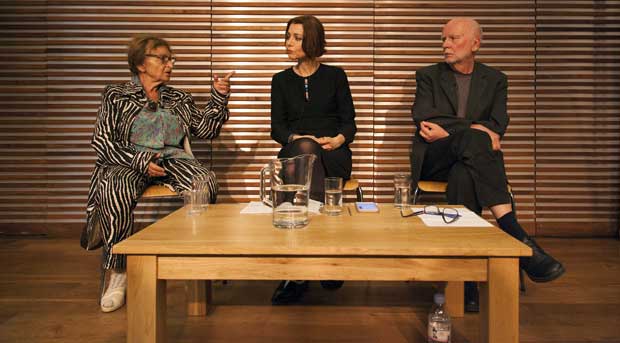
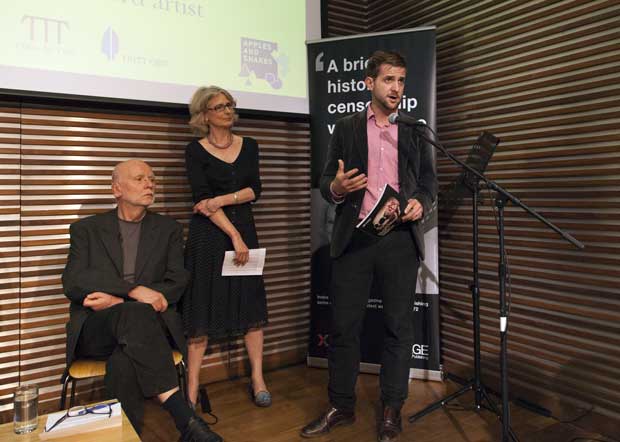
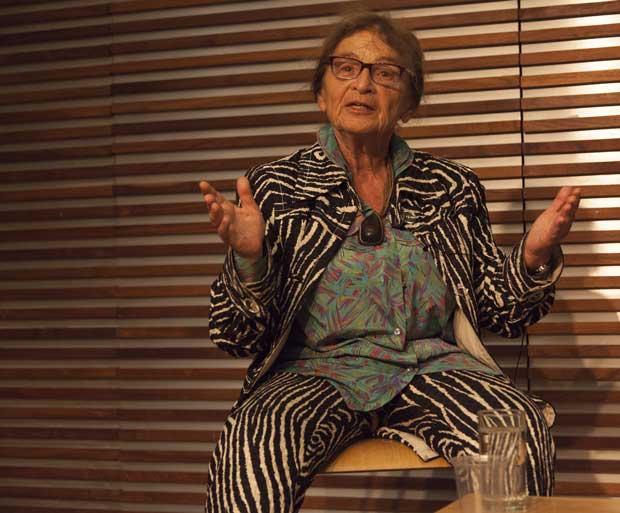
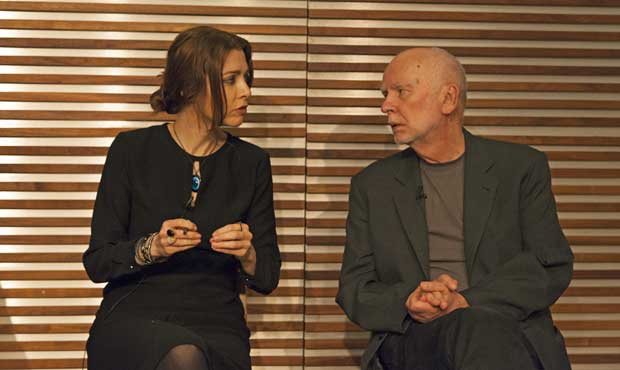
Free Word in partnership with Index on Censorship brought together three major cultural figures from Hungary, Poland and Turkey to compare their stories and ask: is Europe just a place, or a set of values that are rapidly unravelling?
Europe was a bastion of hope for more than a million refugees last year. What brought them? A hunger for safety and security? Dreams of freedom? The draw of liberal democracy with its ideals of free expression, equal opportunity and persecution for none?
But look within our own continent and you will see the cracks. In Hungary, Victor Orban’s administration looks increasingly autocratic. Poland’s new conservative government is making changes to its public media that critics have said amount to a takeover. How can we support neighbours like Turkey in their fight to avoid authoritarianism if we can’t fly the banner for freedom at home?
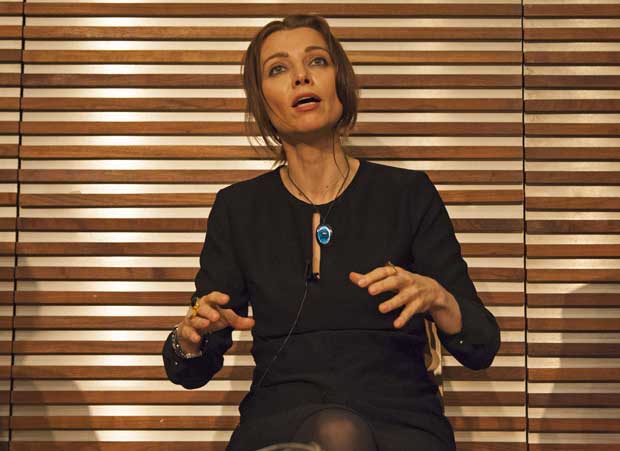
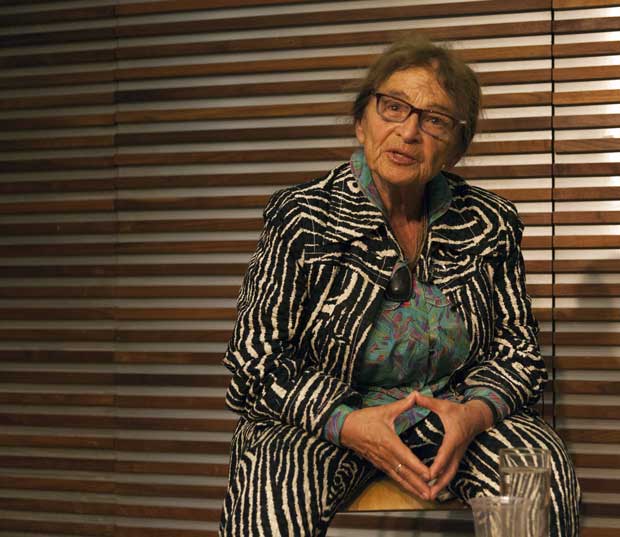
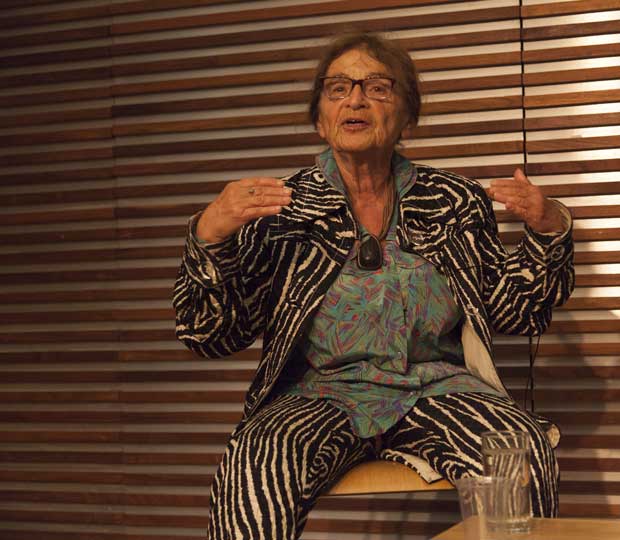
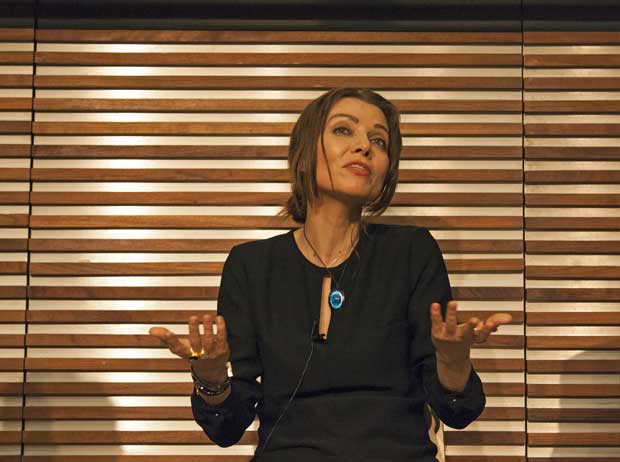
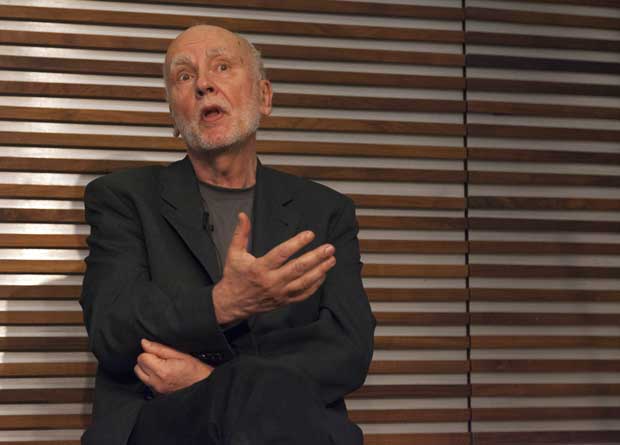
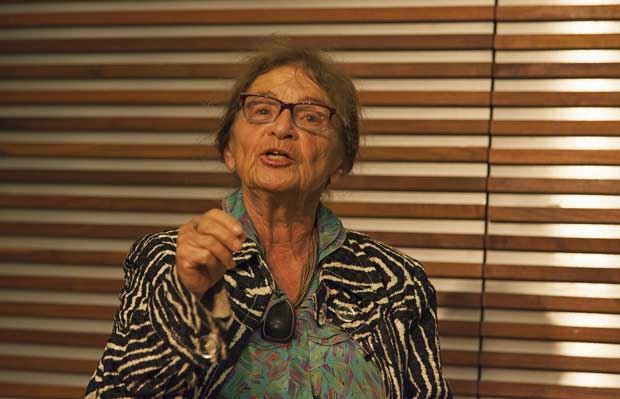
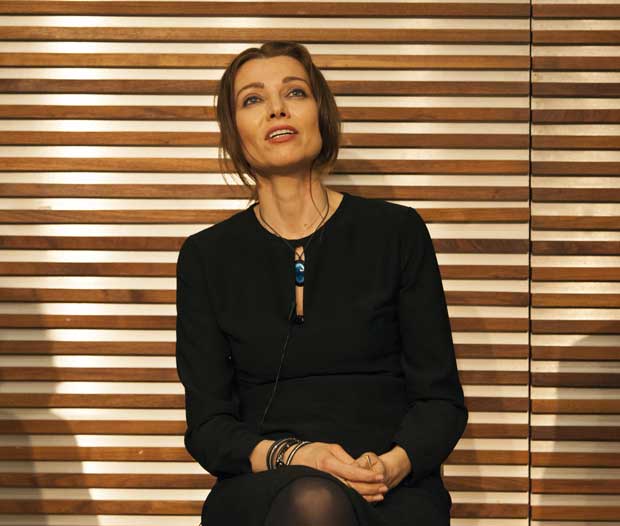
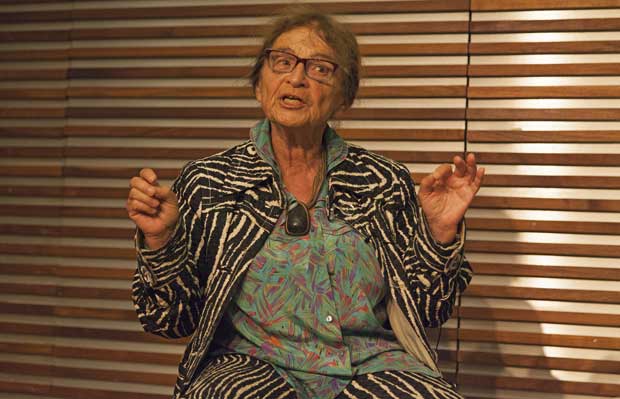
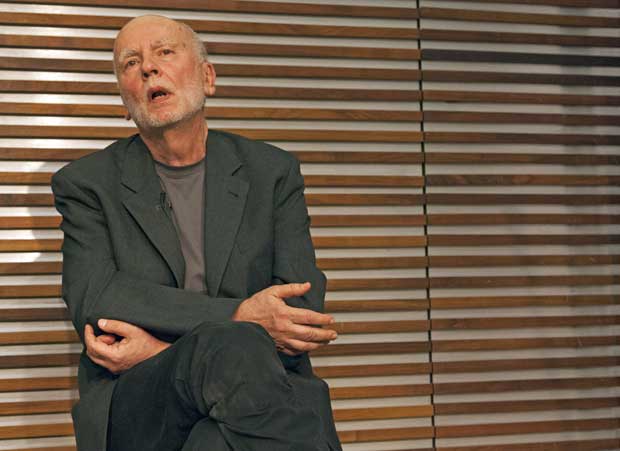
Agnes Heller, Elif Shafak and Adam Zagajewski Photos: Sean Gallagher/Index on Censorship
Poland, Hungary and Turkey come up on Index’s radar far too often at the moment, says @DBetzH, introducing tonight’s panelists #fweurope
— Index on Censorship (@IndexCensorship) June 15, 2016
In Turkey people cite Singapore as example of having economic success without democracy. Says @Elif_Safak#fweurope
— Index on Censorship (@IndexCensorship) June 15, 2016
‘Liberal democracy is majority decision but not majority rule.’ #AgnesHeller#FWEurope
Agnes Heller was born in 1929 and is one of the leading thinkers to come out of the tradition of critical theory. Her broad intellectual range and publications include ethics, philosophical anthropology, political philosophy and a theory of modernity and its culture. Hungarian by birth, she was one of the best-known dissident Marxists in central Europe in the 1960s and 1970s. She has held visiting lectureships all over the world and has been the Hannah Arendt Professor of Philosophy at the New School in New York. She now lives in Budapest and is one of the most popular and outspoken critics of the current regime.
Elif Shafak was born in Strasbourg, France, in 1971. She is an award-winning novelist and the most widely read woman writer in Turkey. Critics have named her as “one of the most distinctive voices in contemporary Turkish and world literature”. Her books have been published in more than 40 countries and she was awarded the honorary distinction of Chevalier of the Order of Arts and Letters. Elif has published thirteen books, nine of which are novels. She writes fiction in both Turkish and English. Elif blends Western and Eastern traditions of storytelling, bringing out the myriad stories of women, minorities, immigrants, subcultures, youth and global souls. Her work draws on diverse cultures and literary traditions, as well as a deep interest in history, philosophy, Sufism, oral culture, and cultural politics. Elif’s writing breaks down categories, clichés, and cultural ghettoes. She also has a keen eye for black humour.
Adam Zagajewski is an award-winning poet, novelist, translator and essayist. Born in Lwow in 1945, he first became well-known as one of the leading poets of the Generation of ‘68’ or the Polish New Wave (Nowa Fala). His poems and essays have been translated into many languages. Among his honors and awards are a fellowship from the Berliner Kunstlerprogramm, the Kurt Tucholsky Prize, a Prix de la Liberté, and a Guggenheim Fellowship. Since 1988, he has served as visiting associate professor of English in the Creative Writing Programme at the University of Houston. In 2010, he was nominated for the Nobel Prize in Literature. Adam is currently co-editor of Zeszyty Literackie (Literary Review). He lives in Krakow.
Since the 1920s, generations of western Europeans got used to the monopoly of public radio and later public television. These broadcasters developed strategies to better serve audiences and distance themselves from governments. The arrival of private broadcasters, in many cases taking place only in the 1970’s, was generally viewed as a complimentary service aimed at entertaining the public. Although public service broadcasting lost market share, it remained a respected institution in society; necessary to bring up youth, to get an objective picture of the world and cater to the interests of minorities.
Eastern Europeans also got used to the monopoly of state radio and television. Those broadcasters served the communist parties and were administered and financed by governments. Their political bankruptcy came with the collapse of communist ideology, underlined in particular by the plurality of private broadcasters that came on to the scene in the early 1990s.
These private media – with plentiful Western programming – was indeed television, for so long hidden from the viewers by totalitarian regimes. Politicians flocked to their studios to take part in talk shows, abandoning once-mighty state television. Thus, in the east, the public perception of public broadcasting was predominantly sceptical, if not negative. A discussion on its development was of tangential interest, at least during the saturation process of the new private media.
Abandoned by politicians and the public, the slow and clumsy transformation of the state broadcasters into public ones was guided by the bureaucrats, almost by themselves. The driving force behind the transformation was almost exclusively the activity of Strasbourg and Brussels. We all know that in the words of European institutions “public service broadcasting is a vital element of democracy in Europe.” Transformation of state television into a public one was a condition precedent of new democracies becoming member states of the Council of Europe in some cases. The authenticity of the transformation has been important to become a candidate for entry into the European Union and even sometimes to NATO.
Developments in younger EU member states show the importance of public service broadcasters for the development of democracy – and how they can be misused.
In December 2015, Poland‘s parliament adopted a law giving the treasury minister the mandate to appoint and dismiss members of management and supervisory boards. Since the law came into effect in January, reportedly more than 100 journalists in public media have lost their jobs, allegedly for not being government-friendly.
Hungary was probably the first example in the EU where public service broadcasting was practically turned back into state broadcasting, going against international standards calling for independence. New media laws in 2010 and the restructuring of the media landscape led, within a matter of one year, to all public service media being subordinated to political decisions. The new system introduced and cemented the political dependence of public service media; the governing party had nominated all new heads of public service media and the Media Authority now controls the budget of all public service media. The law vested unusually broad powers in the politically homogeneous Media Authority and Media Council, enabling them to control content of all media.
The battle to establish credible public service broadcasters in transitional democracies has been even more difficult to wage.
The latest example is the steering board of Bosnian Radio and Television which last month decided to suspend operation of all programming at the end of this month. This decision, a wrong one for several reasons, follows years of political and financial wrangling over control of the operation.
Throughout the western Balkans, significant issues are pending affecting the independence and financial stability of public broadcasting.
A bureaucratic response to the need to establish public service broadcasters has brought predictable results. The newly established broadcasters were visibly underfunded, with formal and informal administrative links – if not strings – to governments and no clear commitments to the public. Once established, it was unclear what to do with them. Most governments viewed them as an element of bureaucracy itself, a burden to carry on the road to a united Europe. If possible and convenient, they tried to make use of them through a carrot-and-stick policy.
As such, the new public service broadcasters immediately became subject to criticism by almost anyone who wanted to speak about them. Left to survive in the monstrous buildings of brutal architecture that once belonged to powerful state television, they had to sell airtime to advertisers, beg for Western donations and save on everything.
The advance of the internet and other new technologies almost killed the whole idea of television and radio, including public service broadcasting. It was saved by the transformation process – from public service broadcasting to public service media. In the West, the BBC and other companies have struggled to make use of the changing trends in media consumption. They went online, launched smartphone applications, became interactive, archived in order to engage fragmented audiences where and when required by the viewers.
Unfortunately this is not the case in the East. Public service broadcasters at best try to appeal to the older and well-educated audiences, traditional in their use of public service media. For our children, today’s debate is not only irrelevant, it is beyond their understanding.
Is there a future?
In my view we are losing the battle and might soon lose the war. To reverse the trend, we should do the following:
Give public service broadcasters a clear-cut mandate and obligation to program for the public which, in turn, should have effective feedback and control over content. There should be programmes that cater to minorities; there should be objective news, calm and matter-of-fact debates, educational and children’s programmes.
Public service broadcasters should function independently of the government. Buffer boards, meaning councils should be established to guarantee that only an abuse of a clear-cut mandate may serve to reprimand or dismiss an editor; only mismanagement and corruption may lead to firing executive directors.
And, finally, licence fees should be introduced or increased to heighten a feeling of public ownership. We can talk about other methods of independent funding, but none of them may bring this feeling of owning an institution that serves you.