29 Aug 2018 | Bahrain, Bahrain Statements, Campaigns -- Featured, Statements
[vc_row][vc_column][vc_single_image image=”95198″ img_size=”full” add_caption=”yes”][vc_column_text]For the second time since 2013, the United Nations (UN) Working Group on Arbitrary Detention (WGAD) has issued an Opinion regarding the legality of the detention of Mr. Nabeel Rajab under international human rights law.
In its second opinion, the WGAD held that the detention was not only arbitrary but also discriminatory. The 127 signatory human rights groups welcome this landmark opinion, made public on 13 August 2018, recognising the role played by human rights defenders in society and the need to protect them. We call upon the Bahraini Government to immediately release Nabeel Rajab in accordance with this latest request.
In its Opinion (A/HRC/WGAD/2018/13), the WGAD considered that the detention of Mr. Nabeel Rajabcontravenes Articles 2, 3, 7, 9, 10, 11, 18 and 19 of the Universal Declaration on Human Rights and Articles 2, 9, 10, 14, 18, 19 and 26 of the International Covenant on Civil and Political Rights, ratified by Bahrain in 2006. The WGAD requested the Government of Bahrain to “release Mr. Rajab immediately and accord him an enforceable right to compensation and other reparations, in accordance with international law.”
This constitutes a landmark opinion as it recognises that the detention of Mr. Nabeel Rajab – President of the Bahrain Center for Human Rights (BCHR), Founding Director of the Gulf Centre for Human Rights (GCHR), Deputy Secretary General of FIDH and a member of the Human Rights Watch Middle East and North Africa Advisory Committee – is arbitrary and in violation of international law, as it results from his exercise of the right to freedom of opinion and expression as well as freedom of thought and conscience, and furthermore constitutes “discrimination based on political or other opinion, as well as on his status as a human rights defender.” Mr. Nabeel Rajab’s detention has therefore been found arbitrary under both categories II and V as defined by the WGAD.
Mr. Nabeel Rajab was arrested on 13 June 2016 and has been detained since then by the Bahraini authorities on several freedom of expression-related charges that inherently violate his basic human rights. On 15 January 2018, the Court of Cassation upheld his two-year prison sentence, convicting him of “spreading false news and rumors about the internal situation in the Kingdom, which undermines state prestige and status” – in reference to television interviews he gave in 2015 and 2016. Most recently on 5 June 2018, the Manama Appeals Court upheld his five years’ imprisonment sentence for “disseminating false rumors in time of war”; “offending a foreign country” – in this case Saudi Arabia; and for “insulting a statutory body”, in reference to comments made on Twitter in March 2015 regarding alleged torture in Jaw prison and criticising the killing of civilians in the Yemen conflict by the Saudi Arabia-led coalition. The Twitter case will next be heard by the Court of Cassation, the final opportunity for the authorities to acquit him.
The WGAD underlined that “the penalisation of a media outlet, publishers or journalists solely for being critical of the government or the political social system espoused by the government can never be considered to be a necessary restriction of freedom of expression,” and emphasised that “no such trial of Mr. Rajab should have taken place or take place in the future.” It added that the WGAD “cannot help but notice that Mr. Rajab’s political views and convictions are clearly at the centre of the present case and that the authorities have displayed an attitude towards him that can only be characterised as discriminatory.” The WGAD added that several cases concerning Bahrain had already been brought before it in the past five years, in which WGAD “has found the Government to be in violation of its human rights obligations.” WGAD added that “under certain circumstances, widespread or systematic imprisonment or other severe deprivation of liberty in violation of the rules of international law may constitute crimes against humanity.”
Indeed, the list of those detained for exercising their right to freedom of expression and opinion in Bahrain is long and includes several prominent human rights defenders, notably Mr. Abdulhadi Al-Khawaja, Dr.Abduljalil Al-Singace and Mr. Naji Fateel – whom the WGAD previously mentioned in communications to the Bahraini authorities.
Our organisations recall that this is the second time the WGAD has issued an Opinion regarding Mr. Nabeel Rajab. In its Opinion A/HRC/WGAD/2013/12adopted in December 2013, the WGAD already classified Mr. Nabeel Rajab’s detention as arbitrary as it resulted from his exercise of his universally recognised human rights and because his right to a fair trial had not been guaranteed (arbitrary detention under categories II and III as defined by the WGAD).The fact that over four years have passed since that opinion was issued, with no remedial action and while Bahrain has continued to open new prosecutions against him and others, punishing expression of critical views, demonstrates the government’s pattern of disdain for international human rights bodies.
To conclude, our organisations urge the Bahrain authorities to follow up on the WGAD’s request to conduct a country visit to Bahrain and to respect the WGAD’s opinion, by immediately and unconditionally releasing Mr. Nabeel Rajab, and dropping all charges against him. In addition, we urge the authorities to release all other human rights defenders arbitrarily detained in Bahrain and to guarantee in all circumstances their physical and psychological health.
This statement is endorsed by the following organisations:
1- ACAT Germany – Action by Christians for the Abolition of Torture
2- ACAT Luxembourg
3- Access Now
4- Acción Ecológica (Ecuador)
5- Americans for Human Rights and Democracy in Bahrain – ADHRB
6- Amman Center for Human Rights Studies – ACHRS (Jordania)
7- Amnesty International
8- Anti-Discrimination Center « Memorial » (Russia)
9- Arabic Network for Human Rights Information – ANHRI (Egypt)
10- Arab Penal Reform Organisation (Egypt)
11- Armanshahr / OPEN Asia (Afghanistan)
12- ARTICLE 19
13- Asociación Pro Derechos Humanos – APRODEH (Peru)
14- Association for Defense of Human Rights – ADHR
15- Association for Freedom of Thought and Expression – AFTE (Egypt)
16- Association marocaine des droits humains – AMDH
17- Bahrain Center for Human Rights
18- Bahrain Forum for Human Rights
19- Bahrain Institute for Rights and Democracy – BIRD
20- Bahrain Interfaith
21- Cairo Institute for Human Rights – CIHRS
22- CARAM Asia (Malaysia)
23- Center for Civil Liberties (Ukraine)
24- Center for Constitutional Rights (USA)
25- Center for Prisoners’ Rights (Japan)
26- Centre libanais pour les droits humains – CLDH
27- Centro de Capacitación Social de Panama
28- Centro de Derechos y Desarrollo – CEDAL (Peru)
29- Centro de Estudios Legales y Sociales – CELS (Argentina)
30- Centro de Políticas Públicas y Derechos Humanos – Perú EQUIDAD
31- Centro Nicaragüense de Derechos Humanos – CENIDH (Nicaragua)
32- Centro para la Acción Legal en Derechos Humanos – CALDH (Guatemala)
33- Citizen Watch (Russia)
34- CIVICUS : World Alliance for Citizen Participation
35- Civil Society Institute – CSI (Armenia)
36- Colectivo de Abogados « José Alvear Restrepo » (Colombia)
37- Collectif des familles de disparu(e)s en Algérie – CFDA
38- Comisión de Derechos Humanos de El Salvador – CDHES
39- Comisión Ecuménica de Derechos Humanos – CEDHU (Ecuador)
40- Comisión Nacional de los Derechos Humanos (Costa Rica)
41- Comité de Acción Jurídica – CAJ (Argentina)
42- Comité Permanente por la Defensa de los Derechos Humanos – CPDH (Colombia)
43- Committee for the Respect of Liberties and Human Rights in Tunisia – CRLDHT
44- Commonwealth Human Rights Initiative – CHRI (India)
45- Corporación de Defensa y Promoción de los Derechos del Pueblo – CODEPU (Chile)
46- Dutch League for Human Rights – LvRM
47- European Center for Democracy and Human Rights – ECDHR (Bahrain)
48- FEMED – Fédération euro-méditerranéenne contre les disparitions forcées
49- FIDH, in the framework of the Observatory for the Protection of Human Rights Defenders
50- Finnish League for Human Rights
51- Foundation for Human Rights Initiative – FHRI (Uganda)
52- Front Line Defenders
53- Fundación Regional de Asesoría en Derechos Humanos – INREDH (Ecuador)
54- Groupe LOTUS (DRC)
55- Gulf Center for Human Rights
56- Human Rights Association – IHD (Turkey)
57- Human Rights Association for the Assistance of Prisoners (Egypt)
58- Human Rights Center – HRIDC (Georgia)
59- Human Rights Center « Memorial » (Russia)
60- Human Rights Center « Viasna » (Belarus)
61- Human Rights Commission of Pakistan
62- Human Rights Foundation of Turkey
63- Human Rights in China
64- Human Rights Mouvement « Bir Duino Kyrgyzstan »
65- Human Rights Sentinel (Ireland)
66- Human Rights Watch
67- I’lam – Arab Center for Media Freedom, Development and Research
68- IFEX
69- IFoX Turkey – Initiative for Freedom of Expression
70- Index on Censorship
71- International Human Rights Organisation « Club des coeurs ardents » (Uzbekistan)
72- International Legal Initiative – ILI (Kazakhstan)
73- Internet Law Reform Dialogue – iLaw (Thaïland)
74- Institut Alternatives et Initiatives Citoyennes pour la Gouvernance Démocratique – I-AICGD (RDC)
75- Instituto Latinoamericano para una Sociedad y Derecho Alternativos – ILSA (Colombia)
76- Internationale Liga für Menschenrechte (Allemagne)
77- International Service for Human Rights – ISHR
78- Iraqi Al-Amal Association
79- Jousor Yemen Foundation for Development and Humanitarian Response
80- Justice for Iran
81- Justiça Global (Brasil)
82- Kazakhstan International Bureau for Human Rights and the Rule of Law
83- Latvian Human Rights Committee
84- Lawyers’ Rights Watch Canada
85- League for the Defense of Human Rights in Iran
86- League for the Defense of Human Rights – LADO Romania
87- Legal Clinic « Adilet » (Kyrgyzstan)
88- Liga lidských práv (Czech Republic)
89- Ligue burundaise des droits de l’Homme – ITEKA (Burundi)
90- Ligue des droits de l’Homme (Belgique)
91- Ligue ivoirienne des droits de l’Homme
92- Ligue sénégalaise des droits humains – LSDH
93- Ligue tchadienne des droits de l’Homme – LTDH
94- Ligue tunisienne des droits de l’Homme – LTDH
95- MADA – Palestinian Center for Development and Media Freedom
96- Maharat Foundation (Lebanon)
97- Maison des droits de l’Homme du Cameroun – MDHC
98- Maldivian Democracy Network
99- MARCH Lebanon
100- Media Association for Peace – MAP (Lebanon)
101- MENA Monitoring Group
102- Metro Center for Defending Journalists’ Rights (Iraqi Kurdistan)
103- Monitoring Committee on Attacks on Lawyers – International Association of People’s Lawyers
104- Movimento Nacional de Direitos Humanos – MNDH (Brasil)
105- Mwatana Organisation for Human Rights (Yemen)
106- Norwegian PEN
107- Odhikar (Bangladesh)
108- Pakistan Press Foundation
109- PEN America
110- PEN Canada
111- PEN International
112- Promo-LEX (Moldova)
113- Public Foundation – Human Rights Center « Kylym Shamy » (Kyrgyzstan)
114- RAFTO Foundation for Human Rights
115- Réseau Doustourna (Tunisia)
116- SALAM for Democracy and Human Rights
117- Scholars at Risk
118- Sisters’ Arab Forum for Human Rights – SAF (Yemen)
119- Suara Rakyat Malaysia – SUARAM
120- Taïwan Association for Human Rights – TAHR
121- Tunisian Forum for Economic and Social Rights – FTDES
122- Vietnam Committee for Human Rights
123- Vigilance for Democracy and the Civic State
124- World Association of Newspapers and News Publishers – WAN-IFRA
125- World Organisation Against Torture – OMCT, in the framework of the Observatory for the Protection of Human Rights Defenders
126- Yemen Organisation for Defending Rights and Democratic Freedoms
127- Zambia Council for Social Development – ZCSD[/vc_column_text][/vc_column][/vc_row][vc_row][vc_column][vc_basic_grid post_type=”post” max_items=”4″ element_width=”6″ grid_id=”vc_gid:1535551119543-359a0849-e6f7-3″ taxonomies=”716″][/vc_column][/vc_row]
24 Aug 2018 | Europe and Central Asia, European Union, Media Freedom, media freedom featured, News, Sweden
[vc_row][vc_column][vc_column_text]
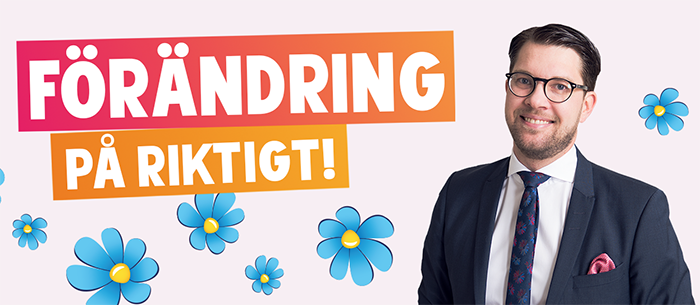
An image from the website of the right-wing populist Sweden Democrats, who changed their logo from a National Front-esque torch to a flower in an effort to clean up their image.
Sweden baked in record temperatures this summer, matched only by the increasingly heated political climate as it gears up for an unprecedentedly bitter and divisive general election. Front page stories about raging wildfires and drought have given a poll boost to the Swedish Green Party as climate change has leapt up the agenda. For populist media critics, however, the attention given to the fires is part of a conspiracy to keep the Greens in government and to give the governing left-wing bloc a victory in September’s vote.
Edward Riedl, a conservative member of parliament for the opposition Moderate Party accused major newspapers of “agenda setting” by giving such prominent coverage to the environment, with one if his party colleagues calling out newspapers for being pro-Green.
The far right meanwhile maintains a longstanding animosity with Sweden’s established print and public service media, which they accuse of being a cosy cartel.
Marie Grusell, a media researcher at Gothenburg University, has compared the attacks to the ongoing deligitimisation of the press in the USA by the White House.
“It is a tactic to undermine journalism. I think this is beneath contempt,” she said in an interview with the Swedish newspaper Aftonbladet.
This bizarre challenging of factual environmental journalism takes place against a backdrop of an increasingly contentious news landscape, in which the fragmentation and polarisation of the Swedish political system has made it increasingly difficult to maintain the balance of the media.
Over the past decade – and in common with other European countries – Sweden has seen the emergence of a powerful populist and anti-immigration party, the Sweden Democrats. The Sweden Democrats have deployed a familiar cocktail of anti-media conspiracism, welfare nationalism and climate scepticism, as well as anti-feminist and anti-Islamic rhetoric, to move from a fringe group to a major parliamentary force with ambitions to form a government. Although they have their roots in the 1990s white power movement, the Sweden Democrats have tried to soften their image by shunning some of their more extreme members and, in 2006, changed their logo from a torch — similar to that once used by the British far-right National Front — to a cartoonish anemone hepatica, a flower in the buttercup family.
Public trust in the Swedish media is still holding up but has diminished among those drifting towards the Sweden Democrats. This section of voters have become resistant to large sections of the established media and have instead turned to social network news groups and fringe sites which claim to expose what is really happening in Swedish society, as well as foreign news sites from the USA and Russia. In an attempt to increase the amount of freely available objective media outlets, the daily Dagens Nyheter recently removed its paywall for the duration of the election campaign, but as with other established media, it may be too late for readers who have already moved on.
Increased extremism
The dangerous situation is compounded by movements operating at the political fringes who have targeted journalists. The Nordic Resistance Movement (NMR), a neo-Nazi white power group, regularly marches in shows of force, intimidating journalists, minority groups and other members of the public. In May Swedish security services raided the home or prominent NMR member Peter Holm and found a suitcase they believed had been adapted for assassinations, along with a hard drive containing details on two journalists.
NMR activists also marched at this year’s Almedalen politics festival, a high point of the political calendar where journalists, civic and business groups and politicians get together to discuss contemporary issues. The investigative anti-fascist magazine EXPO uncovered instructions for NMR activists to attend speeches by politicians and others and to shout “traitor to the people” at politicians, and confront journalists in public. At the previous year’s event, the TV journalist Jan Scherman was called a “disgusting Jew” by an NMR member while filming.
Officially there is no link between the Sweden Democrats and groups like the NMR, but several SD politicians have voiced support for the organisation in the past and the increased support for SD in opinion polls has seemingly emboldened NMR activists to take more direct action on the streets according to data compiled by EXPO.
An uncertain future climate
A glimpse into what might happen should Sweden elect a government that includes the far right is provided by Denmark, where the hardline Danish People’s Party have cut state support to public broadcasting and consistently attacked its content as being leftist and unpatriotic. If a Sweden Democrat supported government becomes a reality, journalists could find themselves pressed by an increasingly powerful and emboldened populist movement that sees journalists as scapegoats for deeper seated problems, and where objective reporting of social challenges such as the environment and integration are dismissed as politically correct opinion rather than society-wide issues of critical importance.
It now falls to the press to fight its corner as a foundational part of the country’s democracy. Sweden, long considered a uniquely stable and tolerant democracy, is about to find out whether it really is safe from anti-democratic populism.[/vc_column_text][/vc_column][/vc_row][vc_row][vc_column][vc_basic_grid post_type=”post” max_items=”4″ element_width=”6″ grid_id=”vc_gid:1535101855192-df766193-d628-5″ taxonomies=”9008, 507″][/vc_column][/vc_row]
20 Aug 2018 | Azerbaijan, Media Freedom, media freedom featured, News, Russia, Turkey, Ukraine
[vc_row][vc_column][vc_row_inner][vc_column_inner][vc_single_image image=”102216″ img_size=”full”][/vc_column_inner][/vc_row_inner][vc_column_text]Visitors to Eurasian countries — Turkey, Russia, Ukraine or, to a lesser extent, Azerbaijan — might be impressed by the sheer number of domestic television channels that offer news programming.
The average TV viewer in Turkey flipping through the local channels is treated to an alphabet soup — atv, Kanal D, NTV, STV, interspersed with FOX TV, CNN Türk, public broadcaster TRT and countless others — all employing a vast number of journalists and purporting to keep the viewers abreast of events shaping the domestic and global agenda. The broadcasts are slick: filled with chyrons, attention-grabbing graphics, remote reports, breaking news, heated exchanges between talking heads and all the other trappings of the modern-day 24-hour news cycle.
Watching the lively debates hosted by TV personalities, who exude an air of professionalism and discernment, with or without live audiences nodding in acquiescence or registering disapproval, viewers may be given the impression that they are being exposed to a wide range of opinions in a vibrant, competitive media market.
But does this wealth of channels translate into pluralism of points of view?
“Certainly not,” says Esra Arsan, journalism scholar and former columnist for Turkey’s Evrensel, one of the remaining newspapers supplying alternative news and commentary left in the country. “In Turkey, there’s no pluralistic media environment. The Turkish media have never been pluralistic in the true sense of the word, but at least there were once mechanisms that allowed for the voices of the right, left, mainstream and fringe wings to be heard, especially, on small media groups occupying the niche space,” she says, citing the formerly independent Turkish-language media, their Kurdish-language counterparts and those of other minority groups.
Arsan described the massive media reorganisation that took place in parallel with the rise of president Recep Tayyip Erdogan’s AKP party since 2007. “It was characterised by replacing the old media owners with the new ones with close ties to the government, and exercising total control over them, especially, in big media,” she adds.
During the Erdogan-inspired restructuring of the media, professional journalists and newsroom managers were forced out or jailed, Arsan says. The replacement managers left a lot to be desired. “Many of these people are uneducated, have no idea of journalistic ethics or professionalism, they’ve become the mouthpieces for the government”. She points out that more than 3,000 professional journalists who were working prior to 2007 are now jobless.
“Nowadays, no matter how many television broadcasters there are in Turkey, we can say the government exercises control over 90 percent of them,” says Ceren Sözeri, a communications faculty member at Istanbul’s Galatasaray University, citing a recent study conducted by Reporters Without Borders.
“Among the channels not under government control were stations belonging to Doğan Group, such as Kanal D and CNN Türk. Very recently, it was sold to Demirören Group, a conglomerate with close ties to the government,” Sözeri says.
Among the TV channels that are still able to provide diversity in the face of the pro-government news she tentatively cites FOX TV, Tele1 and HalkTV, the latter being associated with the CHP, the main opposition party. “With these exceptions, almost all other remaining channels work in conformity with the government, we can say we have an environment completely devoid of diversity,” Sözeri says.
Driven by Erdogan’s efforts to build a single-party regime, this media reorganisation pursued the goal of controlling information disseminated in the country. Buffered by the concurrent changes to the constitution and legal reforms, the jailing of journalists started to rise as well.
If this sounds familiar, that’s because it should: “What [Russian president] Putin did since he came to power, was establish control over influential media outlets that had the capacity to form public opinion, firstly, TV,” notes Gulnoza Said, Europe and Central Asia research associate at the Committee to Protect Journalists.
“All federal channels are very tightly controlled by the state now, with the instructions sent to the heads of TV companies on how to report on certain situations. It’s very clear that anybody who appears on your screen on a federal channel in Russia knows how they can and cannot speak about important and critical issues like Ukraine and Syria,” she says noting the two hot-button issues around Russia’s ongoing military involvement abroad.
According to the latest numbers released by the Media and Law Studies Association, a Turkish non-profit that offers legal protection to the rising number of journalists who find themselves in the crosshairs of the government, with 173 journalists in jail, Turkey currently holds the dubious title of the regional leader.
With 10 journalists currently in jail, according to a CPJ report, Azerbaijan is a distant second in the region, and number one among the former Soviet nations. Russia has five, according to the same report.
In addition to the state-owned AzTV and Ictimai (Public) TV that was created in 2005 as part of the country’s commitments before the Council of Europe, there are four nationwide broadcasters in Azerbaijan: Atv, Xazar, Space and Lider.
Azerbaijani media rights lawyer Alasgar Mammadli says that all these channels fail to inject diversity into the discourse in his country because no outlet presents a balanced viewpoint.
“The media only cover the government’s point of view. Considering the realities of Azerbaijan where the majority of information is obtained through TV and radio, we not only don’t have access to objective information, there’s no room for pluralistic news, we only have one expression, one colour.” He calls it “propaganda coming from the government that is disseminated to a large swath of the public,” noting that the internet is the only place offering some semblance of pluralism.
“In the entire region, I’d probably not name a single country where we’ve seen a positive trend, with the slight exception of, surprisingly, Uzbekistan,” says CPJ’s Said, noting that with the new administration of president Shavkat Mirziyoyev there has been a process of liberalisation, and for the first time in more than two decades, there are no journalists in jail.
Said notes that another negative trend is very visible in Ukraine since Russia annexed its region of Crimea in 2014. “At the time, after the Euromaidan [the wave of civil unrest that resulted in the government change], the Ukrainian media space had been relatively free for some time, but right now what we see is that the authorities are trying to control the flow of information, and the attempts are very visible and quite strong.”
Said explains that Ukrainian journalists are facing obstacles practically every day, stressing that she is not talking about Russian journalists trying cover the news from Ukraine. “The [Ukrainian] Ministry of Defense is making it extremely difficult for local journalists to get the so-called ‘military accreditation’ that would allow them to go to the eastern part of the country and cover combat operations,” says Said, adding that one of the newly imposed requirements is that the journalists applying for accreditation must provide previously written stories about the conflict.
“I would say it is censorship, because the government is trying to control the way the journalists cover the conflict,” she points out.
Galina Petrenko, director of Detector Media, a Ukrainian media watchdog organisation, disagrees: “There is pluralism [in Ukraine]. The economic interests doubtless manipulate the discourse, as the largest media belong not to the government, but to oligarchs, formidable businessmen conjoined with the power. That’s why business interests of each of these owners are reflected in the content of the media they own.”
Ukraine’s TV and radio council puts the number of the national TV broadcasters at 30, in addition to 72 regional channels. The country counts 120 satellite TV channels.
Maria Tomak of the Kyiv-based Media Initiative for Human Rights in Kyiv says that oligarchic ownership of the media has implications for pluralism. “We do have the freedom of speech, in comparison with Russia and other nations, but we do have limitations that are sometimes very tricky and are related to the economic factors, since we don’t have all that many independent media.”
She says that there is more than one “clan” or “group of influence” engaged in a struggle for power and influence. This conflict more or less preserves a tenuous pluralism. “When they start ‘oligarchic wars’, TVs show documentary footage or run news stories that clearly indicate who calls the shots at a particular channel. They mudsling or broadcast expose-style programmes, but it’s hard to call them objective, and it is hard to call it pluralism in its ideal sense.”
Bad examples are contagious
“The countries of the region quite often and quite speedily learn from each other’s negative experience,” says Mammadli. “For instance, Azerbaijan started officially blocking sites in February of 2017 through amendments to legislation. Before that, it was prevalent in Turkey and Russia.” He adds that the majority of the blocked sites are related to the alternative news sources. Mammadli puts the number of the internet sites and resources blocked in Russia at more than 136,000.
“We live in a region neighbouring Russia and Turkey and share ties with them, which speeds up the migration of these experiences into our country. Thus, the negative changes or attitudes towards human rights or the tendencies to limit freedom and rule of law in these countries can come to our country very fast,” he says. “It turns into a competition with the following logic, ‘the neighbor did it and got away with it, so let me try and see what happens’.’’
CPJ’s Said notes that these traditionally autocratic regimes keep one eye on the USA, which has been regarded as the flagman of press freedom and liberal democracy for decades. “Everybody used to look up at the USA, but since Trump was elected president, you know his routine, he wakes up in the middle of the night and starts tweeting, attacking journalists and critical media, calling everything they produce ‘fake news’.”
In her view, this definitely affects global press freedom, as dictators and elected officials with autocratic tendencies step up their pressure on critical media outlets in their own countries.
Arsan says of the effects of this phenomenon in Turkey: “If the dictator says the news is wrong or fake, even if you bring the most truthful news to them, be it on the issue of the human rights, war, the economy, the people will tend to disbelieve you. This makes the job of a journalist that much harder, because we chase the truth, and we see the tendency to disbelieve or outright denial on behalf of the audience.”
“Vulnerable stability” as the dangerous consequence
The shrinking plurality in the media throughout the entire region leads to a somewhat distorted processes of decision making during elections, says Said.
“The lack of plurality, which is a lack of democratic process or access to such, does, in general, make any society more vulnerable. If we look at the situation inside any country, also, when you look at dictators like Putin, you may get an impression that their power is very stable and strong. But that’s a very vulnerable stability,” she adds, explaining it with the fact that it is, ultimately, one person making decisions for the entire country of millions of people.
“If you look at what Erdogan has been doing for the last 10 years or so, he has been pursuing the policy of turning Turkey into a regional leader and suppressing any alternative voice. Same with Putin and his foreign policy in Ukraine with the annexation of Crimea, or Syria. In a way, it is back to the USSR, where people could discuss things only among their family or close friends in their kitchens.”
In the opinion of Arsan, as media plurality shrinks, societies become increasingly unaware of crises, which might set them on a path to disintegration. “This is the process of criminalising political discussion,” she said. “This is common in many Eurasian countries, as well as in the Middle East. These are the dictatorships without an end. People don’t want to go to the ballot boxes anymore because they don’t think they can effect change.”
For Mammadli, the people’s inability to access true information and analyse it means that they are contending with mass propaganda. From this point of view, the societies where people don’t know the truth will base their reactions on a lie, he says.[/vc_column_text][/vc_column][/vc_row][vc_row][vc_column width=”1/4″][vc_column_text]
[/vc_column_text][/vc_column][vc_column width=”3/4″][vc_column_text]
Media freedom is under threat worldwide. Journalists are threatened, jailed and even killed simply for doing their job.
Index on Censorship documents threats to media freedom in Europe through a monitoring project and campaigns against laws that stifle journalists’ work. We also publish an award-winning magazine featuring work by and about censored journalists.
Learn more about our work defending press freedom.[/vc_column_text][/vc_column][/vc_row][vc_row][vc_column][vc_column_text]
Index on Censorship’s project Mapping Media Freedom tracks limitations, threats and violations that affect media professionals in 43 countries as they do their job.
[/vc_column_text][vc_raw_html]JTNDaWZyYW1lJTIwd2lkdGglM0QlMjI3MDAlMjIlMjBoZWlnaHQlM0QlMjIzMTUlMjIlMjBzcmMlM0QlMjJodHRwcyUzQSUyRiUyRm1hcHBpbmdtZWRpYWZyZWVkb20udXNoYWhpZGkuaW8lMkZ2aWV3cyUyRm1hcCUyMiUyMGZyYW1lYm9yZGVyJTNEJTIyMCUyMiUyMGFsbG93ZnVsbHNjcmVlbiUzRSUzQyUyRmlmcmFtZSUzRQ==[/vc_raw_html][/vc_column][/vc_row][vc_row][vc_column][vc_basic_grid post_type=”post” max_items=”12″ style=”load-more” items_per_page=”4″ element_width=”6″ grid_id=”vc_gid:1534691928040-02d2971b-12c6-8″ taxonomies=”9044″][/vc_column][/vc_row]
2 Aug 2018 | Artistic Freedom, Event Reports, News
[vc_row][vc_column][vc_raw_html]JTNDaWZyYW1lJTIwc3JjJTNEJTIyaHR0cHMlM0ElMkYlMkZ3d3cuZmFjZWJvb2suY29tJTJGcGx1Z2lucyUyRnZpZGVvLnBocCUzRmhyZWYlM0RodHRwcyUyNTNBJTI1MkYlMjUyRnd3dy5mYWNlYm9vay5jb20lMjUyRmdheXRpbWVzJTI1MkZ2aWRlb3MlMjUyRjEwMTU2MjA2MDM5MDM2MjczJTI1MkYlMjZzaG93X3RleHQlM0QwJTI2d2lkdGglM0Q3MDAlMjIlMjB3aWR0aCUzRCUyMjcwMCUyMiUyMGhlaWdodCUzRCUyMjQwMCUyMiUyMHN0eWxlJTNEJTIyYm9yZGVyJTNBbm9uZSUzQm92ZXJmbG93JTNBaGlkZGVuJTIyJTIwc2Nyb2xsaW5nJTNEJTIybm8lMjIlMjBmcmFtZWJvcmRlciUzRCUyMjAlMjIlMjBhbGxvd1RyYW5zcGFyZW5jeSUzRCUyMnRydWUlMjIlMjBhbGxvd0Z1bGxTY3JlZW4lM0QlMjJ0cnVlJTIyJTNFJTNDJTJGaWZyYW1lJTNF[/vc_raw_html][vc_column_text]“When I started recording my music I made the decision that I would be out. But at the same time I was so conscious of using pronouns and not coming across as too gay or not coming across too assuming,” said MNEK, English singer, songwriter and record producer, speaking at the Sonos Store in London.
Expression Uncensored, which was hosted by Sonos, Index on Censorship and Gay Times Magazine, featured a panel — Julia Farrington, associate art producer at Index, MNEK, Sado Opera, a queer band, and Princess Julia, a DJ and music writer — that discussed queer music and censorship around the world.
Farrington defined the two main types of censorship that she believes exist — classic state-sponsored censorship imposed through laws and government, and self-censorship.
MNEK’s self-censoring in the beginning of his career was the result of societal pressures. While he said that his coming out was in general a positive experience, he also talked about growing up in a British-Nigerian household where the only thing you hear about homosexuality is that it is wrong. After coming out to his parents, MNEK said that while they support his career and the music he produces, they are sometimes still shocked because “it’s not something they’re used to but it’s all about them learning. There’s nothing wrong with learning something new.”
Living in London, Princess Julia said she had never faced state-sponsored censorship. Instead she faced self-censorship as a result of cultural pressures to look and be a certain way. As part of the Blitz Kids of the 1970s, she helped usher in an era of queer people being able to express themselves the way they wanted to.
She believes that “there’s always been avant garde scenes, underground scenes going on. In times of repression or rebellion even, these scenes tend to emerge. Obviously in Russia, that why there are pockets of creative people striving forth and trying to have an identity.”
Hailing from Russia, Sado Opera faced more state-sponsored censorship, which, in general, leads to self-censorship for fear of being targeted.
Sado Opera was originally created to fight the censorship and homophobia in Russia. The group talked about Russia’s homosexual propaganda law, which forbids talking about homosexuality in public. The name of the law was changed to Promoting Untraditional Family Values to hide the homophobia of the government. The government gives laws unassuming names to make it harder for people to discern the malicious intent behind the legislation, Sado Opera explained.
“Other artists might want to express support, but they can’t. The atmosphere makes you double-think what you say” said Sado Opera.
Although MNEK hasn’t experienced the level of state-sponsored censorship that Sado Opera has, he talks about how he hasn’t been to Nigeria in a long time because of unconscious “fears and my own insecurities with going back there and knowing the legislative issues that are there.”
Sado Opera was only able to be more open about their message when they moved to Berlin, where they have sponsorship from a club and have partnered with several organisations that support LGBTQ+ people facing persecution and women who have survived rape.
MNEK said “it’s a bonus when you realise your music is helping someone live their life” and each artist revealed similar sentiments. [/vc_column_text][vc_row_inner][vc_column_inner width=”1/4″][vc_column_text]
[/vc_column_text][/vc_column_inner][vc_column_inner width=”3/4″][vc_column_text]
Index encourages an environment in which artists and arts organisations can challenge the status quo, speak out on sensitive issues and tackle taboos.
Index currently runs workshops in the UK, publishes case studies about artistic censorship, and has produced guidance for artists on laws related to artistic freedom in England and Wales.
Learn more about our work defending artistic freedom.[/vc_column_text][/vc_column_inner][/vc_row_inner][vc_single_image image=”101971″ img_size=”full” add_caption=”yes”][vc_single_image image=”101969″ img_size=”full” add_caption=”yes”][/vc_column][/vc_row]
