11 Jan 2018 | Campaigns -- Featured, Russia, Statements
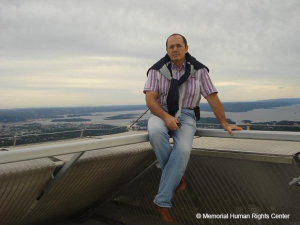
Oyub Titiev
We, members of the Civic Solidarity Platform (CSP), are deeply concerned at reports of the arrest of Oyub Titiev, head of Human Rights Center Memorial’s Grozny office in Chechnya on highly dubious narcotics charges. We call for his immediate and unconditional release and dropping of all charges.
Titiev is highly respected in the international human rights community, as well as in the North Caucasus, where he is part of a small group of brave human rights defenders still working to uncover and document grave ongoing human rights violations. Titiev has led Memorial’s work in Chechnya since the horrific murder of his colleague Natalia Estemirova in 2009. In recent years, he received numerous threats aimed at making him quit human rights work. Now, his life and safety are in jeopardy.
According to reports, Oyub Titiev was brought to the Kurchaloi district police department shortly after his car was stopped and searched near the Khymuk bridge around 10:30 am on Tuesday 9 January. Titiev’s lawyer has been informed that he is being charged with the illegal possession of drugs, reportedly a large amount (180 grams) of marijuana.
Similar trumped-up charges have previously led to several years’ imprisonment for activists and independent journalists in Chechnya. Framing people for drug crimes has become an increasingly frequent tactic used by Chechnya’s authorities to punish and discredit their critics in the eyes of Chechen society.
The Civic Solidarity Platform is a network of more than 90 human rights organizations working across the OSCE region. We consider the suggestion that a highly experienced human rights defender such as 60 year-old Oyub Titiev would travel around Chechnya with any amount of drugs in his car to be absurd, and to be evidence only of the tactics employed by Chechen authorities against principled and hard-working human rights defenders. We believe Chechen authorities are seeking to frame Titiev and close down the extremely important work of Human Rights Center Memorial in the region by means of threats and harassment.
Russia is under an obligation to respect and enable the work of human rights defenders. An important resolution in the UN General Assembly – adopted by consensus on 24 December 2017 – “Calls upon States to take concrete steps to prevent and put an end to arbitrary arrest and detention, including of human rights defenders, and in this regard strongly urges the release of persons detained or imprisoned, in violation of the obligations and commitments of States under international human rights law, for exercising their human rights and fundamental freedoms, such as the rights to freedom of expression, peaceful assembly and association, including in relation to cooperation with the United Nations or other international mechanisms in the area of human rights”.
The undersigned members of the Civic Solidarity Platform call on Chechen authorities as well as central Russian authorities to immediately release Oyub Titiev and stop his persecution as we believe that he is being punished solely in retaliation for his legitimate and peaceful human rights work. Furthermore, we call on authorities to ensure the safety of Memorial staff in Chechnya. Furthermore, we call on authorities not to hinder but to assist brave individuals such as Titiev in their work to uncover grave human rights violations in the North Caucasus region.
We call on international organizations and foreign governments to follow Titiev’s case closely and to bring our concerns to the attention of the authorities in the Russian Federation. Russia must abide by its international human rights obligations and OSCE commitments.
Signed:
- Advisory Centre on contemporary international practices and their implementation in law ”Human Constanta” (Belarus)
- Albanian Helsinki Committee (Albania)
- Article 19 (United Kingdom)
- Association UMPDL (Ukraine)
- Barys Zvozskau Belarusian Human Rights House (Lithuania)
- Belarusian Helsinki Committee (Belarus)
- Bir Duino (Kyrgyzstan)
- Bulgarian Helsinki Committee (Bulgaria)
- Center for Civil Liberties (Ukraine)
- Center for Participation and Development (Georgia)
- Center for the Development of Democracy and Human Rights (Russia)
- Centre de la Protection Internationale (France)
- Citizens’ Watch (Russia)
- Committee Against Torture (Russia)
- Crude Accountability (USA)
- Freedom Files (Poland/Russia)
- Georgian Centre for Psychosocial and Medical Rehabilitation of Torture Victims-GCRT (Georgia)
- German-Russian Exchange (Germany)
- Helsinki Association Armenia (Armenia)
- Helsinki Citizens’ Assembly-Vanadzor (Armenia)
- Helsinki Committee for Human Rights in Serbia (Serbia)
- Helsinki Committee of Armenia (Armenia)
- Helsinki Foundation for Human Rights (Poland)
- Human Rights Center of Azerbaijan (Azerbaijan)
- Human Rights Center “Viasna” (Belarus)
- Human Rights Club (Azerbaijan)
- Human Rights Matter (Germany)
- Human Rights Monitoring Institute (Lithuania)
- IDP Women Association Consent (Georgia)
- Index on Censorship (United Kingdom)
- Institute for Reporters’ Freedom and Safety (Azerbaijan)
- International Partnership for Human Rights (Belgium)
- International Protection Center (Russia)
- Kazakhstan International Bureau for Human Rights and Rule of Law (Kazakhstan)
- Kharkiv Regional Foundation Public Alternative (Ukraine)
- Legal Transformation Center (Belarus)
- Macedonian Helsinki Committee (Macedonia)
- Moscow Helsinki Group (Russia)
- Netherlands Helsinki Committee (Netherlands)
- Norwegian Helsinki Committee (Norway)
- Notabene (Tajikistan)
- OMCT – World Organisation Against Torture (Switzerland)
- Office of Civil Freedoms (Tajikistan)
- Promo LEX Association (Moldova)
- Protection of Rights Without Borders (Armenia)
- Public Association Dignity (Kazakhstan)
- Public Verdict (Russia)
- Regional Center for Strategic Studies (Azerbaijan/Georgia)
- Solidarus (Germany)
- Truth Hounds (Ukraine)
- Women of the Don (Russia)
9 Jan 2018
This Journalists’ Toolbox section brings together a collection of articles from Index on Censorship correspondents that we believe offers helpful advice and knowledge to other reporters. Articles are published in three languages, Russian, Spanish and Arabic, to offer...
8 Jan 2018 | Argentina, Brazil, Colombia, Ecuador, Honduras, Mexico, News, Venezuela
[vc_row][vc_column][vc_column_text]
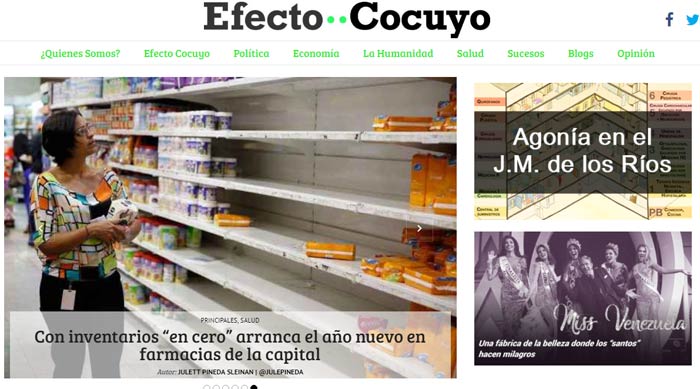
Latin America is home to a growing number of independent publications, like Venezuela’s Efecto Cocuyo, that do not depend on government advertising
With general elections scheduled in six Latin American countries this year, and another six to follow in 2019, the relationship between the media and democracy could have a major impact on the future of the region. However, mounting financial pressures are robbing many media outlets of their objectivity and forcing them to toe pro-government lines.
With traditional advertising revenue in decline, Latin American governments are using vast publicity budgets to keep cash-strapped publications afloat. In return, the media are expected to portray their benefactors in a favourable light.
According to the NGO Freedom House, much of the media in Brazil, Colombia, Ecuador, Honduras and Mexico is heavily dependent on government advertising, resulting in widespread self-censorship and collusion between public officials, media owners and journalists.
“The history of journalism in Latin America is a history of collusion between the press and powerful people,” said Rosental Alves, a Brazilian journalist and founder of the Knight Center for Journalism in the Americas, in an interview with Index. Sections of the media have become subservient, he explained, as any critical coverage could be punished with audits or a loss of advertising revenue.
Financial pressures on the media are particularly pronounced in Venezuela. Alves observed that the Nicolás Maduro regime has applied “waves of censorship” to the media by first decrying it as “the enemy of the people” and then buying up media companies to “make them friendly.”
Freedom House notes that “although privately owned newspapers and broadcasters operate alongside state outlets, the overall balance has shifted considerably toward government-aligned voices in recent years. The government officially controls 13 television networks, dozens of radio outlets, a news agency, eight newspapers, and a magazine.”
This is compounded by Venezuela’s severe economic problems and the virtual government monopoly on newsprint supplies that have led to newspaper closures, staff cutbacks and reduced circulation of critical media.
Mexico’s government has taken the more subtle approach of co-opting swathes of the media through unprecedented expenditure on advertising. According to the transparency group Fundar, President Enrique Peña Nieto has spent almost £1.5 billion on advertising in the past five years, more than any president in Mexican history. On top of that, state and municipal administrations have also spent millions on publicity in local media.
Darwin Franco, a freelance journalist in Guadalajara, told Index that government spending has led to some publications telling reporters “who they can and cannot criticise in their work.”
Then there is the infamous chayote, a local term for bribes paid to journalists in return for favourable coverage. Franco said Mexican reporters are particularly vulnerable to economic pressures or under-the-table incentives because it’s so hard for them to make a living.
“Freelance journalists in Mexico don’t receive the benefits that employees are legally entitled to,” he said. “National media outlets — and even some international ones — pay us minimal fees for stories, which in some cases don’t even cover the costs of reporting.”
Franco, who also teaches journalism at a local university, added that many reporters take on second jobs to supplement their income. With Mexican journalists making less than £450 per month on average, he acknowledged that “there may be people who are tempted” to take money from the government.
Despite these financial pressures, Alves is encouraged by the technology-driven democratisation of the media across Latin America, with increased internet penetration and the affordability of smartphones allowing people who could not afford computers to access nontraditional media for the first time.
These include rudimentary blogs, social media accounts and more sophisticated media startups, Alves said, with countries like Argentina, Brazil, Colombia, Mexico and even Venezuela home to a growing number of independent publications that do not depend on government advertising.
“We are living a time of the decline of advertisements as the main source of revenue for news organisations. On the one hand you have this huge decline in traditional advertising because of Google and Facebook getting all this money, and on the other hand you see the virtual disappearance of the entry barriers for becoming a media outlet,” Alves noted.
“We’re moving from the mass media to a mass of media because there’s this proliferation of media outlets that don’t depend on a lot of money,” he added. “If you can gather some philanthropic support or membership, or you’re just doing it by yourself, like many courageous bloggers are doing in many parts of the region, you don’t make any money but you don’t spend any money either.”[/vc_column_text][/vc_column][/vc_row][vc_row][vc_column][vc_custom_heading text=”Survey: How free is our press?” use_theme_fonts=”yes” link=”url:https%3A%2F%2Fwww.indexoncensorship.org%2F2017%2F12%2Fsurvey-free-press%2F|title:Take%20our%20survey||”][vc_separator color=”black”][vc_row_inner][vc_column_inner width=”1/4″][vc_icon icon_fontawesome=”fa fa-pencil-square-o” color=”black” background_style=”rounded” size=”xl” align=”right”][/vc_column_inner][vc_column_inner width=”3/4″][vc_column_text]
This survey aims to take a snapshot of how financial pressures are affecting news reporting. The openMedia project will use this information to analyse how money shapes what gets reported – and what doesn’t – and to advocate for better protections and freedoms for journalists who have important stories to tell.
More information[/vc_column_text][/vc_column_inner][/vc_row_inner][vc_separator color=”black”][vc_row_inner][vc_column_inner width=”1/2″][vc_single_image image=”97191″ img_size=”full” alignment=”center” onclick=”custom_link” link=”https://www.indexoncensorship.org/2018/01/tracey-bagshaw-compromise-compromising-news/”][/vc_column_inner][vc_column_inner width=”1/2″][vc_column_text]
Commercial interference pressures on the UK’s regional papers are growing. Some worry that jeopardises their independence.[/vc_column_text][/vc_column_inner][/vc_row_inner][vc_separator color=”black”][vc_row_inner][vc_column_inner width=”1/2″][vc_single_image image=”81193″ img_size=”full” alignment=”center” onclick=”custom_link” link=”https://www.indexoncensorship.org/2017/12/jean-paul-marthoz-commercial-interference-european-media/”][/vc_column_inner][vc_column_inner width=”1/2″][vc_column_text]
Commercial pressures on the media? Anti-establishment critics have a ready-made answer: of course, journalists are hostage to the whims of corporate owners, advertisers and sponsors. Of course, they cannot independently cover issues which these powers consider “inconvenient”.[/vc_column_text][/vc_column_inner][/vc_row_inner][vc_separator color=”black”][vc_row_inner][vc_column_inner width=”1/2″][vc_single_image image=”96949″ img_size=”full” alignment=”center” onclick=”custom_link” link=”https://www.opendemocracy.net/openmedia/mary-fitzgerald/welcome-to-openmedia”][/vc_column_inner][vc_column_inner width=”1/2″][vc_column_text]
Forget fake news. Money can distort media far more disturbingly – through advertorials, and through buying silence. Here’s what we’re going to do about it.
This article is also available in Dutch | French | German | Hungarian | Italian |
Serbian | Spanish| Russian[/vc_column_text][/vc_column_inner][/vc_row_inner][vc_separator color=”black”][/vc_column][/vc_row][vc_row][vc_column][vc_custom_heading text=”Don’t lose your voice. Stay informed.” use_theme_fonts=”yes”][vc_separator color=”black”][vc_row_inner][vc_column_inner width=”1/2″][vc_column_text]Index on Censorship is a nonprofit that campaigns for and defends free expression worldwide. We publish work by censored writers and artists, promote debate, and monitor threats to free speech. We believe that everyone should be free to express themselves without fear of harm or persecution – no matter what their views.
Join our mailing list (or follow us on Twitter or Facebook) and we’ll send you our weekly newsletter about our activities defending free speech. We won’t share your personal information with anyone outside Index.[/vc_column_text][/vc_column_inner][vc_column_inner width=”1/2″][gravityform id=”20″ title=”false” description=”false” ajax=”false”][/vc_column_inner][/vc_row_inner][vc_separator color=”black”][/vc_column][/vc_row][vc_row][vc_column][vc_basic_grid post_type=”post” max_items=”12″ style=”load-more” items_per_page=”4″ element_width=”6″ grid_id=”vc_gid:1515148254502-253f3767-99a5-8″ taxonomies=”8996″][/vc_column][/vc_row]
8 Jan 2018 | Awards, News, Press Releases
[vc_row][vc_column][vc_column_text]
Index on Censorship Freedom of Expression Awards Fellowship 2018
Index on Censorship is proud to announce that long-time BBC reporter Razia Iqbal and CEO of the world famous Serpentine Galleries Yana Peel will join a panel of judges to decide the 2018 Freedom of Expression Awards Fellowship winners.
The Freedom of Expression Awards, now in their 18th year, honour champions of free expression and those battling censorship around the world in the field of arts, campaigning, digital activism and journalism. Many have faced prosecution and punishment for their work.
Peel sits on advisory boards for the Tate, the British Fashion Council and the Lincoln Center for the Performing Arts, and is a young global leader of the World Economic Forum. Currently CEO of the Serpentine Galleries, she previously ran Intelligence Squared Group, a leading forum for live debate, and was a regular contributor to the Davos annual meeting and the DLD, particularly on topics at the intersection of technology and visual art.
Iqbal has been an arts correspondent for the BBC for over a decade and is one of the main presenters of Newshour, the flagship news and current affairs programme on BBC World Service radio, and regularly presents The World Tonight on BBC Radio 4.
Iqbal says “In my lifetime, there has never been a more critical time to fight for freedom of expression. Whether it is in countries where people are imprisoned or worse, killed, for saying things the state or others, don’t want to hear, it continues to be fought for and demanded. It is a privilege to be associated with the Index on Censorship judging panel.”
The judging panel will also include Raspberry Pi Ltd CEO Eben Upton, founder of the Raspberry Pi Foundation, a UK-based charity that advances computer science education in schools, who was recently elected to the fellowship of the Royal Academy of Engineering in 2017; and Tim Moloney QC, deputy head of Doughty Street Chambers and Band 1 of Crime Silks, classed as leading silk in the current Legal 500.
Announcing the judging panel, Index on Censorship chief executive Jodie Ginsberg said:“Freedom of expression is a right that our award winners and nominees work tirelessly to defend. The awards draw attention to the repression that they face every day and give us a chance to celebrate and support these inspiring journalists, activists, and artists.
“We’re excited to announce this year’s remarkable panel of judges, who are leaders and experts in their fields. The Freedom of Expression Awards Fellowship recognise global free speech heroes and provide assistance so that their important work can continue.”
Previous winners of the Freedom of Expression Awards include Nobel Peace Prize winner Pakistani education campaigner Malala Yousafzai, Chinese political cartoonist Rebel Pepper and Yemeni street artist Murad Subay. Hundreds of public nominations are made for the awards each year. Many of those nominated are regularly targeted by authorities or by criminal and extremist groups for their work. Some face regular death threats, others criminal prosecution.
Previous judges include digital campaigner and entrepreneur Martha Lane Fox, Nobel laureate Wole Soyinka, Harry Potter actor Noma Dumezweni, novelist Elif Shafak, award-winning journalist and former editor-in-chief of Vanity Fair and The New Yorker Tina Brown and human rights lawyer and shadow Brexit secretary Keir Starmer.
The Freedom of Expression Awards Fellowship ceremony 2018 will be held on April 19 in London.
For Index on Censorship
Sean Gallagher, [email protected]
About the Freedom of Expression Awards Fellowship
Winners of the 2018 Freedom of Expression Awards Fellowship receive 12 months of capacity building, coaching and strategic support. Through the fellowships, Index seeks to maximise the impact and sustainability of voices at the forefront of pushing back censorship worldwide. More information
About Index on Censorship
Index on Censorship is a London-based non-profit organisation that publishes work by censored writers and artists and campaigns against censorship worldwide. Since its founding in 1972, Index on Censorship has published some of the greatest names in literature in its award-winning quarterly magazine, including Samuel Beckett, Nadine Gordimer, Mario Vargas Llosa, Arthur Miller and Kurt Vonnegut. It also has published some of the world’s best campaigning writers from Vaclav Havel to Elif Shafak.[/vc_column_text][/vc_column][/vc_row][vc_row][vc_column][vc_row_inner][vc_column_inner width=”1/2″][staff name=”Razia Iqbal, Journalist” profile_image=”97201″]Razia Iqbal is a presenter for BBC News: she is one of the main presenters of Newshour, the flagship news and current affairs programme on BBC World Service radio. She also regularly presents The World Tonight on BBC Radio 4, a British weekday current affairs radio programme broadcast. Iqbal has hosted HARDtalk Extra, a BBC television and radio programme that conducts in depth one-on-one interviews with significant artists such as Pakistani pop star Haroon and prolific American writer, Joyce Carol Oates. She was the BBC’s arts correspondent for a decade, and has worked as a political reporter and a foreign correspondent in Pakistan and Sri Lanka. Iqbal has also made several successful documentaries through the BBC and presented on a variety of programmes. She was born in Kampala, Uganda and came to London as a child. Iqbal graduated with a BA in American Studies from the University of East Anglia and was nominated in 2013 for the “Services to Media” award at the British Muslims Awards. [/staff][/vc_column_inner][vc_column_inner width=”1/2″][staff name=”Tim Moloney QC, Barrister” profile_image=”97202″]Tim Moloney QC is the deputy head of Doughty Street Chambers. His practice encompasses crime, extradition, international criminal law, international death penalty litigation, public law and media law. Moloney consistently acts in high profile litigation across the spectrum of his practice. He also advises high profile organisations on their exposure to involvement with acts of terrorism and is regularly involved in training of lawyers overseas in the law and practice relating to terrorism and the death penalty. He also regularly advises media organisations on issues they face relating to terrorism and disclosure. Following the completion of his Ph.D, Moloney was a lecturer in law before being called to the Bar in 1993. He became a QC in 2010. He continues to write and lecture extensively. He is the author of the sexual offences, terrorism and appeals sections of the leading reference work, Blackstone’s Criminal Practice, and is the author of the sentencing chapters in Rook and Ward on Sexual Offences. Moloney is also a member of the panel of experts for Halsbury’s Laws.[/staff][/vc_column_inner][/vc_row_inner][/vc_column][/vc_row][vc_row][vc_column width=”1/2″][staff name=”Yana Peel, Chief Executive” profile_image=”97203″]Yana Peel is CEO of the Serpentine Galleries, London, one of the most recognised organisations in the global contemporary art, design and architecture worlds. Prior to this she ran Intelligence Squared Group, the leading forum for live debate. Having co-founded Outset Contemporary Art Fund in 2003 as a hub for creative funding solutions for cultural projects, Peel maintains advisory positions across the arts that include: Tate, British Fashion Council, V-A-C Foundation Moscow, Lincoln Center and Asia Art Archive. At ParaSite Art Space and Intelligence Squared, she serves as board co-chair. Peel is a young global leader of the World Economic Forum and a regular contributor to the Davos annual meeting and DLD, particularly on topics at the intersection of technology and visual art. Her two children provide inspiration for her best-selling book series, Art for Baby, which benefits the National Society for the Protection against Cruelty to Children (NSPCC). Peel was born in St Petersburg, Russia, attended McGill University, completed her post-graduate studies in Economics at LSE, and started her career at Goldman Sachs.[/staff][/vc_column][vc_column width=”1/2″][staff name=”Eben Upton CBE, Chief Executive” profile_image=”97204″]Eben Upton CBE is a founder of the Raspberry Pi Foundation and serves as the CEO of Raspberry Pi Ltd, its commercial and engineering subsidiary. He is the co-author, with Gareth Halfacree of the Raspberry Pi User Guide, and with Jeff Duntemann and others of Learning Computer Architecture with Raspberry Pi. He was elected to the Fellowship of the Royal Academy of Engineering in 2017. In an earlier life, he founded two successful mobile games and middleware companies, Ideaworks 3d and Podfun, held the post of director of studies for Computer Science at St John’s College, Cambridge, and wrote the Oxford Rhyming Dictionary with his father, Professor Clive Upton. He holds a BA in Physics and Engineering, a PhD in Computer Science, and an MBA, from the University of Cambridge.[/staff][/vc_column][/vc_row][vc_row][vc_column][vc_separator][/vc_column][/vc_row][vc_row full_width=”stretch_row_content” equal_height=”yes” css=”.vc_custom_1515150485442{background-color: #cb3000 !important;}” el_class=”text_white”][vc_column width=”1/2″][vc_custom_heading text=”Support the Index Fellowship” font_container=”tag:h2|text_align:center” use_theme_fonts=”yes” link=”url:https%3A%2F%2Fwww.indexoncensorship.org%2Fsupport-the-freedom-of-expression-awards%2F|||”][vc_column_text]
By donating to the Freedom of Expression Awards you help us support individuals and groups at the forefront of tackling censorship.
[/vc_column_text][/vc_column][vc_column width=”1/2″ css=”.vc_custom_1515150288338{background-image: url(https://www.indexoncensorship.org/wp-content/uploads/2017/04/2017-awards-fellows-1460×490-2.jpg?id=89631) !important;background-position: center !important;background-repeat: no-repeat !important;background-size: cover !important;}”][/vc_column][/vc_row][vc_row][vc_column][vc_separator][/vc_column][/vc_row][vc_row][vc_column][vc_custom_heading text=”Don’t lose your voice. Stay informed.” font_container=”tag:h3|text_align:left” use_theme_fonts=”yes”][vc_row_inner][vc_column_inner width=”1/2″][vc_column_text]Index on Censorship is a nonprofit that campaigns for and defends free expression worldwide. We publish work by censored writers and artists, promote debate, and monitor threats to free speech. We believe that everyone should be free to express themselves without fear of harm or persecution – no matter what their views.
Join our mailing list (or follow us on Twitter or Facebook) and we’ll send you our weekly newsletter about our activities defending free speech. We won’t share your personal information with anyone outside Index.[/vc_column_text][/vc_column_inner][vc_column_inner width=”1/2″][gravityform id=”20″ title=”false” description=”false” ajax=”false”][/vc_column_inner][/vc_row_inner][/vc_column][/vc_row]
