5 Sep 2017 | News, Press Releases
This press release is also available in French, Russian, Mandarin, Turkish, Arabic and Spanish
Index on Censorship Freedom of Expression Awards Fellowship 2018
Index on Censorship opens nominations for the 2018 Freedom of Expression Awards Fellowship
- Awards Fellowship honours journalists, campaigners, digital activists and artists fighting censorship globally
- Fellows receive a year-long package of assistance
- Nominate at indexoncensorship.org/nominations
- Nominations are open from 5 September to 8 October 2017
- #IndexAwards2018
Nominations for the Index on Censorship Freedom of Expression Awards Fellowship are open. Now in their 18th year, the awards honour some of the world’s most remarkable free expression heroes.
Previous winners include high profile Russian campaigner Ildar Dadin who was freed from jail whilst nominated, anonymous Chinese digital activists GreatFire who have since secured significant additional funding, and musician and campaigner Smockey who was supported to rebuild his studio in Burkina Faso after it was burnt down in a suspected arson attack.
The Awards Fellowship seeks to support activists at all levels and spans the world with other past winners including Syrian cartoonist Ali Farzat, Pakistani education campaigner Malala Yousafzai, Saudi investigative journalist Safa Al Ahmad and South African LGBTI photographer Zanele Muholi.
Index invites the general public, civil society organisations, non-profit groups and media organisations to nominate anyone (individuals or organisations) who they believe should be celebrated and supported in their work tackling censorship worldwide.
We are offering four fellowships, one in each of the four categories:
- Arts for artists (any form) and arts producers whose work challenges repression and injustice and celebrates artistic free expression.
- Campaigning for activists and campaigners who have had a marked impact in fighting censorship and promoting freedom of expression.
- Digital Activism for innovative uses of technology to circumvent censorship and enable free and independent exchange of information.
- Journalism for courageous, high impact and determined journalism (any form) that exposes censorship and threats to free expression.
As awards fellows, all winners receive a year of direct support including advanced-level capacity building, mentoring and strategic support. The 12 months commence with a week-long residential in London (April 2018). We seek, over the course of the year, to significantly enhance the impact and sustainability of awards fellows’ work.
Jodie Ginsberg, CEO of Index, said: “The Freedom of Expression Awards Fellowship not only showcases — but also strengthens — groups and individuals doing brave and brilliant work to enhance freedom of expression around the world. Awards fellows often have to overcome immense obstacles and face great danger just for the right to express themselves. This is our chance to celebrate them.”
“Use your voice by nominating a free expression champion – make sure their voice is heard.”
The 2018 awards shortlist will be announced in late January. The fellows will be selected by a high profile panel of judges and announced in London at a gala ceremony in April 2018.
For more information on the awards and fellowship, please contact [email protected] or call +44 (0)207 963 7262.
This press release is also available in Russian, Mandarin, Turkish, Arabic and Spanish
About the Freedom of Expression Awards Fellowship
Winners of the 2018 Freedom of Expression Awards Fellowship receive 12 months of capacity building, coaching and strategic support. Through the fellowships, Index seeks to maximise the impact and sustainability of voices at the forefront of pushing back censorship worldwide. More information
About Index on Censorship
Index on Censorship is a London-based non-profit organisation that publishes work by censored writers and artists and campaigns against censorship worldwide. Since its founding in 1972, Index on Censorship has published some of the greatest names in literature in its award-winning quarterly magazine, including Samuel Beckett, Nadine Gordimer, Mario Vargas Llosa, Arthur Miller and Kurt Vonnegut. It also has published some of the world’s best campaigning writers from Vaclav Havel to Elif Shafik.
25 Aug 2017 | Digital Freedom, News
[vc_row][vc_column][vc_column_text]
I spend a lot of my time writing about encryption. Until recently I did this from a UK perspective. That is to say, in a country where there are pretty good citizen protections. Despite the occasional hysterical article, the police don’t snoop on you without having some probable cause and a legal warrant. UK citizens aren’t constantly under surveillance and don’t get rounded up for speaking their mind.
From this vantage point, the public debate on encryption starts with its problems. Terrorists are using encrypted messaging apps. Drug dealers are using the Tor browser. End-to-end encryption used by the big tech firms is a headache for local police forces. All this is true. But any benefits are merely addendum, secondary points, “ands” or “buts”. Don’t forget, however, that encryption is also for activists and journalists, including those in less friendly parts of the world. Oh, and don’t forget ordinary citizens. Such benefits are mostly discussed abstractly, almost as an afterthought.
My view on encryption changed in 2016 when I was researching my book Radicals. This being a book about fringe political movements – often viewed with hostility by governments – I expected to use some degree of caution. But it was more than this. Over in Croatia, I was following Vit Jedlicka, the president of Liberland, a libertarian pseudo-nation on the Serb-Croat border. Jedlicka is trying to create a new nation on some unclaimed land that will run according to the principles of radical libertarianism, including voluntary taxation. The Croat authorities do not like him at all, even though he is non-violent and law abiding.
I arrived in Croatia, after an early Easy Jet flight, and was taken aside for questioning by the border police, who appeared to know I was coming. They told me not to attempt to visit Liberland. A little later, while I was away from my hotel, the police turned up and demanded a copy of my passport from the hotel manager. Jedlicka, meanwhile, was barred from entering Croatia, having been deemed a threat to national security.
I did not know a great deal about the Croatian police, but what little I did know made me doubt they cared too much about my right to privacy. I suddenly felt exposed. So Jedlicka and I communicated using an encrypted messaging app, Signal. I had considered Signal mostly a frustrating tool that helps violent Islamists avoid intelligence agencies. But suddenly this nuisance app was transformed. Thank God for Signal, I thought. Whoever invented Signal deserved a prize, I thought. Without Signal, Jedlicka couldn’t engage in activism. Without Signal, I couldn’t write about it.
This was in Croatia. Imagine what that might feel like as a democratic activist in Iran, Russia, Turkey or China.
You see the debate about encryption differently once you’ve had cause to rely on it personally for morally sound purposes. An abstract benefit to journalists or activists becomes a very tangible, almost emotional dependence. The simple existence of powerful, reliable encryption does more than just protect you from an overbearing state: it changes your mindset too. When it’s possible to communicate without your every move being traced, the citizen is emboldened. He or she is more likely to agitate, to protest and to question, rather than sullenly submit. If you believe the state is tracking you constantly, the only result is timid, self-censoring, frightened people. I felt it coming on in Croatia. Governments should be afraid of the people, not the other way around.
The debate on encryption, therefore, should change. The people who build this stuff – whether Tor, PGP or whatever else – are generally motivated by the desire to help people like Jedlicka, people like me. They don’t do it for the terrorists. Seen and understood in that light, the starting point for discussion is about the great benefits of encryption, followed by the frustrating and inevitable fact that bad guys will use the same networks, browsers and messaging apps.
Which is why any efforts to undermine encryption – through laws, endless criticism, weakening standards, bans, threats to ban, backdoors and international agreements – would hit someone like Jedlicka, or me, just as it would Isis. The questions then become: are we willing to prevent good guys having protection just because bad guys are using it? Once you’ve had cause to use it yourself, the answer is extremely clear.
[/vc_column_text][/vc_column][/vc_row][vc_row][vc_column][vc_basic_grid post_type=”post” max_items=”4″ element_width=”6″ grid_id=”vc_gid:1503654311600-41f8449d-cfd3-2″ taxonomies=”6914″][/vc_column][/vc_row]
18 Aug 2017 | News, Youth Board
[vc_row][vc_column][vc_column_text]Index on Censorship has recruited a new youth advisory board to sit until December 2017. The group is made up of young students, journalists and researchers from four continents.
Each month, board members meet online to discuss freedom of expression issues around the world and complete an assignment that grows from that discussion. For their first task the board were asked to write a short post about a pressing freedom of expression issue from their countries of residence.
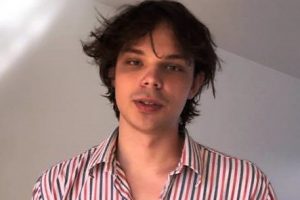
Sean Eriksen – Brisbane, Australia
Eriksen is a 21-year-old Arts/Law student majoring in history and international relations
Notwithstanding the aphorism that ‘if free expression is to mean anything then it must protect unpopular opinions’, censorship is most tolerable at the fringes; and it is a mark of social progress that bigotry is considered so unpopular that many countries have tried to legislate it out of existence. But the suggestion that hate speech laws represent a positive cultural development does not endear them to those who believe free expression is inherently sacrosanct.
Section 18C(1)(a) of Australia’s federal Racial Discrimination Act 1975 prohibits acts that are reasonably likely to ‘offend, insult, humiliate or intimidate another person or group of people’ based on their race, colour, or national or ethnic origin. This allows administrative review and ultimately litigation, giving judges a wide capacity to make rulings on acceptable public discourse.
Defenders of the law claim that sufficient legislative exemptions protecting artists, commentators and academics exist elsewhere in the legislation, but in practice the standard for offence has not been particularly high. Most famously in Eatock v Bolt, articles by a conservative columnist were prohibited from further publication because he had suggested that many people were identifying as indigenous solely because it had become trendy to do so. This is perhaps a crass point to make, but not one that adults cannot reasonably be exposed to.
Though it may be meant well, the censorship of ugly or even disturbing speech is still censorship. Bad ideas do exist and the only harm is in hiding them.
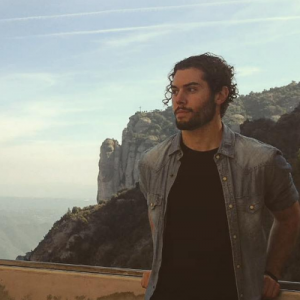
Adam Rossi, youth advisory board, July-December 2017
Adam Rossi – Vancouver, Canada
Rossi is a Canadian student pursuing an MA in International Relations. He recently spent a year teaching English in Barcelona, Spain
Seven years after Catalonia’s government outlawed bullfighting in the autonomous region, its officials now find themselves back in the ring. They’ve been thrown in with a great bull, the Spanish government, which has been trying to skewer any Catalan public figure expressing pro-independence views as if they were matadors clad in red.
They have already suspended, fined, and barred from office the former Catalan prime minister, some of his cabinet members, and city councillors for organising a mock referendum back in 2014 and for continually speaking publicly about their belief in the need for real independence. Joan Coma, a leftist city councillor of the Catalan CUP party, now faces an eight-year prison sentence with his passport confiscated for saying, “To make an omelet, you must break some eggs,” in a discussion on independence. Spanish authorities claim that this was a call for political violence. Meanwhile, Spanish President Manuel Rajoy has even threatened to use force to stop the referendum. Not allowing the vote to happen would be undemocratic, essentially ignoring the voice of the people. In addition, these targeted shots at individual citizens such as Joan Coma only serve to drag Spain back to a dark past of civil oppression. They are even using the Francoist penal code to charge Coma. However, these acts only seem to be fuelling the hearts of Catalans, as street demonstrations and “si” vote flags begin to fly proudly outside people’s homes. The current Catalan president, Carles Puigdemont, says the vote will happen regardless, and that the Catalan government will be prepared for immediate separation if the result is a “yes.”
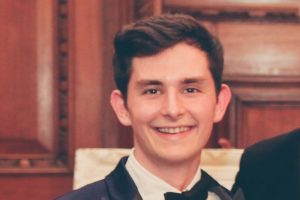
Huw Roberts, youth advisory board, July-December 2017
Huw Roberts – Hampshire, UK
Roberts graduated from Durham University in June 2017 with a BA in Politics. He has been granted a scholarship to study Public Administration at Shanghai Jiao Tong University
In May 2016 major social media firms, including Facebook and Twitter, signed up to a voluntary code of conduct aimed at combating illegal hate speech. This agreement, in partnership with the European Commission, required the signees to remove hate speech posted on their platform within a twenty-four hour period. Since this deal, the pressure placed on these companies to remove hate speech has been increasing, with proposals forwarded by European Union member states for binding legislation and punitive fines. Undoubtedly, the scope for the facilitation and proliferation of hate speech on these platforms requires a response, however, the current demands being placed on social media firms are fostering policies which often lack refinement and curtail legitimate free speech.
Leaked documents from earlier this year revealing Facebook’s hate speech policies typify the problems censorious practices can raise for free expression. The leading headline from these documents was that white men (as a group) were considered a protected category, yet, black children were not. As such, under Facebook guidelines attacks directed against white men were required to be removed, whilst those targeted at black children were permissible. This policy would not only seem discriminatory towards those most vulnerable within society, but has also proven detrimental to discourse. For example, campaigners from social justice groups such as Black Lives Matter have found their accounts blocked due to criticising structural privileges held by white men. Without an overhaul of the current guidelines in place and a more nuanced approach to censoring hate speech, those most marginalised within society risk having a vital outlet for raising debate and challenging inequalities shut down.
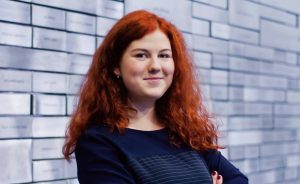
Madara Melnika, youth advisory board, July-December 2017
Madara Melnika – Riga, Latvia
Madara is a law student at University of Latvia. She has also studied in Salzburg and Berlin
At the beginning of July 2017 one of the most popular sports commentators in Latvia, Armands Puče, was dismissed from covering the Latvian Kontinental Hockey League club Dinamo Riga’s games. Although he was dismissed by the private media enterprise MTG TV Latvia, this case is noteworthy as the journalist claims that the decision on his dismissal was taken after the company received an ultimatum from the KHL bureau in Moscow, threatening to end the KHL’s broadcasting agreement with MTG TV unless Puče was removed.
His colleagues hinted that “just like in Soviet times”, all of the articles written by Puče in his parallel work as a journalist, in which he criticised the political ideology of the KHL and its impact on Dinamo Riga, had been translated into Russian and sent to the KHL main bureau in Moscow. It is important to stress that the mentioned articles were not connected to his hockey broadcasts.
After some time, the media enterprise claimed that its cooperation with Puče was ended due to plans for a new show concept, which would include also changing the anchor of the broadcast. Thus Puče, who had led the Hockey studio ever since the first season of the renewed hockey club Dinamo Riga, had to be let go.
Of course, the commentator is connected to his media employer and represents it. However, can the fate and work opportunities of a sports commentator absolutely depend on his ideology and activities done outside work – and will the teams suddenly play better, if their games are covered by loyal commentators?
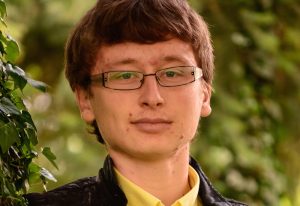
Daniel Penev, youth advisory board, July-December 2017
Daniel Penev – Kyustendil, Bulgaria
Penev is a Bulgarian freelance journalist and a member of the Association of European Journalists
Valentin Todorov is a journalist from Novi Iskar, a town in western Bulgaria, who owns the local news website www.noviiskar.bg. He registered the website under this name in 2010. In June, Todorov learned that Daniela Raycheva, the mayor of the district since 2011, had challenged his right to use this domain. According to the general terms set out by Register BG Ltd., which administrates web domains in Bulgaria, the names of municipalities and regions are reserved for domains registered by the respective administrations. However, when the name is already in use, the parties wanting to use it must either choose another name or wait until it becomes vacant. Here comes the gist of the struggle: when he registered his website, Todorov secured a declaration in which Valentin Kotov, then mayor of Novi Iskar, explicitly states that he will not claim the name while it is active.
“There arises the question as to whether the public administration may, whenever it wishes, make claims in relation to something it has given away and which a citizen owns and has invested in for years,” the Association of European Journalists – Bulgaria wrote in July. “Trust is a media outlet’s greatest capital and it is inseparably connected to its name.”
Todorov suspects that the district mayor resorted to such actions because of the website’s more critical reporting on the various problems in the district. Notably, the mayor only decided to challenge his use of the domain six years after she took office. The administration also already has its own website, www.novi-iskar.bg. Todorov is optimistic about the outcome of the dispute, due by the end August, but if the Register BG commission rules in favour of the mayor, this will set worrying a precedent for all media outlets in Bulgaria.
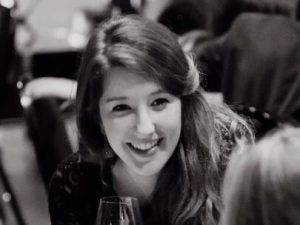
Sophie Baggott, youth advisory board, July-December 2017
Sophie Baggott – London, UK
Baggott is a journalist focused on promoting human rights
Another resounding voice has blasted proposed changes to the regime protecting official information in the UK, which would deem anyone who communicates information seen ‘to prejudice the United Kingdom’s safety or interests’ or anyone who ‘obtains or gathers’ such information as having committed an offence, potentially resulting in a jail sentence of up to 14 years. To what extent will our government listen to the outcry?
“The proposals threatened would be ‘both retrograde and repressive’”, said the News Media Association (NMA) in a 20-page document released at the end of July. The NMA, which speaks for national and regional UK news media, has highlighted the industry’s concerns about consultative proposals for changes to the Official Secrets Acts and the Data Protection Act, as well as to other unauthorised disclosure offences.
The proposed reforms would lead to ‘damaging and dangerous inroads into press freedom by making whistle-blowers, journalists and media organisations prime targets for state surveillance and criminal prosecution’, the NMA warned. The association said the changes would ‘extend and then entrench official secrecy’, adding: ‘It would be conducive to official cover up. It would deter, prevent and punish investigation and disclosure of wrongdoing and matters of legitimate public interest’.
Investigative journalism could endure a ‘chilling effect’, said the NMA, from how the changes would make it easier for the government to prosecute anyone involved in obtaining, gathering and disclosing information, even if no damage were caused, and irrespective of the public interest. The proposed reforms might also precipitate a more widespread use of state surveillance powers against the media under the guise of suspected media involvement in offences. This would pose a threat to confidential sources and whistle-blowers, the NMA noted.
Is the government going to reconsider or restrict? Either way, the media industry will certainly have to remain on high alert for the foreseeable future.
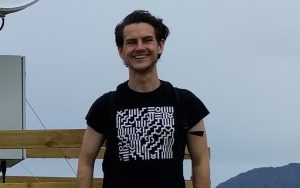
Dan Bateyko, youth advisory board, July-December 2017
Dan Bateyko – Sarasota, Florida
Bateyko is an internet rights researcher from Sarasota, Florida. He is currently travelling on a Watson Fellowship, a one-year purposeful grant for global independent study
U.S. Twitter users blocked by their twit president might have a remedy. On July 11, the Knight First Amendment Institute filed a lawsuit arguing that US President Donald Trump violated the First Amendment rights of dissenting citizens when he blocked them from reading his tweets and contributing their own. Speaking to Index, Katie Fallow, senior staff attorney at Knight Institute, distilled the issue:
“The president may be using social media in a new way, but the First Amendment principles at stake are longstanding. When the government sets up a public forum, whether on Twitter in a town hall, it can’t exclude people just because it doesn’t like what they have to say.”
But whether Trump’s Twitter account can be considered a public forum is a point of contention. As the Knight Institute argues, Trump’s account has all the hallmarks of a public forum; the account tweets news on policy and provides a platform for public debate. However, in a recent statement, the justice department rejoined that Trump’s editorial control over who to follow and block on his private account is not a constitutional issue.
I chose to highlight this case in my first blog post as a member of Index’s youth advisory board because social media is an incredible tool for giving citizens a voice, granting them a platform to exchange views and petition their public officials. But where and how free speech rights extend online is still far from clear—as Lyrissa Lidksy, dean of Missouri’ School of Law, writes, determining whether comment removal on government-sponsored pages is constitutional “requires close examination of the U.S. Supreme Court’s public forum and government speech doctrines, both of which are lacking in coherence – to put it mildly.” With clarity, public officials once reticent to tackle the thorny issue of public accounts could feel comfortable with more online civic engagement. And by establishing further precedent, the Knight Institute’s defense of Twitter users will hopefully protect people’s hard-fought rights to free expression online.
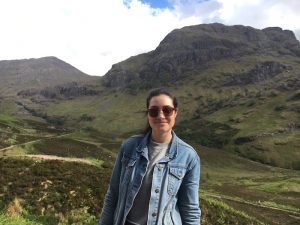
Isabela Vrba Neves youth advisory board, July-December 2017
Isabela Vrba Neves – Stockholm, Sweden
Vrba Neves is a journalist and writer based in Sweden, and a graduate from Kingston University London
Sweden is known for having a good track record when it comes to freedom of expression, and is regarded as being an example in democracy and equality. However, the Nordic country has recently been faced by a wave of threats by far-right groups attacking journalists and media organisations. In February 2017 journalist Evelyn Schreiber received hundreds of death threats and threats of sexual violence after questioning a Facebook post by Peter Springare, a police officer who heavily criticised immigrants for violent crimes.
Springare received support by far-right groups who went after Schreiber with messages and phone calls. In a radio interview Schreiber explained how she believed the threats were “organised” as she would receive a large amount of messages every time a far-right group shared her article on Facebook.
She also described how at first the groups mostly criticised her article, but then progressed to personal vulgar and sexist attacks towards her. The newspaper, Nerikes Allehanda, which published her article, reported the threats to the police.
An issue that Schreiber brings up with these kinds of incidents is that journalists may self-censor for their own safety, which in turn can threaten freedom of expression. To combat this, the Swedish government announced in July 2017 an action plan which aims to strengthen the preventative work towards hate and threats against journalists, artists and elected representatives.
The Swedish Victim Support and the Swedish Crime Victim Compensation and Support Authority have been commissioned to develop material that will provide knowledge and support to those who have been under threat for participating in public conversations, in order to strengthen free speech and freedom of expression.[/vc_column_text][/vc_column][/vc_row][vc_row full_width=”stretch_row_content”][vc_column][three_column_post title=”More from the youth advisory board” category_id=”6514″][/vc_column][/vc_row]
16 Aug 2017 | Magazine, News, Volume 46.02 Summer 2017
[vc_row][vc_column][vc_column_text]
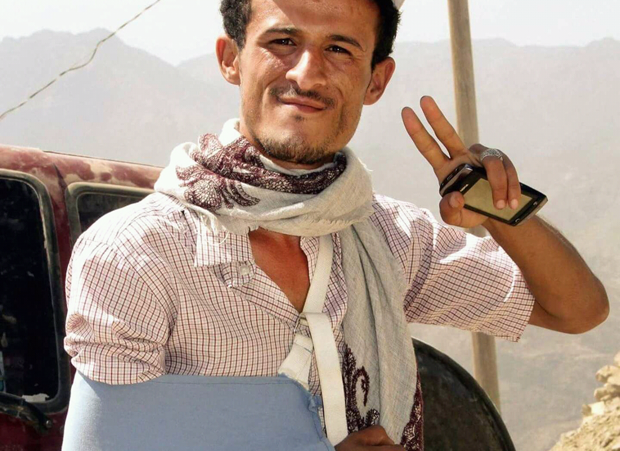
Yemeni journalist Abdulaziz Muhammad al-Sabri wears a sling after he was shot by a sniper in 2015
[/vc_column_text][/vc_column][/vc_row][vc_row][vc_column][vc_custom_heading text=”Yemeni journalist Abdulaziz Muhammad al-Sabri details the dangers of reporting in his country. Interview by Laura Silvia Battaglia”][/vc_column][/vc_row][vc_row][vc_column][vc_column_text]
Abdulaziz Muhammad al-Sabri is smiling, despite everything. But he cannot fail to feel depressed when he sees the photos taken a few months ago, in which he is holding a telephoto lens or setting up a video camera on a tripod: “The Houthis confiscated these from me. They confiscated all my equipment. Even if I wanted to continue working, I wouldn’t be able to.”
Al-Sabri is a Yemeni journalist, filmmaker and cameraman, and a native of Taiz, the city that was briefly the bloodiest frontline in the country’s civil war. He has worked in the worst hotspots, supplying original material to international media like Reuters and Sky News. “I have always liked working in the field,” he said, “and I was really doing good work from the start of the 2011 revolution.”
But since the beginning of the war, the working environment for Yemeni journalists has progressively deteriorated. In the most recent case, veteran journalist Yahia Abdulraqeeb al-Jubaihi faced a trial behind closed doors and was sentenced to death after he published stories critical of Yemen’s Houthi rebels. Many journalists have disappeared or been detained, and media outlets closed, in the past few years.
“The media industry and those who work in Yemen are coming up against a war machine which slams every door in our faces, and which controls all the local and international media bureaus. Attacks and assaults against us have affected 80% of the people employed in these professions, without counting the journalists who have already been killed, and there have been around 160 cases of assaults, attacks and kidnappings. Many journalists have had to leave the country to save their lives. Like my very dear friend Hamdan al-Bukari, who was working for Al-Jazeera in Taiz.”
Al-Sabri wanted to tell his story to Index on Censorship without leaving out details “because there is nothing left for us to do here except to denounce what is going on, even if nobody is listening to us”. He spoke of systematic intimidation by the Houthi militias in his area against journalists in general, and in particular against those who work for the international media: “In Taiz they have even used us as human shields. Many colleagues have been taken to arms depots, which are under attack from the [Saudi-led, government-allied] coalition, so that once the military target has been hit, the coalition can be accused of killing journalists.”
[/vc_column_text][/vc_column][/vc_row][vc_row][vc_column width=”1/4″][vc_icon icon_fontawesome=”fa fa-quote-left” color=”custom” align=”right” custom_color=”#dd3333″][/vc_column][vc_column width=”3/4″][vc_custom_heading text=”In Taiz they have even used us as human shields” google_fonts=”font_family:Libre%20Baskerville%3Aregular%2Citalic%2C700|font_style:400%20italic%3A400%3Aitalic”][/vc_column][/vc_row][vc_row][vc_column][vc_column_text]
This sort of intimidation is one of the reasons why researching and reporting on the conflict is very difficult. “In Taiz and in the north, apart from those working for al-Masirah, the Houthis’ TV station, and the pro-Iranian channels, al-Manar and al-Alam, only a few other journalists are able to work from here, and those few, local and international, are putting their necks on the line,” said al-Sabri.
“You’re lucky if you can make it, otherwise you fall victim to a bullet from the militias, attacks, kidnappings. Foreigners are unable even to obtain visas because of the limitations imposed by [Abdrabbuh Mansour] Hadi’s government and the coalition. The official excuse is that the government ‘fears’ for their lives, since if they were kidnapped, imprisoned or died in a coalition bombardment, it would be the Yemeni government’s responsibility.”
Al-Sabri has personal experience of the violence against journalists in Yemen. In December 2015, he was wounded in the shoulder by a sniper who was aiming at his head. On another occasion, he was kidnapped, held at a secret location for 15 days, blindfolded, threatened with death and tortured.
The full article by Laura Silvia Battaglia is available with a print or online subscription.
[/vc_column_text][/vc_column][/vc_row][vc_row][vc_column][vc_column_text]
Award-winning journalist Laura Silvia Battaglia reports regularly from Yemen. Translated by Sue Copeland.
This article is published in full in the Summer 2017 issue of Index on Censorship magazine. Print copies of the magazine are available on Amazon, or you can find information about print or digital subscriptions here. Copies are also available at the BFI, the Serpentine Gallery, MagCulture, (London), News from Nowhere (Liverpool), and Home (Manchester). Each magazine sale helps Index on Censorship continue its fight for free expression worldwide.
[/vc_column_text][/vc_column][/vc_row][vc_row][vc_column][vc_custom_heading text=”From the Archives”][vc_row_inner][vc_column_inner width=”1/3″][vc_single_image image=”80562″ img_size=”213×289″ alignment=”center” onclick=”custom_link” link=”http://journals.sagepub.com/doi/pdf/10.1177/0306422014550963″][vc_custom_heading text=”The future of Yemeni journalists” font_container=”tag:p|font_size:24|text_align:left” link=”url:http%3A%2F%2Fjournals.sagepub.com%2Fdoi%2Fpdf%2F10.1177%2F0306422014550963|||”][vc_column_text]September 2014
The Yemeni government should not be the ones judging the objectivity of reporting, but there is hope for more freedom.[/vc_column_text][/vc_column_inner][vc_column_inner width=”1/3″][vc_single_image image=”80569″ img_size=”213×289″ alignment=”center” onclick=”custom_link” link=”http://journals.sagepub.com/doi/pdf/10.1177/0306422016657007″][vc_custom_heading text=”Journalists face increasing threats” font_container=”tag:p|font_size:24|text_align:left” link=”url:http%3A%2F%2Fjournals.sagepub.com%2Fdoi%2Fpdf%2F10.1177%2F0306422016657007|||”][vc_column_text]June 2016
Rachael Jolley explains why journalists around the world, especially near the Middle East, are facing increasing threats.[/vc_column_text][/vc_column_inner][vc_column_inner width=”1/3″][vc_single_image image=”80562″ img_size=”213×289″ alignment=”center” onclick=”custom_link” link=”http://journals.sagepub.com/doi/pdf/10.1177/0306422014548392″][vc_custom_heading text=”Journalists should ignore technology” font_container=”tag:p|font_size:24|text_align:left” link=”url:http%3A%2F%2Fjournals.sagepub.com%2Fdoi%2Fpdf%2F10.1177%2F0306422014548392|||”][vc_column_text]September 2014
Journalists in war zones may need to ignore technology and go back to old ways to avoiding surveillance, says Iona Craig.[/vc_column_text][/vc_column_inner][/vc_row_inner][vc_separator][/vc_column][/vc_row][vc_row content_placement=”top”][vc_column width=”1/3″][vc_custom_heading text=”100 Years On” font_container=”tag:p|font_size:24|text_align:left” link=”url:https%3A%2F%2Fwww.indexoncensorship.org%2F2017%2F06%2F100-years-on%2F|||”][vc_column_text]Through a range of in-depth reporting, interviews and illustrations, the summer 2017 issue of Index on Censorship magazine explores how the consequences of the 1917 Russian Revolution still affect freedoms today, in Russia and around the world.
With: Andrei Arkhangelsky, BG Muhn, Nina Khrushcheva[/vc_column_text][/vc_column][vc_column width=”1/3″][vc_single_image image=”91220″ img_size=”medium” alignment=”center” onclick=”custom_link” link=”https://www.indexoncensorship.org/2017/06/100-years-on/”][/vc_column][vc_column width=”1/3″ css=”.vc_custom_1481888488328{padding-bottom: 50px !important;}”][vc_custom_heading text=”Subscribe” font_container=”tag:p|font_size:24|text_align:left” link=”url:https%3A%2F%2Fwww.indexoncensorship.org%2Fsubscribe%2F|||”][vc_column_text]In print, online. In your mailbox, on your iPad.
Subscription options from £18 or just £1.49 in the App Store for a digital issue.
Every subscriber helps support Index on Censorship’s projects around the world.
 SUBSCRIBE NOW[/vc_column_text][/vc_column][/vc_row]
