[vc_row][vc_column][vc_column_text]Russian and international journalists who were covering anti-corruption protests that took place across Russia on Sunday 26 March 2017 were among those detained as police moved to disperse demonstrators.
The protests erupted following allegations of hidden assets amassed by Russian Prime Minister Dmitry Medvedev. A video detailing the investigation conducted by the Russian NGO Anti-corruption Foundation attracted nearly 20 million views and caused a wave of public indignation.
Alexey Navalny, an opposition political activist and co-founder of the NGO, had called for demonstrations, which took place in nearly 100 cities. Initiative groups in Moscow and other cities supported the protest and called on local members to participate. As a result, meetings took place in 98 cities from Vladivostok to Kaliningrad. In 30 cities, the protests were broken up by the police, who detained many and reportedly committed human rights violations. According to OVD-Info, a website that monitors police detainments, in Moscow alone there more than 1,000 people detained, with around 150 detained in Makhachkala and 130 in Saint Petersburg. Some detainees in Moscow spent two nights in custody while waiting for court hearings.
In Moscow, Saint Petersburg, Makhachkala, Petrozavodsk and Saratov, journalists were detained and harassed by the police among protesters.
Moscow police detained RBC correspondent Timofey Dzyadko, Mediazona publisher Piotr Verzilov, correspondent for Open Russia website Sofiko Arifdzhanova, Public Television of Russia journalist Olga Orlova, Echo of Moscow journalist Alexandr Pluschev and Pyotr Parkhomenko of Kommersant-FM. They all spent 3-4 hours in police stations and were released after intervention by their employers.
The owner and editor of the infotainment website gagster.ru Vladimir Stolyarov was detained at his home during the Moscow demonstration for posting, according to his brother, “a link to the live stream of the protest actions and organized streaming on this website”.
[/vc_column_text][/vc_column][vc_column width=”1/2″ css=”.vc_custom_1490969733608{background-image: url(https://www.indexoncensorship.org/wp-content/uploads/2017/01/MMF_report_2016_WEB-1-1A.jpg?id=85872) !important;background-position: center !important;background-repeat: no-repeat !important;background-size: cover !important;}”][/vc_column][/vc_row][vc_row][vc_column][vc_column_text]Guardian correspondent Alec Luhn was among those detained by police officers as he took a picture of someone being detained at protests in Moscow. Luhn told Mapping Media Freedom: “I was charged with the administrative violation of holding an unsanctioned rally even though I repeatedly said I was a journalist and showed police my accreditation from the foreign ministry.”
He was brought to a police station where he spent more than five hours. “The police didn’t care about the legality of their actions and were very glib, refusing to answer for hours why I was being detained.” In an earlier Twitter post Luhn said police told him: “Maybe you are accused of killing Kennedy.”
“This lack of respect for the press is shocking, but even more shocking is their willingness to roughly detain so many peaceful protesters,” Luhn said. He spoke of a 15-year-old who probably had his nose broken after being kicked in the face by police.
Vladimir Suvorov, a photographer for the Russian website Life, was injured in Moscow when he was hit by a bottle thrown as police moved to arrest demonstrators.
In Petrozavodsk, the capital of the Republic of Karelia, a police officer hit Aleksey Alekseyev, correspondent for local news website Chernika, in the face, breaking his glasses, and took his phone. Alekseyev, who was wearing a press badge, was then detained and spent several hours in the police station. His smartphone was returned. The Union of Journalists of the Republic of Karelia made a special statement condemning the violent detention of Alekseyev.
In Saint Petersburg, police officers detained Novaya Gazeta correspondent Sergey Satanovski and confiscated his journalist ID. Police said later that the credential was lost during the administrative process. Satanovski reported that police had used force on detainees during their detention. The editor-in-chief of the Novaya Gazeta’s Saint Petersburg edition Diana Kachalova, stated she would appeal to the prosecutor on his case.
Artyom Aleksandrov, a correspondent for Delovoy Petersburg, and Roman Pimenov, a correspondent for Interpress, and Aleksandr Petrosyan and Nadezhda Zaitseva, journalists working for the Vedomosti business newspaper were also detained in Saint Petersburg.
A special police unit officer told Violetta Ryabko, Saint Petersburg correspondent for Deutsche Welle, to leave the scene: “Get away from here with your camera”.
In Makhachkala, the capital of the Republic of Dagestan, several journalists were brought to the police station, including Kommersant correspondent Sergey Rasulov, Makhachkala correspondent for Kavkazskaya Politika Faina Kachabekova and Eto Kavkaz correspondent Vladimir Sevrinovski.
In Saratov, Aleksandr Nikishin, a journalist for news agency Svobodnye Novosti and TV presenter of Open Channel, was detained after the protest.
A Saratov court found Nikishin, who is also a member of the public monitoring committee, guilty of disobeying police referring to the fact that he was “holding the door” when trying to enter police department. Nikishin was sentenced to four days in jail.
The court refused to use a video of his forced detention as evidence in the the trial.
“In detaining so many peaceful protesters, Russia is in clear violation of its human rights commitments,” Katie Morris of human rights NGO Article 19 told Mapping Media Freedom. Morris said that Russia is obliged to facilitate peaceful protest and journalists covering demonstrations should get increased protections.
“By arresting journalists, the Russian authorities are seeking to limit the spread of news about the protests in independent media and online,” she said.[/vc_column_text][vc_column_text]
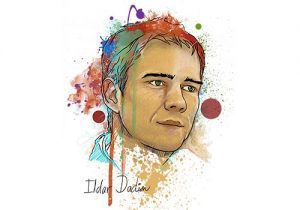
A Russian opposition and LGBT rights activist, Ildar Dadin was the first, and remains the only, person to be convicted under a notorious 2014 public assembly law. Aimed at punishing anyone who breaks strict rules on protest, the law was enacted to silence dissent after a wave of demonstrations following Putin’s last election victory. Dadin’s crime was to stage a series of one-man pickets, often standing silently with a billboard, attempting to duck the cynical law and push for free expression.
For his solo enterprise, Dadin was arrested and sentenced to three years imprisonment in December 2015. In November 2016, website Meduza published a letter smuggled from Dadin to his wife, exposing torture he claimed he was suffering alongside fellow prisoners. The letter, a brave move for a serving prisoner, was widely reported. A government investigation was prompted, and Dadin was transferred – against his will – to an undisclosed new location. A wave of public protest led to Dadin’s new location in a Siberian prison colony being revealed in January 2017.
In February 2017, Russia’s constitutional and Supreme Courts suddenly quashed Dadin’s conviction, ruling he should be released and afforded opportunity for rehabilitation.
“Ildar’s courageous defence of free speech and the right to protest are the chief reasons he was chosen from hundreds of nominations for the shortlist of this year’s awards. I am heartened by this ruling. But Russia must go further and repeal the free-speech-stifling public assembly law,” Jodie Ginsberg, chief executive of Index on Censorship said.
Prior to his release from prison, Index on Censorship spoke with his wife Anastasia Zotova. “Human rights watchers from all over the world were against that law – even Russia’s constitutional court admitted that this law is not fair at all,” she said.
See the full shortlist for Index on Censorship’s Freedom of Expression Awards 2017 here.[/vc_column_text][/vc_column][/vc_row][vc_row][vc_column][vc_basic_grid post_type=”post” max_items=”4″ element_width=”6″ grid_id=”vc_gid:1490773693506-6e49fec3-0f44-0″ taxonomies=”8734″][/vc_column][/vc_row][vc_row full_width=”stretch_row_content” equal_height=”yes” el_class=”text_white” css=”.vc_custom_1490258749071{background-color: #cb3000 !important;}”][vc_column width=”1/2″][vc_custom_heading text=”Support the Index Fellowship.” font_container=”tag:p|font_size:28|text_align:center” use_theme_fonts=”yes” link=”url:https%3A%2F%2Fwww.indexoncensorship.org%2Fsupport-the-freedom-of-expression-awards%2F|||”][vc_column_text]
[vc_row][vc_column][vc_column_text]Today’s decision by the Russian supreme court ordering the release of Index Freedom of Expression Awards nominee Ildar Dadin is welcome news for freedom of expression in the country.
“Ildar’s courageous defence of free speech and the right to protest are the chief reasons he was chosen from hundreds of nominations for the shortlist of this year’s awards. I am heartened by this ruling. But Russia must go further and repeal the free-speech-stifling public assembly law,” Jodie Ginsberg, chief executive of Index on Censorship said.
A long-term opposition and LGBT rights activist Dadin was the first, and remains the only, person to be convicted under Russia’s 2014 public assembly law that prohibits the “repeated violation of the order of organising or holding meetings, rallies, demonstrations, marches or picketing”. Attempting to circumvent this restrictive law, Dadin held a series of one-man pickets against human rights abuses – an enterprise for which he was arrested and sentenced to three years imprisonment in 2015. In November 2016, website Meduza published a letter smuggled to his wife in which Dadin wrote that he was being tortured and abuse was endemic in Russian jails. The letter, a brave move for a serving prisoner, had wide resonance, prompting a reaction from the government and an investigation. Against his will, Dadin was transferred and disappeared within the Russian prison system until a wave of public protest led to his location being revealed in January 2017.[/vc_column_text][/vc_column][/vc_row][vc_row][vc_column][vc_basic_grid post_type=”post” max_items=”4″ element_width=”6″ grid_id=”vc_gid:1487759824428-90801da3-483c-8″ taxonomies=”8935″][/vc_column][/vc_row]
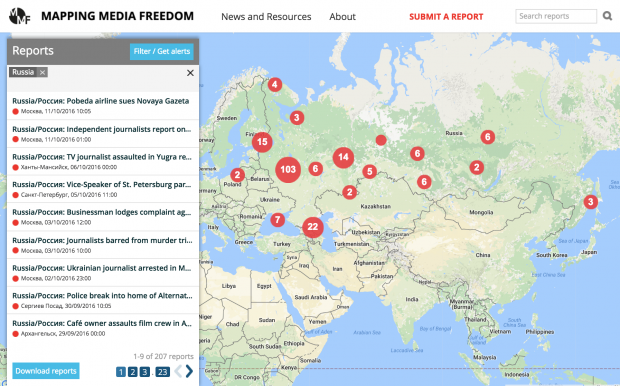
Russia’s recent elections have been described as “the dullest in recent memory”. But as Index on Censorship’s Mapping Media Freedom (MMF) project shows there was no shortage of media violations and claims of voter fraud.
On 18 September, the day of the vote, journalists across Russia were denied entry, attacked and arrested while attempting to monitor polling stations.
In Siberia, reporters were obstructed even from entering polling stations. A number working for Reuters were denied entry after officials at the location said they needed permission from local authorities but there is no law requiring this of international reporters. A voter claimed the counter used by a Reuters reporter to keep track of people voting was actually a radioactive device, and the reporter should be removed. This was not enforced.
Denis Volin, editor-in-chief of local news site Orlovskie Novosti, was barred from entering a polling station in Oryol. Volin was attempting to take photos of the polling station but officials demanded he stop. Journalists in Russia have a right to take photos and observe voting.
Journalist Dmitri Antonenkov and an activist with the Public Monitoring Commission, Vasili Rybakov, were both detained at a polling station in Ekaterinburg while investigating the illegal use of the Russian state coat-of-arms in polling stations. The pair were detained for two hours and their identification confiscated without return.
MMF Russian correspondent, Ekaterina Buchneva, said: “In general, attempts to bar journalists from polling stations were very common. We saw a lot of reports from Saint Petersburg and Moscow but the investigation by Reuters (they sent journalists to 11 polling stations across central and western Russia) proves that it was common for the rest of the country too, but, unfortunately, remained under-reported.”
Another of MMF’s Russian correspondents, Andrey Kalikh, said: “What is common is that journalists monitoring elections are often threatened if they reveal voter fraud at a polling station. There were dozens of cases in the 2011-2012 election campaign (state parliament and presidential elections) where registered journalists were kicked out, beaten up or otherwise harassed.”
Vladimir Romensky, a reporter for the independent TV channel Dozhd, for example, was involved in an altercation at a polling station in Moscow. Romensky was visiting the station to verify information about voter fraud. Earlier in the day a member of the polling board told Romensky that certain ballots were marked for the United Russia party. A man who refused to introduce himself denied access to Romensky and his crew. While Romensky was inquiring, a nearby police officer called armed guards from the station. The guards demanded Romensky’s paperwork and, despite having all his documents, the guards forced Romensky and his crew out of the location.
In another incident, Fontanka news correspondent Dmitry Korotkov was investigating the process of “carouseling”, a form of rigging elections where a group of selected people vote multiple times in different polling stations. When asked whether or not carouseling is a recent trend, Kalikh said, “No, it is not. It has existed before, the most cases were registered in 2011-2012. But the [Korotkov] case… is one of the most outrageous ones.”
Korotkov received information that voters with a special passport stamp were given multiple ballots at a polling station in the Kirov district. Korotkov was able to receive the stamp and received four different ballots at the station, even though he was not registered for the district. The polling official allowed Korotkov to sign as another voter.
Korotkov reported the incident and the polling board promised to investigate. Instead, Korotkov was detained by police officers on charges of illegally receiving ballots. The police interrogated Korotkov and his case was taken to court on 28 September. The journalist could be facing charges of using someone else’s ballot in a general election; his case is still under investigation.
Buchneva said: “The Fontanka reported that after questioning Korotkov and a suspect, who acted as an election official and gave Korotkov ballots named after another person, ‘the judge apparently had no more doubt, that Korotkov signed for another person not to vote illegally, as it was stated in the police report’. However, it is too early to say that the journalist will not be punished.”
Journalist Dmitri Antonenkov and an activist with the Public Monitoring Commission, Vasili Rybakov, were also both detained at a polling station in Ekaterinburg while investigating the illegal use of the Russian state coat-of-arms in polling stations. The pair were detained for two hours and their identification confiscated without return.
Winning 54% of the vote, United Russia now has a majority in the Duma, allowing them to change the country’s constitution without the approval of other parties.

 Today’s decision by the Russian supreme court ordering the release of