12 Aug 2014 | Draw the Line, News, Youth Board
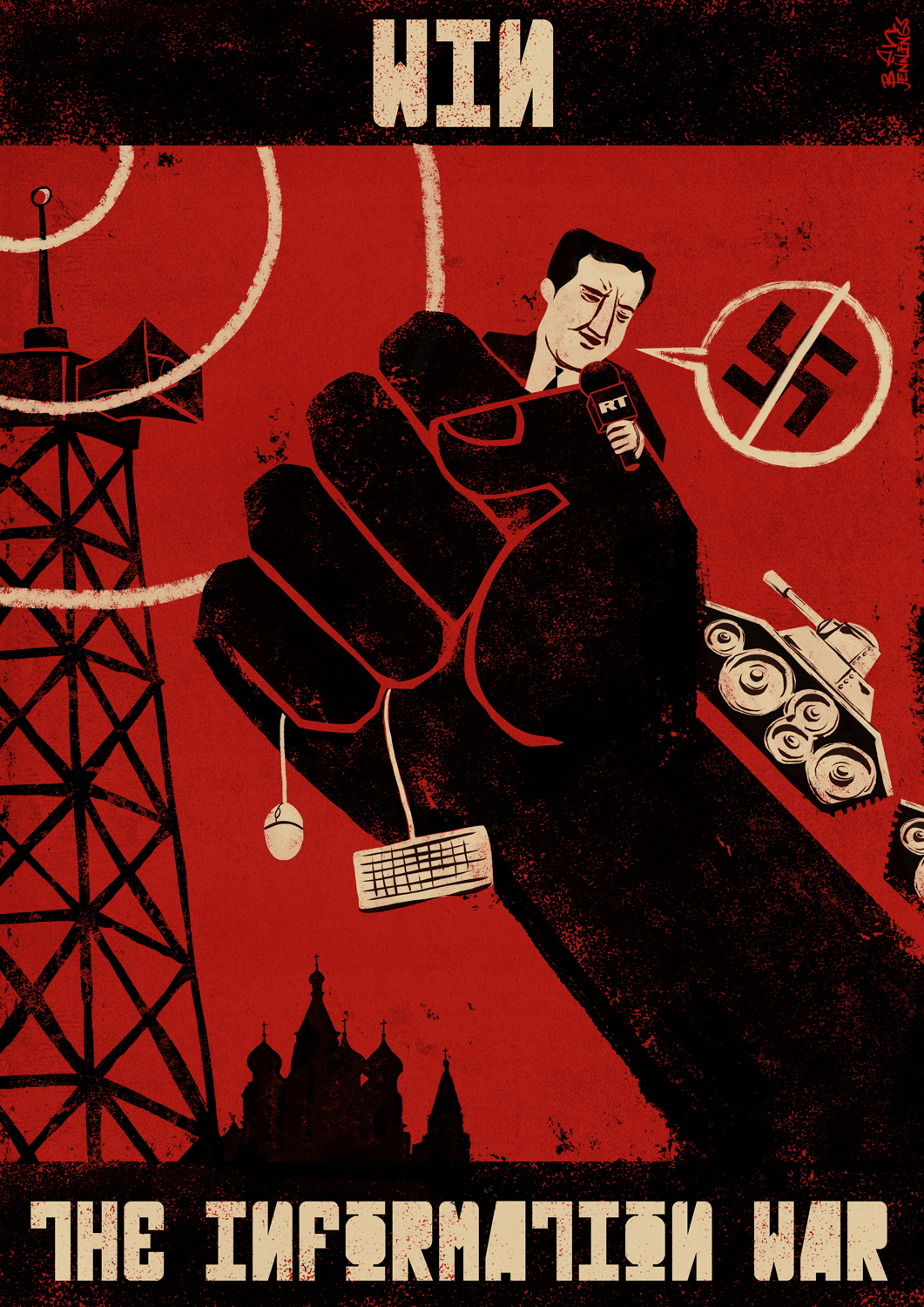
Ben Jennings for Index on Censorship
Draw the Line: We want to hear your thoughts on key free expression issues
Each month, our Youth Advisory Board will choose a free expression topic and encourage readers to respond to the issues it raises via social media. Draw the Line also features pieces from our Young Writers/Artists programme as well as relevant features from our award-winning quarterly magazine.
This month’s question: Do wars justify censorship?
The British government established the War Office Press Bureau 100 years ago this month to censor reports from the British Army before they were issued to the press. Colonel Ernest Swinton, the first man to be appointed the Army’s official journalist, wrote later: “The principle which guided me in my work was above all to avoid helping the enemy… I essayed to tell as much of the truth as was compatible with safety, to guard against depression and pessimism, and to check unjustified optimism which might lead to a relaxation of effort.”
During the First World War, censorship was deemed crucial to send the public the right messages, and keep the enemy in the dark about tactics.
Today, especially in times of war, governments continue with their attempts to control what the public and the outside world are told, often in the name of national security.
Amid the conflict in Israel and Gaza, both sides have been guilty of clamping down on free speech and the press.
Israel last month conducted three air strikes on buildings housing media outlets in Gaza, injuring at least three journalists and, according to the Committee to Protect Journalists, violating international law.
On the Palestinian side, Hamas expelled Russia Today journalist Harry Fear after he referred to the location of rockets fired towards Israel on Twitter, and a university lecturer was arrested for criticising Palestinian president Mahmoud Abbas on Facebook.
As the internet provides a platform for everyone to publish information that might aid the enemy, reporting restrictions that were once limited to the work of journalists extend into the personal lives of us all.
In times of war, can censorship be justified in the name of keeping us safe? Or is national security simply an excuse used by governments to clamp down on their critics?
Participate in the discussion by tweeting your thoughts with the hashtag #indexdrawtheline and follow responses at Draw the Line.
6 Aug 2014 | Azerbaijan Statements, News, Statements
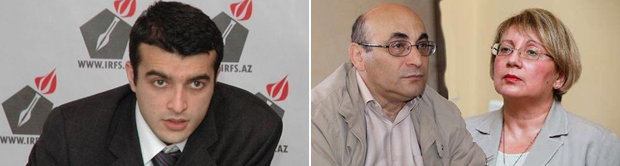
Rasul Jafarov, Arif Yunus and Leyla Yunus (Photos: Rasul Jafarov (© IRFS), Arif and Leyla Yunus (© HRHN))
60 NGOs from 13 Human Rights Houses call upon the Azerbaijani authorities, in their joint letter to President Ilham Aliyev, to immediately and unconditionally release Leyla Yunus, Arif Yunus and Rasul Jafarov, and lift all charges held against them. The NGOs also repeat their previous call to release Anar Mammadli and Bashir Suleymanli, and join calls for the release of Hasan Huseynli.
On 28 April 2014 Leyla Yunus, Director of the Institute for Peace and Democrac, and her husband historian Arif Yunus, were prevented from leaving the country at Baku’s airport. Leyla Yunus and her husband Arif Yunus were arrested on 30 July 2014. On that day, Leyla Yunus was sentenced to 3-months pre-trial detention, whilst her husband was placed under police guard and not allowed to leave Baku. The charges brought against Leyla Yunus are those of state treason (article 274 of the Criminal Code of the Republic of Azerbaijan), large-scale fraud (article 178.3.2), forgery (article 320), tax evasion (article 213), and illegal business (article 192). Arif Yunus was arrested on 5 August 2014 and also sentenced to 3-months pre-trial detention.
The NGOs state in their joint letter to President Aliyev of 5 August 2014 that they are in particular concerned about Leyla Yunus’ health whilst in detention. She suffers from diabetes and needs appropriate medication, as well as arrangements to eat at certain times, necessary to control the illness. We worry that the conditions in detention will have a detrimental effect on her health condition, as it appears that she is to date not provided with adequate health care.
In July 2014, the bank accounts of, amongst others, human rights defender Rasul Jafarov were frozen as part of a broader investigation into numerous NGO’s. On 25 July he was refused to leave the country. Rasul Jafarov was arrested on 2 August 2014, and sentenced to 3 months pre-trial detention on charges of tax evasion (article 213 of the Criminal Code of the Republic of Azerbaijan), illegal business (article 192) and abuse of authority (article 308.2).
On 14 July 2014, Hasan Huseynli, was sentenced to 6 years in prison. He was convicted on charges of armed hooliganism and unlawfully carrying a cold weapon.
The right to freedom of association is at the heart of the charges held against these human rights defenders. In essence they are deprived of their right to work in the defence of human rights. While registration of NGOs and grants to NGOs has become mandatory in Azerbaijan, authorities continue deny registration. Independent NGOs face continuous investigations and human rights defenders are being banned from travelling abroad, depending on their willingness to find agreements with the government, including agreements on their professional activities and their public statements.
Restrictions to laws affecting the right to freedom of association have been widely criticised since October 2011. Such legislation de facto criminalises human rights defenders in Azerbaijan, not for their wrong doing, but rather for the fact that working for an NGO, which does not have the blessing of the government, has become difficult in Azerbaijan. United Nations experts stated ahead of the Presidential elections that they “observed since 2011 a worrying trend of legislation which has narrowed considerably the space in which civil society and defenders operate in Azerbaijan.” The order given to the Human Rights House Azerbaijan in March 2011 to cease all its activities is a consequence of such policies.
The NGOs call upon the Azerbaijani authorities, in their joint letter to President Ilham Aliyev of 5 August 2014, to immediately and unconditionally release Leyla Yunus, Arif Yunus, Rasul Jafarov, and lift all charges held against them. The NGOs see this pre-trial detention of Leyla Yunus, Arif Yunus and Rasul Jafarov as a way to silence them. The NGOs also repeat their previous call to release Anar Mammadli and Bashir Suleymanli, and join calls for the release of Hasan Huseynli.
The NGOs further call upon the Azerbaijani authorities to take appropriate measures to put an end to the attacks, detention and harassment of human rights defenders, journalists and activists, and to take steps in order to foster a safe environment for them, in line with Azerbaijan’s international obligations and commitments, especially as the chair of the Committee of Ministers of the Council of Europe.
Signed by:
Human Rights House Azerbaijan (on behalf of the following NGOs):
- Association for the Protection of Women’s Rights
- Azerbaijan Lawyers Association
- Institute for Reporters’ Safety and Freedom
- Legal Education Society
- Media Rights Institute
- Society for Humanitarian Research
- Women Association for Rational Development
Barys Zvozskau Belarusian Human Rights House in exile, Vilnius (on behalf of the following NGOs):
- Belarusian Association of Journalists
- Belarusian Helsinki Committee
- City Public Association “Centar Supolnaść”
- Human Rights Centre “Viasna”
Human Rights House Belgrade (on behalf of the following NGOs):
- Belgrade Centre for Human Rights
Human Rights House Kiev (on behalf of the following NGOs):
- Association of Ukrainian Human Rights Monitors on Law-Enforcement
- Human Rights Information Centre
- Center for Civil Liberties
- Ukrainian Helsinki Human Rights Union
- Ukrainian Legal Aid Foundation
Human Rights House London (on behalf of the following NGOs):
- Article 19
- Index on Censorship
Human Rights House Sarajevo (on behalf of the following NGOs):
- Helsinki Committee for Human Rights in Bosnia and Herzegovina
Human Rights House Tbilisi (on behalf of the following NGOs):
- Article 42 of the Constitution
- Georgian Centre for Psychosocial and Medical Rehabilitation of Torture Victims
- Human Rights Centre
Human Rights House Oslo (on behalf of the following NGOs):
- Human Rights House Foundation
- Norwegian Burma Committee
- Norwegian Helsinki Committee
Human Rights House Voronezh (on behalf of the following NGOs):
- Charitable Foundation
- Civic Initiatives Development Centre
- Confederation of Free Labor
- For Ecological and Social Justice
- Free University
- Golos
- Interregional Trade Union of Literary Men
- Lawyers for labor rights
- Memorial
- Ms. Olga Gnezdilova
- Soldiers Mothers of Russia
- Voronezh Journalist Club
- Voronezh-Chernozemie
- Youth Human Rights Movement
Human Rights House Yerevan (on behalf of the following NGOs):
- Helsinki Citizens’ Assembly-Vanadzor
- Helsinki Association for Human Rights
- Journalists’ Club “Asparez”
- Public Information and Need of Knowledge NGO
- Shahkhatun
- Women’s Resource Center
Human Rights House Zagreb (on behalf of the following NGOs):
- APEO/UPIM Association for Promotion of Equal Opportunities for People with Disabilities
- B.a.B.e.
- CMS – Centre for Peace Studies
- Documenta – Centre for Dealing with the Past
- GOLJP – Civic Committee for Human Rights
- Svitanje – Association for Protection and Promotion of Mental Health
The Rafto House in Bergen, Norway (on behalf of the following NGOs):
The House of the Helsinki Foundation For Human Rights, Poland (on behalf of the following NGOs):
- Helsinki Foundation for Human Rights
Election Monitoring and Democracy Studies Center, Azerbaijan
Foundation “Multiethnic Resource Center for Civic Education Development”, Georgia
People in Need, Czech Republic
Public Movement Multinational, Georgia
Public Association for Assistance to Free Economy, Azerbaijan
Public Union of Democracy and Human Rights Resource Centre, Azerbaijan
This statement was originally posted on Aug 5, 2014 at http://humanrightshouse.org/Articles/20321.html
4 Aug 2014 | Awards, Azerbaijan, Azerbaijan News, News
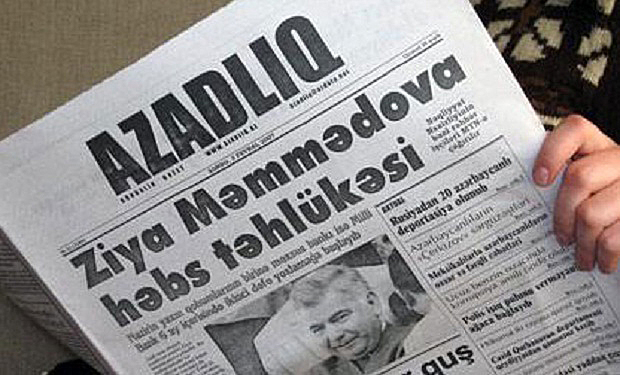
Index Award winning Azadliq newspaper was forced into cancelling its print run last week with little hope of restoring its publication.
It is not that easy to get to the editorial office of Azadliq in Baku. Once you enter the building of Azerbaijan Publishing House, a police officer, who sits close to a statue of Heydar Aliyev, the late “father of the nation” and the actual father of the incumbent president Ilham Aliyev, asks you to call the office of the newspaper to get someone to pick you up downstairs. “Everyone in Baku knows their number,” an old lady in the phone room says as she tells me how to reach Azadliq.
Rahim Haciyev, an acting editor of the daily, smiles as he greets me, and leads to the top floor of the building that looks like a shattered remnant of the Soviet past. We pass a dark and neglected corridor that seems to be last painted around 1989 – the year Azadliq was launched.
The last day of July 2014 can become the end of what was the last independent daily in Azerbaijan as it was forced into suspension of publication.
“We owe 20,000 manat (about £15,000) to the publishing house, and they refuse to print our newspaper unless we pay the debt. But we are not able to, because we don’t get money for the newspaper sales. Gasid, the state-owned press distribution company, owes us 70,000 manat (about £53,000), which should be enough to cover our debts and operation costs. Its general manager is an MP and a member of the ruling party – and they just won’t pay us,” says Rahim Haciyev.
The authorities of Azerbaijan have used economic pressure to silence one of the last critical voices in the country. Last year the newspaper was a target of defamation suits that have resulted in £52,000 in fines, which were followed by bans against selling the paper at tube stations and on the streets of Baku. Thus, Azadliq lost sales of 3,500 copies daily – and with the official distribution network refusing to pay for the copies they sell, it has resulted in a complete blockade of any revenue streams. The State Press Support Fund refused to support the paper as well.
“The authorities have tried to stifle us for a long time, and it looks like they have finally succeeded. I don’t see them letting us go back to print. The only chance is strong pressure from the West, but I don’t expect this to happen. The Western democracies are now preoccupied with weakening the influence of Russia in the region, so it is unlikely they are going to put too much pressure on its neighbouring countries,” says Haciyev.
Azadliq’s editor also sees pressuring of the paper as a part of a wider campaign of the Azerbaijani authorities aimed at silencing of the country’s civil society. Two well-known human rights defenders, Leyla Yunus and Rasul Jafarov, were arrested last week; they will be detained pending trial for three months each.
“At the moment, when repressions against the civil society and human rights activists are getting tougher, the last thing they need is a critical newspaper that spreads the word about their clampdown. And we were the last daily that reported on those cases,” Haciyev points out.
Azadliq’s editorial team keeps working, although they have not been paid for two and a half months. The paper’s website, which is one of the most popular news source online in Azerbaijan, is still updated, but nobody knows for how long.
“Azadliq” means “freedom” is Azerbaijani. There is less and less freedom in the country that looks set to take a sad lead on the number of closed down media outlets and human rights activists in jail.
This article was posted on August 4, 2014 at indexoncensorship.org
31 Jul 2014 | Ireland, News, Pakistan, Religion and Culture
It was, apparently, the posting of a “blasphemous image” on Facebook that led an angry mob to burn down houses with children inside them.
It’s been suggested that it was a picture of the Kaaba, Islam’s holiest site, that provoked the mob in Gujranwala in Pakistan. They rallied last Sunday at Arafat colony, home of 17 families belonging to the Ahmadi sect. As police stood by, houses were looted and torched. At the end of the night, a woman in her 50s, Bushra Bibi, and her granddaughters Hira and Kainat, an eight-month-old baby, were dead. None of them had anything to do with the blasphemous Facebook post.
Was the image even blasphemous? In some ways, it doesn’t really matter. What matters was that it was posted by an Ahmadi, whose very existence is condemned by the Pakistani penal code.
Ahmadiyya emerged in India in the late 19th century. It is a small sect based on the belief that its founder, Mirza Ghulam Ahmad, was, in fact, the Mahdi of Muslim tradition. This teaching is rejected by Orthodox Sunni Islam.
In Pakistan, this means that being a member of the Ahmadiyya sect is dangerous. The law says you cannot describe yourself as Muslim. You cannot exchange Muslim greetings. You cannot describe your call to prayer as a Muslim call to prayer. You cannot describe your place of worship as a Masjid.
Any Ahmadi who “any manner whatsoever outrages the religious feelings of Muslims” can be imprisoned for up to three years.
Ahmadis suffer disproportionately from Pakistan’s blasphemy laws, but they are not the only ones who suffer. Accusations of blasphemy are frequently levelled at members of other minorities and at mainstream Muslims too. Often, this is done out of sheer spite. Often it is done to settle scores.
As the New Statesman’s Samira Shackle has pointed out, amid the chaos and fear generated by the law, it’s often difficult to find out what people are actually supposed to have done, as media hesitate to repeat the alleged blasphemy lest they themselves be accused of the crime.
The fevered atmosphere created by the laws mean that to oppose them can be fatal. In Janury 2011, Punjab governor Salmaan Taseer was killed by his own bodyguard after he pledged to support a Christian woman, Aasia Bibi, who had been accused of the crime. Taseer’s assassin claimed that the governor had been an “apostate”. He was widely praised by the religious establishment. Three months later, Minority Affairs Minister Shahbaz Bhatti was killed, apparently because of his belief that the blasphemy law should be changed.
Meanwhile, an amendment proposed by Taseer’s colleague Sherry Rehman, which would have abolished the death penalty for blasphemy, was dropped. Rehman was posted to diplomatic service in the United States later that year, amid allegations that she herself had committed some kind of blasphemy.
The number of blasphemy cases is steadily rising, and Human Rights Watch recently claimed that 18 people are on death row after being found guilty of defaming the prophet Muhammad, though no one has as yet been executed.
The laws may seem archaic, but they are in fact utterly modern. While some of South Asia’s laws on religious offence date back to the Raj, the laws relating to the Ahmadi, and the law making insulting Muhammad a capital offence only emerged in the 1980s, as part of General Zia’s attempts to shore up his religious credentials.
The sad fact is this Pakistan’s new enthusiasm for blasphemy laws is not an international aberration. Nor is this a trend confined to confessional Islamic states.
Ireland’s 2009 Defamation Act introduced a 25,000 Euro fine for the publication of “blasphemous matter”. According to the Act , “a person publishes or utters blasphemous matter if—
(a) he or she publishes or utters matter that is grossly abusive or insulting in relation to matters held sacred by any religion, thereby causing outrage among a substantial number of the adherents of that religion, and
(b) he or she intends, by the publication or utterance of the matter concerned, to cause such outrage.”
Note how similar the wording is to the Pakistani law forbidding Ahmadis from offending Muslims. The Pakistani government repaid the compliment when, along with other members of the Organisation of Islamic Conference, it attempted to force the UN to recognise “religious defamation” as a crime, lifting text from the Irish act. Pakistan claimed, grotesquely, that criminalising blasphemy was about preventing discrimination. Cast your eyes back once again to how its blasphemy provisions treat Ahmadis.
Across Europe, more and more blasphemy cases are emerging. In January of this year, a Greek man was sentenced to 10 months for setting up a Facebook page mocking an Orthodox cleric. In 2012, Polish singer Doda was fined for suggesting that the Bible read like it was written by someone drunk and “smoking some herbs”. The trial of Pussy Riot in Russia was heavy with talk of sacrilege.
We tend to believe that the world is moving inexorably toward a secular settlement. The unintended upshot of this prevalent belief is that organised religions, even in countries like Pakistan, get to portray themselves as weak people who need to be protected from extinction, even as they wield power of life and death over people.
Religious persecution is real, and should be fought. Freedom of belief is a basic right. But blasphemy laws protect only power, and never people.
This article was posted on July 31, 2014 at indexoncensorship.org
