17 Oct 2025 | News
Rebooted British spoof series Spitting Image came under fire recently from the rights owners of Paddington Bear after the character was featured in a video posted to YouTube in July titled “Spitting Image Presents: The rest is Bulls*!t”.
In the video, a parody of the popular The Rest Is… podcast series, Spitting Image’s Paddington drops his soft-spoken upper-class English accent for something more akin to his native South America whilst swapping the marmalade jam for a pile of suspicious white powder.
Dr Alberto Godionli from the University of Groningen puts forward the question, does the parody actually take aim at the idealised Britishness that Paddington represents?
The mockery looks through the facade of Paddington, described as being the “embodiment of a good immigrant archetype” by James Greig in an article for GQ following the death of Queen Elizabeth II, who famously sat down for tea with the Peruvian immigrant in a YouTube video posted by the royal family in 2022 to mark her Platinum Jubilee. Greig comments on this meeting, writing: “It’s a form of soft monarchism for people who want to buy into a cosy, benign and progressive vision of Britishness”.
Speaking to the Radio Times, Al Murray, one of the comedians behind the latest iteration of Paddington on Spitting Image, slated the legal action as “an attack on comedy” going on to say: “In my experience people find you funny taking the piss out of things, until you take the piss out of something they like. Then they don’t find you funny anymore.”
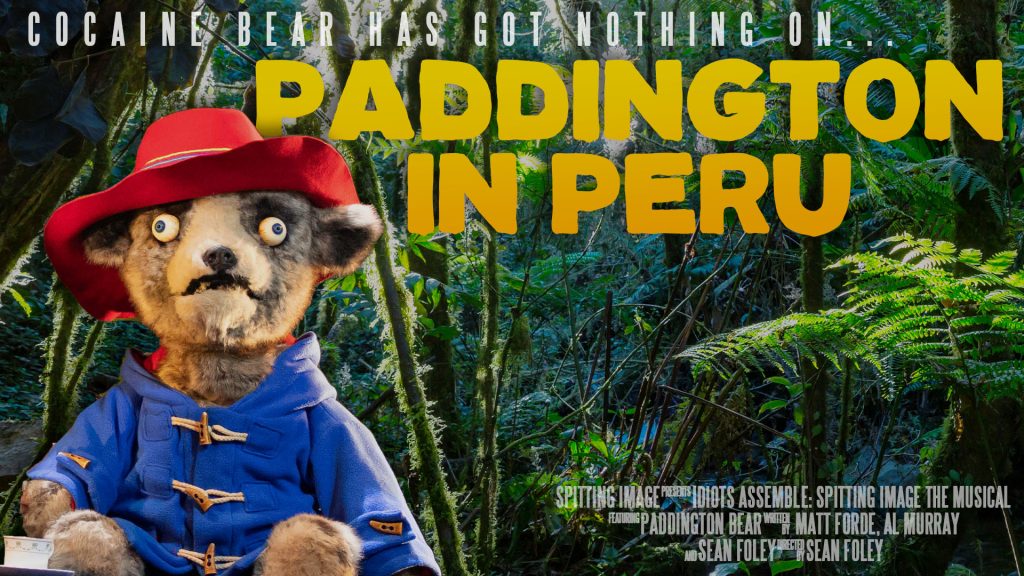
Spitting Image’s version of Paddington Bear, Photo from Spitting Image/Facebook
This legal attack on English satire that uses the image of a beloved bear harks back to the 1971 obscenity trial against counter-culture magazine OZ involving the character Rupert Bear.
Rupert Bear first appeared in Daily Express comic strips in 1920, depicted as a young bear living in the fictional countryside town of Nutwood which served as an idyllic depiction of an old-fashioned British living.
The case started after the release of OZ’s Schoolkids issue in May 1970, which was the result of an invitation to people under 18 to contribute to, and edit, an issue of the magazine.
Among the offending pieces was one submitted by 15-year-old schoolboy Vivian Berger who had modified a comic strip by American artist Robert Crumb to include Rupert Bear as the main character engaging in an explicit sexual act.
The comic drew attention from the British Obscene Publications Squad, later known for its own corruption, with OZ editors Richard Neville, Felix Dennis and Jim Anderson facing charges including “conspiracy to corrupt public morals” in what became the longest obscenity trial in British history.
Jonathan Dimbleby, reporting from the trial wrote: “It was certainly revealing; not least for the fact that the prosecution conspicuously ignored the bulk of the magazine – some 21 pages of the youthful anti-authoritarian political writing. According to the Crown, neither ‘politics’, nor what the kids thought of ‘the pigs’, were relevant in what was merely a criminal trial.”
Neville, Dennis and Anderson were found guilty and sentenced to up to 15 months’ imprisonment, however the verdict was overturned on appeal.
Rupert, like Paddington, represented a sense of Britishness that amounts to little more than a nostalgic look at a Britain still stuck between the wars, before the end of the British Empire, and before the start of the welfare state and the decline in raw global power which would mark the next 100 years.
Other examples of famous bear characters being used for political satire prove however that this is not a uniquely British phenomenon.
Yogi Bear was the subject of a 2020 Onion headline that read: Heavily Armed Fans Guard Statue Of Yogi Bear In Case It Turns Out He Supported Confederacy, mocking the reaction to the removal of a number of Confederate statues that had occurred across the United States that same year.
And again from the USA, the often-mocked Smokey Bear, with his slogan “Only YOU can prevent forest fires” was depicted in a 2022 Seattle Times cartoon saying “I hate to say it but climate change has beat me”, as part of a comment piece on that year’s wildfires.
In China images of Winnie the Pooh have been used to mock President Xi Jinping and they emerged as a symbol of dissent during protests in Hong Kong. This has led to the removal of images of the bear across Chinese social media, where users had been claiming a visual resemblance between Xi and the bear. The mockery at times included other members of government such as former Hong Kong Chief Executive Carrie Lam being compared to the character Piglet after appearing in an image with Xi.
Political artist Badiucao has used Winnie the Pooh in a series of images mocking Xi’s efforts to censor the character, with the piece “‘Xi’s going on a bear hunt” showing the President holding a rifle over the bear’s corpse.
In Russia the bear has been used to represent the country for centuries and demonstrate Russian strength, even when the bear is seen as tamed. With its sharp teeth and knife-like claws aimed towards Ukraine the bear has reared up again. Not that Russian nationalists mind – and mock-ups of Russian President Vladimir Putin riding a bear are are still shared to bolster his strong man image.
17 Oct 2025 | Afghanistan, Americas, Asia and Pacific, Europe and Central Asia, India, Israel, Middle East and North Africa, News, Palestine, Peru, Russia, United States
Bombarded with news from all angles every day, important stories can easily pass us by. To help you cut through the noise, every Friday Index publishes a weekly news roundup of some of the key stories covering censorship and free expression. This week, we look at Trump’s assault on the free press and Russian criminal investigations into dissenting voices.
America: Press freedom under threat
US President Donald Trump’s attacks on the free press continue with the introduction of Defence Secretary Pete Hegseth’s newest rules for journalists.
Under his new directive journalists are being required to sign a pledge promising not to gather or report any information that has not been vetted and approved by the Pentagon. Journalists who don’t follow the rules have been told they will be stripped of their credentials.
Outlets across the US have fought back against these demands by refusing to sign, with only the Trump-affiliated One America News (OAN) agreeing to bend the knee. OAN has made past headlines for its spreading of conspiracy theories relating to fraud in the 2020 presidential election and the Covid-19 pandemic.
This comes during an unprecedented attack on the press from the current administration, with Trump’s dismantling of the Voice of America, and the installation of Trump loyalists at CBS under new owner David Ellison, son of billionaire Trump friend Larry Ellison. This marks a considerable shift to the right for the news outlet.
Russia: Investigations brought against exiled opposition
Russia’s Federal Security Service (FSB) announced on 14 October that it would be targeting exiled opposition figures with criminal investigations in a clear example of trans-national repression.
The charges relate to criticism of Russia’s war in Ukraine, with accusations of a plot to overthrow the Russian government. Former richest man in Russia and critic of Vladimir Putin Mikhail Khodorkovsky faces these charges, as well as journalist and former political prisoner Vladimir Kara-Murza.
Kara-Murza was sentenced in 2022 to 25 years in prison after speaking out against the invasion of Ukraine, but released as part of a prisoner swap in 2024.
Evgenia Kara-Murza, Vladimir’s wife, won Index’s Freedom of Expression Trustee Award last year for campaigning against the imprisonment of her husband and eventually securing his release.
Kara-Murza is being targeted now because of his involvement in the Russian Anti-War Committee alongside a number of prominent members of the exiled Russian opposition including former Prime Minister Mikhail Kasyanov and activist Anastasia Shevchenko.
India: Afghan embassy changes tack on women journalists
Female journalists were given front-row seats to a press conference held by Afghan Foreign Minister Amir Khan Muttaqi in Delhi, India on 13 October – after being excluded from a media event there only two days before.
The exclusion of women journalists had been met with anger across India, with opposition politicians decrying the Taliban-led Afghan government’s decision to invite men only.
Women journalists attending the second press conference took advantage of the opportunity to question Muttaqi on the Taliban’s gender discrimination, with journalist Smita Sharma asking: “Why are you doing this in Afghanistan? When will they be allowed to go back and get the right to education?”
A Taliban source told the BBC that female journalists had been excluded “due to lack of proper coordination”.
Peru: Gen Z uprising
A state of emergency has been declared in Peru after a popular 32-year-old hip hop artist Eduardo Ruiz was killed by police during Gen Z protests in Peru this week.
The protests began in September, and culminated in the removal of the then President Dina Boluarte from office on 10 October over accusations of corruption. But demonstrations continued after the appointment of an interim president Jose Jeri who is now refusing to resign over Ruiz’s death.
Boluarte’s government drew criticism earlier this year for its enactment of a law that threatened the work of civil society organisations and NGOs. Boluarte said the new law would: “place under comprehensive review a minority of NGOs that act against the interests of our country, sowing hatred and attacking our system”.
The protest movement in Peru follows a growing trend of global youth-led revolts that have caused the fall of governments in Nepal and Madagascar.
Palestine: Three journalists released but more still imprisoned
Following the ceasefire agreement between Israel and Hamas, international press are still being denied entry into the embattled Gaza strip.
Fighting has not stopped since the agreement was reached, with clashes between Hamas and rival militias happening across Gaza. The violence on the ground has already led to the death of another Palestinian journalist Saleh Aljafarawi who was killed by an armed faction last weekend. He was a video reporter covering the war with a huge social media following, but was accused by Israel of being a Hamas propagandist.
As part of the ceasefire agreement, Israeli forces have begun to release Palestinian prisoners but have been slow to let journalists go. Out of 19 media workers detained over the last two years only three have been released.
So far 197 journalists have been killed since the start of the war in Gaza according to reporting by the Campaign to Protect Journalists.
10 Oct 2025 | Africa, Americas, Asia and Pacific, Australia, Madagascar, Middle East and North Africa, News, Saudi Arabia, United States
Bombarded with news from all angles every day, important stories can easily pass us by. To help you cut through the noise, every Friday Index publishes a weekly news roundup of some of the key stories covering censorship and free expression. This week, we look at social media restrictions in Afghanistan and the indictment of Letitia James.
Afghanistan
Taliban sources have confirmed that new restrictions on social media platforms in Afghanistan this week are intentional.
Facebook, Instagram and Snapchat are among platforms facing disruption, according to global internet monitor NetBlocks, who also reported another internet outage in Kandahar province.
Last week saw a total telecommunications outage across Afghanistan, which Taliban officials told journalists was caused by old fibre optic cables that needed to be replaced. With this somehow causing a country-wide blackout of both internet and phone services.
USA
New York’s Attorney General Letitia James has been indicted on charges of fraud as part of a wider push by President Donald Trump to use the Justice Department as a weapon against his political enemies.
In 2022 in her position as Attorney General, James had filed a civil lawsuit against the Trump Organisation, as well as aiding in a three-year criminal investigation into Trump’s New York business dealings that led to a now overturned $500 million fraud ruling.
In order to prosecute James and also the former head of the FBI James Comey who had investigated Russian interference in the 2016 elections (and was fired by Trump), the President installed his former personal lawyer Lindsey Halligan as interim US attorney for the eastern district of Virginia. This was after her predecessor refused to bring charges against people Trump had characterised as enemies.
In September before these prosecutions started, Trump posted to Truth Social a message he later admitted was intended as a private memo to Attorney General Pam Bondi stating: “We can’t delay any longer, it’s killing our reputation and credibility. They impeached me twice, and indicted me (5 times!), OVER NOTHING. JUSTICE MUST BE SERVED, NOW!!!”
Comey this week pleaded not guilty to charges of lying to congress.
Australia
Canberra, Australia, 9 October, whistleblower David McBride, who was jailed for leaking documents that alleged Australian Special forces had killed innocent people in Afghanistan, had an application rejected to have his case heard by Australia’s High Court.
This is the latest in an ongoing battle to have his sentencing overturned.
During the original trial, the Australian Government moved to prevent McBride from seeking protection under Australia’s whistleblower laws by blocking expert witnesses from speaking, citing “public interest immunity laws”.
The former military lawyer-turned whistleblower was convicted of three charges last year and sentenced to five years and eight months in prison for the theft of classified documents and for passing the documents to journalists at the Australian Broadcasting Corporation (ABC).
The documents formed the bases of an ABC investigation titled ‘The Afghan Files’ that claimed Australian Special forces units had committed war crimes whilst stationed in Afghanistan.
McBride is the only person imprisoned in relation to these crimes.
Madagascar
Even following the dissolution of his government, embattled President Andry Rajoelina of Madagascar refuses to step down in the face of large scale youth-led protests.
Rajoelina said at a press conference: “I swear that if power cuts persist in the capital within a year, I will resign.”
Protesters from group Gen-Z Mada were not convinced, calling for more protests to take place on Thursday, during which rubber bullets and tear gas were used to disperse demonstrators. They also called for a general strike as a display that they reject the President’s promises.
Saudi Arabia
Human Rights Watch have told comedians who performed at Saudi Arabia’s Riyadh Comedy festival that they “cannot accept” money that originated from the government of Saudi Arabia.
The statement comes as comedians who performed at the festival scramble to get public opinion back on their side.
Bill Burr, Louis C.K. and Omid Djalili have all attempted to spin their participation as positive, whilst comics Aziz Ansari and Jessica Kirson offered to donate their fees in a futile effort to buy back public opinion.
7 Oct 2025 | Americas, Europe and Central Asia, Germany, News, United States
When award-winning author Rachel Seiffert met with Index on Censorship to talk about the freedom to read, she came armed with one of her favourite books, The Seventh Cross. Written by Anna Seghers, who was communist, Jewish and German, it’s what Seiffert describes as “an amazing cross-section of early Third Reich German life”. Published in 1942 in the USA while Seghers was in exile in Mexico and set in pre-war Nazi Germany, the novel tells the story of seven political prisoners who escape from a concentration camp and go on the run. Meanwhile the camp commandant has erected seven crosses which will serve as posts where they will be tortured on recapture. The novel, a graphic depiction, of German totalitarianism was made into a Hollywood film starring Spencer Tracy in 1944 (pictured top).
Seiffert has her own relationship with Germany’s dark past, and it is an uncomfortable one. The maternal side of her family was, as she describes it, implicated in Nazi crimes. To be precise, her maternal grandfather was in the Waffen SS, her step-grandmother was a social worker for the Nazi party and her great uncle was the deputy chief medical officer during the Third Reich. She grew up close to her German family and bilingual. Although her grandfather died the year she was born, she had a deep bond with her grandmother. Seiffert strongly identified with her own “German-ness”, but also knew about a lurking darkness.
“I’m still trying to find out whether my grandfather did anything during his time in terms of taking part in massacres, but it’s clear he was part of an organisation that was banned after the war,” Seiffert told Index. He had previously been in the SA, or Storm Troopers in Hamburg who she knows were involved in book burnings in the 1930s.
Before hearing about the Holocaust at school, Seiffert learnt about it at home. It was desperately important to her mother that she was aware of her family history. Knowing about her family’s past is something Seiffert carries with her.
This lifetime of trying to understand her family’s relationship with the Nazis has led directly to the subjects of her novels. She’s focused her work on trying to understand why people vote for dictatorships and hateful ideas, and why they follow these regimes even when they can see the cruelty.
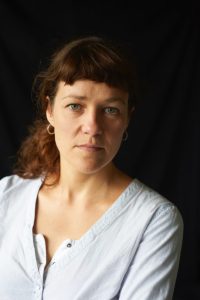
The author Rachel Seiffert. Photo: Charlie Hopkinson © 2013
When Seiffert published her book A Boy in Winter in 2017, soon after Donald Trump had been elected US president for the first time, she could feel the echoes of Nazi Germany. She described how liberal people in the early 1930s would laugh at the Nazis, considering them anti-science and anti-knowledge. People thought they wouldn’t get into power, and if the Nazis did, people thought they were so incompetent that they wouldn’t last.
“People say it’s hysterical if you say Trump is like Hitler. But I saw so many parallels,” she said, describing how now Trump is in his second term “the gloves are off”. The ICE raids, the lawsuit against the New York Times, the censoring of comedian Jimmy Kimmel over remarks critical of the administration are all examples of what she describes as a fascist playbook.
This theme has remained current, and the political atmosphere has become more frightening to her. In the UK too, Seiffert sees parallels.
“History doesn’t repeat itself exactly, but there are so many rhymes here. The centre can’t hold, this is what we’re having at the moment, the hollowing out of the centre ground in terms of politics. And we’re all sitting somewhere at the extremes,” she said.
In this atmosphere, politicians feel they need to appeal to those extremes in order to get votes, she explained. As was the case in 1930s Germany.
“There was a period in my life where I thought it would never happen again in Germany. And I don’t have that conviction at all anymore,” she said. “Part of the drive to write is so that it doesn’t happen again.”
In her books, Seiffert puts readers into the shoes of those facing authoritarianism, showing that there isn’t a single, correct response. Her books also demonstrate that if you decide to stay silent, that is still an active decision. The idea that some people don’t have a choice is to her, inaccurate.
“No, you did have a choice, and you chose to stay silent. And that might have been absoluely the right choice for you and for your family, but it’s the wrong choice for other people, and we just have to be honest with ourselves about that,” she said.
She hopes that if people understood this better, they might step up more readily, unable to live with the idea that they chose to do nothing.
When Seiffert talks to Index, Banned Books Week UK is just around the corner. After a few fallow years, followed by a run of worrying violations of the freedom to read, a coalition led by Index on Censorship revived the annual event – the US version of which has been going strong for many years.
There are many UK examples of restrictions on the freedom to read: more than half of bookshop owners surveyed by the Booksellers Association have reported an increase in intimidating behaviour, school librarians told Index about LGBTQ+ books being whisked off the shelves; and a book-related row broke out in a school in Dorset just days before Seiffert spoke to Index.
In this particular example, a parent put pressure on a school to remove a book from a year 10 lesson plan. The book in question was The Hate U Give by Angie Thomas, which explores issues of race, identity and social injustice, and the parent raised concerns about other books, too. According to local reporting from the Bournemouth Echo, the school removed the book after the parent refused a meeting with teachers because he was not allowed to record it. The paper described how the parent took issue with the book due to what he considered the use of bad language and inappropriate themes, and for making white characters appear as “baddies”. Other parents fought back, and soon launched a petition.
Seiffert herself works in schools, and believes that it is absolutely the right of parents to have conversations about which books are in the classroom, but that schools need to engage in the conversation in a way which backs up their teachers. She feels that classrooms should be open enough so that children who are feeling aggrieved can air their concerns, and the teacher can have those discussions with the class. Removing stories is not the answer.
“If adults are worried that their children might learn about something that makes them feel uncomfortable, it can feel preferable that they don’t know about it,” she said. “But it doesn’t make them safer in the end, because those ideas are out there and those experiences are out there.”
Instead, she believes hiding these parts of the world makes young people more insulated, and withholding information is doing them a disservice.
“I would really emphasise that taking away stories reduces our world. It reduces the possibilities of thought and of empathy, and it’s very dangerous. It should count for stories written from all perspectives. We have to be tolerant of upset.”
Once upon a time, Seiffert didn’t worry too much about her personal risk of being censored, considering it a practice more likely to be waged against writers in, for example, Russia. But as she talked to Index, she recognised how some of the things she was saying could, in today’s USA and a near-future UK, be taken as offensive by some people.
For those like her who have so far lived with the right to freedom of expression, it is now “all very much closer to the bone”.
