5 Mar 2021 | Equatorial Guinea, News
[vc_row][vc_column][vc_single_image image=”116347″ img_size=”full” add_caption=”yes”][vc_column_text]Delfin Mocache Massoko, an investigative journalist from Equatorial Guinea, has been the subject of threats following the publication of an article alleging corruption at the highest level in his home country.
Mocache Mossako is the founder of Diario Rombe, a website dedicated to Equatoguinean affairs based in Spain, where he has refugee status. He was one of the authors of a cross-border investigation published in January by the Organised Crime and Corruption Reporting Project.
According to the investigation, Gabriel Obiang, minister of mines and hydrocarbons and son of the President of Equatorial Guinea, diverted funds into offshore companies controlled by his associates.
A Twitter campaign launched by South Africa-based lawyer NJ Ayuk (who has close ties to the Obiang family) accused Mocache Massoko of spreading misinformation. One tweet read: “the lies of Delfín Mocache … have generated an incalculable amount of damage to many people, businesses and Africans.”
In another tweet, Ayuk said: “He is scared because we are going to catch him… those responsible for his lucrative lies. I’m looking forward to questioning these money-hungry charlatans. You will have a lot of fun. We will imprison him.”
At present, there is no suggestion that Ayuk is threatening anything beyond lawful investigation and prosecution, but there is a risk that his words will be misinterpreted in the environment of a country where dissidents are forced into exile.
Mocache Massoko told Index: “There is a history of citizens of Equatorial Guinea critical of the country’s political system being abducted abroad and clandestinely transferred to African prisons. In the past there have been cases of torture against dissidents, activists, and human rights defenders.”
This week, a South African court ordered Ayuk and his company, Centurion Law Group, to cease its campaign against Mocache Mossako and OCCRP and issue apologies. However, they responded today by issuing further threats to issue “multiple legal claims in various jurisdictions.[/vc_column_text][/vc_column][/vc_row][vc_row][vc_column][three_column_post title=”You may also want to read” category_id=”540″][/vc_column][/vc_row]
11 Apr 2016 | Magazine, Volume 45.01 Spring 2016 Extras
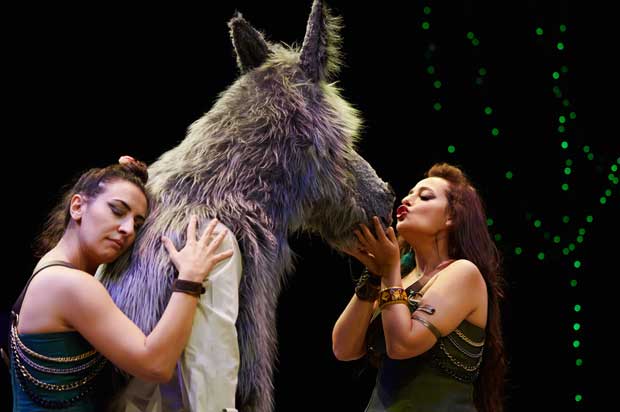
Kemel Aydogan’s production of A Midsummer Night’s Dream in Turkey. Credit: Mehmet Çakici
Hitler was a Shakespeare fan; Stalin feared Hamlet; Othello broke ground in apartheid-era South Africa; and Brazil’s current political crisis can be reflected by Julius Caesar. Across the world different Shakespearean plays have different significance and power. The latest issue of Index on Censorship magazine, a Shakespeare special to mark the 400th anniversary of his death, takes a global look at the playwright’s influence, explores how censors have dealt with his works and also how performances have been used to tackle subjects that might otherwise have been off limits. Below some of our writers talk about some of the most controversial performances and their consequences.
(For the more on the rest of the magazine, see full contents and subscription details here.)
Kaya Genç on A Midsummer’s Night’s Dream in Turkey
“When Turkish poet Can Yücel translated A Midsummer’s Night Dream, he saw the potential to reflect Turkey’s authoritarian climate in a way that would pass under the radar of the military intelligence’s hardworking censors. Like lovers in Shakespeare’s comedy who are tricked by fairies into falling in love with characters they actually dislike, his adaptation [which was staged in 1981 and led to the arrests of many of the actors] drew on the idea that Turkey’s people were forced by the state to love the authority figures that oppressed them the most. They were subjugated by the military patriarchy, the same way the play’s female and artisan characters were subjugated by Athenian patriarchy.
Kemal Aydoğan, the director of the latest Turkish adaptation of A Midsummer Night’s Dream, described the work as ‘one of the most political plays ever written’. For Aydoğan, the scene in which the Amazonian queen Hippolyta is subjugated and taken hostage by the Theseus marks a turning point in the play. ‘That Hermia is not allowed to marry the man she loves but has to wed the man assigned to her by her father is another sign of women’s subjugation by men,’ he said. This, according to Aydoğan, is sadly familiar terrain for Turkey where women are frequently told by male politicians to know their place, keep silent and do as they are told.’ ”
Claire Rigby on Julius Caesar in Brazil
“In a Brazil seething with political intrigue, in which the impeachment proceedings currently facing President Dilma Rousseff are just the most visible tip of a profound turbulence which has gripped the country since her re-election in October 2014, director Roberto Alvim’s 2015 adaptation of Julius Caesar was inspired by a televised presidential debate he saw in the final days of the election campaign, in which centre-left Rousseff faced off against her centre-right opponent Aécio Neves. ‘I watched the debate as it became utterly polarised between Dilma and Aécio, and the famous clash between Mark Antony and Brutus instantly came to mind,’ he said. ‘It was the idea that the same facts can be drawn in such completely different ways by the power of speech: the power of the word to reframe the facts, and its central importance in the political game.’ ”
György Spiró on Richard III in Hungary
“Richard III was staged in Kaposvár, which had Hungary’s very best theatre at the time. This was 1982.
Charges were brought against the production, because the Earl of Richmond wore dark glasses. A few weeks earlier, on 13 December 1981, General Wojciech Jaruzelski declared a state of emergency in Poland. For health reasons he wore sunglasses every time he appeared in public.”
Simon Callow on Hamlet under Stalin and the Nazis
“In 1941, Joseph Stalin banned Hamlet. The historian Arthur Mendel wrote: ‘The very idea of showing on the stage a thoughtful, reflective hero who took nothing on faith, who intently scrutinized the life around him in an effort to discover for himself, without outside ‘prompting,’ the reasons for its defects, separating truth from falsehood, the very idea seemed almost ‘criminal’.’ Having Hamlet suppressed must have been a nasty shock for Russians: at least since the times of novelist and short story writer Ivan Turgenev, the Danish Prince had been identified with the Russian soul. Ten years earlier, Adolf Hitler had claimed the play as quintessentially Aryan, and described Nazi Germany as resembling Elizabethan England, in its youthfulness and vitality (unlike the allegedly decadent and moribund British Empire). In his Germany, Hamlet was reimagined as a proto-German warrior. Only weeks after Hitler took power in 1933 an official party publication appeared titled Shakespeare – A Germanic Writer.”
Natasha Joseph on Othello in South Africa
“In 1987, actress and director Janet Suzman decided to stage Othello in her native South Africa, bringing ‘the moor of Venice’ to life at Johannesburg’s iconic Market Theatre. It was just two years since Prime Minister PW Botha had repealed one of apartheid’s most reviled laws, the Immorality Act, which banned sexual relationships between people of different races. Even without the legislation, many white South Africans baulked at the idea of interracial desire. No wonder, then, that Suzman’s production attracted what she has described as ‘millions of bags full of hate letters from people who thought that this was an outrage’.
But in a country famous for sweeping censorship and restrictions on freedom of movement, speech and association, the play was not banned. Why? Because the apartheid government ‘would have been the laughing stock of the world if they had banned Shakespeare’, Suzman told Index on Censorship. ‘Any government would be really embarrassed to ban Shakespeare. The apartheid government was frightened of ridicule. Everyone is frightened of laughter.’ ”
For more articles on Shakespeare’s battle with power around the world, see our latest magazine. Order your copy here, or take out a digital subscription via Exact Editions (just £18 for the year, with a free trial). Copies are also available in excellent bookshops including at the BFI, Mag Culture and Serpentine Gallery (London), News from Nowhere (Liverpool), Home (Manchester) and on Amazon or a digital magazine on exacteditions.com. Each magazine sale helps Index on Censorship fight for free expression worldwide.
20 Aug 2015 | mobile, News, South Africa, Youth Board
This is the seventh of a series of posts written by members of Index on Censorship’s youth advisory board.
Members of the board were asked to write a blog discussing one free speech issue in their country. The resulting posts exhibit a range of challenges to freedom of expression globally, from UK crackdowns on speakers in universities, to Indian criminal defamation law, to the South African Film Board’s newly published guidelines.
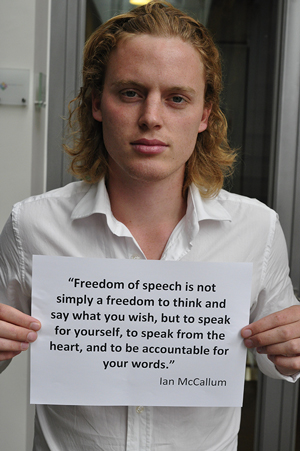
Simeon Gready is a member of the Index youth advisory board. Learn more
Earlier this year, South Africa’s Film and Publication Board (FPB) released their Draft Online Regulation Policy.
The proposed regulations of this policy have huge implications for freedom of expression in South Africa, which can be summarised into the following:
• The policy claims to apply to films, games and “certain publications”. This is vague language that allows it to cover anyone publishing anything on the Internet.
• The policy allows for regulation of private personal communications.
• The policy states that anyone wishing to publish content on the internet need to apply and pay for an agreement with the FPB, meaning that individuals would be required to pay for their fundamental human right to freedom of expression.
• The policy further violates freedom of expression in that it asserts that it retains the right to take down “violent” content published by media outlets, thereby disallowing the media from being able to carry out its social responsibilities.
• The policy allows “classifiers” from the FPB to search distributor’s premises, unhindered and with no responsibility for loss or damage.
Worryingly, it has recently been announced that this policy has been approved to inform a new film and publications amendment bill. If signed into law, the repressive tactics outlined above could become a reality for South African citizens.
Simeon Gready, South Africa
Related:
• Anastasia Vladimirova: A ruthless crackdown on independent media
• Ravian Ruys: Without trust, free speech suffers
• Muira McCammon: GiTMO’s linguistic isolation
• Jade Jackman: An act against knowledge and thought
• Harsh Ghildiyal: Defamation is not a crime
• Tom Carter: No-platforming Nigel
• Matthew Brown: Spying on NGOs a step too far
• About the Index on Censorship youth advisory board
• Facebook discussion: no-platforming of speakers at universities
21 May 2015 | Events, mobile
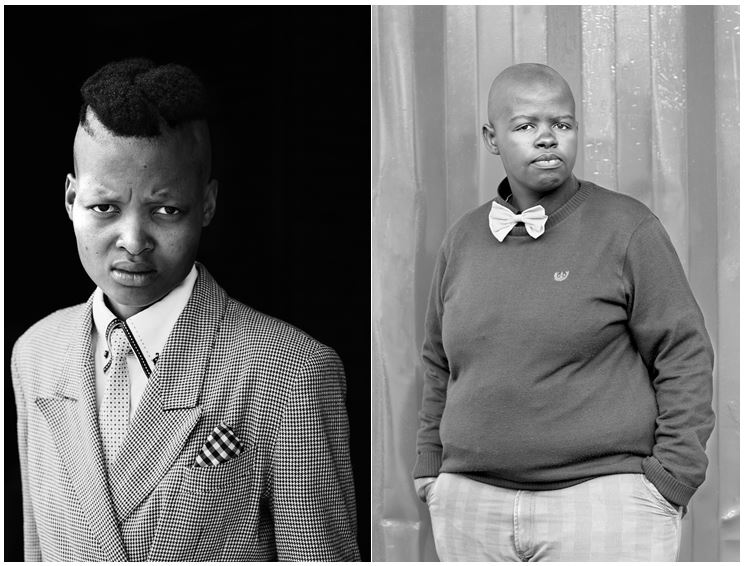
South African photographer and human rights campaigner Zanele Muholi won the Index on Censorship Freedom of Expression Arts Award in 2013.
Writer, campaigner and broadcaster Bidisha joins her in London to discuss the power of art in activism and the importance of visibility and representation in combating prejudice and human rights abuse.
Zanele will also be discussing her Deutsche Börse Photography Prize 2015 nominated work Faces and Phases which is currently on display at The Photographers’ Gallery, London (17 Apr – 7 Jun) and at the Brooklyn Museum, New York (1 May – 1 Nov)
WHEN: Tuesday 26th May 2015, 6.30pm
WHERE: London College of Fashion, London, W1G 0BJ
TICKETS: £12 with promo code PGMEMBER (normally £20) / available here