5 Nov 2014 | Draw the Line, Young Writers / Artists Programme
In response to this month’s Draw the Line question — “Do laws restrict or protect free speech?” — members of our youth advisory board discuss the different ways laws impact free expression in their home countries.
Margot Tudor talking about UK
Alice Olsson on Sweden
Sophie Armour on the UK
This article was posted on November 01, 2014 at indexoncensorship.org
1 Oct 2014 | Magazine, News, Volume 43.03 Autumn 2014
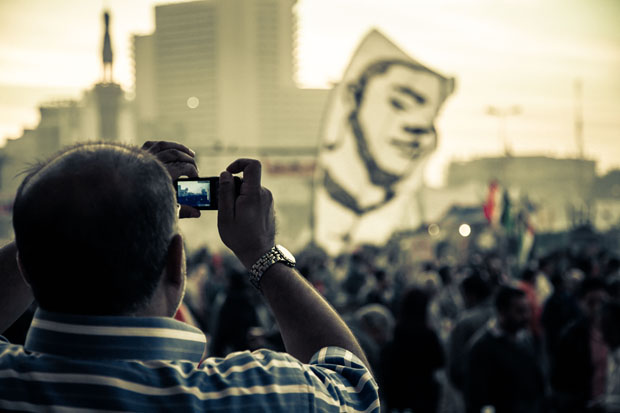
An Egyptian man takes a photo of a large anti-Morsi protest in Tahrir Square, Egypt (Photo: Phil Gribbon/Alamy)
Imagine this: a journalist with her own news drone camera that can be sent to any coordinates in the world to film what is going on. Imagine a world where you had the ability to programme a whole set of drone cameras to go and film a riot, a rally or a refugee camp.
Imagine being able to set off your smartphone down a dangerous river, encased in a plastic bottle, to take photos that might prove the water is carrying disease or is not safe to drink. How about drone cameras that you can leash to your GPS co-ordinates to follow and film you or someone else? Those worlds should not be hard to imagine as they exist already, and, in some cases, those facilities are already being used by journalists.
The future of journalism is going to build on technologies we already have. But we must remember it isn’t really about the technology, but about what it can help us deliver. When the subject of the future of journalism is discussed it often turns to whizzy gadgets but the debate about whether the public ends up being better informed and better equipped happens less often.
The information superhighway, as the internet was once called, was supposed to give individuals amazing access to knowledge that they couldn’t access before, from historical documents to live video footage. And it has.
But the thing that most of us didn’t bargain for was that it would mean we had so much stuff coming at us. We no longer knew where to turn, our eyes and ears were full, a welter of “news” snippets became impossible to absorb, and as for analysis, well, who had time for that?
The reality of exciting new technology is that it is coming to the market at a time when the public appears to value journalists less, and can turn to Twitter or Facebook or citizen journalists to find out what’s going on in the world. Journalists; who needs them when we can find out so much for ourselves? It’s a reasonable question, and of course good and determined researchers can find out plenty of information for themselves, if they have hours to spend. But then again journalists have a whole set of tools and training that should mean they are better than the average member of the public at finding out facts and analysing reports as well as presenting the end results.
Journalists are trained and practiced at interviewing, asking the right questions and drawing out relevant pieces of information. These are rarely acknowledged skills but you have only to switch on a phone-in programme or watch a set of parliamentarians try to quiz a witness at a committee to know asking a good question is not as easy as it might seem. Knowing where to look for evidence and sources is not always so simple as putting any old question into Google either. Then there is analysing charts, graphs and tables; this should be a particularly valued set of skills. When it comes to recognising a story, then the good old reporter’s nose comes in handy. And writing up and compiling a story so that it makes sense and tells the story well is perhaps the most underrated skill of all. Good writing is sadly underappreciated.
With a toolkit like that, it is not surprising that governments around the world would rather journalists weren’t at the scene of a demonstration, or sharpening up their introduction of a story about a government cover-up. Perhaps that’s why governments around the world from the USA to China make it especially difficult, or particularly expensive, for journalists to get a visa. And that’s why journalists are targeted, watched, held captive, and in some horrific cases, such as with US journalist James Foley, murdered. Increasingly journalists are working on a freelance basis from war zones and conflicts. As our writer Iona Craig reports from Yemen, this can leave you exposed on two levels – without the protection of being a staff member of a huge news organisation, and without any income if you can’t file stories. That exposure to pressure, and possible violence, also affects bloggers operating as reporters, and is something that worries OSCE’s Dunja Mijatovic (interviewed in our latest magazine), who brought journalists from different countries together in Vienna last month to discuss what needs to be done.
Journalists are still needed by societies, what they do can be very important (although sometimes very trivial too). At the same time that job is changing. In this issue Raymond Joseph’s fascinating article shows how African newsrooms with little money are able to use low-cost technology such as remote-controlled drone cameras to monitor oil spills, as well as less-sexy-sounding data analysis tools to help reporters find out what is going on. He also reports on how newsrooms are working closely with citizen reporters to bring news from regions that were previously unreported. Work being carried out by Naija Voices in Nigeria, and by our Index 2014 award winner Shu Choudhary in India, shows how technology can help augment old-fashioned reporting, getting news to and from remote areas.
News reporting is also taking different forms to reach different audiences, as was brought home to me at the Film Forward conference in Malmö, Sweden, this summer, when US journalist Nonny de la Peña and Danish journalist Steven Achiam showed the audience how interactive news “games” and cartoon-style films are new forms of reportage. Achiam’s Deadline Athen is a journalism game that allows the player to become a journalist in Athens, collecting information about a riot and shows the choices that are available; it gives the players options of where to find out and source the story. La Peña uses her journalistic skills to engage “players” in the experience of being imprisoned in Guantanamo Bay, using real news sources to inform what the “player” experiences so that it is similar to what prisoners experienced. Both Achiam and La Peña argue that these type of approaches will engage and inform different audiences in finding out about the world, audiences that would not be minded to read a newspaper or watch the TV news.
There’s not yet a journalism ethics handbook that covers these approaches. Both La Peña and Achiam are award-winning journalists and have merged their existing set of research skills with a different style. Both talk about sourcing information for their news films, and La Peña offers links to evidence for her virtual-reality storytelling.
These pioneering approaches so far only have small audiences compared to TV news, but will undoubtedly challenge journalists of the future to learn new skills (video and animation look increasingly like core modules).
Interviewing, research and legal knowledge are always going to part of the mix; they are the skills that give journalists the tools to find out what others would rather they didn’t. And that skill package is always going to be vital.
Read the contents of our future of journalism special here. You can buy the print version magazine or subscribe for £32 per year here, or download the app for just £1.79.
You can also join our magazine debate at London’s Frontline Club on 22 October (free entry, but please book).
This article was published on Wednesday 1 October at indexoncensorship.org
7 Aug 2014 | News, Politics and Society, Religion and Culture
First, the inevitable throat clearing and hand wringing. The most recent conflict between Israel and Hamas has been beyond horrendous. As I type, the ceasefire is holding. Over 1,800 Palestinians have lost their lives, more than 300 of them children. Dozens of Israelis, mostly young conscript soldiers, are also dead. There is an enormous imbalance, in firepower and in defensive capability. Better men than I have gone mad attempting to imagine a way to stop this happening again. Even that statement, I realise, reads like a cop out, but a particular sense of despair looms over this latest manifestation of a war that is only ever dormant at best.
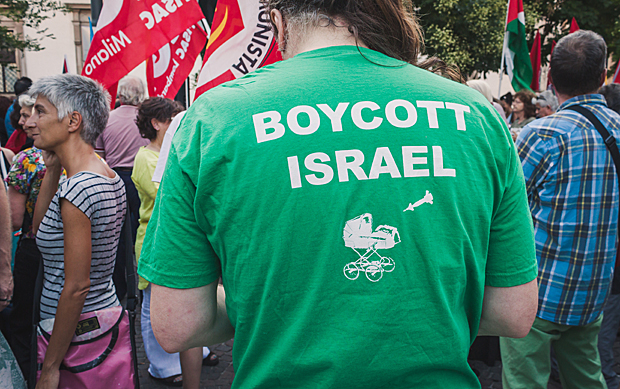
Some clearly feel that the horror has gone too far. Author Hari Kunzru, for example, has decided to join calls for a cultural boycott of Israel. Writing on his Facebook wall, Kunzru cited an op-ed in the Jerusalem Post which suggested the “dismantling” of Gaza and the “relocation” of its non-humanitarian population. Kunzru also cited “”the targeting of schools and hospitals, the picture of a child my son’s age being dug out of rubble that reduced me to helpless tears, the total disregard of the Netanyahu government for international laws and norms…” as signs that Israel was a country that had “lost its moral compass”.
This is notable not because Hari is a well-known figure in the arts world – there are enough of those willing to sign up to any cause that comes along, and more than enough already willing to tell us exactly what they think about Israel/Palestine, or Cuba, or any other issue to which sections of the left are drawn to, like particularly verbose moths to the flames of revolution, or, worse, the great unspecified “resistance”.
No, this is notable exactly because Hari Kunzru is not one of those people. Hari is thoughtful and unshowy. And Hari has actually put in real work for free speech. I recall, in 2012, scrabbling to find a local sympathetic lawyer who would represent Hari when he faced serious risk of prosecution for reading from the Satanic Verses at the Jaipur Literary Festival, in solidarity with Salman Rushdie. He has made himself available for organisations such as Index and English PEN well beyond the call of duty. So when someone such as Hari Kunzru identifies with a cultural boycott, it means we have to take the question seriously.
The concept of boycotts, and particularly cultural and academic boycotts, have for a long time been problematic for people engaged in the promotion of free expression. Most criticisms of censorship are based on a fundamental assumption that communication of ideas is, in and of itself, a good thing. Some vague belief abounds based loosely on the Hegelian triad of thesis, antithesis, synthesis.
This can sometimes sound naive, but it does lead to useful perspectives on any argument: 1) that there are entirely sincere, well-meaning people, who may hold views completely anathema to your own, and 2) following from that, in formulating any position on proscription of certain attitudes or beliefs, or people, one must imagine being on the wrong end of the argument – a kind of categorical imperative crossed with the “golden rule”, that can end up making the certainty of others unsettling.
Boycotters often carry that absolutism and conviction that brooks no argument: a simple righteousness anchored in the belief that their view of the world is so self-evidently correct that anyone who is unconvinced by them is either deviant or deficient.
Then there is always the question of who benefits from boycotts? And who is hurt? The traditional, free expression view on cultural boycotts is that they punish precisely the people who are most outward looking and also most likely to seek change in their own countries. Is it fair to punish the artists for the actions of the government, as we have seen with the cancellation of Israeli show The City at the Edinburgh Festival following protests by the Scottish Palestine Solidarity Campaign? Or to request that the UK Jewish Film Festival should ditch Israeli government funding before it can use a venue, as Kliburn’s Tricycle Theatre has, in the name, it says, of attempting to depoliticise the event?
It is argued that theatre companies, dance troupes etc are legitimate targets for boycott if they benefit from state funding, but in truth, there is hardly a theatre company in the civilised world that does not take funding from government agencies: indeed, most western liberals see state agency funding of arts as a sign, even a crucial part, of a healthy democracy, and it is rare that state-funded companies engage in Red-Army Choir style propaganda tours – though Venezuela’s Orquesta Sinfónica Simón Bolívar, decked out in baseball jackets in the colours of the national flag, can sometimes feel a little too Potemkin for comfort.
Writing on the subject (£) of anti-Israel boycotts back in 2012, Irish Times literary editor Fintan O’Toole drafted these five rules for artists and writers invited to perform in countries with dubious records:
1) Don’t take money, directly or indirectly, from governments that systematically abuse human rights, or from oligarchs who benefit from those abuses.
2) Give a significant part of your fee to human-rights defenders or oppressed artists in the relevant country.
3) Don’t accept any restrictions on your own freedom of expression when you’re in that country.
4) Don’t perform to audiences forcibly segregated on lines of race, gender or ethnicity.
5) Don’t let yourself be used for propaganda purposes.
This was very much the approach used by Sweden’s Loreen during and after the Eurovision Song Contest hosted by Azerbaijan in 2012. The singer made efforts to meet opposition figures and voice their concerns in press conferences and TV interviews, and was widely praised for it.
In fact, O’Toole’s rules are not a million miles from the boycott pledge signed by Hari Kunzru, which states: “We support the Palestinian struggle for freedom, justice and equality. In response to the call from Palestinian artists and cultural workers for a cultural boycott of Israel, we pledge to accept neither professional invitations to Israel, nor funding from any institution linked to its government until it complies with international law and universal principles of human rights.”, though there is a crucial difference in that the boycott statement punishes both state and non-state entities, thus preventing signatories from accepting invitations from, say, a hypothetical human rights group.
And this is the problem I will continue to have with boycotts against nations, particularly nations’ cultural endeavours. They seem too blunt, too broad and flawed. Even the much-cited cultural boycott against South African apartheid went awry, with the bizarre irony of Paul Simon being criticised for technically breaking the boycott by travelling to the country to work with Ladysmith Black Mambazo, the black acapella singing group that was far from a friend of the regime.
But the problem is that for many seeking to register their disgust at the actions of foreign governments, boycott seems the only option. Perhaps it’s time for those of us uncomfortable with the idea of shutting down free speech to figure out new avenues of expression.
This column was posted on August 7, 2014 at indexoncensorship.org
7 Jul 2014 | About Index
Index on Censorship is now recruiting for its next Youth Advisory Board for a six month term (December 2014 to May 2015). The board is open to 16-25 year old volunteers from around the world.
To apply to be on our youth board please send your CV and a covering letter to [email protected], stating what you think is the most pressing free speech issue of the moment.
Deadline for applications is 7th November 2014 at 5pm.
Find more information about the role of Index’s Youth Advisory Board and current board members below.
What is the youth board?
The youth board is a specially selected group of young people aged 16-25 who will advise and inform Index on Censorship’s work, supporting our ambition to fight for free expression all around the world and ensuring our engagement with issues relevant to tomorrow’s leaders.
Why has Index started a youth board?
Index on Censorship is committed to fighting censorship not only now, but also in future generations, and we want to ensure that the realities and challenges experienced by young people in today’s world are properly reflected in our work.
Index is also aware that there are many who would like to commit some or all of their professional lives to fighting for human rights and the youth board is our way of supporting the broadest range of young people to develop their voice, find paths to freely expressing it and potential future employment in the human rights/media/arts sectors.
What does the youth board do?
Board members meet once a month via Google Hangout to discuss the most pressing freedom of expression issues of the moment and to set a monthly question for our project, Draw the Line. You will be expected to write a minimum of 1 blog post introducing/concluding the question of the month and to help us spread the word about Index.
There is also the opportunity to get involved with events such as debates and workshops for our work with young people and also events such as our annual Index Freedom of Expression Awards and Index magazine launches.
How do people get on the youth board?
Each youth board will sit for a term of 6 months.
Current board members are invited to reapply up to one time.
The board will be selected by Index on Censorship in an open and transparent manner and in accordance with our commitment to promoting diversity.
Why join the Index on Censorship youth board?
You get the chance to be associated with a prestigious media and human rights organisation and have the opportunity to discuss issues you feel strongly about with Index and with other amazing young people (internationally). At each Board meeting we will also give you the chance to speak to someone senior within Index or the media/human rights/arts sectors, helping you to develop your knowledge and extend your personal networks and you’ll be featured on our website.
Index on Censorship Youth Advisory Board
Alice Olsson

Alice is a student journalist and human rights advocate. Originally from Stockholm, Sweden, she is currently reading English and related literature at the University of York. Her main research interest is contemporary freedom and resistance writing, particularly the function of different media channels in modern revolution narratives.
Daniel Rey

Daniel is an eighteen-year-old student about to begin his studies at St Andrews University. Daniel thinks that freedom of expression and freedom of speech are important primarily due to their central role in the functioning of a democratic state and a civic society.
Farah Wael
Farah is an Egyptian who has been working on freedom of expression issues, with a special focus on press freedom in the Middle East and Arab world. She now lives somewhere between Cairo, Paris and Beirut.
Margot Tudor

Margot is studying history at the University of Bristol. She became interested in free expression issues thanks to the Libel Reform movement in 2010. Since then Margot has developed her involvement in current affairs by being a reporter for Epigram Newspaper and becoming deputy head of news for UBTV.
Morgan Meaker

Morgan is a human rights and arts journalist based in London. Morgan has been published by The Young Greens, Dazed & Confused, Time Out, The Huffington Post and London Calling. While living in Berlin, she set up political art magazine The Illuminator and she is currently working on the launch of SOUF – a platform dedicated to South London.
Priyanka Mogul

Priyanka is manager of the International Political Forum and studies journalism with human rights at Kingston University. She is also communications intern for the United Nations Association and has just been re-elected for her third term as president of the Kingston University Journalism Society. Priyanka recently founded the Spread The Word Campaign, which aims to open libraries in homeless shelters across London.
Sheema Ghani
Sheema studied to become an engineer from NED University of Engineering and Technology, Karachi. Sheema’s desire to be an agent for a positive change in her society has allowed her to play an important role in the rehabilitation of victims of bomb blasts and natural calamities. Being a supporter of interfaith harmony, minority rights and free media, she is proud to represent Pakistan on the youth board at Index on Censorship.
Sophie Armour

Sophie is an editor at a media analysis company, as well as a freelance writer and active member of the Green Party. A journalism graduate originally from Manchester, she spent five years as a freelance music journalist, going on to run London nightlife blog and digital magazine, Standard London Evening.