3 Jan 2019 | Artistic Freedom, Index Arts, Magazine, News, Student Reading Lists, Volume 47.04 Winter 2018 Extras
[vc_row][vc_column][vc_column_text]
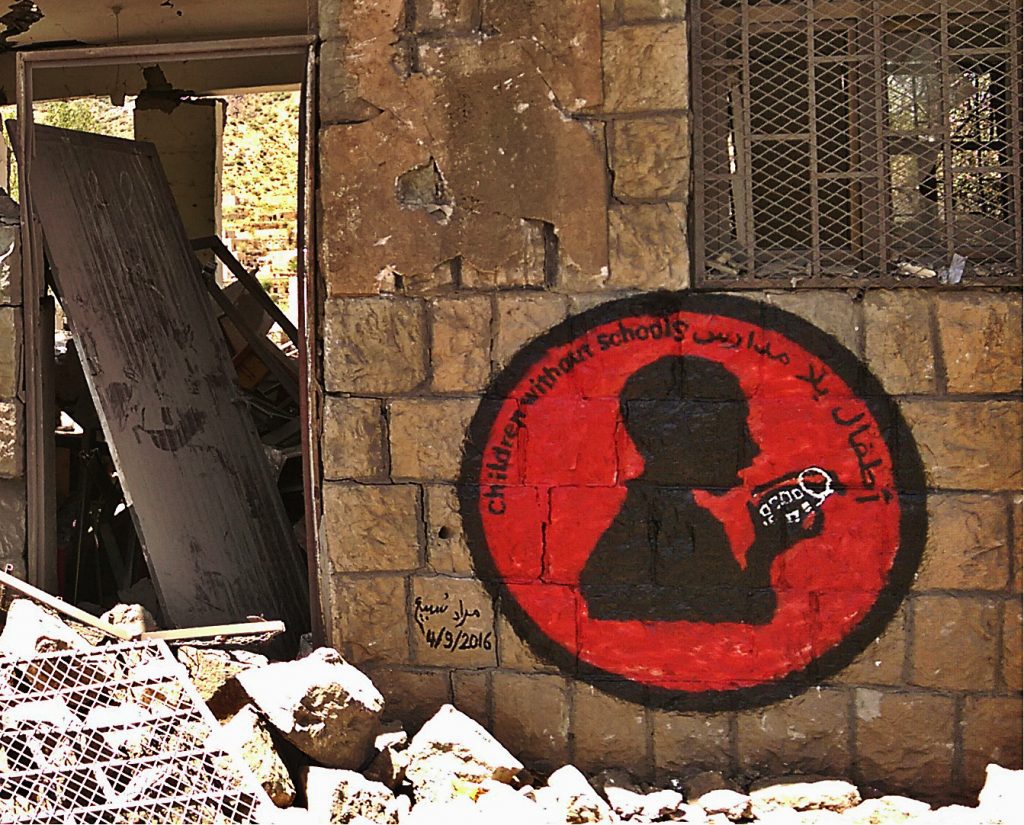
An anti-war mural created by Yemeni street artist Murad Subay, 2016 Freedom of Expression Arts Award winner.
Art has been used as a form of protest during times of crisis throughout history. It is a popular and, at times, effective platform to express opinions about societal or governmental problems, particularly when other forms of protest are not available. Protest art includes performances, site-specific installations, graffiti and street art.
Here Index highlights key articles about art and protest from around the world, from the past five decades.
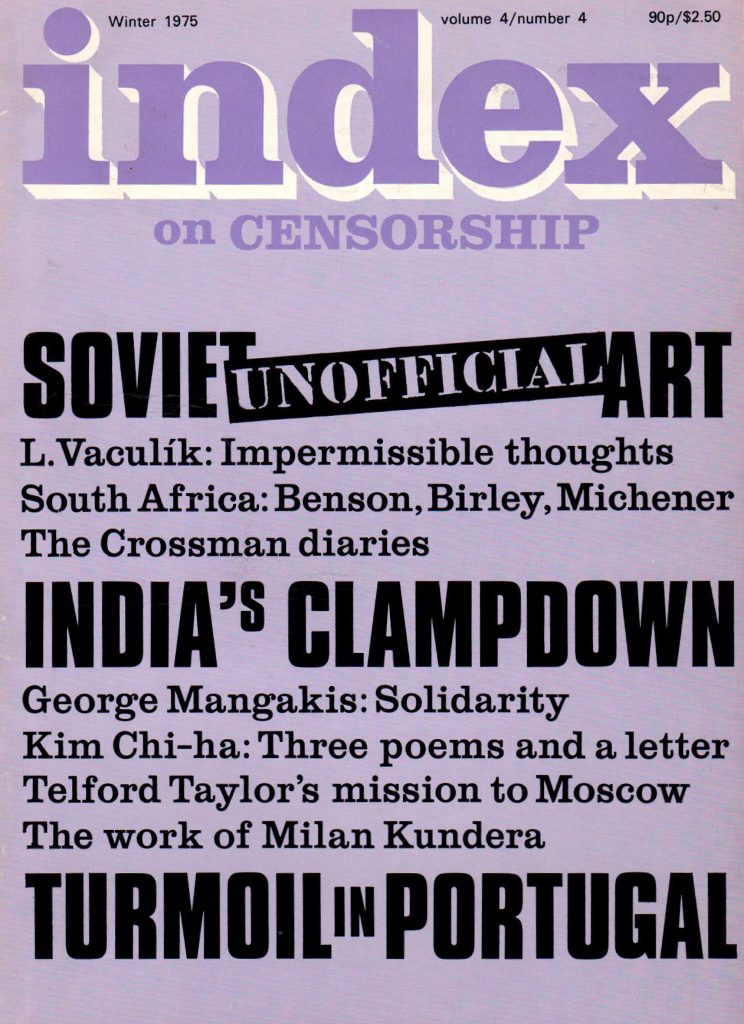
Soviet “unofficial” art
December 1975, vol. 4 issue: 4
Alexander Glezer writes about his participation in organising the unofficial art exhibit in Moscow. When the first exhibition opened, it was bulldozed by undercover police officers and agents from the KGB (Committee for State Security). In the second exhibition, the authorities were forced by the public to grant permission and ten to fifteen thousand people came to see the paintings and sculptures of 50 nonconformist artists’. Glezer, 41-years-old, was questioned by the KGB, arrested and sentenced 10 days for “hooliganism”. He was allowed to leave the Soviet Union in 1975 February.
Read the full article
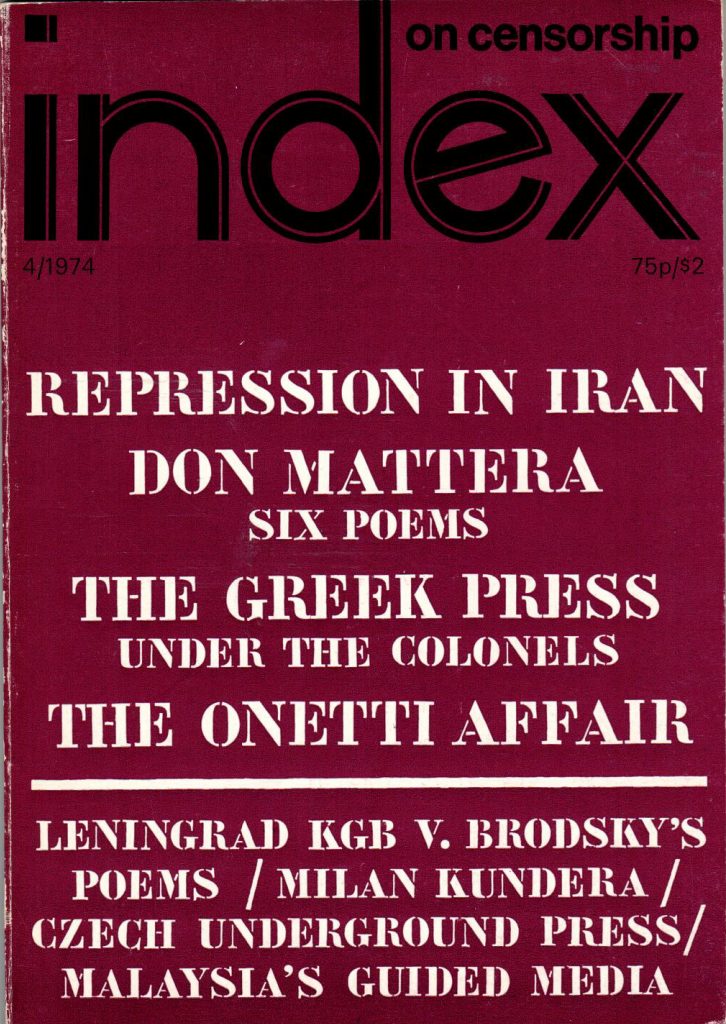
Portugal: Art triumphant
December 1974, vol. 3 issue: 4
The Sao Mamed Gallery opened with 186 artworks by 87 artists who had never shown their work in public before due to the regime’s dictating of Portuguese life. The gallery was built to celebrate the result of the military coup abolishing censorship of expression.
Published in the New York Times.
Read the full article
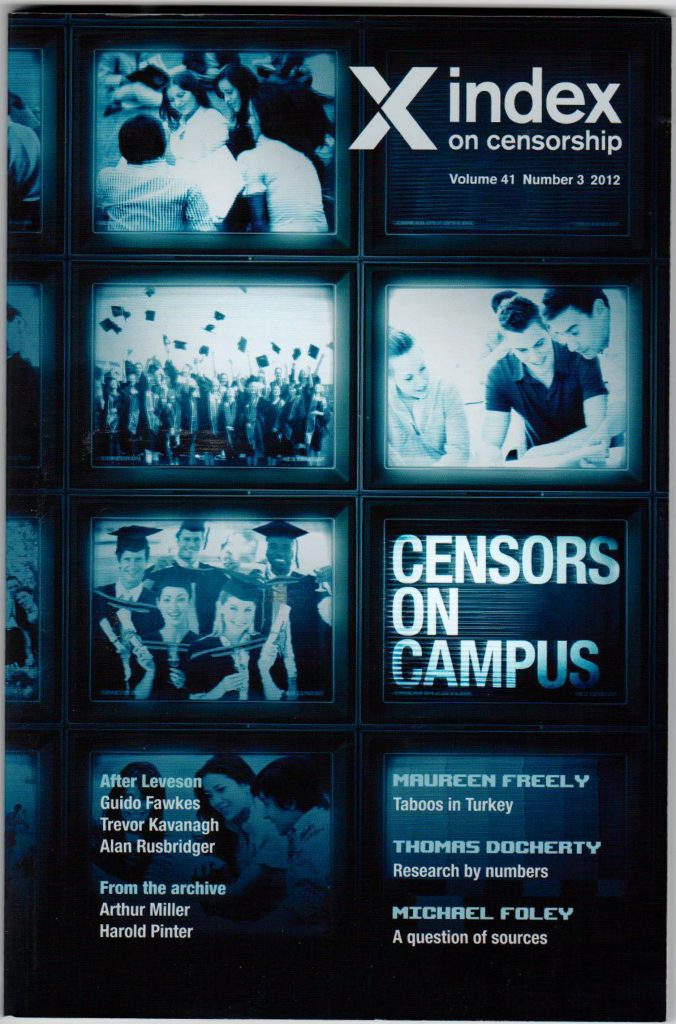
Art of Resistance
September 2012, vol. 41 issue: 3
Malu Halasa, co-curator of the exhibition Culture in Defiance: Continuing Traditions of Satire, Art and the Struggle for Freedom in Syria, writes about how the violence in Syria affected country’s art of resistance production and then created ideas of spreading this work further West which was the reason for the exhibition’s creation.
Read the full article
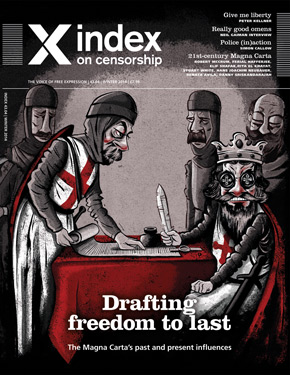
Dark Arts: Three Uzbek artists speak out on state constraints
December 2014, vol. 43 issue: 4
Author Nargis Tashpulatova interviews writer three Uzbek artists – Sid Yanishev, photographer Umida Akhmedova and conceptual artist Vyacheslav Akhunov who continue to create artwork throughout governmental threats and censorship and the regression of art in Uzbek society.
Read the full article
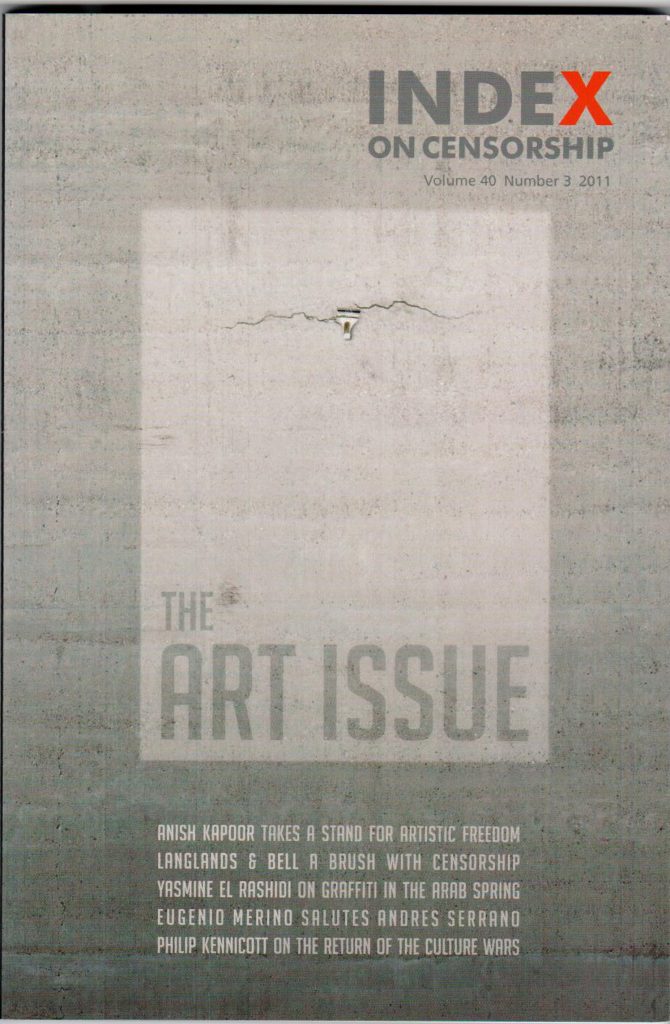
Art or Vandalism
October 2011, vol. 40 issue: 3
Yasmine El Rashidi writes on the outbreak of graffiti in the streets in Cairo during the 18 days of the Egyptian revolution.
Read the full article
[/vc_column_text][/vc_column][/vc_row][vc_row][vc_column][vc_basic_grid post_type=”post” max_items=”4″ element_width=”6″ grid_id=”vc_gid:1546513460633-7f241be5-ccf1-1″ taxonomies=”8890″][/vc_column][/vc_row]
5 Dec 2018 | Artistic Freedom, Awards, Cuba, Fellowship, Fellowship 2019, News
[vc_row][vc_column][vc_column_text]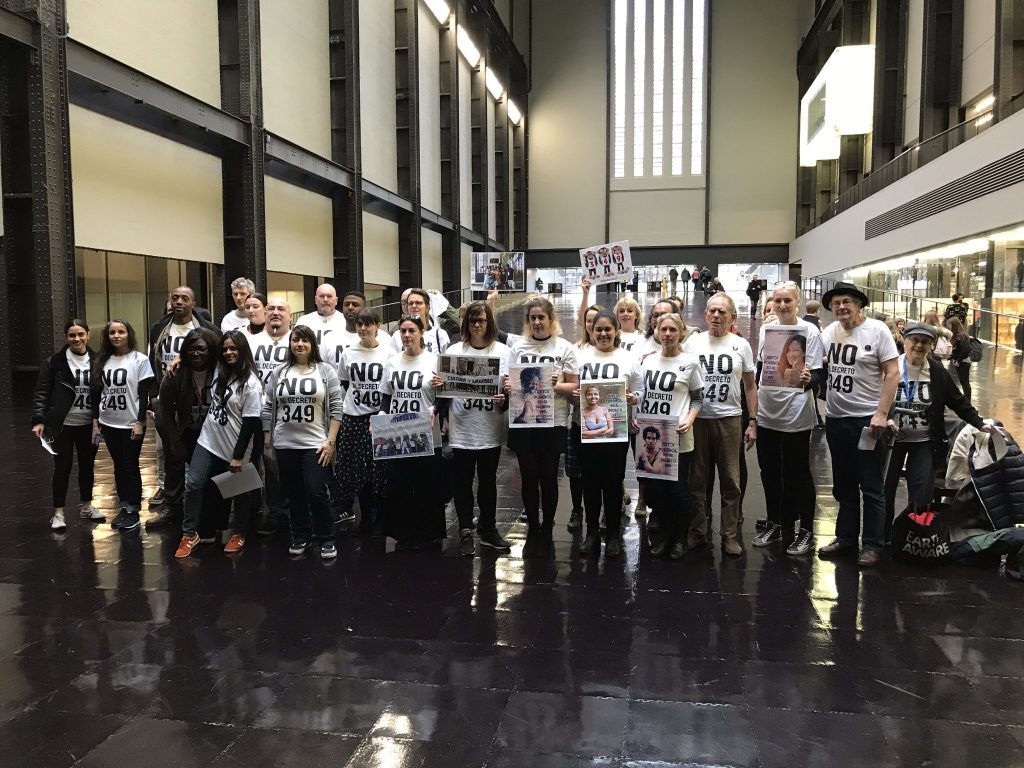
Update: All arrested artists have now been released, although they remain under police surveillance. Cuba’s vice minister of culture Fernando Rojas has declared to the Associated Press that changes will be made to Decree 349 but has not opened dialogue with the artists involved in the campaign against the decree.
Index on Censorship joined others at the Tate Modern on 5 December in a show of solidarity with those artists arrested in Cuba for peacefully protesting Decree 349, a law that will severely limit artistic freedom in the country. Decree 349 will see all artists — including collectives, musicians and performers — prohibited from operating in public places without prior approval from the Ministry of Culture.
In all, 13 artists were arrested over 48 hours. Luis Manuel Otero Alcantara and Yanelys Nuñez Leyva, members of the Index on Censorship Freedom of Expression Award-winning Museum of Dissidence, were arrested in Havana on 3 December. They are being held at Vivac prison on the outskirts of Havana. The Cuban performance artist Tania Bruguera, who was in residency at the Tate Modern in October 2018, was arrested separately, released and re-arrested. Of all those arrested, only Otero Alcantara, Nuñez Leyva and Bruguera remain in custody.
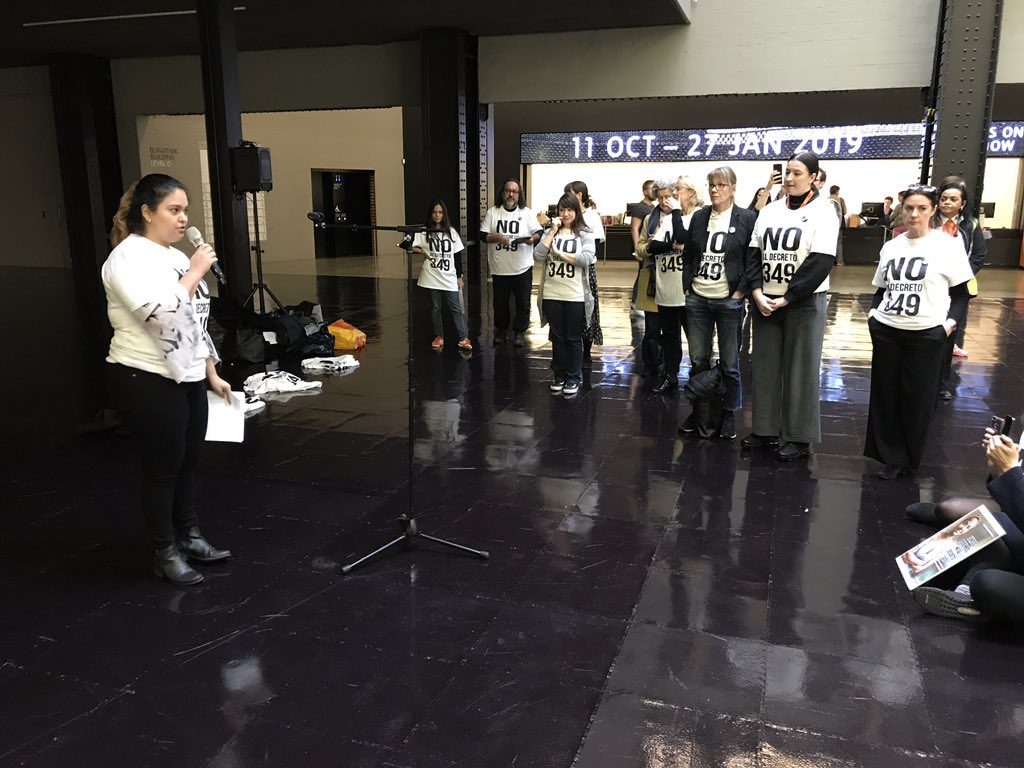
Index on Censorship’s Perla Hinojosa speaking at the Tate Modern.
Speaking at the Tate Modern, Index on Censorship’s fellowships and advocacy officer Perla Hinojosa, who has had the pleasure of working with Otero Alcantara and Nuñez Leyva, said: “We call on the Cuban government to let them know that we are watching them, we’re holding them accountable, and they must release artists who are in prison at this time and that they must drop Decree 349. Freedom of expression should not be criminalised. Art should not be criminalised. In the words of Luis Manuel, who emailed me on Sunday just before he went to prison: ‘349 is the image of censorship and repression of Cuban art and culture, and an example of the exercise of state control over its citizens’.”
Other speakers included Achim Borchardt-Hume, director of exhibitions at Tate, Jota Castro, a Dublin-based Franco-Peruvian artist, Sofia Karim, a Lonon-based architect and niece of the jailed Bangladeshi photojournalist Shahidul Alam, Alistair Hudson, director of Manchester Art Gallery and The Whitworth, and Colette Bailey, Artistic director and chief executive of Metal, the Southend-on-Sea-based arts charity.
Some read from a joint statement: “We are here in London, able to speak freely without fear. We must not take that for granted.”
It continued: “Following the recent detention of Bangladeshi photographer Shahidul Alam along with the recent murder of journalist Jamal Khashoggi, there us a global acceleration of censorship and repression of artists, journalists and academics. During these intrinsically linked turbulent times, we must join together to defend our right to debate, communicate and support one another.”
Castro read in Spanish from an open declaration for all artists campaigning against the Decree 349. It stated: “Art as a utilitarian artefact not only contravenes the Universal Declaration of Human Rights (Cuba is an active member of the United Nations Organisation), but also the basic principles of the United Nations for Education, Science and Culture (UNESCO).”
It continued: “Freedom of creation, a basic human expression, is becoming a “problematic” issue for many governments in the world. A degradation of fundamental rights is evident not only in the unfair detention of internationally recognised creatives, but mainly in attacking the fundamental rights of every single creator. Their strategy, based on the construction of a legal framework, constrains basic fundamental human rights that are inalienable such as freedom of speech. This problem occurs today on a global scale and should concern us all.”
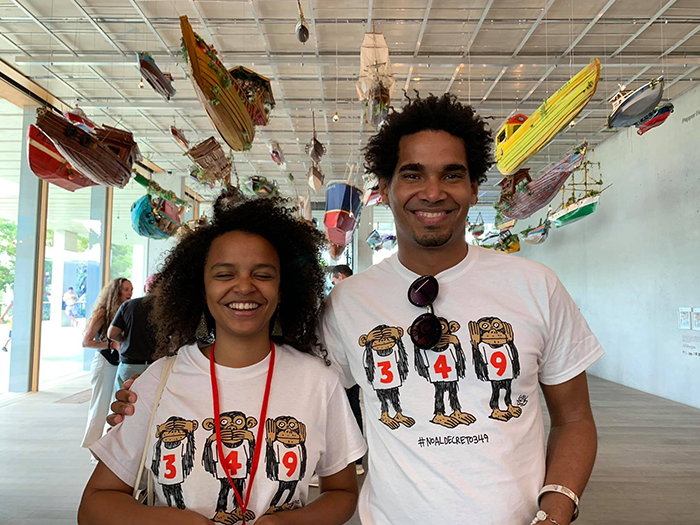
Cuban artists Luis Manuel Otero Alcantara and Yanelys Nuñez Leyva, members of the Index-award winning Museum of Dissidence
Mohamed Sameh, from the Index on Censorship Freedom of Expression Award-winning Egypt Commission on Rights and Freedoms, offered these words of solidarity: “We are shocked to know of Yanelys and Luis Manuels’s detention. Is this the best Cuba can do to these wonderful artists? What happened to Cuba that once stood together with Nelson Mandela? We call on and ask the Cuban authorities to release Yanelys and Luis Manuel immediately. The Cuban authorities shall be held responsible of any harm that may happen to them during this shameful detention.”[/vc_column_text][/vc_column][/vc_row][vc_row][vc_column][vc_basic_grid post_type=”post” max_items=”4″ element_width=”6″ grid_id=”vc_gid:1544112913087-f4e25fac-3439-10″ taxonomies=”23772″][/vc_column][/vc_row]
5 Dec 2018 | Awards, Fellowship 2019, News, Press Releases
[vc_row][vc_column][vc_single_image image=”104120″ img_size=”full”][vc_column_text]Index on Censorship is proud to announce that award-winning investigative journalist Maria Ressa and actor Khalid Abdalla will join a panel of judges to decide the 2019 Freedom of Expression Awards Fellows.
The Freedom of Expression Awards, now in their 19th year, honour champions of free expression and those battling censorship around the world in the field of arts, campaigning, digital activism and journalism. Many have faced prosecution and punishment for their work.
Ressa has been a journalist in Asia for more than 30 years. She was CNN’s bureau chief in Manila then Jakarta, and became CNN’s lead investigative reporter focusing on terrorism in Southeast Asia. Now CEO and executive editor of Rappler.com, Ressa – winner of this year’s Gwen Ifill Press Freedom Award presented by the Committee to Protect Journalists – is frequently targeted by Philippines’ increasingly autocratic president Rodrigo Duterte. Ressa and her company were formally indicted on multiple counts of tax evasion in late November. She is currently on bail pending her next appearance in court on 7 December.
Abdalla is a British-Egyptian actor, producer and filmmaker. He has starred in award-winning films, including United 93, The Kite Runner and In the Last Days of the City, which he also produced. Abdalla is a founding member of three collaborative initiatives in Cairo – Cimatheque, Zero Production and Mosireen.
Abdalla said: “The abyss we are facing all over the world requires acts of courage and intellect capable of changing the terms of how we think and respond to the challenges ahead. We have to celebrate those who inspire us and lead by example, not just because they have managed to break barriers in their own contexts, but because some part of what they do holds a key for us all.”
The judging panel will also include British-Somali feminist, writer and social activist Nimco Ali, who is co-founder and director of Daughters of Eve, a survivor-led organisation which has helped to transform the approach to ending female genital mutilation (FGM). Nimco’s book RUDE: There Is No Such Thing as Over-Sharing is due out in early 2019; and British computer scientist Dr. Kate Devlin, who is a writer and senior lecturer in Social and Cultural Artificial Intelligence at King’s College London. Her book, “Turned On: Science, Sex and Robots”, explores intimacy and ethics in the digital age.
Announcing the judging panel, Index on Censorship chief executive Jodie Ginsberg said: “Our award winners and nominees often face huge personal and professional risks work defending the right for everyone to speak freely. The awards draw attention to the repression that they face every day and give us a chance to celebrate and support these inspiring journalists, activists, and artists.
“We’re excited to announce this year’s remarkable panel of judges, who are leaders and experts in their fields. The Freedom of Expression Awards Fellowship recognise global free speech heroes and provide assistance so that their important work can continue.”
Previous winners of the Freedom of Expression Awards include Nobel Peace Prize winner Pakistani education campaigner Malala Yousafzai, Honduran investigative journalist Wendy Funes and Yemeni artist Murad Subay. Hundreds of public nominations are made for the awards each year. Many of those nominated are regularly targeted by authorities or by criminal and extremist groups for their work. Some face regular death threats, others criminal prosecution.
Previous judges include Serpentine Galleries CEO Yana Peel, digital campaigner and entrepreneur Martha Lane Fox, Nobel laureate Wole Soyinka, Harry Potter actor Noma Dumezweni, novelist Elif Shafak, award-winning journalist and former editor-in-chief of Vanity Fair and The New Yorker Tina Brown and human rights lawyer and shadow Brexit secretary Keir Starmer.
The Freedom of Expression Awards Fellowship ceremony 2019 will be held on 4 April in London.
More information about the judges follows:
For Index on Censorship
Sean Gallagher, [email protected]
About the Freedom of Expression Awards Fellowship
Winners of the 2019 Freedom of Expression Awards Fellowship receive 12 months of capacity building, coaching and strategic support. Through the fellowships, Index seeks to maximise the impact and sustainability of voices at the forefront of pushing back censorship worldwide. More information
About Index on Censorship
Index on Censorship is a London-based non-profit organisation that publishes work by censored writers and artists and campaigns against censorship worldwide. Since its founding in 1972, Index on Censorship has published some of the greatest names in literature in its award-winning quarterly magazine, including Samuel Beckett, Nadine Gordimer, Mario Vargas Llosa, Arthur Miller and Kurt Vonnegut. It also has published some of the world’s best campaigning writers from Vaclav Havel to Elif Shafak.[/vc_column_text][/vc_column][/vc_row][vc_row][vc_column][vc_row_inner][vc_column_inner width=”1/2″][staff name=”Khalid Abdalla, Actor and Filmmaker” profile_image=”104118″]Khalid Abdalla is an actor, producer and filmmaker who also works in cultural production and alternative media. He has starred in award winning films, including Paul Greengrass’s United 93 and Green Zone, Marc Forster’s The Kite Runner, Tala Hadid’s The Narrow Frame of Midnight, and Tamer El Said’s In the Last Days of the City – which Khalid also produced. In documentary film he has producing credits on Hanan Abdalla’s In the Shadow of a Man and the upcoming film by Hanan Abdalla & Cressida Trew, The Vote and has appeared in Jehane Noujaim’s Oscar nominated The Square. Khalid is a founding member of three collaborative initiatives in Cairo – Cimatheque, Zero Production and Mosireen. Brought up in the UK to Egyptian parents, Cairo and London are his two cities. [/staff][/vc_column_inner][vc_column_inner width=”1/2″][staff name=”Nimco Ali, Writer and Social Activist” profile_image=”104121″]Nimco Ali is a British Somali feminist, writer and social activist. She is co-founder and director of Daughters of Eve, a survivor-led organisation which has helped to transform the approach to ending female genital mutilation (FGM), and is the lead advisor to the UK’s APPG to End FGM. She is working to ban FGM in Somaliland, is a former ambassador for #MAKERSUK and was awarded Red Magazine’s Woman of the Year award 2014 and placed No. 6 in Woman’s Hour Power List. Her book ‘RUDE’ There Is No Such Thing as Over-Sharing comes out in early 2019.[/staff][/vc_column_inner][/vc_row_inner][/vc_column][/vc_row][vc_row][vc_column width=”1/2″][staff name=”Kate Devlin, Writer and Academic” profile_image=”104081″]Kate Devlin is a writer and an academic in the department of Digital Humanities in King’s College London where she works on artificial intelligence and human-computer interaction. Her book, Turned On: Science, Sex and Robots, explores intimacy and ethics in the digital age. [/staff][/vc_column][vc_column width=”1/2″][staff name=”Maria Ressa, CEO and Executive Editor” profile_image=”104085″]Maria Ressa is CEO and executive editor of social news network Rappler in the Philippines. She has been a journalist in Asia for more than 30 years and was CNN’s bureau chief in Manila then Jakarta, and became CNN’s lead investigative reporter focusing on terrorism in Southeast Asia. She is an author of two books on terrorism, co-founder of production company Probe and later managed ABS-CBN News and Current affairs. Maria has won numerous awards for her work, including the prestigious Golden Pen of Freedom Awards in 2018.[/staff][/vc_column][/vc_row][vc_row][vc_column][vc_separator][/vc_column][/vc_row][vc_row full_width=”stretch_row_content” equal_height=”yes” css=”.vc_custom_1515150485442{background-color: #cb3000 !important;}” el_class=”text_white”][vc_column width=”1/2″][vc_custom_heading text=”Support the Index Fellowship” font_container=”tag:h2|text_align:center” use_theme_fonts=”yes” link=”url:https%3A%2F%2Fwww.indexoncensorship.org%2Fsupport-the-freedom-of-expression-awards%2F|||”][vc_column_text]
By donating to the Freedom of Expression Awards you help us support individuals and groups at the forefront of tackling censorship.
[/vc_column_text][/vc_column][vc_column width=”1/2″ css=”.vc_custom_1543427572500{background-image: url(https://www.indexoncensorship.org/wp-content/uploads/2018/05/2018-fellows-1000.jpg?id=100251) !important;background-position: center !important;background-repeat: no-repeat !important;background-size: cover !important;}”][/vc_column][/vc_row][vc_row][vc_column][vc_separator][/vc_column][/vc_row][vc_row][vc_column][vc_custom_heading text=”Don’t lose your voice. Stay informed.” font_container=”tag:h3|text_align:left” use_theme_fonts=”yes”][vc_row_inner][vc_column_inner width=”1/2″][vc_column_text]Index on Censorship is a nonprofit that campaigns for and defends free expression worldwide. We publish work by censored writers and artists, promote debate, and monitor threats to free speech. We believe that everyone should be free to express themselves without fear of harm or persecution – no matter what their views.
Join our mailing list (or follow us on Twitter or Facebook) to receive our weekly newsletter, monthly events email and periodic updates about our projects and campaigns. See a sample of what you can expect here.
Index on Censorship will not share, sell or transfer your personal information with third parties. You may unsubscribe at any time. To learn more about how we process your personal information, read our privacy policy.
You will receive an email asking you to confirm your subscription to the weekly newsletter, monthly events roundup and periodic updates about our projects and campaigns.[/vc_column_text][/vc_column_inner][vc_column_inner width=”1/2″][gravityform id=”20″ title=”false” description=”false” ajax=”false”][/vc_column_inner][/vc_row_inner][/vc_column][/vc_row]
7 Nov 2018 | Burma, Campaigns -- Featured, Statements
At the recent World Economic Conference in Hanoi, Viet Nam, Aung San Suu Kyi defended the 3 September conviction and sentencing of Reuters reporters Wa Lone and Kyaw Soe Oo and invited anyone who believes in the rule of law to point out why the judgment was problematic. 52 IFEX members and other groups have taken her up on this invitation.
Aung San Suu Kyi
State Counselor
Naypyidaw
Myanmar
Your Excellency,
Recently, at the World Economic Conference in Hanoi, Viet Nam, you defended the September 3 conviction and sentencing of Reuters reporters Wa Lone and Kyaw Soe Oo for violating the Official Secrets Act, and invited anyone who believes in the rule of law to point out why the judgment was problematic. As a concerned group of more than 50 human rights and free expression organizations from around the world, we would like to take this opportunity to respond to your invitation and to call for Wa Lone and Kyaw Soe Oo’s immediate and unconditional release.
First and foremost, contrary to your comments, the case is a clear attempt to restrict freedom of expression and independent journalism in Myanmar. Wa Lone and Kyaw Soe Oo were arrested on December 12, 2017, in the course of doing their job as professional journalists: investigating military operations in northern Rakhine State. Specifically, the two men were investigating a massacre that took place in the village of Inn Din, during which 10 Rohingya men and boys were summarily executed by the security forces—a crime which the military later admitted to. This investigation—which came at a time when the Myanmar military and the civilian-led government rejected mounting reports of human rights violations in northern Rakhine State—was clearly in the public interest, and still is.
The law that was then used to prosecute them—the colonial-era Official Secrets Act—is one of a number of repressive laws that have been used to prosecute journalists and stymie media freedom. The Act is broadly worded, and grants wide powers to the government to determine what classifies as a “secret”—indeed, the entire Act goes well beyond the restrictions on the right to freedom of expression which are permitted under international human rights law on the grounds of national security.
Even within the terms of the Act itself, for a conviction under Section 3.1 (c), evidence should demonstrate that the accused had in their possession secret documents that “might be or is intended to be, directly or indirectly, useful to an enemy.” However, evidence and testimony presented during the pre-trial and trial hearings failed to demonstrate this was the case and instead established the following facts:
• The documents Wa Lone and Kyaw Soe Oo are accused of possessing are not secret, but contain information already in the public domain;
• There is no evidence of intent to turn documents over to an enemy or to harm the country;
• Police testimony regarding the circumstances of their arrest was contradictory;
• Moreover, a police whistleblower credibly testified that the two journalists had been framed: namely, that police were ordered by their superiors to invite Wa Lone to a meeting so he could be handed documents and then immediately arrested;
• Wa Lone and Kyaw Soe Oo were subject to ill-treatment after their initial arrest, including incommunicado detention for two weeks, hooding, and sleep deprivation.
In summary, we believe that that Wa Lone and Kyaw Soe Oo should never have been arrested in the first place, let alone prosecuted, convicted and imprisoned. Their trial, which was already manifestly unfair, was made more so by the repeated failure to uphold key tenets of the rule of law and to build a convincing evidence-based case against these journalists.
We therefore call on the Myanmar authorities to immediately and unconditionally release these two men, and reject the convictions against them. We further urge your government to work towards the swift review and amendment of all laws that can be used to unlawfully restrict the right to freedom of expression, so as to bring them into line with international human rights law and standards.
Yours respectfully,
PEN America
Adil Soz – International Foundation for Protection of Freedom of Speech
Afghanistan Journalists Center (AFJC)
Africa Freedom of Information Centre (AFIC)
Albanian Media Institute
Americans for Democracy & Human Rights in Bahrain (ADHRB)
ARTICLE 19
Association for Freedom of Thought and Expression (AFTE)
Bytes for All (B4A)
Cambodian Center for Human Rights (CCHR)
Cartoonists Rights Network International (CRNI)
Center for Media Freedom and Responsibility (CMFR)
Centre for Independent Journalism (CIJ)
Committee to Protect Journalists (CPJ)
Freedom Forum
Fundamedios – Andean Foundation for Media Observation and Study
Globe International Center
Human Rights Watch (HRW)
Independent Journalism Center (IJC)
Index on Censorship
Initiative for Freedom of Expression – Turkey
International Federation of Journalists (IFJ)
International Press Institute (IPI)
Mediacentar Sarajevo
Media, Entertainment and Arts Alliance
Media Foundation for West Africa (MFWA)
Media Institute of Southern Africa (MISA)
Media Rights Agenda (MRA)
Mizzima News
Norwegian PEN
OpenMedia
Pakistan Press Foundation
PEN Canada
Reporters Without Borders (RSF)
Southeast Asian Press Alliance (SEAPA)
South East Europe Media Organisation
Vigilance for Democracy and the Civic State
World Association of Newspapers and News Publishers
Amnesty International
Athan – Freedom of Expression Activist Organization
Burma Campaign UK
Civil Rights Defenders
CSW
English PEN
Equality Myanmar
Free Expression Myanmar
Myanmar Media Lawyers’ Network
Norwegian Myanmar Committee
PEN Myanmar
Society for Threatened Peoples – Germany
South East Asian Journalist Unions (SEAJU)
The Swedish Burma Committee
