As the annual Index on Censorship Freedom of Expression Awards gala approaches, we’ve highlighted five of those who have won or been nominated for free expression awards, including the Freemuse Awards. From a Moroccan rapper to an Iranian folk singer, these artists refuse to be censored and continue to fight to have their voices heard.
El Haqed, Morocco
Winner of the 2015 Index on Censorship Freedom of Expression Award for arts
Mouad Belghouat, aka El Haqed, faced repression from the Moroccan government, including multiple arrests since the Arab Spring. His music focuses on poverty, oppression and political corruption in his country. He is currently living in Belgium, where he continues to write music.
Mayam Mahmoud, Egypt
Winner of the 2014 Index on Censorship Freedom of Expression Award for arts
Mayam Mahmoud, one of Egypt’s first and bravest female hip-hop artists, uses music to address some of the grievances in her country, from a lack of women’s rights to sexual harassment. After competing on the TV show Arabs Got Talent, she used her prominence to speak out against the misogyny she has witnessed and experienced.
Ferhat Tunç, Turkey
2010 Freemuse Award winner
Despite years of attempted censorship by the Turkish government, Ferhat Tunç has continued to release music and promote human rights in his homeland. He has released more than 20 albums, undeterred by numerous court summons and a prison sentence.
Songhoy Blues, Mali
Nominees for the 2015 Index on Censorship Freedom of Expression Award for arts
A group of musicians that fled northern Mali after the occupation by militant Islamist groups in spring 2012, Songhoy Blues are a rowdy blend of blues and rock. After Islamists banned music in their region, they went into exile and have since gone on to tour with Julian Casablancas and Damon Albarn. The band released their debut album, Music in Exile, in February 2015.
Pussy Riot, Russia
Nominees for the 2013 Index on Censorship Freedom of Expression Award for arts In February 2012, members of the feminist punk band Pussy Riot staged a brief demonstration through music at Moscow’s Christ the Saviour Cathedral, condemning the Russian Orthodox Church’s close ties to Vladimir Putin. In August of that year, three members were sentenced to two years in jail for hooliganism motivated by religious hatred. The verdict was a bitter blow for freedom of expression in Russia, which continues to be under attack today.
Index on Censorship has teamed up with the producers of an award-winning documentary about Mali’s musicians, They Will Have To Kill Us First, to create the Music in Exile Fund to support musicians facing censorship globally. You can donate here, or give £10 by texting “BAND61 £10” to 70070.
On the anniversary of the brutal attack on the offices of Charlie Hebdo we, the undersigned, reaffirm our commitment to the defence of the right to freedom of expression, even when that right is being used to express views that some may consider offensive.
The Charlie Hebdo attack, which left 11 dead and 12 wounded, was a horrific reminder of the violence to which journalists, artists and other critical voices are subjected in a global atmosphere marked by increasing intolerance of dissent. The killings inaugurated a year that has proved especially challenging for proponents of freedom of opinion.
Non-state actors perpetrated violence against their critics largely with impunity, including the brutal murders of four secular bloggers in Bangladesh by Islamist extremists, and the killing of an academic, M M Kalburgi, who wrote critically against Hindu fundamentalism in India.
Despite the turnout of world leaders on the streets of Paris in an unprecedented display of solidarity with free expression following the Charlie Hebdo murders, artists and writers faced intense repression from governments throughout the year. In Malaysia, cartoonist Zunar is facing a possible 43-year prison sentence for alleged ‘sedition’; in Iran, cartoonist Atena Fardaghani is serving a 12-year sentence for a political cartoon; and in Saudi Arabia, Palestinian poet Ashraf Fayadh was sentenced to death for the views he expressed in his poetry.
Perhaps the most far-reaching threats to freedom of expression in 2015 came from governments ostensibly motivated by security concerns. Following the attack on Charlie Hebdo, 11 interior ministers from European Union countries including France, Britain and Germany issued a statement in which they called on Internet service providers to identify and remove online content ‘that aims to incite hatred and terror.’ In July, the French Senate passed a controversial law giving sweeping new powers to the intelligence agencies to spy on citizens, which the UN Human Rights Committee categorised as “excessively broad”.
This kind of governmental response is chilling because a particularly insidious threat to our right to free expression is self-censorship. In order to fully exercise the right to freedom of expression, individuals must be able to communicate without fear of intrusion by the State. Under international law, the right to freedom of expression also protects speech that some may find shocking, offensive or disturbing. Importantly, the right to freedom of expression means that those who feel offended also have the right to challenge others through free debate and open discussion, or through peaceful protest.
On the anniversary of the Charlie Hebdo attacks, we, the undersigned, call on all Governments to:
Uphold their international obligations to protect the rights of freedom of expression and information for all, and especially for journalists, writers, artists and human rights defenders to publish, write and speak freely;
Promote a safe and enabling environment for those who exercise their right to freedom of expression, and ensure that journalists, artists and human rights defenders may perform their work without interference;
Combat impunity for threats and violations aimed at journalists and others exercising their right to freedom of expression, and ensure impartial, timely and thorough investigations that bring the executors and masterminds behind such crimes to justice. Also ensure victims and their families have expedient access to appropriate remedies;
Repeal legislation which restricts the right to legitimate freedom of expression, especially vague and overbroad national security, sedition, obscenity, blasphemy and criminal defamation laws, and other legislation used to imprison, harass and silence critical voices, including on social media and online;
Ensure that respect for human rights is at the heart of communication surveillance policy. Laws and legal standards governing communication surveillance must therefore be updated, strengthened and brought under legislative and judicial control. Any interference can only be justified if it is clearly defined by law, pursues a legitimate aim and is strictly necessary to the aim pursued.
PEN International
ActiveWatch – Media Monitoring Agency
Adil Soz – International Foundation for Protection of Freedom of Speech
Africa Freedom of Information Centre
ARTICLE 19
Bahrain Center for Human Rights
Belarusian Association of Journalists
Brazilian Association for Investigative Journalism
Bytes for All
Cambodian Center for Human Rights
Canadian Journalists for Free Expression
Center for Independent Journalism – Romania
Center for Media Freedom and Responsibility
Comité por la Libre Expresión – C-Libre
Committee to Protect Journalists
Electronic Frontier Foundation
Foundation for Press Freedom – FLIP
Freedom Forum
Fundamedios – Andean Foundation for Media Observation and Study
Globe International Center
Independent Journalism Center – Moldova
Index on Censorship
Initiative for Freedom of Expression – Turkey
Institute for the Studies on Free Flow of Information
Instituto de Prensa y Libertad de Expresión – IPLEX
Instituto Prensa y Sociedad de Venezuela
International Federation of Journalists
International Federation of Library Associations and Institutions
International Press Institute
International Publishers Association
Journaliste en danger
Maharat Foundation
MARCH
Media, Entertainment and Arts Alliance
Media Foundation for West Africa
National Union of Somali Journalists
Observatorio Latinoamericano para la Libertad de Expresión – OLA
Pacific Islands News Association
Palestinian Center for Development and Media Freedoms – MADA
PEN American Center
PEN Canada
Reporters Without Borders
South East European Network for Professionalization of Media
Vigilance pour la Démocratie et l’État Civique
World Association of Community Radio Broadcasters – AMARC
PEN Mali
PEN Kenya
PEN Nigeria
PEN South Africa
PEN Eritrea in Exile
PEN Zambia
PEN Afrikaans
PEN Ethiopia
PEN Lebanon
Palestinian PEN
Turkish PEN
PEN Quebec
PEN Colombia
PEN Peru
PEN Bolivia
PEN San Miguel
PEN USA
English PEN
Icelandic PEN
PEN Norway
Portuguese PEN
PEN Bosnia
PEN Croatia
Danish PEN
PEN Netherlands
German PEN
Finnish PEN
Wales PEN Cymru
Slovenian PEN
PEN Suisse Romand
Flanders PEN
PEN Trieste
Russian PEN
PEN Japan
When I started working at Index on Censorship, some friends (including some journalists) asked why an organisation defending free expression was needed in the 21st century. “We’ve won the battle,” was a phrase I heard often. “We have free speech.”
There was another group who recognised that there are many places in the world where speech is curbed (North Korea was mentioned a lot), but most refused to accept that any threat existed in modern, liberal democracies.
After the killing of 12 people at the offices of French satirical magazine Charlie Hebdo, that argument died away. The threats that Index sees every day – in Bangladesh, in Iran, in Mexico, the threats to poets, playwrights, singers, journalists and artists – had come to Paris. And so, by extension, to all of us.
Those to whom I had struggled to explain the creeping forms of censorship that are increasingly restraining our freedom to express ourselves – a freedom which for me forms the bedrock of all other liberties and which is essential for a tolerant, progressive society – found their voice. Suddenly, everyone was “Charlie”, declaring their support for a value whose worth they had, in the preceding months, seemingly barely understood, and certainly saw no reason to defend.
The heartfelt response to the brutal murders at Charlie Hebdo was strong and felt like it came from a united voice. If one good thing could come out of such killings, I thought, it would be that people would start to take more seriously what it means to believe that everyone should have the right to speak freely. Perhaps more attention would fall on those whose speech is being curbed on a daily basis elsewhere in the world: the murders of atheist bloggers in Bangladesh, the detention of journalists in Azerbaijan, the crackdown on media in Turkey. Perhaps this new-found interest in free expression – and its value – would also help to reignite debate in the UK, France and other democracies about the growing curbs on free speech: the banning of speakers on university campuses, the laws being drafted that are meant to stop terrorism but which can catch anyone with whom the government disagrees, the individuals jailed for making jokes.
And, in a way, this did happen. At least, free expression was “in vogue” for much of 2015. University debating societies wanted to discuss its limits, plays were written about censorship and the arts, funds raised to keep Charlie Hebdo going in defiance against those who would use the “assassin’s veto” to stop them. It was also a tense year. Events discussing hate speech or cartooning for which six months previously we might have struggled to get an audience were now being held to full houses. But they were also marked by the presence of police, security guards and patrol cars. I attended one seminar at which a participant was accompanied at all times by two bodyguards. Newspapers and magazines across London conducted security reviews.
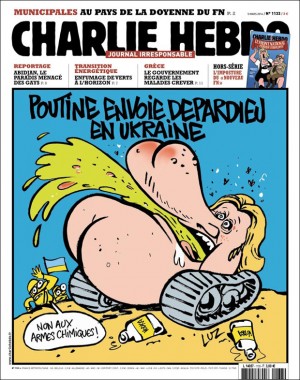
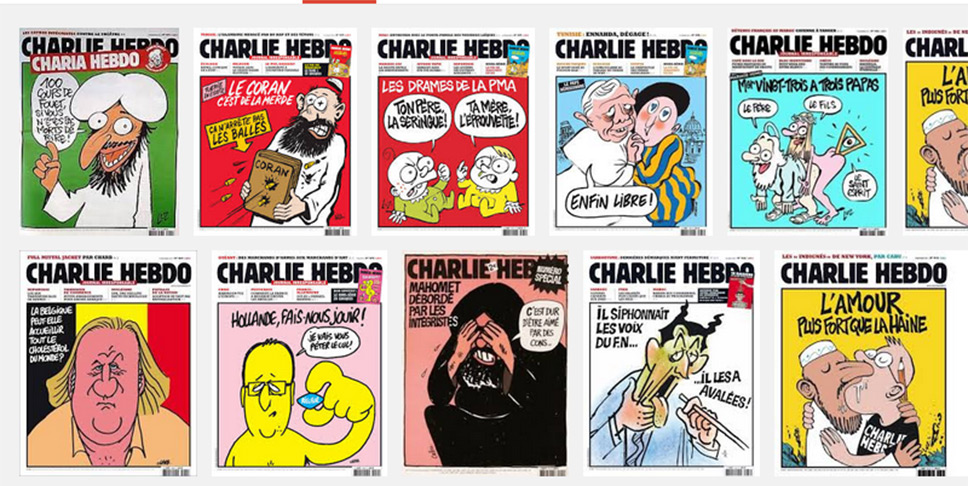
But after the dust settled, after the initial rush of apparent solidarity, it became clear that very few people were actually for free speech in the way we understand it at Index. The “buts” crept quickly in – no one would condone violence to deal with troublesome speech, but many were ready to defend a raft of curbs on speech deemed to be offensive, or found they could only defend certain kinds of speech. The PEN American Center, which defends the freedom to write and read, discovered this in May when it awarded Charlie Hebdo a courage award and a number of novelists withdrew from the gala ceremony. Many said they felt uncomfortable giving an award to a publication that drew crude caricatures and mocked religion.
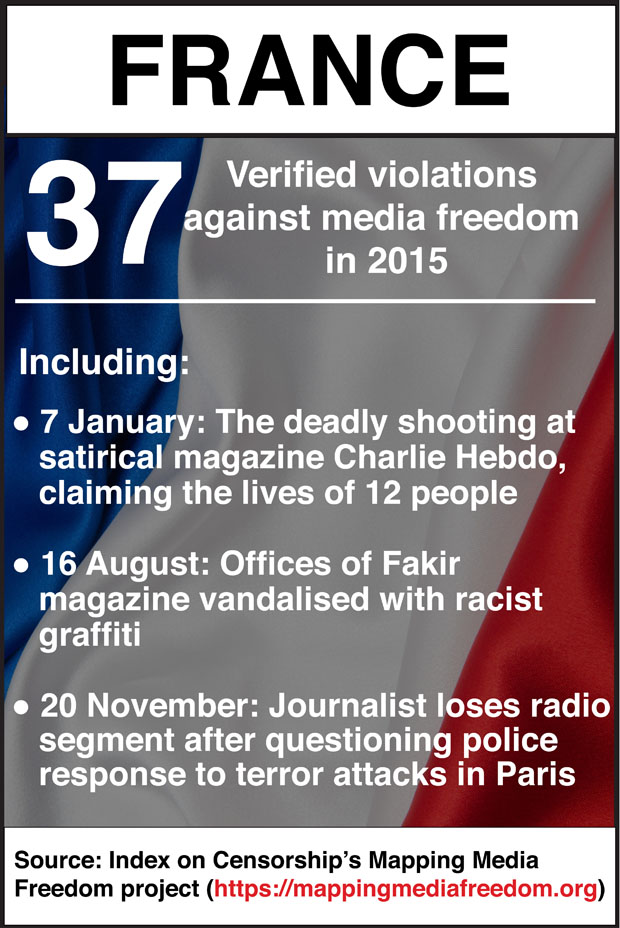
Index’s project Mapping Media Freedom recorded 745 violations against media freedom across Europe in 2015.
The problem with the reaction of the PEN novelists is that it sends the same message as that used by the violent fundamentalists: that only some kinds of speech are worth defending. But if free speech is to mean anything at all, then we must extend the same privileges to speech we dislike as to that of which we approve. We cannot qualify this freedom with caveats about the quality of the art, or the acceptability of the views. Because once you start down that route, all speech is fair game for censorship – including your own.
As Neil Gaiman, the writer who stepped in to host one of the tables at the ceremony after others pulled out, once said: “…if you don’t stand up for the stuff you don’t like, when they come for the stuff you do like, you’ve already lost.”
Index believes that speech and expression should be curbed only when it incites violence. Defending this position is not easy. It means you find yourself having to defend the speech rights of religious bigots, racists, misogynists and a whole panoply of people with unpalatable views. But if we don’t do that, why should the rights of those who speak out against such people be defended?
In 2016, if we are to defend free expression we need to do a few things. Firstly, we need to stop banning stuff. Sometimes when I look around at the barrage of calls for various people to be silenced (Donald Trump, Germaine Greer, Maryam Namazie) I feel like I’m in that scene from the film Lock, Stock and Two Smoking Barrels where a bunch of gangsters keep firing at each other by accident and one finally shouts: “Could everyone stop getting shot?” Instead of demanding that people be prevented from speaking on campus, debate them, argue back, expose the holes in their rhetoric and the flaws in their logic.
Secondly, we need to give people the tools for that fight. If you believe as I do that the free flow of ideas and opinions – as opposed to banning things – is ultimately what builds a more tolerant society, then everyone needs to be able to express themselves. One of the arguments used often in the wake of Charlie Hebdo to potentially excuse, or at least explain, what the gunmen did is that the Muslim community in France lacks a voice in mainstream media. Into this vacuum, poisonous and misrepresentative ideas that perpetuate stereotypes and exacerbate hatreds can flourish. The person with the microphone, the pen or the printing press has power over those without.
It is important not to dismiss these arguments but it is vital that the response is not to censor the speaker, the writer or the publisher. Ideas are not challenged by hiding them away and minds not changed by silence. Efforts that encourage diversity in media coverage, representation and decision-making are a good place to start.
Finally, as the reaction to the killings in Paris in November showed, solidarity makes a difference: we need to stand up to the bullies together. When Index called for republication of Charlie Hebdo’s cartoons shortly after the attacks, we wanted to show that publishers and free expression groups were united not by a political philosophy, but by an unwillingness to be cowed by bullies. Fear isolates the brave – and it makes the courageous targets for attack. We saw this clearly in the days after Charlie Hebdo when British newspapers and broadcasters shied away from publishing any of the cartoons featuring the Prophet Mohammed. We need to act together in speaking out against those who would use violence to silence us.
As we see this week, threats against freedom of expression in Europe come in all shapes and sizes. The Polish government’s plans to appoint the heads of public broadcasters has drawn complaints to the Council of Europe from journalism bodies, including Index, who argue that the changes would be “wholly unacceptable in a genuine democracy”.
In the UK, plans are afoot to curb speech in the name of protecting us from terror but which are likely to have far-reaching repercussions for all. Index, along with colleagues at English PEN, the National Secular Society and the Christian Institute will be working to ensure that doesn’t happen. This year, as every year, defending free speech will begin at home.
We, the undersigned organisations, all dedicated to the value of creative freedom, are writing to express our grave concern that Ashraf Fayadh has been sentenced to death for apostasy.
Ashraf Fayadh, a poet, artist, curator, and member of British-Saudi art organisation Edge of Arabia, was first detained in August 2013 in relation to his collection of poems Instructions Within following the submission of a complaint to the Saudi Committee for the Promotion of Virtue. He was released on bail but rearrested in January 2014.
According to court documents, in May 2014 the General Court of Abha found proof that Fayadh had committed apostasy (ridda) but had repented for it. The charge of apostasy was dropped, but he was nevertheless sentenced to four years in prison and 800 lashes in relation to numerous charges related to blasphemy.
At Ashraf Fayadh’s retrial in November 2015 the judge reversed the previous ruling, declaring that repentance was not enough to avoid the death penalty. We believe that all charges against him should have been dropped entirely, and are appalled that Fayadh has instead been sentenced to death for apostasy, simply for exercising his rights to freedom of expression and freedom of belief.
As a member of the UN Human Rights Council (HRC), the pre-eminent intergovernmental body tasked with protecting and promoting human rights, and the Chair of the HRC’s Consultative Group, Saudi Arabia purports to uphold and respect the highest standards of human rights. However, the decision of the court is a clear violation of the internationally recognised rights to freedom of conscience and expression. Article 18 of the Universal Declaration of Human Rights (UDHR) states that, “[e]veryone has the right to freedom of thought, conscience and religion; this right includes freedom to change his religion or belief”. Furthermore, under Article 19 of the Universal Declaration of Human Rights, “everyone has the right to freedom of opinion and expression; this right includes freedom to hold opinions without interference and to seek, receive and impart information and ideas through any media and regardless of frontiers”. Saudi Arabia is therefore in absolute contravention of the rights that as a member of the UN HRC it has committed to protect.
There are also widespread concerns over an apparent lack of due process in the trial: Fayadh was denied legal representation, reportedly as a result of his ID having been confiscated following his arrest in January 2014. It is our understanding that Fayadh has 30 days to appeal this latest ruling, and we urge the authorities to allow him access to the lawyer of his choice.
We call on the Saudi authorities to release Ashraf Fayadh and others detained in Saudi Arabia in violation of their right to freedom of expression immediately and unconditionally.
List of signatories:
AICA (International Association of Art Critics)
Algerian PEN
All-India PEN
Amnesty International UK
Arterial Network
ARTICLE 19
Artists for Palestine UK
Austrian PEN
Banipal
Bangladesh PEN
Bread and Roses TV
British Humanist Association
Bulgarian PEN
Centre for Secular Space
CIMAM (International Committee for Museums and Collections of Modern Art)
Council of Ex-Muslims of Britain
Croatian PEN
Crossway Foundation
Danish PEN
English PEN
Ethiopian PEN-in-Exile
FIDH (International Federation for Human Rights)
Five Leaves Publications
Freemuse
German PEN
Haitian PEN
Human Rights Watch
Index on Censorship
International Humanist and Ethical Union
Iranian PEN in Exile
Jimmy Wales Foundation
Lebanese PEN
Ledbury Poetry Festival
Lithuanian PEN
Modern Poetry in Translation
National Coalition Against Censorship (NCAC)
Norwegian PEN
One Darnley Road
One Law for All
Palestinian PEN
PEN American Center
PEN Canada
PEN International
PEN South Africa
Peruvian PEN
Peter Tatchell Foundation
Portuguese PEN
Québec PEN
Russian PEN
San Miguel PEN
Scottish PEN
Slovene PEN
Society of Authors
South African PEN
Split This Rock
Suisse Romand PEN
School of Literature, Drama and Creative Writing, University of East Anglia
The Voice Project
Trieste PEN
Turkish PEN
Wales PEN Cymru