21 Mar 2014 | Egypt, News, Politics and Society, Religion and Culture
Singer Nancy Ajram is among those whose videos have been banned by Egypt’s censorship committee.
In a move that has sparked concern among Egyptian secularists, the country’s censorship committee this week banned 20 music videos allegedly containing “heavy sexual connotations” and featuring “scantily-dressed female singers and models.”
The decision to ban the video clips deemed “inappropriate” and “indecent” by members of the state censorship committee, comes two months after a new constitution guaranteeing freedom of expression and opinion was approved by 98 per cent of voters in a national referendum. The new charter replaced the 2012 constitution, widely criticized by rights organizations and revolutionary activists as an “Islamist-tinged” document.
The majority of Egypt’s secularists who celebrated the ouster of Islamist president Mohamed Morsi in Tahrir Square in July had feared that the Muslim Brotherhood –the Islamist group from which he hails –was seeking to alter Egypt’s ‘moderate’ identity. The Islamist group has since been outlawed and designated a terrorist organization by the military-backed authorities that replaced the toppled president.
The banning of the video clips comes amid heated debate on “raunchy” music videos broadcast on some of the Arab satellite channels. In recent years, an increasing number of popular Arab female singing-stars have challenged social norms and broken cultural taboos by revealing more flesh in their video clips. The trend has stirred controversy in Egypt’s deeply conservative Muslim society with many Egyptians rejecting what they describe as “the pornification of pop music”. They insist that the “graphic, semi-porn sexual scenes featured in some of the music videos are not in line with Islamic tradition and culture”.
“Some of these video clips are more porn than music. We can hardly understand the lyrics; They are an insult to Arabic music and culture,” said Amina Mansour , a Western educated 30 year- old Egyptian freelance photographer.
It is no surprise that some liberal, westernised Egyptians agree with ultra-conservative Muslims in their society that the videos should be banned. Egyptian society–once a melting pot of different cultures has grown more conservative in the last 30 years. In his book Whatever Happened to the Egyptians, Economist Galal Amin blames the growing conservatism in the country on the introduction of Wahhabism –a more rigid form of Islam practised in Saudi Arabia and adopted by the millions of Egyptian migrants who travelled to Gulf countries after the oil boom in the seventies, seeking higher-paid jobs. The gradual transformation from a diverse, open and tolerant society into today’s conservative and far less tolerant Egypt is evident in the style of dress, behaviour and speech of many Egyptians. An estimated 90 per cent of women wear the hijab-the head covering worn by Muslim women -while the niqab, a veil covering the face , has become more prevalent in recent years.
Some analysts believe the trend of conservatism, which had steadily grown in Egypt recent decades, now appears to be regressing. A growing number of women and girls are removing their Islamic headscarf —once adopted as a political statement against the authoritarian regime of Hosni Mubarak and against Western-style values imposed on the society. Leila el Shentenawy, a 31 year old lawyer told Index she removed her veil after Morsi’s ouster to express her disappointment with Islamist rule.
“Morsi failed to deliver on promised reforms,” she said, adding that she and other liberal Egyptians were alarmed by the calls made by some hardline Islamists to bring back female genital mutilation and lower the age of marriage for girls.
“We were becoming a backward society instead of moving forward,” she said.
Shentenawi however, supports the ban on the video clips, arguing that such videos are “commercialization of women’s bodies and a downright insult to women.”
Other Egyptians have meanwhile expressed disappointment over the banning of the video clips, perceiving the move as “a reversal of the democratic gains of the January 25, 2011 Revolution” that toppled autocratic president Hosni Mubarak and the subsequent uprising against Islamist rule in June 2013.
“We had two uprisings for freedom and a modern, democratic society,” lamented 26 year-old graphic designer Amr El Sherif. “The video clips are popular with young Egyptians and the latest ban can only be considered as a means of stifling free artistic expression.”
In January, Egyptian TV imposed a ban on several video clips reportedly containing “seductive scenes”, deciding they were”inappropriate for viewers”. The ban on the music videos featuring Middle Eastern pop idols Haifa Wahby, Alissa, Nancy Agram and Ruby among others, came in response to complaints by some viewers that the “hot scenes” depicted in the videos were “provocative” and “went against the morals of Muslim society.”
While modest by Western standards, “the gyrations and revealing costumes featured in the videos were too sexy for Arab audiences”, the censors decided. The ban is a continuation of the ultra-conservative trend started by Islamists during their one year rule when some of their lawmakers had complained to Parliament (then dominated by Islamists) that “Egyptian performer Ruby’s pelvic thrust dance moves and bare midriff were too much,” warning that the “obscene scenes” depicted in the music videos would “trash the taste of Egyptians.”
The ban of the videos meanwhile, coincided with the sexual assault of a female student by a mob on Cairo University’s main campus on Monday–the first violence of its kind on an Egyptian university campus. While condemning the assault incident in a telephone interview broadcast on the private ONTV channel later that evening, University President Gaber Nassar implied the victim was to blame, saying her “immodest attire” had invited the assault. He urged students to dress modestly, adding that those who do not follow the university’s regulation would be barred from entering the university campus by security guards.
Some Egyptians believe that the “suggestive” and “explicit” music videos are partly to blame for a surge in incidents of sexual harassment and violence against women in the country since the January 2011 uprising.
“Sexual frustrations of youth –many of whom are unemployed and unable to afford the cost of marriage– are being fuelled in part by sexy music videos and other pornograhic material on the internet, causing unruly behaviour by some youth,” Said Sadek, a Cairo-based Political Sociologist and activist, told Index.
The recent ban on the video clips also comes hot on the heels of an International Women’s Day protest-rally staged by nude Arab and Iranian women in the Louvre Art Museum’s Square in Paris, calling for “equal rights” and “secularism” in their respective countries. Egyptian internet activist Alia Al Mahdi was among the participants in the Paris nudist rally which organizers said, was held to “highlight the many legal and cultural restrictions imposed on women in the Arab World”. El Mahdi had also protested naked outside the Egyptian Embassy in the Swedish capital Stockholm in December 2012 to express her opposition to what she called Morsi’s “Sharia Constitution.” Raising the Egyptian flag, she had the words ” No to Sharia” written in bold print on her naked body.
Many of the revolutionary youth-activists who led the uprisings in Tahrir Square in January 2011 and June 2013 had hoped the downfall of two authoritarian regimes would usher in a new era of greater freedoms including freedom of expression and opinion.But their hopes are fading fast amid increased restrictions and a climate of growing repression.Despite the challenges, they vow to continue to push for “reforms” and “a more liberal Egypt”. While many of the revolutionaries say they oppose Alia Al Mahdi’s method of protest, perceiving it as ” extreme”, they insist ” there is no going back to repression and censorship by the authorities.”
“We’ve had our first taste of freedom with the revolution three years ago and once you’ve had that, you can only move forward and never look back, ” said Mohamed Fawaz, an activist and member of the April 6 Movement, one of the two main groups that mobilized protesters for the January 11 mass uprising. Meanwhile, the battle between secularists and conservatives for the soul of the “new Egypt” continues.
This article was posted on 21 March 2014 at indexoncensorship.org
19 Mar 2014 | Campaigns, Europe and Central Asia, United Kingdom
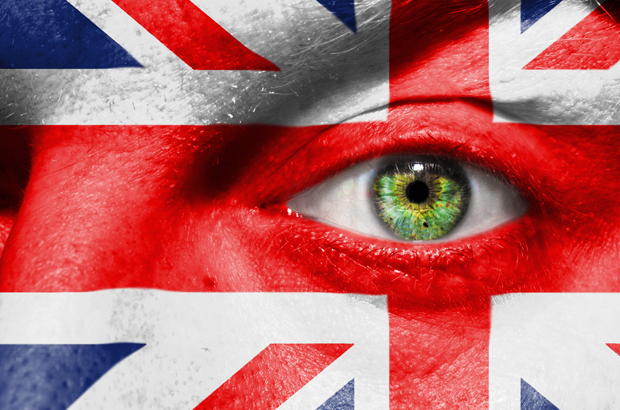
(Image: Semmick Photo/Shutterstock)
Restricting press freedom in the name of national security, the Royal Charter press regulator and the UK’s lack of constitutional guarantees for freedom of expression were only some of the things criticised in a new report by the World Association of Newspapers and News Publishers (WAN-IFRA). The organisation represents over 18,000 publications and 15,000 websites in over 120 countries.
Referring to the UK’s influence internationally WAN-IFRA says: “How changes to the system of press regulation are managed in the UK will have an unparalleled impact beyond its shores.” They fear that a regulator with government involvement — such as the Royal Charter — risks being “an open invitation for abuse” of press freedom in less democratic countries. The report in many ways echoes Index on Censorship’s position on press regulation and threats to press freedom in the UK.
The report comes after concerns were expressed by UK media and press freedom organisations over the state of press freedom following the Leveson debate, and the threats and pressure faced by the Guardian over their reporting on Snowden and mass surveillance, culminating in the destruction of hard drives in the Guardian’s basement overseen by GCHQ representatives. A delegation from WAN-IFRA travelled to the UK on a fact-finding mission in January.
The report agrees that the phone hacking scandal led to a major breach in public confidence in the press, but stressed that the vast majority of British journalists “adhere to professional standards”. It warns against conflating the hacking scandal with the regulatory debate, stressing that: “British law provides appropriate remedy for illegal activity in proven cases of wrongdoing.”
The report makes several heavy criticisms of the proposed Royal Charter system. Punitive damages, enshrined in statute, for not signing up to the regulator “defies any definition of ‘voluntary’ as understood by the WAN-IFRA delegation”. The report in particular says that it was quite inappropriate to develop a system of press regulation without the involvement of the industry in the final stages of discussion, when the government’s preferred Royal Charter was drawn up. The speed of implementation, the lack of legislative scrutiny, parliamentary vote or public consultation was criticised, with the report arguing the whole process should have been more transparent. “The Royal Charter system — used as an example or transposed elsewhere to countries lacking the United Kingdom’s historic commitment to human rights — risks an open invitation for abuse in other parts of the world,” it argues.
The report further states that claims of the Royal Charter being a “hands-offs” regulator is “undermined by the readiness of the UK government to intervene against the Guardian newspaper”. The treatment the Guardian has been subject to following their mass surveillance revelations was identified as a cause for concern. Prime Minister David Cameron’s claims that the reporting harmed national security, with no evidence to back this up, “suggest an unprecedented level of political interference in the freedom of the press”. The report states that he should distance his government from conflating terrorism with journalism. However, the recent court judgement finding the detention of David Miranda (partner of Glen Greenwald) legal under the UK’s Terrorism Act suggests that any positive response to this recommendation is unlikely. The report also criticised other publisher’s perceived lack of support for the Guardian, calling it a “low point” given “the apparent need for solidarity within the media fraternity”.
“If the UK government feels it is acceptable, in the name of national security, to dictate what is in the public interest, and given the UK’s continued influence over developing nations where media are essential for the spread of democratic values, the future of a free, independent press that can hold power to account is under threat worldwide,” said WAN-IFRA CEO, Vincent Peyrègne.
The report also expresses, among other things, worries over the arrests of journalists, criminalisation of social media, mass surveillance and proposals to introduce web filters.
Recommendations include urging the UK government “to step back from any further involvement – perceived or otherwise – in the regulation issue”, to defend and support public interest journalism, and encourage investigative reporting “as an essential benefit to society”.
This article was posted on 19 March 2014 at indexoncensorship.org
17 Mar 2014 | News, Religion and Culture, Young Writers / Artists Programme

A few weeks ago, 13,000 writers swarmed Seattle for the annual Association of Writers and Writing Programs conference. In the seaport city known for its ideal reading (and writing) weather — and home to poet Maged Zaher — writers filled hotel rooms and bars. On official panels they debated the state of contemporary literature, and at offsite readings and parties, they celebrated the written word.
The song of the nightingale / Is not up for sale
Ziba Karbassi, Gravequake
On the other side of the hemisphere, Ziba Karbassi doesn’t need to attend a conference to know what contemporary literature looks like. Born in 1974 in Tabriz, Iran, this rising star of Persian poetry, who also writes in her first language of Azeri Turkish, has been living in exile in London since leaving her country in 1989. Karbassi has published eight books of poetry in Persian, and with Stephen Watts, she has translated much of her work into English.
Taken from an incident close to the author’s family in the 1980s, her poem “Death by Stoning” depicts a young pregnant woman taken to prison, tortured, and stoned to death:
I am not a scaffold to be toppled
not a felled tree to be sunk in the flood
I am only a bag of bones and skin
smashed about
The heavy consonants in the nouns and adjectives and the scattered form of the poem demonstrate the mother-to-be’s “anguished, loving, and crazed” state of mind. “Death by Stoning” shows how poetry can give us a view into worlds distant from — but not entirely unlike — our own. Poetry can also play a part in shaping our world.
After the US invasion of Iraq by the Bush administration in 2003, over 13,000 poets rallied in the global movement Poets Against the War. During Occupy Wall Street in the autumn of 2011, poets from around the world contributed to the People’s Library in Zuccotti Park to form a living, breathing, inclusive anthology of the moment. At Occupy Oakland’s Port Shutdown on 2 November, 2011, there was a strong poets’ contingent, and when protestors in Cairo marched on Tahrir Square in solidarity with Occupy Oakland, the meme “Don’t Afraid” from one protestor’s sign quickly became a poetic rallying cry for Oaklanders.
But for artists as for whistleblowers — especially those working against repression, colonialism, and the destruction of the environment by big business — exercising free speech, online or off, can still lead to worst-case scenarios of exile, as in Karbassi’s case, and execution, as friends, relatives, and fans of Arab-Iranian poet Hashem Shaabani can attest to.
What! Graveyard? Fear? Are you kidding? You’re kidding, right?
Gravequake
Karbassi, however, is not afraid of expressing herself, and poets continue to organise, as manifested at the Revolution and/or Poetry conference in the San Francisco Bay Area in October 2013.
Our poetry is not exactly our politics, and our politics are not necessarily our poetry, but the line between them is blurry and easily crossed. Poetry remains a relatively free space: there are plenty of freely accessible journals on the internet; house and salon-style readings are growing in and around urban centres; anyone could submit to the Occupy Wall Street anthology, and all submitted poems were accepted. The art form remains a hopeful space for full participation in cultural and everyday life, whether we gather at conferences or in the streets — or both.
This article was posted on March 17, 2014 at indexoncensorship.org
11 Mar 2014 | Americas, News, United States

(Image: Free Barrett Brown)
On 7 March, a US federal judge granted the government’s motion to dismiss the majority of its criminal case against journalist Barrett Brown. The 11 dropped charges, out of 17 in total, include those related to Brown’s posting of a hyperlink that led to online files containing credit card information hacked from the private US intelligence firm Stratfor.
Brown, a 32-year old writer who has had links to sources in the hacker collective Anonymous, has been in pre-trial detention since his arrest in September 2012 – weeks before he was ever charged with a crime. Prior to the government’s most recent motion, he faced a potential sentence of over a century behind bars.
The dismissed charges have rankled journalists and free-speech advocates since Brown’s case began making headlines last year. The First Amendment issues were apparent: are journalists complicit in a crime when sharing illegally obtained information in the course of their professional duties?
“The charges against [him] for linking were flawed from the very beginning,” says Kevin M Gallagher, the administrator of Brown’s legal defense fund. “This is a massive victory for press freedom.”
At issue was a hyperlink that Brown copied from one internet relay chat (IRC) to another. Brown pioneered ProjectPM, a crowd-sourced wiki that analysed hacked emails from cybersecurity firm HBGary and its government-contracting subsidiary HBGary Federal. When Anonymous hackers breached the servers of Stratfor in December 2011 and stole reams of information, Brown sought to incorporate their bounty into ProjectPM. He posted a hyperlink to the Anonymous cache in an IRC used by ProjectPM researchers. Included within the linked archive was billing data for a number of Statfor customers. For that action, he was charged with 10 counts of “aggravated identity theft” and one count of “traffic[king] in stolen authentication features”.
On 4 March, a day before the government’s request, Brown’s defence team filed its own 48-page motion to dismiss the same set of charges. They contended that the indictment failed to properly allege how Brown trafficked in authentication features when all he ostensibly trafficked in was a publicly available hyperlink to a publicly available file. Since the hyperlink itself didn’t contain card verification values (CVVs), Brown’s lawyers asserted that it did not constitute a transfer, as mandated by the statute under which he was charged. Additionally, they argued that the hyperlink’s publication was protected free speech activity under the First Amendment, and that the application of the relevant criminal statutes was “unconstitutionally vague” and created a chilling effect on free speech.
Whether the prosecution was responding to the arguments of Brown’s defense team or making a public relations choice remains unclear. The hyperlink charges have provoked a wave of critical coverage from the likes of Reporters Without Borders, Rolling Stone, the Committee to Protect Journalists, the New York Times, and former Guardian columnist Glenn Greenwald.
Those charges were laid out in the second of three separate indictments against Brown. The first indictment alleges that Brown threatened to publicly release the personal information of an FBI agent in a YouTube video he posted in late 2012. The third claims that Brown obstructed justice by attempting to hide laptops during an FBI raid on his home in March of that year. Though he remains accused of access device fraud under the second indictment, his maximum prison sentence has been slashed from 105 years to 70 in light of the dismissed charges.
While the remaining allegations are superficially unrelated to Brown’s journalistic work, serious questions about the integrity of the prosecution persist. As indicated by the timeline of events, Brown was targeted long before he allegedly committed the crimes in question.
On 6 March 2012, the FBI conducted a series of raids across the US in search of material related to several criminal hacks conducted by Anonymous members. Brown’s apartment was targeted, but he had taken shelter at his mother’s house the night prior. FBI agents made their way to her home in search of Brown and his laptops, which she had placed in a kitchen cabinet. Brown claims that his alleged threats against a federal officer – as laid out in the first indictment, issued several months later in September – stem from personal frustration over continued FBI harassment of his mother following the raid. On 9 November 2013, Brown’s mother was sentenced to six months probation after pleading guilty to obstruction of justice for helping him hide the laptops – the same charges levelled at Brown in the third indictment.
As listed in the search warrant for the initial raid, three of the nine records to be seized related to military and intelligence contractors that ProjectPM was investigating – one of which was never the victim of a hack. Another concerned ProjectPM itself. The government has never formally asserted that Brown participated in any hacks, raising the question of whether a confidential informant was central to providing the evidence used against him for the search warrant.
“This FBI probe was all about his investigative journalism, and his sources, from the very beginning,” Gallagher says. “This cannot be in doubt.”
In related court filings, the government denies ever using information from an informant when applying for search or arrest warrants for Brown.
But on the day of the raids, the Justice Department announced that six people had been charged in connection to the crimes listed in Brown’s search warrant. One, Hector Xavier Monsegur (aka “Sabu”), had been arrested in June 2011 and subsequently pleaded guilty in exchange for cooperation with the government. According to the indictment, Sabu proved crucial to the FBI’s investigation of Anonymous.
In a speech delivered at Fordham University on 8 August 2013, FBI Director Robert Mueller gave the first official commentary on Sabu’s assistance to the bureau. “[Sabu’s] cooperation helped us to build cases that led to the arrest of six other hackers linked to groups such as Anonymous,” he stated. Presuming that the director’s remarks were accurate, was Brown the mislabeled “other hacker” caught with the help of Sabu?
Several people have implicated Sabu in attempts at entrapment during his time as an FBI informant. Under the direction of the FBI, the government has conceded that he had foreknowledge of the Stratfor hack and instructed his Anonymous colleagues to upload the pilfered data to an FBI server. Sabu then attempted to sell the information to WikiLeaks – whose editor-in-chief, Julian Assange, remains holed up in the Ecuadorian embassy in London after refusing extradition to Sweden for questioning in a sexual assault case. Assange claims he is doing so because he fears being transferred to American custody in relation to a sealed grand jury investigation of WikiLeaks that remains ongoing. Though Sabu’s offer was rebuffed, any evidence linking Assange to criminal hacks on US soil would have greatly strengthened the case for extradition. It was only then that the Stratfor data was made public on the internet.
During his sentencing hearing on 15 November 2013, convicted Stratfor hacker Jeremy Hammond stated that Sabu instigated and oversaw the majority of Anonymous hacks with which Hammond was affiliated, including Stratfor: “On 4 December, 2011, Sabu was approached by another hacker who had already broken into Stratfor’s credit card database. Sabu…then brought the hack to Antisec [an Anonymous subgroup] by inviting this hacker to our private chatroom, where he supplied download links to the full credit card database as well as the initial vulnerability access point to Stratfor’s systems.”
Hammond also asserted that, under the direction of Sabu, he was told to hack into thousands of domains belonging to foreign governments. The court redacted this portion of his statement, though copies of a nearly identical one written by Hammond months earlier surfaced online, naming the targets: “These intrusions took place in January/February of 2012 and affected over 2000 domains, including numerous foreign government websites in Brazil, Turkey, Syria, Puerto Rico, Colombia, Nigeria, Iran, Slovenia, Greece, Pakistan, and others. A few of the compromised websites that I recollect include the official website of the Governor of Puerto Rico, the Internal Affairs Division of the Military Police of Brazil, the Official Website of the Crown Prince of Kuwait, the Tax Department of Turkey, the Iranian Academic Center for Education and Cultural Research, the Polish Embassy in the UK, and the Ministry of Electricity of Iraq. Sabu also infiltrated a group of hackers that had access to hundreds of Syrian systems including government institutions, banks, and ISPs.”
Nadim Kobeissi, a developer of the secure communication software Cryptocat, has levelled similar entrapment charges against Sabu. “[He] repeatedly encouraged me to work with him,” Kobeissi wrote on Twitter following news of Sabu’s cooperation with the FBI. “Please be careful of anyone ever suggesting illegal activity.”
While Brown has never claimed that Sabu instructed him to break the law, the presence of “persons known and unknown to the Grand Jury,” and whatever information they may have provided, continue to loom over the case. Sabu’s sentencing has been delayed without explanation a handful of times, raising suspicions that his work as an informant continues in ongoing federal investigations or prosecutions. The affidavit containing the evidence for the March 2012 raid on Brown’s home remains under seal.
In comments to the media immediately following the raid, Brown seemed unfazed by the accusation that he was involved with criminal activity. “I haven’t been charged with anything at this point,” he said at the time. “I suspect that the FBI is working off of incorrect information.”
This article was posted on March 11, 2014 at indexoncensorship.org
