9 Mar 2022 | China, Hong Kong, News
In October 1999, a crowd gathered outside Buckingham Palace to jeer at Jiang Zemin, then China’s president as he ate dinner inside with Queen Elizabeth. “Free Tibet!” and “Nazi China,” they shouted. For Jiang, who was known to be sensitive to criticism (he had earlier told Swiss lawmakers that they had “lost a good friend” after they declined to quash similar protests) it was surely an uncomfortable moment. It was also a sign of a robust democratic principle: the right to peaceful assembly and protest.
I lived in Guangzhou at the time and watched coverage of Jiang’s UK visit on Hong Kong terrestrial TV, beamed from across the border about 130km away. But at just the point where cameras panned over the protestors and their placards, the screen was abruptly replaced with a test card. I later learned that beetle-browed apparatchiks spent their days waiting to pounce on any broadcast that offended mainland sensibilities. Like the Stalinist cult of Soviet Russia, China could not endure the friction of free expression.
Censorship this crude can be grimly funny. Blanking TV screens is an electronic update of photographic ‘retouching’, when Soviet bureaucrats diligently scratched out images of political figures who had been purged or executed by the regime of Joseph Stalin. In the late 1980s, British television producers hired voice actors to precisely mimic Sinn Fein politicians in a creative attempt to work around a government ban on terrorist spokespersons. But it was hard to find much humor in China’s didactic prohibitions, except for the unintentional kind.
I taught at the Guangdong University of Technology until 2000. In the evenings I would traipse to the university internet centre, a crowded room full of battered old computers to send emails home. Large signs on the wall warned against browsing for anything to do with politics, religion or sex. In the classroom I was also instructed to avoid those taboos. It was made known to me that a cadre from the Communist Party was in the classroom ready to flee to the dean should I break the rules, for which I would be fired and sent home.
The state graduated from these primitive attempts to restrict internet searches to erecting the Great Chinese Internet Firewall, one of the world’s most sophisticated systems of online censorship. YouTube and Facebook were banned in 2009, later Google, Dropbox and Wikipedia. Foreign newspapers (including my own – The Economist and The Independent) and the New York Times have been repeatedly blocked, domestic journalists imprisoned, foreign journalists intimidated or kicked out.
One of the bleakest developments of the last decade has been watching the dead-hand of this official repression seep into Hong Kong. The province was hardly paradise – crowded, venal and with eye-popping disparities in wealth. Nevertheless, its cinemas, newspapers and bookstores did not live in fear of being gagged or shut down. One of the first books I bought there was The Private Life of Chairman Mao, a memoir by Mao’s doctor Li Zhisui, which chronicles, among other things, the Chinese leader’s alleged fondness for sex with young girls.
Long before the National Security Law (NSL) dropped like a dirty bomb in the summer of 2020, bookstores and public libraries were removing critical titles about Mao, history, the 1989 Tiananmen Massacre and the democracy movement. The closures last year of the anti-communist Apple Daily, Hong Kong’s largest-selling newspaper, and online website Stand, which scrubbed all its old articles, are only the tallest trees to be toppled by the law.
Programmes have been cancelled and reporters sacked, moved or banned from covering press events. Foreign journalists, such as Aaron McNicholas, a former Bloomberg reporter from the same Irish town as myself (Clones) have had their visa applications rejected (he was forced to return home in September 2020). Radio Television Hong Kong (RTHK), the public service station I used to watch while in Guangdong, has pulled back from interviews and removed archives that might trigger the censors.
Self-censorship is the worst kind, said the Czech-born movie director Milos Forman, because it twists spines, destroys character and turns us into hypocrites. It’s also the “goal” of all repressive regimes, said one Hong Kong-based journalist. “You start to question yourself whether that story you’re researching is still doable in light of the NSL,” said the journalist who requested anonymity. “They can slice and dice that law in whatever way they wish, and if you cross the line, you can be arrested and denied bail.”
More reporters are getting the message. In the last month, over half a dozen have reportedly quit the newsroom of The South China Morning Post, once one of the crowns in Rupert Murdoch’s empire, now owned by Alibaba, a Chinese internet company run by billionaire Jack Ma. Ma disappeared from public view for three months in November 2020 after he criticised the country’s creaking financial system. Many will have surely heeded the lesson: if China’s richest man can be brought to heel, who cannot.
Hong Kong’s chief executive, Carrie Lam, has punctuated this historic assault on a first-world media with a series of surreal statements denying it is happening. In January, she said her government did “not seek to crack down on press freedom.” Last year, in a Trumpian touch, she said her government was the “worst victim” of fake news, the prelude to what many fear will be more legislation targeting the internet.
As the scale of the government’s ambitions to throttle free expression became clear, Lam insisted that journalists were safe – as long as they obeyed the security law. Of course, as media watchdog Reporters Without Borders noted, the scope of the four new offences that can be wielded against journalists – secession, subversion, terrorism and collusion with foreign powers – is so “deliberately vague and catch-all” as to make all but government stenography a dangerous proposition (life imprisonment is the mandated punishment).
Beyond the silenced reporters, activists and politicians, various sectors of Hong Kong society, such as unions, are “quietly shutting down”, said the anonymous journalist, citing “fear of repercussions”.
“That bedrock of civil society is slowly – actually quickly – being eroded,” he said.
One of the last public memorials to the Tiananmen incident – a statue of piled-up corpses to commemorate those killed – was removed from the University of Hong Kong in December. “Hong Kong has now become a place where those who speak out against such draconian measures await the midnight knock,” writes Michael C Davis, a professor of law at the university until 2016.
David Law, who also taught at the university but who recently left Hong Kong, says the removal of the ‘pillar of shame’ was a shock. “It isn’t necessarily the most telling event but it is the most visible, something that people saw and remember and can relate to as a common point of reference – literally a landmark,” he says. “It has been valuable for getting people to literally see what is happening. Symbols do that.”
I was last in Hong Kong in 2013, on a book tour, giving a couple of talks on the Fukushima nuclear accident that had occurred two years previously. I had been invited by activists campaigning for the closure of the Daya Bay Nuclear Power Plant across the border in Guangdong. I wrote back to them this month as I was researching this article, asking if the new law had affected their activities, but I got no reply. It’s possible they hadn’t received my mail – or that they cannot respond. That’s what happens when everyone is afraid.
Pondering all this over the last week, I recalled gleefully smuggling my Mao book back across the border in late 1999 and debating with my wife whether to teach it in journalism class, which I eventually did.
I’d love to frame this decision, which broached two of three of the university’s banned topics, as a daring jab at the censors, or a pedagogic exercise in challenging perspectives – but I was mostly curious about the reaction of my students. They had been taught a precise formulation on Mao’s rule – 70% good, 30% bad – a calculation that included nothing about his sexual proclivities. In the end, one or two were furious at this new information but if the dean got wind of it, I never heard. Perhaps the university was short of teachers.
Or perhaps the students knew already. One of the surprises of being in China was the knowing cynicism and dry humour that peppered chats about the country’s rulers. It would be good to be able to talk again to my now middle-aged students about how such cynicism finds expression in the age of Xi Jinping. As we know, attempts to use online euphemisms and code, such as images of Winnie the Pooh to lampoon the tubby tyrant have been squashed, proving again that despotism and humorlessness are natural partners, and, as British contrarian Christopher Hitchens once said, censorship inevitably degenerates into absurdity and corruption.
4 Mar 2022 | Opinion, Russia, Ruth's blog, Ukraine
Today marks nine days since Putin unilaterally declared war on Ukraine, invading a sovereign state and attempting to redraw the world order as we know it. Thanks to our independent and free media we have all witnessed the coordinated Russian military attacks from land, sea and air against an innocent population who sought nothing more than to be free. Every one of us is now a witness, for better or worse, to the heart-breaking events happening in mainland Europe. There can be no excuses of ignorance, no turning the other way and no pretence that this isn’t happening on our watch.
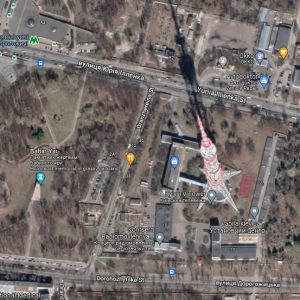
An aerial view of the TV tower and Babyn Yar Holocaust Memorial in Kyiv. Photo: Google
On Tuesday Putin’s forces committed what can only be considered a war crime in Kyiv – where they targeted the main TV tower and also hit the Babyn Yar Holocaust memorial, the site of the largest mass grave in Europe. Five civilians were burned alive, in a European capital, in the twenty-first century. This is only one of the devastating atrocities we have seen reported in the last week – the International Criminal Court has already determined that there is enough evidence to launch a probe into war crimes perpetuated by Russian forces and 38 world leaders have made the largest ever referral to ICC with evidence of potential war crimes perpetuated by Putin’s forces.
On Wednesday Ukrainian Emergency Services announced that over 2,000 Ukrainian civilians have been killed by Russian actions since the invasion began.
Overnight, for the first time in world history, Russian troops targeted a nuclear power facility in Zaporizhzhia, something which could have had terrible consequences for us all.
And this morning the Russian government blocked access to the BBC Russian service website after the Russian language website’s audience had grown from 3.1 million people to 10.7 million since the invasion.
The news is bleak; every day there is more despair, more death and more destruction. Every conversation I have had over the last week has not just touched on events in Ukraine but returned to them again and again. Tears have been shed throughout Europe and impartial and independent media coverage has never been more important.
But even in the midst of war there is hope. Humanity does indeed prevail. Small acts of kindness, of resistance, of rebellion have inspired us all. From the unarmed Ukrainians who refused to let the tanks pass to the exceptional bravery of the journalists who are at the frontline reporting hourly on events, and those in Russia who have been trying to report the facts of the war.
Whilst I could have dedicated this entire blog to the incredibly impressive Volodymyr Zelenskiy and other politicians in Ukraine who are leading from the front, there are others whose bravery I would like to highlight. Every day since the invasion began anti-war protestors have made their voices heard across Russia and Belarus.
Ovd-Info reports that as of this morning 8,163 Russians have been arrested for protesting the war in towns and cities across the country. The Duma has brought in emergency legislation which will now enable jail terms of up to 15 years for spreading ‘fake information’ about the armed forces – this would include saying that the war isn’t going to plan. In response one of the final independent TV stations – Dozhd has closed up shop – their final programme an act of defiance as it showed the staff walking off the set. In Putin’s Russia challenging him or the status quo is a very dangerous thing to do – these people are heroes, using all the tools at their disposal to demonstrate their dissent.
While there are people who are willing to say No, to highlight the impact of an authoritarian regime, to fight for our shared human rights – then there is hope.
Index stands with Ukraine and we stand with the people of Russia who oppose Putin’s aggression.
17 Jan 2022 | Kazakhstan, News, Russia
Life is returning to normal in Almaty, Kazakhstan’s largest city and commercial capital, after the unprecedented violence that followed peaceful protests earlier in January but questions remain over the actions authorities will take about civil society activists and journalists who publicised the protests.
Peaceful protests against rising prices started in the western oil town of Zhanaozen on 2 January and spread nationwide after the government’s refusal to cut the prices of liquefied petroleum gas back to the previous level. Back in December 2011, Zhanaozen had been the scene of violent clashes between striking oil workers and security forces that left at least 16 people dead.
The protesters began putting forward demands that the government should resign when the protests spread to Almaty on the evening of 4 January with protests on the city’s main square.
Access to the independent news site Orda.kz and the KazTAG news agency were almost immediately blocked in a heavy-handed response from Kazakh authorities.
Before they were blocked, Orda.kz and other independent outlets and blogs were the only sources of reliable information during the crisis. Despite the blockage of their website, its editor-in-chief Gulnar Bazhkenova said they had worked hard to keep their Telegram channel running.
“When the internet blackout was imposed, we looked for spots where the internet still worked and we would rush there to post our content wherever possible both on the website and Telegram channel,” she said. “We also shared logins and passwords with our colleagues abroad so they could post material which we passed on to them by all means available.”
Unlike in other towns and cities in Kazakhstan, the security services began to use force and the peaceful protests turned violent. Authorities later dubbed groups who hijacked these protests as “destructive forces” and “terrorists” without showing any evidence and imposed a two-week state of emergency and curfew in the city on 5 January. The same day a total blackout of communications, including the internet, was imposed on the whole country.
On 6 January Kazakh President Kassym-Jomart Tokayev called on the Moscow-led Collective Security Treaty Organisation to send troops, mostly Russian, to restore order in Almaty.
The following day Tokayev blamed “certain human rights activists”, “free media outlets” and “foreign figures” for the tragic events which sent shockwaves sent through the country’s civil society and media circles.
As the number of those detained started rising throughout the country, exceeding 10,000 as of 13 January, many Almaty-based journalists and activists have become reluctant to share their views publicly on the ongoing events in their city.
However, Index spoke to some who would talk despite the current situation.
Ardak Bukeyeva, an independent journalist from Almaty, says that following the violence on Almaty’s main square her attempts to find out about the casualties at the city’s main morgue, ambulance hospitals and other medical facilities were fruitless because staff refused to provide the information, citing ‘no disclosure’ orders from above.
As communications were cut off, Bukeyeva headed to the city hall in the hope she would find information on missing relatives or victims. As she approached the building she heard shots fired to warn her away.
“Shutting down communications, especially the internet, violated my rights not only to access information as a citizen but also to disseminate it as journalist,” she says.
Bukeyeva hopes the human cost of suppressing genuine public protests about socioeconomic and political issues will lead to meaningful changes in the country. Kazakhstan’s former president, Nursultan Abishuly Nazarbayev, only relieved the last vestiges of his omnipotent powers after holding a tight grip on them for over 30 years in protests in 2019.
Some of those who went out to Almaty’s city square on the first night of protests when they still were peaceful say that they would not even contemplate a protest in the current atmosphere of uncertainty.
Darkhan Sharipov, an activist from the Oyan, Qazaqstan! (“Wake Up, Kazakhstan!”) civil movement for political reform, was detained on the first night of the protests and kept until 3am when the protests turned violent. The following day, he and his fellow activists went back to the square but saw the violent crowd and decided to leave.
“It was hard to maintain communications because some had internet connections, but others did not,” he said. “After that night of violence we decided not to protest because we are afraid and fear that there might be repercussions.”
Political activist Askhat Belsarimov, who was also detained on the first night of the protests, echoes Sharipov: “We can’t think of protesting at the moment. Maybe, when the foreign troops leave.”
The Collective Security Treaty Organisation troops, which had the mandate of guarding government buildings and strategic facilities, started pulling out of Almaty on 13 January. The pull-out is expected to be completed by 19 January when the state of emergency ends. Should the Russian troops overstay their welcome, it will be a completely uncertain future not only for independent journalists and human rights activists but the whole county.
As for the country’s independent media, that remains to be seen.
While access to KazTAG was unblocked relatively quickly, it took until 13 January for the unblocking of Orda.kz to be announced by pro-government media outlets.
However, Orda’s Gulnar Bazhkenova told Index this was only partially correct.
“I personally could access to our website on my phone but I cannot do it on my computer which means the block hasn’t been lifted fully,” she said. “That’s why I have appealed to President Kassym-Jomart Tokayev requesting him to order the complete lifting of the block on our website.”
Kazakhstan’s activists are still concerned despite the seeming return to normality.
Darkhan says, “[The protests] might have ended for the general public but for civil society [the crackdown] is only starting,” he says. “It’s dangerous now. We all are keeping our heads down and waiting to see what happens.”
