29 May 2017 | Events
[vc_row][vc_column][vc_column_text]Organised by International Federation for Human Rights, the Gulf Centre for Human Rights, Index on Censorship and others, this is a discussion of threats to human rights defenders, journalists and online activists working in Yemen’s dangerous environment.
Human rights defenders in war-torn Yemen undertake their work in a dangerous and hostile environment as they face human rights violations at the hands of all parties to the conflict. Journalists and online activists undertake their work under threat to their safety as public freedoms including freedom of assembly in addition to freedom of expression remain severely restricted.
All those who are party to the conflict in Yemen have an obligation to protect civilians and continue negotiations, and respect and protect public freedoms including freedom of assembly in addition to freedom of expression during the conflict.
The side event aimed at highlighting how serious violations and abuses of international law have continued throughout the fighting and urge support for the UN High Commissioner’s call for an international, independent investigation into civilian deaths and injuries in Yemen, a call repeatedly made by national, regional and international civil society organisations.
On 2 October 2015, the council adopted HRC resolution 30/18, a deeply flawed resolution, drafted by Saudi Arabia, a party to the conflict that ignored earlier calls for an international inquiry and instead endorsed a Yemeni national commission. In August 2016, the High Commissioner for Human Rights, in concluding that the Yemeni commission was not acting in accordance with international standards, said the “commission did not enjoy the cooperation of all concerned parties and could not operate in all parts of Yemen,” and “has not been able to provide the impartial and wide-ranging inquiry that is required by serious allegations of violations and abuse.” At the mid of 2017, an adequate independent international investigation had yet to be established.
The side event will also call for the release of detained human rights defenders and for those responsible for guaranteeing the safety of journalists and for an investigation to be established into the murder of journalists and activists.
Speakers
Radhia Al-Mutawakel, chairperson of Mwatana Organisation, Yemen
Afrah Nasser, blogger from Yemen
Sherif Mansour, Committee to Protect Journalists
Kristine Beckerle, Human Rights Watch
Moderator:
Khalid Ibrahim, executive director, Gulf Centre for Human Rights[/vc_column_text][/vc_column][/vc_row][vc_row][vc_column][vc_row_inner][vc_column_inner][vc_column_text]
When: Tuesday 20 June 2017, 4-5:30pm
Where: Palais des Nations Room XVI, Geneva
Join the online conversation by using #HRC35 for social media
[/vc_column_text][/vc_column_inner][/vc_row_inner][/vc_column][/vc_row]
18 Apr 2017 | Awards, Awards Update, Digital Freedom, News, Youth Board
[vc_row][vc_column][vc_column_text]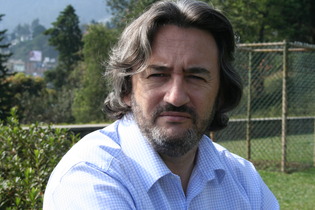
Fergal Keane is a journalist who made his name as a war reporter at the end of millennium, covering conflicts from Congo and Rwanda to Kosovo. In 2003, the Index on Censorship recognised his efforts with their award for Outstanding Commitment to Journalism Integrity. It wasn’t Keane’s first award, and it wasn’t his last either. On top of his Orwell Prize (1996) and Amnesty International Press Award (1993) and Television Prize (1994), his OBE and his BAFTA (both from 1997), Keane has since added a Sony Gold award in 2009, for his inspiring Radio 4 series ‘Taking a Stand’, and the Ireland Funds Literary Award in 2015.
In 2004, following decades in the profession, Keane made the decision to stop entering active war zones. “I couldn’t justify potentially robbing my children of a father,” he told the Daily Telegraph in 2010. “I couldn’t do it anymore.” But despite a slight career shift, Keene continues his commitment to journalism and justice just as fervently. He is now a special correspondent for the BBC, still writing and broadcasting on topics like the refugee crisis, the Yemen conflict and the South Sudan civil war – though sometimes from afar – as well as often being dispatched to the latest scenes of terrorism in Europe, whether France, Belgium or Germany. Wherever he is, he retains an insight and awareness of historical context that few can match.
Beyond the BBC, he is also the author of several well-received books and in 2011 he received an honorary degree from the University of Liverpool, where he is now three years into a Professorial Fellowship. He is part of the university’s Institute of Irish Studies, teaching students on the Understanding Conflict masters programme.
Speaking to the university’s website in 2015, Fergal criticised the “endlessly reductive” mainstream press and urged his students to “always challenge your opinions with facts, every day of your life. You will only know what your opinions are worth if they are taken out of the box and subjected to the most severe tests. Facts, facts, facts.”
Not all Keane’s work is confined to journalism, however. In 2005, he founded Msaada, an NGO dedicated to assisting Rwandans – and Rwandan society – to recover from the 1994 genocide, through meaningful, income-generating projects. It continues to support such projects today.
Samuel Earle is a member of Index on Censorship’s Youth Advisory Board. He is a freelance writer and recent masters graduate from the London School of Economics and Political Science, where he studied Political Theory. He lives in Paris.[/vc_column_text][/vc_column][/vc_row][vc_row][vc_column width=”1/2″][vc_single_image image=”85476″ img_size=”full” alignment=”center” onclick=”custom_link” link=”https://www.indexoncensorship.org/2016/11/awards-2017/”][/vc_column][vc_column width=”1/2″][vc_column_text]
Index on Censorship Freedom of Expression Awards
Seventeen years of celebrating the courage and creativity of some of the world’s greatest journalists, artists, campaigners and digital activists
2001 | 2002 | 2003 | 2004 | 2005 | 2006 | 2007 | 2008 | 2009 | 2010 | 2011 | 2012 | 2013 | 2014 | 2015 | 2016 | 2017[/vc_column_text][/vc_column][/vc_row][vc_row][vc_column][vc_basic_grid post_type=”post” max_items=”12″ style=”load-more” items_per_page=”4″ element_width=”6″ grid_id=”vc_gid:1492505799978-a5ad6490-9f12-5″ taxonomies=”4881, 8935″][/vc_column][/vc_row]
3 Feb 2017 | Awards, Fellowship, Fellowship 2016, Middle East and North Africa, News, Yemen
[vc_row][vc_column][vc_column_text]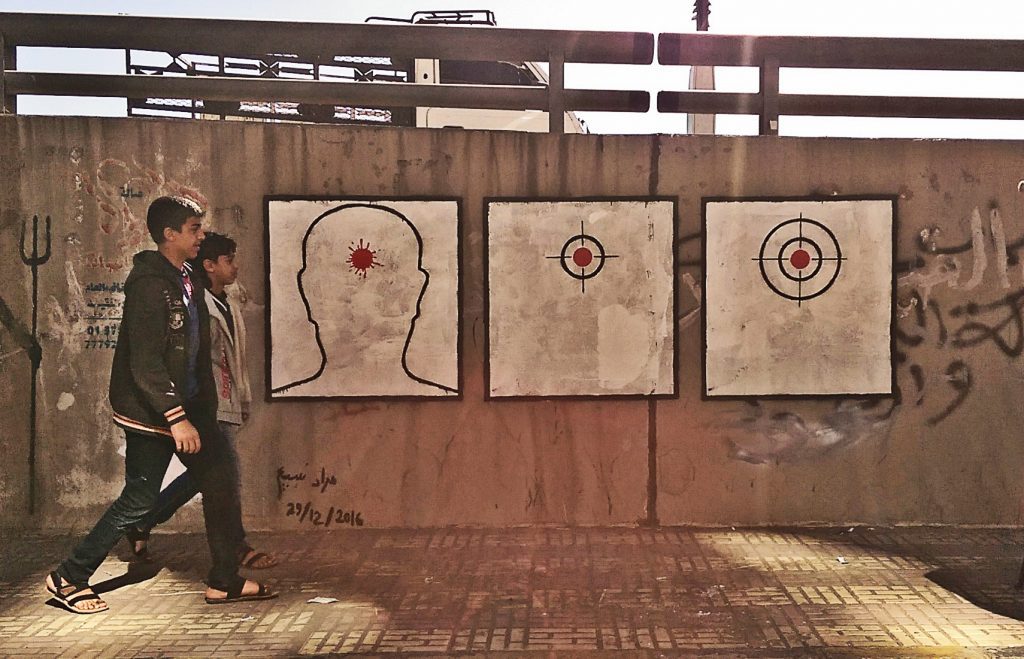
US president Donald Trump’s executive order banning citizens of seven predominantly Muslim countries from travelling to the USA for has had devastating consequences for thousands of people. Among them is Index on Censorship Award winner Murad Subay. The Yemeni street artist is now unable to visit his wife, who is currently studying in the USA.
“It’s really frustrating to even start thinking that I won’t be able to see her for that long,” he told Index. “She was supposed to visit during summer break, however, it seems that she can’t do that now.”
With uncertainty surrounding how the Trump administration’s policy towards Yemen will play out, the couple are now facing the very real prospect of not seeing each other until she finishes her studies four years from now.
“It’s been a really difficult time for both of us because it’s the first time we’ve been away from each other for more than a month,” Subay said. “I can’t say that this doesn’t have its negative effects on my work, for it surely does.”
At home, the worries that have plagued Subay throughout the Obama administration remain, particularly Trump’s continuation – and possible escalation – of his predecessor’s drone strikes in Yemen, which by February 2016 had killed up to 729 Yemenis including 100 civilians. One rural counter-terrorism raid authorised by Trump has already left at least 10 women and children dead, according to Al-Jazeera.
|
Murad Subay is the 2016 Index on Censorship Freedom of Expression Arts Award-winner and fellow. His practice involves Yemenis in creating murals that protest the country’s civil war. Read more about Subay’s work.
|
|
“Trump has no right to make things even worse for Yemenis. Yemen is already suffering from US arms deals with Saudi Arabia that helped fuel this war. Barring Yemenis from entering the USA under his administration only adds to these troubles.”
The war has been hitting close to home for Subay in recent months. Two of his cousins were recruited by warring parties and killed on the battlefield. – Fuad Subay, aged 26, was a soldier killed in Albuka’a, and Yaser Subay, just 14, was recruited by Houthis and killed in Isilan.
On top of this, a close friend of his, the respected investigative journalist Mohammed Alabsi, was killed in an apparent assassination. According to the Yemen Times, Alabsi had gone out for dinner in Sana’a with a cousin on 20 December. A little while later both men were rushed to hospital, where Alabsi died.
“I was told that blood came out of his ears and eyes,” Subay said. “Mohammed was investigating the black markets trading in oil that were associated with high-ranking politicians. I do not know the exact details of this, but what I do know is that Yemen has lost one of its most important and noblest investigative journalists, and that I lost a dear friend.”
An investigation into Alabsi’s death is underway.
Subay addressed a recent wave of violence against civilians, including journalists and public figures, in a mural entitled Assassination’s Eye, painted on the Mathbah Bridge in Sana’a in late December. Part of the Ruins Campaign, the minimalist painting depicts a sniper’s crosshairs training in on a human target.
“It conveys the assassin’s point of view, where it first feels like it is only a part of training on how to hit a target, but then in the final square the bullet ends up in the head of a real person rather than a target board,” Subay explained. “These assassinations have spread vastly since 2012, where they were mostly carried out among the military ranks and politicians. Lately, however, these operations have been targeting civilians too. I was planning to address this issue some time ago after hearing about the assassinations of innocent civilians in different places of the country, and that was just two weeks before I was shocked by the death of my friend.”
Elsewhere, Subay has been asked to serve as a judge for the Italian arts award, Fax for Peace, which invites students and artists from around the world to send pictures, videos or animations on the themes of peace, tolerance, human rights and the fight against all forms of racism. He said of the role: “It is a great pleasure to be selected as a judge in this contest and it is a big responsibility, which I hope to be able to carry out effectively.”
However, with Yemen’s economic circumstances ever worsening, and many working people now into their fourth month without receiving salaries, he sees difficult times ahead.
“It’s very harsh to see people every day looking for anything to eat from garbage, waiting along with children in rows to get water from the public containers in the streets, or the ever increasing number of beggars in the streets. They are exhausted, as if it’s not enough that they had to go through all of the ugliness brought upon them by the war.”
Referring to the deaths of his cousins and his close friend, he added: “No one can live in this country and not be affected by the war. This all happened in the last three or four months. These events make a month in Yemen feel like a year.”[/vc_column_text][vc_basic_grid post_type=”post” max_items=”4″ element_width=”6″ grid_id=”vc_gid:1486138786513-e5ca059b-efd0-1″ taxonomies=”8196″][/vc_column][/vc_row]
22 Sep 2016 | Awards, Fellowship, Fellowship 2016, Middle East and North Africa, mobile, News, Yemen
Credit: Ruins campaign. Bani Waleed, September 2016
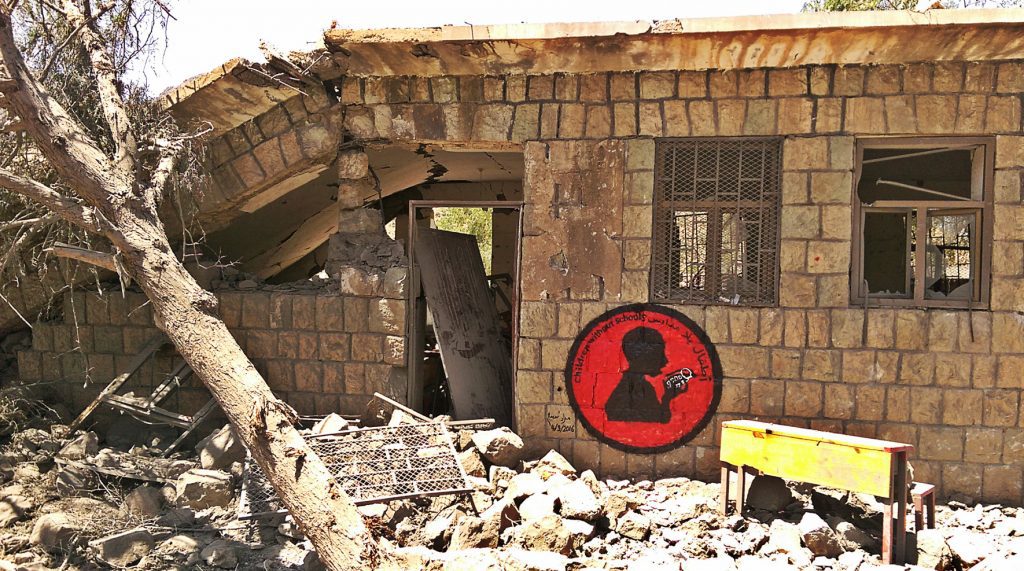
On 3 September 2016, a group of Houthi rebels convened a meeting at al-Najah School in the al-Haima district of Bani Waleed, a local witness told Murad Subay, street artist and winner of the 2016 Index on Censorship award for arts, that the men entered the school without permission.
“We are not with any of the warring parties – we are caught in the middle,” the witness said.
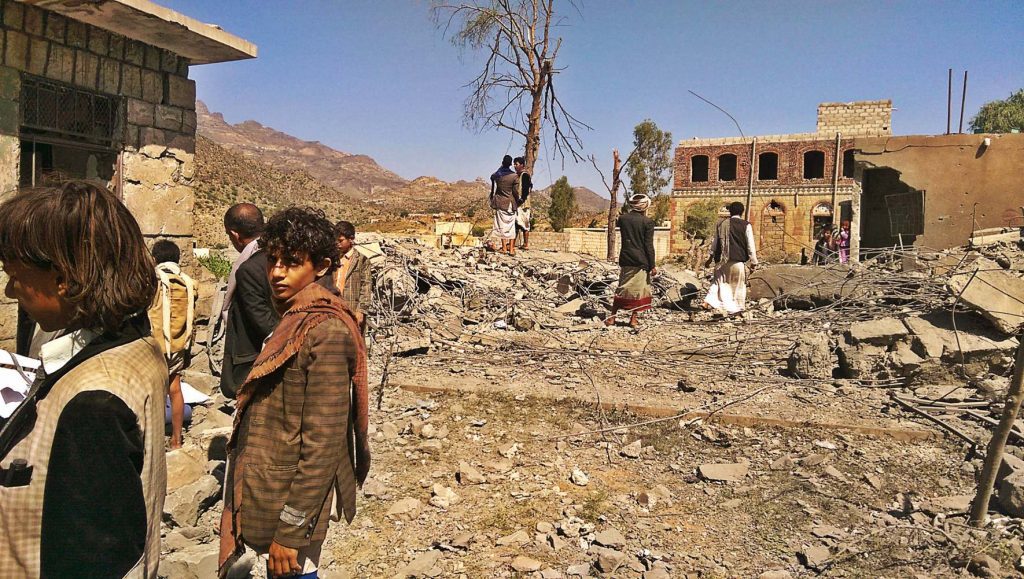
Soon after, the school was destroyed in an airstrike carried out by the Saudi Arabian-led military coalition, killing one disabled student and adding 1,200 to the more than 3.4 million already forced out of education in the country as over 3,600 schools have been forced to close in the course of the war.
“Can you imagine? These are the soldiers of the wars to come,” Subay told Index. “Without education, these children could become tomorrow’s fighters and tools in the hands of extremists.”
At dawn on 4 September Subay travelled to Bani Waleed to create a mural on what remained of al-Najah.
Credit: Ruins campaign. Bani Waleed, September 2016
“When we got there I asked some of the students what they were going to do now that their school was destroyed and some told me they will go to Sanaa while others said they will travel to surrounding villages,” Subay said. “But it will be much more difficult for the 400 girls who attended the school because traditions in Yemen mean they will not be able to travel alone, making it impossible for them to go to other villages to study.”
|
Murad Subay is the 2016 Index on Censorship Freedom of Expression Arts Award-winner and fellow. His practice involves Yemenis in creating murals that protest the country’s civil war. Read more about Subay’s work.
|
|
Destroying schools isn’t a big deal for the warring parties, the artist added. “Some of the children of those leaders who shout ‘death to America’ are studying at the best universities in the world, including in the USA, while each bombed school in Yemen – especially big ones like al-Haima – will take years to rebuild.”
The situation is made even more difficult in a time of war when resources and building materials are almost impossible to come by. “Even if the West stopped supplying weapons to Saudi Arabia today and patted themselves on the back saying ‘we are doing good’, Saudi Arabia already has enough to wage wars for another 150 years if it wants.”
If there is any hope for peace to prevail and schools, hospitals and other buildings belonging to the people are to be rebuilt, countries like Britain and America should take a step further and tell Saudi Arabia “to show restraint”, Subay said.
“While Saudi Arabia is doing the majority of the destruction, all sides of the war in Yemen must take responsibility.”
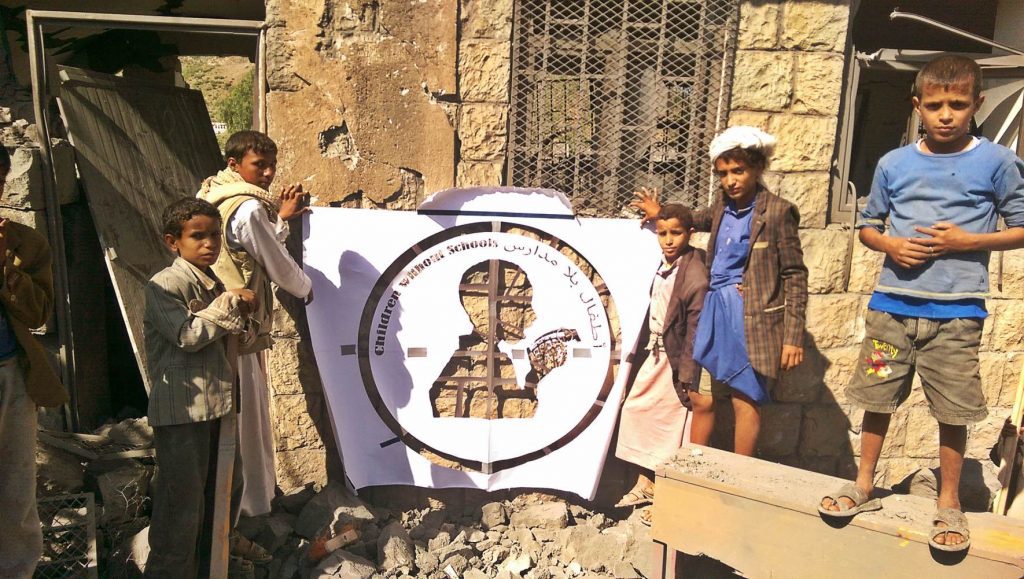
Credit: Ruins campaign. Bani Waleed, September 2016
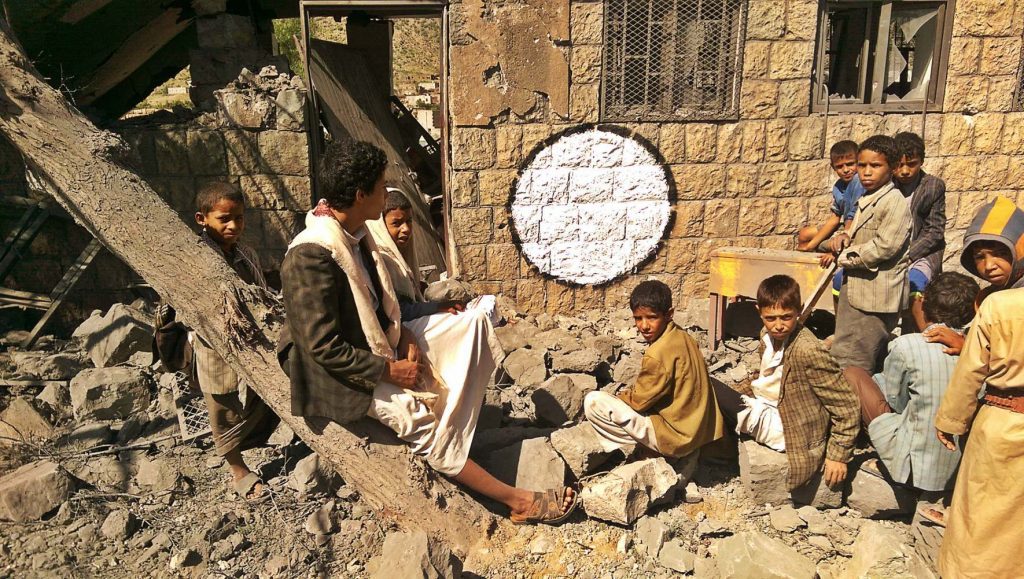
Credit: Ruins campaign. Bani Waleed, September 2016
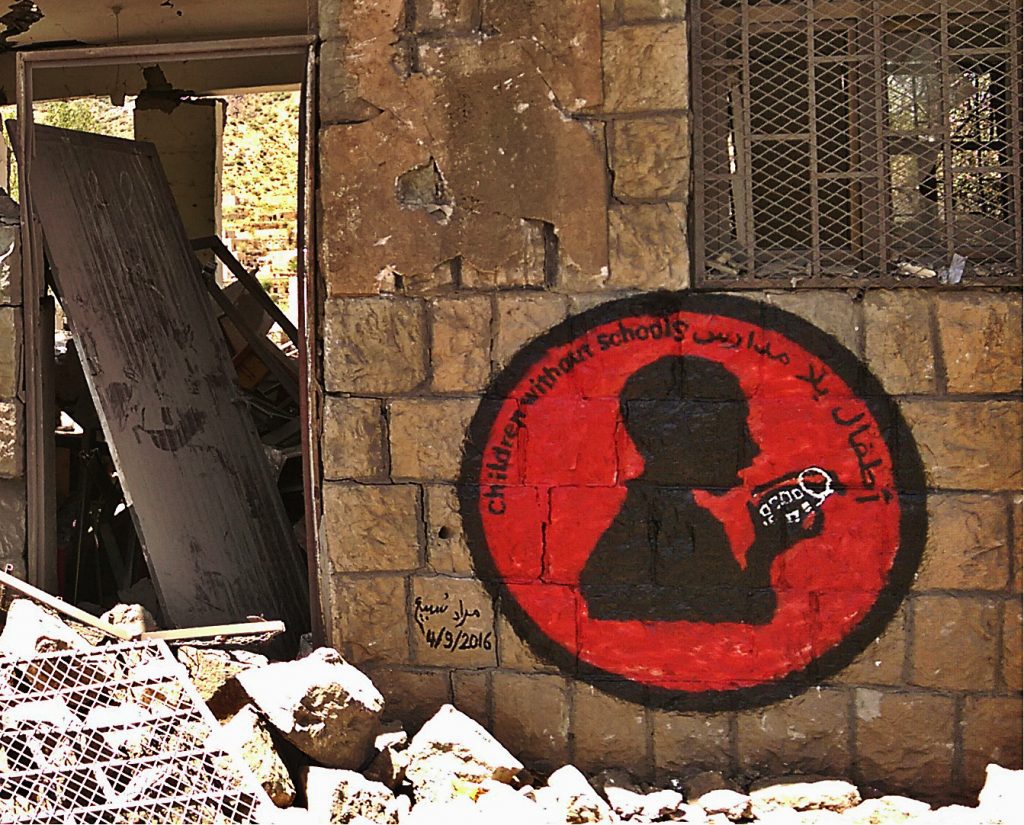
Credit: Ruins campaign. Bani Waleed, September 2016
The mural completed on 4 September depicts a child holding a hand grenade in place of a book, with the words “Children without schools” painted in English and Arabic.
When painting with fellow artists from the Ruins campaign – set up in May 2015 in collaboration with fellow artist Thi Yazen to paint on the walls of buildings damaged by the war – on 25 August, the group were arrested and interrogated by a local militia.
“They asked us to sign a letter with our fingerprints promising that we would not return again without permission,” Subay explains. “I actually did have permission from a local tribal leader but they wouldn’t listen.”
The artists were told if they returned they would be punished.
“My friends were very afraid and some of them said even with permission they would not return,” Subay said. “It was a strange situation for them.”
Subway himself isn’t put off and is already looking forward the next Ruins campaign, wherever that may be.
The last time he spoke with Index, Ruins had just completed a series of murals in front of the Central Bank of Yemen to represent the country’s economic collapse. Soon after the murals were finished, Houthi rebels defaced two out of the three works of art, writing “Samidoon” (صامدون), meaning “steadfast”, which is one of their slogans.
Assessing the situation in Yemen and the many different sides of the conflict, Subay said: “It is very difficult. Every night we hear airstrikes here and there, but we go on with our lives.”
“But any day when I can paint is a good one.”
Nominations are now open for 2017 Index on Censorship Freedom of Expression Awards and will remain open until 11 October. You can make yours here.
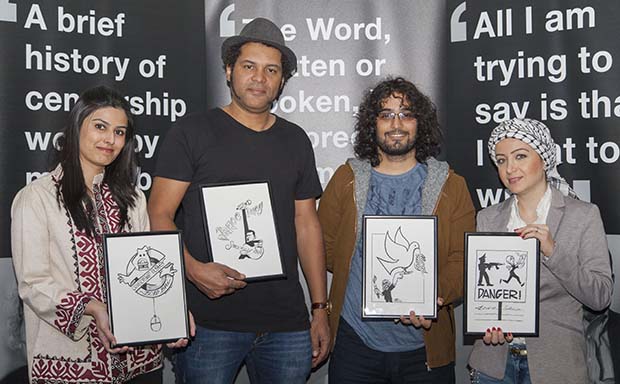
Winners of the 2016 Freedom of Expression Awards: from left, Farieha Aziz of Bolo Bhi (campaigning), Serge Bambara — aka “Smockey” (Music in Exile), Murad Subay (arts), Zaina Erhaim (journalism). GreatFire (digital activism), not pictured, is an anonymous collective. Photo: Sean Gallagher for Index on Censorship
Ryan McChrystal is the assistant online editor at Index on Censorship
