21 Oct 2019 | Awards, Campaigns -- Featured, Fellowship, Fellowship 2019, Statements
[vc_row][vc_column][vc_column_text]
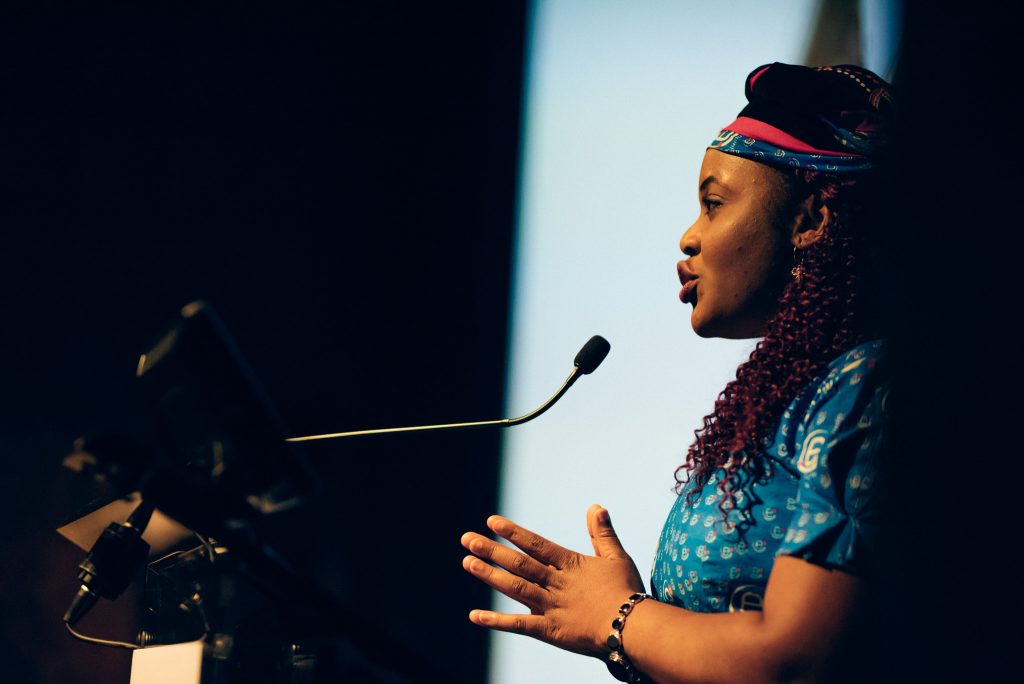
Journalism award-winning journalist Mimi Mefo (Photo: Elina Kansikas for Index on Censorship)
Mimi Mefo, winner of this year’s Index on Censorship Freedom of Expression Award, is due to give a keynote speech at the Integrity 20 conference in Brisbane. The conference, hosted by Griffith University, is an internationally renowned event bringing together the world’s leading thinkers and activists to discuss global issues.
Mefo is due to speak on Friday October 25 on media freedom and the challenges she faces as a journalist in Cameroon.
Her visa was refused because authorities said they “were not satisfied that the applicant’s employment and financial situation provide an incentive to return.”
Mimi – who flew to London in July from Berlin to speak as the guest of the UK government at a major global conference on media freedom – is currently working as a freelance journalist in Germany.
“Australia prides itself on its democratic values, including freedom of expression,” said Index on Censorship chief executive Jodie Ginsberg. “This means it needs to support and champion those being denied the right to speak in their own countries. Denying visas to journalists who have faced oppression and censorship in their own countries simply emboldens the oppressor.”
“It is frankly insulting and belittling to suggest Mimi Mefo would use the opportunity of this keynote to seek asylum in Australia.”
Mefo is due to fly from Australia straight to give the prestigious Carlos Cardoso memorial lecture at the 15th African Investigative Journalism Conference in South Africa on October 28, where Nobel Prize-winning economist Joseph E. Stiglitz will give the keynote.
Contact: Joy Hyvarinen, head of advocacy, [email protected] + 44 (0)20 3848 9820[/vc_column_text][/vc_column][/vc_row][vc_row][vc_column][vc_basic_grid post_type=”post” max_items=”4″ element_width=”6″ grid_id=”vc_gid:1571649254262-2677266b-c9f9-2″ taxonomies=”8935″][/vc_column][/vc_row]
1 Oct 2019 | Events
[vc_row][vc_column][vc_column_text]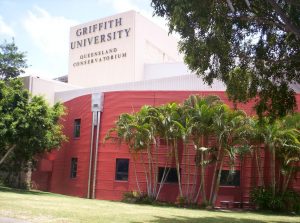
The recent AFP raids in Australia highlighted that challenges to media freedom are not limited to authoritarian countries.
It has been reported that since 9/11, Australia has seen the introduction or amendment of more than 75 sets of legislation, many of which may impinge on press freedom. Simultaneously, the debate about journalist and whistleblower protection laws has gained momentum.
But where does the security issue fit into this? While a successful democracy is characterised by a free press, it remains true that there are often good reasons for secrecy and confidentiality. How can we reconcile the conflicting perspectives of press freedom and security?
As part of the Integrity 20 conference, Index chief executive and 2019 Freedom of Expression Award winner Mimi Mefo join a panel of experts to discuss challenges to media freedom worldwide.[/vc_column_text][/vc_column][/vc_row][vc_row][vc_column][vc_column_text]
When: Friday 25 October, 12.15pm
Where: Conservatorium Theatre, South Bank Brisbane
Tickets: AUS $153
[/vc_column_text][/vc_column][/vc_row]
5 Jun 2019 | Australia, Campaigns -- Featured, Media Freedom, Statements
[vc_row][vc_column][vc_single_image image=”107111″ img_size=”full”][vc_column_text]Index on Censorship condemns the raid by Australian federal police on the offices of public broadcaster ABC over a 2017 article it ran in on operations of Australian special forces in Afghanistan.
The search warrant named three ABC journalists — news director Gaven Morris, Daniel Oakes, Samuel Clark — and gives police wide-ranging powers, including the power to “add, copy, delete or alter” material in the ABC’s computers. Thousands of documents are being sought by police in the raid.
“The power of this warrant is terrifying,” said Index chief executive Jodie Ginsberg. “Protection of journalistic sources is one of the basic conditions for press freedom – and the huge scope of this warrant puts that at risk.”
The federal police said it was investigating “allegations of publishing classified material, contrary to provisions of the Crimes Act”.
The raid comes a day after the federal police searched the home of Annika Smethurst, a News Corp political editor, over articles she published on plans to expand Australia’s domestic surveillance capabilities.
Last week, the High Court in Belfast, Northern Ireland ruled that warrants against two Northern Irish journalists whose homes and office were raided by police last year were “inappropriate”. Three days later, the criminal investigation into Trevor Birney and Barry McCaffrey was dropped.
Birney and McCaffrey produced a documentary No Stone Unturned, which examines claims of state collusion in the murders of six men. During the Northern Irish raid, police seized documents, personal computers and USB sticks belonging to family members and copied a computer server that contained years of sensitive reporting by the documentary makers, risking endangering confidential sources unrelated to the film.
Index on Censorship and colleagues English PEN intervened in the judicial review of the case, noting the “chilling effect” of such orders, which were “likely to have the effect of intimidating journalists throughout Northern Ireland and further afield.”[/vc_column_text][vc_basic_grid post_type=”post” max_items=”4″ element_width=”6″ grid_id=”vc_gid:1559725317075-72546647-22cf-1″ taxonomies=”6534″][/vc_column][/vc_row]
7 Mar 2019 | Awards, News
[vc_row][vc_column][vc_video link=”https://youtu.be/i_eRNjepHBg”][vc_column_text]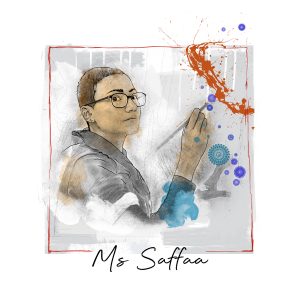 Ms Saffaa is a self-exiled Saudi street artist living in Australia who uses murals to highlight women’s rights and human rights violations in Saudi Arabia.
Collaborating with artists from around the world, she often focuses on Saudi women, their individuality and autonomy. She challenges Saudi authorities’ linear and limited narrative of women’s position in Saudi society, and offers a counter narrative. Recently, she has also focussed on human rights and the murder of Jamal Khashoggi.
Part of a new generation of Saudi activists who take to social media to spread ideas, Ms Saffaa’s work has acquired international reach. Through her use of social media and collaborations, Ms Saffaa amplifies her subjects’ voices online, beyond their life on a wall.
“I am my own guardian”, a series of murals she created in 2012-13, made waves in Saudi Arabia and internationally. This was a protest against restrictive guardianship laws that mandate women must have a male guardian’s permission to get married, undertake education, have elective surgery or even to open a bank account. She depicted Saudi women wearing the male Saudi headdress, with banners across their mouths saying: “I Am My Own Guardian”.
In 2016, a conservative Saudi man discovered her work and abused her on Twitter. This sent Ms Saffaa trending. Many activists retweeted her artwork, and used it in a movement protesting against Saudi Arabia’s guardianship laws, which used the artwork as the unofficial logo.
Ms Saffaa has faced online threats, harassment, and in 2017, after an interrogation by the head of intelligence at the Saudi embassy in Canberra, her passport renewal request was denied, leaving her stranded in Australia with a de facto travel ban.
With crown prince Mohammed Bin-Salman’s rise to power, expressing dissent or challenging the Saudi leadership has become even more dangerous. After the murder of prominent journalist Jamal Khashoggi, it is clear that dissidents face repression beyond a travel ban, and regardless of whether they live in the country or abroad.
In 2017, a mural celebrating Saudi women and the 150th day of the “I am my own guardian” movement was vandalised. In 2018, she recreated the defaced artwork with support from Peter Khalil, an Australian Labor MP. The new mural included the work of 10 local and international female artists as collaborators. On the week of International Women’s Day, she created a mural in Sydney to celebrate Saudi women’s resilience. It features two portraits of prominent Saudi activists imprisoned on terrorism charges. In November 2018, Ms Saffaa collaborated with renowned American artist and writer Molly Crabapple on a mural celebrating Jamal Khashoggi that read, “We Saudis deserve better.”[/vc_column_text][vc_separator][vc_row_inner][vc_column_inner width=”1/2″][vc_single_image image=”104691″ img_size=”full” onclick=”custom_link” link=”https://www.indexoncensorship.org/2019/01/awards-2019/”][/vc_column_inner][vc_column_inner width=”1/2″][vc_column_text]
Index on Censorship’s Freedom of Expression Awards exist to celebrate individuals or groups who have had a significant impact fighting censorship anywhere in the world.[/vc_column_text][/vc_column_inner][/vc_row_inner][vc_separator][/vc_column][/vc_row][vc_row][vc_column][vc_basic_grid post_type=”post” max_items=”4″ element_width=”6″ grid_id=”vc_gid:1551786362908-3b759dfe-64e8-9″ taxonomies=”26925″][/vc_column][/vc_row]
