22 Jun 2022 | News, Russia, Ukraine, Volume 51.02 Summer 2022, Volume 51.02 Summer 2022 Extras
In the dark times
Will there be singing?
Yes, there will be singing
About the dark times.
Bertolt Brecht, motto to Svendborg Poems 1939
For someone who has by now lived most of my adult life in the West but grew up in Belarus – a country that borders both Ukraine and Russia – these have certainly been dark and turbulent times.
The horror of what people in Ukraine are going through is heart-breaking. It is also confusing if my own country of birth is viewed as an aggressor or a victim.
Should people who have bravely protested in hundreds of thousands in 2020 and paid a very high price for it be now equated to the regime that rules them? Does Belarus, the country and the people, mean Lukashenka? What about Russia? The support for Putin is undoubtedly bigger there. But does Russia and Russian culture mean Putin?
Having always been a passionate advocate of freedom of expression under the most trying of conditions, what to make now of the blanket censorship of Russian and Belarusian artists not in Russia and Belarus… but in the West?
When the horror of the invasion of 24 February sank in, the Western cultural scene was immediately rocked by a succession of cancellations and calls for boycotts. Some of them were easier to understand and justify than others.
Opera singer Anna Netrebko and conductor Valery Gergiev have been tied to Putin’s regime and identified as representatives of his soft power: association with them became too toxic for Western cultural institutions. Recently, the evidence of oligarchic wealth accumulated by Gergiev due to his political connections has also come to light. This made any defence of him even more difficult
Art in some ways has always been held hostage. The authoritarian Soviet regime used the prestige of the Bolshoi and the power of Russian culture as soft power.
One is reminded of a powerful 1968 performance by cellist Mstislav Rostropovich at the BBC Proms in London where he performed – intitally to the calls of protest and with tears streaming down his face – a tortured and impassionate piece of music by a Czech composer Antonin Dvorak on the day Soviet tanks rolled into Czechoslovakia to crush the Prague Spring.
His wife, the opera singer Galina Vishnevskaya, recalled the event in her autobiography:
“In the hall, six thousand people greeted the appearance of Soviet artists with long unceasing cries, stomping, whistling, preventing the concert from starting. Some shouted: ‘Soviet fascists, get out!’ Others: ‘Shut up, the artists are not to blame!’
“Slava (his nickname) stood there completely pale, absorbing the shame for his criminal government, and I, closing my eyes and not daring to raise my head, huddled in the far corner of the viewing box. But then, finally, the hall fell silent. Dvořák’s music poured over the people like a requiem, and Rostropovich, shedding tears, spoke through his cello.
“The hall froze, listening to the confession of the great artist, who at that moment, together with Dvořák merged with the very soul of the Czech people, suffering with him and with them asking his forgiveness and praying for them.
“As soon as the last note played, I rushed backstage to Slava. Pale, with trembling lips, having not yet recovered from his experience on stage, with eyes full of tears, he grabbed my arm and dragged me to the exit:
“‘Let’s go to the hotel, I can’t see anyone.’
“We went out into the street – the demonstrators were shouting there, waiting for the musicians of the orchestra to express their indignation to them.
“Seeing the two of us, they suddenly fell silent and parted in front of us. In the ensuing silence, not looking at anyone, feeling like criminals, we quickly walked to the car waiting for us and, returning to the hotel, we could finally give vent to our despair.
“But what could we do? We did the only thing that was in our power – got drunk.”
What then should the answer to this moral dilemma be? Should musicians and artists be allowed to perform only once they have stated their opposition to their government?
And is it then morally justifiable from the point of view of Western democracies to put someone living under completely different conditions in that position? To demand dissent from someone who might not be in the position to speak freely?
The German music critic Jan Brachmann gives the example of Dmitri Shostakovich, who, in 1949, appeared at a Soviet-backed peace conference in New York, having been pressured by Stalin into attending.
The émigré Russian composer Nicolas Nabokov publicly interrogated Shostakovich about Soviet denunciations of modernist music, even though he knew that his colleague could not speak his mind. Shostakovich muttered, barely audible: “I fully agree with the statements made in Pravda.”
It is unclear what exactly had been gained from that exercise. But Gurgiev aside and any moral clarity there notwithstanding, there have been other, much less clear-cut cases recently.
Sergei Loznitsa, one of Ukraine’s most prolific filmmakers, who has explored the Maidan uprising, the Donbass war, Stalin’s personality cult and the tragedy behind the Babyn Yar massacre, has recently been expelled from the Ukrainian Film Academy for speaking out against blanket boycott of Russian filmmakers.
His opposition is based on the fact that people should be judged by their actions not their passports. It is hard to disagree. People can still love their country and feel deeply ashamed of their government’s actions.
Kirill Serebrennikov, a Russian dissenting artist of great talent, is currently also in the line of fire.
Serebrennikov, who had his homoerotic production, Nureyev, taken off stage at Bolshoi in 2017, was placed under house arrest accused of embezzling theatre funds – a charge widely seen as being politically motivated. He was not allowed to attend a premiere of his production of Cosi Fan Tutte at Zurich Opera nor to the Cannes premiere of his hugely acclaimed ode to rock ‘n’ roll and dissent in 1980s Leningrad, Leto.
Recently Bolshoi has once again cancelled a scheduled production of Nureyev, this time as a retaliation for him speaking up against the war. Serebrennikov told France 24 in an interview last month that “it’s quite obvious that Russia started the war”, and that it was breaking his heart.
“It’s war, it’s killing people, it’s the worst thing (that) ever might happen with civilisation, with mankind… It’s a humanitarian catastrophe, it’s rivers of blood,” he said.
And yet the Ukrainian State Film Agency opposed Serebrennikov’s inclusion in Cannes Film Festival and the premiere of his new film on the grounds that he is a Russian filmmaker, and it was unacceptable in times of war. While this reaction is humanly understandable and can even be seen by some as a moral decision, we need to ask ourselves who ultimately benefits from silencing, cancelling, de-platforming and similar methods? It is never a viewer, a reader or any ordinary person.
The power of art is in our shared humanity and not in division. Art and its healing power is what gets us through the hard and dark times. We need to show solidarity with people in Ukraine and Ukrainian artists, shine a spotlight on their experiences and prioritise their voices, as well as support those who struggle under authoritarianism in their own countries. This is a task for any functioning democracy.
Having started by quoting Bertolt Brecht, another quotation, this time by the Soviet dissident Alexander Solzhenitsyn comes to mind: “The line separating good and evil passes not through states, nor between classes, nor between political parties either – but right through every human heart – and through all human hearts.”
This article appears in the forthcoming summer 2022 edition of Index on Censorship. Get ahead of the game and take out a subscription with a 30% discount from Exact Editions using the promo code Battle4Ukraine.
For another view, read Marina Pesenti’s article where she argues that promoting Russian culture risks furthering Putin’s agenda.
9 Mar 2022 | China, Hong Kong, News
In October 1999, a crowd gathered outside Buckingham Palace to jeer at Jiang Zemin, then China’s president as he ate dinner inside with Queen Elizabeth. “Free Tibet!” and “Nazi China,” they shouted. For Jiang, who was known to be sensitive to criticism (he had earlier told Swiss lawmakers that they had “lost a good friend” after they declined to quash similar protests) it was surely an uncomfortable moment. It was also a sign of a robust democratic principle: the right to peaceful assembly and protest.
I lived in Guangzhou at the time and watched coverage of Jiang’s UK visit on Hong Kong terrestrial TV, beamed from across the border about 130km away. But at just the point where cameras panned over the protestors and their placards, the screen was abruptly replaced with a test card. I later learned that beetle-browed apparatchiks spent their days waiting to pounce on any broadcast that offended mainland sensibilities. Like the Stalinist cult of Soviet Russia, China could not endure the friction of free expression.
Censorship this crude can be grimly funny. Blanking TV screens is an electronic update of photographic ‘retouching’, when Soviet bureaucrats diligently scratched out images of political figures who had been purged or executed by the regime of Joseph Stalin. In the late 1980s, British television producers hired voice actors to precisely mimic Sinn Fein politicians in a creative attempt to work around a government ban on terrorist spokespersons. But it was hard to find much humor in China’s didactic prohibitions, except for the unintentional kind.
I taught at the Guangdong University of Technology until 2000. In the evenings I would traipse to the university internet centre, a crowded room full of battered old computers to send emails home. Large signs on the wall warned against browsing for anything to do with politics, religion or sex. In the classroom I was also instructed to avoid those taboos. It was made known to me that a cadre from the Communist Party was in the classroom ready to flee to the dean should I break the rules, for which I would be fired and sent home.
The state graduated from these primitive attempts to restrict internet searches to erecting the Great Chinese Internet Firewall, one of the world’s most sophisticated systems of online censorship. YouTube and Facebook were banned in 2009, later Google, Dropbox and Wikipedia. Foreign newspapers (including my own – The Economist and The Independent) and the New York Times have been repeatedly blocked, domestic journalists imprisoned, foreign journalists intimidated or kicked out.
One of the bleakest developments of the last decade has been watching the dead-hand of this official repression seep into Hong Kong. The province was hardly paradise – crowded, venal and with eye-popping disparities in wealth. Nevertheless, its cinemas, newspapers and bookstores did not live in fear of being gagged or shut down. One of the first books I bought there was The Private Life of Chairman Mao, a memoir by Mao’s doctor Li Zhisui, which chronicles, among other things, the Chinese leader’s alleged fondness for sex with young girls.
Long before the National Security Law (NSL) dropped like a dirty bomb in the summer of 2020, bookstores and public libraries were removing critical titles about Mao, history, the 1989 Tiananmen Massacre and the democracy movement. The closures last year of the anti-communist Apple Daily, Hong Kong’s largest-selling newspaper, and online website Stand, which scrubbed all its old articles, are only the tallest trees to be toppled by the law.
Programmes have been cancelled and reporters sacked, moved or banned from covering press events. Foreign journalists, such as Aaron McNicholas, a former Bloomberg reporter from the same Irish town as myself (Clones) have had their visa applications rejected (he was forced to return home in September 2020). Radio Television Hong Kong (RTHK), the public service station I used to watch while in Guangdong, has pulled back from interviews and removed archives that might trigger the censors.
Self-censorship is the worst kind, said the Czech-born movie director Milos Forman, because it twists spines, destroys character and turns us into hypocrites. It’s also the “goal” of all repressive regimes, said one Hong Kong-based journalist. “You start to question yourself whether that story you’re researching is still doable in light of the NSL,” said the journalist who requested anonymity. “They can slice and dice that law in whatever way they wish, and if you cross the line, you can be arrested and denied bail.”
More reporters are getting the message. In the last month, over half a dozen have reportedly quit the newsroom of The South China Morning Post, once one of the crowns in Rupert Murdoch’s empire, now owned by Alibaba, a Chinese internet company run by billionaire Jack Ma. Ma disappeared from public view for three months in November 2020 after he criticised the country’s creaking financial system. Many will have surely heeded the lesson: if China’s richest man can be brought to heel, who cannot.
Hong Kong’s chief executive, Carrie Lam, has punctuated this historic assault on a first-world media with a series of surreal statements denying it is happening. In January, she said her government did “not seek to crack down on press freedom.” Last year, in a Trumpian touch, she said her government was the “worst victim” of fake news, the prelude to what many fear will be more legislation targeting the internet.
As the scale of the government’s ambitions to throttle free expression became clear, Lam insisted that journalists were safe – as long as they obeyed the security law. Of course, as media watchdog Reporters Without Borders noted, the scope of the four new offences that can be wielded against journalists – secession, subversion, terrorism and collusion with foreign powers – is so “deliberately vague and catch-all” as to make all but government stenography a dangerous proposition (life imprisonment is the mandated punishment).
Beyond the silenced reporters, activists and politicians, various sectors of Hong Kong society, such as unions, are “quietly shutting down”, said the anonymous journalist, citing “fear of repercussions”.
“That bedrock of civil society is slowly – actually quickly – being eroded,” he said.
One of the last public memorials to the Tiananmen incident – a statue of piled-up corpses to commemorate those killed – was removed from the University of Hong Kong in December. “Hong Kong has now become a place where those who speak out against such draconian measures await the midnight knock,” writes Michael C Davis, a professor of law at the university until 2016.
David Law, who also taught at the university but who recently left Hong Kong, says the removal of the ‘pillar of shame’ was a shock. “It isn’t necessarily the most telling event but it is the most visible, something that people saw and remember and can relate to as a common point of reference – literally a landmark,” he says. “It has been valuable for getting people to literally see what is happening. Symbols do that.”
I was last in Hong Kong in 2013, on a book tour, giving a couple of talks on the Fukushima nuclear accident that had occurred two years previously. I had been invited by activists campaigning for the closure of the Daya Bay Nuclear Power Plant across the border in Guangdong. I wrote back to them this month as I was researching this article, asking if the new law had affected their activities, but I got no reply. It’s possible they hadn’t received my mail – or that they cannot respond. That’s what happens when everyone is afraid.
Pondering all this over the last week, I recalled gleefully smuggling my Mao book back across the border in late 1999 and debating with my wife whether to teach it in journalism class, which I eventually did.
I’d love to frame this decision, which broached two of three of the university’s banned topics, as a daring jab at the censors, or a pedagogic exercise in challenging perspectives – but I was mostly curious about the reaction of my students. They had been taught a precise formulation on Mao’s rule – 70% good, 30% bad – a calculation that included nothing about his sexual proclivities. In the end, one or two were furious at this new information but if the dean got wind of it, I never heard. Perhaps the university was short of teachers.
Or perhaps the students knew already. One of the surprises of being in China was the knowing cynicism and dry humour that peppered chats about the country’s rulers. It would be good to be able to talk again to my now middle-aged students about how such cynicism finds expression in the age of Xi Jinping. As we know, attempts to use online euphemisms and code, such as images of Winnie the Pooh to lampoon the tubby tyrant have been squashed, proving again that despotism and humorlessness are natural partners, and, as British contrarian Christopher Hitchens once said, censorship inevitably degenerates into absurdity and corruption.
25 Feb 2022 | Belarus, Opinion, Russia, Ruth's blog, Ukraine
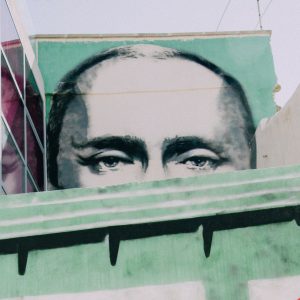
Graffiti of Vladimir Putin. Photo: Don Fontijn/Unsplash
I have struggled to write this blog. There don’t seem to the right words for something so serious, so terrifying but so utterly predictable.
Putin has invaded Ukraine – again.
As I write there are Russian bombs falling across Ukraine. Innocent people are dying, families are sheltering from bombing raids in the underground and people are fleeing.
This act of war, from a tyrant, cannot be explained or excused. This is an effort to destabilise Europe. To re-build a Russian Empire. To secure Putin’s legacy. It is not about NATO expansionism or a security threat from Ukraine. This is all Putin. This is not about the Russian or Ukrainian people.
Putin has brought war and death to mainland Europe and the world is more unstable than at any time since the Cuban Missile Crisis. That is our shared reality in 2022. This is the consequence of allowing a dictator to operate unchecked as readers of our work at Index know only too well.
Index does not exist to pontificate about international relations and defence policy – as frustrated as we may be. Our role, always, is to provide a space and a voice for dissidents and those being persecuted. But, and it’s a big but, we were founded in the midst of the Cold War half a century ago – to promote and protect the liberal democratic value of free expression. To work behind the Iron Curtain to provide a platform for the work and personal reflections of dissidents. We did this because we believe in democracy. That the foundations of free expression are protected at the ballot box. That the ultimate expression of freedom is the right to self-determination and to peace in a free society.
The invasion of Ukraine brings to the fore the reasons why Index exists. Even in the early hours and days of this aggression we have seen misinformation used as a propaganda tool. Journalists in Russia have been instructed to only use official comment on events in Ukraine. Protesters against the war in Moscow are being arrested in the dozens. And DDoS attacks on Ukrainian cyber infrastructure is becoming the norm. Putin is seeking to control every form of communication – that is not free speech.
In the months and years ahead Index will continue to provide a platform for dissidents. We will tell the stories of those writers, artists and academics who are being silenced by Putin’s regime. We will do what we do best – be a voice for the persecuted.
But as scared as I am of events in Eastern Europe – I worry about censorship through noise (as so ably articulated by Umberto Eco) that we are about to live through. Every repressive government could move against their citizens in the coming months with little global condemnation as our world leaders seek to find peace and secure the world as we know it. As we have for over half a century Index will be a home for those dissidents too – wherever they live – highlighting their stories and publishing their work.
The months ahead are going to be awful for too many people. Tyrants will believe they have a free hand to move against their citizens. Europe faces more war and the Chinese Communist Party may well seek to manipulate events to suit themselves.
In this unstable world the work of Index has never been more vital and we will do everything we can to support those who need us most.
18 Feb 2022 | News
It’s difficult to see the multi-millionaire US podcast host Joe Rogan as the victim of censorship. This month, Forbes reported that he had been offered $100m to switch allegiance from the music streamer Spotify to the right-wing free-speech platform Rumble. To his fans, part of the attraction of this former wrestling commentator is that he represents the American everyman, a fearless straight talker in opposition to the mainstream media.
The reality is that, with 11 million listeners, Rogan far outstrips the audience of the established media. Even the most popular TV news hosts cannot dream of such figures: Tucker Carlson, Fox News’s most popular anchor, averages a mere 3.2 million viewers while Jake Tapper of the liberal network CNN struggles to hit viewing figures of one million.
But there is a free expression issue here. When singer-songwriters Neil Young and Joni Mitchell objected to Rogan including misinformation about the Covid vaccine, they could have simply decided to remove their music from the platform. This would have been consistent with the tradition of the protest singer, from which they both come. The problem was that they appeared to make this an ultimatum, asking Spotify to choose between them and the podcaster.
As a commercial decision this was no contest. But in terms of the free circulation of ideas in a free society, it is more problematic. Wherever possible, we should allow the most uncomfortable debates to take place in the largest possible arena. And Rogan’s arena is certainly large.
The intervention of Young and Mitchell was significant precisely because it sparked debate about the limits of free speech. They were not alone in objecting to the views of Dr Robert Malone, a guest who questioned the effectiveness of mask-wearing and likened the mass-vaccination programme to Nazi Germany. Some 270 scientists also wrote to Spotify to demand they address misinformation on Rogan’s show.
Following the row, Spotify is reported to have removed more than 110 episodes of Rogan’s show where they were seen to spread misinformation or guests used racist slurs. This though is not censorship. Removing content is an editorial decision. Young and Mitchell have succeeded where others have failed in forcing a major media platform to recognise its responsibilities as a publisher.
The pandemic has put a huge strain on our instinct for free speech. But the reality is that the debate between sceptics and adherents to government policy has been, for the most part, open and vibrant. The discussion around the Joe Rogan show has resulted in the podcaster committing himself to providing more balance in future and Spotify acknowledging its role in modifying content.
If nothing else, this episode has at least disabused us of the idea that Rogan is an outsider, let alone a dissident. For better or worse he now is the mainstream media.
