7 Jul 2014 | Morocco, News, Statements
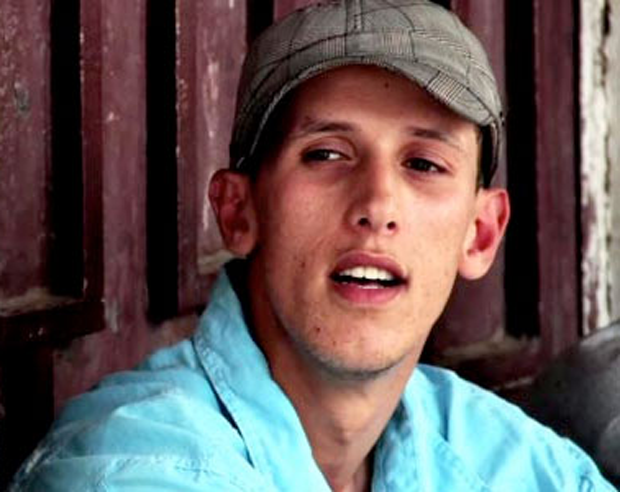
The Moroccan rapper Mouad Belghaoute – also known as Lhaqed or El Haqed, ‘the enraged one’ – was sentenced on 1 July 2014 to four months in prison amid concerns that the trial was unfair, and that he is being held because of his popularity and lyrics that condemn corruption and police brutality. Arrested on 18 May, the 26-year-old rapper is expected to remain in prison until mid-September.
In an Open Letter to the Moroccan Minister of Justice and Liberties El Mustapha Ramid, 11 organisations committed to the defence of the rights to freedom of expression, culture and the arts have condemned the four-month sentence served against Mouad Belghouate following a trial that fell short of international standards:
7 July 2014
Mr El Mustapha Ramid
Minister of Justice and Liberties
Ministère de la Justice et des libertés Place El Mamounia – BP 1015
Rabat
Morocco
Fax: +212 537 73 47 25
We the undersigned organisations committed to the defence of the rights to freedom of expression, culture and the arts, condemn the four-month sentence served against musician Mouad Belghouate (aka El Haqed) following a trial that fell short of international standards. We are concerned that the sentence has been given in retribution for his involvement in Morocco’s pro-democracy movement, and specifically his condemnation of corruption and police violence through his music.
Convicted of assaulting police officers during an incident in Casablanca on 18 May 2014, evidence including testimonies of witnesses to the incident were not accepted by the court. This led defence lawyers to withdraw from the proceedings calling them “unjust” and “unfair”.
This is the third incident since 2011 where Belghouate has been imprisoned following trials that have been condemned as highly flawed. Notably in May 2012 he was imprisoned for 12 months for insulting police in a song and its accompanying video, a charge that clearly violated his rights to freedom of expression.
Belghouate has been closely engaged with the 20th February democracy movement, and he has been openly critical of corruption in Morocco and accused police of brutality in his lyrics, leading to concerns that these are the source of the accusations against him, concerns that are heightened by trial irregularities.
Morocco has ratified the International Covenant on Civil and Political Rights which includes the rights to freedom of expression and fair trial. We therefore call on the Moroccan authorities to immediately release Mouad Belghouate and to ensure that any appeal be carried out fairly and include all evidence and witnesses relevant to the case.
Yours sincerely,
Arterial Network
ARTICLE 19
European Composer and Songwriter Alliance
European Council of Artists
freeDimensional
Freemuse
Index on Censorship
Initiative for Freedom of Expression, Turkey
Equity’s International Committee for Artists’ Freedom (ICAF)
Observatoire de la liberté de creation, France
Vivarta
Copies to:
President of National Human Rights Council Mr. Driss El Yazmi
Minister of Culture, Mr Mohamed Amine Sbihi
Association Marocaine des Droits Humains (AMDH), Mr. Ahmed El Haij (President)
» Arabic: المغرب: رسالة مفتوحة إلى وزير
» French: Maroc: Lettre ouverte à Mr El Mustapha Ramid
3 Jul 2014 | Campaigns, Statements
Commenting on the recent articles removed from search engines by Google, Jodie Ginsberg, CEO of Index on Censorship, said:
“As Index on Censorship warned when the ruling was delivered last month the ‘right to be forgotten’ is a blunt instrument ruling that opens the door for widespread censorship and the whitewashing of the past.
Private companies like Google should not have been handed the power to make decisions – that lack any kind of transparency and accountability – about what information can and cannot be found on the internet.”
Further information:
Index urges court to rethink ruling on “right to be forgotten” (30 May, 2014)
Are search engines the ultimate arbiters of information? (14 May, 2014)
Index blasts EU court ruling on “right to be forgotten” (13 May, 2014)
9 Jun 2014 | About Index, Campaigns, Press Releases, Statements

Ahead of the World Cup, Index on Censorship’s new policy paper Brazil: A new global internet referee? (PDF: [English] | [Portuguese]) explores the challenges and threats to online freedom of expression in the country.
In the wake of a global internet conference – Netmundial – and the signing of a groundbreaking domestic internet law – Marco Civil – Brazil has the potential to become an influential leader in digital rights. But that will depend on key choices and decisions taken in the coming weeks and months. Drawing on interviews with leading figures in Brazilian civil society, internet businesses, politicians and journalists conducted in Sao Paulo and Rio de Janeiro in February 2014, the paper analyses the country’s increasing profile in global internet governance debates and the consequences of its domestic internet policies.
“With the adoption of a progressive legislation on internet rights, Brazil is taking the lead in digital freedom” Index’s Senior Advocacy Officer and author of the paper, Melody Patry said.
“Digital technologies have provided new opportunities for freedom of expression in the country, but have also come with new attempts to regulate content and strong inequalities between those with and without access to the internet. Old problems like violence against journalists, media concentration and the influence of local political leaders over judges and other public agents persist.”
By the end of June 2013, more than 105 million people, 52% of the Brazilian population, had internet access at work, home, school or in cyber cafés. Brazilians are among the world’s top users of blogs and social networks. Considerable hopes are being placed on the new Marco Civil bill, which will provide a much-needed progressive legal framework for internet rights. The bill was signed into law on 23 April 2014, making Brazil the largest country in the world to enshrine net neutrality in its legal code. The law also includes stricter privacy standards to fight surveillance, and guarantees freedom of expression online. However, Brazil still faces considerable challenges in ensuring it can deliver on the promise of the new legislation.
“Brazil must now build on Marco Civil to ensure the respect of the right to freedom of expression online and offline, and promote internet rights in the international sphere”, Patry said.
In order for Brazil to provide a safe space for digital freedom and ensure the promise of Marco Civil is met in reality, Index on Censorship offers the following recommendations:
At the international level, Brazil should:
• Use its leadership to further promote a free and fair internet by continuing to publicly advocate for fundamental internet principles such as net neutrality, user privacy and freedom of expression in international forums
• Ensure that civil society organisations are deeply involved in the discussions and decision-making process on global internet governance, and that the outcome of international debates adequately reflect their recommendations
• Resist intervention by powerful lobby groups and governments to skew the outcome of multistakeholder gathering
• Refuse to adopt or sign up to repressive measures and/or international agreements favouring internet censorship, top-down approach of internet governance and tighter government control of the internet
At the domestic level, Brazil should:
• Reform defamation and privacy laws to ensure they are not used to prosecute journalists and citizens who express legitimate opinions in online debates, posts and discussions
• Provide proper training to the judiciary and law enforcement agencies on defamation and other freedom of expression-related issues
• Introduce clear guidelines regarding civil defamation lawsuits, especially in regard to the use of content takedown and the setting of indemnification amounts
• Ensure that all cases of killings and other forms of violence against media professionals and human rights defenders are effectively, promptly and independently investigated, and those responsible are held accountable
• Be more transparent about the ongoing work around privacy legislation, including the Data Protection Bill
• Pursue their efforts in promoting digital access and inclusion to all Brazilians by expanding the Digital Cities programme and stick to the target of ensuring 40 million households or 68% of the population are able to access broadband by the end of 2014 as part of the National Broadband Plan
Brazil: A new global internet referee?
PDF: [English] | [Portuguese]
For further information and interview requests, please call 0207 260 2660
8 Apr 2014 | About Index, Campaigns, Press Releases
A NEW CHAMPION FOR FREE EXPRESSION
Index announces new CEO
Index on Censorship, the organization that advocates for freedom of expression and against censorship throughout the world, is delighted to announce the appointment of our new Chief Executive Officer, Jodie Ginsberg.
Jodie, who takes up her post next month (mid-May), comes from the think-tank, Demos. A former London Bureau Chief for Reuters, Jodie worked for more than a decade as a foreign correspondent and business journalist. She was previously Head of Communications for Camfed, a non-profit organisation working in girls’ education.
The Chair of Index, David Aaronovitch, said; “Index is an indispensible organization and I am really pleased to have someone of Jodie’s experience and talents coming to us. Index’s work defending freedom of expression on- and off-line is more important than ever in the face of growing censorship in many countries around the world from Turkey to Russia, from Azerbaijan to India to China. I am sure Jodie will build on the great work of her predecessor Kirsty Hughes and all the Index staff, and lead Index into new and important campaigns.”
Jodie Ginsberg said: “Defending freedom of expression is not an easy task but it is a vital one. If we want to live in a world where everyone is free to speak, write, publish or perform without fear of persecution then we need to champion those rights every day. I’m thrilled to be leading an organisation with such an amazing track record in defending free expression and can’t wait to start working with our incredible roster of supporters and contributors.”
Outgoing CEO, Kirsty Hughes, said: “I am delighted that Jodie will lead Index in its vital campaigning work around the world. I wish her all success in this vital and exciting challenge.”
Press enquiries to [email protected]
