1 Dec 2022 | China, Hong Kong, Tyrant of the Year 2022
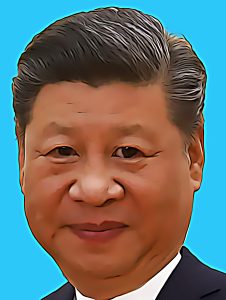 Xi Jinping has excelled with his tyrant credentials this year. Earlier this year, a controversial United Nations‘ report said that “serious human rights violations” have been committed in Xinjiang while Xi’s government is behind moves to repress Uyghurs living in Europe.
Xi has also now started a third term in power, after a 2018 change to the country’s laws to end the previous two-term limit. Tyrants just love to rip up the rule book when it comes to clinging to power.
“My nomination for Tyrant of the Year 2022 goes to the man who somehow made us all feel sorry for Hu Jintao when he snubbed the former Chinese Communist Party leader back in October, a remarkable feat given that Hu isn’t exactly an ally when it comes to human rights and free speech,” says Index on Censorship’s editor-in-chief Jemimah Steinfeld.
Xi’s policies are increasingly being called into question.
“His Zero Covid policy is as barmy as it is draconian. It’s led to the deaths of many who have not been able to get urgent medical treatment, been locked in their apartments when they’ve caught fire, have taken their own lives out of desperation,” says Steinfeld.
The protests against his policy (and indeed his legitimacy) showed a kink in Xi’s armour but he responded in true autocratic style – arrests, arrests and more arrests (plus a raft of other silencing measures).
“The CCP’s unofficial promise to make people’s lives materially better in exchange for fewer political freedoms has been broken,” says Steinfeld. “Unemployment is high and people are miserable and yet his merciless reign shows no signs of getting easier.”
1 Dec 2022 | Russia, Tyrant of the Year 2022
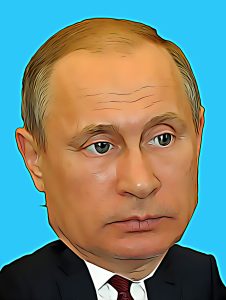 Vladmir Vladimirovich Putin is the tyrant’s tyrant in more ways than one. Over the two decades he has dominated Russian politics as president and prime minister, he has set a new standard in the brutal oppression of opponents at home and abroad. His illegal invasion of Ukraine on 24 February has had a devastating effect on the global economy and turned Russia into a global pariah. But he has also been a consistent champion of other tyrants, whether it is Ayatollah Khamenei, the supreme leader of Iran, President Assad of Syria or his closest ally in the region, President Lukashenska of Belarus.
The horrors perpetrated by the army sent to Ukraine in 2022 by Putin are too many to catalogue here. But they include torture and summary execution, as evidenced from the mass graves of Bucha, the forced deportations of citizens of occupied territories in the east of the country, indiscriminate attacks on civilian targets such as the maternity hospital in Mariupol and sexual violence used as a weapon of war. As winter sets in his forces have targeted power facilities, leaving many Ukrainians without light, heat and water in freezing conditions.
Meanwhile, in Russia itself the independent media has been crushed, with many journalists silenced or forced into exile. New legislation has turned protesters into traitors. Even calling Russia’s intervention in Ukraine a war has been deemed a crime, with anyone convicted of spreading “false information” facing a 15-year prison sentence.
“Most tyrants only brutalise their own people or the countries they invade. But Putin is a truly global tyrant who has made the whole world a poorer place by strangling the supply of Russian oil and gas and Ukrainian grain. And he has made it a more dangerous place by bringing the threat of nuclear war to Europe. Tyrant of the year? More like tyrant of the century,” says Index’s editor-at-large Martin Bright.
1 Dec 2022 | Equatorial Guinea, Tyrant of the Year 2022
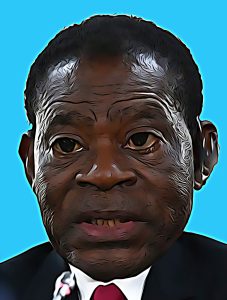 Teodoro Obiang Nguema Mbasogo may not be an obvious choice for our 2022 ‘Tyrant of the Year’, but he certainly wins awards for many aspects of his dictatorial reign. Gaining power before three of his fellow inductees on this list were even born, he’s now entered his sixth decade as the leader of Equatorial Guinea and is currently the longest serving president in the world.
“Anybody looking at Obiang’s 95% share of the recent national elections vote may think he’s an electoral powerhouse. However, with little political opposition and a heavily controlled press, it’s far from a free democratic choice for most,” says Francis Clarke, editorial assistant at Index on Censorship.
While elections are regular, the one held in November 2022 ‘returned’ Obiang to his sixth term in office. While opposition is nominally allowed alongside a multi-party system, he has near total control of the West African nation. Before the 2017 legislative election, it was reported that opposition party supporters were arrested, polling stations closed earlier than advertised and people were limited from reaching distant polling stations.
In September, a human rights campaigner was arrested by police and held for at least 18 days for assisting opposition activists in the country. Anacleto Micha Nlang, co-founder of the banned rights group Guinea is Also Ours, was delivering food to families held under siege in the offices of the outlawed Citizens for Innovation (CI) party. In 2021, an exiled investigative journalist was the subject of threats following the publication of an article alleging corruption at the highest level in his home country.
An oil-rich state, the elite of the country are thought to have plundered the proceeds from this natural resource. In 2017 Obiang’s eldest son, vice-president of the country at the time, was convicted of embezzling millions of dollars from his government and laundering the money through France. He was handed a three-year suspended prison sentence and a $35 million fine.
“With the President’s reign likely to continue, and then passed on to his son, there is currently no sign of a name other than Obiang to be installed as the leader of the nation,” says Clarke.
1 Dec 2022 | Qatar, Tyrant of the Year 2022
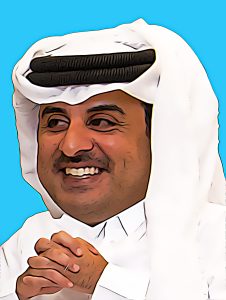 The atrocious worker conditions and contempt for basic human rights in Qatar have certainly been on our minds over the last year. However, relatively little attention has been paid to the man pulling the strings.
“Al Thani holds a relatively lower profile than his counterparts in Saudi Arabia and the UAE, but his dedication to censorship is no less concerning. From concealing thousands of workers’ deaths due to poor working conditions to arresting both local and international journalists, Al Thani remains committed to curtailing freedom of expression at every level,” says Emma Sandvik Ling, partnerships and fundraising manager at Index on Censorship.
Tamim bin Hamad Al Thani became emir in Qatar in 2013. Since then, he has demonstrated a commitment to censoring dissident voices. Qatar boasts widespread censorship in the press, academia, and civil society. Blatant cases of censorship are certainly not hard to come by: In 2021, blogger Malcolm Bidali was arrested and spent 28 days in solitary confinement for writing critically about the Qatari royal family. Indigenous groups are excluded from participating in Shura Council elections. In November, two Norwegian journalists were arrested hours before a scheduled interview with Abdullah Ibhais, the former communications director for Qatar’s 2022 World Cup.
Like his regional counterparts, Al Thani has invested in soft power strategies to appease international critics. Index editor-in-chief Jemimah Steinfeld reflected on the 2022 World Cup in Qatar in the autumn edition of the Index on Censorship magazine: “Here’s a nation that prohibits homosexuality, has no free press, forbids protest, restricts free speech. It has stadiums built using migrant labour with little to no workers’ rights. And yet come November these stadiums will open to the world, international dignitaries will be wined and dined and Qatar will revel in the glory associated with hosting a World Cup.”
Global attention will likely move on to new issues and challenges after the World Cup final on 18 December. Still, Al-Thani’s oppressive regime will remain.
