10 Apr 2018 | Magazine, News, Volume 47.01 Spring 2018
[vc_row][vc_column][vc_column_text]
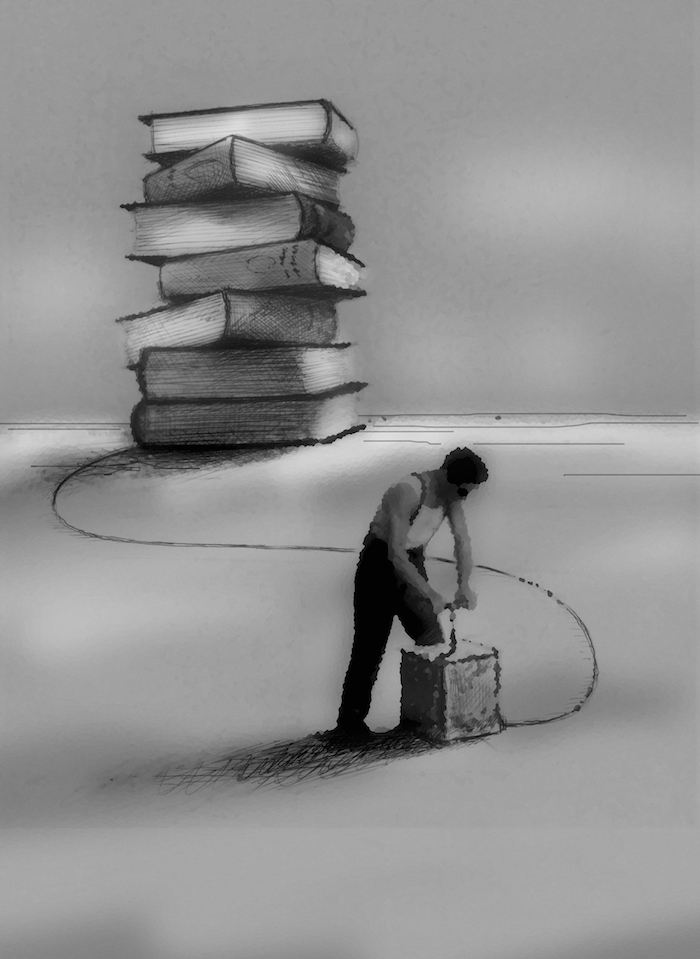
Authoritarian leaders know their history. They also know the history they would like you to know. They are aware, perhaps more than anyone else, that choosing images and stories from the past to align and amplify the ways a country is run can be a terribly powerful tool.
As Canadian historian Margaret MacMillan discussed with Index for this issue, dictators have been aware of the power of history to make their arguments for centuries. From the first Chinese emperors to today’s leaders – China’s Xi Jinping and Turkey’s Recep Tayyip Erdogan, among others – the selection of historical stories which reflect their view of the world is revealing.
“The thing about history is if people know only one version then it seems to validate the people in power,” said MacMillan.
But if you know more, you can use that information to make informed decisions about what worked in the past – and what didn’t – allowing people to learn and move on.
And right now, historical validation is an active part of the political playbook. In Russia, Vladimir Putin is a big fan of the tale of the great and powerful Russia. And what he doesn’t like are people who don’t sign up to his version of history.
Even asking questions about the past can provoke anger at the top. It interferes with the control, you see.
In 2014, Dozhd TV had an audience poll about whether Leningrad should have surrendered to the Nazis during World War II. Immediately there were complaints, as Index reported at the time. The station changed the wording of the question almost immediately, but within months various cable and satellite companies had dropped Dozhd from their schedules. Question and you shall be pushed out into the cold.
From the start, this magazine has covered how different countries have attempted to control the historical knowledge their citizens receive by limiting the pipeline (rewriting textbooks or taking history off the syllabus completely, for instance); using social pressure to make certain views taboo; and, in extreme cases, locking up historians or making them too afraid to teach the facts.
In our Winter 2015 issue, we covered the story of a Palestinian teacher who took his students to visit Nazi concentration camps in Poland because he felt they should know about the Holocaust. But not everyone agreed. While he was on the trip, there were demonstrations against him, his office was stormed and his car was torched. Later there were threats against his family. To escape the danger, he and his family had to move abroad. The teacher, Mohammed Dajani Daoudi, who wrote about his experiences for the magazine, said: “My duty as a teacher is to teach – to open new horizons for my students, to guide them out of the cave of misconceptions and see the facts, to break walls of silence, to demolish fences of taboos.”
What an incredibly brave vision for a teacher to have in the face of a mob of people who would seek to damage his life, and that of his family, to show how much they disapproved of what he was trying to do.
[/vc_column_text][/vc_column][/vc_row][vc_row][vc_column width=”1/4″][vc_icon icon_fontawesome=”fa fa-quote-left” color=”custom” align=”right” custom_color=”#dd3333″][/vc_column][vc_column width=”3/4″][vc_custom_heading text=”But censoring history is not the only way to go about establishing inaccuracies and ill-informed attitudes about the past. Another option is to spin it.” google_fonts=”font_family:Libre%20Baskerville%3Aregular%2Citalic%2C700|font_style:400%20italic%3A400%3Aitalic”][/vc_column][/vc_row][vc_row][vc_column][vc_column_text]
Dajani Daoudi is not alone in fighting against the odds to bring research, open thinking and a wide base of knowledge to students. But, as our Spring 2018 issue shows, the odds are starting to stack up against people like him in an increasing number of places.
In 2010, Maureen Freely wrote a piece called Secret Histories for this magazine, about Turkish laws that had kept most of its citizens in the dark about the killings of a million Armenians in the last years of the Ottoman empire, and how those laws were enforced by making certain things – including criticising the legacy of modern Turkey’s founding father, Mustafa Kemal Atatürk – illegal.
Turkey’s government today has just passed a law making mention of the word “genocide” an offence in parliament, as our Turkish correspondent, Kaya Genç, reports on page 22.
But censoring history is not the only way to go about establishing inaccuracies and ill-informed attitudes about the past. Another option is to spin it.
Resisting Ill Democracies in Europe, the excellent report from the Human Rights House Network, acknowledges that a common thread in countries where democracy is weakening is the “reshaping of the historical narrative taught in schools”. In Poland, the introduction of a Holocaust law means possible imprisonment for anyone who suggests Polish involvement in the Holocaust or that the concentration camps were Polish. In Hungary, the rhetoric of the ruling party is to water down involvement of its citizens in the Holocaust and to rehabilitate the reputation of former head of state Miklós Horthy.
At the same time as undermining public trust in the media, governments in this spin cycle seek to stigmatise academics, as well as close down places where open or vigorous debate might take place. The result is often the creation of a “them and us” mentality, where belief in the avowed historical take is a choice of being patriotic or not.
As the HRHN report suggests, “space for critical thinking, independent research and reporting and access to objective and accurate information are pre-requisites for informed participation in pluralistic and diverse societies” and to “debunk myths”.
However, if your objective is not having your myths debunked then closing down discussions and discrediting opposition voices is the ideal way to make sure the maximum number of people believe the stories you are telling.
That’s why historians, like journalists, are often on the sharp end of a populist leader’s attack. Creating a nostalgia for a time where supposedly the garden was rosy and citizens were happy beyond belief often forms another part of the political playbook, alongside creating a false history.
Another tactic is to foster a sense that the present is difficult and dangerous because of change and because of threats to “traditional” values; and a sense that history shows a country as greater than it is today. The next step is to find a handy enemy (migrants and LGBT people are often targets) to blame for that change and to stoke up anger.
Access to the past matters. Knowledge of what happened, the ability to question the version you are receiving, and probing and prodding at the whys and wherefores are essentials in keeping society and the powerful on their toes.
In this issue of Index on Censorship magazine, we carry a special report about how history is being abused. It includes interviews with some of the world’s leading historians – Lucy Worsley, Margaret MacMillan, Charles van Onselen, Neil Oliver and Ed Keazor (p31).
We look at how history is being reintroduced into schools in Colombia (p60) and how efforts continue to recognise the victims of General Franco’s dictatorship in Spain (p72). We also ask Hannah Leung and Matthew Hernon to talk to young people in China and Japan to discover what they learned at school about the contentious Nanjing massacre. Find out what happened on page 38.
Omar Mohammed, aka Mosul Eye, writes on page 47 about his mission to retain information about Iraq’s history, despite risk to his life, while Isis set out to destroy historical icons.
[/vc_column_text][/vc_column][/vc_row][vc_row][vc_column][vc_column_text]
Rachael Jolley is editor of Index on Censorship. She tweets @londoninsider. This article is part of the latest edition of Index on Censorship magazine, with its special report on The Abuse of History.
Index on Censorship’s spring 2018 issue, The Abuse of History, focuses on how history is being manipulated or censored by governments and other powers.
Look out for the new edition in bookshops, and don’t miss our Index on Censorship podcast, with special guests, on Soundcloud.
[/vc_column_text][/vc_column][/vc_row][vc_row][vc_column][vc_custom_heading text=”From the Archives”][vc_row_inner][vc_column_inner width=”1/3″][vc_single_image image=”89164″ img_size=”213×287″ alignment=”center” onclick=”custom_link” link=”http://journals.sagepub.com/doi/pdf/10.1080/03064229108535157″][vc_custom_heading text=”Brave new words” font_container=”tag:p|font_size:24|text_align:left” link=”url:http%3A%2F%2Fjournals.sagepub.com%2Fdoi%2Fpdf%2F10.1080%2F03064229108535157|||”][vc_column_text]2010
In 2010, Maureen Freely wrote a piece called Secret Histories for this magazine, about Turkish laws that had kept most of its citizens in the dark about the killings of a million Armenians in the last years of the Ottoman empire[/vc_column_text][/vc_column_inner][vc_column_inner width=”1/3″][vc_single_image image=”90649″ img_size=”213×287″ alignment=”center” onclick=”custom_link” link=”http://journals.sagepub.com/doi/pdf/10.1080/03064220008536796″][vc_custom_heading text=”Censorship in China” font_container=”tag:p|font_size:24|text_align:left” link=”url:http%3A%2F%2Fjournals.sagepub.com%2Fdoi%2Fpdf%2F10.1177%2F0306422013495334|||”][vc_column_text]September 2000
How China attempts to censor, using different methods[/vc_column_text][/vc_column_inner][vc_column_inner width=”1/3″][vc_single_image image=”71995″ img_size=”full” alignment=”center” onclick=”custom_link” link=”http://journals.sagepub.com/doi/pdf/10.1080/03064229308535477″][vc_custom_heading text=”Taboos” font_container=”tag:p|font_size:24|text_align:left” link=”url:http%3A%2F%2Fjournals.sagepub.com%2Fdoi%2Fpdf%2F10.1177%2F0306422013513103|||”][vc_column_text]Winter 2015
We tell the story of a Palestinian teacher who took his students to visit Nazi concentration camps in Poland because he felt they should know about the Holocaust. But not everyone agreed.[/vc_column_text][/vc_column_inner][/vc_row_inner][vc_separator][/vc_column][/vc_row][vc_row content_placement=”top”][vc_column width=”1/3″][vc_custom_heading text=”The abuse of history” font_container=”tag:p|font_size:24|text_align:left” link=”url:https%3A%2F%2Fwww.indexoncensorship.org%2F2018%2F04%2Fthe-abuse-of-history%2F|||”][vc_column_text]The spring 2018 issue of Index on Censorship magazine takes a special look at how governments and other powers across the globe are manipulating history for their own ends
With: Simon Callow, David Anderson, Omar Mohammed [/vc_column_text][/vc_column][vc_column width=”1/3″][vc_single_image image=”99282″ img_size=”medium” alignment=”center” onclick=”custom_link” link=”https://www.indexoncensorship.org/2018/04/the-abuse-of-history/”][/vc_column][vc_column width=”1/3″ css=”.vc_custom_1481888488328{padding-bottom: 50px !important;}”][vc_custom_heading text=”Subscribe” font_container=”tag:p|font_size:24|text_align:left” link=”url:https%3A%2F%2Fwww.indexoncensorship.org%2Fsubscribe%2F|||”][vc_column_text]In print, online. In your mailbox, on your iPad.
Subscription options from £18 or just £1.49 in the App Store for a digital issue.
Every subscriber helps support Index on Censorship’s projects around the world.
 SUBSCRIBE NOW[/vc_column_text][/vc_column][/vc_row]
10 Apr 2018 | Awards, Fellowship 2018, News
[vc_row][vc_column][vc_video link=”https://youtu.be/jPOdNm8Sxos”][vc_column_text]Avispa Midia is an independent online magazine that prides itself on its daring use of multimedia techniques to bring alive the political, economic and social world that is Mexico and Latin America.
“As with avispas (wasps), insects that exist across the world that are equipped with various eyes or ocelli capable of distinguishing between light and dark, Avispa Media seeks to participate in and witness the variety of shades that colour reality,” said Avispa Midia. “We believe that modern-day communication should be nourished by the varied formats and technology that characterise new virtual journalism, such as integrating multimedia tools that make information more dynamic. What sets us apart is our critical, far-reaching eye, primarily through reportage and investigative journalism.”
In the Spanish version, the site’s use of pictures, videos, music and maps to illustrate its stories is particularly striking.
But the beauty of the design masks the serious intent of this collective of journalists and researchers who are seeking to challenge violence and corruption in the region and reflect the lives of marginalised and indigenous people.
They specialise in investigations into organised criminal gangs and the paramilitaries behind mining mega-projects, hydroelectric dams, and the wind and oil industry.
The Latin American world they report on is extremely violent. Between 2000 and 2016, at least 105 journalists were murdered in Mexico for carrying out their work. According to Reporters Without Borders, in 2016 Mexico became third highest country in the world for journalist killings — the most deadly outside war zones.
Avispa Midia says its work has meant that human rights organisations and NGOs have taken action on slave labour and undocumented migrants as a result of their reports.
The site however suffers from scant resources and their main challenge is to be able to establish some form of continuous financing, since they do not have a fixed budget to do their work and no one receives a salary.
Topics that Avispa Midia has addressed in the last year include: US interference in Mexico and Central America; the persecution of peasants in Honduras; land restitution demands by displaced people in Guatemala and the first visit of Mexican president Enrique Peña Nieto to the city of Oaxaca.
Many of the reports in the last 12 months have been focused on Mexico and Central America, where the media group has helped indigenous and marginalised communities report on their own stories by helping them learn to do audio and video editing.
In the future the journalists want to create a multimedia journalism school for indigenous people and young people from marginalised neighbourhoods, so that ordinary citizens can inform the world what is happening in their region, and break the stranglehold of the state and large corporations on the media.
“In a field where war has contaminated even communication, where truths but also actions are disputed, having been nominated for the Index of Censorship award lifts our courage up,” said Avispa Midia. “And it enables us to reaffirm our investment in the truth and the tenacity of the voices and experiences we carry through each word and each image documented by Avispa Midia. For us, this represents respect and appreciation for the work we have done. This means expanding the support of communities, civil organisations and academic groups that supported us against the violence exerted against journalists in Mexico.”
See the full shortlist for Index on Censorship’s Freedom of Expression Awards 2018 here.[/vc_column_text][/vc_column][/vc_row][vc_row full_width=”stretch_row_content” equal_height=”yes” el_class=”text_white” css=”.vc_custom_1490258749071{background-color: #cb3000 !important;}”][vc_column width=”1/2″][vc_custom_heading text=”Support the Index Fellowship.” font_container=”tag:p|font_size:28|text_align:center” use_theme_fonts=”yes” link=”url:https%3A%2F%2Fwww.indexoncensorship.org%2Fsupport-the-freedom-of-expression-awards%2F|||”][vc_column_text]
By donating to the Freedom of Expression Awards you help us support
individuals and groups at the forefront of tackling censorship.
Find out more
[/vc_column_text][/vc_column][vc_column width=”1/2″ css=”.vc_custom_1521479845471{background-image: url(https://www.indexoncensorship.org/wp-content/uploads/2017/05/2017-awards-fellows-1460×490-2_revised.jpg?id=90090) !important;background-position: center !important;background-repeat: no-repeat !important;background-size: cover !important;}”][/vc_column][/vc_row][vc_row][vc_column][vc_basic_grid post_type=”post” max_items=”4″ element_width=”6″ grid_id=”vc_gid:1523523668709-d546d4ac-7872-3″ taxonomies=”10735″][/vc_column][/vc_row]
9 Apr 2018 | Azerbaijan, Azerbaijan News, Germany, Mapping Media Freedom, Media Freedom, media freedom featured, News, Russia, Turkey, Uzbekistan
[vc_row][vc_column][vc_column_text]
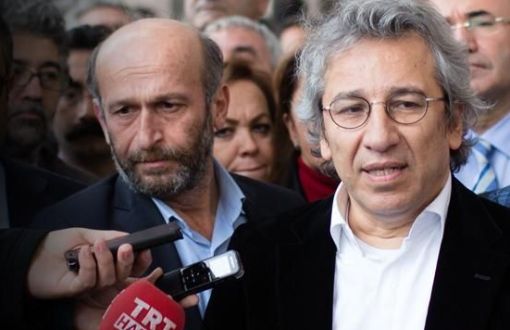
Journalists Erdem Gül and Can Dündar (Photo: Bianet)
Can Dündar, editor-in-chief of Cumhuriyyet, one of Turkey’s most popular newspapers, was awaiting an appeal on his case in Turkey from Germany when the news of the coup d’etat in his homeland came. Scores of arrests followed, and his lawyer advised that Dündar, who had just narrowly escaped an assassination attempt in May 2016 outside a courtroom and was facing over five years in prison for allegedly leaking state secrets, stay in Germany.
He recalls that it was the hardest decision in his life, 40 years of which he had devoted to working as a journalist in Turkey.
“I thought it was impossible to go back, decided to stay and work from Germany, and about a year ago I with a small team started a media organization here, Özgürüz.”
When it’s time to leave
As shocking as Dündar’s story is, it is hardly unusual in the Eurasian region, where, according to International Media Support, there was a steady decline in freedom of expression in Eurasia since 2011. While for years the Committee to Protect Journalists named Turkey the biggest jailer of journalists globally, there are other nations competing for this dubious title.
For some journalists, the alternative to being jailed is an exile. According to Yavuz Baydar, chief editor of Ahval Online, a Turkey-oriented news site based in Germany, “That’s an inevitable result of oppression in any country because as long as the conventional media are suffocated and put under the yoke of the powers, it leaves journalists with no other choice than leaving the profession altogether or moving abroad.”
However, only a select few survive the shock and reemerge as viable journalists continuing to work in exile.
Some of the most successful examples of the media in exile emerged from the region and operating in the more permissive environment of Western Europe, according to Jens Uwe Thomas with RSF Germany, are Meduza, Amurburg and Spektr, Russia-oriented news portals, as well as MeydanTV, an Azerbaijani multimedia outlet in exile, Dündar’s Özgürüz and Baydar’s Ahval Online.
Challenges of exile
Thomas says that upon settling in exile, the first step for the journalists is usually to legalize their status, and then they start looking for opportunities to establish their outlets.
“The most important thing is to support these media abroad in terms of their registration,” says Bektour Iskander, editor of Kyrgyz media Kloop, who monitors exiled media and is in the process of creating a digital resources kit for them, adding that oftentimes, the media can’t relocate abroad due to lack of financial resources or visas.
“In 2010 we were threatened by the special services because of our investigative reporting about the son of president Bakiyev [of Kyrgyzstan]. But we had no opportunity to leave the country. Only now I realize that we were facing scary consequences, even assassination. We were so clueless as to how to do that, or find the resources for that, we were saved by the miracle, a revolution happened in the country and the threat disappeared,” he recalls.
One common thread for these media across the board is that while their editorial teams operate in exile, they have networks of journalists working for them from inside their home country, says Thomas, adding that secure communication and creating collaborative work environment in such circumstances is often a challenge.
“Those are operating under the great risks, which causes a lot of hurdles and obstacles for continuity and consistency in the content quality,” Baydar adds. MeydanTV founder Emin Milli agrees, “Unfortunately, journalists and their family members are under pressure. The ones who work with us have been attacked, some tortured. Some parents of theirs were fired”. Galima Bukhabrayeva, former editor of exiled Uznews web site that was allegedly hacked by the Uzbek government and is now defunct, says: “In our case, the best journalists in Uzbekistan worked with us, because in our case it wasn’t enough to be a journalist, one had to be a patriot and a citizen, and a brave person, at that.”
But the relocation doesn’t always pose a challenge, says Aleksandr Kushnar, editor of Russian exiled media Amurburg. Commenting on the success of Meduza, he says, “It makes more sense for them to be located where they are for the reasons of safety of the editorial staff [because] their geographic location doesn’t affect the quality of their content.”
Uniformly, the exiled media representatives bemoan the perception in their home countries that these media lack the situational awareness on the ground. One example of successfully solving this challenge is MeydanTV, says Iskander, adding that “they encourage citizen journalism, their readers [are] often involved in the content creation, they send photos, videos, materials.”
Another challenge all of the exiled media managers interviewed for this article cite is the lack of funding, which poses a constant problem on the back of everybody’s mind. What complicates things for the managers of these outlets is the stipulation set forward by the international donors that the medium be located in-country in order to satisfy the funding criteria, which is impossible to abide by for those operating in exile.
Silver linings
But not all is hopeless for the uprooted journalists and media managers, and alongside obvious challenges, there are reasons for cautious optimism. There are quite a few success stories among the outlets who learned to capitalise on the advantages of operating from free environments.
Kushnar says attaining success is very difficult in reality, and he attributes it to the issues of funding, resources and teams. Speaking of the outlets, he says that “Their capabilities are seriously restricted. Oftentimes, they cannot compete with the leading news agencies that are funded very generously. We all know very well how RT is funded all over the world. The goal for these media is to identify the niches where they still can get in and tell the truth. It’s very difficult when pro-Kremlin outlets have an audience of 40 million, and your budget is a thousand times smaller.”
The upsides are quite self-evident, according to Anton Lysenkov, editor of Latvia-based Spektr: “Our situation is beneficial. We are not subjected to constant audits and provocations. Our work environment is much more peaceful. I admire those who continue to work from Russia, and we are trying to help them,” he adds.
According to Baydar, “The upside is you can see everything with a bird’s eye, in a free domain, analyse things much more clearly in a macro way which gives a lot of advantages to focus on the main areas that need to be covered.”
Some media in exile not only survive, but they manage to thrive and even increase their audiences, like Meduza. “They have millions of unique visitors a month, and it’s been rising year to year. They’re trusted,” says Milli. “They can work freely in Russia and come and go as they please. They’re a successful model.”
Galina Timchenko, Meduza’s editor-in-chief, cannot attribute the success of her outfit to any one strategy: “Unfortunately, there are no long-term plans and effective strategies for success in the current political climate. So far, we are not considering the possibility of moving to Russia because we cannot remain oblivious to the rising risks in that case. The media market in Russia is almost completely controlled by the state, and we don’t see a place for ourselves within such a market in the short term perspective,” she adds.
Preserving and rehearsing for the return
But what is the purpose of the media in exile and what is their end game?
While Kushnar says, exiled media preserve the freedom of the press in a dictatorship, Lysenkov adds that their goal is to supply the population with propaganda-free and less emotionally-charged content. Milli sees the enormous power of the free media to change the society for the better. “People have big hopes and need this, too. That’s why we keep working”.
Others see their ultimate goal as return home. Iskander cautions that “when a dictatorship in their home country comes to an end and [the media in exile] return home, their ratings start falling sharply. Because the credit of trust has been disintegrating, because the rhetoric could change from “at least someone is trying to do some good, even if it is from abroad” to “where have you been all these years while we were suffering?”
Despite such dangers, Bukharbayeva says, the ultimate goal of the exiled media is the return home. She points out that one loses focus and ability to write accurately when unable to visit their home country for over a decade, but “exiled media cannot exist indefinitely, and we must try to return because the time has come.”
Dündar, who has also started publishing a print magazine and opened a publishing house, is looking into opening a TV channel. He says his team’s current work is like a rehearsal in preparations for the future.
“It’s impossible to be in Turkey. But like the German Jews in WWII [who] came to Turkey, rehearsed there, came up with new ideas, and then went back to Germany after the war, we, Turks, are rehearsing and preparing for a better day in Turkey to return there”. [/vc_column_text][/vc_column][/vc_row][vc_row][vc_column][vc_basic_grid post_type=”post” max_items=”10″ grid_id=”vc_gid:1523289736466-bd3f6e90-fdac-9″ taxonomies=”8607″][/vc_column][/vc_row]
