21 Mar 2019 | Asia and Pacific, India, News
[vc_row][vc_column][vc_column_text]
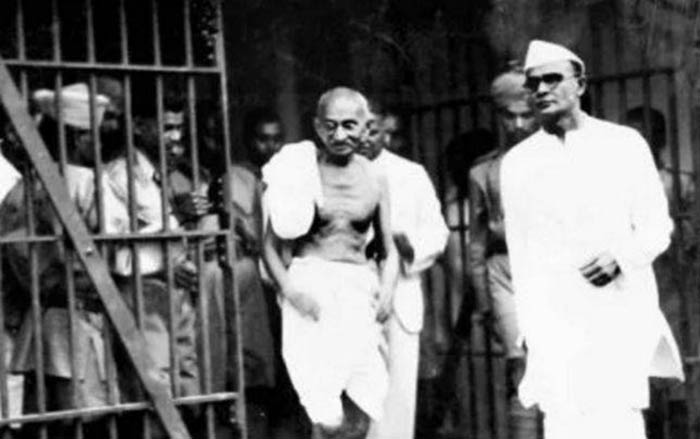
Mahatma Gandhi during his trial for sedition in Match 1922.
It’s been 72 years since India gained independence from Britain, but sedition remains entrenched not only in law (Section 124-A of the Indian Penal Code), but also in the mindset of successive governments.
In 1922, Mahatma Gandhi, leader of the Indian independence movement, was tried and prosecuted for “bringing or attempting to excite disaffection towards the British Government established by law in British India”, under Section 124-A.
“Affection cannot be manufactured or regulated by law,” Gandhi said while on trial. “If one has no affection for a person or system, one should be free to give the fullest expression to his disaffection, so long as he does not contemplate, promote, or incite to violence.”
“Sedition was made an offence under the Indian Penal Code of 1860 which was drafted by [British Whig politician] Thomas Macaulay,” Suhrith Parthasarathy, a lawyer and writer based in Chennai, India, tells Index on Censorship. “It was unquestionably a weapon at the hands of the colonial government.”
Jawaharlal Nehru, India’s first prime minister, and other prominent figures believed sedition should have no place in the newly independent India’s law books, Parthasarathy adds, “but unfortunately no elected government has thought it necessary to amend the IPC and delete Section 124-A”.
The authorities in India today are using Section 124-A to stifle dissent. A Manipur student activist was arrested over a social media post on the contentious Citizenship Bill, 14 students of Aligarh Muslim University were arrested for raising anti-national slogans on campus, and four students of Kashmiri origin in Rajasthan were charged with sedition over social media posts about last month’s terror attack in Jammu and Kashmir.
Parthasarathy says it is difficult to predict the outcome of these ongoing cases. “Instances of conviction where people have had to face imprisonment for sedition are rare,” he adds. “But the process is often a greater punishment — people accused of the offence face imprisonment and a trial, which can be long, arduous and hugely chilling.”
Section 124-A criminalises anyone who “through words, either written or spoken, or by signs, or by visual representation, or otherwise, brings or attempts to bring into hatred or contempt, or excites or attempts to excite disaffection towards the government”, with the term disaffection meaning “disloyalty and all feelings of enmity”.
The misuse of sedition law is not specific to any one political party in India. Since independence, many writers, activists and cartoonists have been accused of sedition by governments across the country as a response to legitimate criticism.
In the 1962 case of Kedar Nath Singh v State of Bihar, the Supreme Court of India, upholding the constitutional validity of 124-A, ruled that a person could be prosecuted if they “incitement to violence or intention or tendency to create public disorder or cause disturbance of public peace”.
In its third attempt to determine the validity of sedition, earlier last year, the Law Commission of India observed that while dissent is essential to any democracy, law enforcement agencies must use sedition law judiciously. Additionally, it also held that it is necessary for the Supreme Court to interpret the provisions of sedition law. The report also notes that the United Kingdom has itself abolished its own law on sedition almost a decade ago. While the powers of the Law Commission of India are limited to providing suggestions and recommendations only, the Parliament of India, the lawmaking body of the government, and the judiciary, the custodian of human rights, ought to revisit the justification of this provision.
With the indiscriminate use of archaic laws for dissenting against the government, many have raised their voices against such arbitrary restrictions on the fundamental right to free speech and expression, which is granted under the Constitution of India. Given the record of the ruling party in the last four years, intolerance of criticism is only seeing a rise in the country with authorities clamping down on free speech behind the garb of disloyalty and anti-national sentiments.
In 2015, Section 66A of the Information Technology Act 2000, which criminalised online speech considered “grossly offensive”, “menacing”, and caused “annoyance”, was struck down as unconstitutional due to the ambiguity of such terms. The Supreme Court of India held that any restrictions on speech could only be deemed reasonable under Section 19(2) of the Constitution of India. While the sedition law suffers a similar problem with definition, along with a lack of procedural safeguards, the Supreme Court has argued time and again that seditious words or actions are likely to threaten public order or incite violence, which is a reasonable restriction on free speech.
In data submitted to the Parliament of India by the Ministry of Home Affairs, which is in charge of law and order in the country, between 2014 and 2016, the first three years of the current government’s time in power, 179 people were arrested on the charge of sedition with only two convictions. This leads many to believe that authorities are abusing the law to stifle dissent and harass those who speak out.
There is a growing demand for amending the sedition law or repealing this relic of the past. However, there is an urgent necessity to first address the systemic flaws to ensure that these laws are not misused so as to mock free speech in India.
“The only amendment that we need on sedition is to remove Section 124-A, which parliament, if it has the will, can easily do,” Parthasarathy says. “P Chidambaram of the Indian National Congress has said recently that if the congress comes to power they’ll remove section 124-A from the IPC. But we have to ask the congress why they hadn’t thought of removing it earlier.” With a general election due to take place on 11 April, congress’s manifesto committee has promised to repeal sedition law.
“I would be very pessimistic of change coming from parliament,” Parthasarathy concludes. “Perhaps one day the Supreme Court will reconsider its 1962 verdict and strike Section 124-A down, for it unquestionably violates the right to freedom of speech and expression.”[/vc_column_text][/vc_column][/vc_row][vc_row][vc_column][vc_basic_grid post_type=”post” max_items=”4″ element_width=”6″ grid_id=”vc_gid:1553177738983-78591bd7-912e-5″ taxonomies=”6514″][/vc_column][/vc_row]
20 Mar 2019 | Awards, News
[vc_row][vc_column][vc_video link=”https://youtu.be/Ux4icHaQpoQ”][vc_column_text] SFLC.in (Software Freedom Law Centre) tracks internet shutdowns in India, a crucial service in a country with the most online blackouts of any country in the world. The tracker was the first initiative of its kind in India, and has quickly become the top source for journalists reporting on the issue.
More Indians are gaining access to the internet and the government even rolled out a Digital India project to make government services available to its citizens online. But while this move online has been beneficial for many, internet connections have also become less reliable.
SFLC.in has noticed a staggering increase in the number and frequency of shutdowns in the country, often to subdue unrest or prevent cheating during examinations. The organisation has recorded at least 251 shutdowns since 2012, 113 of which took place in 2018 alone, the most in any country in the world – and by a wide margin.
Since service providers don’t notify the public of a shutdown, SFLC.in monitors the national and local press, and then updates its Internet Shutdown Tracker with any reports. The tracker takes the form of a real-time map of ongoing shutdowns by state and district, so that the information can be used to hold local institutions accountable.
The website also provides reports and analysis based on the project’s database, and keeps a record of blocked URLs and take-down notices received by websites. SFLC.in has since made the source code available for activists for free.
The tracker has become a go-to resource for politicians and MPs as well as reporters: it was cited in discussions in the Indian parliament, and its data convinced the government to amend existing legislation.
The organisation, which brings together lawyers, policy analysts and technologists to fight for digital rights, produces reports and studies on the state of the Indian internet, also has a productive legal arm. SFLC.in has conducted landmark litigation cases, petitioned the government on freedom of expression and internet issues, and campaigned for WhatsApp and Facebook to fix a feature of their platform that has been used to harass women in India.
It also provides training and pro-bono services to journalists, activists and comedians whose rights have been curtailed.
SFLC.in recently expanded the project to include a mechanism for citizens to report shutdowns in their area and provide information on how it affected them and their communities. In parallel, SFLC.in is seeking to deepen the understanding of economic losses caused by internet shutdowns, and to step up its advocacy and strategic litigation work to prevent authorities from shutting down the internet illegally or beyond situations of public emergency and public safety.[/vc_column_text][vc_separator][vc_row_inner][vc_column_inner width=”1/2″][vc_single_image image=”104691″ img_size=”full” onclick=”custom_link” link=”https://www.indexoncensorship.org/2019/01/awards-2019/”][/vc_column_inner][vc_column_inner width=”1/2″][vc_column_text]
Index on Censorship’s Freedom of Expression Awards exist to celebrate individuals or groups who have had a significant impact fighting censorship anywhere in the world.[/vc_column_text][/vc_column_inner][/vc_row_inner][vc_separator][/vc_column][/vc_row][vc_row][vc_column][vc_basic_grid post_type=”post” max_items=”4″ element_width=”6″ grid_id=”vc_gid:1552650168972-e2837402-6210-3″ taxonomies=”26925″][/vc_column][/vc_row]
19 Mar 2019 | Awards, News
[vc_row][vc_column][vc_video link=”https://youtu.be/1VVGMgSHM6U”][vc_column_text] Mohammed al-Maskati is a Bahraini activist and digital security consultant who provides digital security training to activists in the Middle East and in North Africa.
Working as Frontline Defenders’ Digital Protection Consultant for the MENA Region, Mohammed teaches activists – ranging from vulnerable minorities to renowned campaigners taking on whole governments – to get the truth out despite governments’ attempt to shut them down. He educates them on the use of VPNs, and how to avoid falling into phishing or malware traps, create safe passwords and keep their accounts anonymous.
The MENA region is one of the most oppressive areas of the world for human rights defenders, but it is too often ignored by app and software developers, who do not provide products or instructions manual in Arabic.
Mohammed Al-Maskati opens the door to using digital security apps, and as a direct result of his training, a growing number of activists in the Middle East have reported being able to avoid government surveillance and reprisals.
Regional governments have also taken notice of Mohammed’s activities. In May 2014, during a visit to Oman, he was kidnapped from a taxi and disappeared for three days, during which he was asked the names of the people he was helping. He has been banned from travelling to at least five countries, making it more difficult to reach activists in the region.
A good example is Mohammed’s work in Iraq. Demonstrations erupted in September, and clashes broke out between protesters and Iraqi forces. The independent media websites reporting on the unrest were soon taken down by the government.
Mohammed travelled to Iraq and helped the activists to circumvent censorship, and the websites were able to keep going.
He had a similar impact in Egypt ahead of the March 2018 national elections, when the government was censoring not only websites but also several VPN services. Mohammed was able to arrange for a group of organisations to offer their VPN for free to Egyptian human rights defenders and journalists.
Mohammed has also been active to circumvent his travel ban. He has written Arabic-language training manuals on digital security, which he has released online, and set up a digital security email newsletter. He is also the founder of and part of the rapid response team, which is available 24 hours a day 7 days a week to help tackle digital attacks as they happen in real time.[/vc_column_text][vc_separator][vc_row_inner][vc_column_inner width=”1/2″][vc_single_image image=”104691″ img_size=”full” onclick=”custom_link” link=”https://www.indexoncensorship.org/2019/01/awards-2019/”][/vc_column_inner][vc_column_inner width=”1/2″][vc_column_text]
Index on Censorship’s Freedom of Expression Awards exist to celebrate individuals or groups who have had a significant impact fighting censorship anywhere in the world.[/vc_column_text][/vc_column_inner][/vc_row_inner][vc_separator][/vc_column][/vc_row][vc_row][vc_column][vc_basic_grid post_type=”post” max_items=”4″ element_width=”6″ grid_id=”vc_gid:1552650108302-4a47418b-5e3e-10″ taxonomies=”26925″][/vc_column][/vc_row]
18 Mar 2019 | Awards, News
[vc_row][vc_column][vc_video link=”https://youtu.be/Ex0EURB6Zk8″][vc_column_text] Colombia’s Fundación Karisma is a civil society organisation devoted to encouraging the use of digital technology and enhancing freedom of expression on the internet.
The organisation offers a rare space to discuss many issues at the intersection of human rights and technology in the country.
Karisma identifies areas of concern — like the online harassment of women — in Colombia’s digital sphere, and then tackles them through a mix of research, advocacy and digital tools.
One such initiative is Fundación Karisma’s “Machitroll Alert”, an online tool that uses humour to tackle misogynism online. Abuse and harassment online is leading increasing numbers of women to self-censor or withdraw from debates online.
Fundación Karisma’s tool allows internet users to call out misogynistic abuse online (or machist trolls, in short ‘machitroll’). Users upload screenshots of abuse, and place a stamp to mark their alert: Incurable Machitroll, Recoverable Machitroll or Machitroll Alert, and then post it online with a funny message. An example: “You are suffering a lot! Have an herbal infusion before bed and occasionally wear a pastel coloured garment. You will see that you will continue to be just as macho, but less aggressive.”
The initiative provides an alternative, non re-victimising course of action for women facing abuse online, while drawing attention to the amount of online harassment in Colombia and its chilling effect on women.
While ‘Machitroll Alert’ has been one of Fundación Karisma’s successes, the intersection of gender, free expression and the internet is not its only focus. Its “Sharing is not a crime” campaign supports open access to knowledge against the backdrop of Colombia’s restrictive copyright legislation. The campaign started after a young student faced criminal prosecution for posting a publicly funded master’s thesis on the internet, and thanks to Karisma and support from international organisations, the student was acquitted in December 2017.
While “Machitroll Alert” was launched in 2015, it has expanded over the years, and Fundación Karisma keeps adding content to the initiative.
Another addition to the project has been the campaign to make it visible beyond the online world with a series of workshops and events across the country. The first four events took place in Bogotá in September and October 2018.[/vc_column_text][vc_separator][vc_row_inner][vc_column_inner width=”1/2″][vc_single_image image=”104691″ img_size=”full” onclick=”custom_link” link=”https://www.indexoncensorship.org/2019/01/awards-2019/”][/vc_column_inner][vc_column_inner width=”1/2″][vc_column_text]
Index on Censorship’s Freedom of Expression Awards exist to celebrate individuals or groups who have had a significant impact fighting censorship anywhere in the world.[/vc_column_text][/vc_column_inner][/vc_row_inner][vc_separator][/vc_column][/vc_row][vc_row][vc_column][vc_basic_grid post_type=”post” max_items=”4″ element_width=”6″ grid_id=”vc_gid:1552649999151-8ee70357-5058-7″ taxonomies=”26925″][/vc_column][/vc_row]
