NEWS

The violent silencing of Mexican people
Witnesses to the recent shooting at the Teotihuacán pyramids are afraid to speak out for fear of retaliation
24 Apr 2026

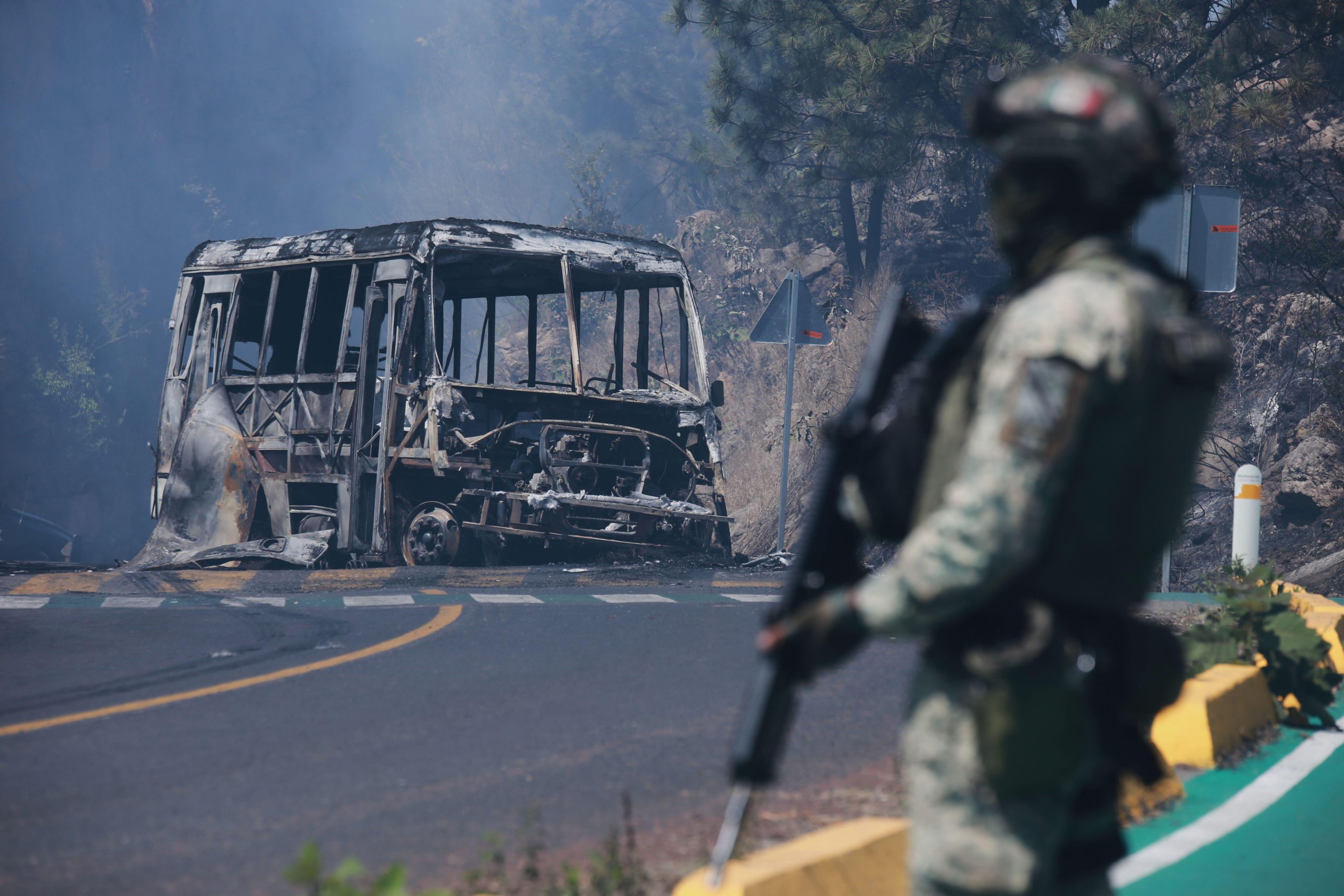
A soldier stands guard by a charred vehicle after it was set on fire, in Cointzio, Mexico, Feb. 22, 2026, following the death of the leader of the Jalisco New Generation Cartel, Nemesio Oseguera, known as "El Mencho." Photo by: AP Photo/Armando Solis, File

When I heard the horrifying news of tourists being shot at the Teotihuacán pyramids in Mexico (one Canadian woman was killed), I was struck by a detail – the number of people who wished to remain anonymous when interviewed by the media. I probably shouldn’t have been surprised. For years Mexico was the deadliest place to be a journalist – the media caught between murderous cartels and corrupt officials. The country no longer occupies the number one spot (that goes to Gaza where 53 press members were killed in 2025), but it’s still an incredibly dangerous place to be a reporter. Between October 2024 and October 2025 10 journalists were killed. All of which impacts people’s willingness to go on the record.

The journalists’ killings are part of a wider context of extreme violence in Mexico, laid bare two months ago when masked gunmen from the Jalisco New Generation Cartel went on a rampage to avenge the killing of their leader “El Mencho” by security forces. Yes, the Teotihuacán pyramids’ attack seems to have been carried out by a lone assailant with no apparent links to cartels. But violence begets violence – the backdrop counts.

The current Mexican president, Claudia Sheinbaum, has condemned the attack on tourists and called for a thorough investigation. Will that happen in a meaningful way? The jury is out. Sheinbaum is not her predecessor when it comes to freedom of expression (Andrés Manuel López Obrador was actually crowned our Tyrant of the Year in 2022 due to his hostility to the media; Sheinbaum is slightly better here). Both leaders though have in different ways struggled to fully confront and discuss the country’s violence. Sheinbaum says the problem is getting better, citing declining murder rates. Others dispute this, pointing to things like the growing numbers of forced disappearances, which don’t count as murder. Obrador did the same. He proclaimed femicide figures had dropped under his leadership, except he narrowed the reporting period to the lowest point, ignoring the time when the numbers rose under him. Anyone who highlighted this was derided as an enemy of Mexico (as we reported in 2023).

It’s easy to understand why both leaders would want to downplay the violence – it’s hardly a great look politically, nor does it position Mexico as a “top holiday destination”. And with Mexico hosting the World Cup in June, it’s an extra-sensitive moment. Sadly such tactics don’t stop the realities on the ground. The opposite in fact – they feed into the climate of impunity, where ordinary people are so intimidated they are reluctant to bear witness, even to random attacks, for fear of becoming victims of violence themselves.

Support free expression for all


At Index on Censorship, we believe everyone deserves the right to speak freely, challenge power and share ideas without fear. In a world where governments tighten control and algorithms distort the truth, defending those rights is more urgent than ever.

But free speech is not free. Instead we rely on readers like you to keep our journalism independent, our advocacy sharp and our support for writers, artists and dissidents strong.

If you believe in a future where voices aren’t silenced, help us protect it.

Make a £10 monthly donation

At Index on Censorship, we believe everyone deserves the right to speak freely, challenge power and share ideas without fear. In a world where governments tighten control and algorithms distort the truth, defending those rights is more urgent than ever.

But free speech is not free. Instead we rely on readers like you to keep our journalism independent, our advocacy sharp and our support for writers, artists and dissidents strong.

If you believe in a future where voices aren’t silenced, help us protect it.

Make a £20 monthly donation

At Index on Censorship, we believe everyone deserves the right to speak freely, challenge power and share ideas without fear. In a world where governments tighten control and algorithms distort the truth, defending those rights is more urgent than ever.

But free speech is not free. Instead we rely on readers like you to keep our journalism independent, our advocacy sharp and our support for writers, artists and dissidents strong.

If you believe in a future where voices aren’t silenced, help us protect it.

Make a £10 one-off donation

At Index on Censorship, we believe everyone deserves the right to speak freely, challenge power and share ideas without fear. In a world where governments tighten control and algorithms distort the truth, defending those rights is more urgent than ever.

But free speech is not free. Instead we rely on readers like you to keep our journalism independent, our advocacy sharp and our support for writers, artists and dissidents strong.

If you believe in a future where voices aren’t silenced, help us protect it.

Make a £20 one-off donation

At Index on Censorship, we believe everyone deserves the right to speak freely, challenge power and share ideas without fear. In a world where governments tighten control and algorithms distort the truth, defending those rights is more urgent than ever.

But free speech is not free. Instead we rely on readers like you to keep our journalism independent, our advocacy sharp and our support for writers, artists and dissidents strong.

If you believe in a future where voices aren’t silenced, help us protect it.

Donate a different amount

Jemimah Steinfeld

Jemimah Steinfeld has lived and worked in both Shanghai and Beijing where she has written on a wide range of topics, with a particular focus on youth culture, gender and censorship. She is the author of the book Little Emperors and Material Girls: Sex and Youth in Modern China, which was described by the FT as "meticulously researched and highly readable". Jemimah has freelanced for a variety of publications, including The Guardian, The Telegraph, The Independent, Vice, CNN, Time Out and the Huffington Post. She has a degree in history from Bristol University and went on to study an MA in Chinese Studies at SOAS.

READ MORE

CAMPAIGNS

SUBSCRIBE

SUPPORT INDEX'S WORK